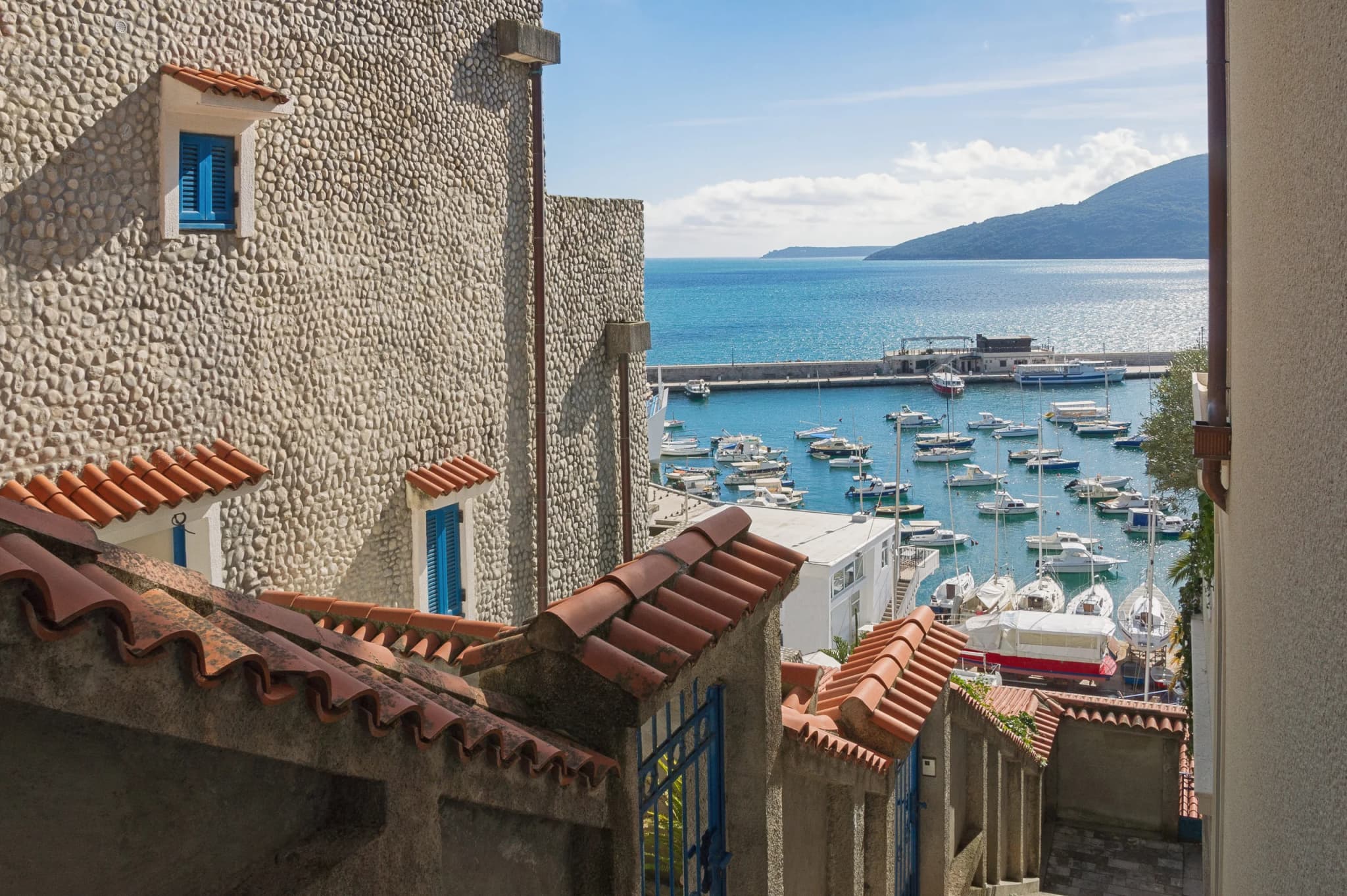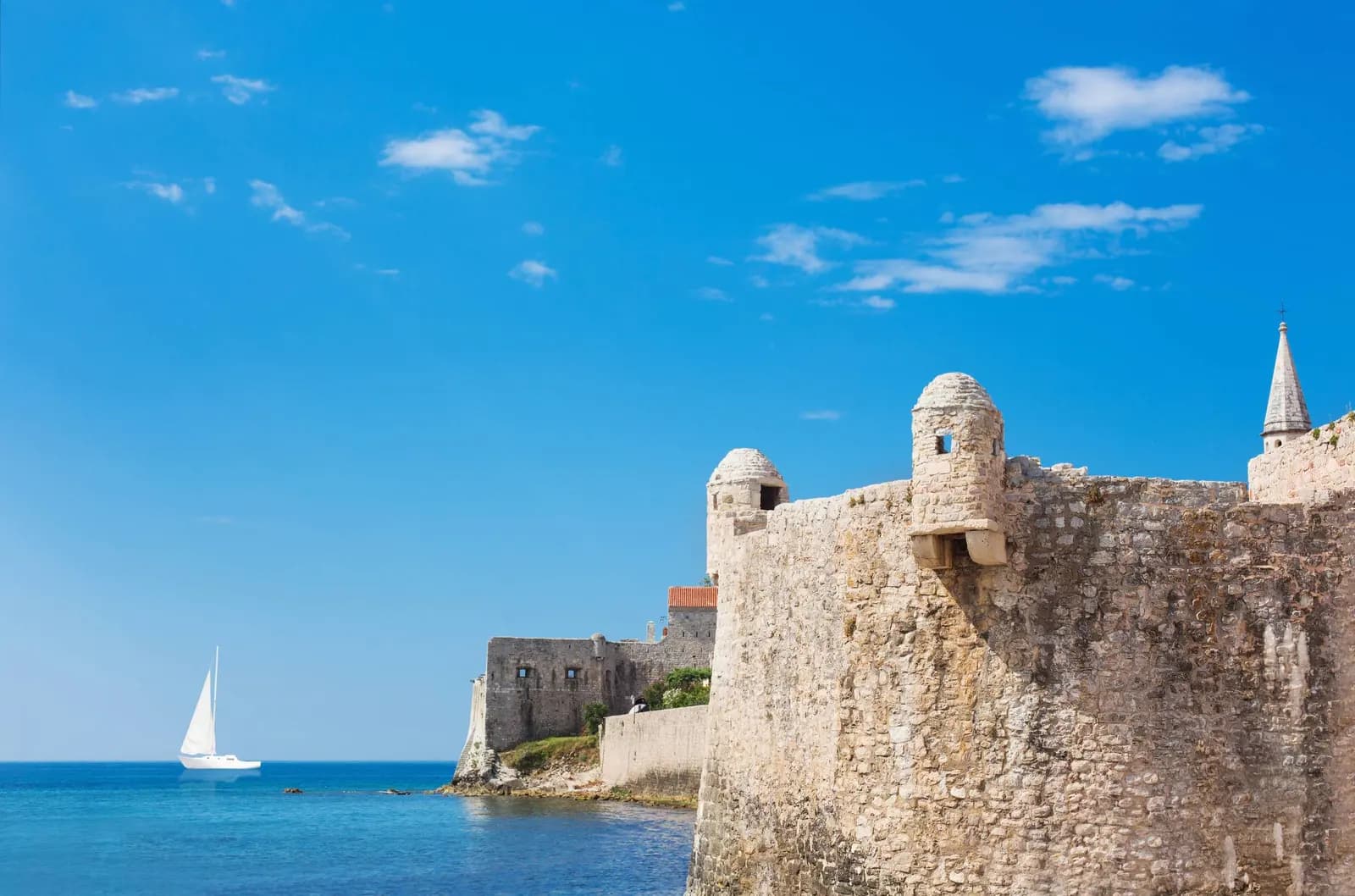
Budva’s Old Town is often sold as a finished picture: stone walls, red roofs and sea. Theatre City asks a more interesting question. What happens when the picture becomes a working stage—when a church receives a new composition, a square becomes a theatre, a street becomes a scripted walk and a passer-by becomes part of the audience?
That question gained unusual weight in 2026. Theatre City marked its 40th edition, Budva hosted the European Festivals Association’s annual summit, the International Carnival crossed the city, and performances occupied spaces inside, outside and beyond the walled core. Together, those records show a cultural city in motion rather than a monument frozen for photographs.
Scope
This is a 2026 cultural case study, not a general Old Town itinerary. For construction phases, churches, archaeology and a visit route, use the evidence-led Budva heritage guide. For transport, beaches and where to stay, use the practical Old Town guide.
A festival built from places, not one building
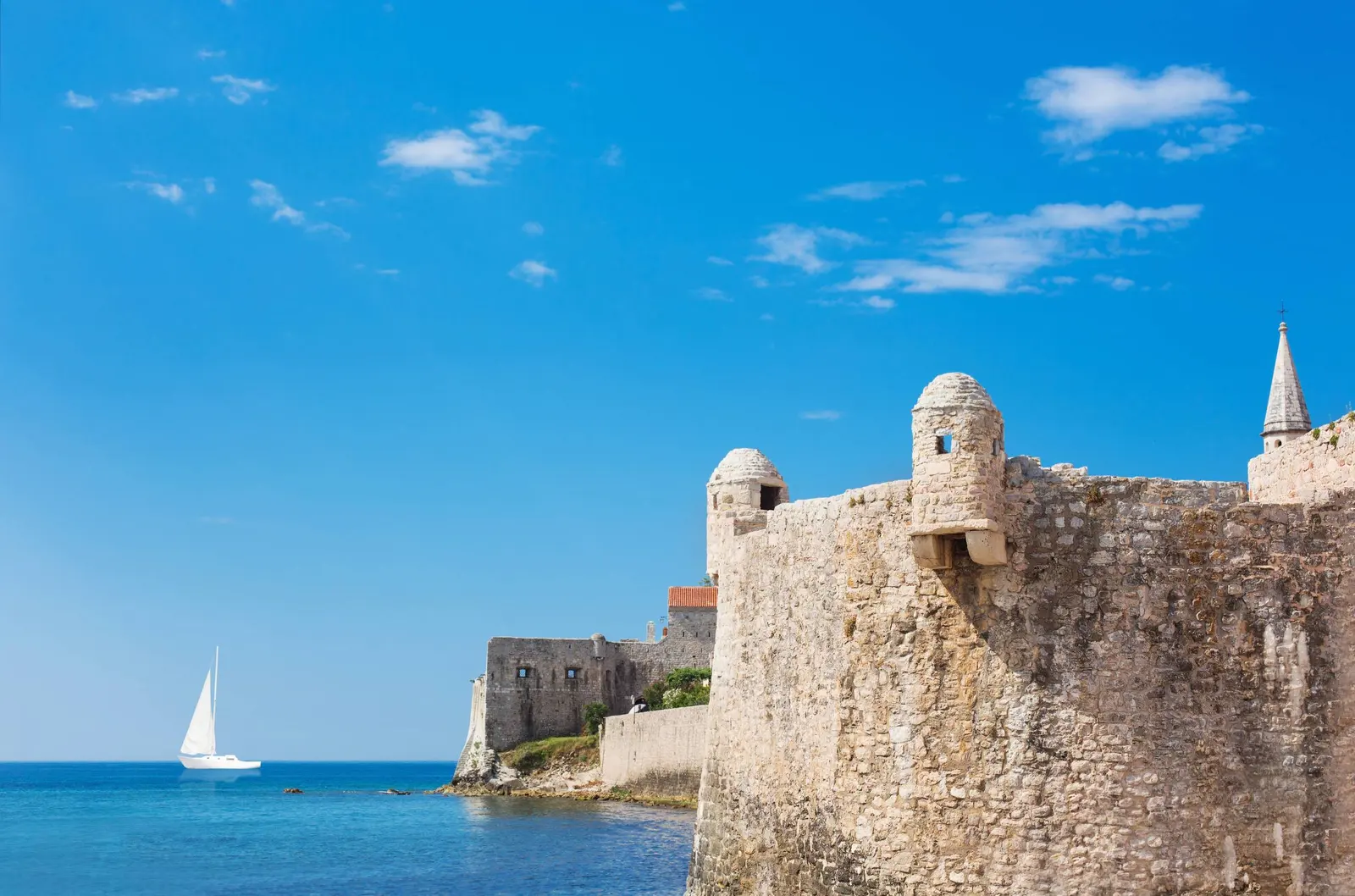
Theatre City’s institutional history dates its founding to 1987. Its defining proposition is spatial: squares and piazzas inside the Old Town, along with selected places elsewhere in Budva, become open-air stages. Theatre remains central, but the programme also includes music, visual art and literature. The European Festivals Association’s current member profile independently describes the same venue logic, including squares, churches, an ancient basilica and Santa Maria in Punta.
This is not merely an attractive background strategy. A conventional theatre controls entry, seating, acoustics, weather and the boundary between performer and audience. Budva’s distributed model gives some of that control away. A resident can cross a performance route. Restaurant noise can enter a scene. Wind and rain can change a production. Historic walls and church interiors are not neutral scenery; their scale, surfaces and prior meanings enter the event.
The result is better understood as a network than a venue. In 2026, that network reached from the square outside the walls to the “Between the Churches” stage, Poets’ Square, Santa Maria in Punta, Old Town lanes and Mogren Fortress. The broader Budva city guide helps locate these places; the analysis here asks what each type of space does culturally.

| Space | 2026 use | Stage effect | Evidence limit |
|---|---|---|---|
| Outside Old Town | Opening dance and music | Audience, walls and city traffic share a threshold. | Official records fix place and rain interruption. |
| Between the Churches | Drama, music, closing musical | A forecourt becomes a repeat stage address. | Use does not imply permanent control. |
| Poets’ Square | Literary talks | Dialogue replaces a proscenium view. | Attendance is not inferred. |
| Santa Maria | Concert, art installation | A church frames contemporary work. | Event use is not general access. |
| Old Town streets | Unreal City walk | The audience moves and participates. | Personal response stays subjective. |
| Mogren Fortress | New large stage | The map expands beyond the wall cluster. | No permanent venue is guaranteed. |
The 40th edition: a dated record, not evergreen promotion
The 40th festival opened on 30 June 2026 with A Night More Precious than a Century, a Theatre City and BITEF Theatre co-production for nine dancers and three musicians. The chosen site was the square outside the Old Town, not the established stage between the churches. A later festival account records that rain interrupted the performance. That detail matters: outdoor theatre’s openness is a creative resource and an operational risk.
By late August, the festival’s own 40th-edition assessment reported programmes on more than five stages, a new and unusually large stage at Mogren Fortress, and the 40th performance of the guided-walk production Unreal City. Its separate 25 August closing report said the edition had officially closed with the musical Kao kakao between the churches.
Those are historical facts about 2026, not a template for the next edition. A future visitor should not assume the same opening date, route, venue, ticket arrangement or weather plan. The official programme remains the controlling source for each event.
| Dates | Event |
|---|---|
| 30 Apr–3 May | International Carnival |
| 16–19 May | EFA summit in Budva |
| 30 June | 40th festival opens |
| Late August | 40th edition closes |
Sources: Budva Tourism Organisation, European Festivals Association and Theatre City Budva, accessed 30 Aug 2026.
Three ways the 2026 programme activated memory
1. A walk made the audience move through the archive
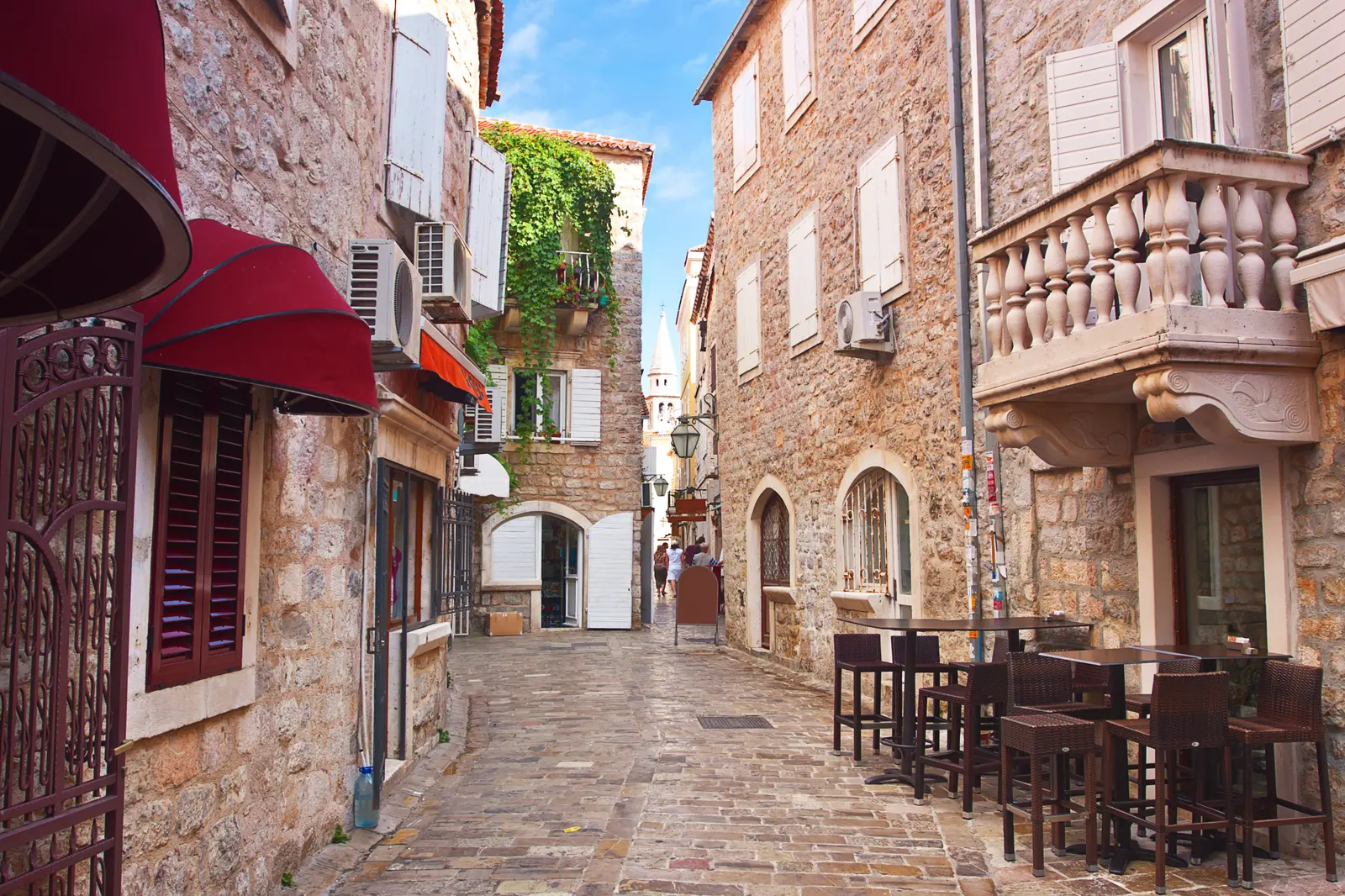
Unreal City was not marketed as a historical tour. The official description calls it theatre in the form of a guided walk. Participants wore headphones, followed narration through Old Budva and interacted with the environment and people around them. Its subject was memory—personal as well as urban—and its method dissolved the fixed line between spectator and performer.
That distinction protects the reader from a common category error. A theatrical walk can make history emotionally present without becoming an archaeological authority. It interprets place; it does not replace the museum, the cultural-property register or excavation reports. The Risan mosaics evidence audit shows why material interpretation needs the same discipline. Visitors who want Budva’s underlying dates should read its heritage guide before or after the work, not turn stage dialogue into documentary proof.
2. A new play placed Budva’s political past back in Budva
The 2026 co-production Kjara Zorzi: A Pseudo-Historical Comedy about Theatre and Homeland Security was set between Budva and Venice in 1786. Its official production material openly calls the work pseudo-historical. That label is useful: named figures, Venetian rule and a recognisable city supply material, while theatre rearranges them to ask contemporary questions about culture, power and freedom.
Budva already contains other modern narratives attached to place. The nearby Ballerina story shows how a recent public image can acquire multiple legends. The disciplined response is not to ban imagination. It is to label genres: archival fact, community memory, legend and invented drama can coexist when readers know which is which.
3. A church hosted music written from regional heritage
On 17 August, Santa Maria in Punta hosted the close of the festival’s music strand. The programme included the premiere of Ivan Marović’s Paštrovske Impressions for two flutes and piano, commissioned by Theatre City and inspired by the Paštrovići area. This was not the final event of the whole festival; it was the music programme’s conclusion.
The setting and the composition therefore carried different kinds of heritage at once: a historic church, a contemporary commission, performers working in a living regional tradition, and an audience assembled for a one-night event. The Paštrovići parliament story at Drobni Pijesak provides another carefully sourced way into that regional identity without pretending that one composition can summarize it.
Carnival is another performance system
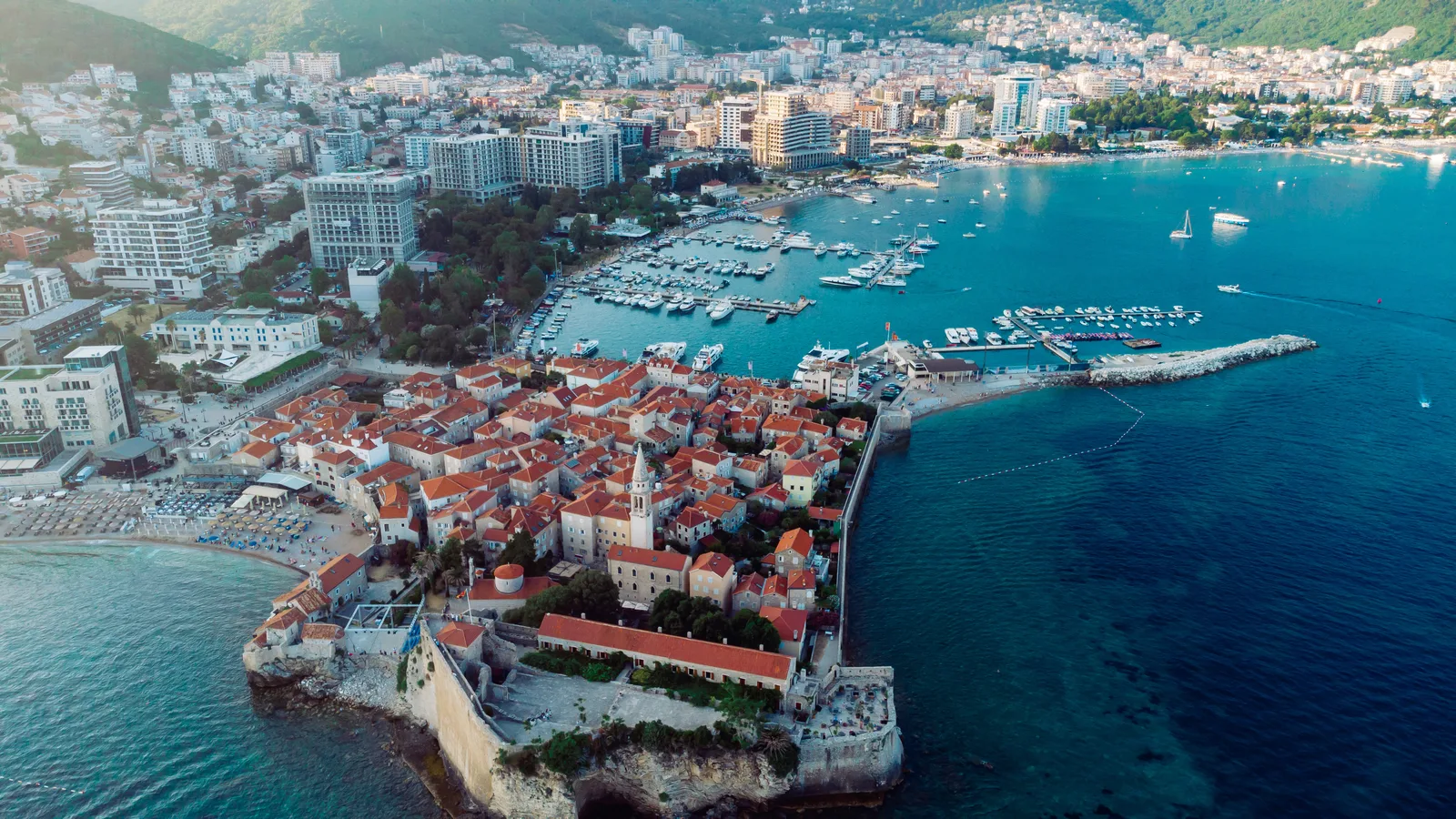
Theatre City is not shorthand for every Budva event. The official 2026 International Carnival programme documents a separate four-day sequence from 30 April to 3 May. It included a boat-based Abrum along the Budva Riviera, an Abrum through the Old Town, concerts inside and outside the walls, a large procession from the wider city toward the Old Town, and a children’s procession ending on the forecourt.
The route tells its own story. Theatre City distributes authored works among selected venues; carnival links neighbourhoods through collective movement. One often establishes an audience area, even outdoors. The other deliberately crosses ordinary roads and thresholds. Both turn city space into cultural infrastructure, but they do so through different organisers, calendars, permissions and audience behaviours.
That is why a “festival city” cannot be reduced to a summer stage. In 2026, Budva’s cultural geography included the sea approach, the boulevard, the Old Town gates, internal squares, church spaces and an outlying fortress. The performance city expanded and contracted across the year.
From regional festival to European meeting place
From 16 to 19 May 2026, between carnival and the summer festival, Budva hosted the Arts Festivals Summit of the European Festivals Association. The association’s post-event record counts 209 delegates from 42 countries. It also records that Budva joined Muğla and Cáceres/Extremadura in signing the EFFE Seal for Festival Cities and Regions.
These figures must stay in their lane. They do not measure the Theatre City audience, local cultural participation or tourism impact. They document a professional summit. Their significance is institutional: Budva was temporarily a workplace for an international festival network, and Old Town “Walk and Talk” sessions made its urban heritage part of the meeting format.
Current EFA pages list Theatre City as an ordinary member. Festival-owned pages disagree on the membership start year, variously giving 2019, 2020 and 2021. With no reconciliation in the reviewed material, the honest statement is the simplest one: the festival is a current member. The disputed anniversary is not needed to explain 2026.
When heritage is a participant, not a prop
What the sources say
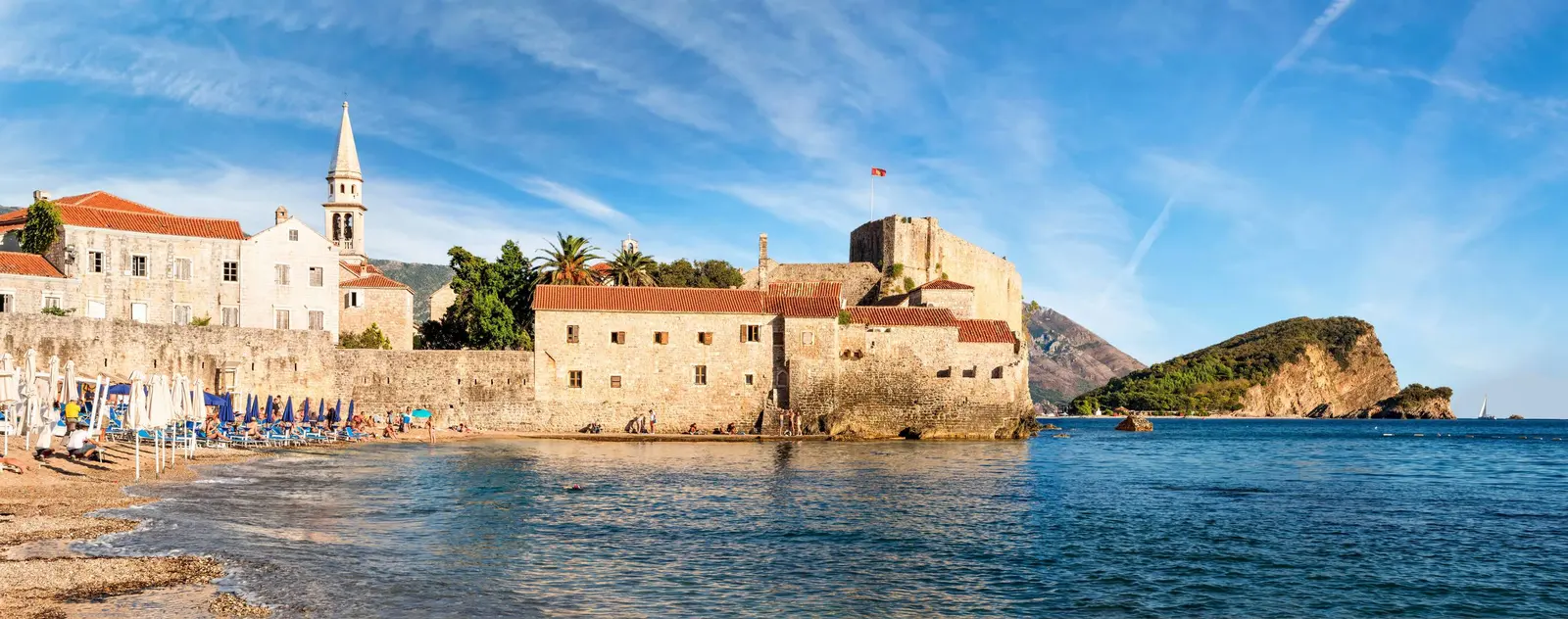
A December 2025 Ministry of Culture and Media report identifies the protected property by name as “Walls with Bastions and Old Town Budva.” It says the Protection Administration found the Jadranska straža building to be an integral part of that named property. This is a case-specific determination about one building’s relationship to the property—not a legal category called “integral cultural property,” and not evidence about event approvals.
UNESCO’s Historic Urban Landscape recommendation offers a helpful lens, even though Budva Old Town is not a World Heritage property. It defines urban heritage as layered cultural and natural values extending beyond isolated monuments to setting, infrastructure, public space, land use, perception and social practice. It also recognises historic cities as dynamic rather than inert.
Applied as questions—not as a claim of local UNESCO compliance—that lens improves event reading:
- Fabric: What touches historic stone, and is the intervention temporary and reversible?
- Capacity: Can audience numbers, queues and emergency access fit the space without damaging it?
- Sound and light: Are technical systems proportionate to a church, square or residential lane?
- Everyday city: Can residents, worshippers, workers and non-ticketed visitors still use the place?
- Meaning: Does the programme interpret local culture with identifiable authors and sources, or use heritage as an interchangeable visual brand?
- Afterlife: Is there a record of what was installed, learned, commissioned and removed?
| Layer | Consideration |
|---|---|
| Fabric | Capacity |
| Sound and light | Daily life |
| Meaning | Record afterward |
Analytical lens: UNESCO Historic Urban Landscape recommendation; no UNESCO designation implied.
Practical planning: attend without treating the town as a set
Festival attendance begins with current information. Theatre City’s programme, not an old travel article, controls dates, locations, ticket arrangements and last-minute changes. Outdoor locations can shift, and weather can alter a performance. Check the named venue on the day rather than assuming every item happens inside the walls.
Arrive with enough margin to find the correct square without pushing through a seated audience or a religious gathering. “Between the Churches,” Poets’ Square, Santa Maria in Punta and the square outside the Old Town are not interchangeable labels. If step-free access, seating, captioning, hearing support or language interpretation is essential, ask the organiser about the specific production; the reviewed programme does not establish one universal accessibility standard.
Inside a historic church or tight lane, carry less, keep exits clear and follow staff instructions on photography. Do not climb masonry or use walls as seating unless the managed venue explicitly permits it. A temporary barrier, cable cover or closed passage is part of the production’s safety system, not an invitation to find a picturesque bypass.
Then leave room for ordinary Budva. Explore the coast through the responsibly framed Sveti Nikola day-trip guide, but do not assume a festival ticket, boat ride and island visit fit one fixed timetable. Cultural participation is stronger when the day is not planned so tightly that every delay becomes conflict.
What a better public record could show
The 2026 sources establish a rich programme but leave several evaluation questions open. A future public report would be more useful if it separated paid attendance, free-event attendance, summit delegates and repeat visitors; listed venue changes and weather cancellations; described temporary installations; published an accessibility summary by venue; and recorded conservation conditions before and after major events.
That is not a demand to turn art into a spreadsheet. It is how a city can test whether a distributed festival supports both culture and place. Commissioned works, local employment, resident access, material impact and audience reach answer different questions. One headline number cannot replace them.
Budva’s 2026 record already supplies a strong foundation: a 40th festival edition, a guided work reaching its own 40th performance, a new fortress stage, an international summit, a regional music commission and a city-crossing carnival. The next step is not a louder claim. It is clearer evidence of how those systems coexist.
FAQ
What is Theatre City Budva?
It is a multidisciplinary summer arts festival founded in 1987 under municipal patronage. Its defining format turns Old Town squares, churches and other Budva locations into stages for theatre, music, literature and visual art.
Was 2026 really the 40th edition?
Yes. Theatre City’s official 2026 materials consistently label it the 40th edition. This article does not invent a year-by-year continuity account to reconcile that edition number with the 1987 founding date.
Is Theatre City the same event as Budva Carnival?
No. The 2026 International Carnival was a separate late-April-to-early-May programme with boat, Old Town, concert and procession routes. Theatre City opened on 30 June and ran through late August.
Is Budva Old Town a UNESCO World Heritage Site?
No. This article uses UNESCO’s general Historic Urban Landscape recommendation as an analytical tool. Montenegro’s record names “Walls with Bastions and Old Town Budva” as a cultural property, but that national record is not a UNESCO inscription.
Can visitors enter every festival space outside event times?
Do not assume so. Squares, churches, walls and fortress sites have different functions and access conditions. Check the relevant site or organiser for current access rather than treating a past programme listing as an opening-hours notice.
Will the next edition use the same venues?
The reviewed sources do not guarantee that. The 2026 Mogren stage was described as a major new development, but programmes, locations and operating conditions can change.
Methodology and handoff
This account separates institutional claims from independent records. Theatre City controls its founding narrative, programme, productions and closing assessment. The European Festivals Association controls summit totals, current membership and the EFFE Seal record. Budva Tourism Organisation controls the dated carnival programme. Montenegro’s ministry controls the cultural-property statement. UNESCO supplies a general management lens, not a designation for Budva.
The original “tourist compass” supplied the central insight that Budva’s walls, churches, masquerade and theatre belong in one story. The replacement narrows that insight to evidence from 2026, corrects mismatched image captions, labels drama and legend as interpretation, and hands general trip planning back to the established guides.