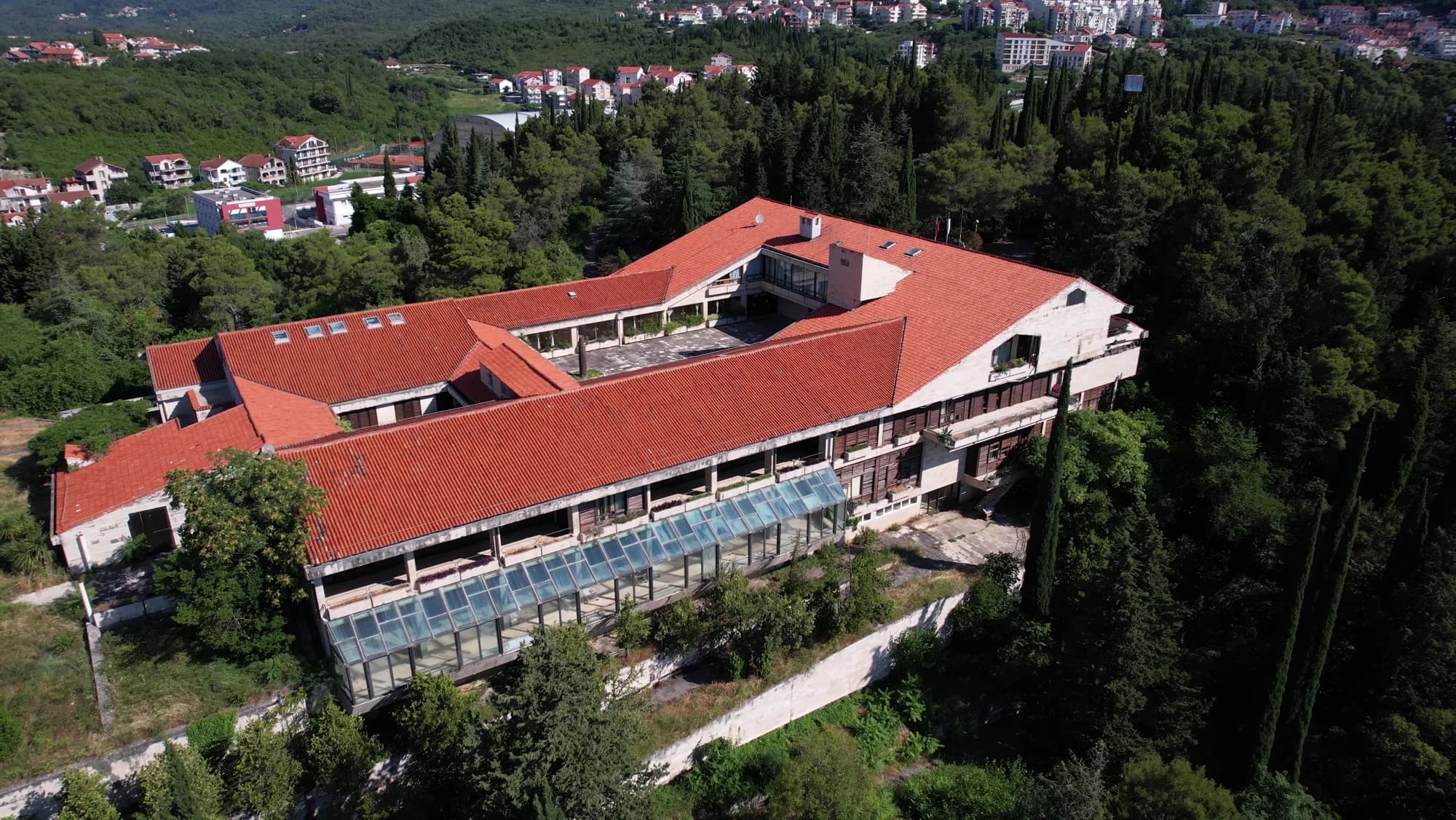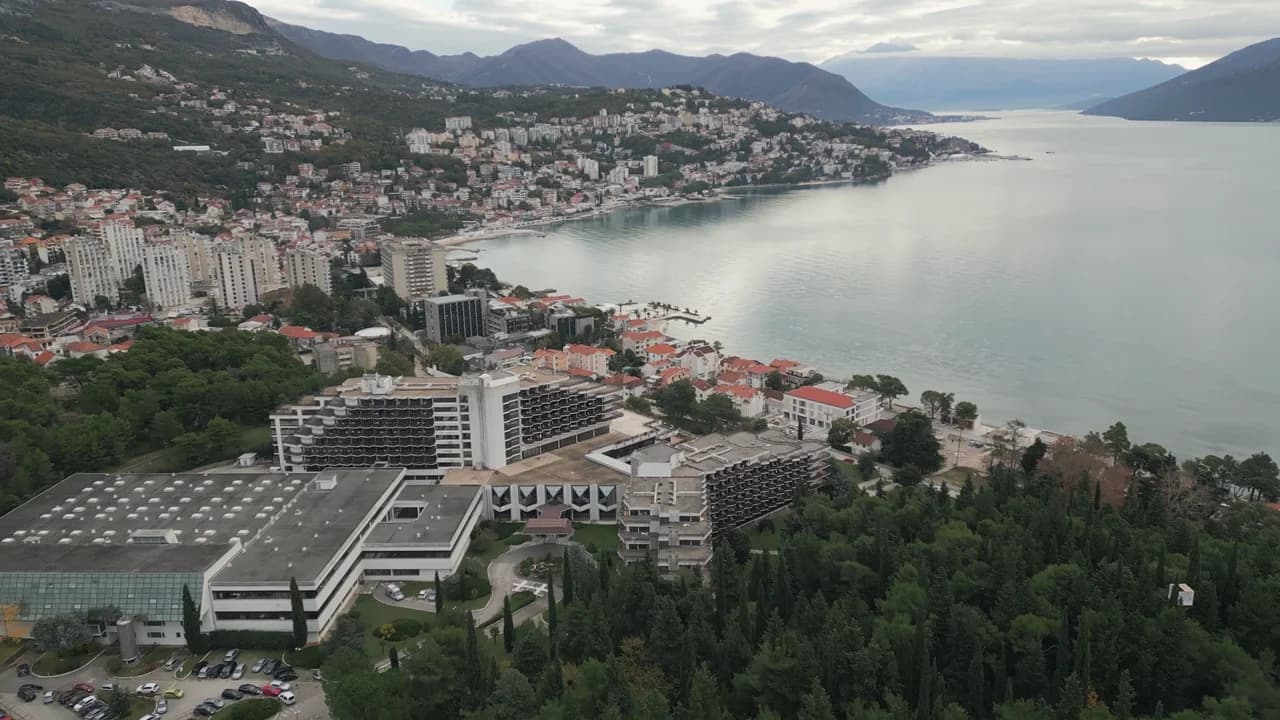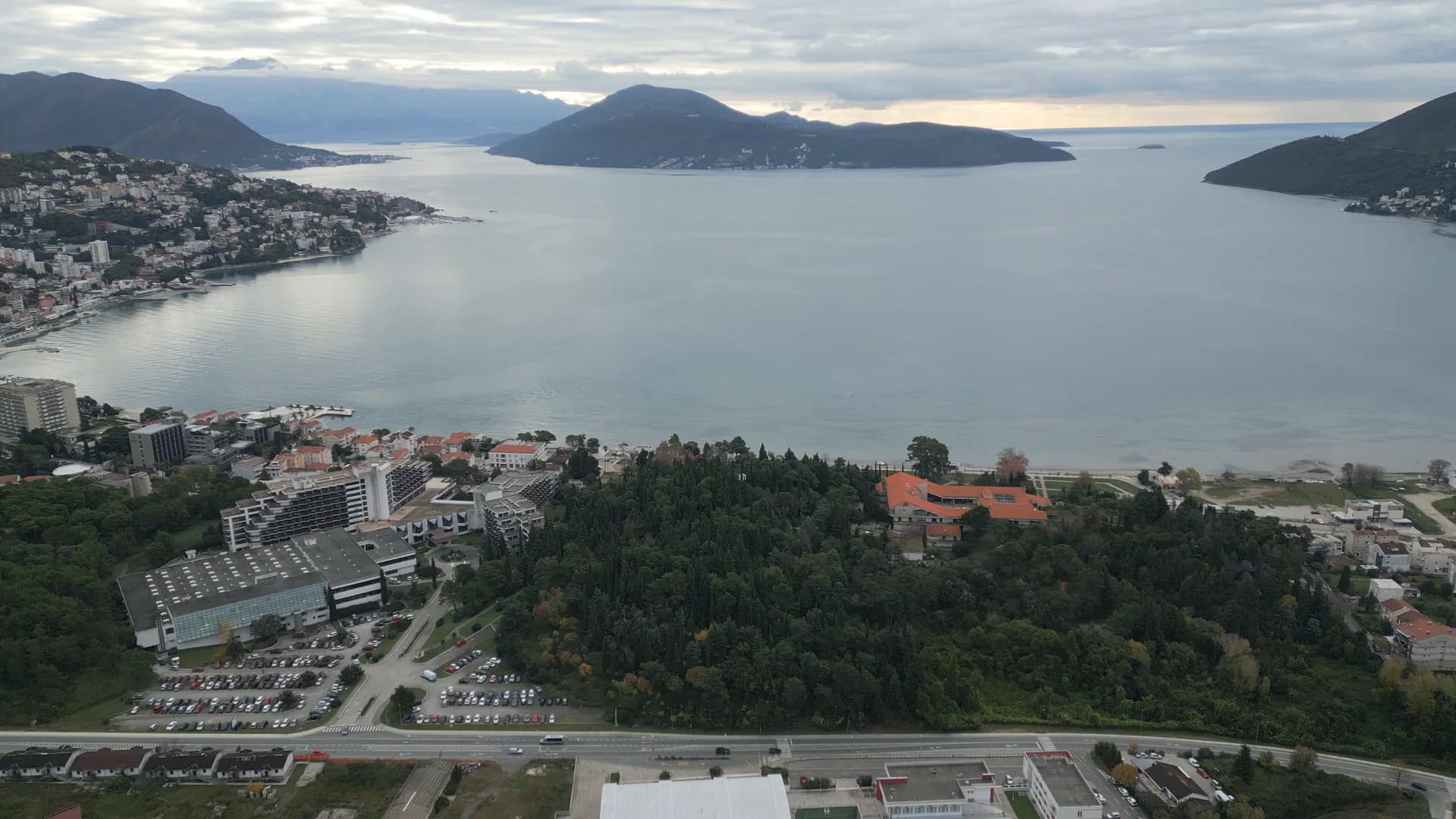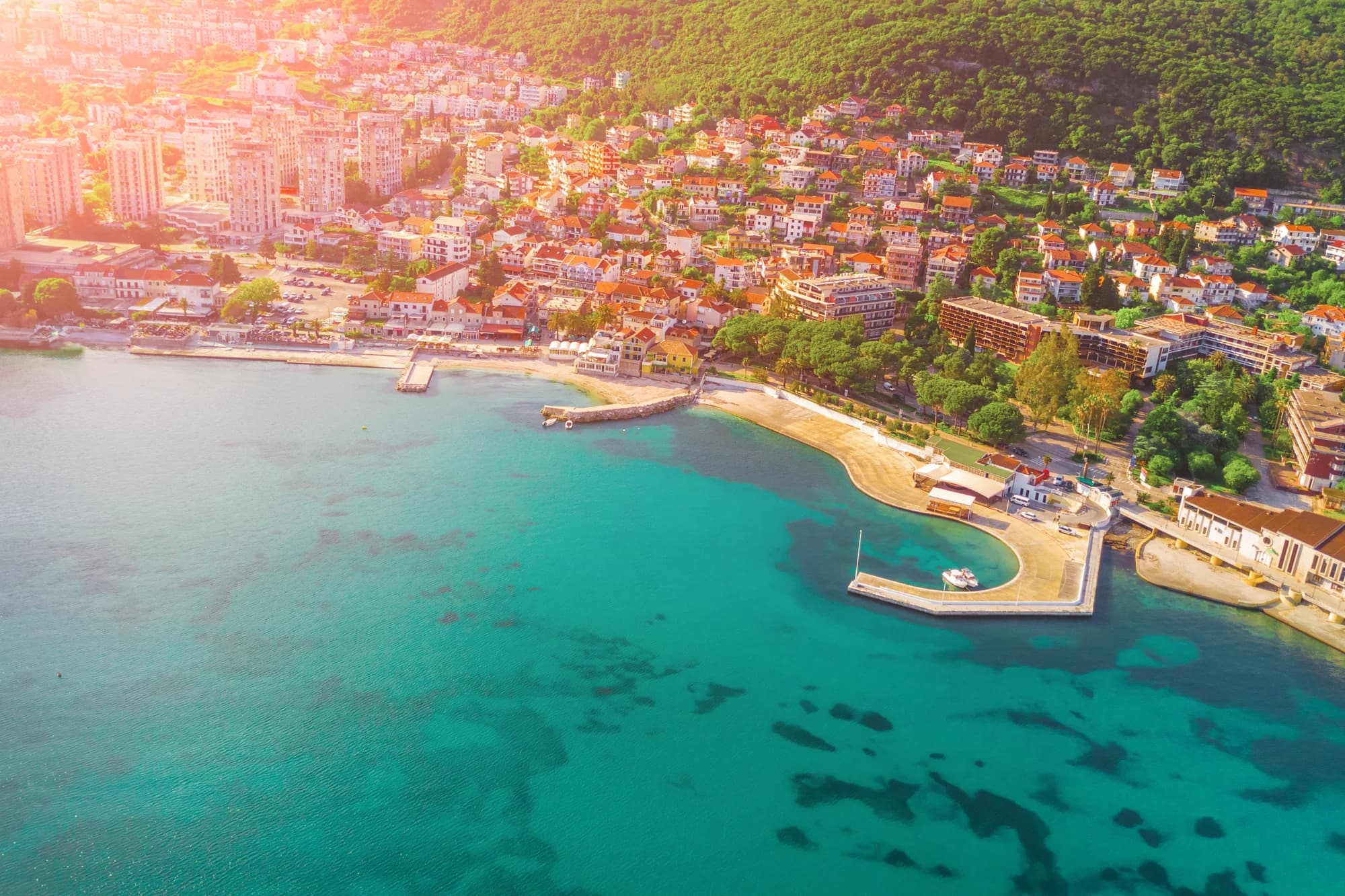
Igalo is frequently marketed with one powerful word: “healing.” That is too broad for a medical-rehabilitation trip. Institute “Dr Simo Milošević” is an operating rehabilitation and hospitality complex with physicians, therapists and a long catalogue of treatments. But the existence of mud, mineral water and thalassotherapy does not prove a cure, and the strongest recent evidence review rates the benefits and risks of balneotherapy in rheumatology as very low certainty.
This guide treats booking as a health decision, not a spa impulse. It explains what the Institute currently advertises, what research can support, why its 2026 tariff needs careful reading, how the 2025 restructuring affects confidence, and what to put in writing before travelling. It is general information, not medical advice or a recommendation to start, stop or replace treatment.
The decision in one table
| Question | Best current evidence | Booking implication |
|---|---|---|
| Is the Institute operating? | Current website, contacts and a 2026 package are live | Still confirm dates, department and written acceptance |
| Is this medical rehabilitation? | Provider describes individual doctor-led programmes and multidisciplinary staff | Send diagnosis, goals and functional needs before paying |
| Does balneotherapy work? | 2025 meta-analysis: suggested effects, very-low-certainty evidence | Do not treat marketing language as a guaranteed outcome |
| Is it proven safe? | Same review: adverse-event and withdrawal findings inconclusive | Suitability requires a clinician who knows your health history |
| What does 2026 cost? | One current package is restricted by ex-Yugoslavia ID; English page says 2025 | Request an itemised, dated offer for your eligibility |
| Is restructuring finished? | Plan adopted May 2025; monitoring and recapitalisation followed | Reconfirm services close to travel; do not infer closure or completion |
Three layers that must not be collapsed
Provider layer: Institute Igalo says it combines accommodation with rehabilitation and uses individual medical programmes. Its medicine pages list multidisciplinary staff and programmes in rheumatological, cardiac, respiratory, neurological, sports-injury, locomotor and children’s rehabilitation. Those pages verify an advertised service—not the right programme for you.
Evidence layer: balneotherapy and marine climatotherapy have been studied, but the interventions, diagnoses, comparators and settings vary. A positive result in another mineral-water centre does not validate Igalo’s mud composition, a hotel wellness package or every therapy in the Institute’s catalogue.
Individual layer: WHO describes rehabilitation as person-centred, selected around a person’s goals and needs. A diagnosis name alone cannot select heat exposure, exercise load, pool work or a device-based modality. Current symptoms, surgery timing, skin integrity, cardiovascular status, medicines, mobility and the treating clinician’s plan all matter.
| Layer | What it answers |
|---|---|
| PROVIDER | what is offered |
| EVIDENCE | what studies support |
| INDIVIDUAL | what is suitable |
| WRITTEN CLINICAL PLAN | NO SINGLE LAYER IS ENOUGH |
| Caveat | A service list is not evidence; evidence is not an individual prescription. |
Source: igalospa.com, pubmed.ncbi.nlm.nih.gov, who.int
What Institute Igalo currently lists
The official therapy page lists hydro-treatments such as underwater water-jet massage and mineral baths; hydrokinesitherapy in heated mineral-water pools; kinesitherapy; manual massage; and electro-, sono-, magneto- and laser-based modalities. It defines thalassotherapy broadly around marine and coastal factors. The catalogue also attaches temperatures and session lengths to some procedures.
That is a menu, not a treatment plan. The site’s own general material says medical programmes are individualised. Ask which professional assesses you, which modalities are proposed, the goal and measure for each, what would cause a session to be modified or stopped, and how the plan interacts with care at home. Do not book a named device or mud application solely because it appears on a webpage.
Wellness and medical rehabilitation also need separating. A massage or recreational stay can be enjoyable without claiming to treat disease. A rehabilitation course should have defined functional goals, clinical oversight, progress measures and a handover plan. Choose accommodation around the purpose: our where-to-stay guide for Igalo distinguishes proximity from medical inclusion, while Herceg Novi accommodation may suit companions who do not need to be on the Institute campus.
What the evidence says—and does not say
The most consequential source is a 2025 BMJ Open systematic review and meta-analysis of 42 randomised trials of European balneotherapy for rheumatological indications. Its pooled results suggested lower pain and better quality of life at three months, but the authors rated both effects very low certainty because of serious bias, inconsistency and suspected publication bias. Withdrawal and adverse-event estimates were inconclusive. Their conclusion was not “proven therapy”; it was very-low-certainty evidence for both potential benefit and risk.
A 2026 review of marine and Dead Sea climatotherapy found short-term signals for pain and function, especially in osteoarthritis. But it included only nine studies, could pool only two for pain, called the pooling exploratory and found safety reporting inconsistent. These reviews do not contradict each other: both describe possible signals inside evidence too heterogeneous for firm, general promises.
Neither review is a direct trial of Institute Igalo as a complete programme. They cannot prove that local mud “releases minerals through the skin,” that a mild coastal climate treats respiratory disease, or that a particular combination will help an individual. They also cannot tell you to replace medication, surgery follow-up or rehabilitation already prescribed at home.
Operating while restructuring continues
The Institute’s live site, appointment contacts and 2026 package show operational activity. Its financial story is less final. Montenegro’s government says it adopted a restructuring plan on 15 May 2025, enabling the Institute to avoid bankruptcy. In September 2025, a monitoring commission began work and described minority-share acquisition, recapitalisation and an investment cycle as continuing steps.
That is neither a closure notice nor proof that every restructuring measure has finished. The practical response is to reconfirm the exact service, building and dates shortly before travel. Pay against a written offer that identifies the legal provider, cancellation terms and included care. Avoid relying on an old travel agent PDF, cached tariff or the assumption that a government rescue fixes every operational detail immediately.
| Date | Step |
|---|---|
| MAY 2025 | plan adopted |
| JUL 2025 | capital steps |
| SEP 2025 | monitoring starts |
| 2026 | package online |
| Takeaway | OPERATING DOES NOT MEAN RESTRUCTURING COMPLETE — reconfirm services and terms close to travel. |
Source: gov.me, igalospa.com
The 2026 price-page trap
The Institute’s Montenegrin Phase II page publishes a 2026 “ex-YU” package. It requires valid identification from a former Yugoslav country and says the package includes full board and up to five therapies a day, with no therapy on Sunday. That is a specific eligibility product—not the default price for every international patient.
Meanwhile, the English general price page was still headed 2025 when checked on 31 August 2026. Quoting either page as a universal current price would be misleading. Request a dated offer in a language you understand and have it state room type, meal basis, clinician assessment, exact therapy allowance, non-treatment days, companion rate, tax and insurance charges, supplements, deposit, cancellation terms and what happens if the clinician changes the planned programme.
For a stay outside the campus, compare transport and walking burden as carefully as nightly cost. Our Kumbor base guide is useful only as a coast comparison; it is not a substitute for proximity when daily rehabilitation is the priority.
Practical pre-booking and travel checklist
- Define a functional goal. Examples are walking farther, managing stairs or returning to a daily task—not “detox” or “general healing.” Ask your treating clinician whether travel and the proposed programme fit your current care.
- Send the right medical summary securely. Ask the Institute what records, imaging reports, recent test results and medication list it needs, which language it accepts and how to transmit health information safely. Do not send sensitive records to an address you have not verified.
- Get clinical and commercial acceptance separately. A room confirmation is not proof that a modality is appropriate. Obtain both the accommodation terms and the medical assessment process in writing.
- Ask about accessibility precisely. Name the mobility aid, transfer assistance, bathroom features, lift dimensions, pool entry and distance between room, dining and therapy. “Accessible” on a homepage is not a room-level guarantee.
- Plan continuity and emergencies. CDC advises travellers with chronic illness to carry a condition and medication list and plan insurance and access to care. Bring enough regular medicine, understand exclusions and emergency transport, and know who coordinates with your clinician at home.
- Recheck transport. Border queues make fixed Dubrovnik transfer times unreliable; our Dubrovnik–Montenegro transport guide explains the variables. For a Tivat arrival, use the Tivat base guide only for airport-side planning, then obtain a current transfer quote.
- Protect recovery time. Do not fill treatment days with ambitious excursions. A gentle section of the Pet Danica promenade may be appropriate only if your clinician and current function agree.
A usable written offer should remove ambiguity before any non-refundable payment. Ask it to name the accommodation building and room category, arrival and departure dates, board basis, number of medical examinations, maximum or expected daily therapy schedule, rest days, and every charge excluded from the package. It should also state who decides whether a listed modality is unsuitable after assessment, what happens to the price if the plan changes, and whether an accompanying person receives accommodation only or any clinical service. Confirm payment currency, deposit deadline, cancellation and no-show rules, refund timing, tourist tax, transfer arrangements and the contact responsible for changes. If the offer depends on ex-Yugoslav identification, send only the minimum document information through a channel the Institute confirms as secure and ask it to verify eligibility in writing. Keep that dated reply, the tariff version and the final invoice together. This commercial record cannot guarantee a health outcome, but it makes later disagreements about inclusions, substitutions and eligibility much easier to resolve.
| Step | Action |
|---|---|
| 1 | HOME CLINICIAN |
| 2 | VERIFY CONTACT |
| 3 | WRITTEN PLAN |
| 4 | ITEMISED OFFER |
| 5 | TRAVEL + INSURANCE |
| 6 | RECHECK, THEN PAY |
| Why | SEQUENCE REDUCES AVOIDABLE RISK — payment is late in the process, after clinical and commercial clarity. |
Source: igalospa.com, wwwnc.cdc.gov
Keep optional sightseeing genuinely optional. Villa Galeb is a separate cultural visit with its own current schedule; it is not evidence for the Institute’s therapies or part of a medical package unless your written offer says so.
Frequently asked questions
Does Igalo mud cure arthritis?
No reliable source supports a cure claim. Research suggests possible symptom effects in some settings, but the strongest current review rates the evidence very low certainty.
Is balneotherapy proven safe?
The 2025 meta-analysis found safety estimates inconclusive. Individual suitability must be assessed by qualified clinicians who know your conditions, medicines and current status.
Can I select treatments from the website?
You can use the catalogue to ask questions, but the Institute describes individual medical programmes. A modality name is not a prescription.
Are the 2026 ex-YU prices available to everyone?
No. The page requires valid identification from a former Yugoslav country. Other travellers need a separate dated quote.
Is the Institute financially stable now?
The government says its May 2025 plan avoided bankruptcy, while later reporting describes monitoring, recapitalisation and investment as ongoing steps. This guide does not declare the restructuring finished.
How long should a programme last?
There is no universal duration in this guide. It should follow clinical assessment, goals, tolerance, travel constraints and the written programme—not a generic “one to three weeks” claim.