Eco Hotel Carrubba
HotelTivat, Montenegro
1 / 17
2 guests · 1 bedroom · 1 bathroom · 1 bed
About this property
Eco Hotel Carrubba is a small hotel in Tivat, on Montenegro's Adriatic coast, offering a compact one-bedroom room arranged for two guests. The layout is straightforward: a single bedroom with one bed, plus a private bathroom, making it a practical base for a couple or two friends travelling together rather than a group. Tivat sits on the inner stretch of the Bay of Kotor, within the country's coastal region, so the town works well as a starting point for exploring the bay and the wider Adriatic shoreline. Because the room sleeps two and no more, it suits travellers who want simple, self-contained accommodation over extra space they won't use. Specific in-room and on-site amenities are not listed for this property, so guests planning around particular facilities are encouraged to confirm details with the hotel directly before booking.
About the area
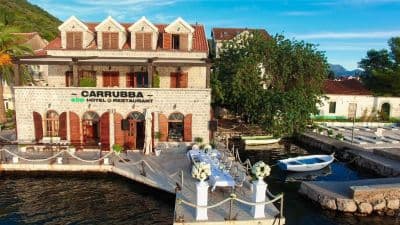
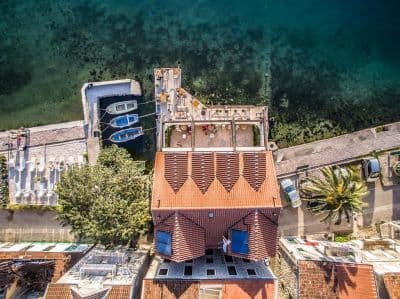
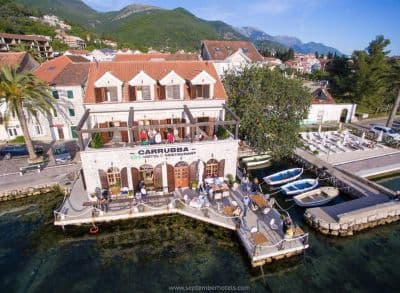
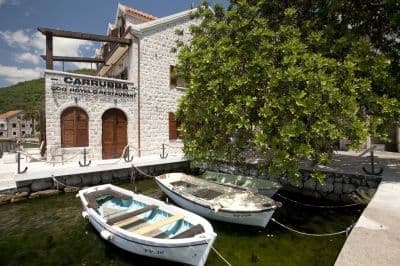
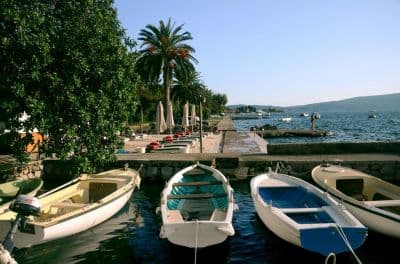
Donja Lastva keeps a green edge that most of the Tivat shore has lost: carob and olive trees between the houses, gardens running down to the water, and the wooded Vrmac slope rising directly behind. The carob — carrubba in the Venetian speech that shaped this coast — grew here for centuries as fodder and famine food, and old specimens still shade the lanes. The village waterfront is a working one, with mandraći, moored fishing boats and a stone-paved promenade heading south toward Tivat.
The area rewards slow use. A steep road and an older stone path both climb to Gornja Lastva, whose restored church, olive terraces and summer village fair look out over the whole Tivat field. On the far side of town the Solila salt pans are a protected wetland where flamingos and herons stop on migration, flat and easy to walk. For the sea, the promenade reaches Seljanovo and Porto Montenegro in about half an hour on foot, and boats from Tivat's quay run to Ostrvo cvijeća, Perast and the Blue Cave. The airport is a few minutes by car, and the Lepetane ferry to the outer bay a little further north.
Listed March 21, 2017 · Updated October 18, 2026