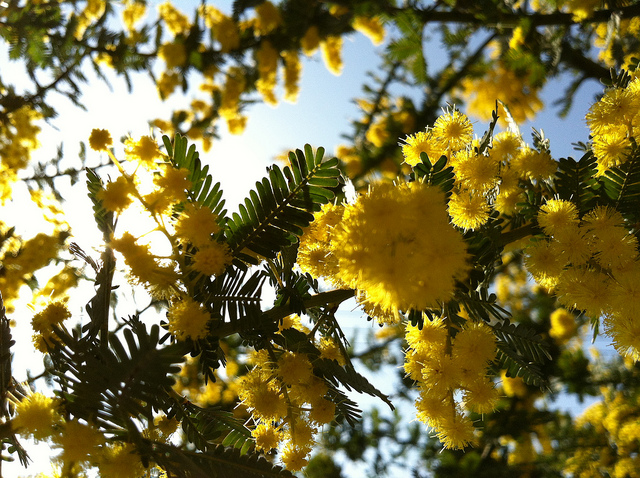
Every winter, Herceg Novi turns a spray of small yellow flowers into a civic season. The Mimosa Festival is part carnival, part neighborhood feast and part strategy: a coastal city using its mildest landscape symbol to pull visitors into February, when much of the Adriatic is quiet. Brass bands, majorettes, masks, fish, wine, sports and gallery programs matter at least as much as the flower itself.
The story is memorable without the myths that accumulated around it. The “mimosa” celebrated here is neither a rare mystery tree nor native to Montenegro. It is generally identified as Acacia dealbata, an Australian species widely planted beyond its native range. The festival, however, is authentically local: Herceg Novi's cultural institution dates it to 1969, making the 2026 program its 57th edition.
The short version: what travelers should know
The festival is distributed, not confined to one gate or venue. The city center, Igalo and settlements along the Herceg Novi Riviera all host events. Some are free street programs; exhibitions, masquerades and concerts may have tickets or limited capacity. The signature public ritual is the Mimosa, Fish and Wine Feast along the Riviera, accompanied by music and flowers. Carnival processions and costume events supply a second visual language, while sports competitions can outlast the main cultural program.
| Measure | 2026 record | What it means | Caveat |
|---|---|---|---|
| Edition | 57th | Festival founded in 1969 | Some editions were disrupted, so edition number is not simple elapsed years |
| Advertised core dates | 13–28 February | National tourism listing | Formal closing was reported on 1 March |
| International carnival | 600+ participants; 22 groups | Regional carnival scale | Municipality-reported count |
| Flower exhibition | 50+ exhibitors; 3 countries | Horticulture remains a programmed element | Organizer-reported count |
| Visitors during main period | 20,000+ | Tourism director's citywide estimate | No public counting method or audit supplied |
| Municipal budget line | €220,000 | Transfer allocation for organization | Not final spend or total festival cost |
| Date | Milestone |
|---|---|
| 13 Feb | Opening + flower exhibition |
| 28 Feb | Advertised core ends (core · 13–28 Feb) |
| 1 Mar | Formal closing report |
| 22 Mar | Related sports program continued |
Herceg Novi Municipality, Herceg Fest and National Tourism Organisation records for 2026
How a flower became a winter tourism institution
Herceg Fest's official history says the Tourism Alliance of Boka Bay and the Municipality of Herceg Novi established the festival in 1969. Its institutional language calls the event “tourism-promoting,” a revealing phrase. The founders were not merely honoring a garden plant; they were creating a reason to travel to the coast outside the summer season.
The structure still follows that logic. Yellow branches offer an immediate visual identity, but the program turns the whole municipality into the product. A visitor follows processions down Njegoševa Street, gathers around the waterfront, travels east to Đenovići or Baošići for the fish-and-wine feast, and returns to Igalo for larger indoor or outdoor events. In effect, the festival converts geography into a route.
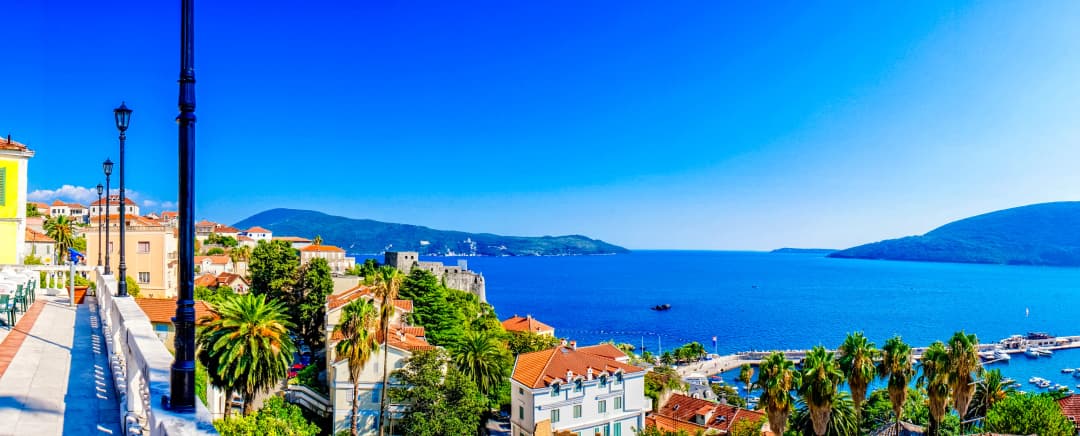
For context beyond the festival, our complete Herceg Novi guide explains the city across seasons. The Old Town guide is useful for understanding the compact center where processions and cultural programs overlap with everyday movement.
The flower is Australian; the meaning is Montenegrin
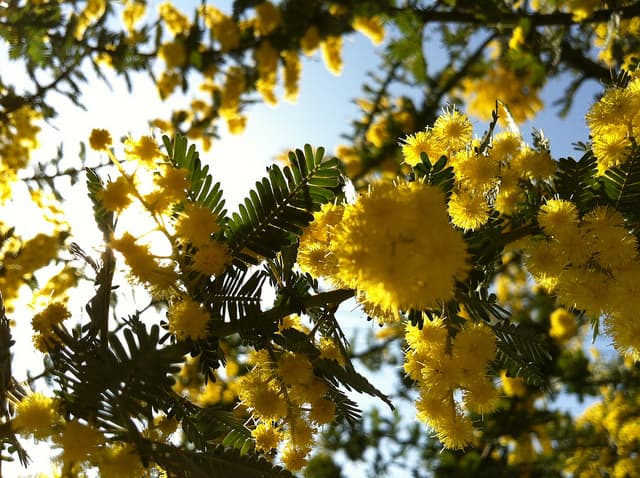
“Mimosa” is a common name used loosely in horticulture. Kew's Plants of the World Online accepts Acacia dealbata as a species native to New South Wales, Victoria and Tasmania in southeastern Australia. It records the plant as introduced in the northwestern Balkan Peninsula and many other regions. The Royal Horticultural Society describes it as an evergreen tree or shrub with finely divided grey-green leaves and fragrant yellow spherical flower heads.
That evidence overturns the old article's claim that mimosa is an inexplicably rare tree found especially in Herceg Novi. Its success here is not botanically mysterious. RHS guidance says the species favors full sun, shelter and well-drained soil and is suited to relatively mild coastal climates. Those are broad horticultural conditions, not a scientific study of Herceg Novi's individual trees, but they provide a plausible explanation for why a sheltered Adriatic shore can carry winter bloom.
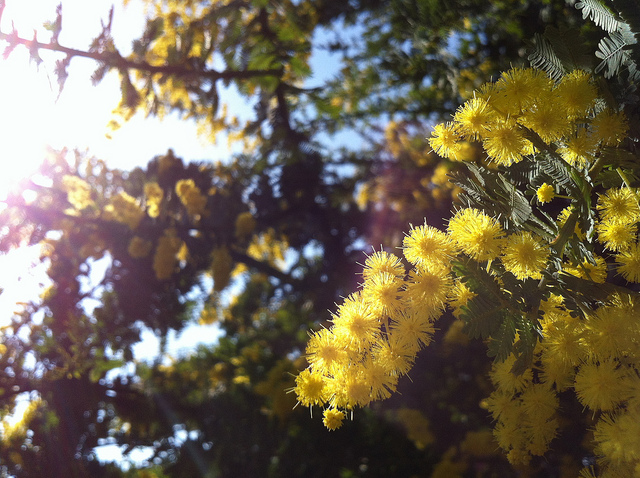
There is also an ecological complication. The European and Mediterranean Plant Protection Organization has listed Acacia dealbata among invasive alien plants since 2006, and documents invasive behavior in parts of the Mediterranean region. That regional warning does not prove a measured ecological impact in Herceg Novi, nor does it erase the flower's cultural role. It does mean “beloved” and “native” should not be treated as synonyms, and planting or spreading the species outside managed settings deserves locally informed advice.
What the festival actually sounds and tastes like
The yellow branch is the emblem; movement is the grammar. Herceg Novi's city band, the local Đenovići band, majorettes, carnival groups and trombonjeri recur through official accounts. Trombonjeri are ceremonial participants whose traditional salutes punctuate processions. At the 2026 opening, the parade moved from Nikola Đurković Square through the center and Škver promenade toward Igalo, where the main ceremony and concert followed.
The fish-and-wine feast shifts attention east along the Riviera. Official festival material identifies it as a central attraction and says it draws around 20,000 guests in a typical year. Treat that as an organizer estimate, not a turnstile count. What matters for planning is the format: a large outdoor gathering spread across settlements, with promenading music, grilled fish, wine and mimosa branches. Weather, crowding, road control and the exact route can change the experience.
Carnival supplies satire as well as spectacle. In 2026, the municipality reported more than 600 participants from 22 groups at the international carnival. The closing followed the coastal custom of putting a symbolic culprit on trial for the community's troubles. The invented defendant's name changes; the ritual's function is stable—convert a year's complaints into public theater before the season turns.
2026: the latest completed edition, not a future schedule
As of 26 August 2026, the latest completed edition was the 57th. The national tourism site listed the main festival for 13–28 February. The flower exhibition opened on 13 February with more than 50 exhibitors from Montenegro, Serbia and Bosnia and Herzegovina. The municipality's opening account describes a central-city procession followed by the Igalo ceremony.
The end date is less tidy. The municipality published its formal closing report on 1 March and described 15 days of activity; a separate official schedule extended related sports competitions through 22 March. This is not necessarily an error. Large civic festivals often place tournaments and partner events outside the headline cultural window. For travelers, the lesson is practical: distinguish the advertised festival dates from the date of the one event you want.
The closing report attributed more than 20,000 city visitors during the main period to the director of the local tourism organization, and said more than 10,000 attended the final concert. Neither figure came with a public counting method. They indicate claimed scale, not audited footfall. Anyone evaluating economic impact would need accommodation data, repeat-visitor controls, day-trip estimates, spending and public cost—not just two crowd numbers.
The public-investment story behind the celebration
Herceg Novi's adopted 2026 budget included a €220,000 transfer line for institutions and individuals organizing the Mimosa Festival. That is unusually concrete evidence of civic commitment. It should not be confused with final expenditure or total event cost: sponsorship, ticket revenue, in-kind services, policing, sanitation and spending by other municipal bodies may sit elsewhere.
The municipality's 2024–2027 culture-development program is candid about the strategic challenge. It says the festival has a long tradition and stable audience but needs modernization and clearer profiling, combining local particularities with contemporary content to attract new visitors. This is more informative than celebratory slogans. The city itself recognizes that longevity does not guarantee relevance.

Practical planning for the next Mimosa Festival
Do not reuse the 2026 dates for a future trip. Wait for the new official program from the festival, Herceg Fest, the municipality or the local tourism organization, then verify each event close to travel. Save the exact location in the original language: “Herceg Novi,” “Igalo,” “Đenovići” and “Baošići” are different points along the coast, not interchangeable venue labels.
Book accommodation according to the event pattern. The center works best for Old Town processions, Dvorana Park and evenings on foot. Igalo suits programs based around the sports center or institute area and offers a flatter waterfront. A Riviera settlement can be ideal for the fish-and-wine feast but less convenient for repeated city-center events. Our where-to-stay guide compares these tradeoffs.
February weather on the coast can alternate between bright, mild spells and rain driven across the bay. Bring a waterproof layer and shoes with grip; Herceg Novi's polished stone and steps become slippery. For accessible routing, ask organizers about the specific venue rather than assuming a parade route is step-free. Large street events may change bus stops, parking and taxi access.
Getting around the city during a distributed festival
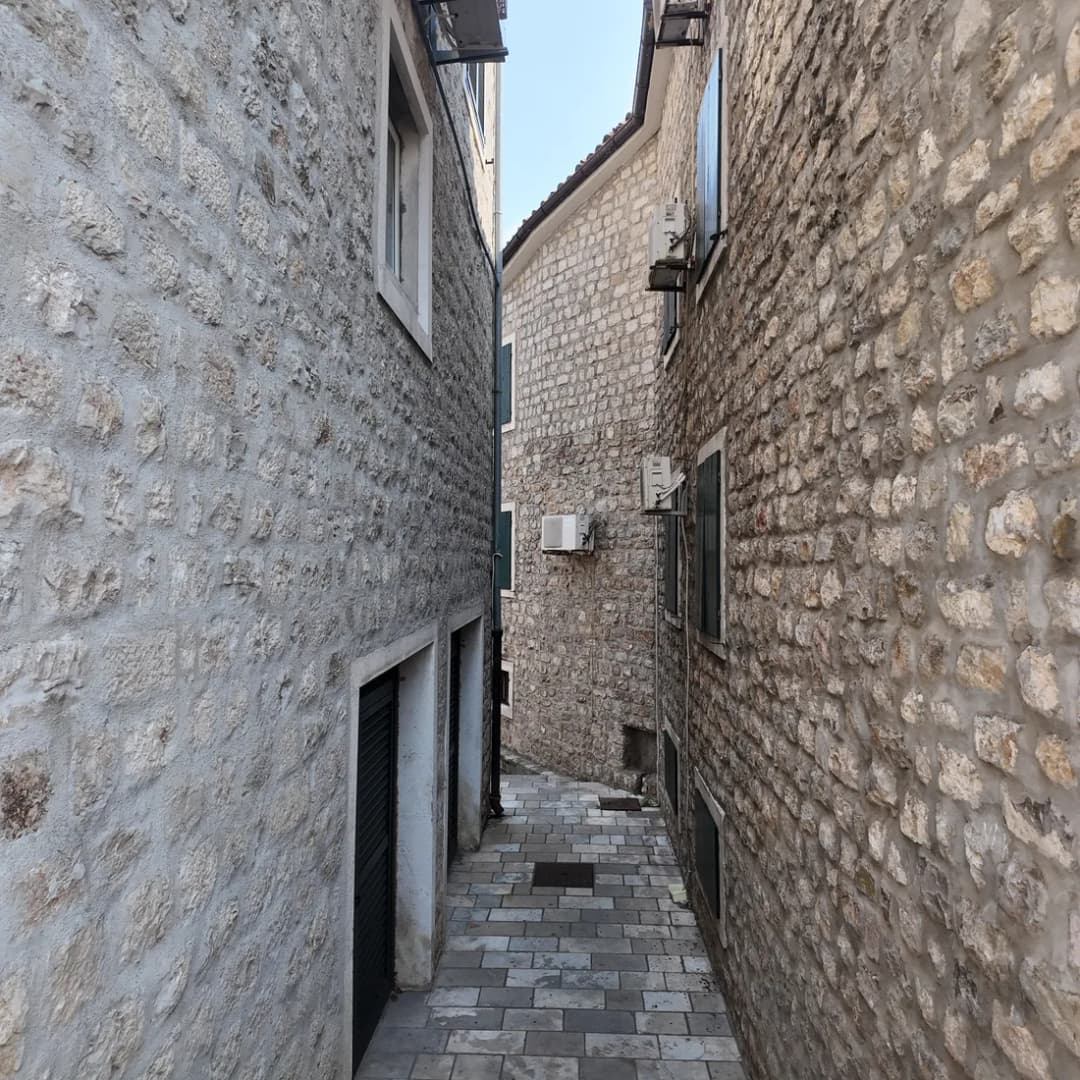
Herceg Novi rewards walking but demands elevation. The Pet Danica promenade is the easiest east–west line near the water; the historic center climbs sharply above it. Read the history behind the Five Danicas promenade, then map how you will return uphill after an evening program.
Two cultural stops fit naturally between scheduled events. Kanli Kula and Forte Mare explain the defensive landscape around the center, while literary Topla connects the upper town to Njegoš and Ivo Andrić. The Savina Monastery guide extends the story eastward toward the Riviera.
How to read the program without missing the point
Choose one anchor event, then leave space around it. A street feast requires time for slow movement and queues. A parade is better approached from a known point along the route than chased by car. A masquerade may require advance tickets. Flower exhibitions suit a shorter visit, while concerts and sports competitions follow venue-specific entry rules.
Look for four details on every listing: date, start time, exact settlement and organizer. Screenshots of social posts age badly when schedules move. Use the organizer's current page on the day, especially in poor weather. If two official listings conflict, contact the named venue or organizer rather than choosing the more convenient version.
Frequently asked questions
When is the next Herceg Novi Mimosa Festival?
The next edition's dates should be taken from a newly published official program. The latest verified main edition ran in February 2026, with a formal closing reported on 1 March and related sports events later in March. Do not assume the same dates recur every year.
Is the festival only about flowers?
No. Mimosa is the symbol, but the program combines carnival, brass bands, majorettes, food and wine, exhibitions, concerts, children's events and sports. The signature experience is distributed across central Herceg Novi, Igalo and Riviera settlements rather than concentrated in a botanical garden.
Is Herceg Novi's mimosa native to Montenegro?
No. Kew identifies Acacia dealbata as native to southeastern Australia and introduced in the northwestern Balkans. Its cultural meaning in Herceg Novi developed locally, but cultural belonging and botanical origin are different questions.
Are the street events free?
Many public processions and outdoor festivities have traditionally been open, while some masquerades, performances or limited-capacity venues may require tickets. The mix changes by edition. Check the official program and ticket source for each event rather than assuming one festival-wide admission rule.