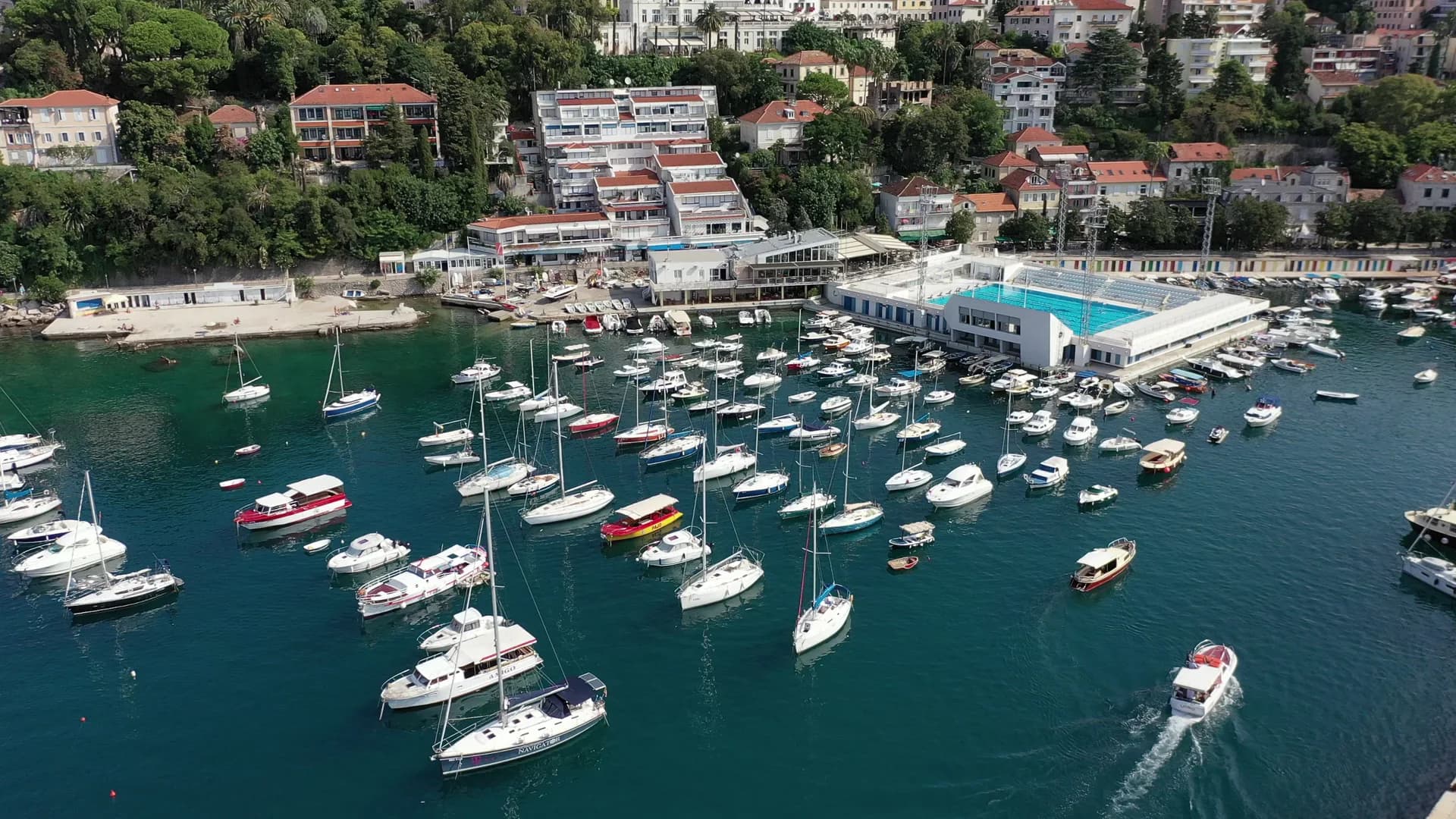
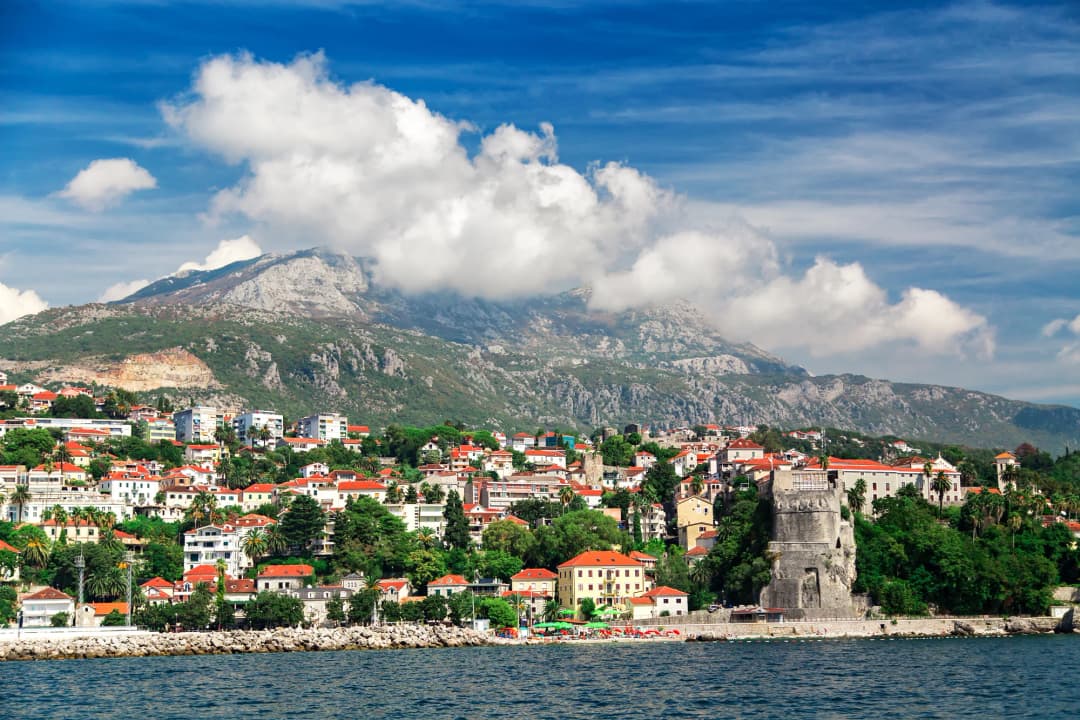
Perched where the Adriatic meets the Bay of Kotor, Herceg Novi is a cascading botanical garden of a city where ancient fortresses rise from lush Mediterranean greenery and steep stone stairways wind past palm trees, orange groves, and centuries-old churches. With around 200 sunny days per year and layers of Bosnian, Ottoman, Venetian, and Austrian history, it has a character unlike anywhere else in Montenegro.
Suggested Itineraries: How Many Days in Herceg Novi?
Herceg Novi works equally well as a relaxed multi-day base or a single full day on a Bay of Kotor road trip. Because the Old Town is compact and most sights are within walking distance, you can see the highlights quickly, but the surrounding coast, mountains and islands reward a longer stay. As a rule of thumb, allow 3-4 days to enjoy the town without rushing.
One day in Herceg Novi
Start with a morning coffee on Belavista (Herceg Stjepan) Square, then climb up to Kanli Kula for panoramic views before exploring the Old Town, the Clock Tower (Sahat Kula) and Forte Mare. Walk a stretch of the Šetalište Pet Danica seafront promenade, stop for fresh seafood at a konoba such as Konoba Škver, and finish with an evening drink at one of the waterfront cafés like Fabrika or Koffein.
Two days
Add a half-day boat trip to the Blue Cave, Žanjice beach and Mamula Island, then spend the afternoon at the Savina Monastery and unwinding in Igalo, home to the famous healing sea mud and the Dr Simo Milošević Institute spa.

Three to four days
With more time, take a day trip deeper into the Bay of Kotor (Perast and Our Lady of the Rocks), hike in the Orjen mountains, tour a local winery, and visit the village of Rose on the Luštica Peninsula. This is also enough time to factor in a slower pace for the town's many staircases, which give Herceg Novi its nickname “the city of stairs.”
Old Town and Fortresses
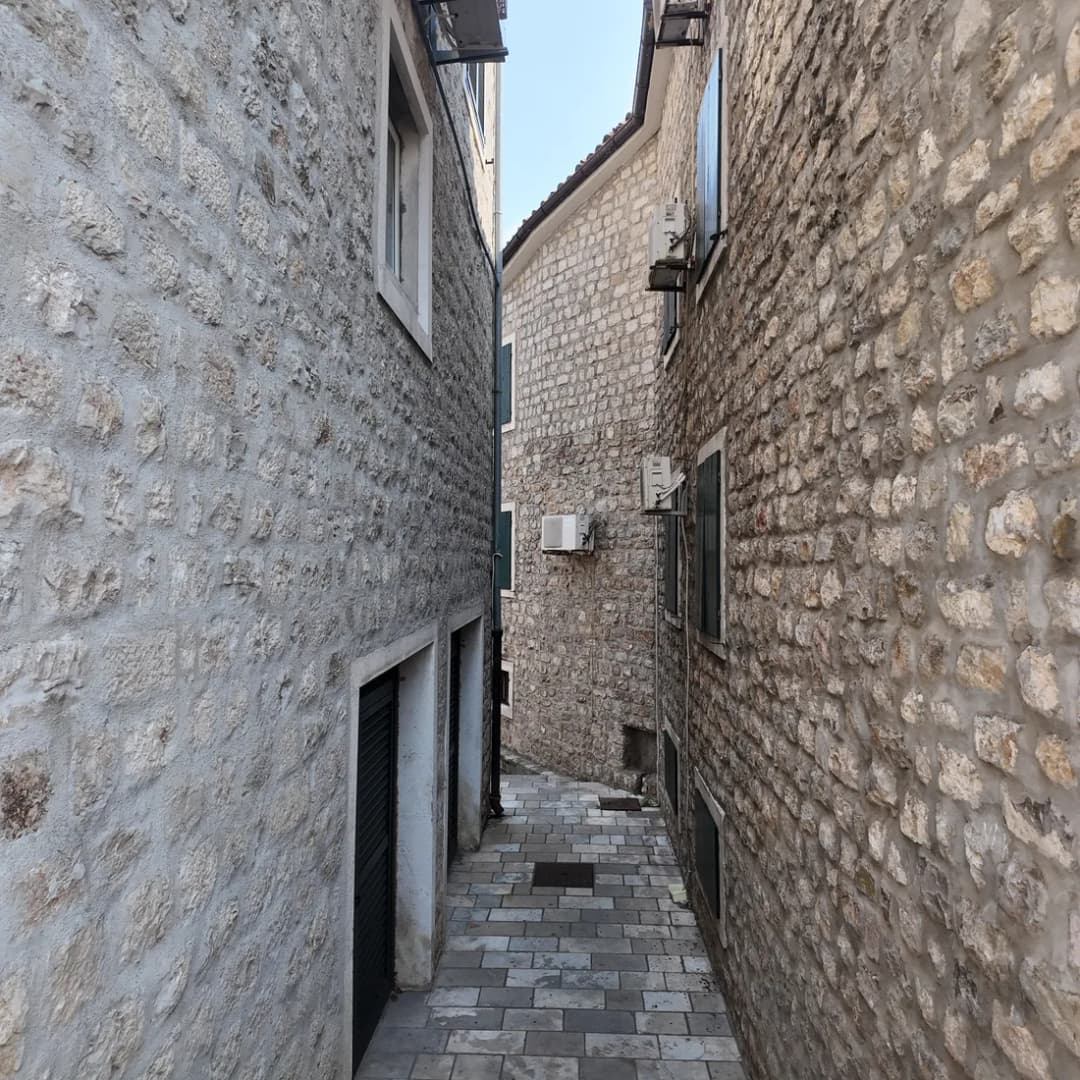
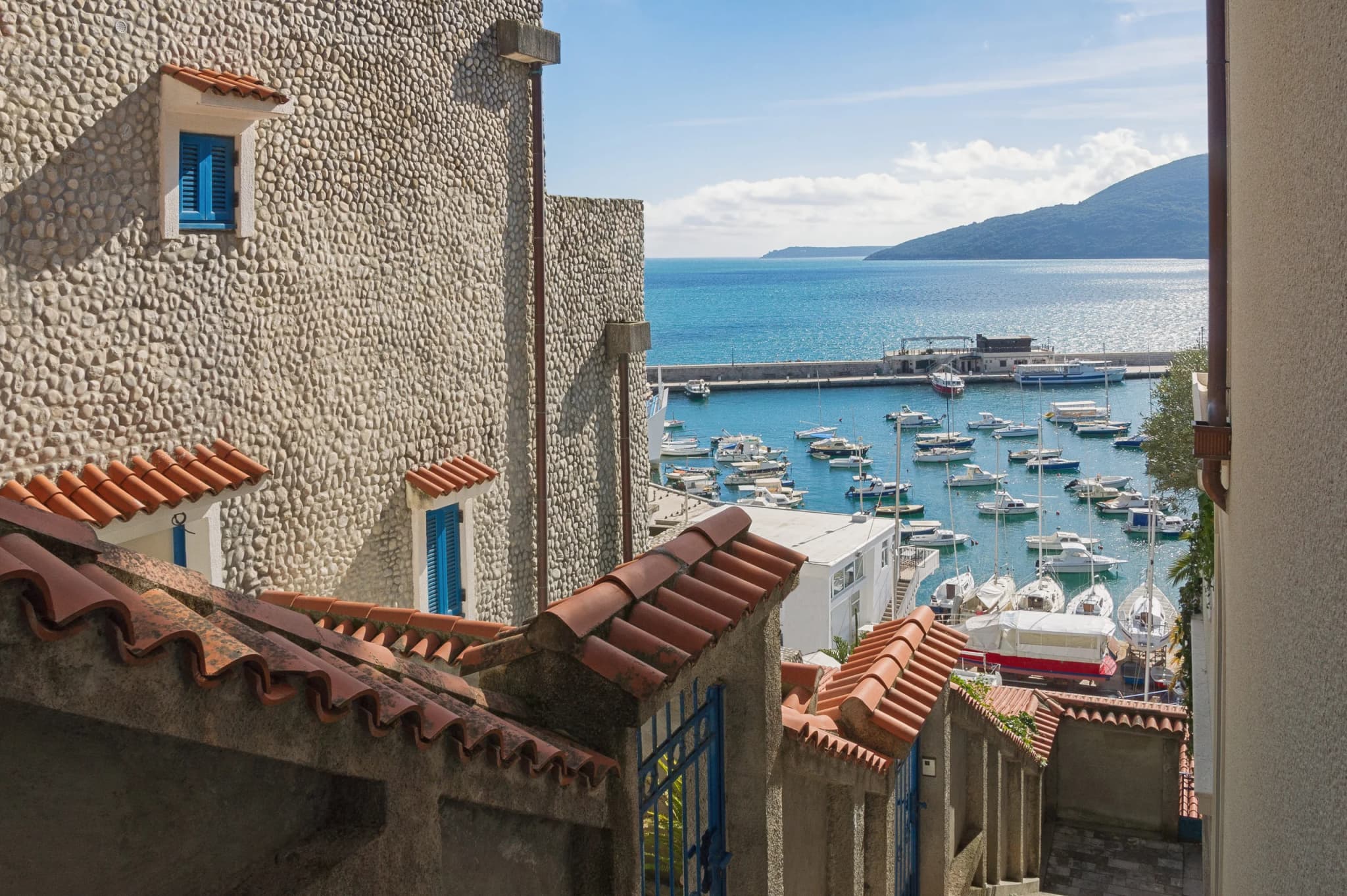
Herceg Novi is often called the city of 100,001 steps, and it earns that nickname the moment you leave the waterfront promenade. The Old Town climbs steeply up the hillside in a labyrinth of narrow stairways, arched passages, and small squares shaded by oleander and bougainvillea. Comfortable walking shoes are essential.
Sahat Kula (The Clock Tower)
The natural starting point for any exploration is Sahat Kula, the Ottoman clock tower that serves as the main gateway into the historic quarter and the symbol of Herceg Novi. Built in 1667 by order of Sultan Mehmed IV, this 16-metre octagonal tower was designed to announce the hours of daily prayer. Clock faces decorate all four sides, and the tower appears on the city's coat of arms and flag. Pass beneath its archway and you step from the modern town into centuries of layered history.
Forte Mare
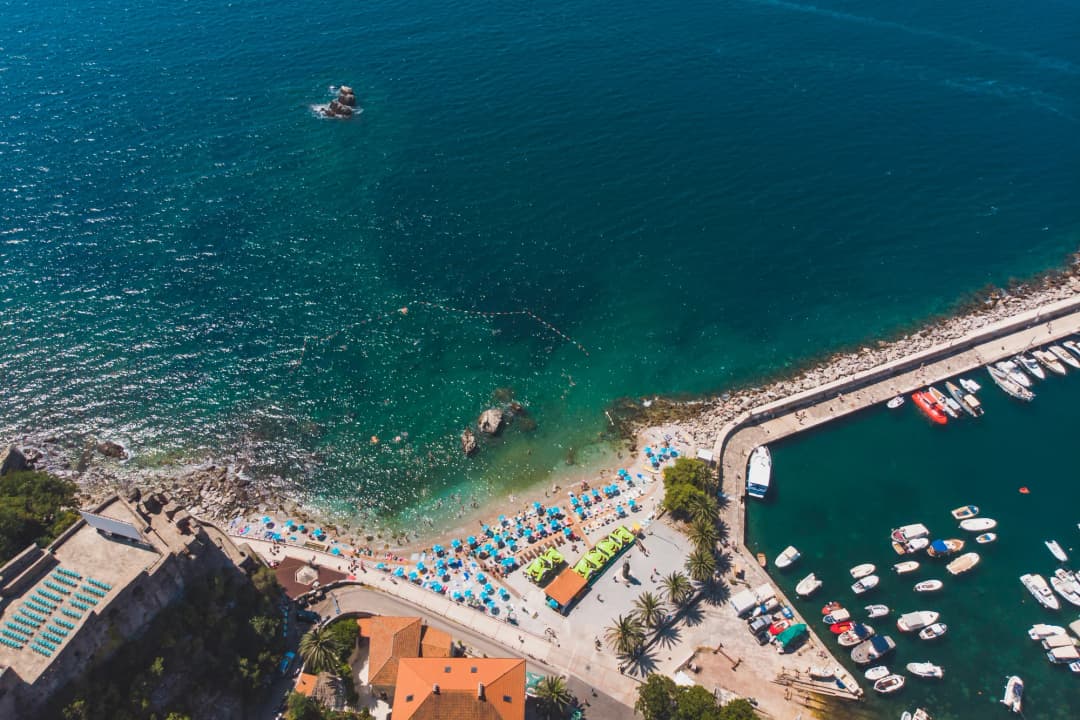
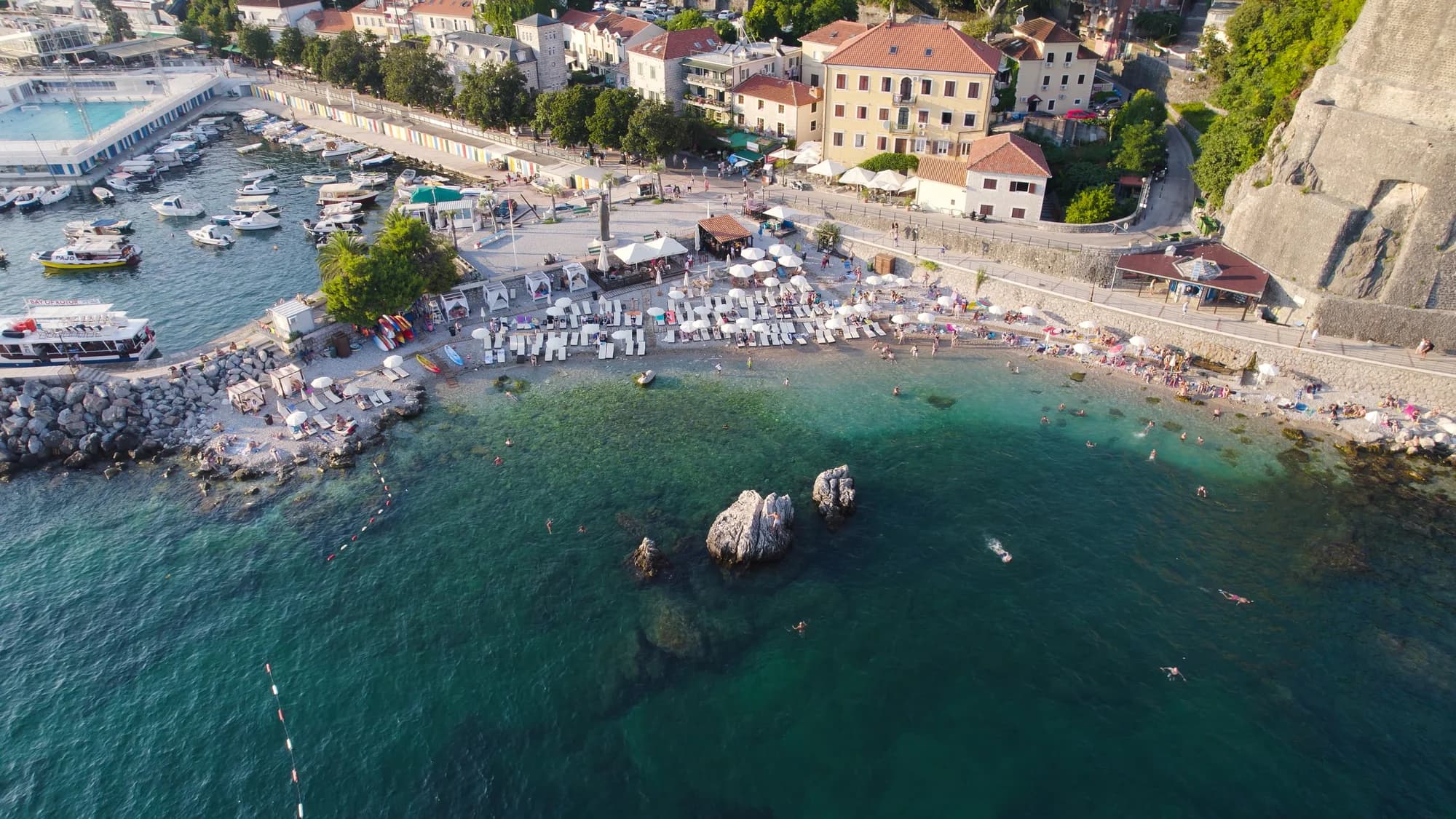
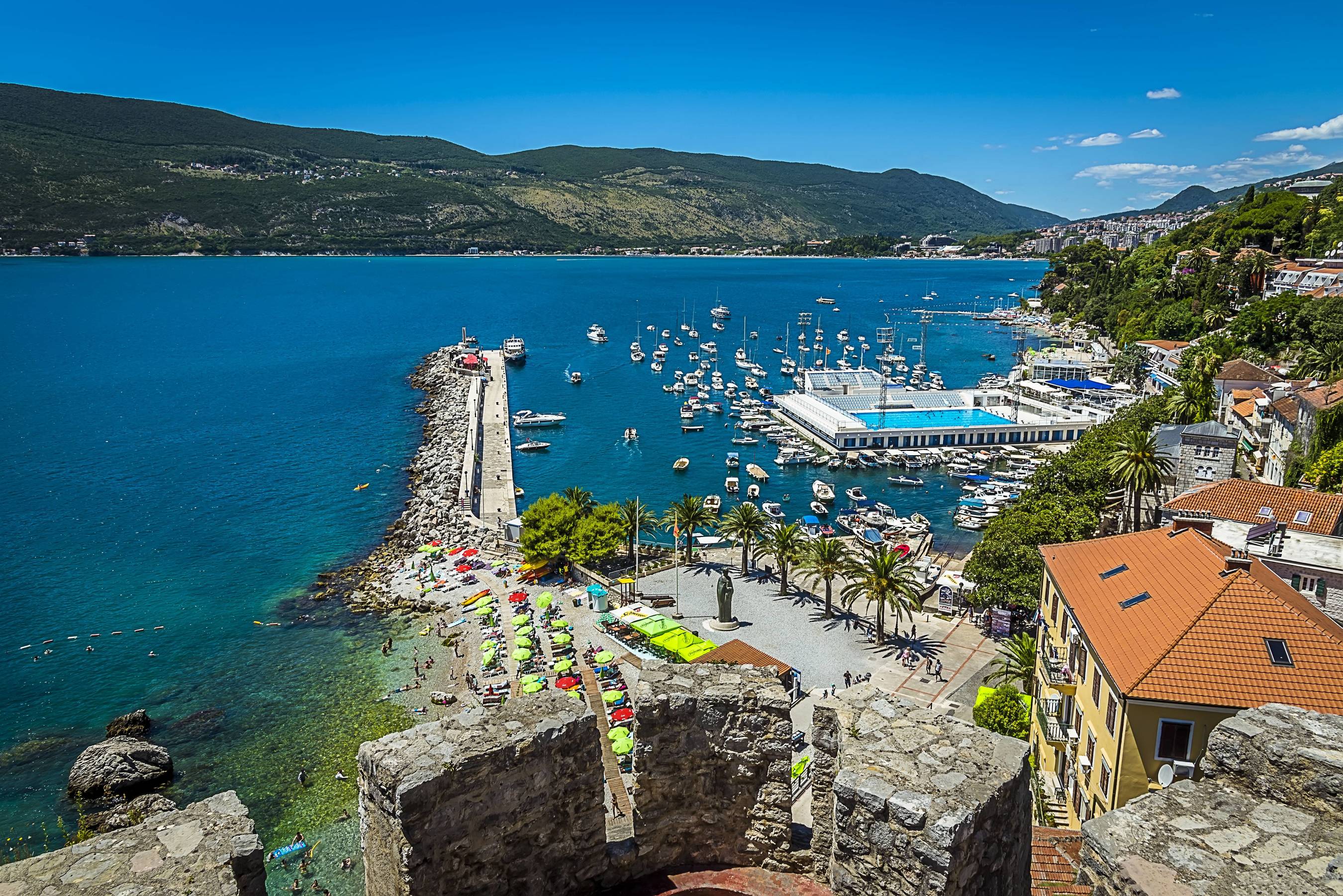
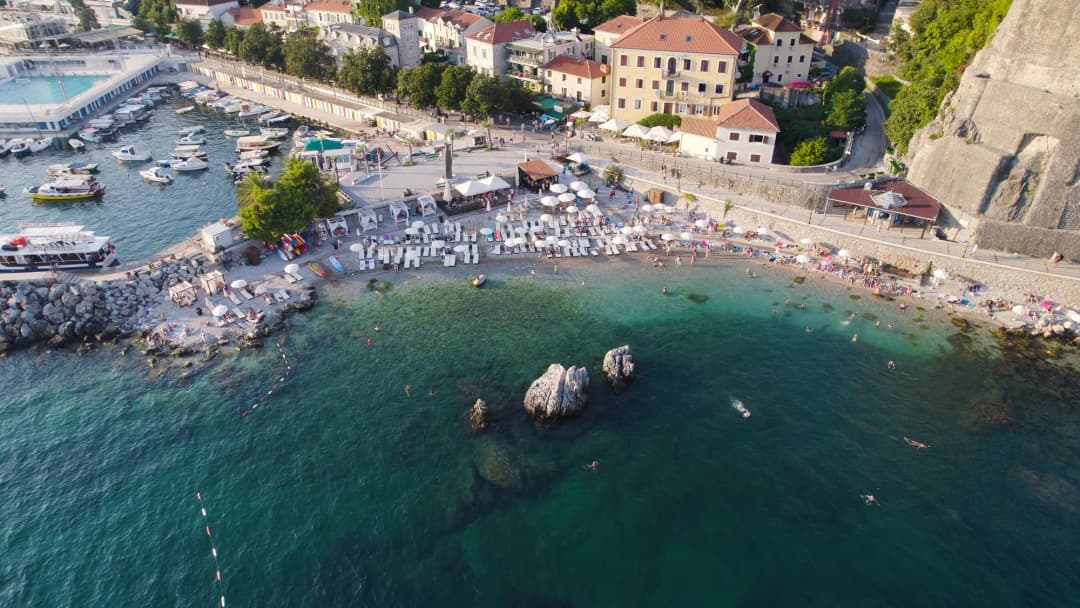
Directly below the Old Town at the waterline sits Forte Mare — the sea fortress. Visible from almost every position in town, it rises, as its name suggests, vertically above the Gradska plaža (town beach) and the harbour, Škver. Its foundations date to the 14th century, but the structure reached its current form during Ottoman rule, when cannons and defensive walls were added. The Venetians gave it its Italian name in the 18th century. Today Forte Mare serves as a cultural venue with a summer cinema, a cafe built into the fortress walls, and unobstructed views across the bay entrance. In the immediate vicinity you will find the Kusturica cineplex-cinema "Aurora", the house of the painter Voj Stanica, the pool of the water polo club "Jadran", and — of course — good restaurants.
Kanli Kula
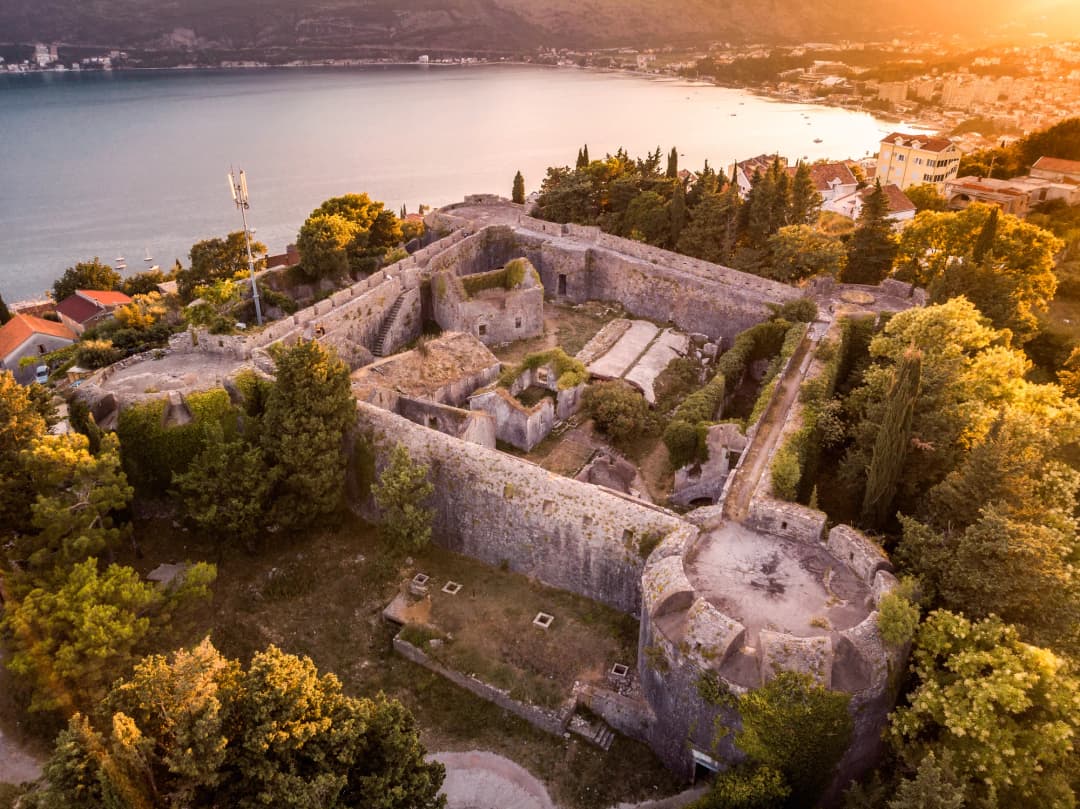
Climb higher and you reach Kanli Kula, whose Turkish name translates ominously as "bloody tower." Built in the 16th century at 85 metres above sea level, this massive fortress served as both defensive stronghold and prison under Ottoman rule. From its gun emplacements, the Turks controlled the entire city and the entrance to the Gulf.
Since 1960, Kanli Kula has been reborn as one of the most spectacular open-air amphitheatres on the Adriatic. With seating for around 1,000 spectators and the bay glittering far below, it hosts film screenings, concerts, opera performances, and theatre throughout summer. Watching a performance here as the sun sets over the water is an experience that stays with you.
Spanjola (The Spanish Fortress)
At the very top of the Old Town, in what was once the Upper Town, the Spanish Fortress commands the highest ground, and its dimensions are genuinely impressive. The Spanish captured Herceg Novi from the Ottomans in 1538 and began building this hilltop fortification. They held the town for only nine months before the Turks recaptured it, but they left behind the foundations of a fortress that still bears their name. The Ottomans completed the construction a decade later.
The climb to Spanjola is steep, but the reward is a 360-degree panorama taking in the entire bay, the surrounding mountains, and the open Adriatic. Underground passages once connected Spanjola to both Kanli Kula and Forte Mare, forming an integrated defensive network. Walkers heading further inland and uphill can make use of the Mountain House – Subra, the base for hiking in the hills behind the town.

Squares, Churches and Streets
Curiously, Herceg Novi has two main squares. The lower one is Trg Nikole Đurkovića, formerly Salt Square — a reminder of the trade the town was founded on. Walk up from it through the Clock Tower and you arrive at Belavista Square, the “beautiful view” square, in the heart of the Old Town.
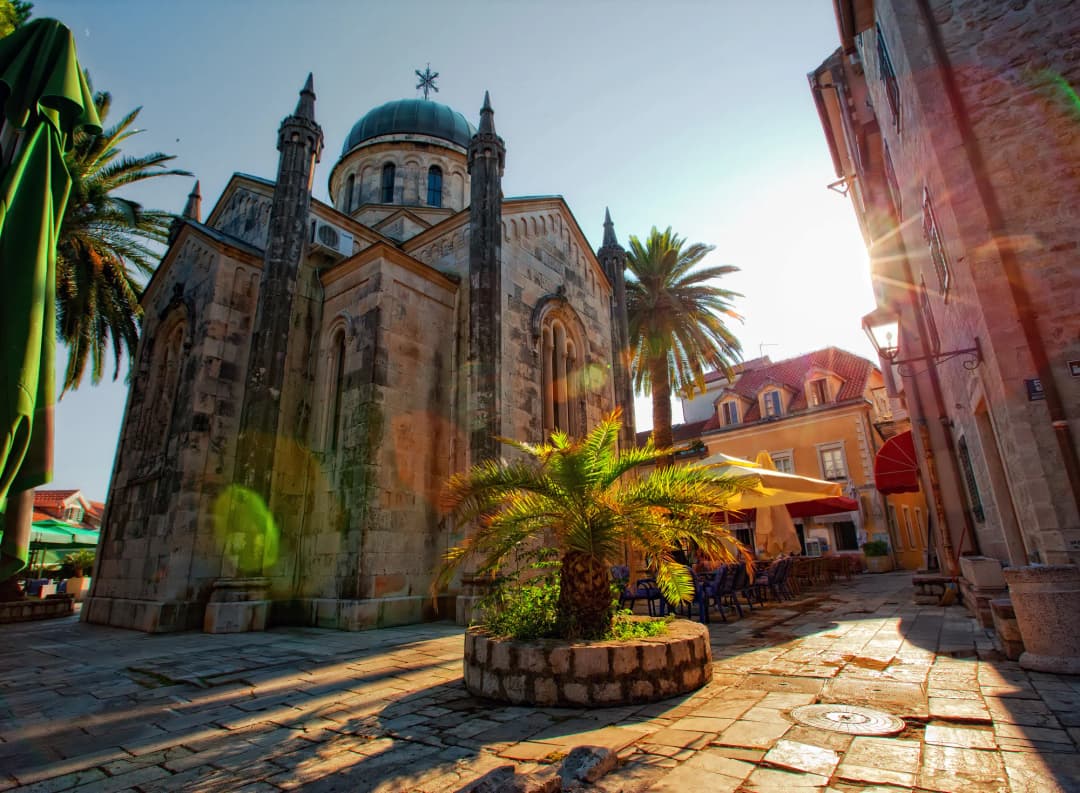
Belavista is dominated by the Orthodox Church of St. Archangel Michael, built in the Byzantine style with elements of the Orient and unique for its stone iconostasis. The square is a real architectural medallion: everything the town needs is gathered there in a nutshell — the church, the city Archives, the Library, Radio Herceg Novi, an art gallery, a pharmacy, cafeterias and private houses.
Down the stairs from Belavista you reach the Catholic Church of St. Jerome, which holds a rich treasury, and the church of St. Leopold Mandić, the Novljanin. On the same cascade plane stands the Music School — and everywhere, palm trees and vegetation. In the street-staircase named after the writer Marko Car grows a kind of dinosaur tree, a Ginkgo biloba. In the church of St. Ascension of Christ, in the former suburb of Toplo, Petar II was once taught to read.
The main street, Njegoševa, runs from the square all the way to Igalo, and it is where the everyday life of the town happens: exclusive boutiques, the City Tavern, the City Park, the Main Post Office, tourist agencies and churches all line its length. Njegoševa is crossed again and again by staircases — the streets-stairs for which the city is famous.
A Botanical Garden by the Sea
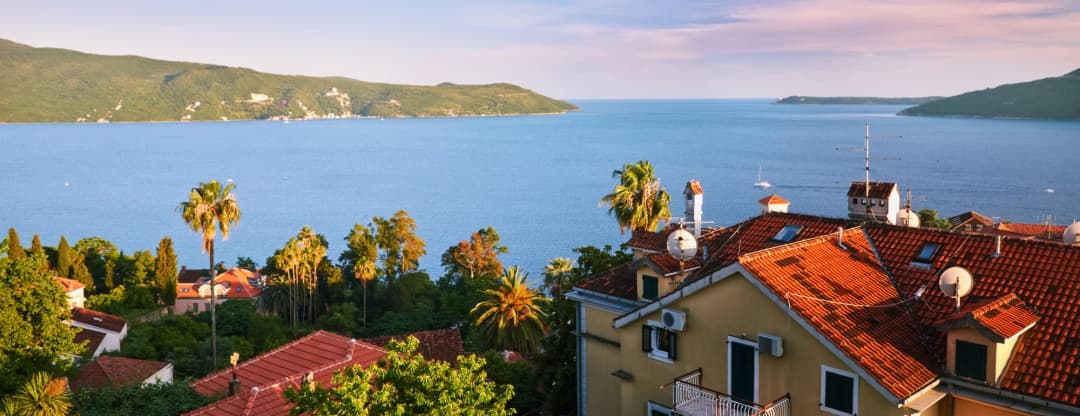
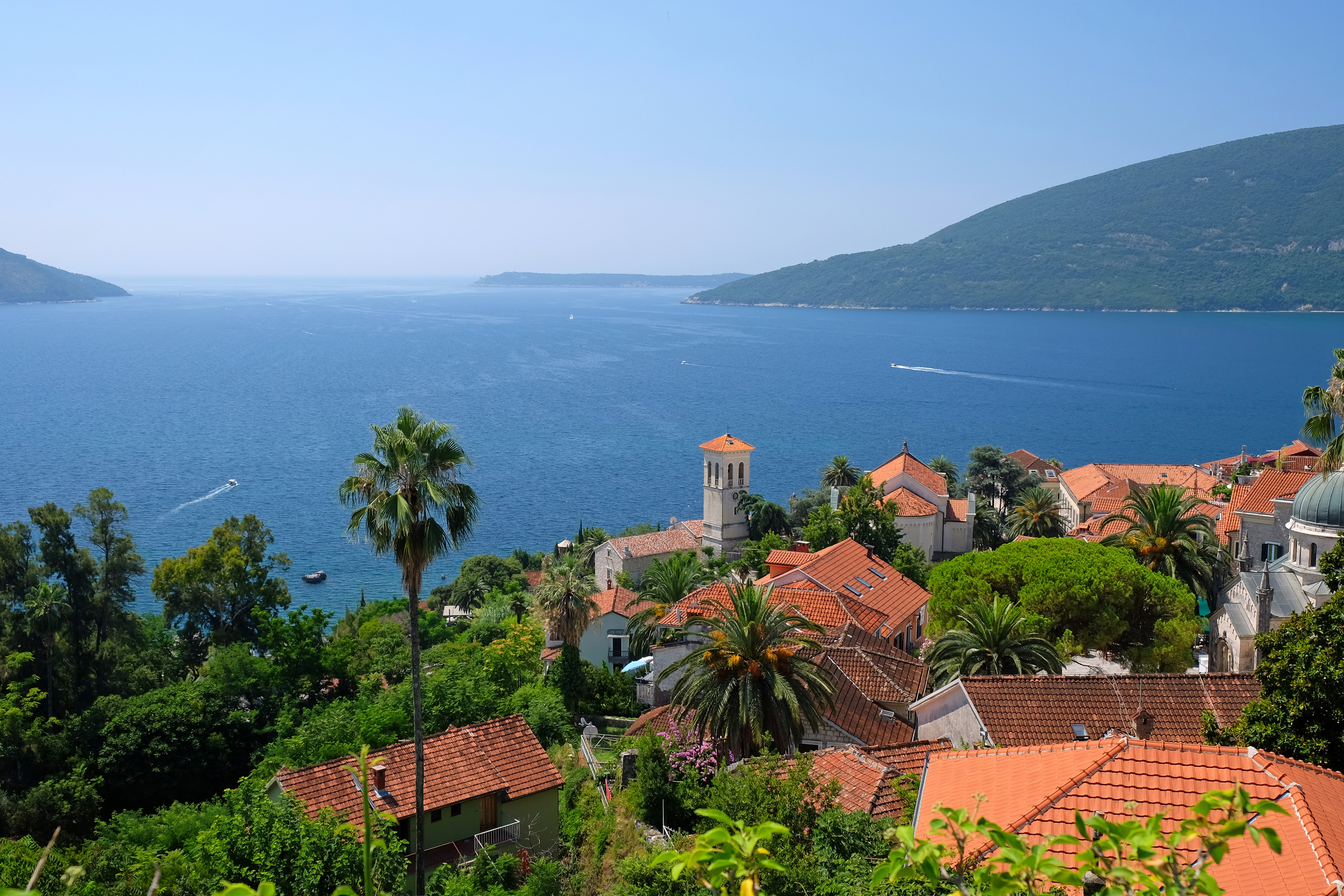
For centuries, the city has been perceived in all its grandeur and beauty from the sea. For just as long, sailors brought home seeds of unusual plants, exotic trees and fruits, which is why Herceg Novi became a real botanical garden over time. Built on cascading terrain, the City of Greens nestles like an amphitheatre, with a privileged view of the open sea and of two opposite peninsulas, Luštica and Prevlaka.

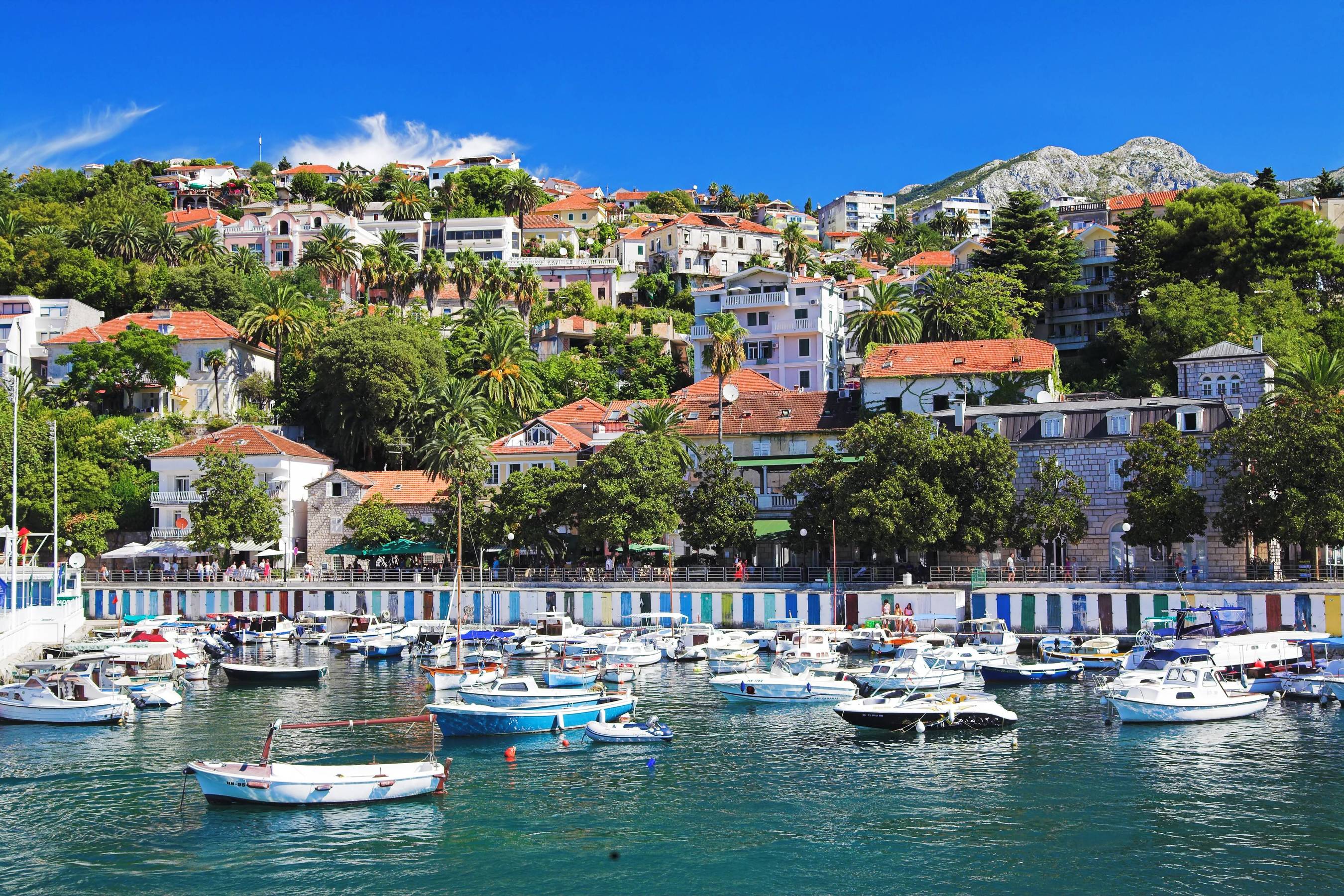
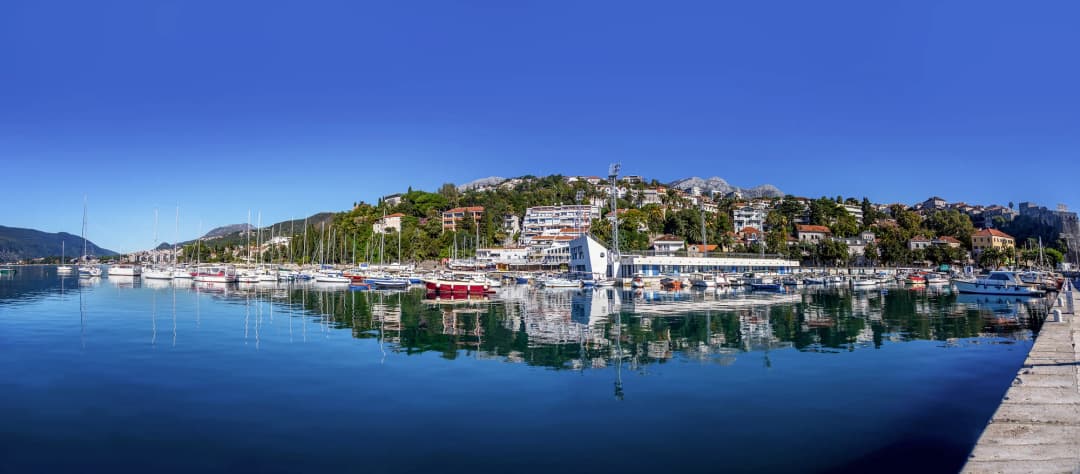
Between those peninsulas there are events every day: sailors set out to compete in regattas, fishermen head out to have their catch on the market the next morning, and tourist boats stream toward the most famous picnic spots — Žanjice, Mamula, the Blue Cave. In summer the water area is very lively, and yachts and large cruise ships attract the attention of anyone who has sought peace in a coastal restaurant garden. The city port is called Škver, which means Shipyard, because a shipyard used to stand there.

To the left and right, the promenade stretches from Igalo to Meljine, a distance of 5 km. Along this longest coastal promenade sprouts the largest outdoor exhibition of exotic plants in the country: rare and unusual species from all continents, various palm trees, cacti, bananas, magnolias, ornamental shrubs, mimosas, wild oranges, camellias, pittospores, oleanders and eucalyptus.

The City of Writers
Herceg Novi is also known as the City of Writers. In the idyllic silence of Novi worked Aleksa Šantić, Simo Matavulj, Ivo Andrić, Mihailo Lalić, Stevan Raičković, Dušan Kostić and Zuko Džumhur. Andrić's house is now the Writers' Club, and in its immediate vicinity stands the Native Museum. Many contemporary writers can still be found in the city's bookshop, Knjižara So, on the main square.
Savina Monastery
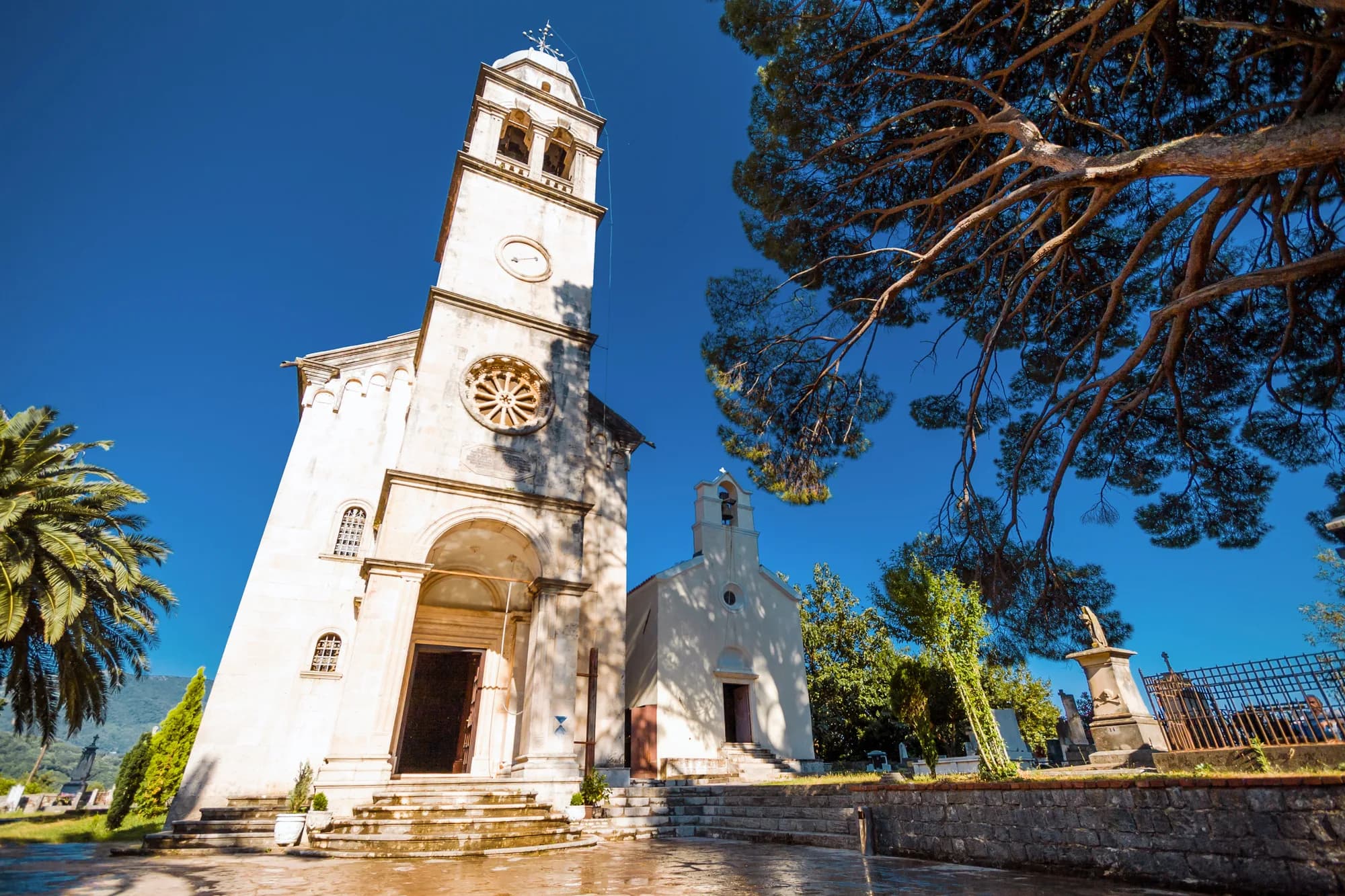
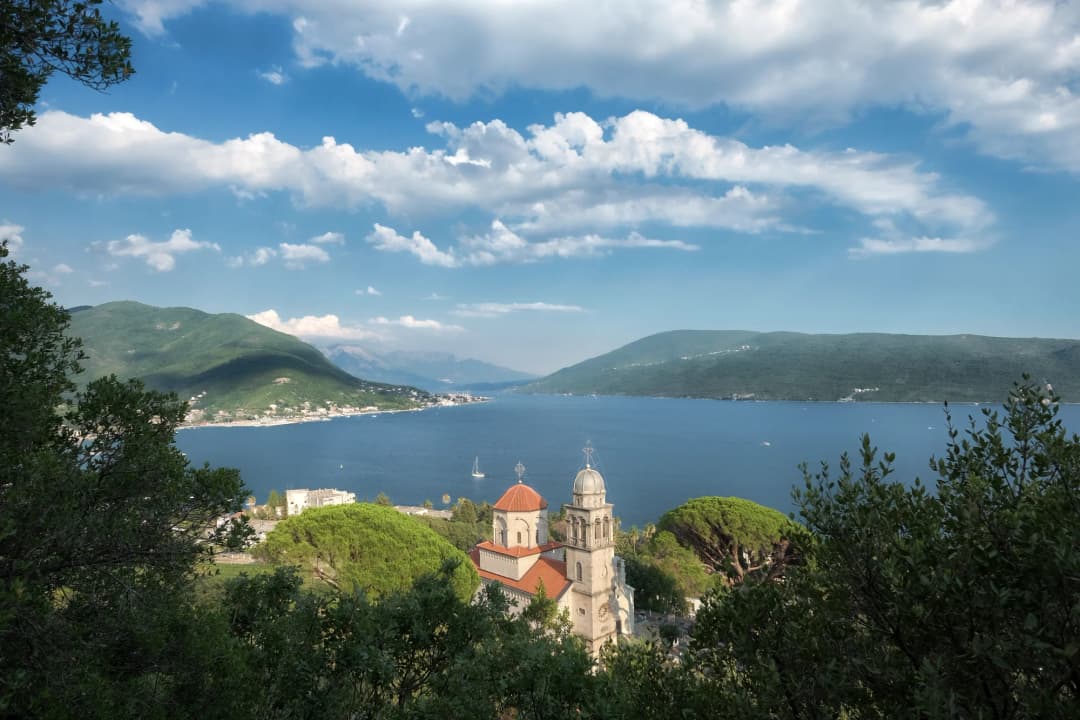
A 20-minute walk east of the Old Town, set among dense Mediterranean gardens on a wooded hillside and on one of the most beautiful viewpoints in the bay, Savina Monastery is one of the most important Serbian Orthodox monasteries on the Adriatic coast. Though the site dates back to the 11th century, its current form took shape in the 17th and 18th centuries, when monks fleeing the Ottoman conquest of Bosnia and Herzegovina found refuge here.
The complex contains three churches. The oldest is the Small Church of the Dormition, from the 11th century and the medieval period. The Church of St. Sava Srpski, perched on a nearby hill, is believed to have been built by Saint Sava himself in the 13th century. The centrepiece is the Great Church, dedicated like the small one to the Assumption of the Virgin Mary and constructed between 1777 and 1799 in a striking blend of Byzantine, Romanesque, and Baroque styles. Its iconostasis, painted by Simeon Lazovic, is a masterpiece of Serbian Baroque art.
The monastery treasury and library house a crystal cross attributed to Saint Sava from the 13th century, a handwritten Gospel from 1375, ornate silver-gilt icons, and historical documents spanning centuries. Beyond the churches, the terraced gardens of centuries-old cypresses, towering palms, and fragrant Mediterranean shrubs create an atmosphere of deep tranquillity with beautiful views down to the bay. The monastery is worth the walk not only for its treasury but for its extraordinary beauty and its spiritual and cultural significance.
Visitors should dress modestly (covered shoulders and knees) and maintain respectful silence, particularly during services. Entry is free, though donations are welcomed.
Museums and Galleries
Beyond its fortresses, Herceg Novi has a surprisingly rich cultural scene for its size:
- City Museum (Mirko Komnenović Museum): archaeological, ethnographic and maritime collections housed in a historic villa with a botanical garden.
- Mikhail Bulgakov Museum: opened in 2020, the first international museum dedicated to the Russian writer — a unique draw reflecting the town's long ties to the Russian community.
- Ivo Andrić House: the seaside residence of the Nobel Prize-winning author, now the Writers' Club, a cultural venue and garden stage; the Native Museum stands nearby.
- Villa Galeb: the former summer residence of Yugoslav president Josip Broz Tito, on the waterfront in Igalo.
- Art galleries: the “Josip Bepo Benković” gallery and the Sue Ryder gallery showcase regional and international art.

Beaches
Herceg Novi sits at the entrance to the Bay of Kotor, so the water here is among the cleanest in the bay, refreshed by open Adriatic currents. You will not find the long sandy stretches of the Budva Riviera, but the beaches have their own character — pebbly coves backed by pine forests, concrete bathing platforms, and remote spots accessible only by boat.

Town and Igalo Beaches
The main town beach, Gradska plaža, sits directly below Forte Mare and the Old Town — a concrete and pebble affair, perfectly adequate for a quick swim and steps from cafes and restaurants. The Igalo waterfront features a long, shallow sandy beach that is popular with families — the gentle gradient means children can wade far from shore. The beach near the former Tito's Villa is particularly well known for the healing sea mud that collects in its shallows.

Zanjice Beach
On the Lustica Peninsula, across the narrow strait at the bay's entrance, Zanjice is widely regarded as one of the most beautiful beaches in the entire Bay of Kotor. This 300-metre stretch of white pebbles slopes gently into extraordinarily clear turquoise water, with views out to Mamula Island. There is good infrastructure — sun loungers, restaurants, and changing facilities. Most visitors reach it by taxi boat from the Herceg Novi waterfront, a 20-minute ride that is half the fun.
Miriste Beach
Adjacent to Zanjice but quieter and more secluded, Miriste is a peaceful pebble cove with outstanding snorkelling. You can swim out to a small island with a chapel dedicated to Our Lady of Miriste, and the nearby ruins of the Arza Fortress make for interesting exploration. A small beachside restaurant serves grilled calamari and simple local dishes.
Lustica Peninsula Beaches
Beyond Zanjice and Miriste, the Lustica coastline harbours numerous smaller coves reachable only by boat or on foot along coastal paths. These are the spots for travellers who want solitude and pristine water without any infrastructure.
Igalo and Health Tourism
Adjacent to Herceg Novi and connected by the waterfront promenade, Igalo has been a destination for health tourism since long before wellness became a buzzword. The combination of a mild Mediterranean climate, mineral-rich sea mud, and natural mineral springs has attracted visitors for centuries.
Institut Dr Simo Milosevic
The centrepiece of Igalo's health tourism is the Institut Dr Simo Milosevic, founded in 1949 and now one of the largest institutions for physical medicine and rehabilitation in southeastern Europe. Originally established as a bath and climate spa, it has grown into a full medical rehabilitation centre with its own Faculty of Applied Physiotherapy and membership of the University of Montenegro.
The Healing Mud and Mineral Springs
The therapeutic mud, known locally as igaljsko blato, collects in the shallow waters along the shore. Its healing properties were confirmed scientifically in the 1930s when France's Vichy Laboratoires attested to its medicinal value, though locals had used it for joint pain, skin conditions, and rheumatic ailments for generations. Today you will still see people wading into the shallows at Igalo's Stara Banja beach to smear the dark, mineral-rich mud on their skin.
Natural mineral springs called igaljske slatine emerge along the shoreline and have long been consumed for digestive and metabolic benefits. The institute offers hydrotherapy, balneotherapy, electrotherapy, thalassotherapy, tailored exercise programmes, massage, aromatherapy, and rejuvenation treatments. You do not need to be a patient to enjoy Igalo's health benefits — public beaches provide free access to the mud and mineral waters.
Boat Trips
One of the highlights of any visit to Herceg Novi is getting out on the water. The town's position at the bay entrance means immediate access to dramatic coastal scenery, and a half-day boat trip is one of those experiences that defines a holiday.

The Classic Route
Boats depart from the Pet Danica promenade or Skver harbour, heading south along the Lustica Peninsula coastline to Mamula Island, the Blue Cave, and Zanjice beach — the three most famous picnic spots in the waters between the Luštica and Prevlaka peninsulas.
Mamula Island
Mamula is a small rocky island dominated by an imposing circular fortress built in the 1850s by the Austrian general Lazar Mamula. The fortress has a dark wartime history and has recently been undergoing conversion into a luxury resort. Boats circle the island slowly, giving passengers time to photograph its dramatic stone walls rising from the sea.
Blue Cave (Plava Spilja)
The Blue Cave is a sea cave where sunlight enters through an underwater opening and refracts through the clear water, bathing the interior in an ethereal blue glow. Boats enter directly, and passengers can swim in the luminous water. The effect is most dramatic on sunny mornings. It is a genuinely magical experience and one of the most photographed features on the Montenegrin coast.
Rose Village
Many trips pass by or stop at Rose, a tiny fishing village at the tip of the Lustica Peninsula. With its stone houses and unhurried atmosphere, Rose feels like a place time forgot. Some tours also visit a nearby former Yugoslav submarine tunnel carved into the cliffs — a fascinating Cold War relic.
Expect to pay between 15 and 25 euros per person for shorter trips (two hours) and 30 to 60 euros for longer excursions with multiple stops.
The Herceg Novi Riviera
Herceg Novi anchors a broader riviera stretching 25 kilometres along the northern shore of the Bay of Kotor. A series of smaller settlements, each with its own character, are connected by the coastal road and waterfront promenade.

Meljine, three kilometres east and the eastern end of the 5 km seafront promenade, has its own beaches, a handful of restaurants, and the Lazareto — a former quarantine station that is one of the oldest such facilities in Europe. Zelenika, further east, takes its name from a Mediterranean evergreen plant and contains the first hotel ever built in Montenegro, dating to 1902. Kumbor, whose name derives from the Italian conborgo (suburb), has some of the best-positioned waterfront restaurants on the riviera. Djenovici claims a history stretching to the Greco-Roman period and offers a quiet, authentic base. Baosici has a proud maritime heritage — during the peak of Boka's seafaring tradition, this small settlement had over 30 ships and 50 maritime captains. Bijela, the easternmost settlement, is the starting point for the Kamenari-Lepetane ferry crossing to the other side of the bay.
Portonovi & Luštica Bay: The New Luxury Riviera
In the last decade the Herceg Novi Riviera has become one of the Adriatic's fastest-rising luxury destinations. At Portonovi, in Kumbor, a superyacht marina is paired with the One&Only Portonovi resort and an Espace Chenot wellness spa, drawing a high-end international crowd each summer. Across the bay, the sprawling Luštica Bay development combines a marina, an 18-hole golf course, the Chedi hotel and residential villages on the peninsula. Together they have shifted Herceg Novi's profile upmarket while the Old Town keeps its laid-back, authentic character — a contrast that makes the area appealing to very different kinds of traveller.
Where to Eat
Herceg Novi punches above its weight when it comes to dining. Fresh Adriatic seafood, Montenegrin mountain cuisine, and lingering Italian, Turkish, and Austrian influences make for an exciting food scene. Seafood dominates the menus: fresh fish, grilled octopus, mussels, black risotto, fresh salads dressed with locally produced olive oil, and the local speciality buzara.
Gradska Kafana
No dining guide would be complete without Gradska Kafana, the City Tavern — the city's grand cafe and restaurant housed in a handsome Empire-style building on Njegoseva street. It has been serving diners and bohemians since 1924. The upper floor houses a coffeehouse with a terrace; the lower floor is the restaurant proper, with Montenegrin specialities, Italian-influenced dishes, and excellent seafood. Both terraces face the sea with magnificent bay views.
Waterfront and Old Town Dining
The Pet Danica promenade and Skver harbour area are lined with restaurants offering fresh-caught fish, grilled squid, and seafood risotto with bay views. Most buy directly from local fishermen. Within the Old Town walls, several restaurants occupy atmospheric stone buildings with terraces tucked into steep streets, serving traditional Montenegrin fare alongside lighter Mediterranean dishes.
Konobas
For the most authentic experience, seek out the konobas — traditional taverns serving home-style cooking. Expect dishes like buzara (shellfish in wine, garlic, and breadcrumbs; some kitchens cook it in a tomato-based sauce with garlic and white wine), black risotto, fresh grilled fish, and Njeguski steak stuffed with prosciutto and cheese. A full meal with local wine rarely exceeds 20 to 30 euros per person.
Other names worth seeking out include Konoba Kruso (seafood with bay views on the Pet Danica promenade), Konoba Feral (Mediterranean and grilled meats), and Tri Lipe (traditional Montenegrin fare).
Do not leave without sampling fresh grilled fish with olive oil and lemon, Njeguski prsut (dry-cured ham), riblja corba (fish soup), and a glass of Vranac, Montenegro's signature red wine.
Wineries and Wine Tasting
The hills above the bay and the nearby Luštica Peninsula support a growing number of small family wineries, several within easy reach for a tasting. The Savina neighbourhood in particular has gained attention for its winemaking:
- Savina Winery: set beside the historic Savina Monastery, known for whites and rosés.
- Castel Savina: producing award-winning Merlot, Chardonnay, Cabernet Sauvignon, and Rose wines [25][26].
- Delić Wines: a respected boutique producer focused on indigenous Montenegrin grapes.
- Damarius & Malvasija Karaman: Luštica-area cellars producing the local Malvasija white among other varieties.
Tastings usually pair the wines with local cheese, olive oil, prosciutto and figs — a relaxed way to spend an afternoon away from the coast.
Nightlife and Culture
Herceg Novi is not a party town in the way that Budva is, and that is a large part of its appeal. Instead of nightclubs, you get al fresco cinema in a sea fortress, open-air opera in a medieval amphitheatre, and long evenings at waterfront cafes watching lights dance on the bay.
Herceg Fest and the Film Festival
Since 1996, JUK Herceg Fest has organised the city's year-round cultural programme. Its crown jewel is the Herceg Novi Film Festival, with screenings on the summer stage of Kanli Kula fortress. The festival holds the status of a cultural event of special importance for Montenegro.
Summer Concerts and Performances
July and August bring the International Art Music Festival Days of Music, the Guitar Art Summer Fest with nightly classical guitar concerts in the Old Town, and the Operosa Montenegro Opera Festival staging full productions in Kanli Kula. Forte Mare hosts additional concerts and summer cinema.
The Music Scale Festival
It was the stairs that gave rise to the name of the town's most famous summer festival. The Music Scale Festival, held every July at the Kanli Kula tower, is one of the brands of the city of Herceg Novi.
Mimosa Festival
Visit in February and you will find Herceg Novi in the grip of the Mimosa Festival, celebrating the yellow mimosa flower since 1969. What started as a floral tribute has grown into a month-long carnival with masquerade balls, brass band processions, majorettes, the Mimosa, Fish and Wine Festival along the harbour, and the burning of a life-size effigy to mark the end of winter.
Cafes and Evening Life
The main square, Trg Nikole Djurkovica, and surrounding streets are filled with cafes that serve as the social heart of the city. On summer evenings, tables spill across the square and along the promenade. Locals linger over espresso, rakija, and conversation, and visitors are warmly welcomed. Several waterfront bars stay open late with cocktails and live music, but the vibe remains mellow.

Culture and Events
Mimosa Festival (Praznik Mimoze)
Held annually since 1969, the Mimosa Festival is Herceg Novi’s signature cultural event and one of the most important tourism-promoting festivals in the region. Celebrated across February and March (lasting approximately one month), it marks the arrival of spring with the blooming of the city’s beloved mimosa trees – fragrant yellow-flowered plants originally brought from Australia by Boka sailors.
Festival highlights include:
- Festive parades and masquerades through the Old Town streets
- “Festa od mimoze, ribe i vina” (Feast of Mimosa, Fish, and Wine) – a gastronomic celebration attracting approximately 20,000 visitors annually
- International flower exhibitions
- Sports events including swimming championships, the Mimosa Cup in archery and shooting
- Concerts, folklore performances, and art exhibitions
The mimosa flower has become the enduring symbol of the city itself [19][21][22].
Herceg Novi Film Festival (Montenegro Film Festival)
The most significant film festival in Montenegro and one of the most important in Southeast Europe, the Herceg Novi Film Festival has been held for over three decades. It showcases more than 60 productions across feature film, documentary, and student film competition programs under the slogan “All colors of film.” Feature films are screened in the atmospheric setting of Kanli Kula fortress, while documentaries are presented in the garden of the House of Nobel laureate Ivo Andric [23].
Other Cultural Events
- Herceg Novi April Theatre Festival – held since 1996
- Days of Music – an international art music festival (July 10-20) featuring classical music performances with a long tradition
- Music Scale Festival – named after the city’s streets-stairs and held every July at Kanli Kula
- Sunny Rocks and Guitar Art Fest – music events held at Kanli Kula
- Herceg Fest – the city’s main cultural institution, organizing year-round programming across all areas of the arts [23][24].
Day Trips from Herceg Novi
Herceg Novi's position at the entrance to the Bay of Kotor makes it an outstanding base for exploring the region.
Kotor
The medieval walled city of Kotor, a UNESCO World Heritage Site, is roughly an hour's drive away. Take the scenic route along the bay's northern and eastern shore, or use the Kamenari-Lepetane ferry to cut the journey. Kotor's Old Town is one of the best-preserved medieval centres in the Mediterranean, and the hike to the fortress of San Giovanni provides one of the most photographed views in Europe.
Perast and Our Lady of the Rocks
Perast, a tiny baroque town on the bay's eastern shore, is among Montenegro's most picturesque settlements. From its waterfront, boats shuttle visitors to Our Lady of the Rocks, an artificial island with a church containing remarkable votive paintings and a tapestry allegedly stitched over 25 years by a local woman using her own hair.
Risan
The oldest settlement on the Bay of Kotor, Risan was once the capital of the Illyrian Queen Teuta. Its main attraction is well-preserved Roman mosaics from the 2nd century, including a rare depiction of the Greek god Hypnos.
Dubrovnik
The Croatian border is just 10 kilometres from Herceg Novi, and Dubrovnik is roughly 40 kilometres beyond. Allow about 90 minutes including the border crossing. Dubrovnik's magnificent walled Old Town makes for an unforgettable day trip.
Mount Orjen
Mount Orjen rises to 1,894 metres directly behind Herceg Novi — the highest peak in the coastal Dinaric range and one of the wettest spots in Europe. Marked trails lead through forests, alpine meadows, and karst landscapes, with summit views extending far across the Adriatic.
Herceg Novi and Kotor Compared
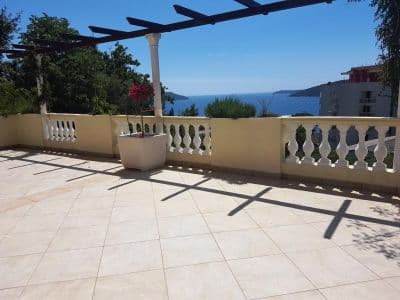
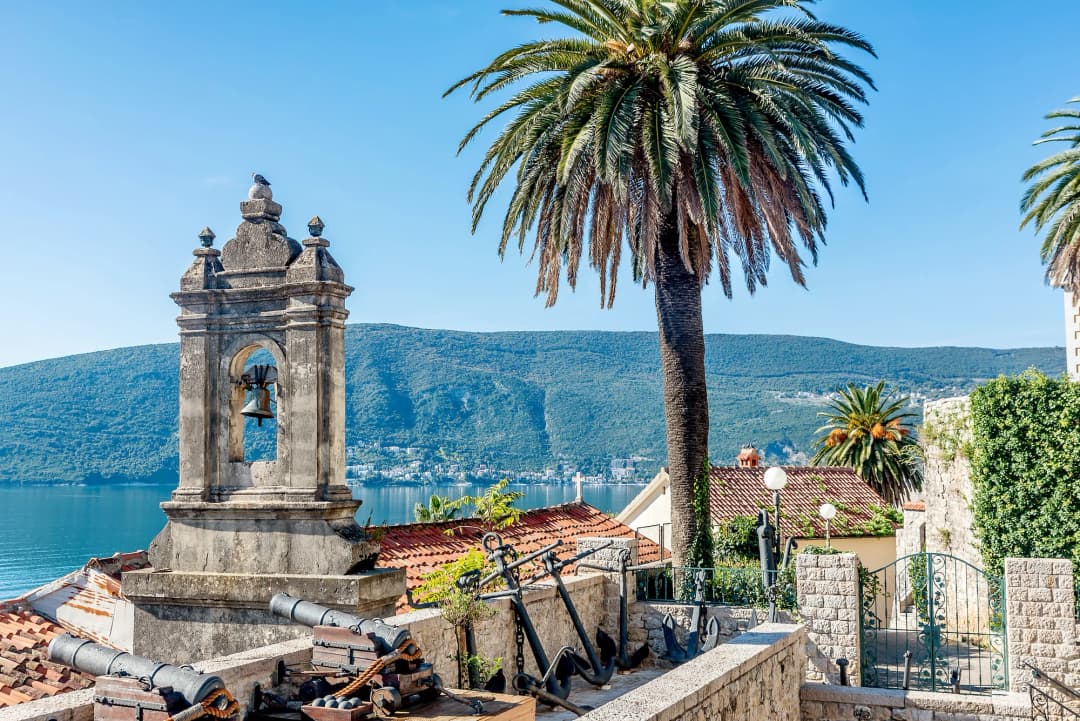
Kotor is the most famous and, according to many, the most beautiful city in Boka Kotorska. According to others, it is Herceg Novi. The difference between these two centres is that Kotor is dominated by stone palaces, mostly from the Baroque era, while Herceg Novi is dominated by villas. Whoever loves Herceg Novi loves it because of the garden ambience, the exceptional sunshine throughout the year, and the fact that from almost every terrace you can see two blues: the sea and the sky.
Where to Stay
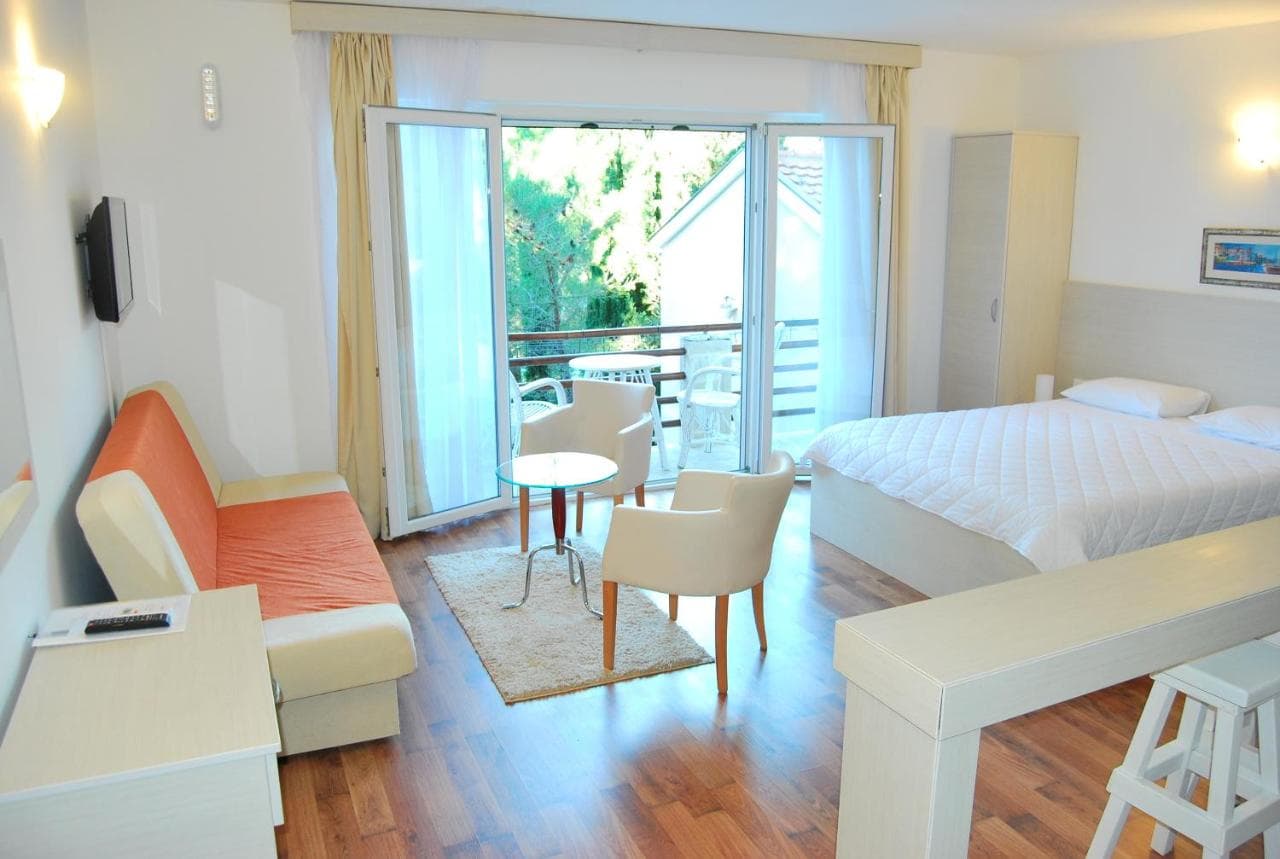
Herceg Novi offers accommodation ranging from waterfront hotels to private apartments and stone houses in the Old Town.
Old Town Area puts you at the centre of the action, steps from fortresses and restaurants. Several boutique hotels and renovated stone apartments offer atmospheric stays, though the steep streets may challenge those with mobility concerns. Igalo is ideal for families and wellness visitors, with flat waterfront access, sandy beaches, and the Institut Dr Simo Milosevic at hand. Savina, near the monastery, offers a quieter residential experience with stunning bay views, while Meljine balances quiet surroundings with a 15-minute promenade walk to the centre.
For budget travellers, private apartments (apartmani) offer excellent value across all areas, many with kitchens for self-catering using the outstanding local produce from nearby markets.
Getting There
From Dubrovnik Airport (Closest)
Dubrovnik Airport (DBV) in Croatia is approximately 30 kilometres away. The journey takes about an hour, including the border crossing at Debeli Brijeg, which can have queues in peak summer. Taxis, transfers, and rental cars are available.
From Tivat Airport
Tivat Airport (TIV) is about 23 kilometres away. The quickest route uses the Kamenari-Lepetane car ferry, a 10-minute crossing at the bay's narrowest point. A taxi via the ferry takes 30 to 40 minutes.
From Podgorica Airport
Podgorica Airport (TGD) is approximately 120 kilometres away, about two hours by car. Regular buses connect the two cities.