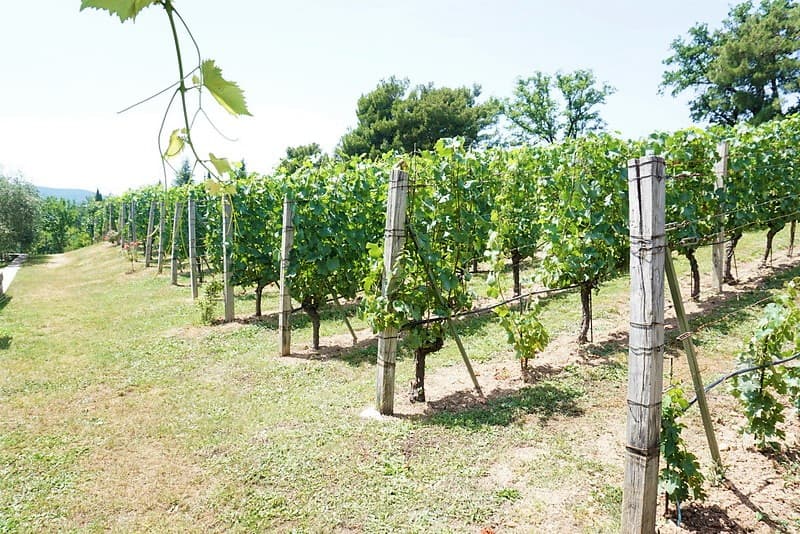
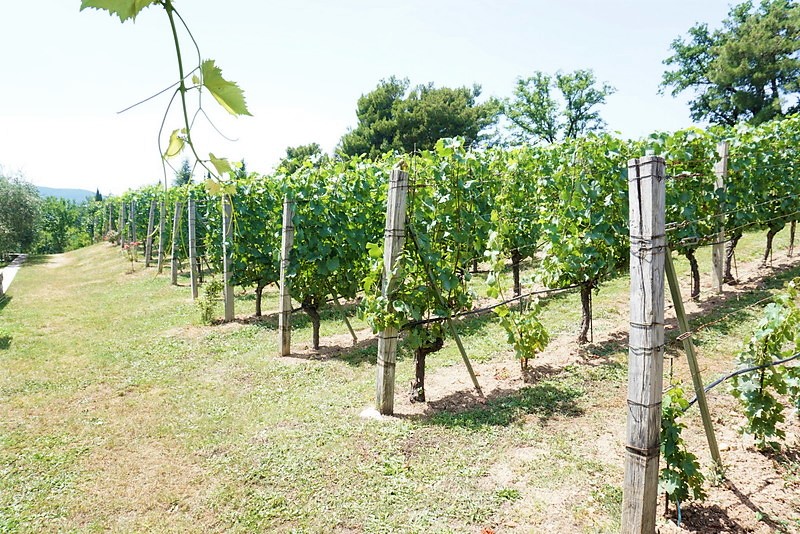
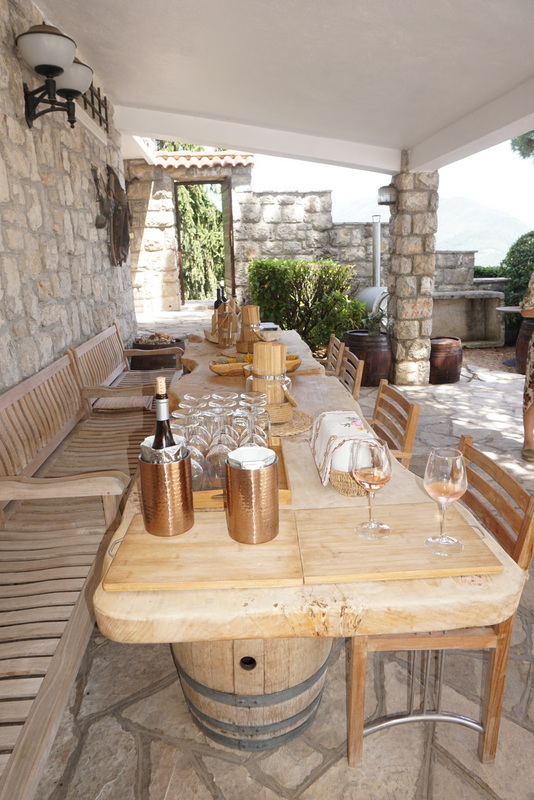
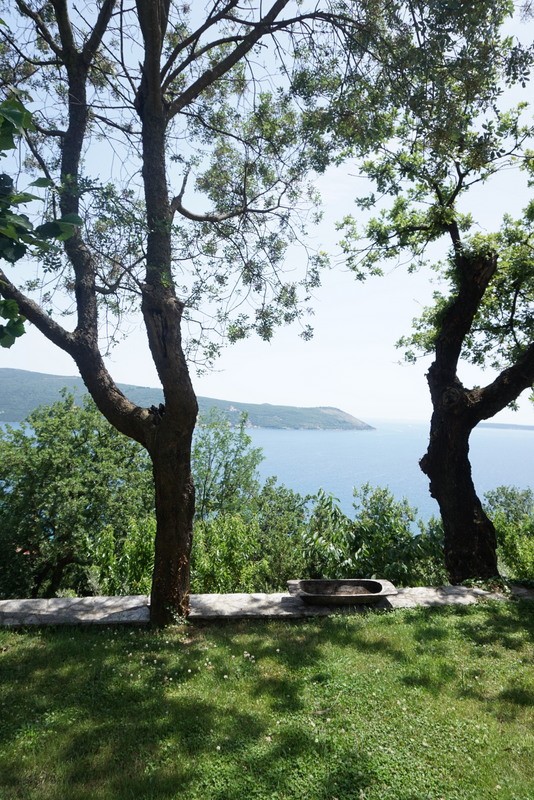
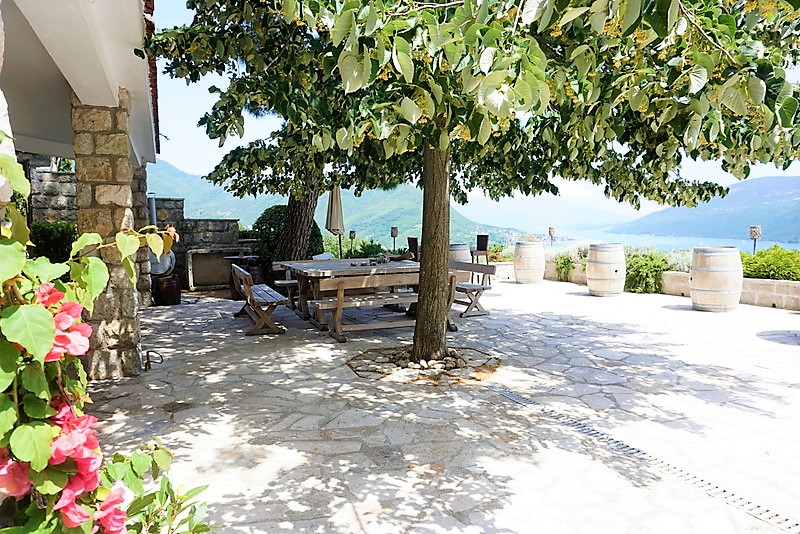
Castel Savina is a two-hectare family winery on the Savina hillside above Meljine, with vineyard rows, a small cellar and a tasting terrace looking across the entrance to the Bay of Kotor. This guide replaces an old booking invitation with verified 2026 choices: what each tasting includes, why access must be arranged by car, how the estate describes its history, and which claims belong to the winery rather than an independent archive.
Choose the tasting before arranging transport
Castel Savina's official reservation page currently shows five formats. The central decision is whether you want only a seated tasting or the estate story, vineyard and cellar as well. The Basic option is the shortest and explicitly excludes the vineyard walk, barrique-room tour and grappa. The winery recommends Classic or Gourmet for a first visit because those formats include more of the estate.
| Experience | Displayed duration | Displayed price | Core inclusion | Best decision use |
|---|---|---|---|---|
| Basic | 1 hour | €40 per person | Three wines and local homemade canapés; no vineyard, barrique room or grappa | Returning guests or a genuinely tight schedule |
| Classic | 1.5 hours | €55 per person | Three wines, local homemade canapés, vineyard/cellar programme and local grappa | First visit with a compact estate overview |
| Gourmet | 2 hours | €75 per person | Four wines, local canapés and tapas, estate programme and grappa | More pairing time without a full meal |
| Traditional Montenegro | 3 hours | €95 per person | Four wines, canapés, a clay-oven main course, dessert and grappa | A tasting built around lunch or dinner |
| Old Cellar | 3.5 hours | €120 per person | Traditional Montenegro format plus older vintages and a group wine quiz | Groups of eight or more seeking the longest format |
The prices are per person and displayed as VAT-inclusive, but a form submission is only a request. The winery says it will confirm by email. Ask the reply to state the package, number of guests, date, start time, total price, languages, dietary handling, cancellation terms and transport arrangements. Do not assume the current “open daily, 11:00–22:00” display means a walk-in tasting is available at any time.
Practical visit plan: solve the steep road first
The estate lists its address as Branka Ćopića 7d in Herceg Novi and repeatedly warns visitors not to walk from the gate. This is unusually important operational information, not marketing fine print. Book a taxi or private transfer that knows the precise entrance, or nominate a driver who will not drink. Confirm whether the vehicle can wait, when it should return and where the driver can safely turn or collect you. A tasting should never end with an improvised descent or a guest deciding they are “fine to drive.”
Tell the winery in advance about reduced mobility, vertigo, heat sensitivity, allergies, pregnancy, alcohol avoidance or a need for a non-alcoholic experience. A vineyard walk can involve slope, sun and uneven ground; a cellar may have thresholds or constrained circulation. The public page does not publish a complete accessibility audit. Ask for step counts, surfaces, seating, toilet access and a step-free alternative rather than treating “car access” as equivalent to accessible access.
Allow the stated tasting duration plus transport margin. For a longer day, visit the nearby Savina Monastery separately and respectfully, then continue to the winery at the confirmed time. Do not arrive at the monastery carrying an open drink or treat its grounds as an extension of the tasting. Our Meljine guide explains the coastal neighbourhood below, while the Herceg Novi accommodation guide compares bases for a car-free evening.
The estate's 1753 origin story—carefully attributed
The winery says owners Zoran and Gordana Obradović found their family property in a 1753 Venetian land register, identified as “Villa di Meljine” with the Savina slope under vine. On its official history page, the estate presents that discovery as the reason to revive winegrowing after returning from London. It dates planting to 2009 and the first commercial release to 2014.
This is compelling family history, but the digitised register excerpt and its full archival catalogue reference were not independently verified in the sources reviewed for this article. We therefore write “the winery says,” not “the archive proves.” The 2018 Montenegro.com article recorded the same account from owner Zoran Obradović, which shows continuity in the estate's narrative but is not a second independent verification.
The present estate describes itself as intentionally small, with a ceiling of 25,000 bottles per year. Earlier copy used 20,000; that is not necessarily a contradiction in actual output, because a production ceiling and yearly production are different measures. The safe current wording is the winery's stated maximum, not an assertion that exactly 25,000 bottles are produced.
Two hectares between sea air and limestone
The estate reports that its south-facing vines sit between 70 and 120 metres above sea level, about 500 metres from the water. It gives a planting density of 4,500 vines per hectare and an intentionally low yield near four tonnes per hectare. Those are producer-supplied viticultural figures, not measurements independently audited by Montenegro.com.
What the sources say
What is directly legible is the setting. The Savina slope rises quickly above Meljine at the western entrance to Boka. Sun exposure, moving coastal air and proximity to the water are central to how the winery explains its style. The National Tourism Organisation's wine-roads guide places Castel Savina within Montenegro's broader wine offer and identifies its Cabernet Sauvignon, Merlot, Chardonnay and Grenache rosé. The winery's 2026 collection is wider than that tourism summary, so the estate's live list is the better source for a reservation.
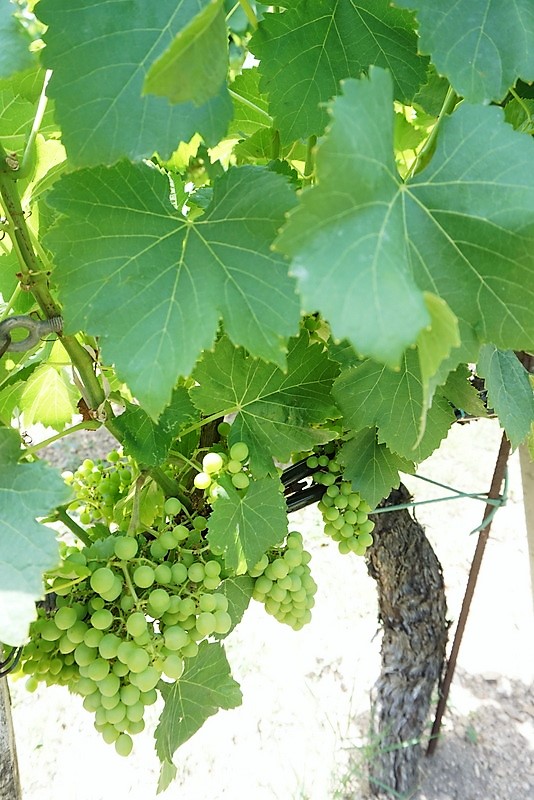
From vine to glass
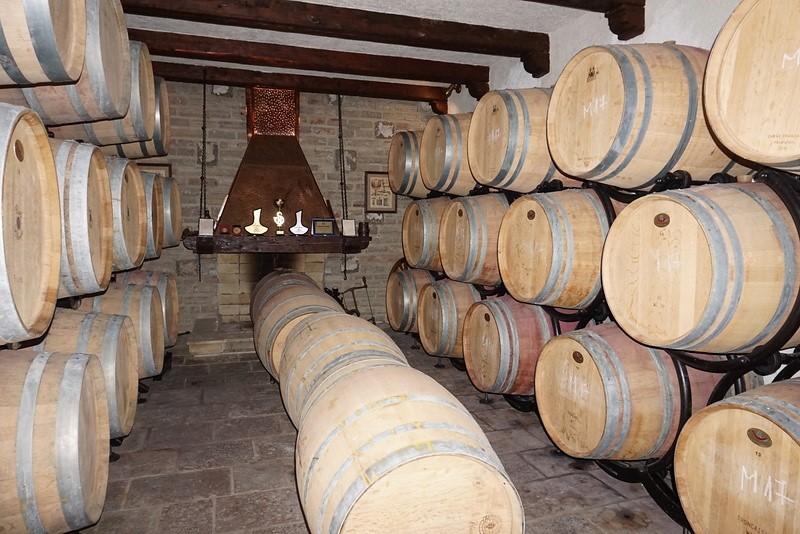
The winery says harvesting is manual. Its current technical account describes three days of cold maceration and about seven days of fermentation for whites; reds receive roughly 25–30 days of skin contact before selected wines move to French oak. Those timings describe the producer's general method, not a formula applied identically to every vintage, lot or wine.
| Step | Treatment |
|---|---|
| 1. Harvest | Hand-picked |
| 2. Macerate | By wine style |
| 3. Ferment | Controlled |
| 4. Age | Selected French oak |
| 5. Bottle | Small batches |
Source: castelsavina.me
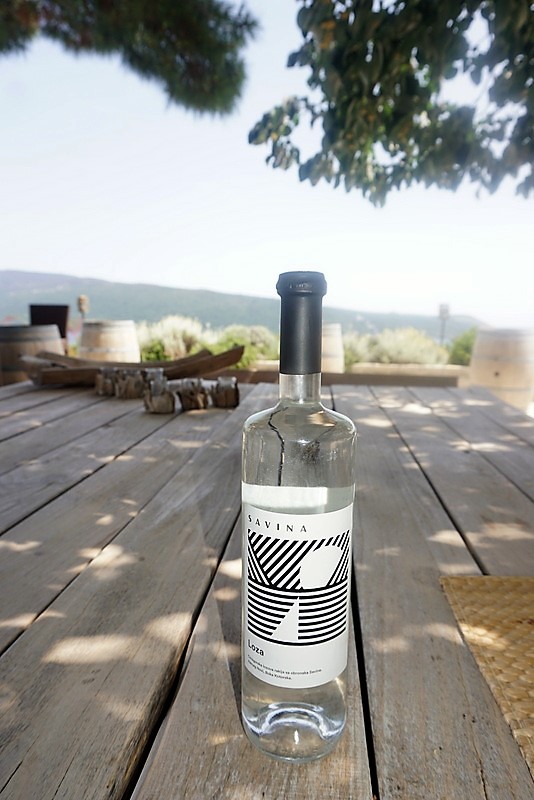
What may be in the glass
The live 2026 collection lists Merlot 2020, Cabernet Sauvignon 2021, Castello 2024, Chardonnay 2025, Chardonnay Barrique 2024, Rosé Grenache 2025 and a late-harvest Žižak 2022. Vintage availability can change faster than an editorial page. A tasting package promises a number of wines, not necessarily these exact bottles; ask what is scheduled when the winery confirms.
Žižak deserves special attention because it connects the estate to Montenegro's local grape heritage. The National Tourism Organisation includes Žižak among the country's autochthonous varieties, and University of Montenegro researchers have published work on its yield and oenological potential. Castel Savina currently presents its Žižak as a late-harvest wine. Avoid collapsing those distinct facts into a claim that every Žižak is sweet or that one producer's profile defines the variety.
The winery's tasting notes are useful expectations, not objective verdicts. Its Merlot description emphasises dark fruit and integrated oak; Chardonnay Barrique is described as richer and oak-shaped; Rosé Grenache as bright and fresh; and late-harvest Žižak as honeyed and citrus-toned. Taste them as one estate's interpretation of place and vintage, not as a ranking of Montenegrin wine.
Pair the tasting with Savina—not a rushed checklist
The winery sits near an active Serbian Orthodox monastery. The monastery's official site describes three churches, daily worship and a treasury and library. Its historical page treats the small church's 1030 origin as tradition and dates the present form more cautiously. That distinction corrects the old winery article, which stated 1030 without qualification.
If you visit both places, give them separate purposes. At the monastery, dress conservatively, silence phones, avoid photographing worshippers without consent and follow posted guidance. At the winery, ask questions, taste slowly and arrange food and transport. For the wider historical setting, our dedicated Savina Monastery feature explains the evidence and devotional tradition. Continue west with the Herceg Novi Old Town guide, explore the literary history of Topla, or walk part of the Pet Danica promenade on another sober, unhurried block of the day.
Frequently asked questions
Can I visit Castel Savina without a reservation?
The winery's current site says reservations are required and that requests are confirmed by email. Do not interpret displayed daily hours as guaranteed walk-in availability.
Can I walk from Herceg Novi or Meljine?
The winery explicitly says not to walk from the gate and describes the steep approach as car-only. Arrange the exact arrival and return with the winery or a transport provider. A map's short distance does not describe gradient, heat or safe roadside conditions.
Which tasting is best for a first visit?
The winery recommends Classic or Gourmet for a fuller first experience. Basic omits the vineyard and barrique-room components. Choose by time, food needs and desired depth, then confirm the current inclusions and wines in writing.
Are the displayed prices guaranteed?
No editorial page can guarantee them. The table reproduces the official display accessed on 26 August 2026. Your written confirmation should control the price, package, taxes, group rule, cancellation terms and any supplement.
Is the tasting accessible?
The public booking page does not provide a complete accessibility specification. Ask about vehicle drop-off, steps, slopes, surfaces, toilet access, seating and alternatives to the vineyard walk before booking.
Can children or non-drinkers join?
The public package page does not publish a universal child or non-drinker policy. Ask directly about age rules, supervision, non-alcoholic options and pricing. Never assume a wine tasting is designed for children because food is included.