Stari Bar is not one ruined town from one moment. It is a fortified hillside settlement whose walls, houses, churches, palaces, baths and water system record repeated rebuilding from the Middle Byzantine period through Venetian and Ottoman rule, then war damage, abandonment, earthquakes, conservation and archaeology. Reading those layers separately makes a visit far more rewarding than treating every stone as simply “medieval.”
This guide also resolves three practical traps. Stari Bar is on Montenegro's UNESCO Tentative List, not the World Heritage List. Official sources disagree on the aqueduct's century. And a February 2026 operator page has newer hours and prices than the older tourism-board listing still circulating online.
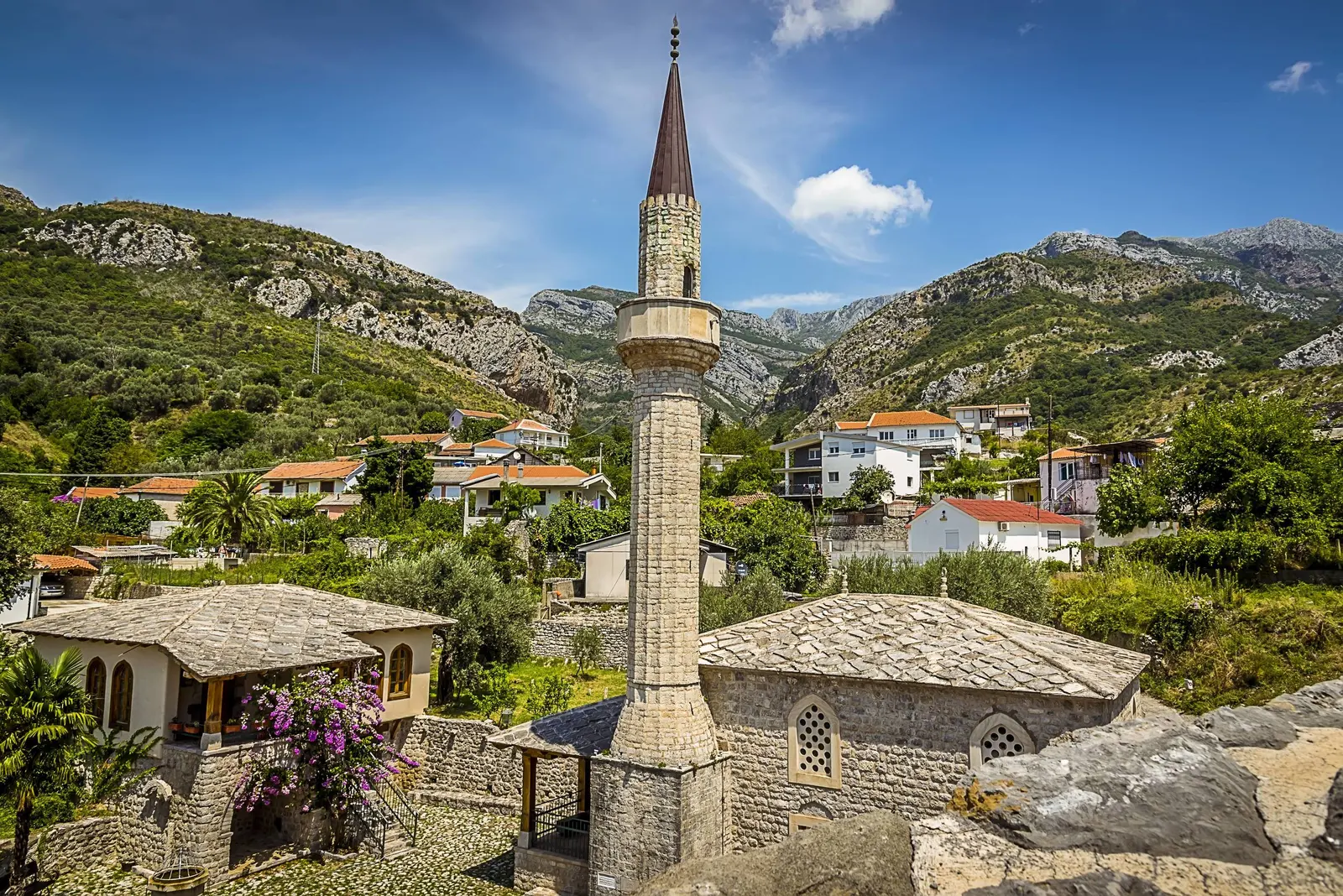
Stari Bar at a glance
| Question | Best current answer | Caveat |
|---|---|---|
| Where is it? | On a defensible rise below Rumija, about 4 km inland from the Adriatic shore and modern Bar. | Official descriptions vary between roughly 4 and 5 km depending on the point and method measured. |
| What is it? | A protected archaeological and architectural ensemble with 238 numbered remains recorded by the heritage administration. | That does not mean 238 complete or enterable buildings. |
| UNESCO status? | Montenegro added Old Town of Bar to its Tentative List in 2010. | It is not an inscribed World Heritage property. |
| Current published hours? | 08:00–20:00 on the operator's February 2026 page. | Confirm before travel; an older tourism page still displays different seasonal hours. |
| Current published price? | €5 adult; children up to six free on the operator page. | No Old Bar price for ages 6–14 is displayed there. |
| How long? | Allow 90 minutes for the main enclosure; two hours if you read labels slowly and stop for views. | Events, conservation barriers, heat and mobility affect pace. |
The timeline: activity is older than the visible city
Ca' Foscari's archaeological synthesis makes an important distinction. It records Bronze Age activity or visitation at the location, but places the first material evidence for a stable settlement in the Middle Byzantine period. A worship building and early wall circuit survive in the archaeological sequence. Calling Stari Bar a continuously inhabited Bronze Age city would therefore overstate what the evidence proves.
A larger stone town developed in the later Middle Ages. The Municipality of Bar records one Venetian phase from 1405 to 1412, followed by other rulers, then continuous Venetian control from 1443 to 1571. The Ottoman Empire governed it from 1571 until 1878. Those labels are chronological guides, not colour codes: buildings were repaired, reused and adapted, and later households occupied fabric inherited from earlier ones.
| Period | What happened |
|---|---|
| Bronze Age | activity traces |
| Middle Byzantine | stable settlement |
| 1443–1571 | Venetian rule |
| 1571–1878 | Ottoman rule |
| 1877–78 | siege + damage |
| 1979 | earthquake |
| 2004 / 2025 | project / research authorized |
| What the line does not claim | Early activity ≠ continuous urban life; political control ≠ instant architectural replacement; restored fabric ≠ untouched fabric. |
Source: iris.unive.it, bar.me, makale.isam.org.tr, gov.me
The 1877–1878 siege was a rupture, not the site's final chapter
A Turkish Historical Society congress paper dates the Montenegrin siege from 13 November 1877 and describes bombardment beginning the following day. After 59 days, the heavily burned and depleted town surrendered on 10 January 1878. The precise military narrative differs by national tradition, but the material consequence is not in doubt: the independence war caused severe damage and accelerated the walled settlement's late-nineteenth-century abandonment.
The ruins did not then freeze in place. The 15 April 1979 earthquake devastated Montenegro's coast and damaged Stari Bar. Restoration and clearance opened buried areas and rebuilt selected structures; regional conflict interrupted some work in the early 1990s. An international archaeological project began in 2004, and new investigation at the Prince's Palace was authorized for summer 2025. Visitors are seeing both inherited fabric and decades of conservation decisions.
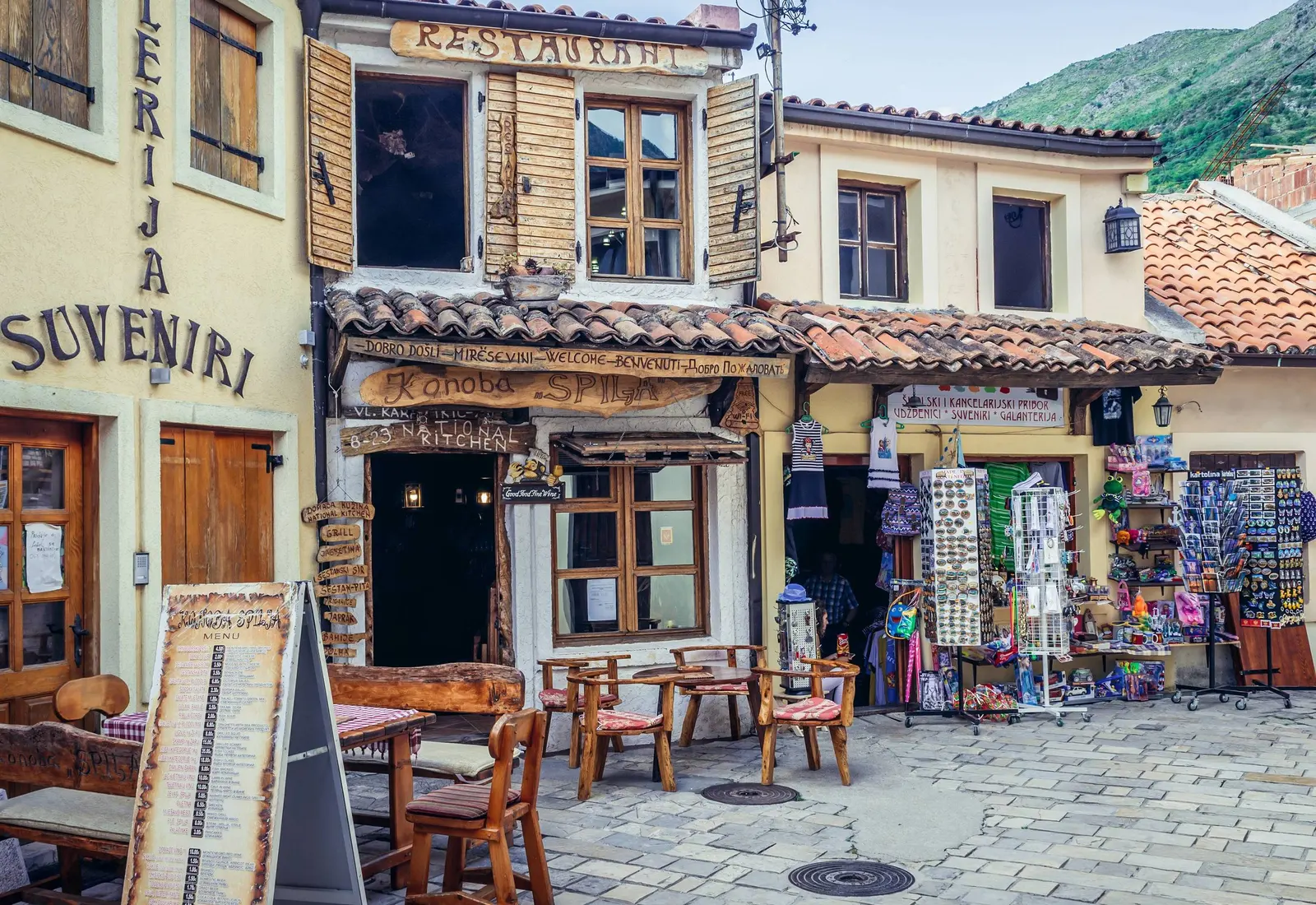
What to read inside the walls
The gate, citadel and defensive position
The steep rock, ravines and mountain foothills explain why a town developed inland rather than directly on the coast. Montenegro's UNESCO submission dates the main gate broadly from the fourteenth to sixteenth centuries and the Tatarovica Citadel across a much longer tenth-to-nineteenth-century range. Those spans are reminders that fortification is an accumulation of interventions, not one architect's project.
Churches, palaces, bath and powder store
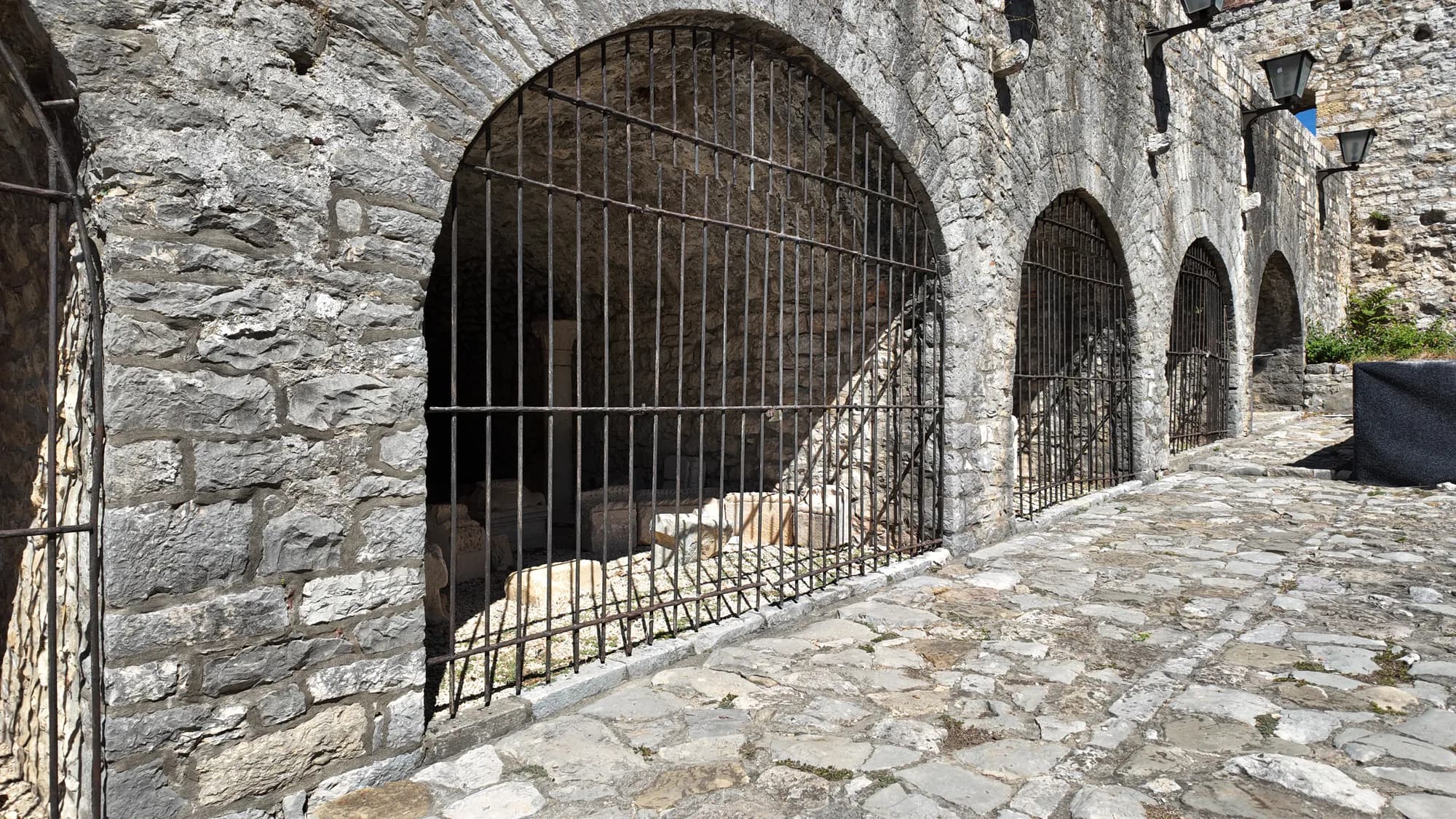
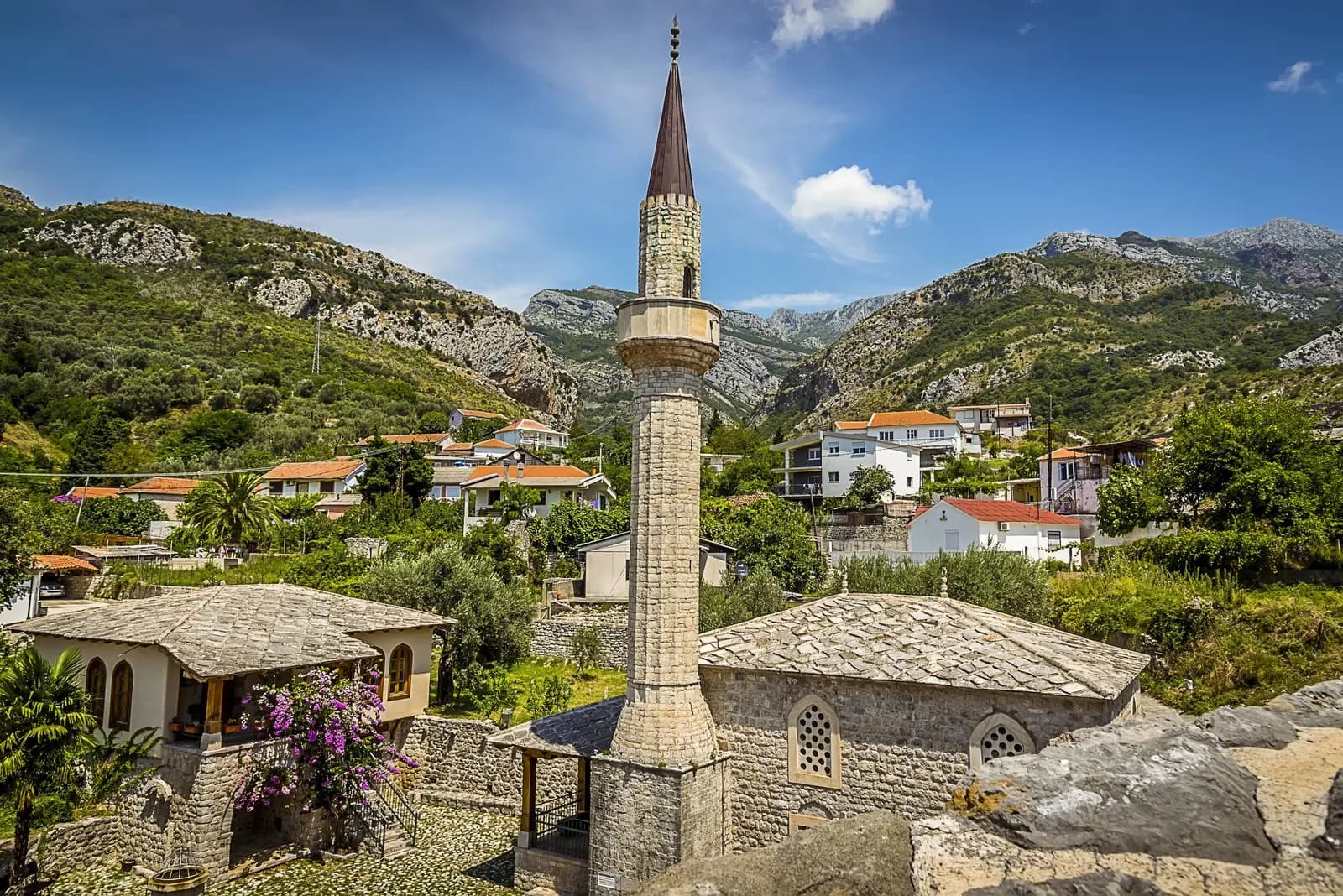
The same inventory records St Nicholas's Church from the thirteenth century, St Veneranda and St Catherine from the fourteenth, St George's Cathedral with fabric spanning the eleventh to fifteenth centuries, and the Prince's and Bishop's Palace from the fifteenth to sixteenth. Ottoman-period urban life added or reshaped the hammam, powder storage, water supply and domestic routines. Archaeological finds of coffee cups and clay pipes show habits spreading through the settlement centuries after the first wall circuit.
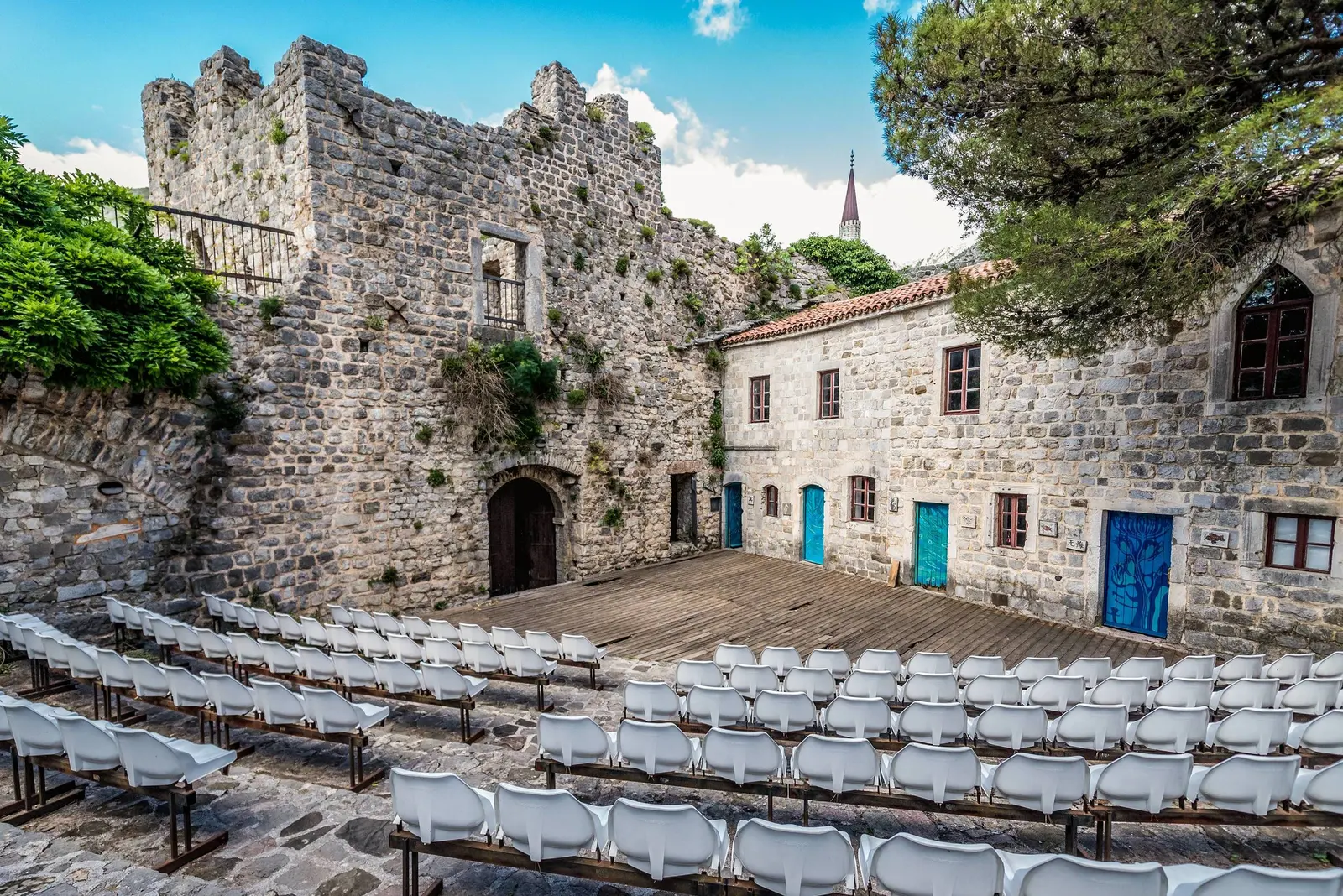
The aqueduct: impressive, Ottoman—and imprecisely dated
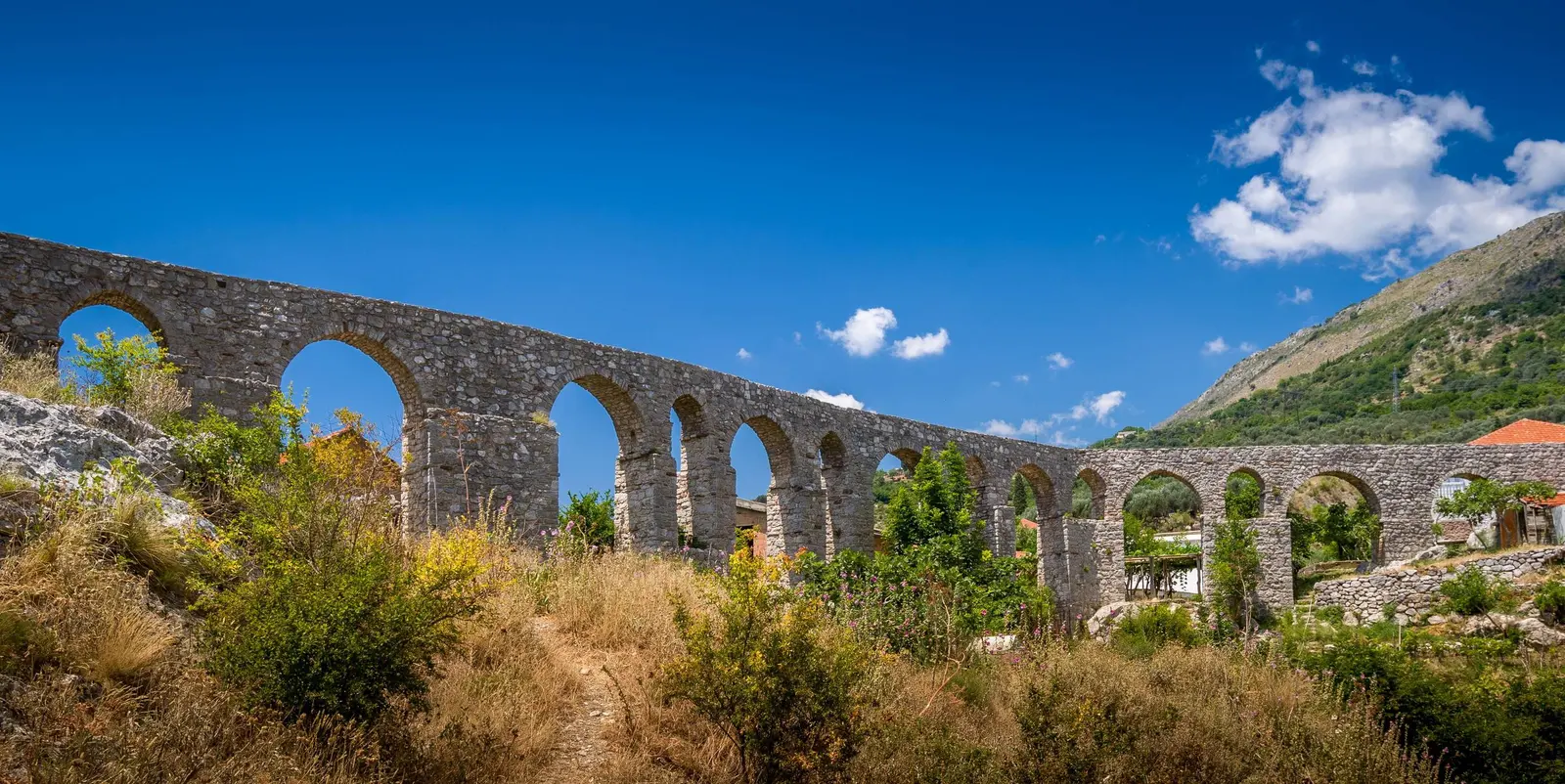
The aqueduct on the north side carried spring water from about three kilometres away across 17 large arches. The Tourism Organisation of Bar calls it seventeenth century; Montenegro's UNESCO Tentative List record calls it eighteenth century. Without a source that resolves whether these refer to construction, rebuilding or a documentation error, “Ottoman-era aqueduct” is the honest label.
The Clock Tower: 1752 or a 1753 renovation?
Another small discrepancy deserves the same restraint. The UNESCO inventory dates the Clock Tower to 1752. The tourism board says an older building was renovated in 1753, when it acquired an oriental form. Both may be compatible if one date refers to construction and the other to completion or alteration, but the published pages do not demonstrate that. On site, use the tower as an orientation point rather than forcing a one-year certainty.
| Monument | Tourism board | UNESCO submission | Safe label |
|---|---|---|---|
| Aqueduct | 17th century | 18th century | Ottoman-era water system |
| Clock Tower | renovated 1753 | 1752 | date and renovation may differ |
| Caution | — | — | Do not turn administrative precision into archaeological certainty. |
Source: bar.travel, whc.unesco.org
UNESCO: what Tentative List status actually means
What the sources say
Montenegro submitted Old Town of Bar to UNESCO's Tentative List in July 2010 under cultural criteria (ii), (iii) and (v). The submission emphasizes the meeting of Gothic, Renaissance, Baroque, oriental and local traditions and the relocation of urban life from the walls toward the coast. UNESCO clearly states that Tentative List descriptions remain the responsibility of the submitting state.
A Tentative List is an inventory of properties a country may consider nominating. It is not inscription, does not make Stari Bar a World Heritage property, and does not mean UNESCO has endorsed every phrase in the national description. The status is still significant: it records the ensemble's national nomination potential and the comparative case Montenegro wants to make.
Practical visit planning in 2026
Hours and admission: use the operator page
The JU Cultural Centre Bar page, published 9 February 2026, lists Stari Bar open 08:00–20:00 and adult admission at €5, with free entry for children up to six. It does not publish a separate Old Bar price for children aged 6–14. Confirm before a special trip because temporary event, weather or conservation conditions may alter access.
An older Tourism Organisation page still shows €3 adult admission, €1 for children up to 12, 08:00–21:00 in season and 08:00–17:00 outside it. That page is useful historical visitor information, but the dated 2026 operator page is the stronger current source.
| Source | Hours | Adult | Notes |
|---|---|---|---|
| Operator · February 2026 | 08:00–20:00 | €5 | Under 6: free |
| Older tourism listing | Season 08:00–21:00; off-season 08:00–17:00 | €3 | — |
| Rule | — | — | Use the operator; verify again before travel. |
Source: kulturnicentarbar.me, bar.travel
Surfaces, heat and access
Expect worn stone, steps, gradients, broken thresholds and exposed ruin edges. Closed shoes with grip are sensible. Much of the enclosure is open to sun, so summer mornings or later afternoons reduce heat exposure; carry water without placing bottles or bags on masonry. The operator page does not document a complete step-free route, accessible toilet or wheelchair circulation. Travellers who need these should contact the Cultural Centre before arrival rather than relying on generic “accessible attraction” filters.
Build a coherent Bar day
The closest cultural pairing is the Stara Maslina old olive tree at Mirovica. Its age claims need the same evidence discipline as Stari Bar's dates, but the living olive landscape makes the town's historic oil economy tangible.
For transport choices, consult the Montenegro bus, car and transfer guide; published local frequencies are too variable to promise a specific service here. If the journey continues southeast, the Montenegro-to-Albania route guide helps separate border logistics from a sightseeing day.
Do not force Lake Skadar into the same short visit. Use the practical Lake Skadar and Virpazar guide for boat and access decisions, then read the separate cultural and ecological interpretation of Lake Skadar if the historic road over Rumija matters to your route. Cooler-month travellers can pair these decisions with the Montenegro off-season guide, while remembering that the operator's 08:00–20:00 display may still change.
Frequently asked questions
Is Stari Bar medieval, Venetian or Ottoman?
All three labels describe part of the site, but none describes all of it. Stable settlement evidence begins in the Middle Byzantine era; the larger medieval city passed through Venetian and Ottoman control, and many structures were repeatedly altered.
Is Stari Bar a UNESCO World Heritage Site?
No. It has appeared on Montenegro's UNESCO Tentative List since 2010. Tentative status is a preliminary national inventory step, not inscription.
When was the aqueduct built?
It is Ottoman-era. The tourism board says seventeenth century, while the UNESCO Tentative List submission says eighteenth century. This guide does not choose between them without stronger evidence.
What are the opening hours and ticket price?
The site operator's February 2026 page displays 08:00–20:00 and €5 adult admission, with children up to six free. Confirm directly because older official tourism information conflicts.
Is Stari Bar accessible without stairs?
The published operator information does not document a complete step-free route. The visible enclosure includes slopes, worn paving, thresholds and stairs, so contact the Cultural Centre with specific mobility requirements.
Methodology and sources
The chronology follows Ca' Foscari archaeological publications rather than compressing early traces into a continuous city legend. Siege dates come from a scholarly congress paper and are used without adopting its national rhetoric. Monument names and broad dates are checked across the UNESCO submission, Tourism Organisation of Bar and Montenegro's heritage administration. Current hours and prices come from the site's operator.
Where official records conflict, the disagreement remains visible. Photographs are captioned only to what they show; none is used to settle a disputed construction date or prove access conditions. The result is a guide to reading Stari Bar, not an illusion that every wall and visitor detail has one uncontested answer.