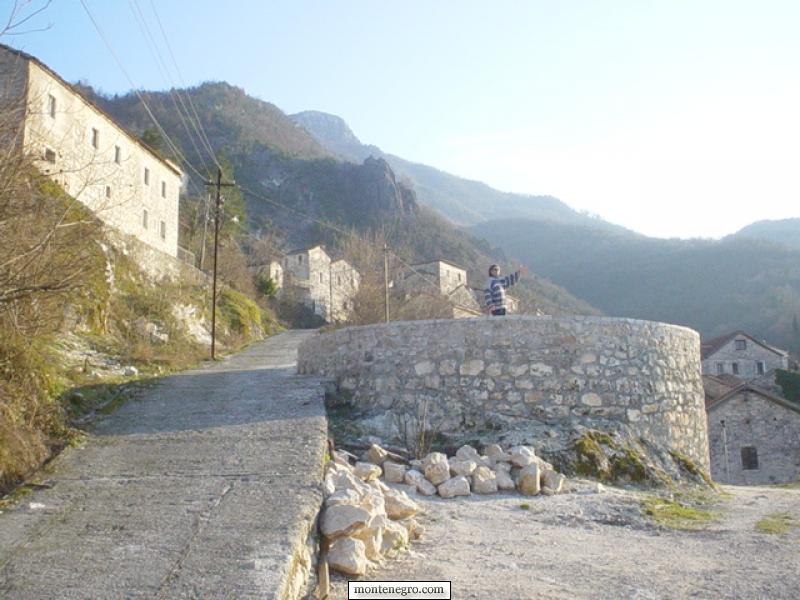
Godinje is not an abandoned film set above Lake Skadar. It is a small living settlement whose Lekovići quarter is protected for the way stone houses, cellars, vaults, lanes, waterworks and communal space form one architectural system. Montenegro’s 2023 census recorded 42 usual residents and 24 households in the wider settlement. That human scale changes how the village should be visited: slowly, quietly and without treating private thresholds as museum doors.
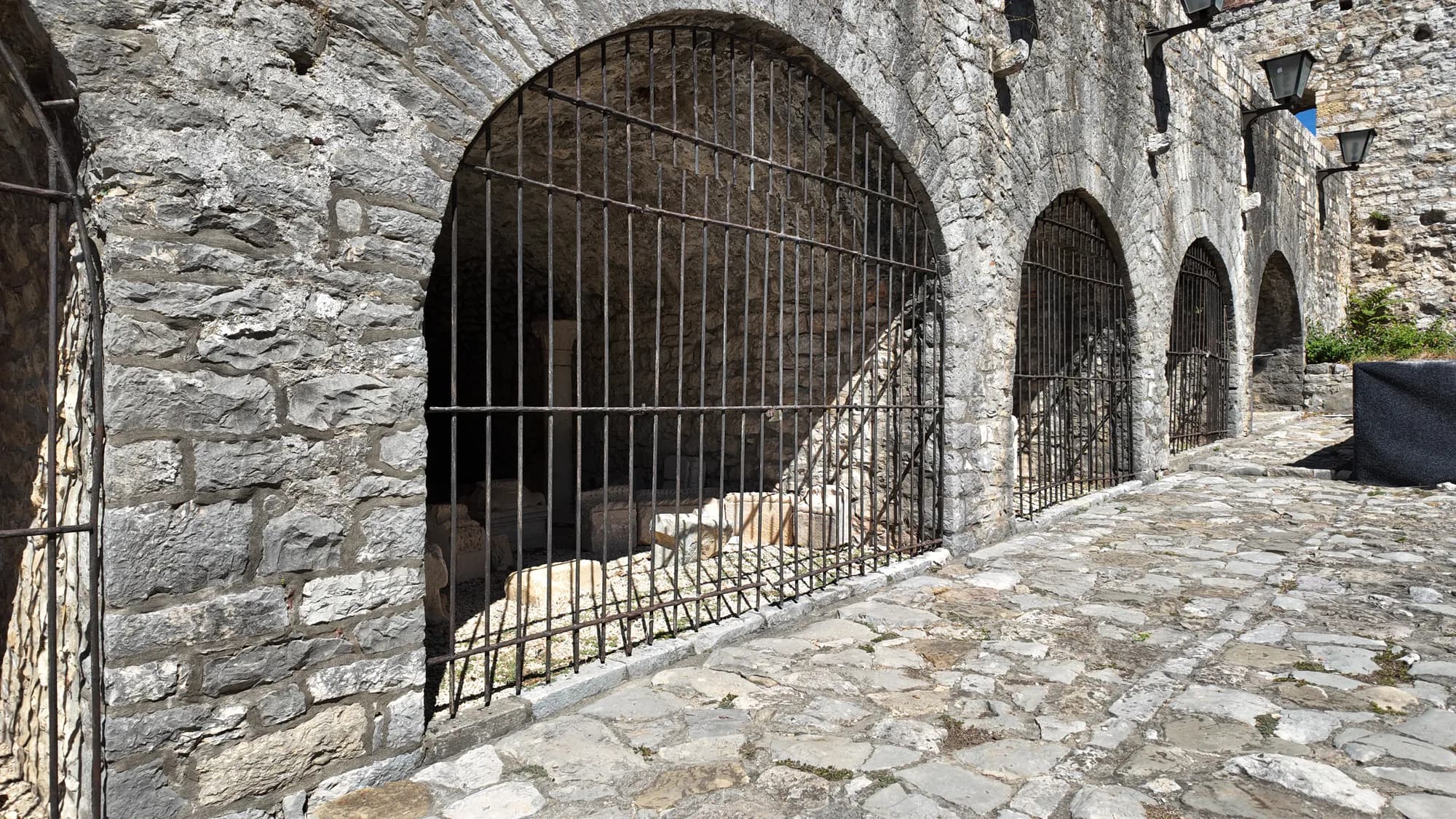
Three Montenegrin terms unlock Godinje’s architecture. A volat is a vault or vaulted passage; a konoba is a cellar or ground-floor work and storage space; and the round open surface associated with threshing and gatherings is the gumno.
Godinje in numbers
| Measure | Recorded value | What it means |
|---|---|---|
| Usual residents | 42 | The whole census settlement in MONSTAT’s 2023 population workbook. |
| Households | 24 | The whole census settlement in MONSTAT’s separate household workbook; not a count of old houses. |
| Protected property | Lekovići ambient ensemble | The named immovable cultural property, rather than every parcel in Godinje. |
| Protection decision | 18 March 2016 | Decision UPI-02-165/2012-9, cited in a Government of Montenegro property record. |
| Zabes–Godinje trail | 4.5 km; about 2 hours | Listed as moderate and “linear,” although the written itinerary returns toward Zabes; verify the current map. |
| Architectural workshop | May 2004 | Field documentation by EXPEDITIO, architecture students and NGO Godinje. |
MONSTAT’s 2023 workbooks record 42 residents and 24 households in the census settlement of Godinje. A household is not the same as a historic house, building or protected parcel. The legal heritage record separately names the Ambijentalna cjelina Lekovići.
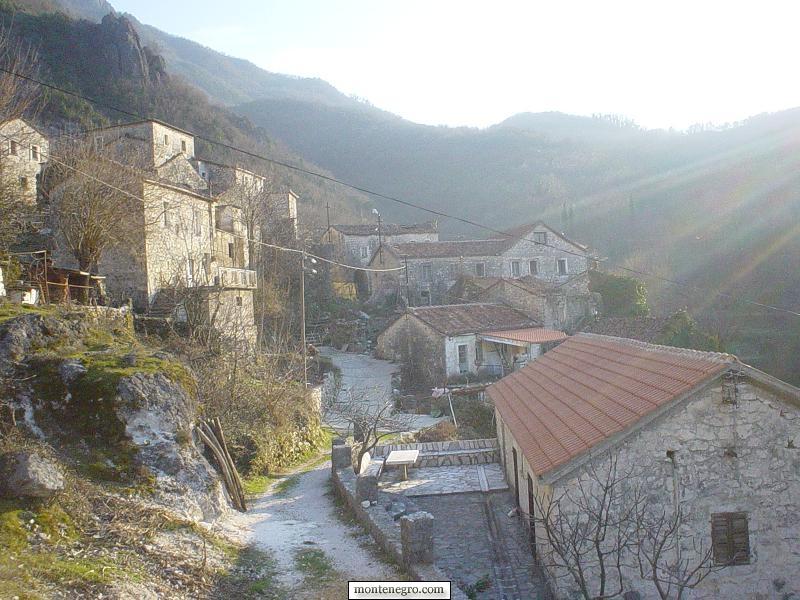
The protected Lekovići ensemble
A Government of Montenegro property decision record identifies parcels as integral parts of the immovable cultural property “Ambijentalna cjelina Lekovići,” created by decision UPI-02-165/2012-9 of 18 March 2016. Lake Skadar National Park’s draft 2026–2030 management plan likewise lists the Lekovići ensemble at Godinje and gives 2016 as its protection year.
The legal distinction has practical consequences. A protected ensemble can include privately owned, inhabited, unused and deteriorated structures with different individual values. In the 2019 government record, the heritage authority described the offered properties as category 3: they had retained traditional-building elements to a significant degree but were unmaintained or abandoned and were not individually a state-purchase priority. The state’s decision not to buy those particular parcels did not remove them from the ensemble.
Protection followed long documentation. EXPEDITIO and NGO Godinje organized a student architectural workshop in May 2004. The resulting drawings, surveys and database were published in 2005; EXPEDITIO’s 2020 English edition says the complete material was given to the heritage administration in 2015 as the protection process advanced.
How to read the architecture
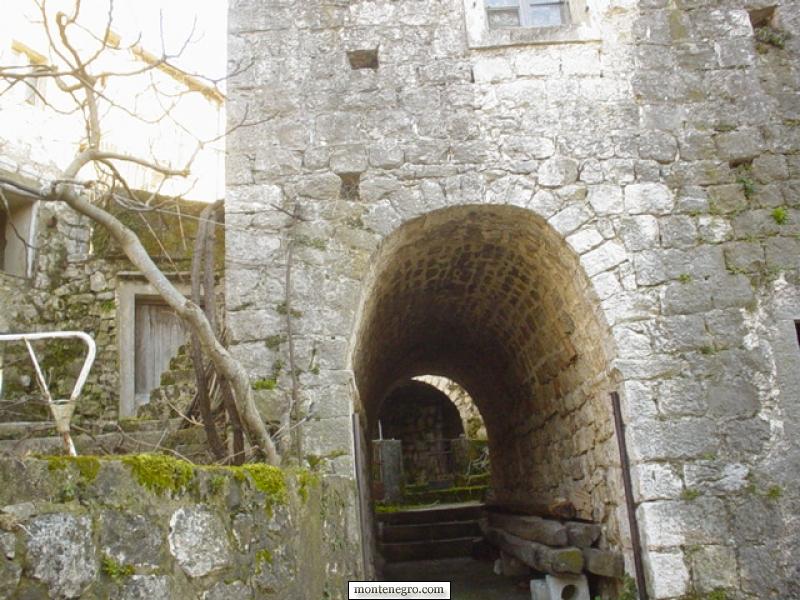
Godinje’s character comes from accumulation. Buildings press against rock and one another. Routes pass beside houses, under vaults and between ground-floor rooms. Stone steps negotiate changes in level. Terraces and upper living rooms receive light above cooler work and storage spaces. Architectural studies also document ventilation openings, wall niches, hearths, ovens and gunports.
Local tradition describes a defence network through which villagers could cross the settlement unseen during Ottoman attacks. Gunports and protected lines of movement remain part of the village’s architecture. Its cellar openings, vaults and passages also developed as families, production and the steep terrain required. The “secret tunnel” story connects these features to the village’s defensive history.
| Element | Role in the cluster |
|---|---|
| Slope and stepped lane | Route bends through the cluster |
| Upper living level | Light + terrace access |
| Konoba | Cellar, storage, work |
| Volat / vault | Building carried over passage |
| Terrace | Outdoor work + life |
Source: shop.expeditio.org, ekip.me
Gumno, konoba and the working village
The gumno is a round stone surface used first for threshing. Regional heritage material also describes it as a place for meetings, singing and dancing outside the agricultural season.
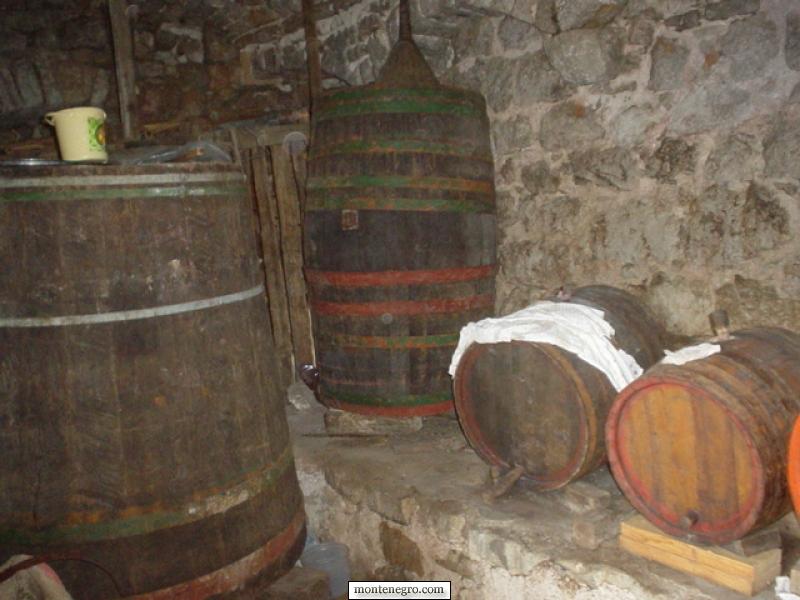
Konobe connect architecture to Crmnica’s economy. Cool lower rooms supported storage, tools, food processing and wine. They could accommodate animals in some households, but defining every konoba as a cattle room erases most of the type’s flexibility. Above, domestic rooms and terraces used the slope, sun and air differently. This vertical organization is why a house should be read as a working system rather than a picturesque façade.
The wider Crmnica region is strongly associated with Vranac and Kratošija. Lake Skadar National Park says some privately owned cellars in old lakeside villages receive visitors, but that statement is not a live directory. A 2017 academic history places one of Montenegro’s first specialized winegrowing and wine cooperatives at Godinje–Crmnica in 1918. For current varieties, appointment questions and sober transport planning, use the Montenegro wine guide and the separate Crmnica wine-route planner.
Springs: heritage, utility and legend
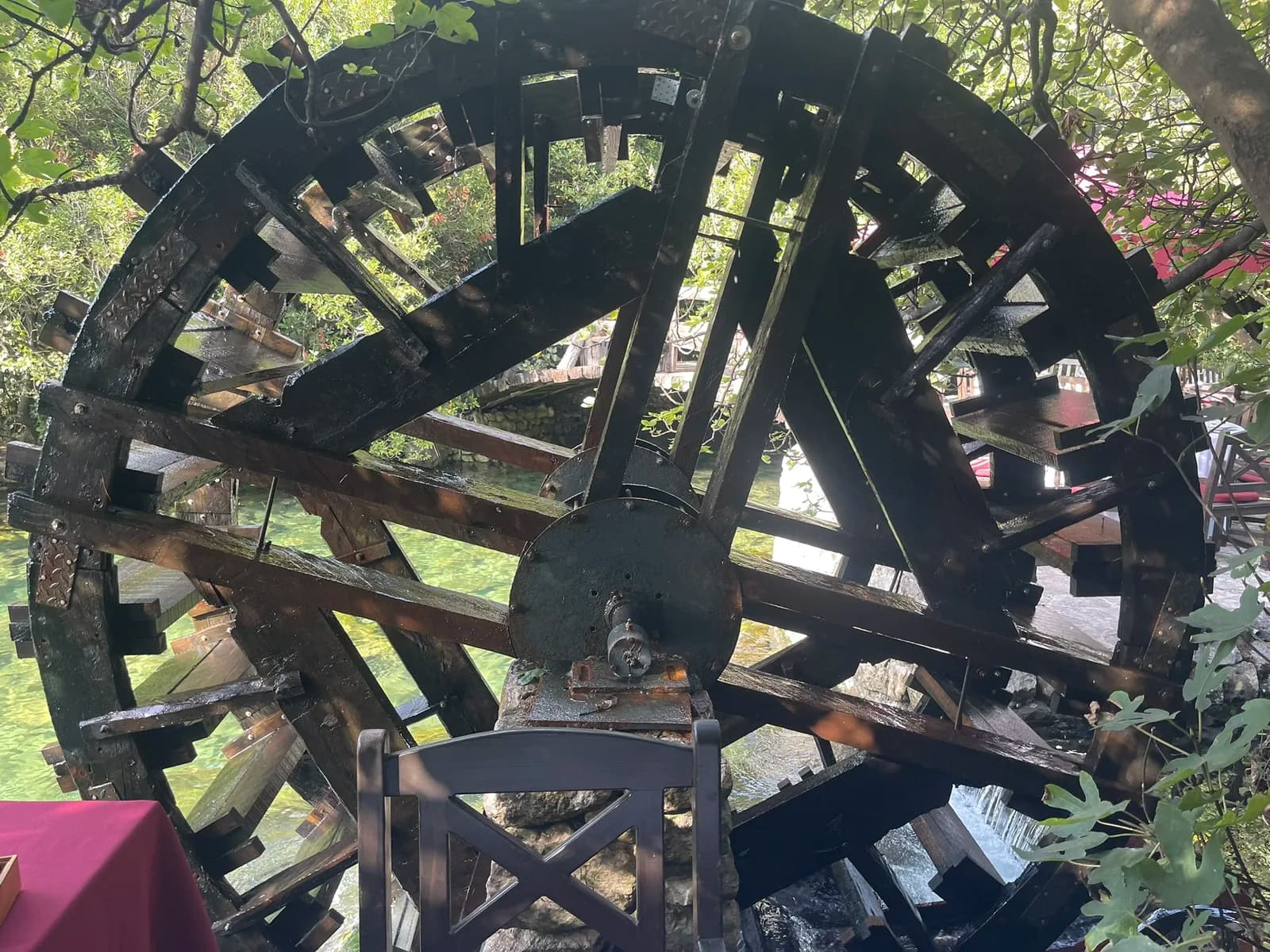
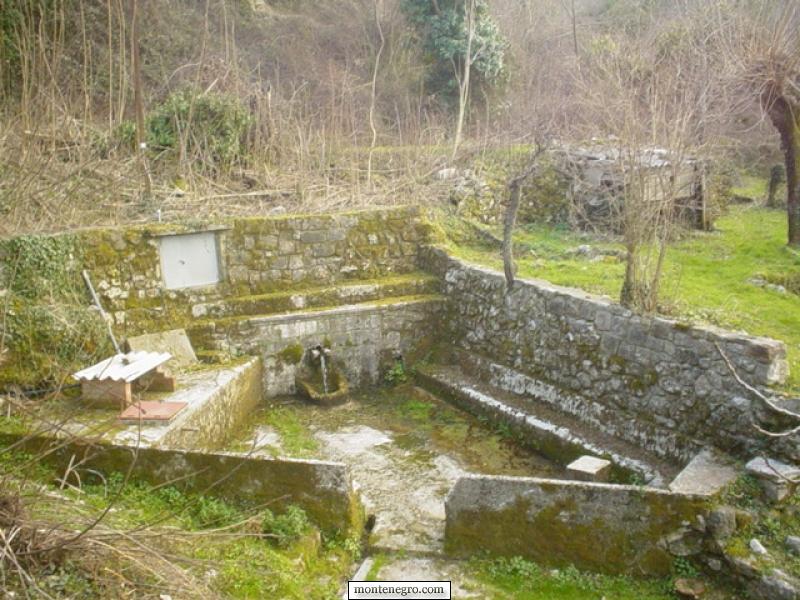
Water explains part of Godinje’s settlement pattern. Heritage accounts describe multiple springs and name Točak–Lješkovac, although totals vary according to whether built outlets, natural springs, seasonal flows or mills are counted. The water network supported households, gardens and milling.
Local tradition tells of Leka, ancestor of the Leković brotherhood, following a goat with a wet beard to a spring and sacrificing it so the water would not fail. The story expresses the community’s relationship with dependable water. For drinking, use only a source that a host or responsible authority confirms is currently maintained and tested.
Milena Delibašić and the 1907 London exhibition
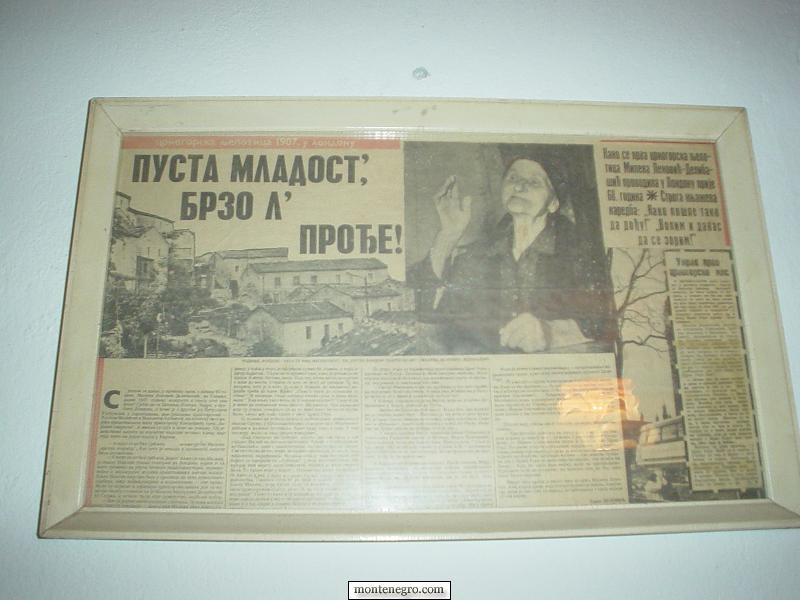
Godinje remembers Milena Delibašić Leković through her connection with the Balkan States Exhibition at Earl’s Court, London. A 2024 archival study in Matica crnogorska dates the exhibition from 4 May to 6 October 1907. Montenegro sent material for a national display and people in national dress to staff it.
A contemporary Glas Crnogorca notice reproduced in that study names two Montenegrin men and three women. One was “Milena Mišurova Delibašić from Spuž.” She was therefore neither the sole representative nor born in Godinje. A later Godinje oral-history account says she married Niko Leković and became part of the village community. That connection is strong enough to explain why her story lives here; it does not make Spuž disappear from her biography.
Family and popular memory preserve accounts of extraordinary attention, marriage proposals and Milena’s reply that she had come to represent Montenegro rather than marry. The archival exhibition study documents her presence in London but no formal world-beauty contest or crown. The beauty-pageant framing and romantic dialogue belong to the oral tradition.
Practical planning for a responsible visit
- Begin with Virpazar. Use the Virpazar guide for orientation, supplies and Lake Skadar planning. Godinje is a village visit, not a full-service attraction with guaranteed daily hours.
- Choose road or trail deliberately. Lake Skadar National Park lists the Zabes–Godinje trail as 4.5 km, moderate and about two hours. The page labels it “linear,” yet its written itinerary returns toward Zabes. Check the current park map and confirm the intended track, markings and return plan locally.
- Do not block village circulation. Park only where legal and clearly safe, keep access to homes and agricultural plots open, and be prepared to continue if no suitable space is available.
- Distinguish lane from doorway. Stay on obvious public or shared routes. Do not enter a cellar, vault, courtyard, ruin or house without direct permission, even if a tour photo shows the space.
- Arrange hospitality. A winery visit, tasting, meal or guide requires current confirmation. Ask what is included, the price, payment method, duration, dietary limits and exact meeting point before arriving.
- Walk for the surface. Stone steps, uneven lanes, vegetation and loose edges require secure footwear. Visitors with limited mobility should ask a named host about the actual route; “village centre” is not an accessibility specification.
- Protect the fabric. Do not climb walls, move stones, pick grapes or lean on unstable openings. Photograph people and private interiors only with permission.
- Carry water and manage heat. An old village spring is not a guaranteed tested supply. Bring drinking water, sun protection and a sober driver if tasting wine.
For a wider day, pair Godinje with the Lake Skadar and Virpazar guide rather than racing through many villages. For a useful comparison in vernacular stone construction, read the Žlijebi architecture and responsible-visit guide. The broader case for travelling while small communities remain more than backdrops appears in why visit Montenegro now.
FAQ
Is all of Godinje a protected cultural property?
The legal record names the Ambijentalna cjelina Lekovići within Godinje as the protected cultural property. This designation does not give every building and parcel in the wider census settlement an identical status.
How many people live in Godinje?
MONSTAT’s final 2023 settlement data record 42 usual residents and 24 households. Neither number is a count of historic houses, ruins or structures in the protected ensemble.
Can I walk through the famous tunnels?
Godinje has real vaulted passages and links between tightly grouped buildings, but access status varies. Use obvious public routes and enter no cellar, covered passage, courtyard or ruin unless a local owner or guide explicitly permits it.
Can I drink from the springs?
Do not assume so. The springs are important to Godinje’s history, but neither an old description nor a photograph is a current water-quality test. Bring your own drinking water.
Can I taste wine without booking?
Godinje has no dependable published walk-in schedule. Contact a current host in advance and confirm the service, price and transport arrangements.
Was Milena Delibašić a Miss World winner from Godinje?
Milena was from Spuž and represented Montenegro at the 1907 Balkan States Exhibition in London, later marrying Niko Leković of Godinje. No formal Miss World contest took place there; the beauty-contest and proposal narrative survives as oral tradition.
Is the Zabes–Godinje walk a loop?
The official page is internally inconsistent: it labels the 4.5 km route “linear,” but its written itinerary returns toward Zabes. Do not infer the route shape from either phrase alone; obtain the current park map and confirm the track locally before starting.