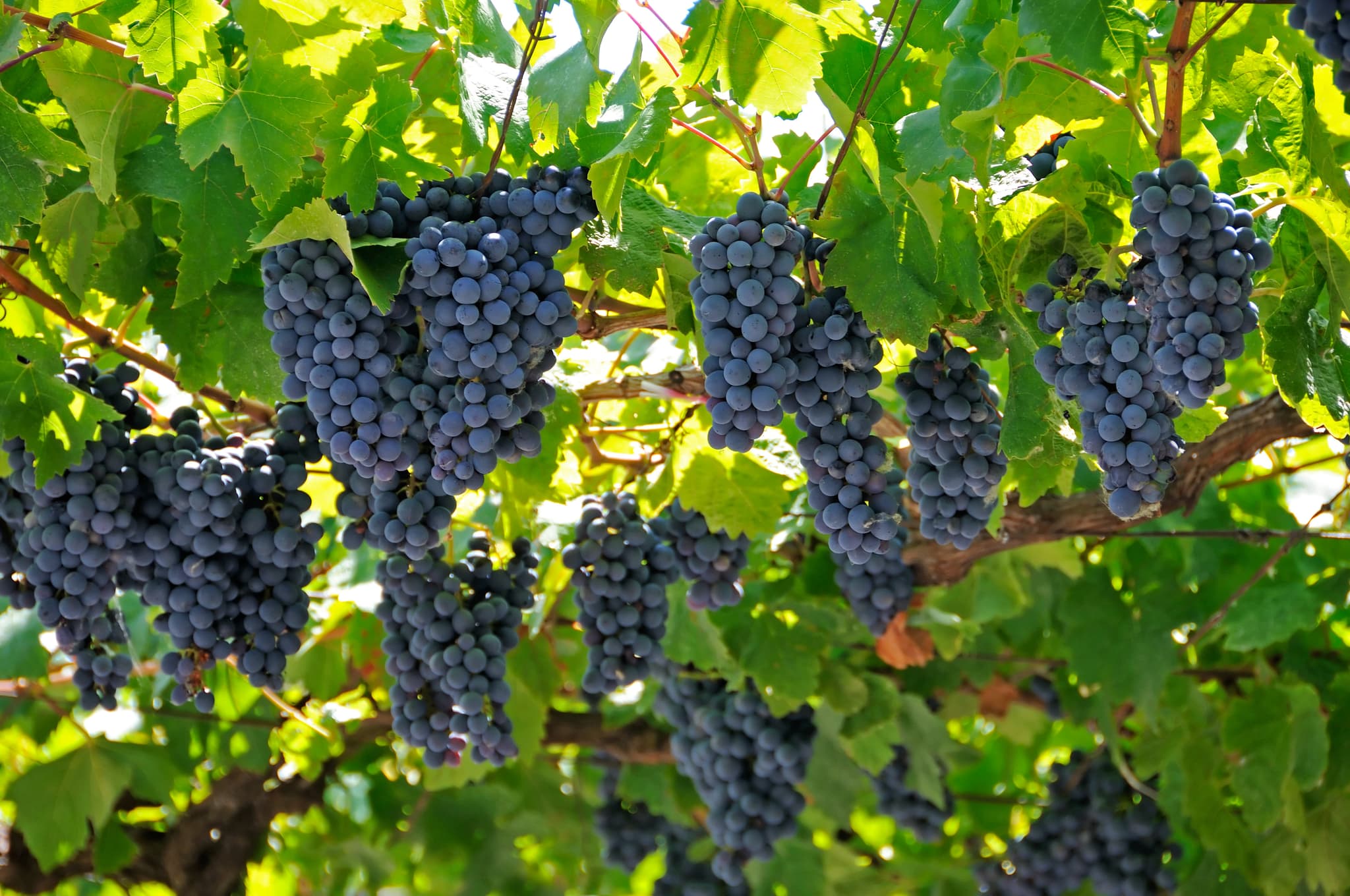
Šipčanik currently offers three published one-hour tasting programmes, priced from €23 to €33 as of 29 August 2026. Compare the included wines and food, reserve in advance, confirm the payment and cancellation terms, and arrange a sober return before visiting.
Šipčanik is the dramatic underground cellar near Podgorica: a former military tunnel converted for wine maturation and visitor tastings. It works best as a reserved experience, not an unannounced roadside stop. Choose the food-and-wine format first, tell the team about dietary or mobility needs, obtain written confirmation, and arrange a sober return before tasting. Prices and operations can change, so treat every number below as a dated planning baseline rather than a voucher.
Šipčanik at a glance
| Decision | Published baseline | Confirm before travel |
|---|---|---|
| Standard programmes | Bouquet €23; In vino veritas €28; Power of the Terroir €33 | Price, wine list, food pairing and availability |
| Duration | Each current standard tasting is listed as one hour | Arrival time and whether a group addition changes duration |
| Visitor hours | Daily, 09:00–17:00 | Your reserved start time; opening hours do not guarantee entry |
| Booking lead | Reserve at least one day ahead | Written confirmation, payment method and applicable cancellation terms |
| Location | Tuzi bb, Karabuško Polje | Exact navigation pin and return transport |
| Cellar conditions | 17–19°C; official sources publish roughly 70–80% humidity | Clothing, mobility assistance and any health concern |
| Alcohol rule | The English FAQ says tasting is for people “over the age of 18”; minors may visit with a parent or legal guardian | Guests who are exactly 18 should confirm eligibility |
| Contact | [email protected]; +382 67 099 099 | Use the contact shown in the current booking flow |
The operator’s official visitor FAQ publishes current hours, reservations, clothing and transport. Its current tasting page lists programme names, inclusions and prices. Recheck both and obtain a booking confirmation for your date and party.
What Šipčanik is—and what it is not
Plantaže traces its modern institutional history to 1963. Its history page says Šipčanik opened as a wine cellar in November 2007 after conversion of an old military facility. The National Tourism Organisation describes a tunnel 356 metres long and about 30 metres underground. Company and tourism pages put its floor area near 7,000 square metres and its wine-aging volume above two million litres. Those are physical descriptions, not a guarantee that every passage or barrel area is included in every tour.
What the sources say
The cellar’s stable conditions are part of its appeal. Plantaže publishes a temperature of 17–19°C and humidity around 70%; the Podgorica Tourism Organisation also gives 17–19°C but says 80% humidity. Plan for a cool, humid interior in the published 70–80% range. A light layer and secure shoes are sensible even when Podgorica is hot.
| Measure | Value | Note |
|---|---|---|
| Depth | 30 m | below ground |
| Tunnel length | 356 m | tunnel length |
| Floor area | ~7,000 | square metres |
| Wine capacity | >2m L | wine capacity |
| Temperature | 17–19°C | Cool and humid |
| Humidity | 70–80% | Access follows your booked programme |
Source: plantaze.com, montenegro.travel, podgorica.travel
Compare the three current tastings
Bouquet is the shortest route to a representative trio: Crnogorski Krstač, Crnogorska Kratošija and Vranac Pro Corde. The official page describes a 270 g bruschetta assortment containing tomato, Njeguši cheese, prosciutto, olive spread, dried fruit, walnuts, bread, olive oil and a muffin. It is listed at €23 for one hour. This is a mixed meat, dairy and nut plate—not a generic light toast—so anyone with an allergy or dietary restriction must confirm ingredients and cross-contact before booking.
In vino veritas adds one wine and a cheese selection. The published four are Krstač, Malvasia, Vranac Pro Corde and Epoha; the listed price is €28 for one hour. This is a useful bridge for someone who wants to compare white varieties before moving into red blends or styles. If a named bottle matters, confirm it: substitutions can happen even when an old page remains indexed.
Power of the Terroir is listed at €33 for one hour, with Krstač, Pro Anima Pinot Blanc, Kratošija and Vladika. Its pairing is described as a traditional meat or fish plate. It is the most food-forward of the three standard offers, but “traditional plate” is not a sufficient answer for an allergy, vegetarian requirement, pregnancy concern or religious restriction. Ask for ingredients and cross-contact limitations in writing.
| Programme | Wines | Pairing | Listed price |
|---|---|---|---|
| Bouquet | 3 | 270 g mixed bruschetta assortment with prosciutto, cheese and walnuts among the listed ingredients | €23 |
| In vino veritas | 4 | Cheese selection | €28 |
| Power of the Terroir | 4 | Traditional meat or fish plate | €33 |
For the wider landscape of estates and family cellars, compare the Montenegro wine-route planning guide. Šipčanik offers scale, controlled cellar conditions and a structured programme; a small Crmnica producer offers a different encounter. Neither replaces the other.
How to reserve without ambiguity
The FAQ asks visitors to reserve at least one day in advance through the official form or the published contact. “At least one day” is a minimum and does not guarantee availability. Send the date, preferred programme, number and ages of guests, language, food restrictions, step or walking limitations, and whether you are asking about the vineyard train. Request a reply that identifies the programme, start time, total price, payment path and meeting point.
There is a material tension in the operator’s own pages. The FAQ says guests can pay by cash or card at the cellar. The terms of use describe online card payment and confirmation in a reservation flow. Follow the method shown for your actual booking; never send card details by ordinary email, and do not assume that a request is confirmed merely because it was sent.
Cancellation language also needs care. The FAQ asks guests to cancel at least 48 hours ahead by email or phone. The terms say that when a user cancels after payment there is no refund, while providing different remedies if the company cannot deliver the service. Read the terms attached to your transaction and ask what the 48-hour notice changes in your case. Obtain the applicable refund terms in writing before payment.
The terms further say the company is not obliged to provide the tour when a guest is more than 15 minutes late, without a refund. Build margin for navigation and traffic, but do not arrive so early that you obstruct another group. If delayed, call immediately; a courtesy call is not a guarantee that the booking will be held.
| Step | Action | Detail |
|---|---|---|
| 1 | choose | programme |
| 2 | declare needs | time |
| 3 | request | total |
| 4 | read terms | payment · cancellation |
| 5 | transport | meeting point |
| 6 | arrive on time | Keep the confirmation and return transport offline |
Source: plantaze.com
Getting there and returning safely
The FAQ locates the cellar at Tuzi bb, Karabuško Polje and lists private car, taxi or organised transport as the approach options. It explicitly says transport on the Wine Route is organised by the visitor. That means a tasting reservation is not a transfer unless your confirmation specifically includes one.
The safest decision is made before the first pour. A designated driver drinks zero alcohol; spitting samples, eating or waiting does not turn drinking into a dependable driving plan. Alternatively, prearrange a licensed taxi or transfer in both directions and keep the driver’s details, pickup point and agreed fare accessible offline. If there is no credible sober return, skip alcohol and ask whether a non-alcoholic visit is available.
Montenegro began enforcing amended road-traffic legislation in August 2026. Current thresholds and sanctions should be checked in the applicable law before travel. “I only tasted” is not a transport strategy. Insurance, medicine, body size and time since drinking introduce further uncertainty; zero alcohol for the driver removes the guesswork.
| Question | Answer | Do this |
|---|---|---|
| Will the driver taste alcohol? | No | designated driver drinks zero |
| Will the driver taste alcohol? | Yes — even one pour counts as “yes” | prearranged taxi or transfer |
| No confirmed sober return? | — | Skip alcohol; ask about a non-alcoholic visit |
Source: plantaze.com, gov.me
First-time visitors should connect this transport decision to the broader Montenegro practical guide. If you prefer a day where someone else manages the route, compare the structure—not merely the title—of the site’s popular Montenegro tours and ask whether tasting, entry and return transfer are actually included.
What to wear, bring and disclose
Plantaže recommends comfortable shoes and long sleeves because the cellar is cool and humid. Choose footwear with grip, not heels intended for a restaurant floor. Bring a light layer, water for before and after the programme, the booking confirmation and the return driver’s details. Personal photography and filming are allowed according to the FAQ, but professional work requires approval; staff instructions and other guests’ privacy still apply.
Outside food and drink are not permitted. That makes advance disclosure essential for allergies, coeliac disease, diabetes, pregnancy, vegetarian or vegan diets, and religious restrictions. Do not assume that removing visible cheese or meat removes cross-contact. Ask what can be provided and decide from the written answer. Anyone who should not drink can still learn from aroma, grape history and cellar design, but a non-alcoholic participation format needs confirmation.
Confirm step-free access for every required part of the cellar before booking. Give the operator the practical detail it needs: wheelchair dimensions, ability to transfer, maximum walking distance, difficulty with uneven or damp surfaces, hearing or vision needs, and whether a seat is required. “Accessible” is too vague to be useful on either side.
Vranac, Kratošija and Krstač: the useful version
Vranac is the name visitors are most likely to associate with Montenegro. A peer-reviewed study in Scientific Reports used genetic analysis to identify Vranac as an offspring of Duljenga and Kratošija. That relationship is more precise than saying only that the grape was “created in Montenegro,” and it makes a side-by-side Vranac–Kratošija tasting intellectually interesting rather than just promotional.
The study does not make every Vranac taste alike. Site, ripeness, yield, fermentation, oak, bottle age and serving conditions shape the glass. Plantaže’s Pro Corde label is a particular wine, not a synonym for the variety. Ask the guide what changed between examples: grape composition, vintage, vessel, time in wood and release age.
Kratošija matters both as a wine and as part of Vranac’s documented pedigree. Krstač is the white variety that opens all three current standard programmes. Learn the styles in more depth with the companion Montenegrin wine and label guide. For the regulatory background, Montenegro publishes a Wine Law and public register information; those legal systems matter more to provenance than a romantic anecdote on a souvenir label.
Government research reporting also records recognition of seven Vranac clones in 2014. A clone is selected plant material within a variety, not a different grape and not proof that one bottle is superior. It is a reminder that the word “Vranac” contains agricultural diversity before winemaking begins.
The 1907 London award
The Montenegrin Academy of Sciences and Arts wine lexicon records that Petar Plamenac of Crmnica won a Grand Prix for wine and brandy at the 1907 Balkan Exhibition in London. It does not identify that distinction as a first prize awarded specifically to Vranac.
The award belongs to the producer and the wine-and-brandy entry. It should not be described as a first prize awarded specifically to the Vranac grape.
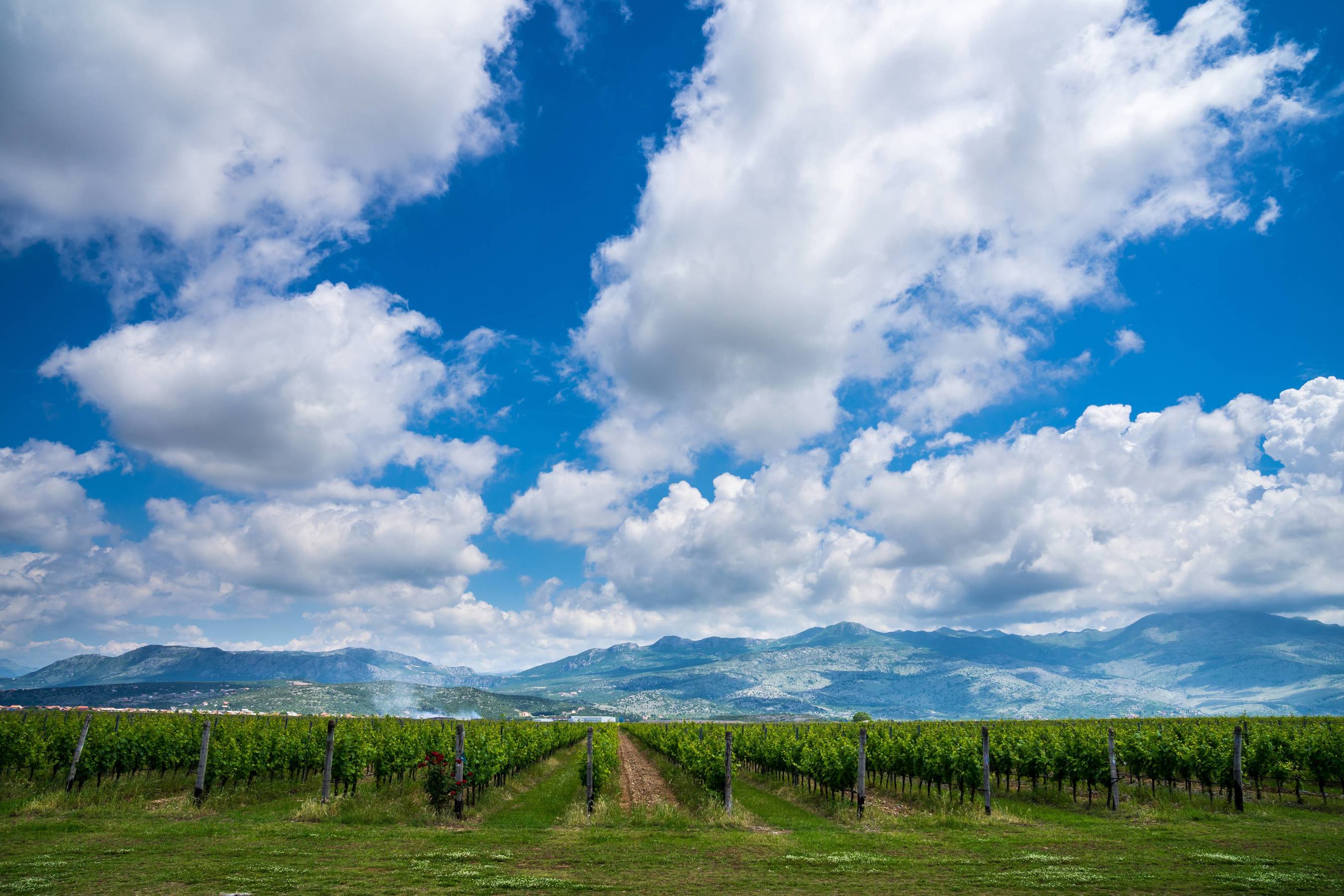
Crmnica remains central to Montenegro’s wine identity. A responsible visit to Godinje village shows a human-scale settlement and cellar landscape that complements, rather than competes with, industrial-scale Šipčanik.
How to taste without turning it into a test
Begin by looking at the wine against a neutral background: colour depth and change at the rim can prompt questions, but they do not yield a definitive quality score. Smell before swirling, then swirl gently and smell again. Name broad families—fruit, floral, herbal, spice, earth, oak—before hunting for a precise fruit that someone else suggested.
Take a small sip and notice acidity, tannin, alcohol warmth, sweetness, flavour intensity and finish. Spitting is normal and useful, especially across four wines; ask for a vessel if one is not obvious. Alternate with water. Food changes perception, so taste once before the pairing and once with it. Record a few words and the exact label rather than trying to memorise a speech.
There is no need to agree with the host or the loudest guest. “I notice more acidity than fruit” is a valid observation. Preference is not the same as technical quality, and price is not a command to enjoy something. If you feel unwell, stop drinking, sit down and tell staff. Never pressure another person to finish a pour.
| Step | What to do |
|---|---|
| LOOK | colour · rim |
| SMELL | before + after swirl |
| SIP | structure · finish |
| SPIT OR SWALLOW | You never need to finish a pour |
| WATER | then short notes |
| Comfort | Stop if uncomfortable · no pressure · driver drinks zero |
Source: plantaze.com
The vineyard train is not a standard individual add-on
The current FAQ lists a vineyard tourist train for groups of at least 15 people. It gives an approximate duration of 25 minutes and a price of €5 per person, added to a cellar programme, with advance reservation required. An individual traveller should not arrive expecting to buy a train seat on demand.
Group organisers should confirm minimum charged numbers, weather policy, boarding conditions, accessibility, exact route, start time and whether the 25 minutes is included within or added to the cellar schedule.
If your interest is a landscape-led route rather than one cellar, the Grand Tour overview helps compare long touring days, while the wine-route guide is more focused. Do not combine multiple tastings by car unless the driver abstains throughout.
A realistic half-day plan
Before departure: reconfirm the programme and meeting point, eat appropriately, pack a layer, and save the return contact. Check traffic and allow margin. If using a taxi, make sure the return driver knows the expected finish and pickup location.
At the cellar: arrive within the confirmed window, disclose any last-minute health issue, and follow staff guidance. Use the tour to understand the tunnel before focusing on labels. During tasting, compare structure and style, drink water and leave pours unfinished when useful.
Afterward: use the sober transport already arranged. Do not add an improvised drive to another winery. A meal can be a pleasure, not a sobriety calculation; the Montenegro food guide explains regional dishes, while the Njeguši guide gives context for the cheese and cured meat often mentioned in tasting menus.
Frequently asked questions
Can I walk in without a reservation?
Do not plan on it. Plantaže asks for reservation at least one day ahead. Daily 09:00–17:00 visitor hours are not a promise of walk-in capacity.
Which tasting is best?
Bouquet is the compact three-wine introduction; In vino veritas pairs four wines with cheese; Power of the Terroir pairs four with a meat or fish plate. “Best” depends on food needs and desired comparison. Confirm the live menu.
Can children enter?
The FAQ says minors may visit with a parent or legal guardian, while its English wording limits wine tasting to people “over the age of 18.” A guest who is exactly 18 should confirm eligibility rather than relying on a paraphrase. Ask how the chosen programme handles minors and whether a non-alcoholic option exists.
Is the vineyard train included?
No. The published train is a €5-per-person addition to a cellar programme, for a minimum group of 15, lasting about 25 minutes and requiring advance reservation. Reconfirm all terms.
Will I get a refund if I cancel 48 hours ahead?
Do not assume so. The FAQ requests at least 48 hours’ notice, but the terms say user cancellation after payment is not refundable. Obtain the rule applying to your transaction in writing before payment.
Is Šipčanik wheelchair accessible?
Confirm step-free access for every tour segment. Describe wheelchair and assistance needs to the operator and request a route-specific answer before booking.
Can I drive after spitting the samples?
A driver who participates in alcohol tasting should not drive. Spitting reduces ingestion but does not certify zero consumption or fitness. Use a zero-alcohol designated driver or prearranged return.
Before you book
Use Plantaže’s current programme page for prices and inclusions, its visitor FAQ for hours and contact details, and the terms attached to the actual transaction for payment and cancellation. Confirm availability, access, dietary arrangements, transport and the final total before paying.
Current published prices and programmes supersede old menus. For wine history, distinguish Petar Plamenac’s 1907 Grand Prix for wine and brandy from a varietal award, and use the genetic study for Vranac’s documented parentage.
Let the current booking confirmation control the visit. Choose the programme that fits the group, taste at a comfortable pace, and make sure everyone returns safely.