Ulcinj 2026: Old Town, Living Culture and Southern Coast
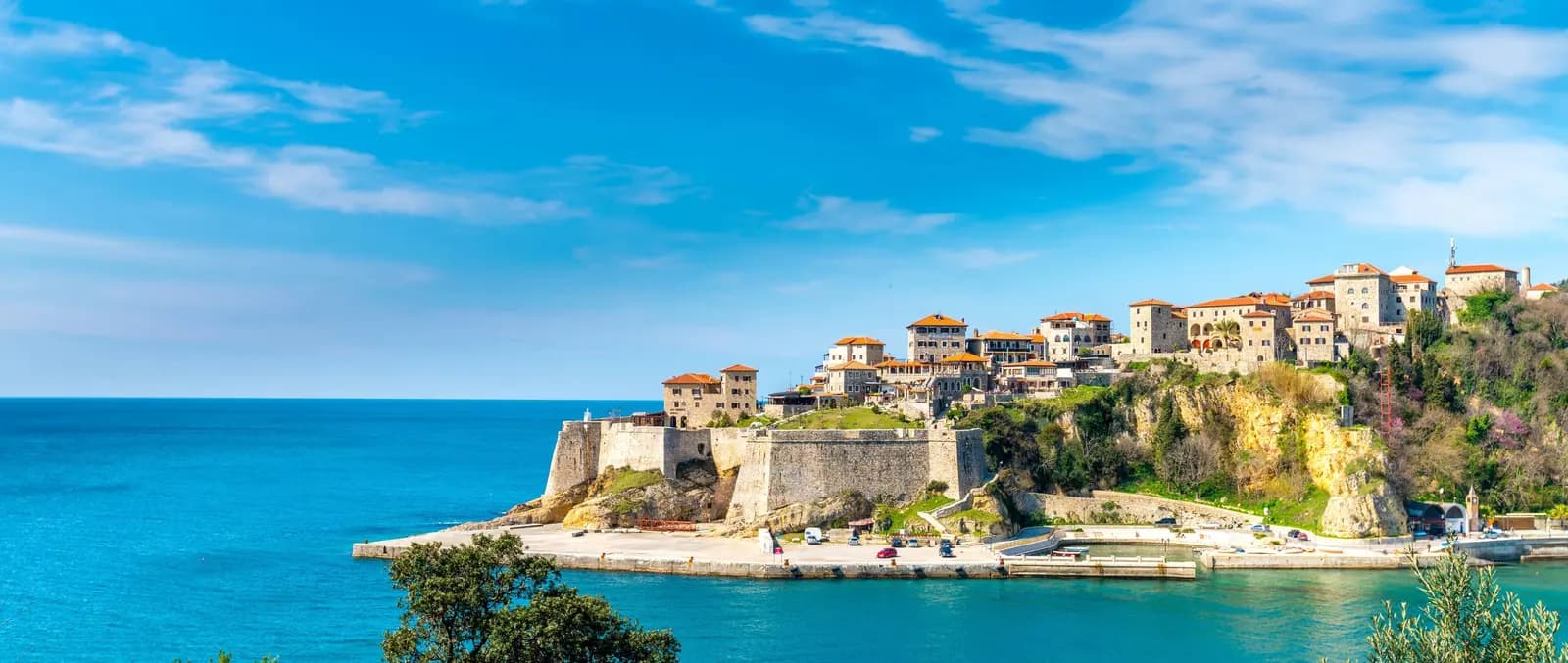
Ulcinj (Ulqin) is not simply Montenegro’s last coastal town before Albania. It is a municipality where Albanian is the majority mother tongue, a fortified headland built through Mediterranean empires, a sand coast divided among many managed bathing sectors, and a wetland whose international value depends on water management rather than postcard beauty. Set on a rocky promontory just above the Albanian border, where the Adriatic meets the long sandy delta of the Bojana River, it is also the country’s most distinctive seaside destination: a clifftop Old Town with more than two thousand years of history, the longest sandy beach on the whole Adriatic, a triangular river island famous for its naturist village and stilt fish restaurants, and a salt-pan reserve where flamingos gather in their hundreds. The town makes most sense when these layers are read together.
Ulcinj works best when you stop treating it as one beach plus one Old Town. Its strongest landmark is the Old Town, nationally protected and submitted to UNESCO’s Tentative List. That wording matters: Ulcinj is not an inscribed World Heritage property. Beyond the walls, Mala Plaža, the pine-coast coves, Velika Plaža, the Salina and Ada Bojana require different transport, timing and condition checks. A useful visit is therefore a sequence, not one attraction — and a useful 2026 plan chooses one compact city experience and one wider-coast experience, with exact water, access and operating checks for each.


This guide covers what there is to see, the beaches, kitesurfing, birdwatching, where to stay and eat, how to get there, the best time to come and the easiest day trips — and it shows how to select a beach sector, read Old Town evidence, avoid medical and Cervantes myths, and build a one- or two-day visit without assuming every attraction is open or every photograph describes present conditions.
| Status | Detail | Note |
|---|---|---|
| PROTECTED | national cultural asset | since 1961 |
| TENTATIVE LIST | submitted 2018 | State Party dossier |
| NOT INSCRIBED | not World Heritage | not a UNESCO listing |
Source: whc.unesco.org
Why visit Ulcinj
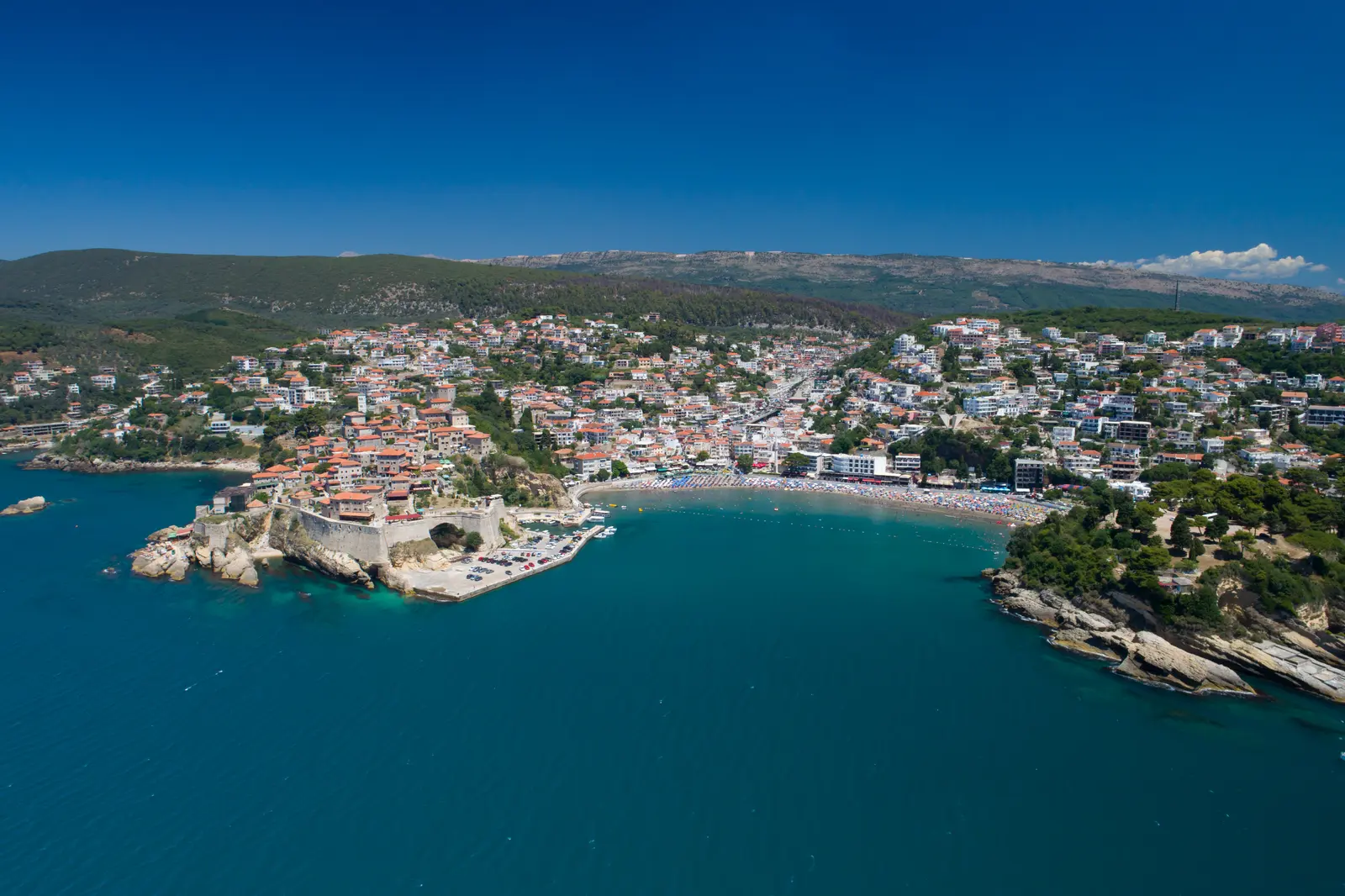
Ulcinj rewards travellers who want sand rather than pebbles, heritage rather than resorts, and a little more edge than the polished bays further north. The town’s roughly 32 km of coastline holds about 18 km of beaches — some 25 in total — anchored by two very different stretches: the small city beach beneath the Old Town and the vast Velika Plaža (“Long Beach”) running south toward Albania. Above them, the fortified Old Town sits on a rock over the sea, a candidate on the UNESCO World Heritage Tentative List. Add the river island of Ada Bojana, the Ulcinj Salina salt pans, a kitesurfing scene that draws riders from across Europe, and a food culture shaped by both Montenegrin and Albanian kitchens, and Ulcinj makes a strong case for more than a day of your trip.
It is less polished than Kotor or Budva, which is precisely its appeal for travellers after warm, shallow swimming, big open beaches and a strong sense of place. What follows is a decision guide as much as a description: the municipality combines a steep historic core, a compact urban beach, many separately managed sandy sectors, a Ramsar wetland and a river-mouth landscape that changes from year to year.
Ulcinj at a glance: choose one anchor and one extension
| Priority | Best anchor | Live check | Fallback |
|---|---|---|---|
| History and townscape | Old Town and museum area | Opening, steps, heat, event access | Exterior circuit and viewpoints |
| Urban swim | Exact Mala Plaža sector | Portal, flag, board, crowding | Dry waterfront stop |
| Long sandy beach | One named Velika Plaža sector | Operator, wind, water, swim zone | Change sector or skip water |
| Women-only cove | Ženska Plaža only after confirmation | Operating rules and current access | Public coastal viewpoint |
| Bird and wetland interest | Ulcinj Salina with verified access | Entry, guide, weather, season | Do not approach unannounced |
| River-mouth landscape | Ada Bojana as a separate outing | Road, shoreline, operation, return | Velika Plaža sector instead |

If only one day is available, combine the Old Town with one exact nearby bathing sector or a dry coastal walk. With two days, use the second for one destination—Velika Plaža, the Salina or Ada Bojana—not all three. The Montenegro seven-day itinerary helps decide whether Ulcinj deserves one or two nights within a wider trip.
| Anchor | Focus | Verification step | Limit |
|---|---|---|---|
| Old Town | history + exterior | check museum access | Steps and heat matter |
| Beach sector | exact code or name | portal + flag + board | No coast-wide promise |
| Salina | wetland significance | verify entry and guide | No sighting guarantee |
Source: ulcinj.travel, morskodobro.me, ramsar.org
The Old Town: protected layers, not a single founding myth
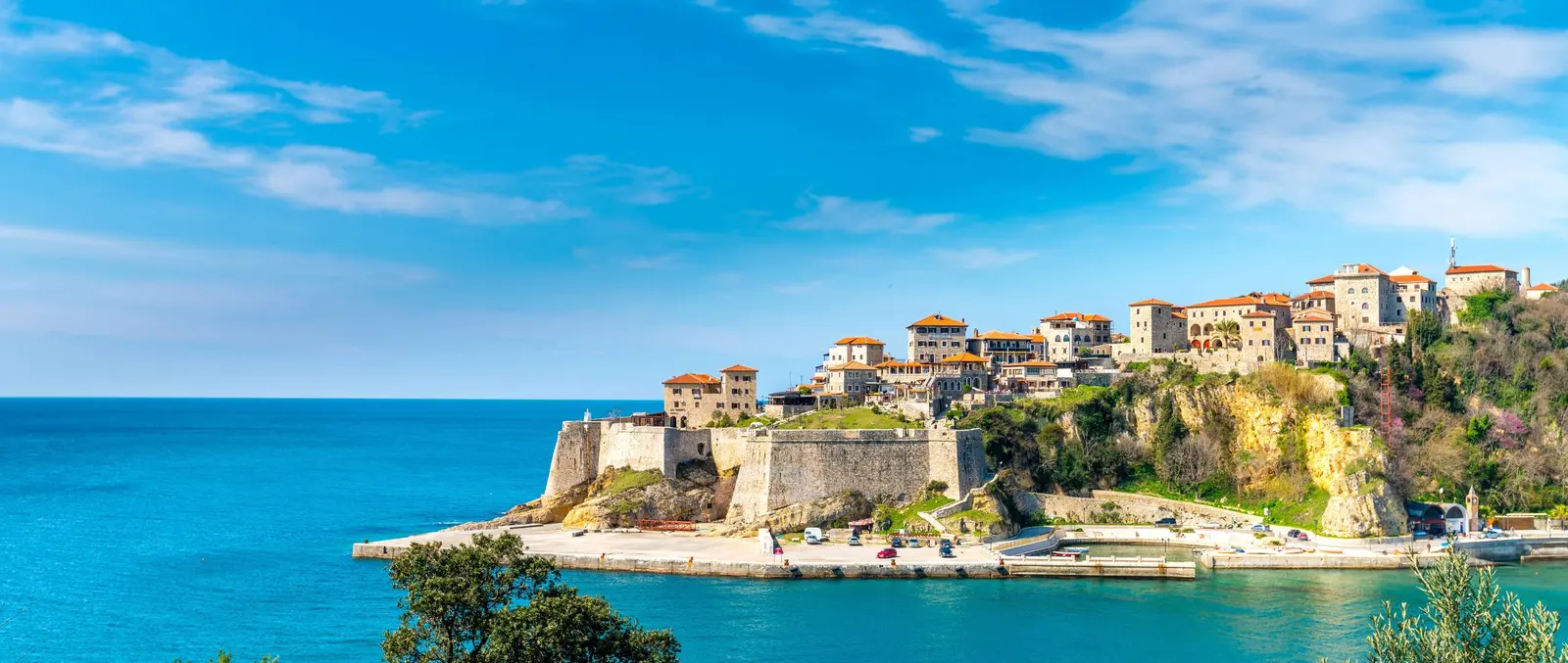
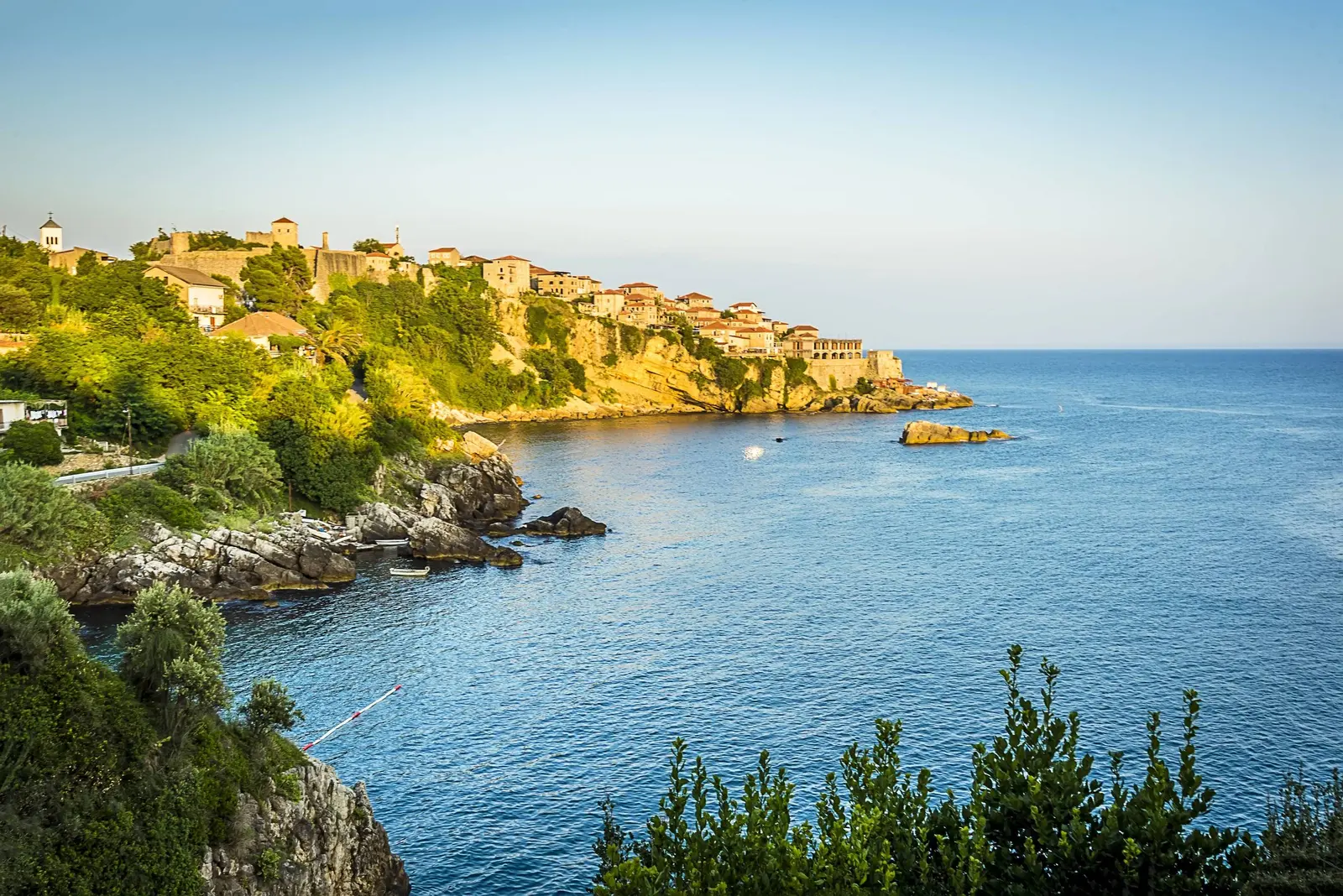
The Old Town (Stari Grad) is Ulcinj’s historic heart: a walled, clifftop quarter rising straight from the sea, with origins reaching back to an Iliro-Greek settlement and the Roman town of Olcinium. Montenegro’s UNESCO submission describes a fortified ensemble of roughly 29 hectares, protected nationally since 1961 and on the Tentative List since 2018 (entry 6300). Archaeological remains support settlement in the fourth or fifth century BCE; Ulcinj’s tourism organisation discusses fifth-century BCE fortification and objects, followed by Roman references. The honest formulation is archaeological continuity across Illyro-Greek and Roman worlds—not a neat claim that one named people “founded” everything visible today, and not an overly tidy “founded by Greeks from Colchis, destroyed and rebuilt” sequence. Names, rulers and legends accumulated across a long record; they do not collapse into one uncontested origin story.
The headland’s current form is cumulative. Over the centuries it passed through Byzantine, Venetian and Ottoman hands. Medieval rulers and the Balšić dynasty shaped the citadel; Venetian rule introduced or rebuilt ramparts, gates, towers and Gothic-Renaissance forms; Ottoman rule after 1571 added an eastern Mediterranean urban and domestic layer. In the seventeenth and eighteenth centuries the town was a notorious corsair stronghold — home port to a pirate fleet said to number in the hundreds of ships. Earthquakes in 1969 and 1979 also affected what survives, followed by archaeological, conservation and rebuilding campaigns. Old stone here is evidence, but so are repairs.
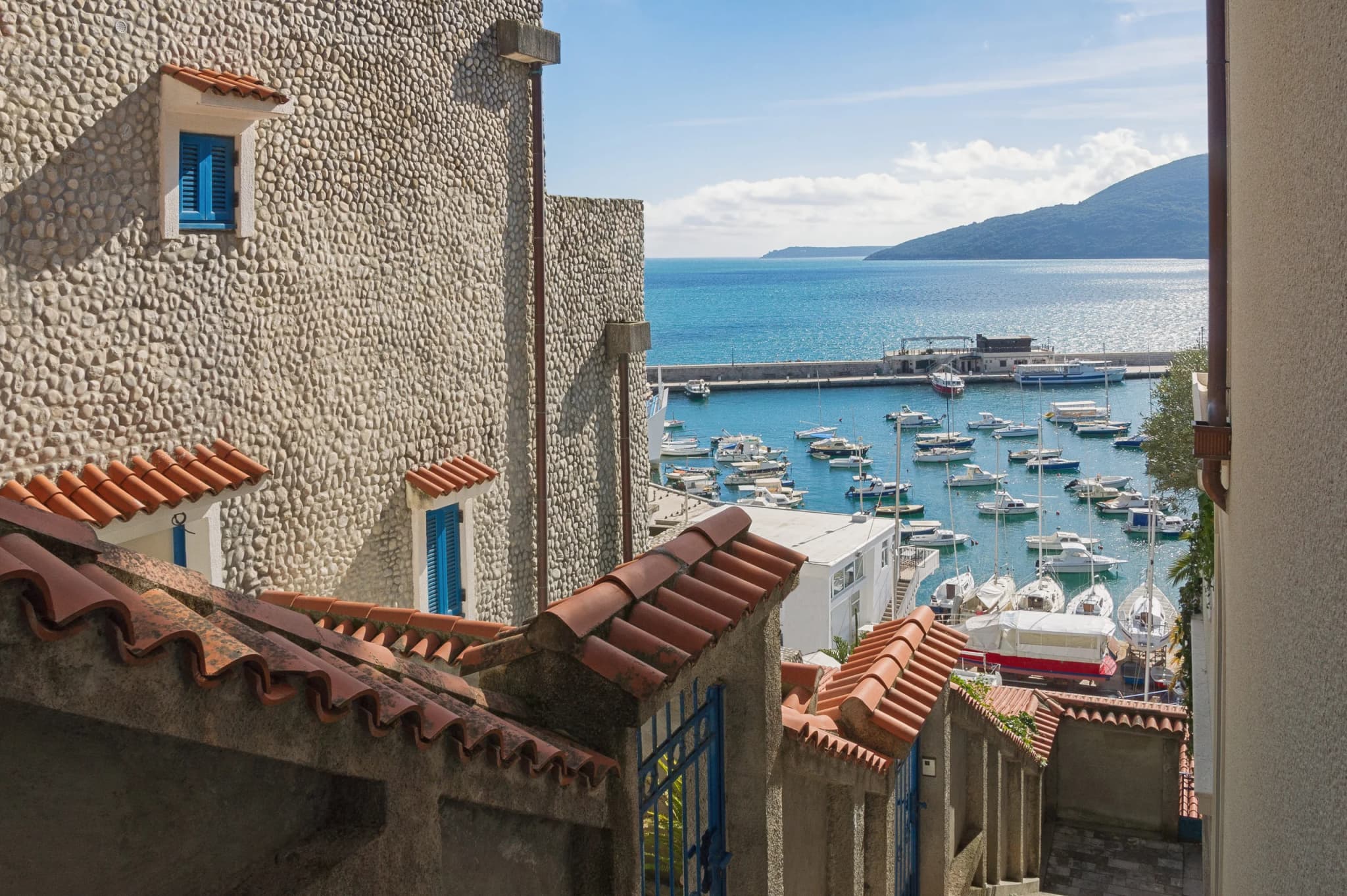
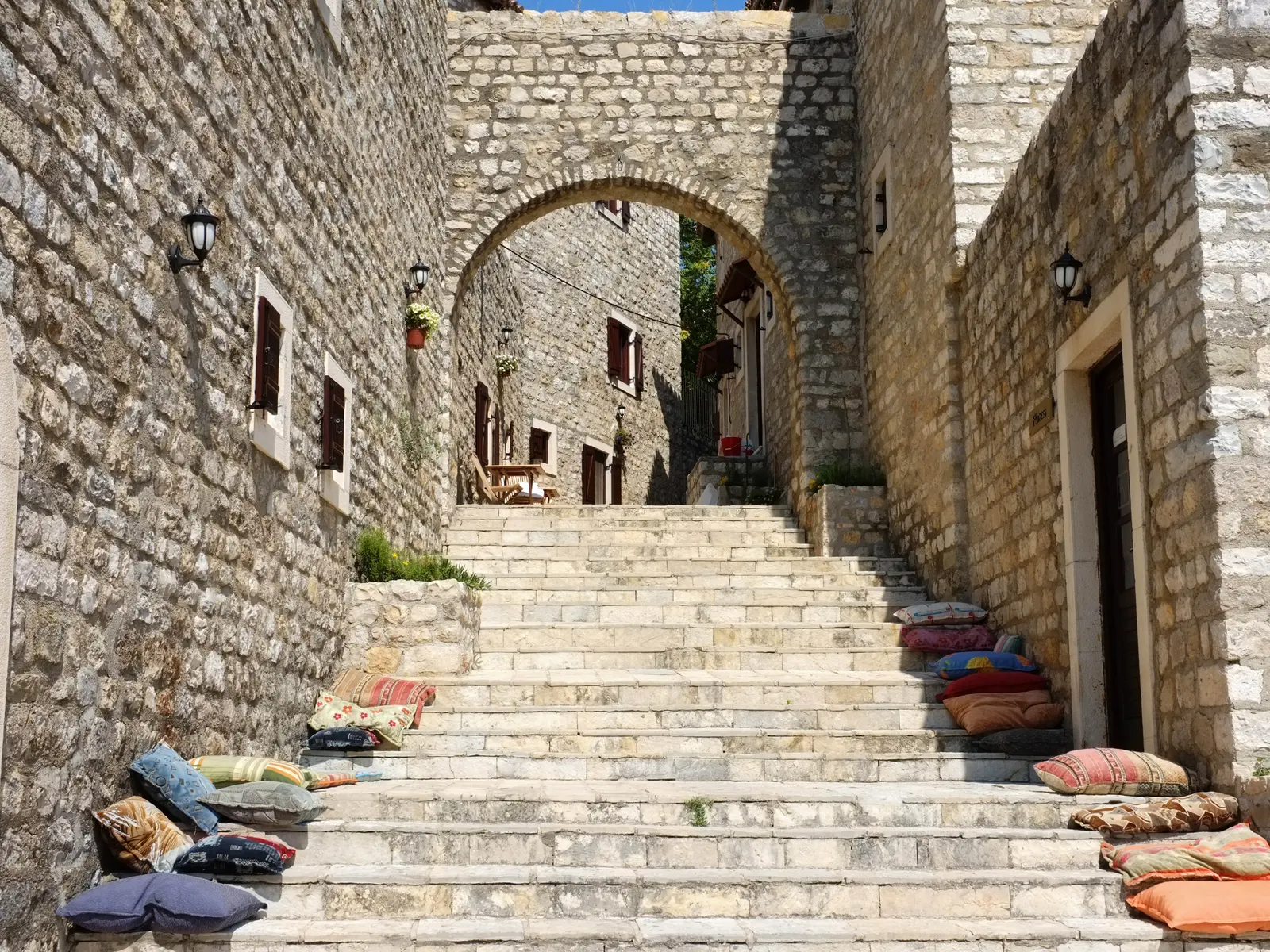
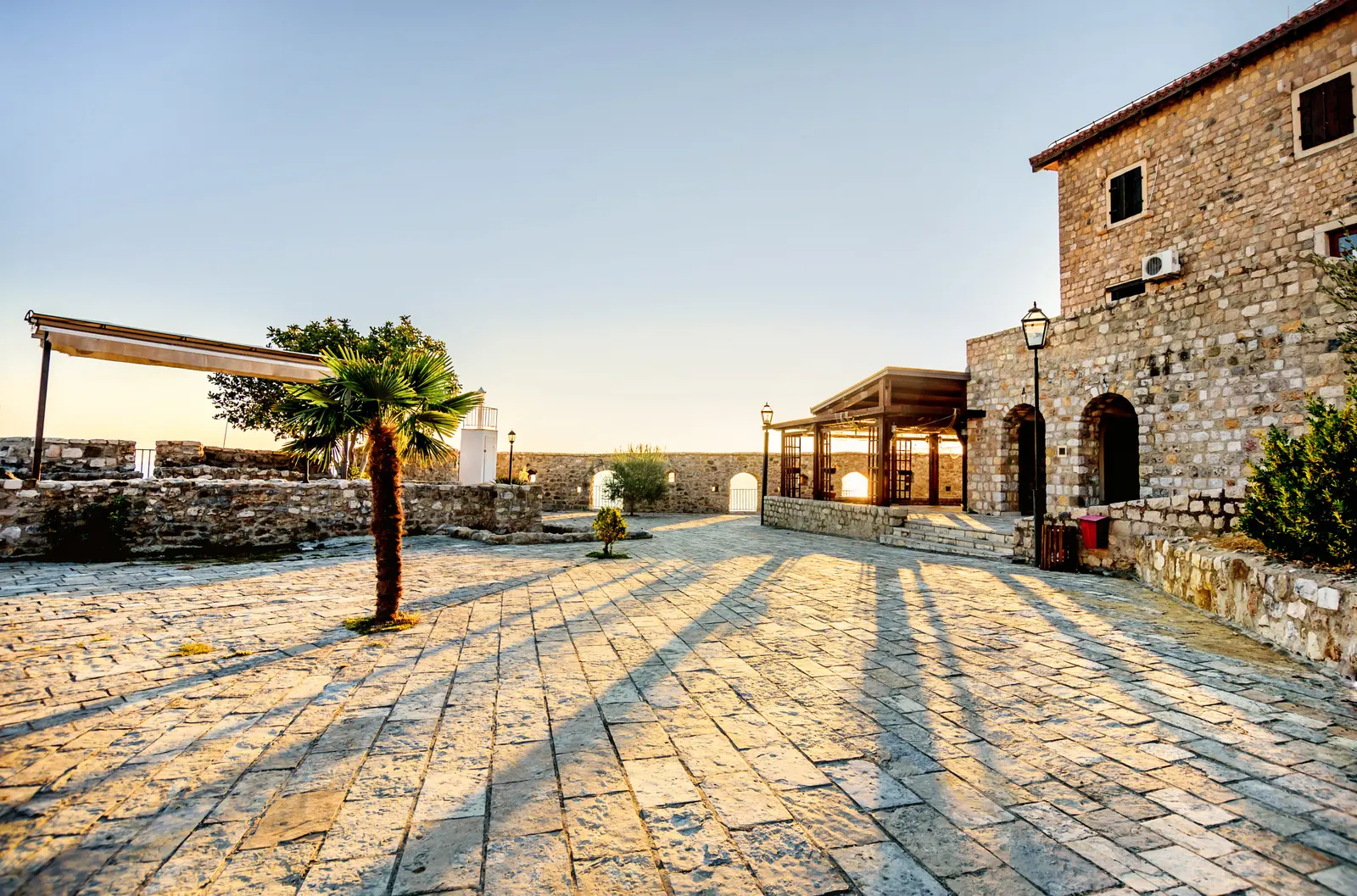
Today you wander stone lanes between old houses, ramparts and small museums, with sweeping views over the bay and Mala Plaža below. Landmarks include the clifftop castle and the Sailors’ Mosque (Pasha’s Mosque), whose minaret once doubled as a lighthouse. The quarter is one of the most atmospheric in Montenegro. Wear sturdy shoes — the cobbles and steps are uneven — and come early or late in the day to avoid the midday heat and crowds.
The dossier remains Montenegro’s case for possible future inscription, not UNESCO’s final endorsement of every historical proposition it contains, and it does not guarantee current interior access. That distinction is useful beyond legal status: look for changes in masonry, street width, vaulting and house form rather than trying to assign the whole fortress to one civilization.
| Period | Layer |
|---|---|
| 4th–5th c BCE | fortification |
| MEDIEVAL | citadel |
| 1421–1571 | Venetian |
| 1571–1878/80 | Ottoman |
| 1961 | protected |
| 2018 | tentative |
Source: whc.unesco.org, ulcinj.travel
| Evidence layer | How to treat it |
|---|---|
| Archaeology: settlement evidence around the fifth century BCE | Attribute disputed origins carefully |
| Documented building layers: Church 1510, conversion after 1571 | Verify current museum operation |
| National protection + UNESCO Tentative List | Not World Heritage inscription |
| Cervantes in Ulcinj | Legend, not documented biography |
Source: whc.unesco.org, ulcinj.travel
The Church-Mosque and museum: one building, multiple uses
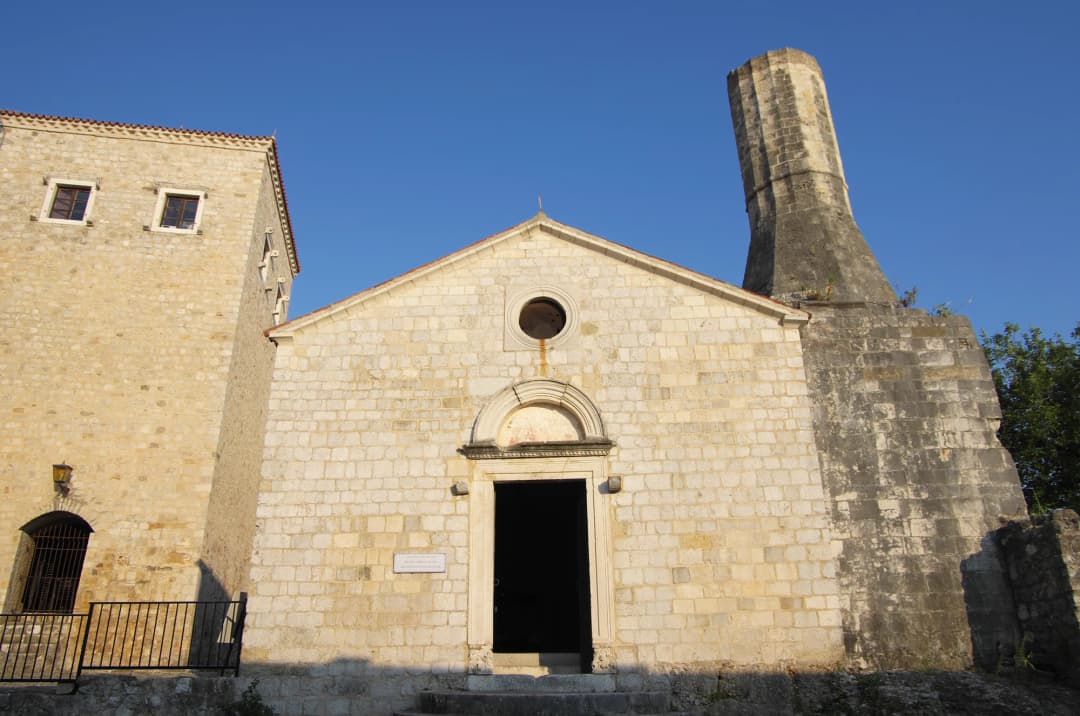
Inside the walls, the Church-Mosque makes Ulcinj’s layered history unusually legible, and it is the clearest single building case in town. The local tourism organisation dates St Mary’s church to 1510, its conversion to the Mosque of Sultan Selim II after the Ottoman conquest in 1571, and the addition of a cut-stone minaret by Hajji Halil Skura in 1693. The building now houses the town museum.
That chronology is stronger than generic language about “East meeting West,” because it names changes of function and fabric. The building did not somehow serve both rites simultaneously; its religious use changed with political rule, and its present museum role is another phase. Read the fuller Church-Mosque history before visiting; the Church-Mosque guide also explains why present admission has to be verified rather than assumed.
Do not plan around an undated opening-hours snippet. Current hours, admission, accessible rooms and whether all collections are open should be confirmed with the museum or tourist information shortly before arrival. The Old Town’s steep, irregular lanes and thresholds should not be described as universally accessible; visitors with mobility needs need an exact route and entrance check.
Corsairs, captivity and why Cervantes belongs to legend
Ulcinj’s Ottoman-era maritime history included corsair networks, captive-taking, ransom and sale. The local tourism organisation identifies the square before the Church-Mosque as a former slave market and describes captives taken around Italy and Dalmatia. That history should not be softened into pirate entertainment: the commodity was often a person whose family was pressured to pay. It deserves serious treatment.
The popular claim that Miguel de Cervantes was held in Ulcinj is different, and it does not become true through repetition. The Instituto Cervantes Virtual Centre places his captivity from 1575 to 1580 in Algiers. No comparable documentary chain places him in Ulcinj, and the proposed Dulcigno–Dulcinea wordplay is not proof. The responsible version is a local literary legend attached to a town with a real captive economy.
The dedicated Slave Square and Cervantes guide separates documented captivity, Adriatic corsair context and later storytelling; use the same distinction when a guide, sign or souvenir collapses them. A legend can illuminate civic memory without becoming a biographical fact.
The Sailors' Mosque guide applies the same method to another prominent landmark: building traditions, later reconstruction and current religious use need separate evidence and respectful visitor behaviour.
| Claim type | Elements |
|---|---|
| DOCUMENTED CONTEXT | corsair economy; captives + ransom; market square tradition |
| LOCAL LEGEND | Cervantes in Ulcinj; Dulcigno → Dulcinea; not documentary history |
Source: ulcinj.travel, cvc.cervantes.es
A living Albanian-speaking municipality, not a museum set
MONSTAT’s 2023 census counted 20,507 residents in Ulcinj municipality. Of them, 15,233—74.28%—reported Albanian as mother tongue; Montenegrin accounted for 11.70% and Serbian 8.32%, with Bosnian at 1.97% and remaining responses in other categories. These are municipal data, not the urban settlement alone. They establish why Albanian is central to everyday civic and commercial life alongside Montenegrin and other languages, which remain visible.
Mother tongue is not a complete statement of ethnicity, religion, politics or the language an individual prefers with a visitor. Greet politely, follow the language offered by the person in front of you, ask rather than assume, and avoid treating multilingualism as exotic scenery. Treat mosques, churches and mixed-use heritage buildings as living spaces; dress appropriately, lower voices and ask before photographing worship or people at close range. The most important cultural fact about Ulcinj is that the Old Town’s inherited layers belong to a contemporary community.
Four coastal zones, four different decisions
One municipality, four beach logics. Mala Plaža is town-adjacent, the pine coast has rock coves and a women-focused beach, Velika Plaža holds many managed sectors, and Ada Bojana is a dynamic river-mouth shore. Choose the zone first, then verify its exact managed sector.
| Zone | Character | Note |
|---|---|---|
| MALA PLAŽA | town access | busy sectors |
| PINE COAST | rock coves | special access |
| VELIKA | many sectors | wind + services vary |
| ADA | river mouth | dynamic shore |
Source: morskodobro.me, ulcinj.travel
Mala Plaža (the city beach)
Mala Plaža sits directly below the Old Town and works for a compact town-and-swim day. The “Small Beach” is a roughly 360-metre crescent of fine sand and the social centre of summer Ulcinj: backed by cafés, bars and hotels, busy, shallow and family-friendly, within easy walking distance of everything in town. It is the obvious choice if you want a swim without leaving the centre, but it fills quickly in July and August — arrive early for a spot, or use it as a base and head to the longer beaches for more space. It is also divided into managed sectors, so crowding, free space, equipment and services must be read from the actual sign.
Borova šuma, Valdanos and the smaller coves
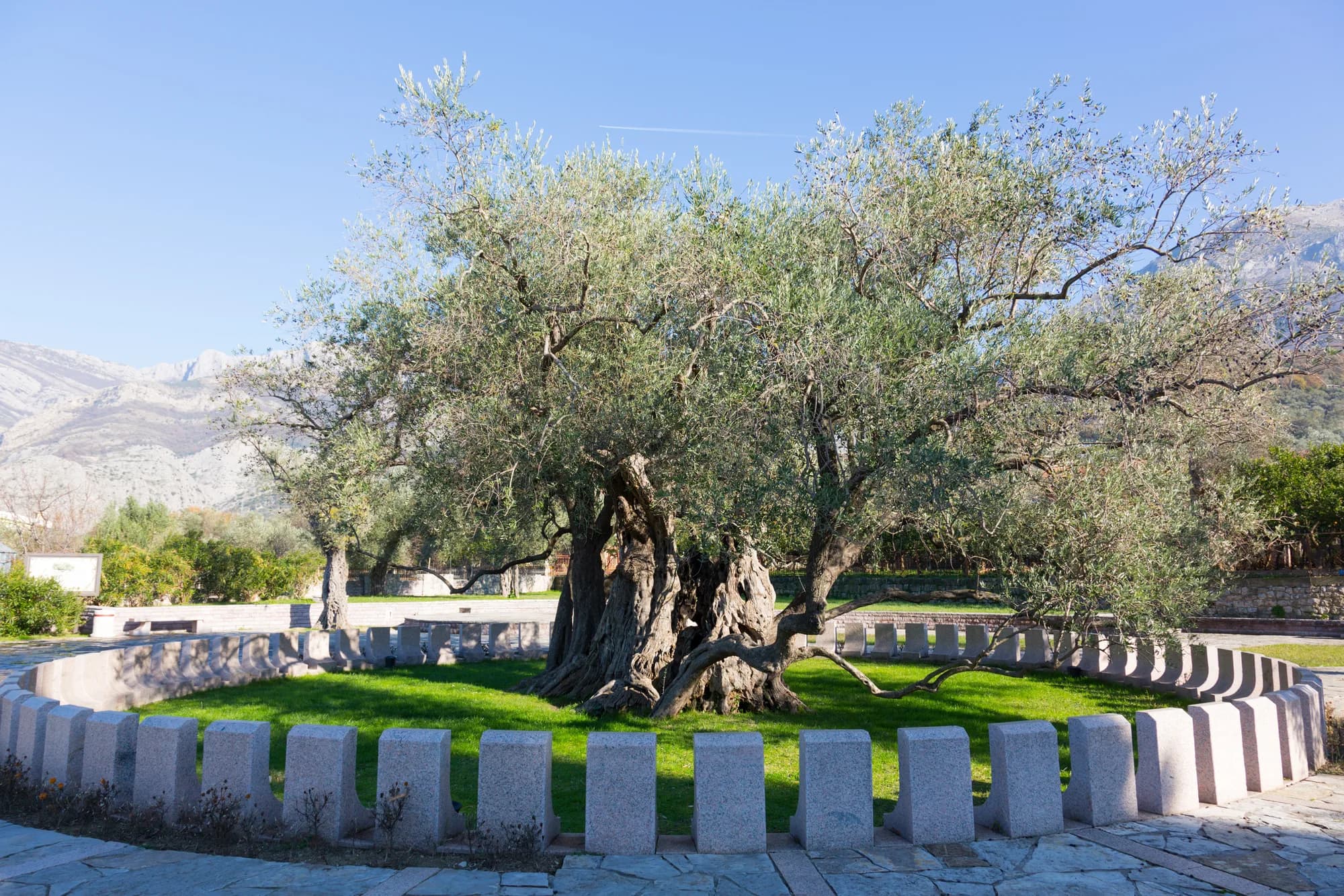
Borova šuma and Ženska Plaža form a rockier pine-coast experience. North-west of town, Valdanos is a sheltered horseshoe bay set against a hillside of ancient olive trees — the Ulcinj area is famous for its groves of tens of thousands of old olives, some many centuries old. It is a calmer, pebblier, more shaded alternative to the open sands. Between these and the resort sections of Velika Plaža, Ulcinj’s coast has enough variety — fine sand, pebble coves, naturist stretches and mineral springs — to suit almost any kind of beach day.
Ženska Plaža: verify rules, reject medical promises
Closer to town, the small Ladies’ Beach (Ženska Plaža) is a women-focused cove fed by sulphur springs and known locally for its mineral water and mud; it has traditionally been a women’s bathing spot. That specific women-only operating tradition and the spring are documented facts, but they do not establish a fertility treatment or any other medical outcome. Current entry rules, seasonal operation, hours, privacy expectations, price and photography restrictions must be confirmed directly. Use the evidence-led Ženska Plaža guide rather than medical folklore; the same guide distinguishes published site history from health claims.
Never photograph over a wall, from a drone or with a long lens. Do not test access rules in person when a phone or official check can settle them. Anyone with a medical condition should seek clinical advice rather than using an unverified spring claim to make a treatment decision.
Velika Plaža (Long Beach)
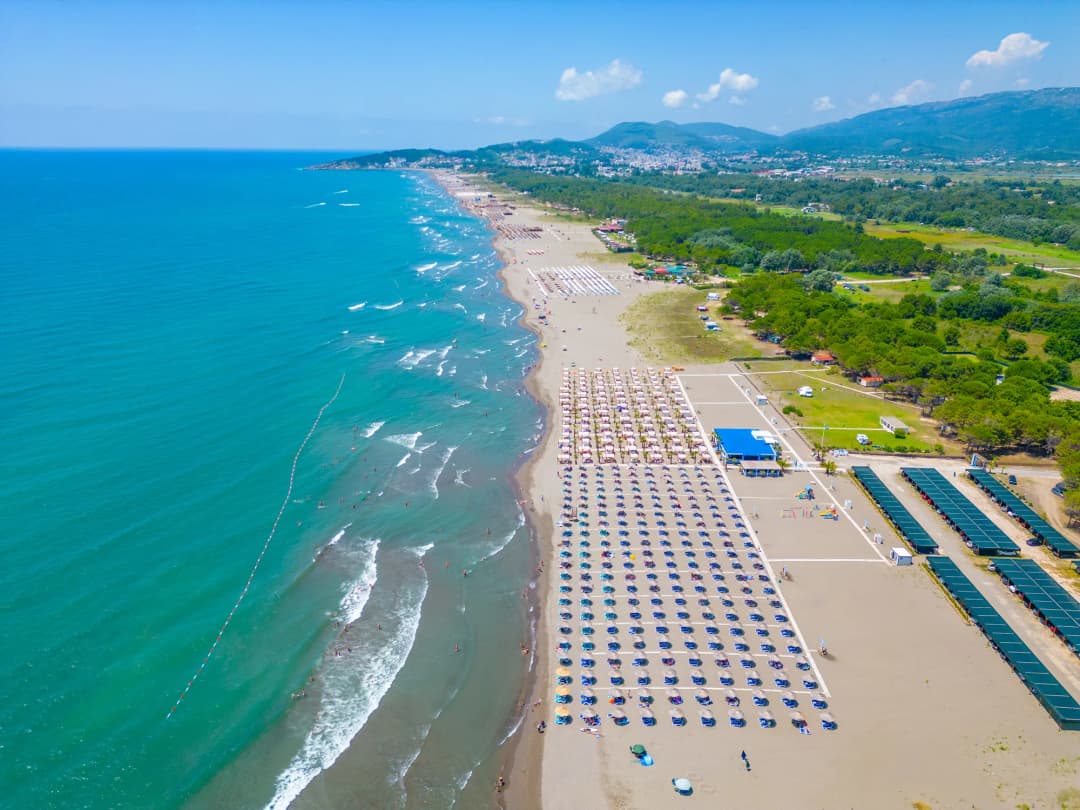
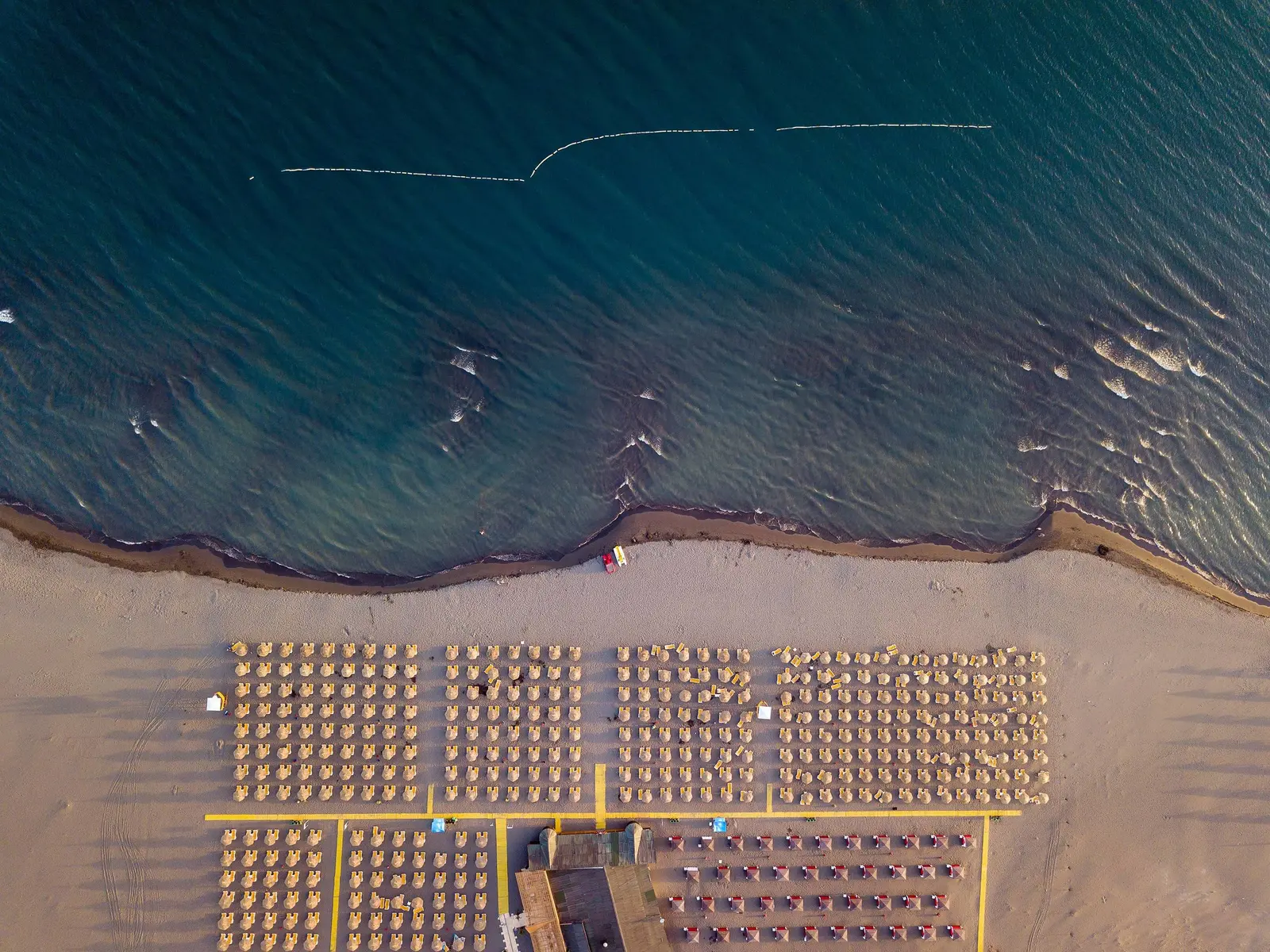
Velika Plaža is Ulcinj’s headline attraction and one of the most-reviewed sights in town — a long sandy system, not one uniform beach club. It stretches for around 12 km along the coast south-east toward the Bojana River and the Albanian border, making it the longest beach in Montenegro and the longest continuous sandy beach on the entire Adriatic, a genuine rarity on a coast otherwise dominated by pebbles. The sand is fine and the water unusually warm and shallow, shelving so gently that you can wade out a long way, which makes it popular with families. The beach begins about 5 km from the town centre; a car, taxi or seasonal shuttle makes getting there easy.
Sections of the beach are managed resort areas (with names such as Miami, Tropicana and Safari) offering sunbeds, bars and watersports, several of them Blue Flag–certified, while long stretches in between stay wild and quiet. Morsko Dobro’s register shows numerous coded Ulcinj sectors and agreements, including many on the long beach. Wind-sport zones, swimming areas, lifeguards, free-use space, facilities and tariffs can differ. The Long Beach guide helps choose a section, but posted current rules control.
Ada Bojana
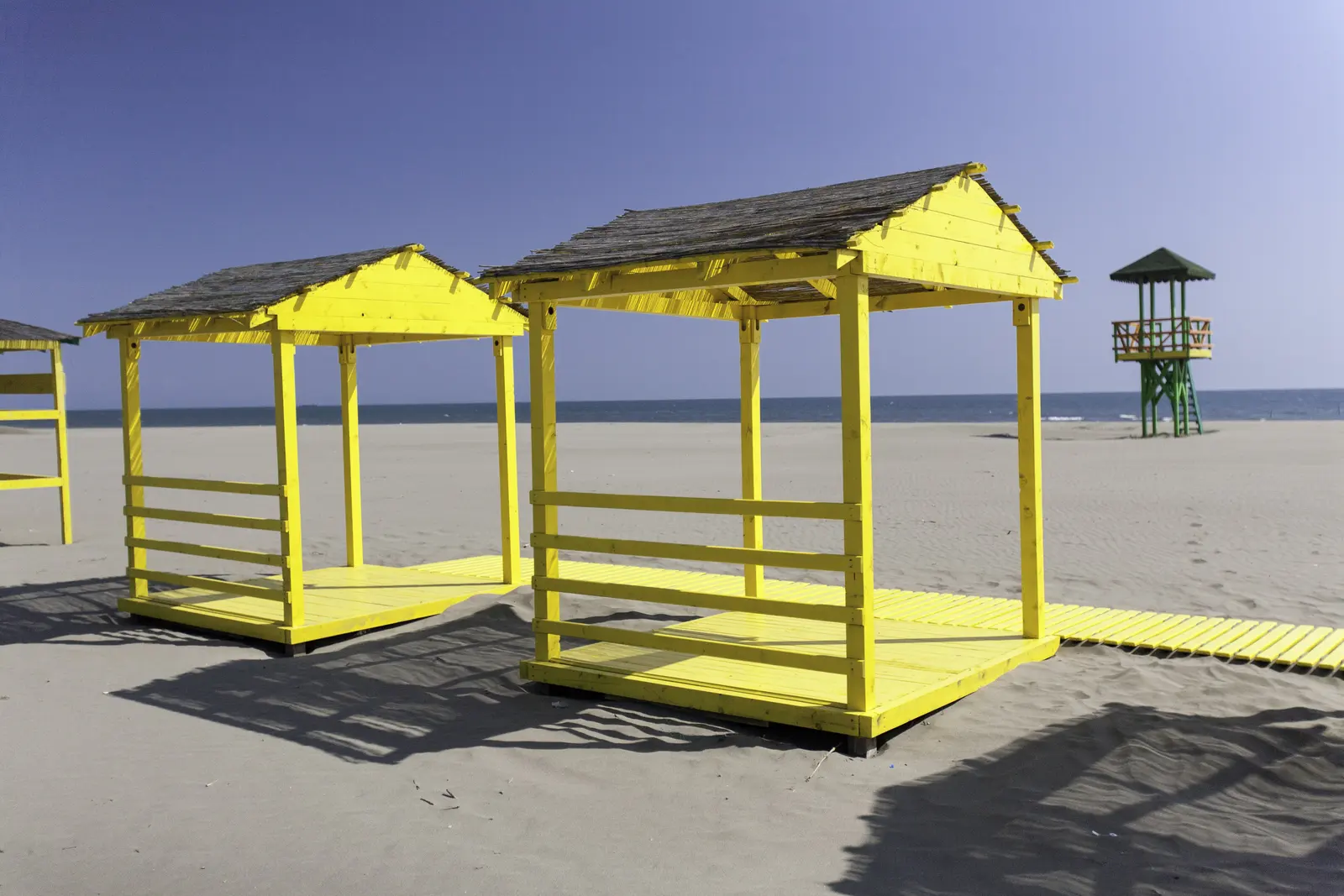
Ada Bojana lies at the very south of Velika Plaža, where the Bojana River meets the sea: a triangular island of roughly 4.8 km², bordered by the river on two sides and the open Adriatic on the third. The island was formed after the 1858 wreck of the ship Merito, around which river sediment gradually built up the land. Its 3.7 km of sandy beach is best known for the naturist (FKK) resort established here in 1973, the first official naturist site in the former Yugoslavia, but the island draws plenty of clothed visitors too. The signature experience is dinner at one of the wooden stilt restaurants standing over the river, serving river fish and Adriatic seafood, ideally timed for one of Ada Bojana’s celebrated sunsets. It is also a prime spot for kitesurfing and other watersports, and lies about 15 minutes’ drive from the centre of Ulcinj.
Ulcinj’s tourism organisation itself notes that river arms and beach shape change from year to year. Treat map pins, shore access and water channels as dynamic, and do not freeze old island dimensions, naturist arrangements, restaurant lists and water-sport claims into a 2026 plan. Confirm the current road, operator, beach rules, wind and return. Confirm the exact venue’s dress policy too; “Ada Bojana” does not make every surrounding space automatically naturist.
Beach choice begins with a sector, not a name
The coastal manager’s register divides Ulcinj into many separately coded bathing sectors. Mala Plaža, the Borova šuma coast and Velika Plaža contain distinct entries rather than one continuous operation. A claim about loungers, lifeguards, free space, dogs, kitesurfing or accessibility at one sector cannot be copied along the coast.
On arrival, read the actual board. Confirm the operator, sector limits, equipment price, free-use allocation, lifeguard hours, flag meaning, buoy line and any activity zone. Photograph the sector code and tariff before renting equipment. Ask where the free-use area begins, what the price includes, when equipment must be returned, and whether the lifeguard is on duty. If a map pin names only “Long Beach,” it has not completed this task. The dedicated Velika Plaža guide explains how to select a named sector and separate swim space from wind-sport operations.
Kitesurfing & watersports
Ulcinj is widely regarded as Montenegro’s kitesurfing and windsurfing capital. The action centres on the southern end of Velika Plaža (roughly the final couple of kilometres before the river) and around Ada Bojana, where the flat, shallow water and steady summer wind create near-ideal conditions for beginners and freestylers alike. The reliable draw is the Maestral, a thermal sea breeze that typically builds through the early afternoon — often from around 1 pm until sunset — at roughly 14–25 knots on sunny summer days. Several kite schools and rental centres operate along this stretch in season, offering lessons, gear hire and storage. If you are coming specifically to ride, the warm, wide, uncrowded southern sands are the reason Ulcinj punches well above other Adriatic spots.
Wind-sport space and swimming space are separately managed. Ask each sector where its swim area ends, and never cross activity buoys, enter a kite launch corridor or swim behind an anchored craft to find quieter water.
The Salina: protected infrastructure, habitat and birdwatching
Inland from the beaches, the Ulcinj Salina (salt pans) is one of the most important bird habitats on the eastern Adriatic. The Convention on Wetlands designated it as Ramsar Site 2399 in 2019. Ramsar describes the 1,477-hectare former saltworks as the Adriatic’s largest salina and records 252 bird species, including 20 globally threatened species; other summaries round the figure to around 250 recorded species. They include greater flamingos and the rare Dalmatian pelican, and the site is a key stop on the Adriatic migratory flyway. Salt production stopped in 2013; the ecological system remains tied to the water regimes created for evaporation and crystallisation.
Spring and autumn bring the largest numbers, but the pans are rewarding from roughly April to October; early morning and late afternoon are best for both light and bird activity. Bring binoculars, or join one of the local guided birdwatching tours that combine the Salina with the surrounding olive groves. It is a quiet, low-key counterpoint to the busy beaches and a genuine draw for nature travellers.
Those species figures are site-wide conservation records across time, not a same-day list. Ramsar status is not a guarantee that flamingos will be visible, that every dike is open, or that visitors can enter without prior arrangement. Access, water management, viewing areas, guides and species presence can change. Check current access, hours, route and guide options directly, verify permission before travelling, carry optics and keep distance from birds, and do not enter operational or sensitive zones unannounced. Use the dedicated Ulcinj Salina guide for conservation context, but let current site management control the visit.
Water and beach services are exact-site questions
Morsko Dobro provides a live sanitary bathing-water map. Before swimming, select the exact monitored point nearest your chosen sector and read the newest dated result. A result for Mala Plaža cannot be reassigned to a distant Long Beach section; a municipality percentage is not a sample.
Two August rounds show why municipal averages are useful but insufficient. For samples taken 3–7 August 2026, Ulcinj had 15 excellent, one good and two satisfactory monitored locations. For 17–21 August, it had 14 excellent, three good and one satisfactory. Neither round reported a poor Ulcinj location, but the distribution changed and the national notices did not map those classes to your chosen beach in the summary.
Open the official site-level portal, select the exact location and read the sample date as well as the class. Then check the on-site flag and any newer notice. Finally assess weather, wind, waves, currents, visibility, vessel or board-sport movement and personal ability. If signals conflict, follow the more restrictive one. Shallow-looking water is not a safety certification.
| Check | What to read |
|---|---|
| SECTOR | exact code |
| SIGN | rules + tariff |
| SAMPLE | newest date |
| FLAG | conditions |
| ZONES | swim / sport |
Source: morskodobro.me, monitoring.morskodobro.me
Do not use colour, sand texture or shallow appearance as a water-quality test. Children need direct supervision even in apparently gentle water. Never cross activity buoys, enter a kite launch corridor or swim behind an anchored craft to find quieter water.
Where to eat in Ulcinj
Ulcinj’s kitchen sits at the meeting point of Montenegrin and Albanian cooking, with a strong Adriatic seafood backbone. Expect fresh fish and shellfish, grilled meats, Balkan grills and burek, and the river fish specialities served at the stilt restaurants on Ada Bojana. The Old Town and Mala Plaža have the densest cluster of restaurants and cafés, while Ada Bojana is the destination for a leisurely seafood dinner over the water. Local olive oil — pressed from those ancient groves — turns up everywhere and makes a good edible souvenir, along with handmade goods from the town’s craft shops.
Where to stay in Ulcinj
Ulcinj offers a broad spread of places to stay, generally better value than the headline resorts further north. The Old Town and Mala Plaža area put you within walking distance of the historic quarter, the city beach and the nightlife, and suit travellers who want to be in the middle of things. For a beach holiday with space, the apartments, guesthouses and resort hotels strung along and behind Velika Plaža are closer to the long sands and the kite spots, though further from the old centre. Naturist visitors have dedicated accommodation on and around Ada Bojana. Browse current availability and prices for places to stay in Ulcinj on our listings.
How to get to Ulcinj
Ulcinj sits at the southern end of the Montenegrin coast, beyond Bar, about a 25-minute drive from the Albanian border. The nearest airports are Podgorica and Tivat; Tirana in Albania is another option for the south.
- By bus: Ulcinj is on the coastal bus network, with regular services from Bar, Budva, Kotor and Podgorica in season. As a guide, a one-way fare from Kotor runs in the region of €7–8; check current schedules and prices locally, as they change seasonally. The bus station is about 2.5 km from the town centre (roughly a 30-minute walk, or a short taxi).
- By car: Driving gives you the most freedom, especially for reaching Velika Plaža, Ada Bojana, the Salina and Valdanos, which are spread out around the town. The coastal road down from Bar is straightforward; allow extra time in peak-summer traffic.
- By taxi or transfer: Taxis are inexpensive for short hops around town — short rides are typically only a few euros — and private transfers from the airports and other coastal towns are widely available. Agree the fare before setting off.
Fares and timetables above are indicative and change with the season — confirm current prices locally before you travel.
Getting around Ulcinj and moving between zones
The Old Town and Mala Plaža are compact and walkable, but Ulcinj's main draws are spread along the coast: Velika Plaža starts about 5 km out, Ada Bojana around 15 minutes' drive away, and the Salina and Valdanos in different directions again. In summer, seasonal shuttle buses and minibuses run from town to Velika Plaža, taxis are cheap, and many visitors rent a car, scooter or bike to link the beaches and the river island at their own pace.
The city core, Velika Plaža, Salina and Ada Bojana are not one walkable cluster. Build each day around one geographic zone and solve the return before leaving the first. Current congestion, parking controls, road works, event closures and transport frequencies can change, so treat every drive time and timetable above as indicative and confirm it locally rather than relying on a fixed figure in an evergreen guide.
If staying near the city centre, confirm whether accommodation parking is reserved, on site and accessible through the exact street. Old Town approaches include slopes, steps and uneven stone. Drop luggage before entering the narrowest area when the host provides a lawful arrangement. For a beach day, ask the sector for its precise entrance rather than following the first “Velika Plaža” pin.
If continuing south across the border, treat it as a separate transport day. The Montenegro-to-Albania guide covers documents, crossings and the need for live wait checks, and the same guide is the place to recheck current border documents and queues rather than assuming an “easy drive.” A beach outing should not depend on an unverified border schedule.
Best time to visit Ulcinj
July and August are the warmest and liveliest months, with the fullest beach scene and the most reliable kitesurfing wind — but also the biggest crowds and highest prices. June and September are the sweet spot for most travellers: warm sea, long days and noticeably fewer people. May and October are cooler and quieter but pleasant for sightseeing, walking the Old Town and birdwatching at the Salina, which is at its best in spring and autumn migration. Whenever you come, the early morning and the hours before sunset are the most rewarding times for both the beaches and the Old Town.