Ulcinj’s history is strongest where stone, objects and documents overlap. The Old Town preserves early fortification, medieval street and tower forms, Venetian defensive work, Ottoman houses and religious conversion, and modern reconstruction. It also carries stories—the Argonauts, Miguel de Cervantes, 365 churches at Svač—that matter as memory but cannot all be promoted as documented events.
Archaeology, written records and surviving architecture reveal different parts of Ulcinj’s past. Local legends add another layer, particularly around the Argonauts and Cervantes, while the Old Town itself preserves the city’s successive political and cultural periods.
| Channel | Evidence | Also |
|---|---|---|
| MATERIAL | walls · pottery | inscriptions |
| DOCUMENT | archive · census | official decision |
| SYNTHESIS | historical overview | qualified dates |
| LEGEND | Cervantes | Argonauts |
Source: ulcinj.travel, cervantesvirtual.com, whc.unesco.org
Ulcinj history at a glance
| Phase | Historical record | Visible or visitable context | Interpretation |
|---|---|---|---|
| 5th century BCE onward | Fortification, ceramics, carved gem, Greek inscription | Museum and early wall context | Colchian origin is tradition |
| Roman | Ancient authors and material culture | Museum interpretation | Pliny describes a town of Roman citizens |
| Medieval to 1421 | Church fabric, coinage, statute, tower tradition | Street plan and citadel | Exact attribution varies |
| Venetian to 1571 | Walls, gates, civic and religious architecture | Defensive ensemble | Not every wall is Venetian |
| Ottoman 1571–1878/80 | Houses, mosque conversion, maritime archives | Church-Mosque and urban fabric | Legend is not archive |
| Montenegrin/modern from 1880 | Economic change, earthquake and heritage records | Rebuilt Old Town | Tentative list ≠ inscription |
Antiquity: archaeology before the Argonauts
Ulcinj Tourism’s antiquity overview links the settlement’s emergence to an Illyrian political context in the fifth century BCE. The important point is material, not ethnic certainty: a northern fortification built with large, roughly dressed blocks in a Greek technique; black-figure ceramic fragments; white lekythoi; a carved gem; and a Greek dedication to Artemis. Together they support an early Adriatic settlement shaped by contact between Illyrian communities and Greek craft or culture.
Pliny reports Colchinium as a former name for the settlement. The connection with Colchians or the Argonauts survives as a traditional explanation of that name. Archaeology places settlement and fortification in the fifth century BCE, while the founders’ identity and political organization remain uncertain.
For the Roman era, the local historical overview cites Pliny’s phrase oppidum civium Romanorum—a fortified town of Roman citizens. This description identifies a community connected with Roman civic status without defining every stage of its administration.
| Find | What it shows |
|---|---|
| WALL | Greek technique |
| CERAMICS | ancient context |
| GEM | 5th c BCE |
| ARTEMIS | Greek text |
| Argonaut connection | Local origin legend |
Source: ulcinj.travel
Medieval Ulcinj: trade, statute and a residence city
The local medieval synthesis places Ulcinj within Byzantine systems before Nemanjić control from 1183. It reports an episcopal tradition, an early medieval church, changing written forms of the city’s name, commercial growth, local coinage and a statute dated 1330. From 1360 to 1421, the Balšić family used Ulcinj as a residence. Those details explain why the city cannot be reduced to a military outpost: worship, law, exchange and elite residence all shaped the dense urban fabric.
The tower usually called Balšić Tower expresses the same problem of layers. Tourism interpretation connects its lower history with the late Balšić period but says the Ottomans added a third storey and ground-floor dome. A single building can therefore carry a medieval name and later fabric. Visitors should resist dating every arch, opening or upper wall to the dynasty advertised on the sign.
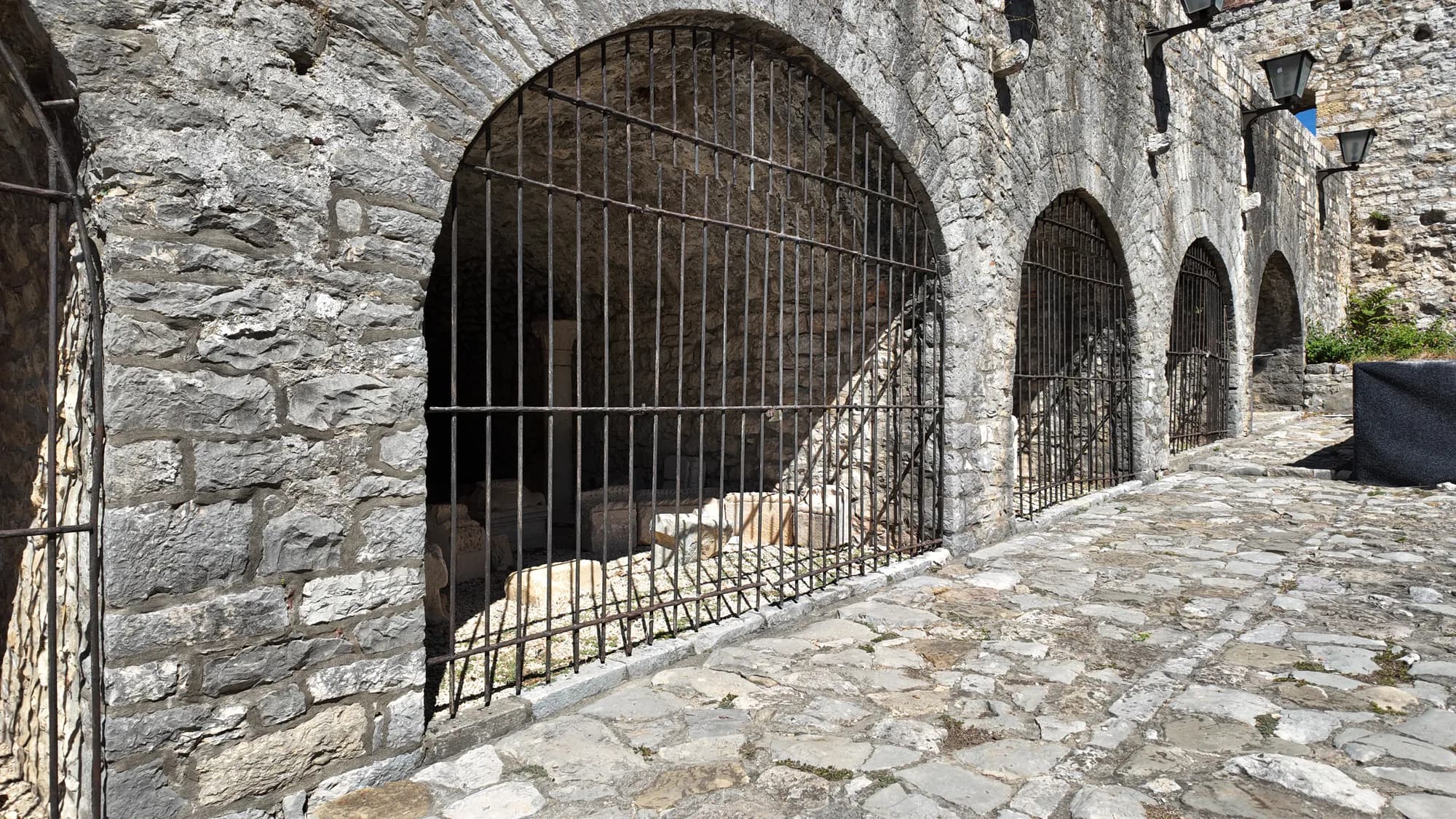
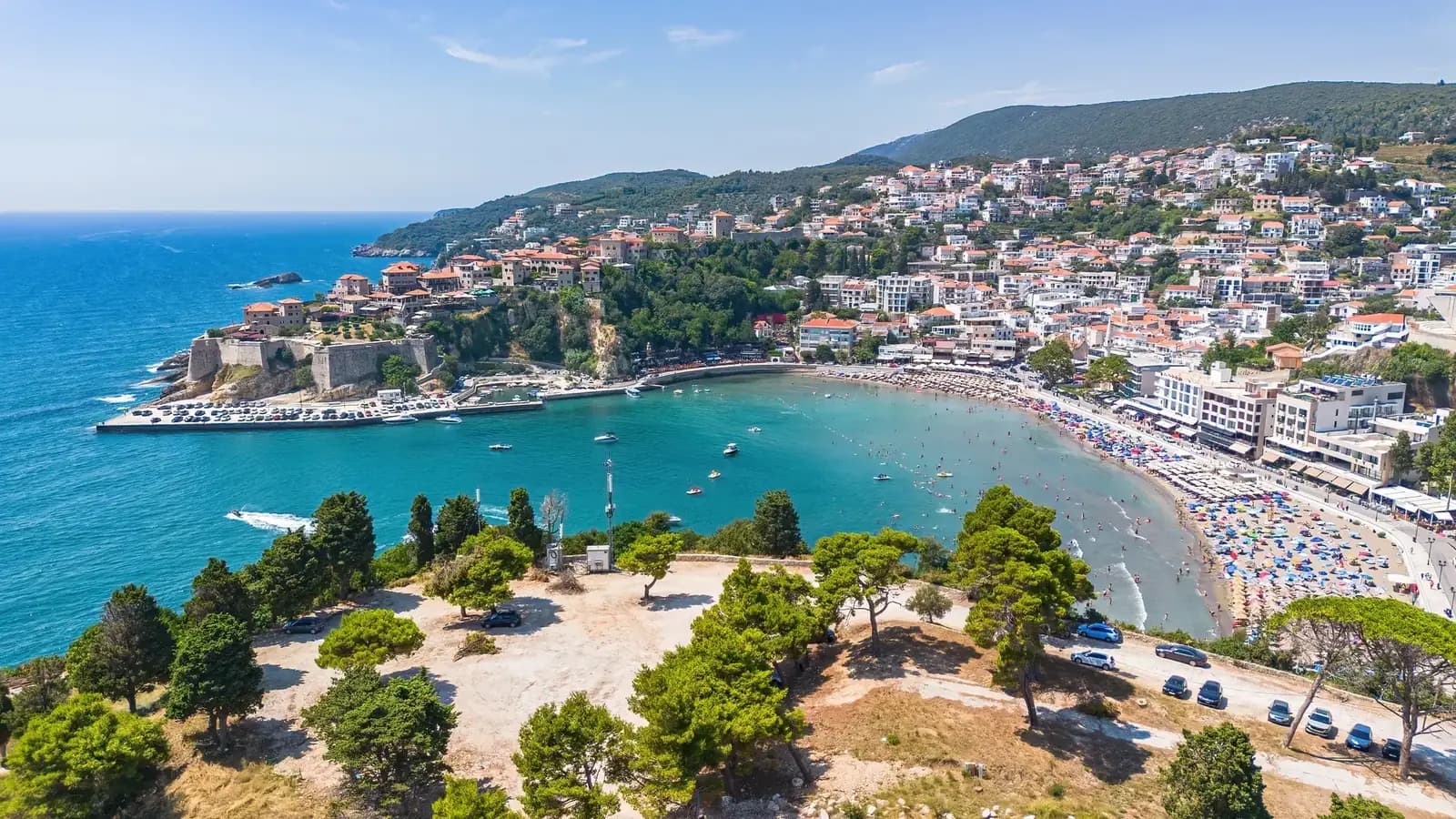
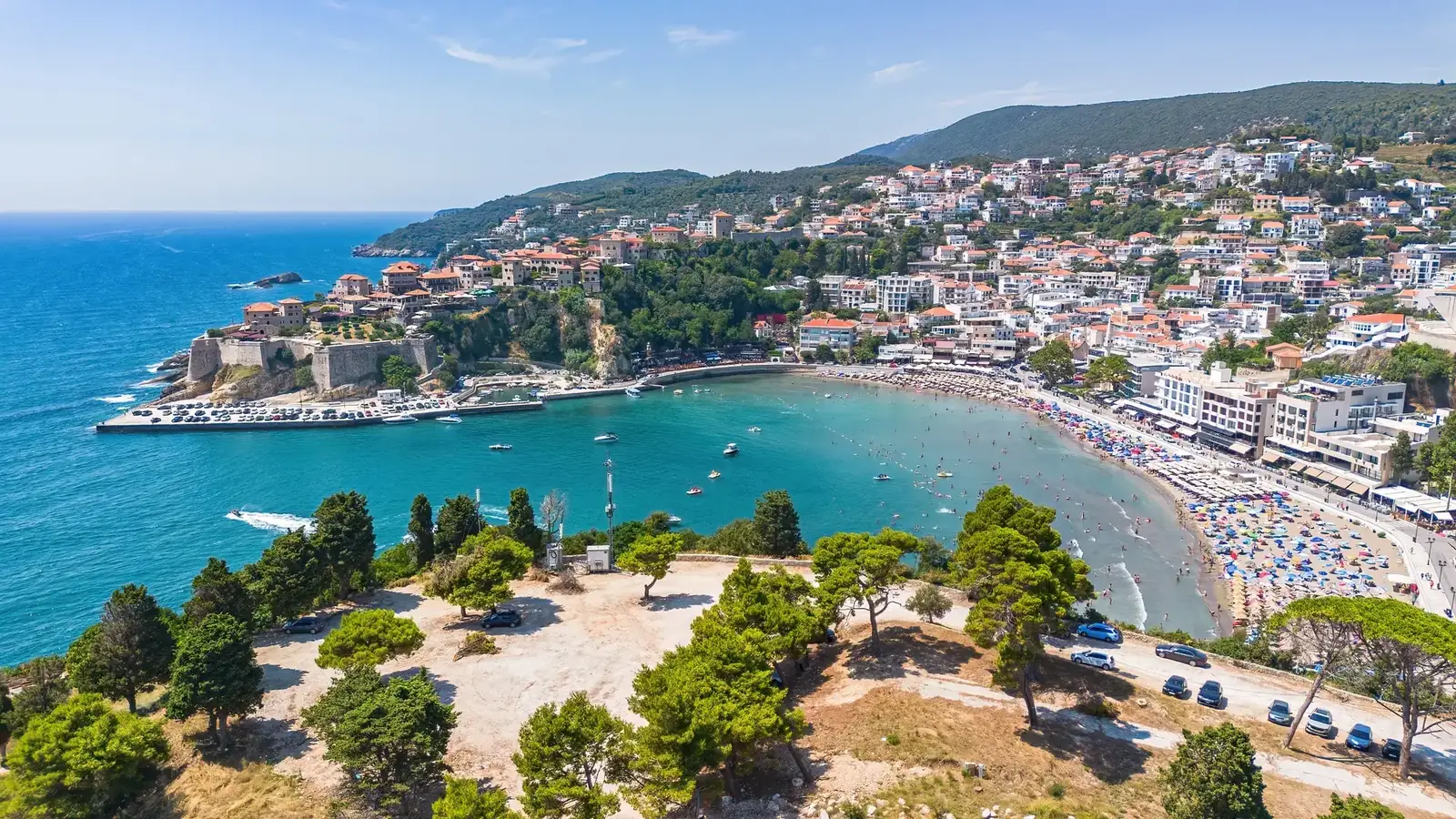
The Old Town’s street network reflects its layered growth. The upper area and citadel emphasize defence; lower lanes organize houses, squares and civic or religious buildings. Restaurants, accommodation and private homes now occupy parts of this historic fabric, so a public lane is not permission to enter every doorway.
| Layer | What it left |
|---|---|
| MEDIEVAL | urban matrix |
| VENETIAN | walls + civic forms |
| OTTOMAN | houses + conversions |
| MODERN | repair + reuse |
| Note | Later layer modifies, not replaces |
Source: ulcinj.travel, whc.unesco.org
Venetian and Ottoman transformation
What the sources say
The medieval overview places Ulcinj under Venetian rule until the Ottoman conquest in 1571. Venetian interventions affected walls, bastions, gates, towers, palaces and urban culture. Yet calling the entire fortified town “Venetian” would erase both earlier masonry and the Ottoman transformation that followed. UNESCO’s State Party submission likewise describes distinct wall and building techniques across periods rather than one uniform defensive system.
The Church-Mosque offers the clearest readable sequence. Ulcinj Tourism dates St Mary’s church to 1510, its conversion after 1571, and the minaret addition to 1693. Religious use ended in 1878; the building now forms part of the city museum. The related Slave Square history guide examines the adjacent space and its history of captivity and trade.
Ottoman Ulcinj also became a maritime and corsair centre. A peer-reviewed study using Dubrovnik archival material finds attacks becoming more frequent after 1709 and documents particular captives and leaders during 1725–1731. The records identify specific actors, dates and diplomatic problems rather than a complete count of ships, raids or captives.
Cervantes and the Ulcinj legend
Local legend places Miguel de Cervantes in Ulcinj after Lepanto and connects Dulcinea’s name with the city’s Venetian name, Dulcigno. Documentary biography places his capture in 1575 and his five-year captivity in Algiers.
Ulcinj Tourism labels the city version as legend and records more than one variant, including a possible transfer to Algiers. Cervantes remains part of Ulcinj’s cultural memory, although his documented captivity occurred in Algiers. The resemblance between Dulcigno and Dulcinea is likewise a local literary tradition rather than a documented etymology.
| Account | Capture | Captivity | Outcome |
|---|---|---|---|
| DOCUMENTED | 1575 capture | Algiers captivity | release in 1580 |
| LOCAL LEGEND | Ulcinj captivity | Dulcigno → Dulcinea | local tradition |
Source: cervantesvirtual.com, ulcinj.travel
From 1880 through earthquake and reconstruction
Ulcinj Tourism’s modern-period overview dates the city’s incorporation into Montenegro to 1880. Maritime commerce later weakened, while the 1930s brought a different economic turn through saltworks and hotel development. The Second World War interrupted that growth; post-war tourism and large enterprises reshaped the municipality again.
What the sources say
The earthquake of 15 April 1979 severely damaged the city. UNESCO’s Tentative List description also points to the 1969 and 1979 earthquakes as decisive in today’s appearance and records archaeological and conservation campaigns around those disruptions. Reconstruction is therefore part of the heritage story—not a modern footnote outside it.
MONSTAT recorded 20,507 residents in Ulcinj municipality in the 2023 census. This municipal total covers a much wider area and population than the Old Town.
UNESCO status and current conservation
Ulcinj Old Town was added to Montenegro’s UNESCO Tentative List in 2018. The State Party submission describes about 29 hectares and says the ensemble was nationally protected in 1961. Tentative status is a preparatory national listing; it is not inscription on the World Heritage List. The broader Montenegro in the international press provides wider context for how international recognition shapes travel.
Conservation remains active. Montenegro’s 2025 heritage programme funded medium-precision recording of condition and damage on the Old Town walls. Follow barriers, avoid climbing wall crowns, and do not treat a restaurant terrace or private accommodation as public heritage access.
Practical history walk: read five layers without rushing
Start with the public urban form: the upper and lower gates, defensive edge, lanes and relationship with Mala Plaža. At the museum, ask whether the archaeology and lapidary displays are open; published information does not give one current schedule or universal ticket. Next, read the Church-Mosque building sequence and adjacent square. Finish with tower and wall views only where the current route permits.
Allow extra time for steep stone, steps, heat and crowding. Ask about the route from drop-off, gradients, seating, toilets and open levels if mobility matters. For the surrounding landscape, use the Port Milena kalimera history, the Velika Plaža guide and the privacy-aware Ženska Plaža guide. The five-stop Montenegro planner helps decide whether Ulcinj needs its own day rather than a rushed coastal stop.
| Step | What to look at |
|---|---|
| FORM | walls + gates |
| OBJECT | museum |
| LAYER | church/mosque |
| LABEL | legend |
| RESPECT | barriers |
Source: ulcinj.travel, gov.me
Frequently asked questions
Is Ulcinj really 2,500 years old?
Archaeological material supports settlement and fortification in the fifth century BCE. “2,500 years” is reasonable shorthand, but it should not imply an unchanged city or a proven Colchian colony.
Did the Argonauts found Ulcinj?
The connection arises from a Colchinium name tradition and belongs to local legend. Archaeology documents an early settlement but does not identify an Argonaut colony.
Was Ulcinj a Roman municipium?
The local historical overview cites Pliny’s phrase oppidum civium Romanorum, meaning a fortified town of Roman citizens. It does not identify Ulcinj as a municipium.
Did Cervantes spend five years in Ulcinj?
Documentary biography places his 1575–1580 captivity in Algiers. Ulcinj’s Cervantes and Dulcinea story is a local legend, and the city tourism page labels it that way.
Is Ulcinj Old Town a UNESCO World Heritage Site?
No. It has been on Montenegro’s Tentative List since 2018. Tentative listing is not inscription.
Can I visit the museum and every tower?
Do not assume so. Confirm museum hours, admission and open levels locally; obey event and conservation barriers and respect private interiors.
Which historic details should I look for?
Start with early wall technique and museum objects, then compare the medieval urban matrix, Venetian defensive work, Ottoman domestic and religious layers, and modern conservation or reconstruction.