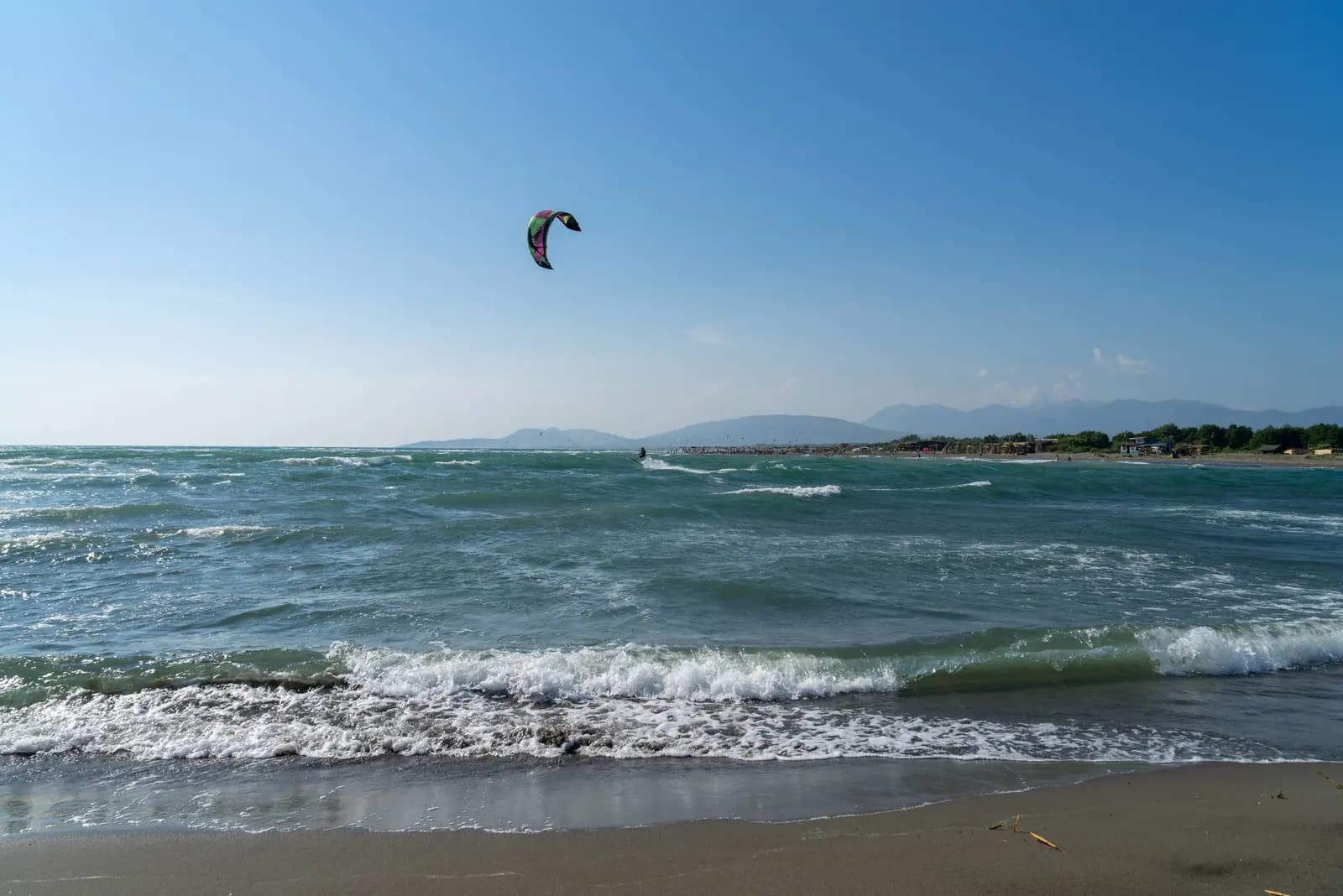
Decision first: Ada Bojana and neighboring Velika Plaža are genuine kitesurfing destinations, but “good wind” is not enough to make a session safe. A workable plan needs the right launch zone, current marine forecast, local instruction, beach-user separation, equipment matched to the rider, and a rescue and communication plan. Beginners should book instruction; independent riders should get a same-day local briefing before rigging.
This guide separates three things that travel copy often merges: the island and naturist-resort beach called Ada Bojana; the long open coast of Velika Plaža to its northwest; and the moving river-mouth environment between Montenegro and Albania. They share a wind system, but they are not one interchangeable launch.
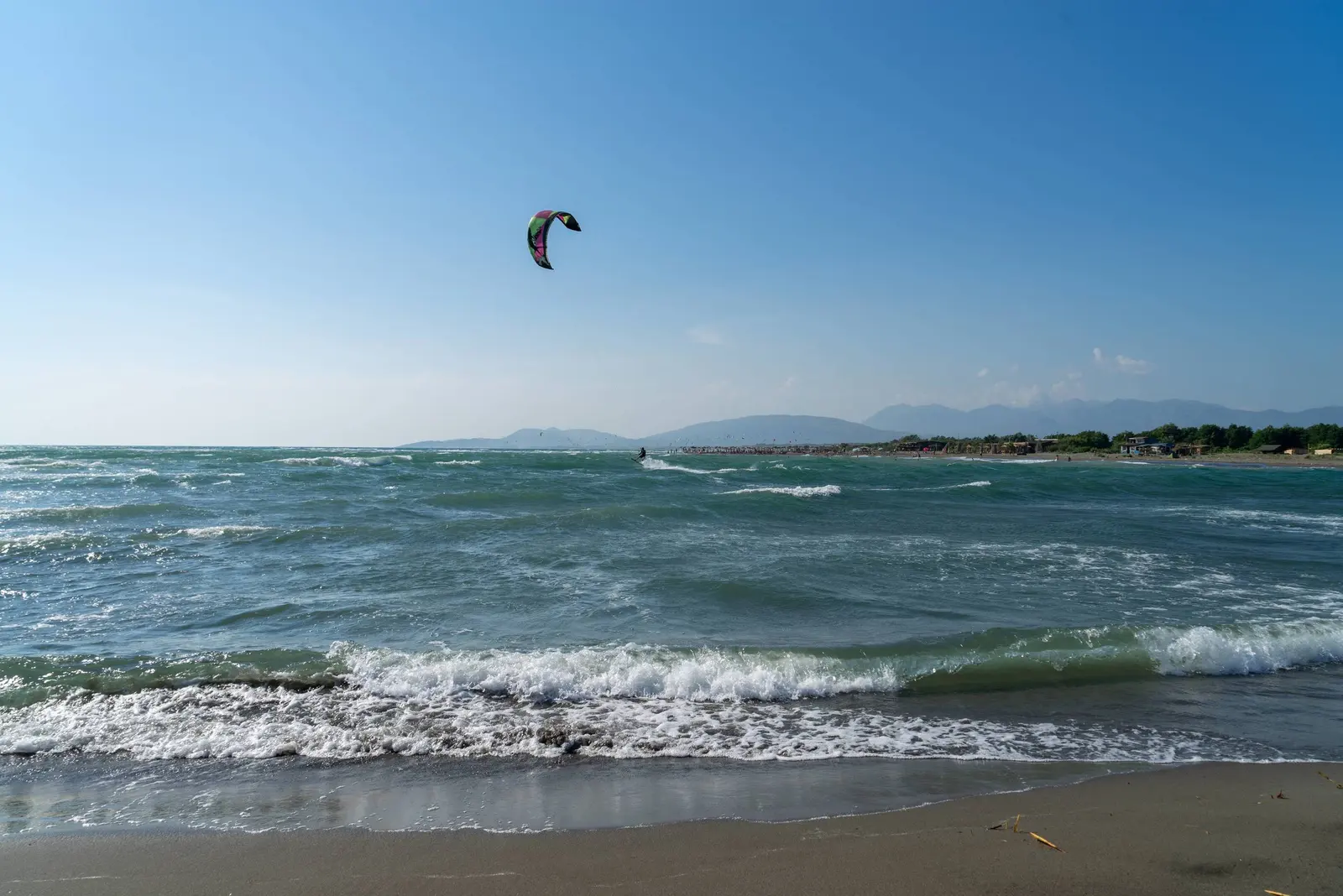
Kitesurfing near Ada Bojana: the quick decision table
| Situation | Safer plan | Verify locally | Do not assume |
|---|---|---|---|
| First lesson | Instructor-led session in the school’s designated teaching area | Credentials, student ratio, radio/rescue method, helmet and buoyancy aid | Shallow water makes self-teaching safe |
| Independent intermediate | Briefing at an operating kite center before launch | Wind direction, gusts, shore break, traffic, exclusion zones and downwind exit | A familiar forecast icon describes the beach |
| Experienced rider | Buddy session with conservative distance and current local rules | Equipment size, weather change, navigation traffic and recovery options | Experience elsewhere transfers to the river mouth |
| No wind or unsafe wind | Do not rig; switch to a land-based plan | Next forecast issue and cancellation terms | A paid day must become a water day |
| Crowded beach | Use the operator’s separated launch/landing corridor or stand down | Swimmers, walkers, umbrellas, vehicles, animals and other kites | Kiters have priority |
Ada Bojana, Velika Plaža and the river mouth are different decisions
Ulcinj’s tourism organization describes Ada Bojana as a river island with a three-kilometre sandy beach and a shoreline that changes from year to year. The island’s official accommodation site was actively advertising naturist-resort stays and the same three-kilometre beach when checked on 31 August 2026. Those facts help with orientation, not launch permission or guaranteed operation. Resort entry, clothing expectations, photography rules, day access and the part of the beach allocated to watersports must be confirmed for the date you visit.
Velika Plaža is the long sandy coast running northwest toward Ulcinj. It supports multiple seasonal beach operations and is the area most often highlighted by Montenegro’s national tourism board and Ulcinj’s active-holiday guide for kite schools and broad launch space. Our Velika Plaža guide covers the wider beach and accommodation geography; the Ada Bojana beach guide covers the island experience. Neither page substitutes for a kite-center briefing.
The river mouth is a third environment. A wide, calm-looking surface can still combine river flow, changing sandbars, boat movement and an exit toward open sea. The sources reviewed for this guide do not designate the mouth as a beginner practice lagoon. Treat it as a no-assumption zone: use it only if a competent local operator explicitly chooses it for your session and explains boundaries, current, navigation and recovery.
| Area | Role |
|---|---|
| VELIKA PLAŽA | school-selected launch corridor |
| ADA BOJANA | resort + seaward beach |
| RIVER MOUTH | verify; never infer |
| Status | NOT A NAVIGATION OR LAUNCH MAP — local zones and shoreline change |
Source: ulcinj.travel, montenegro.travel, gov.me
What the wind claims mean—and what they do not
Montenegro’s tourism board attributes the area’s appeal to the warm-season Maestral and advertises roughly 90 windy days, with a 5–10 m/s figure. Ulcinj’s active-holiday brochure describes May through October as the usual season and says the sea breeze is frequent. These are useful planning signals, but they are destination marketing, not a forecast and not a universal “safe range.” A wind that works for one rider, kite and direction can be wrong for another.
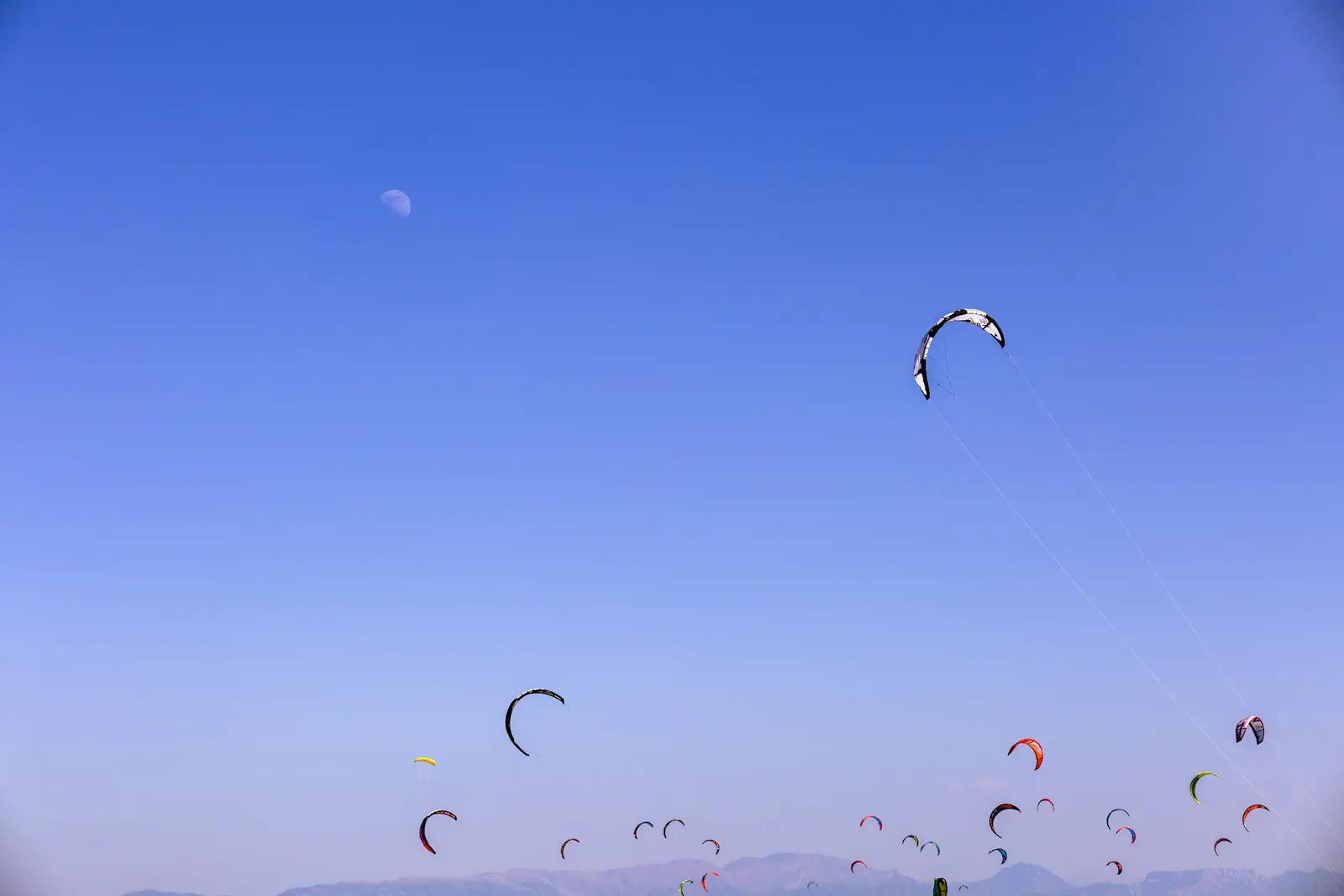
For a specific day, start with the marine forecast in Montenegro’s official 112 MNE app, which the government says draws weather information from the national hydrometeorological institute. Read the issue time, warning, wind direction and range, sea state and trend. Then compare it with current observation at the beach and the operating school’s local assessment. Other forecast apps can add detail, but they should not overrule an official warning or an on-site stand-down.
Direction matters as much as speed. Offshore wind can carry a failed rider away from land; onshore wind can compress the launch and shore break; gusts can make an otherwise manageable average unstable. The correct kite size is a live equipment decision based on rider mass, board, model, experience, gust range and local advice. This article deliberately gives no size chart.
| Step | Evidence | Weight |
|---|---|---|
| 1 | SEASONAL MARKETING | trip clue |
| 2 | CURRENT OFFICIAL MARINE FORECAST | day context |
| 3 | BEACH OBSERVATION + LOCAL ZONES | site reality |
| 4 | RIDER / INSTRUCTOR GO–NO-GO | final decision |
Source: montenegro.travel, ulcinj.travel, gov.me
Beginners: buy instruction, not a promised number of hours
Kitesurfing couples a powered wing to a rider through lines and a harness. Mistakes can affect people far beyond the board. RNLI guidance recommends tuition at an accredited school, while IKO material stresses safety zones and that kiters do not have priority over swimmers, walkers, paddlers and other users. A beginner should not learn from a friend’s quick beach demonstration or a video.
Ask a prospective school for answers in writing:
- Which organization certifies the instructor, and is that credential current?
- What is the maximum student-to-instructor ratio on land and in water?
- Are a helmet, an appropriate buoyancy aid or PFD, a working quick release and weather-appropriate exposure protection included?
- How does the instructor communicate once the student is downwind or separated?
- What rescue craft, shore team or recovery procedure exists, and when is a lesson cancelled?
- Which launch corridor is being used that day, and how are swimmers and bystanders kept outside the line and kite zone?
- Does the price cover equipment damage, transfer, certification, rescheduling and no-wind cancellation?
A competent course normally progresses through risk assessment, kite control, release systems, assisted launching and landing, body dragging, board starts and independent recovery. Progression is competency-based. Three sessions may be enough for one student to reach an early stage and nowhere near enough for another to ride independently. Ask the instructor to state what you demonstrated, what remains supervised, and what conditions you are cleared to use.
Independent riders: the local briefing still matters
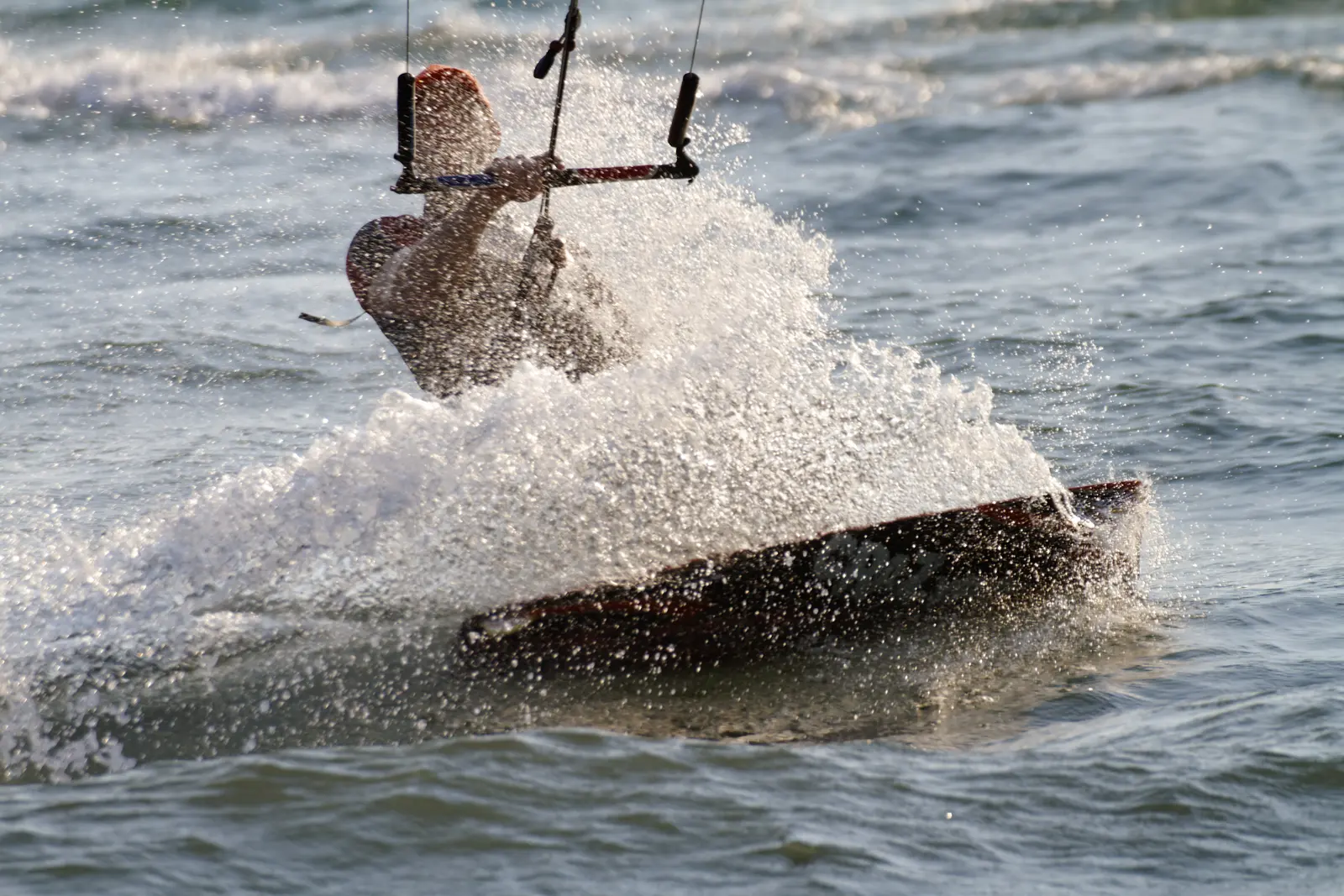
Bring proof of training if a rental operator asks for it, but do not let a card replace judgment. Walk the entire launch and downwind exit before inflating. Identify hard objects, fishing gear, vehicles, umbrellas, bathers, animals, shore break, other schools’ corridors and any temporary restriction. Ask where kites are landed if the wind changes and who initiates rescue.
RNLI’s conservative checks are portable: ride with another person, stay no farther out than you can swim back, expect equipment failure, use a helmet and buoyancy aid, and carry a workable means of calling for help. A phone in a waterproof pouch may help where there is coverage; a school may specify another device. Agree the emergency plan rather than assuming someone on shore knows it.
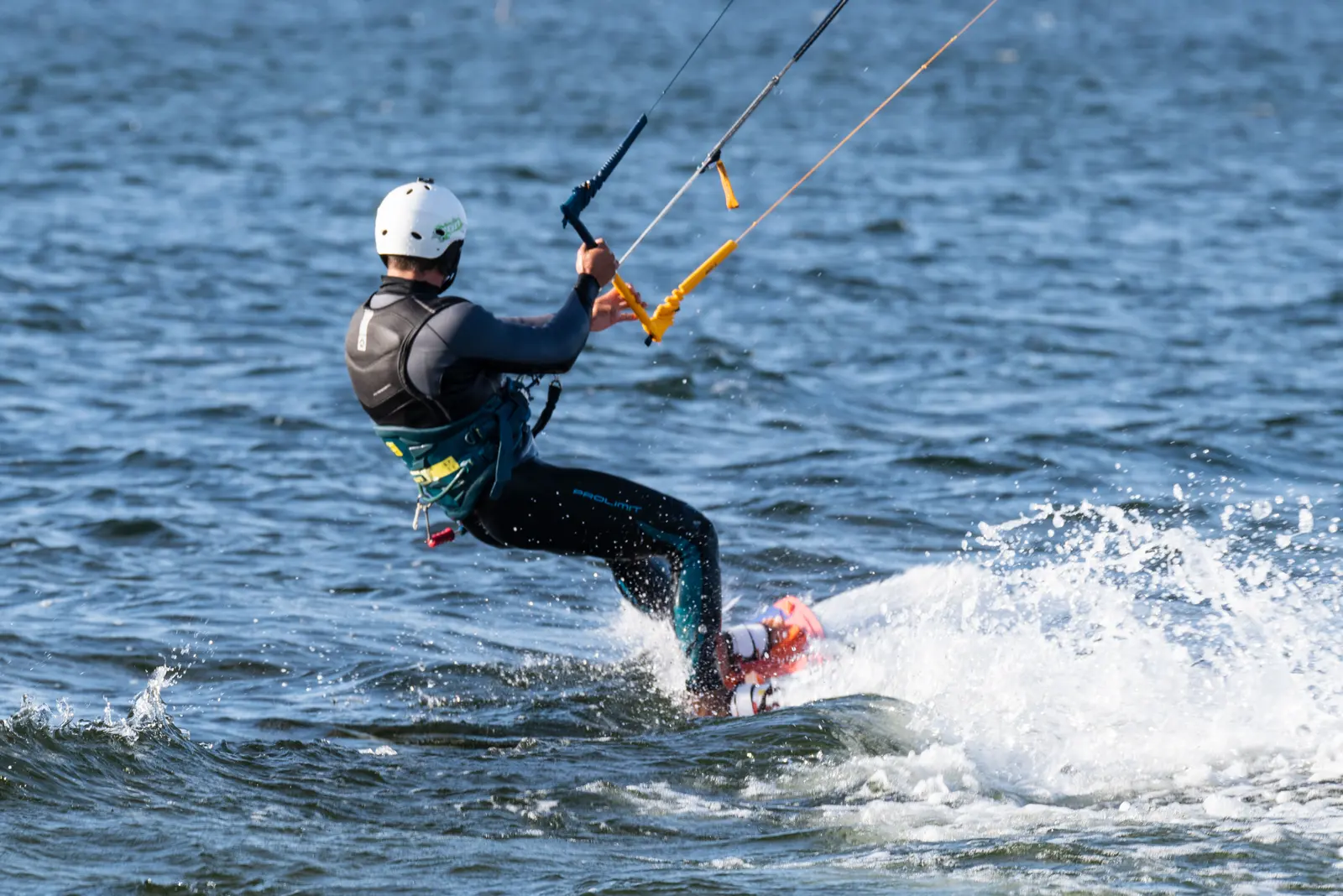
Montenegro’s emergency number 112 operates nationwide and can activate maritime and medical help. The Maritime Search and Rescue service also publishes 129 for sea-safety emergencies, plus Bar Radio contacts and VHF channels. Save the numbers, but prioritize prevention: delayed recognition, lack of location and weak signal can defeat a perfect contact list.
Make the no-go decision before pressure builds
Write down the conditions that cancel your session before you reach the beach. Automatic no-go triggers should include an official warning, offshore flow without an operator-approved recovery system, gusts or sea state beyond your demonstrated level, lightning or an approaching squall, damaged safety hardware, no clear launch and landing corridor, swimmers or obstacles inside the required safety zone, no competent buddy or shore contact, and any uncertainty about the river-mouth boundary. A local operator may add stricter triggers.
Social pressure is not evidence. Other riders may have different equipment, weight, skill, rescue support or risk tolerance. A crowded sky can mean the wind is popular; it cannot prove that you belong on the water. Similarly, a school continuing advanced sessions does not mean a beginner lesson should proceed. Ask for the decision about your level and the reason behind it.
If the answer is no-go, secure the kite before conditions worsen and keep bystanders outside the line arc. Do not launch “for five minutes,” change to an unfamiliar smaller kite without competent guidance, or move toward the river because it looks flatter. Use the written no-wind or unsafe-condition policy agreed at booking. A deferred session is an expected outcome in a wind sport, not a failed holiday.
| Gate | Pass condition |
|---|---|
| FORECAST | no warning / fit trend |
| LAUNCH | clear + authorized |
| RIDER | competent for conditions |
| EQUIPMENT | checked + appropriate |
| BUDDY / RESCUE | agreed + reachable |
| GO ONLY IF ALL FIVE PASS | Any doubt, conflict or missing control = NO-GO |
Source: rnli.org, d8.ikointl.com, gov.me
The beach itself is moving
Ada Bojana is not a fixed sports facility. Ulcinj’s tourism page openly says its river arms and beach appearance change. A government-presented erosion study reported major long-term loss and examined sand nourishment and protective structures. That 2021 proposal does not tell us the exact 2026 shoreline or completed works; it tells us not to rely on an old map, photo or remembered launch.
Shifting sand can move shallow bars, alter shore break, narrow the safe rigging area and expose temporary works. Never rig beside machinery, groynes, posts or fencing, and do not cross dunes or vegetation to create a shortcut. Follow the current operator’s access route and any beach-management restriction.
The Bojana is also a navigation and border environment. In July 2026, Montenegrin police and maritime-safety inspectors reported enhanced vessel controls at Velika Plaža and on the river. That notice does not create a new kite permit rule, but it confirms that the water is actively managed for navigation safety. Keep clear of vessels and follow current instructions from the relevant operator and authorities.
Practical trip planning
Base: Ulcinj gives the widest choice of services and a fallback plan when the wind is wrong; compare areas in our where-to-stay Ulcinj guide. Staying on Ada reduces the daily road leg but ties you more closely to island access, resort conditions and a smaller service area. Ask accommodation providers about late arrival, parking, gear storage, wet-equipment rules and transport to the exact kite center—not just “the beach.”
Arrival: Podgorica and Tivat can both work, but summer coastal congestion makes fixed driving times misleading. Use the Podgorica base guide or Tivat base guide for an overnight decision, then obtain a dated transfer quote with space for boards and kite bags. If continuing across the nearby border, our Montenegro-to-Albania guide covers the international trip; do not attempt to cross the river or maritime boundary on a kite.
Windless day: Keep the day genuinely flexible. The Ulcinj Salina guide explains birdwatching access and conservation etiquette; the Port Milena kalimera dossier gives a cultural stop closer to town. Neither should be squeezed between an uncertain forecast and a rushed late launch.
Booking record: Get the exact meeting point, lesson level, included equipment, insurance statement, cancellation thresholds, no-wind policy and refund timing in writing. Confirm again shortly before travel. Seasonal businesses, access points and teaching zones can change without an evergreen article changing with them.
Safety-oriented packing list
- Training record or certification accepted by the rental operator
- Helmet and an appropriate buoyancy aid or PFD matched to the session and local requirements
- Working release system and leash checked under instructor or competent local guidance
- Sun protection, drinking water and footwear for hot sand and rough access
- Exposure protection selected for current water and air temperature, not the calendar
- Charged communication device in a suitable waterproof solution
- Emergency contacts, accommodation location and a shore contact who knows the return time
- Travel insurance wording checked for kitesurfing, instruction, rental damage and rescue
Frequently asked questions
Is Ada Bojana good for a complete beginner?
It can support beginner instruction when an operating school selects a suitable teaching area and conditions. The destination name, shallow-looking water or warm season does not make independent learning safe.
When is the kitesurfing season?
Local tourism material presents May through October as the usual season and emphasizes spring and summer. Treat that as trip-planning context; use the current marine forecast and school assessment for every session.
How many lessons will I need?
There is no responsible fixed number. Continue supervised training until an instructor confirms the required competencies for the conditions and equipment you intend to use.
Can I kite on the Bojana River side?
Do not infer that calm-looking water is an approved training zone. Use it only under explicit local instruction that accounts for current, navigation, boundaries, launch space and recovery.
Does the kitesurfing beach overlap the naturist resort?
Ada Bojana’s official site was advertising naturist-resort stays when checked on 31 August 2026, while much of the kite-school activity is associated with nearby Velika Plaža. That dated listing does not guarantee operation or day access; confirm the exact access point, resort rules, photography etiquette and designated launch.
What number should I call in an emergency?
Call 112 for Montenegro’s integrated emergency response. The maritime service also publishes 129 for help at sea. Agree the local plan and your location description before launching.