Šćepan Polje: Montenegro's Rafting Capital at the Confluence of Two Rivers
Šćepan Polje is Montenegro's rafting capital, where the Tara and Piva rivers merge at the bottom of Europe's deepest canyon — a base for world-class whitewater adventure.
Updated Originally published 11 min readby Pavle Obradović
Šćepan Polje: Where the Tara and Piva Rivers Meet
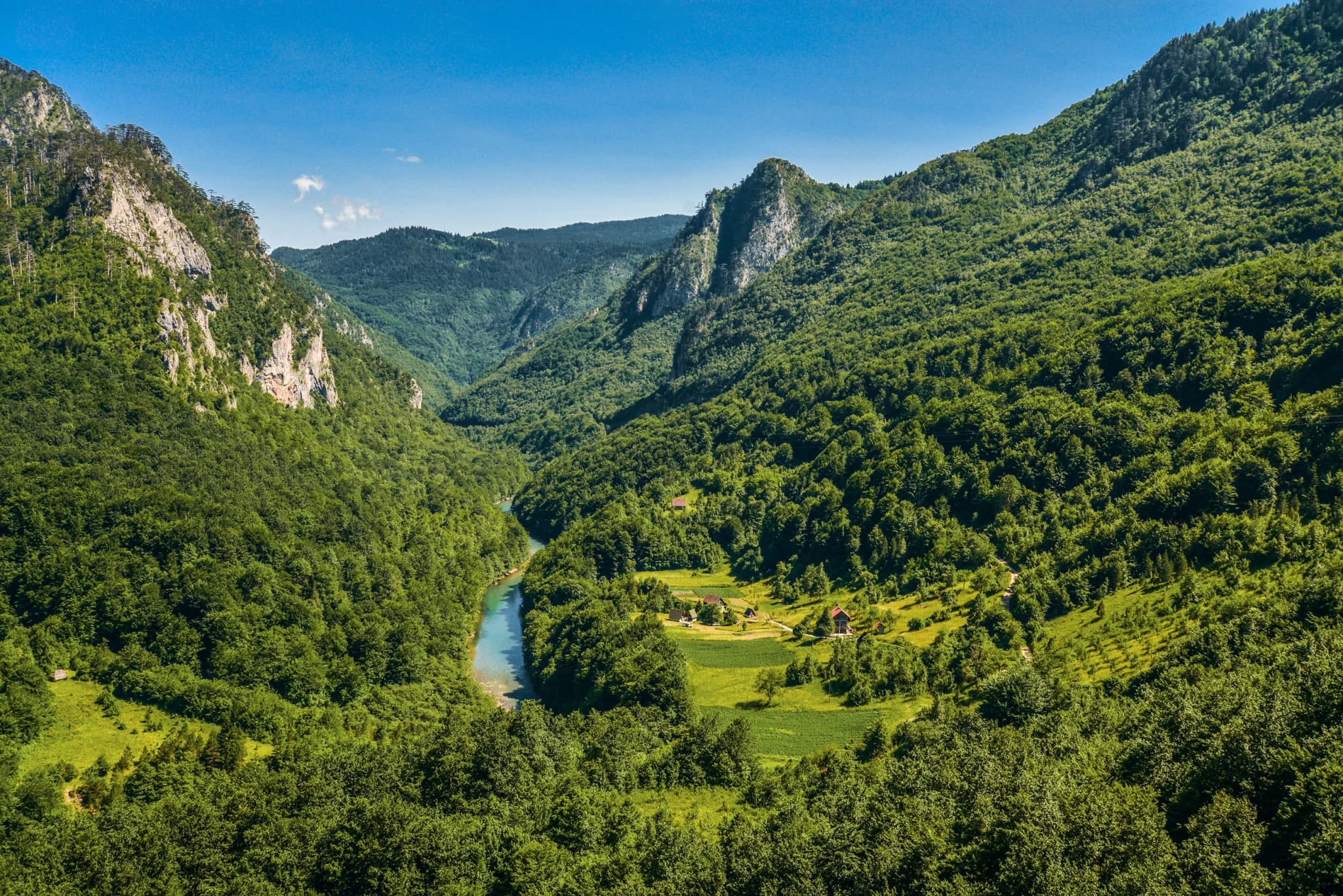
Šćepan Polje is a tiny settlement at the confluence of two of Montenegro's greatest rivers: the Tara and the Piva. Perched at the bottom of immense canyon walls near the Bosnian border, this remote spot has become Montenegro's undisputed rafting capital — the starting or ending point for the most popular rafting trips through the Tara River Canyon, Europe's deepest gorge at 1,300 metres from rim to riverbed. The settlement itself is little more than a collection of rafting camps, a few restaurants, and a customs checkpoint where the road crosses into Bosnia and Herzegovina. But what it lacks in urban substance, it more than compensates for in raw natural drama: the meeting of two turquoise-green rivers surrounded by towering limestone cliffs, dense forest, and the echoing silence of deep canyon wilderness.
For the adventure traveller, Šćepan Polje is one of those rare places where geography concentrates an extraordinary amount of adrenaline and beauty into a single point. From here, you can raft the Tara, kayak the Piva, hike into canyon forests, or simply sit by the river and watch two of Europe's cleanest waterways merge into one. The settlement operates primarily from May to October, when the rafting season brings thousands of visitors from across Europe. In winter, the camps close, the roads may be difficult, and Šćepan Polje returns to its natural state of profound wilderness solitude.
A Brief History of Šćepan Polje
The name Šćepan Polje (Stephen's Field) is believed to derive from Stjepan (Stephen) Vukčić Kosača, a powerful medieval Herzegovinian duke who controlled territory on both sides of what is now the Montenegro–Bosnia border in the 15th century. The flat, fertile field at the confluence of the two rivers provided one of the few habitable spots in this otherwise vertigo-inducing canyon landscape.
For centuries, Šćepan Polje was little more than a crossing point — a place where travellers, traders, and armies forded the rivers or crossed by ferry. The area was part of the Ottoman Empire for centuries, lying on the borders of Ottoman Herzegovina and the Montenegrin highlands. During the wars of Montenegrin expansion in the 19th century, the canyon borderlands saw intermittent fighting.
The modern story of Šćepan Polje begins with the recognition of the Tara Canyon as an outstanding natural monument and its inscription as a UNESCO World Heritage Site (as part of the Durmitor National Park) in 1980. As international awareness of the canyon grew, enterprising locals began offering rafting trips in the 1980s and 1990s. Today, the rafting industry is the economic lifeblood of the area, supporting a dozen or more camps and outfitters that operate during the warm months.
How to Get to Šćepan Polje
Šćepan Polje is remote, located in Montenegro's far northwest near the Bosnian border. Getting there requires commitment, but the journey through canyon country is itself an adventure.
From Nikšić: The most common approach from central Montenegro is via Nikšić, heading northwest through the mountains. The distance is about 90 kilometres, but the winding mountain roads mean a driving time of approximately 2–2.5 hours. The road passes through Šavnik and then follows the canyon of the Piva River, with spectacular views of Piva Lake.
From Žabljak: From the Durmitor area, drive south to Šavnik and then west toward the Piva Canyon. The total distance is about 70 kilometres (1.5–2 hours). Alternatively, a more dramatic route follows the Tara Canyon road from Žabljak, though this is longer and can be slow.
From Podgorica: The drive takes about 3–3.5 hours (roughly 200 kilometres) via Nikšić and the Piva Canyon. It is a long day trip, and most visitors spend at least one night at the camps.
From Foča (Bosnia): The border crossing at Šćepan Polje connects to Foča in Bosnia and Herzegovina, about 50 kilometres away. Many rafting trips actually begin on the Bosnian side (where the upper Tara Canyon is located) and end at Šćepan Polje.
From the coast (Dubrovnik or Herceg Novi): Some visitors approach from the south, driving via Trebinje in Bosnia or through Nikšić. Allow 4–5 hours from the coast.
There is no public bus service to Šćepan Polje. Most visitors arrive by car or as part of an organised rafting trip (many operators provide transfers from Žabljak, Nikšić, or even the coast).
Best Time to Visit
The rafting season runs from May to October, with peak activity in June, July, and August. Water levels and conditions vary through the season:
Climate at a glance
Best time: April · May · October
May and June: The highest water levels from snowmelt create the most exciting rapids — Class III to IV in some sections. Water temperature is cold (10–14°C). This is the best time for experienced rafters seeking thrills.
July and August: Water levels drop, rapids moderate to Class II–III, and water temperatures rise slightly. This is the peak tourist season with the largest numbers of rafters. Booking in advance is recommended.
September and October: Lower water levels make for gentler rafting, suitable for families and beginners. The canyon forests begin to change colour, and the crowds thin dramatically. October can be magical but cold.
The camps typically close from November to April. Winter access is possible by car on maintained roads, but there are no services available and the area is essentially deserted.
Top Things to See and Do
Tara River Canyon Rafting
This is the main event and one of the premier outdoor adventures in Europe. The Tara River Canyon — 82 kilometres long and up to 1,300 metres deep — is the deepest canyon in Europe. The most popular rafting route covers about 18 kilometres of the canyon, typically starting from Brštanovica (on the Bosnian side, upstream) and finishing at Šćepan Polje. The trip takes about 3–4 hours on the water, running approximately 25 rapids of varying intensity.
The experience is not just about adrenaline — the scenery is staggering. Sheer canyon walls rise hundreds of metres on both sides, cloaked in primeval beech and pine forests. Waterfalls cascade down the cliffs, and the water is so clear you can see the river stones 10 metres below. The Tara is famous for its exceptionally clear water, but treat or filter it before drinking.
Rafting is offered by numerous operators based at Šćepan Polje, including Tara Raft, Encian, Kamp Grab, and others. Prices typically range from 40 to 80 euros per person, including equipment (raft, paddle, wetsuit, life jacket, helmet), guide, and often lunch. Most trips also include transport from the starting point upstream. A longer, two-day rafting trip covers the entire navigable canyon (approximately 60 kilometres), with overnight camping on the riverbank — an extraordinary wilderness experience.
The Confluence Viewpoint
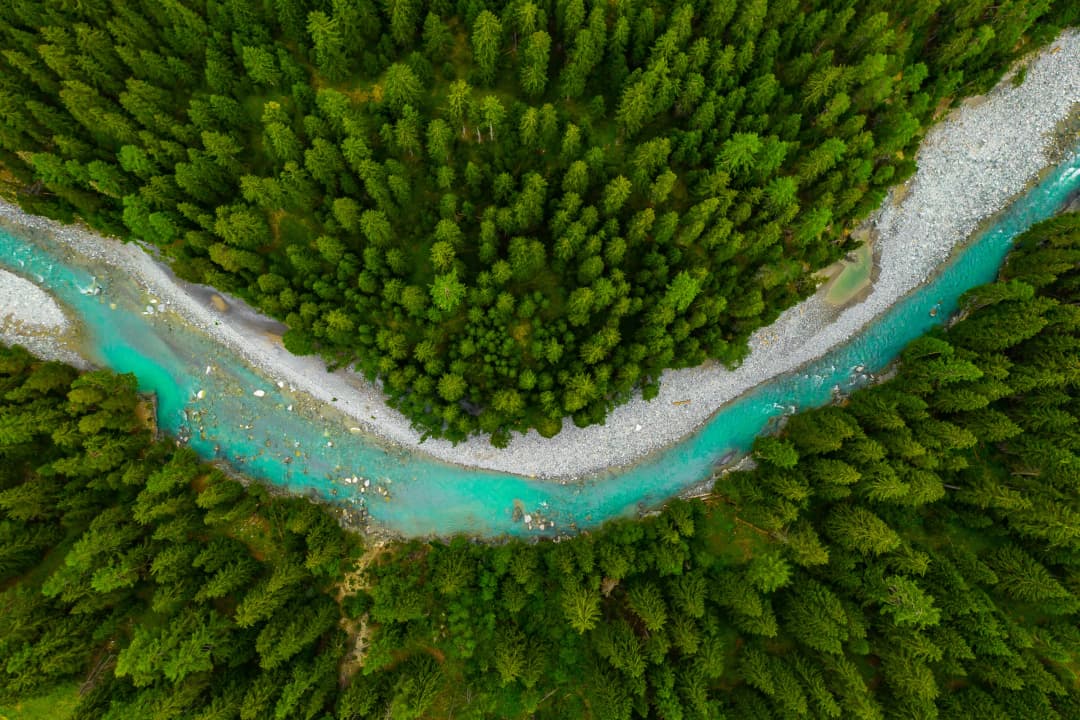
The point where the jade-green Tara meets the slightly darker Piva is visible from several spots near the settlement. The two rivers maintain their distinct colours for some distance after merging, creating a striking two-tone effect. The best viewpoint is from the bridge near the border crossing, or from elevated points along the access road. In the early morning, when mist rises from the cold water, the scene is ethereal.
Piva Lake and Canyon
The road from Šavnik to Šćepan Polje follows the shore of Piva Lake, an artificial reservoir created by the Mratinje Dam (completed in 1976). The lake is about 45 kilometres long and occupies a deep, narrow canyon, with turquoise water framed by vertical limestone walls rising hundreds of metres. The drive along the lake is one of Montenegro's most dramatic — the road tunnels through the rock repeatedly and emerges to dizzying views over the water. Swimming and kayaking on the lake are possible from several access points along the road.
Mratinje Dam
This massive concrete arch dam, standing 220 metres tall, is one of the highest dams in Europe. It blocks the Piva River to create Piva Lake. The dam can be viewed from the road below, where its sheer scale — rising almost vertically above you — is genuinely awe-inspiring. A small parking area near the dam allows for photos and contemplation of this engineering achievement.
Hiking in the Canyon Forests
The forests surrounding Šćepan Polje are part of the Durmitor–Tara ecosystem, sheltering beech, pine, and fir trees along with bears, wolves, chamois, and eagles. Several informal hiking trails follow the river banks or climb the canyon walls. A popular short hike follows the Tara riverbank upstream from the confluence for about 3 kilometres, passing deep swimming pools and small beaches. Longer hikes require good fitness and navigation skills — the terrain is steep and trail markings are sparse.
Kayaking
For experienced paddlers, the Tara and Piva rivers offer exceptional kayaking. The Tara's rapids range from Class II to IV depending on water levels, while the Piva below the dam offers calmer stretches suitable for touring kayaks. Some rafting operators also offer kayak rentals and guided kayak trips. The Piva Lake is excellent for flat-water kayaking, with the dramatic canyon walls providing a stunning backdrop.
Zip-lining and Adventure Activities
Several camps at Šćepan Polje have developed additional adventure activities to complement rafting. These include zip-lines spanning the river, rope courses, and organised hiking excursions. The Tara Bridge Bungee (at the Đurđevića Tara Bridge, about 45 kilometres away) is another popular adrenaline option that can be combined with a visit to Šćepan Polje.
Fishing
The Tara and Piva rivers are renowned for trout fishing. The Tara in particular hosts healthy populations of brown trout and Danube salmon (huchen), a large and increasingly rare species. Fishing permits are required and can be obtained through rafting camps or local fishing associations. The season typically runs from March to October, with catch-and-release increasingly encouraged for conservation.
Where to Stay
Accommodation at Šćepan Polje consists almost entirely of rafting camps, which range from basic to comfortable:
Kamp Grab: One of the most established camps, offering wooden bungalows, a restaurant, and direct river access. Rates typically 25–50 euros per person including meals.
Kamp Encian: A well-regarded camp with bungalows, camping pitches, and good facilities. Often booked as part of rafting packages.
Tara Raft Camp: Another popular option with accommodation ranging from basic cabins to more comfortable rooms.
Riverside camping: Several camps offer tent pitches directly beside the river for 5–15 euros per person. Bring your own tent or rent on-site.
Most visitors book accommodation as part of a rafting package, which typically includes one or two nights, meals, and the rafting trip itself. Packages from Žabljak or Nikšić including transport, rafting, accommodation, and meals range from 80 to 150 euros per person for a two-day experience.
For those preferring hotel accommodation, Žabljak (1.5–2 hours) has the nearest substantial range of hotels and apartments. Nikšić (2–2.5 hours) is the nearest city.
Where to Eat
Dining at Šćepan Polje is centred on the camp restaurants, which serve hearty, unpretentious Montenegrin mountain cuisine:
River trout: Caught fresh from the Tara and Piva, grilled over open flame — this is the quintessential Šćepan Polje meal.
Lamb under sač: Slow-roasted with potatoes, available at most camps when ordered in advance.
Grilled meats: Ćevapi, pljeskavice, and mixed grill platters are standard camp fare.
Kajmak and cheese: Fresh mountain dairy products accompany most meals.
Rakija: Homemade fruit brandy — typically plum (šljivovica) or pear (kruška) — is served as an aperitif or digestif at every camp.
Meals at camp restaurants are substantial and affordable, typically 8–15 euros for a full dinner. Many rafting packages include all meals. Vegetarian options are limited — communicate dietary requirements when booking.
Practical Tips
Book rafting in advance: In July and August, the most popular operators and camps fill up. Book at least a few days ahead, and earlier for weekend trips.
What to bring for rafting: Operators provide wetsuits, life jackets, and helmets. Bring a swimsuit, water shoes (essential — river rocks are sharp), sunscreen, and a waterproof camera or phone case. A change of dry clothes for after the trip is important.
Water temperature: The Tara is cold year-round (10–18°C even in summer). Wetsuits are necessary for comfort.
Cash: Bring euros in cash. Card payment is rare at the camps. The nearest ATMs are in Plužine (about 20 kilometres) or Žabljak.
Border crossing: If your rafting trip starts on the Bosnian side (which many do), you will technically cross the border. Carry your passport. EU and most other nationals do not need a visa for either Montenegro or Bosnia.
Road conditions: The roads to Šćepan Polje are paved but winding and narrow. The Piva Lake road includes many tunnels (some unlit — use headlights). Drive carefully, especially in darkness or rain.
Mobile coverage: Patchy at the confluence. Some camps have WiFi, but do not count on reliable connectivity.
Fitness: Standard rafting trips require no special fitness — children as young as 7 can participate in calmer conditions. Two-day canyon trips require moderate stamina.
Day Trip Suggestions
Đurđevića Tara Bridge: This iconic concrete arch bridge spans the Tara Canyon at a height of 172 metres and a length of 365 metres. Located about 45 kilometres from Šćepan Polje (toward Žabljak), it offers vertiginous views into the canyon and is one of Montenegro's most photographed landmarks. A bungee jump operates from the bridge in summer.
Durmitor National Park: Continue to Žabljak for Black Lake, mountain hiking, and the dramatic Durmitor peaks.
Piva Monastery: Visit the relocated medieval monastery on the shore of Piva Lake, about 30 kilometres from Šćepan Polje.
Plužine and Piva Lake: The small town of Plužine, on the shore of Piva Lake, offers additional dining options and a scenic base for exploring the lake.
Foča (Bosnia and Herzegovina): Cross the border to this Bosnian town (about 50 kilometres), which has Ottoman-era architecture, mosques, and a different cultural atmosphere.
Quick answers
When is the best time to visit ŠćEpan Polje?+
The rafting season runs from May to October, with peak activity in June, July, and August. Water levels and conditions vary through the season: May and June: The highest water levels from snowmelt create the most exciting rapids — Class III to IV in some sections.
Šćepan Polje is remote, located in Montenegro's far northwest near the Bosnian border. Getting there requires commitment, but the journey through canyon country is itself an adventure. From Nikšić : The most common approach from central Montenegro is via Nikšić, heading northwest through the mountains.
The forests surrounding Šćepan Polje are part of the Durmitor–Tara ecosystem, sheltering beech, pine, and fir trees along with bears, wolves, chamois, and eagles. Several informal hiking trails follow the river banks or climb the canyon walls.
Dining at Šćepan Polje is centred on the camp restaurants, which serve hearty, unpretentious Montenegrin mountain cuisine: River trout: Caught fresh from the Tara and Piva, grilled over open flame — this is the quintessential Šćepan Polje meal.
Accommodation at Šćepan Polje consists almost entirely of rafting camps, which range from basic to comfortable: Kamp Grab: One of the most established camps, offering wooden bungalows, a restaurant, and direct river access.
Pavle Obradović is from Herceg Novi. He was Manager of Montenegro.com, then Director of the Herceg Novi Tourism Organization, and is now Coordinator for Investment and Development Projects at the Municipality of Herceg Novi. He holds a BSc in International Hospitality and Service Management from the Rochester Institute of Technology (RIT).
···
Updated · Originally published
Montenegro Travel Newsletter
Get weekly stories, guides, and insider tips about Montenegro delivered to your inbox.