Tivat’s best five attractions do different jobs. Buća-Luković explains the town before the marina era; Pine gives the simplest waterfront walk; the Naval Heritage Museum preserves the Arsenal story; Tivat Solila is a protected wetland rather than a leisure park; and Miholjska Prevlaka is an active religious place layered over a difficult archaeological history. The useful question is not “Which five are famous?” but “Which of these fits the time, mobility and interests of this visit?”
The five places combine town history, waterfront life, naval heritage, wetland ecology and religious history. Museum hours, submarine entry, bird sightings, parking and monastery access can change, so confirm the details that determine your day before setting out.
| Interest | Attraction |
|---|---|
| ARCHITECTURE | Buća-Luković complex |
| EASY STROLL | Pine waterfront |
| NAVAL STORY | Maritime collection and submarine display |
| NATURE | Tivat Solila reserve |
| SACRED SITE | Miholjska Prevlaka |
Source: tivat.travel, rsis.ramsar.org
Tivat’s top five at a glance
| Stop | Best for | Visit mode | Check first |
|---|---|---|---|
| Buća-Luković | Layered architecture, local collections, exhibitions | Compact centre stop | Exhibition and interior hours |
| Pine | Public waterfront orientation and an easy pause | Self-guided outdoor walk | Weather and any event closures |
| Naval Heritage Museum | Arsenal, maritime and submarine history | Managed museum in Porto Montenegro | Opening, tickets, submarine entry |
| Tivat Solila | Wetland landscape and quiet observation | Protected reserve | Manager authorization, route, conditions |
| Miholjska Prevlaka | Living monastery and complex heritage | Active religious site | Access, services, dress and photography |
Three stops—Buća-Luković, Pine and the Naval Heritage Museum—form the logical urban group. Solila and Miholjska Prevlaka lie outside that compact centre and need separate transport planning. The official Tivat attractions and map page is the right place to check the current city map before departure. A map pin proves location, however, not opening, parking or step-free access.
1. Buća-Luković: the strongest pre-Arsenal history stop
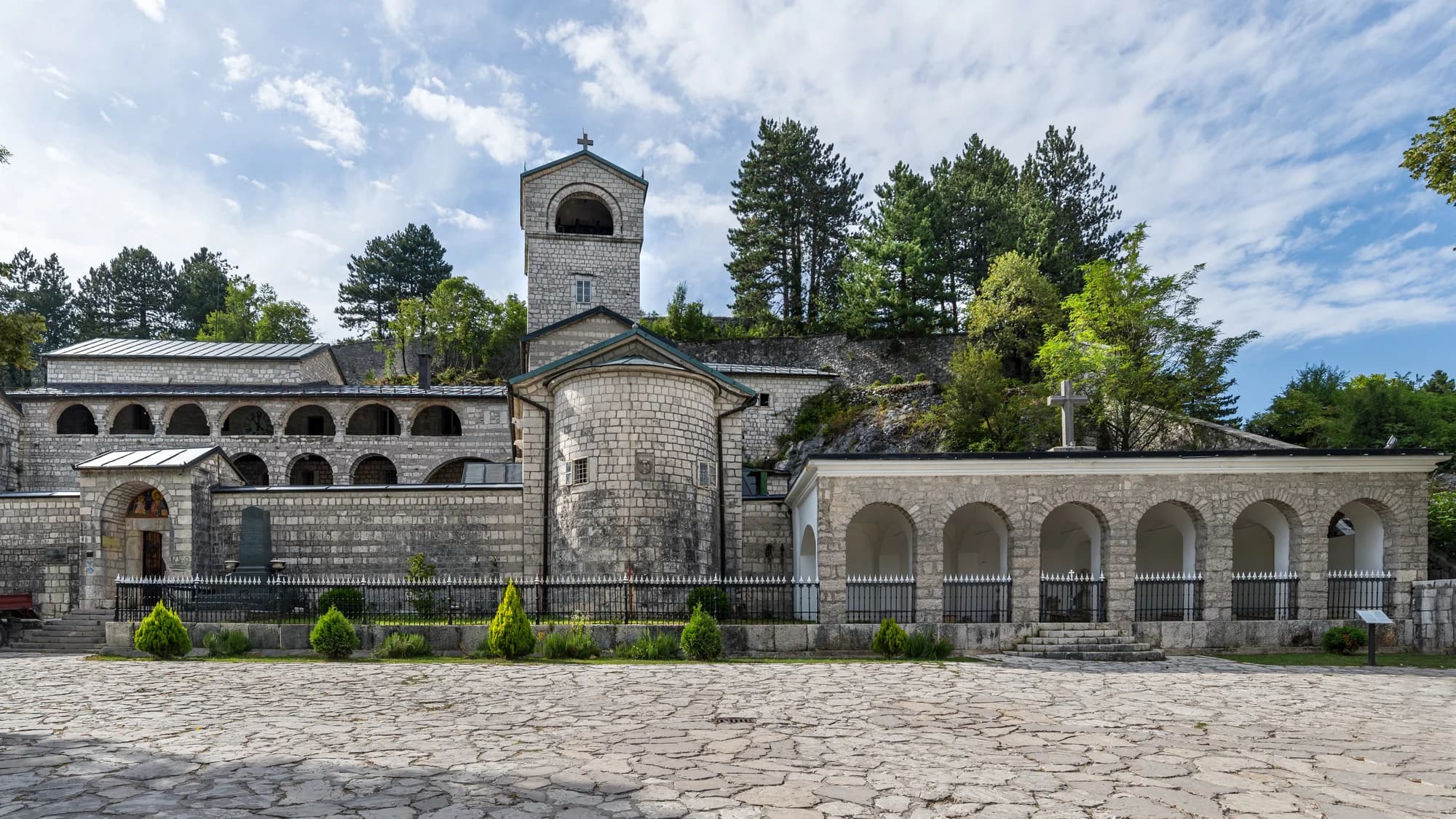
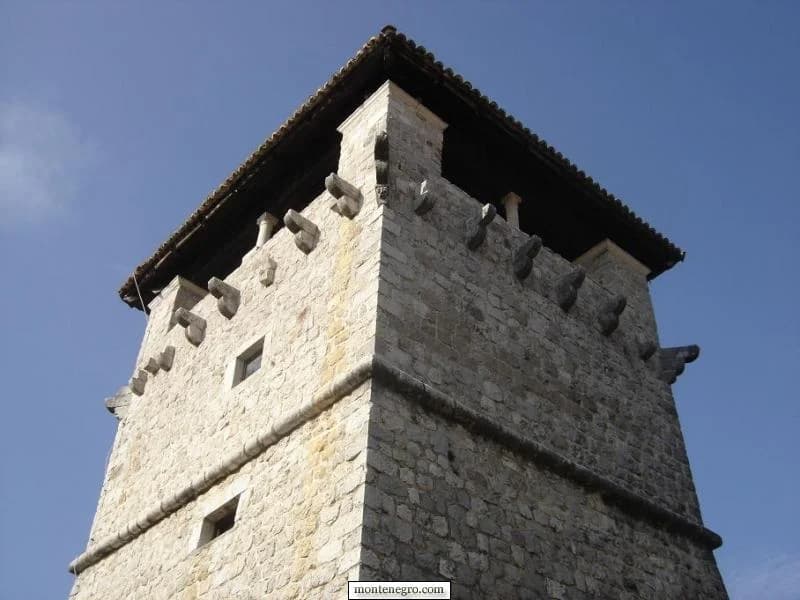
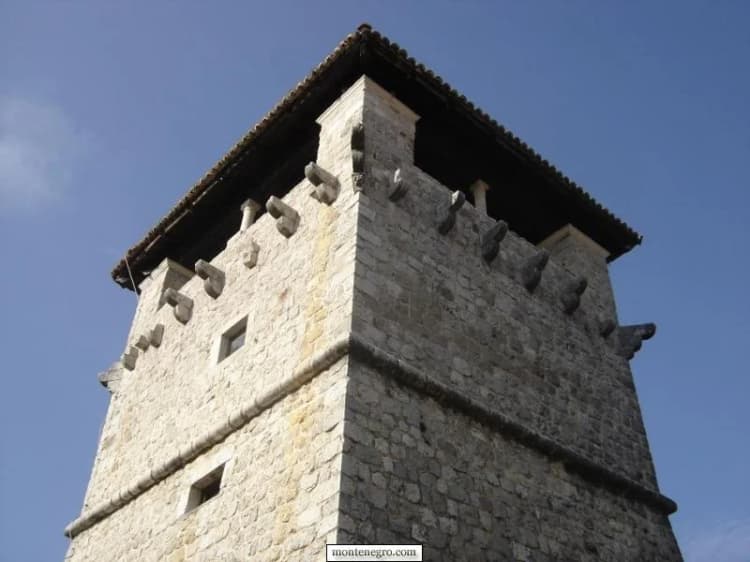
The Buća-Luković complex earns first place because it corrects the impression that Tivat began with modern yachting. It is a fortified summer residence associated first with the Buća family of Kotor and later with the Luković family. Its surviving ensemble includes residential and service buildings, a tower, chapel and enclosed court. The official heritage catalogue treats it as a layered complex rather than a perfectly uniform “Renaissance palace.”
What the sources say
The tower inscription records 1548, but the same catalogue cautions that the date probably marks rebuilding. Elements may reach back toward the late fourteenth century, while later interventions added late-Gothic and Renaissance character. That distinction matters: a date carved into reconstructed fabric does not automatically date every wall. Tivat Tourism records transfer to Tripo Luković in 1812 and says the heirs left part of the property to the municipality in 1888.
Today the complex is tied to Tivat’s museum and gallery activity. The official culture page lists the Museum Collection “Ethnographic Heritage of Tivat,” archaeology, documentary and art exhibitions at the medieval complex. It displayed an 08:00–20:00 working period on 1 September 2026, but did not clarify season, closing days, ticketing, which rooms are continuously open or whether the same schedule applies during installations. Treat that listing as a contact lead, not an access guarantee. The page publishes Trg od kulture 4, +382 (0)32 674 591 and [email protected].
Outside viewing still rewards attention: read the tower, walls, gate and chapel as parts of a defended household rather than a single mansion façade. For a deeper architectural and Great City Park pairing, use the dedicated Buća-Luković Palace and Tivat park guide. Ask staff which spaces and exhibitions are available that day; not every building in the complex is necessarily part of the public gallery route.
2. Pine promenade: the easiest way to orient yourself
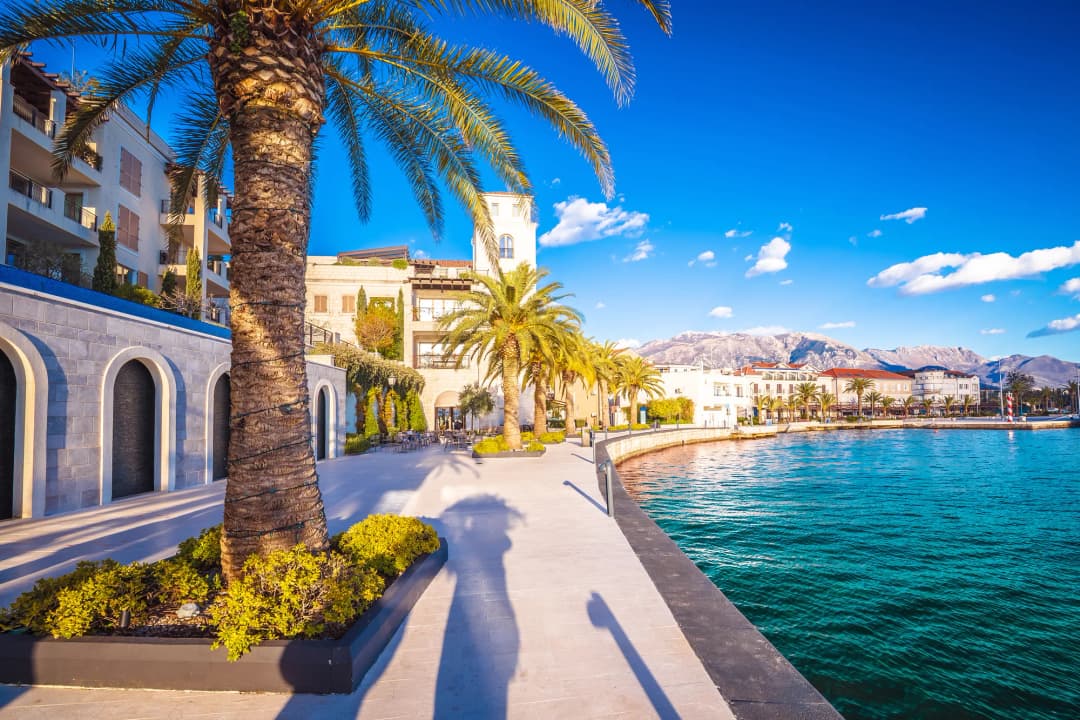
Pine is the least complicated stop. It occupies Tivat’s central waterfront and works as the visual hinge between the civic centre and the Porto Montenegro direction. Come here to understand the open scale of Tivat Bay, not to search for an old town comparable with Kotor. The promenade is a modern public realm with benches, hospitality businesses and views; individual terraces, piers and marina facilities may be private or commercially managed.
The best use is a slow outward-and-back walk. Notice how the shoreline changes as the traditional centre gives way to the former Arsenal and contemporary marina landscape. Cafés are optional, not the attraction’s proof of value; their prices and operating times vary. In hot weather, build the walk around shade and water rather than the midday sun. During events, follow temporary barriers and leave emergency or working-waterfront access clear.
Anyone deciding whether to stay in the centre or use Tivat as a base can continue with the broader Tivat city guide. Pine itself needs little scheduling, which makes it the safest buffer between two ticketed or appointment-dependent places.
3. Naval Heritage Museum: understand what Porto replaced
Porto Montenegro makes more sense after the Naval Heritage Museum. The current Porto Montenegro museum page describes a collection housed in a restored nineteenth-century sawmill at the north end of the village. Its more than 300 artefacts, Austro-Hungarian naval equipment, machinery and two Yugoslav submarines preserve an industrial and naval layer that the contemporary marina can otherwise conceal.
The outdoor submarine display is the immediate landmark. The current operator page listed Tuesday–Saturday opening from 09:00 to 17:00 on 1 September 2026 and publishes +382 (0)69 356 031 and [email protected]. It does not publish a ticket price or promise submarine-interior entry on every opening day. Recheck the hours, admission and submarine access separately before making the museum the fixed point of a short visit.
| Permanent collection | Check before visit |
|---|---|
| 300+ artefacts | posted hours |
| restored sawmill setting | admission price |
| naval machinery | submarine interior |
| two submarines | accessibility route |
Source: portomontenegro.com, tivat.travel
Read the museum in three layers: the Austro-Hungarian industrial building, the Yugoslav naval base, and the post-2007 marina transformation. The wider Porto Montenegro guide explains the contemporary destination, while the museum supplies the memory that a polished waterfront can otherwise conceal.
4. Tivat Solila: a reserve, not a bird checklist
Tivat Solila protects a former saltworks between freshwater inflows and Tivat Bay. Ramsar lists it as site 2135, covering 150 hectares and designated on 30 January 2013. Montenegro declared it a special nature reserve in 2008. The wetland’s shallow water, mud, channels and salt-tolerant vegetation create feeding and resting habitat for migratory birds as well as habitat for amphibians and reptiles.
The number of recorded species varies across documents because surveys, dates and taxonomic scope differ. That is normal in ecological work and a reason not to turn an old total into a promise. Ramsar highlights the site's role for migratory birds and pygmy cormorants, but no source can guarantee that a visitor will see a named species on a chosen morning. Season, water level, weather, disturbance and observation skill all matter.
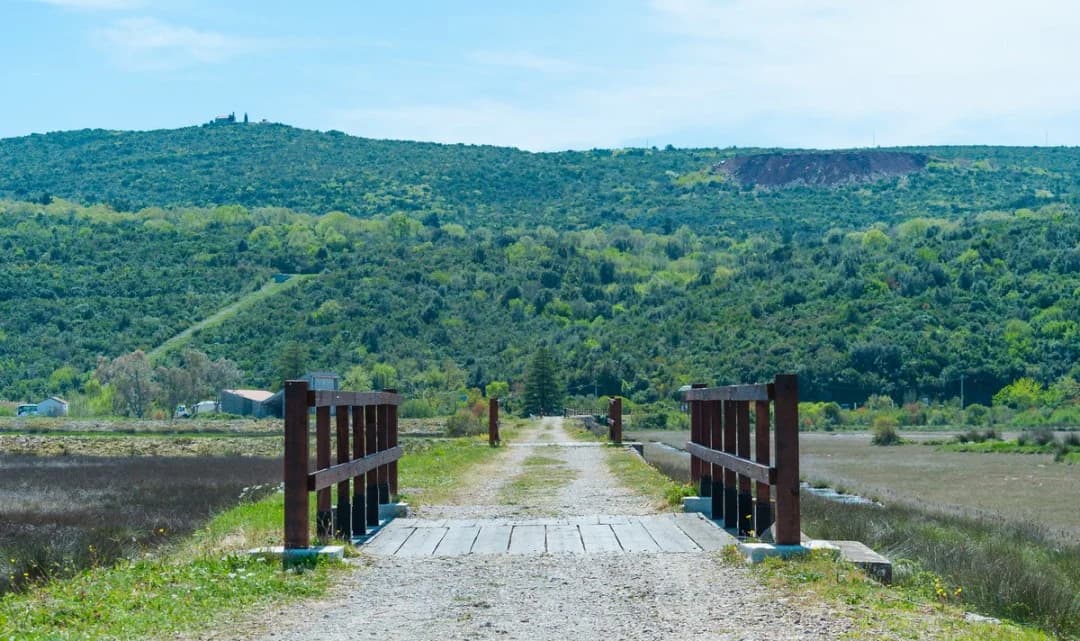
The reserve manager says fishing is prohibited and that monitoring, educational and tourism visits are based on manager approval, with no disturbance of wildlife or damage to habitats. Confirm current authorization with Morsko dobro before setting out; a route shown on an old map is not permission to enter. Once authorized, stay on the managed route, obey newer signs, keep voices low, give animals space and take litter out. Do not use recordings to draw birds closer, launch a drone, cross a dyke barrier or treat observation structures as picnic shelters when others are watching. Conditions can make surfaces muddy, exposed or uncomfortable, so carry water, sun protection and binoculars and be willing to turn back.
| Step | Action |
|---|---|
| CHECK | conditions |
| FOLLOW | the route |
| WATCH | from distance |
| DISTURB | nothing |
| REMOVE | all litter |
| Limits | No fishing · no playback · no off-route shortcut · no sighting guarantee |
Source: rsis.ramsar.org, morskodobro.me
The dedicated Tivat Solila birdwatching field guide covers equipment, ethics and evidence in more depth. Solila belongs on the top-five list only if you accept that the habitat—not a close photograph—is the destination.
5. Miholjska Prevlaka: living religion and contested chronology
Miholjska Prevlaka, often marketed as the Island of Flowers, is a small landform connected to the mainland by a narrow link. Its main reason for inclusion is not the floral nickname but the active Monastery of St Michael the Archangel and the visible relationship among present religious life, the nineteenth-century Church of the Holy Trinity and remains of earlier buildings.
What the sources say
Tivat Tourism records occupation of the peninsula from Hellenistic through medieval periods; a Benedictine abbey existed in the early Middle Ages; the location became the seat of the Zeta bishopric in the early thirteenth century and gained metropolitan status in 1346. It describes archaeological evidence for a three-nave basilica and dates the Church of the Holy Trinity to 1833. A separate tourism page presents a tradition beginning with a sixth-century monastery and later destruction. Those specific episodes belong to the site's institutional tradition and are not universally settled archaeological conclusions.
This is a living monastery, not an abandoned ruin. Check current access before travel; dress in a way appropriate to an active religious community; silence phones; never photograph worshippers, monastics or an interior without permission. A publicly mapped peninsula does not make every path, residence, excavation or shore publicly accessible. Services and religious events take priority over sightseeing.
The dedicated Miholjska Prevlaka evidence and visit guide separates archaeology, church tradition and visitor etiquette. If the site is closed or a service is underway, accept an exterior-only visit rather than trying to negotiate entry.
How to combine the five without rushing
| Group | Site | Note |
|---|---|---|
| CENTRAL TIVAT · WALKING GROUP | Buća-Luković | walkable |
| CENTRAL TIVAT · WALKING GROUP | Pine | walkable |
| CENTRAL TIVAT · WALKING GROUP | Naval museum | walkable |
| Outer site | SOLILA | conditions + reserve route |
| Outer site | MIHOLJSKA PREVLAKA | access + religious etiquette |
Source: tivat.travel, portomontenegro.com, morskodobro.me
Short visit: choose Buća-Luković if its museum spaces are confirmed, then walk Pine. Add the Naval Heritage Museum only if current entry is verified. This keeps the route coherent and leaves room for an unexpected closure.
Full day: complete the central group and choose either Solila or Miholjska Prevlaka. Solila suits nature observation only after current manager authorization is confirmed; Prevlaka suits visitors comfortable entering a living sacred place respectfully. Trying both outer sites after three central stops can reduce each to a photograph and amplify transport uncertainty.
Two days: give the central waterfront its own half-day, then place Solila and Prevlaka on a separate outing only after checking the current map and conditions. For a country-wide schedule, the seven-day Montenegro itinerary helps keep Tivat in proportion. Travellers still choosing coastal priorities can compare the five-stop Montenegro shortlist.
Practical access and transport decisions
The venue pages do not provide a complete accessibility route for all five sites. Before a mobility-dependent visit, ask each managed venue about the route from drop-off to entrance, gradients, thresholds, lifts, accessible toilets, seating and which exhibition levels are open. At Solila, ask about current surface condition and accessible viewing points. At Prevlaka, ask what can be reached without steps while respecting residential and liturgical areas.
Do not infer legal parking from cars already stopped beside a road. Tivat’s airport traffic and summer congestion can change a simple-looking transfer. Use the official map, confirm the destination with a licensed driver or accommodation host, and preserve a return buffer. A walking time from a mapping app may ignore heat, crossings, crowds and access gates.
Frequently asked questions
Can all five Tivat attractions be visited in one day?
Physically possible does not mean worthwhile. The three central stops combine naturally. Add one outer site after checking access; keep the fifth for another day if transport or opening uncertainty is high.
Is Buća-Luković a Renaissance palace?
That label is too simple. The official catalogue describes a layered fortified summer residence with possibly late-fourteenth-century fabric, a 1548 rebuilding inscription and late-Gothic and Renaissance interventions.
Can I enter the P-821 Hero submarine?
Do not assume so. Official material confirms the display and museum, but the current attractions directory does not guarantee daily submarine-interior entry. Contact the operator before building a trip around it.
Is Tivat Solila free and always open?
Do not assume so. The reserve manager does not publish a reliable all-season admission and opening statement and says tourism visits are based on its approval. Confirm current authorization and follow entrance notices and restrictions.
What birds will I see at Solila?
No particular species is guaranteed. Ramsar confirms its importance as migratory feeding and resting habitat; sightings depend on season, water, weather and disturbance.
Is Miholjska Prevlaka an island?
Tourism material describes it as a small island-like peninsula joined to land by a narrow connection. More important for visitors, it is an active monastery site rather than a conventional beach attraction.
Is Pine part of Porto Montenegro?
They connect along Tivat’s waterfront but are not interchangeable. Pine is the central public promenade; Porto Montenegro occupies the transformed former Arsenal area farther along the shore.