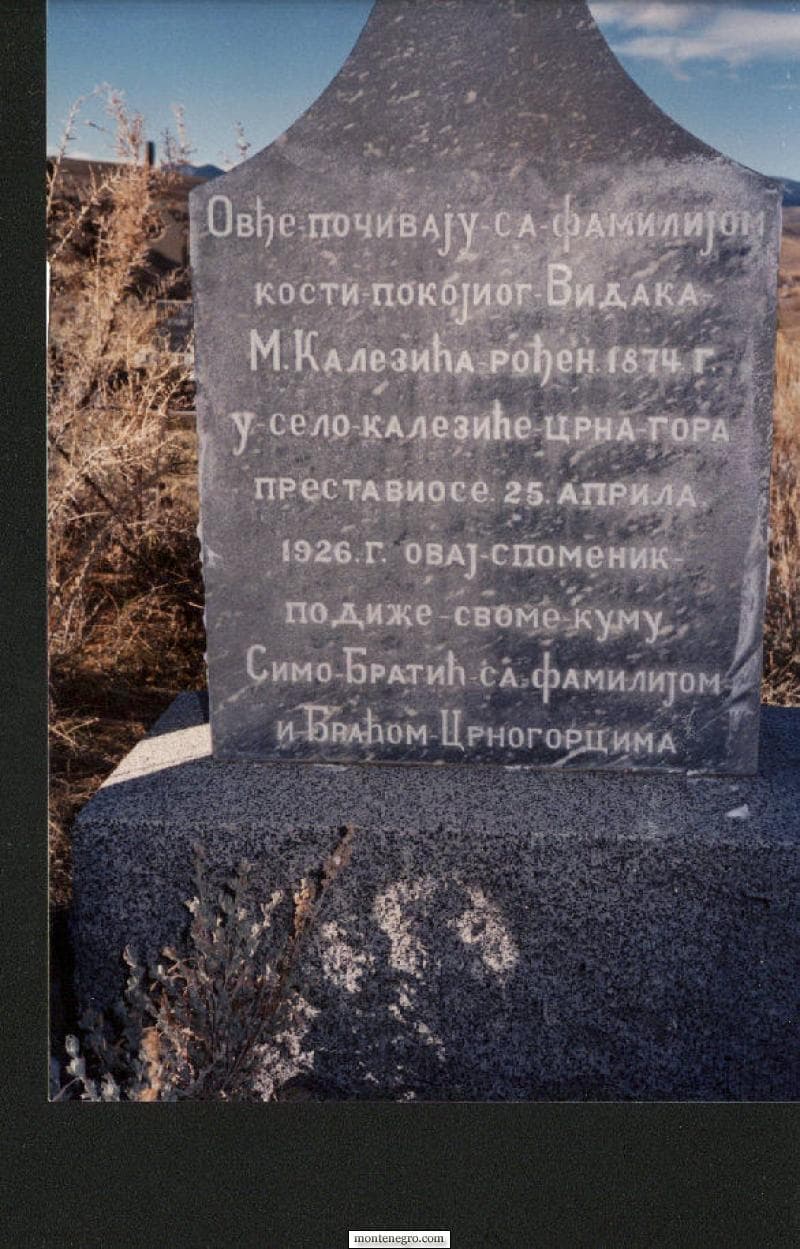
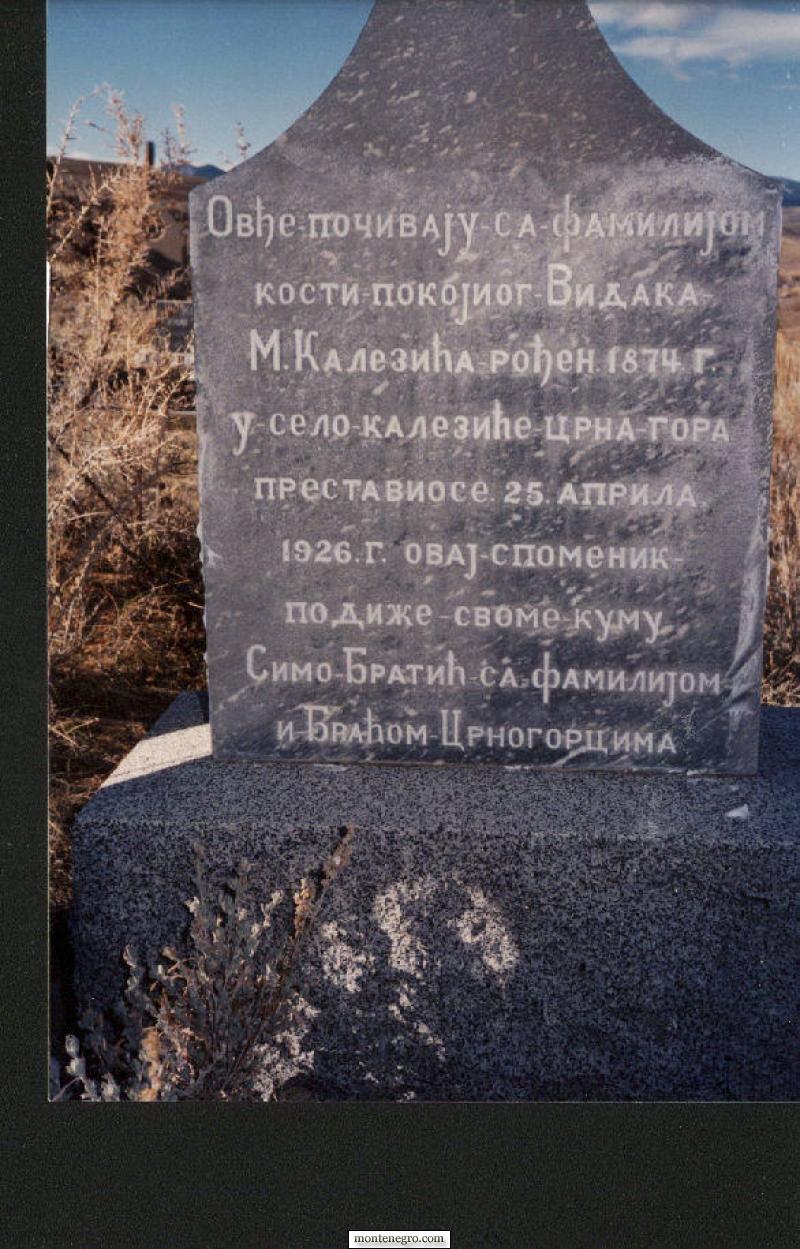
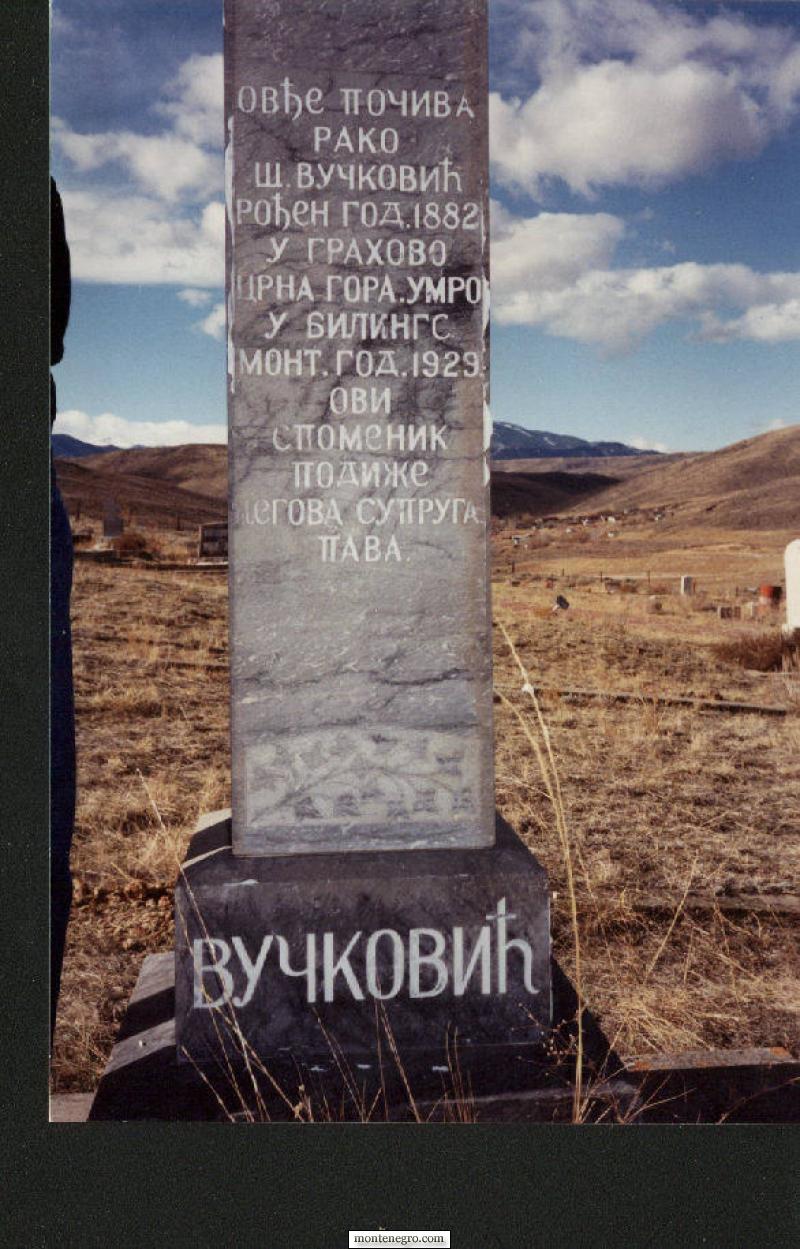
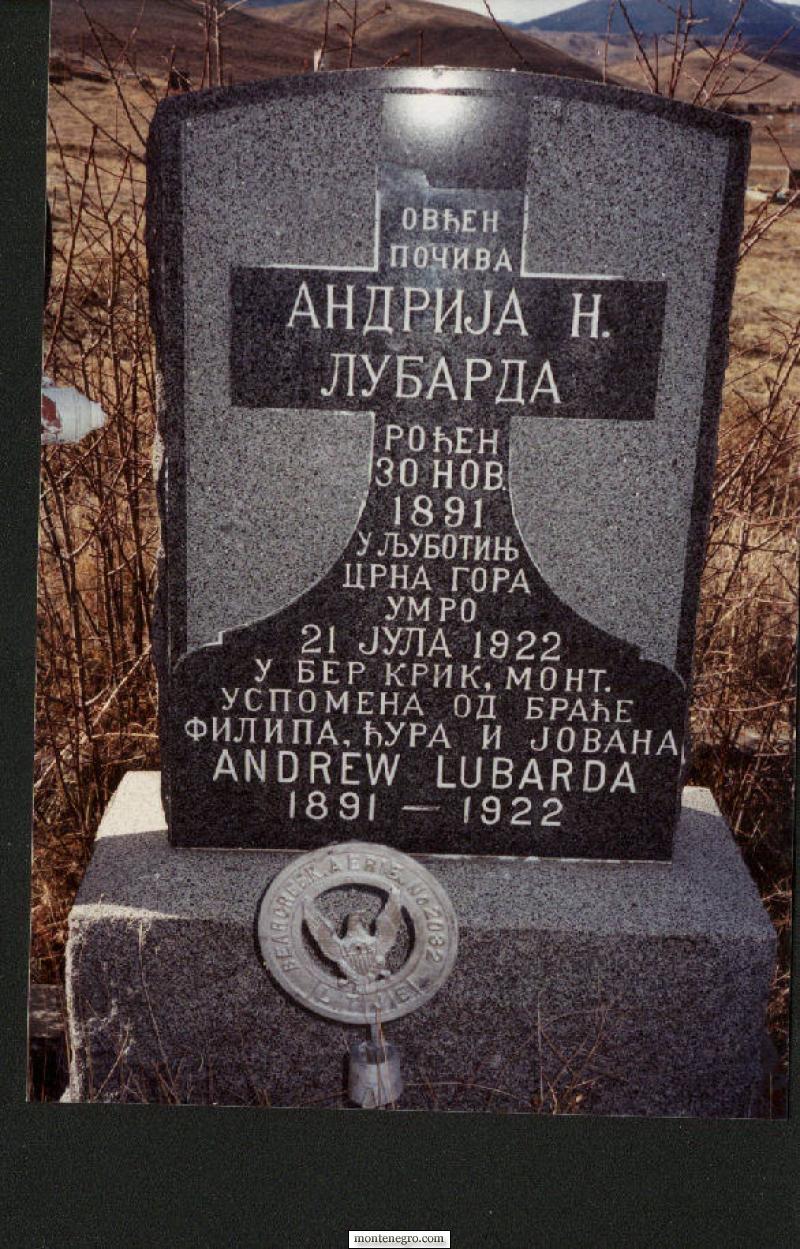
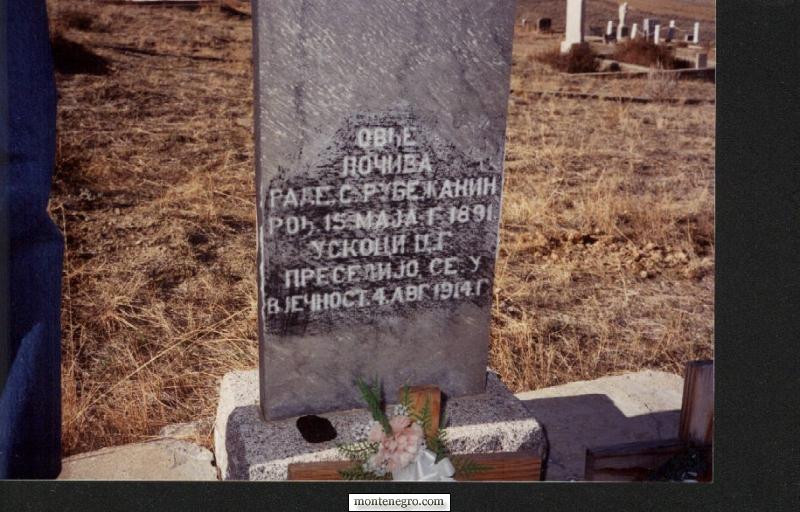
Eight gravestones in Bearcreek Cemetery preserve unusually direct evidence of migration from Montenegro and the Bay of Kotor to Montana’s coal country. Their Cyrillic inscriptions name villages, spouses, brothers, godparents, and dates that a surname-only index cannot recover. Together with current Montana records, the stones reveal both individual lives and the limits of what can be known from a cemetery alone.
Bearcreek Cemetery is not a “Montenegrin cemetery” in the exclusive sense. It is a multiethnic community cemetery west of Bearcreek, near Red Lodge in Carbon County. The Montenegrin stones form one important cluster within a landscape that also records Croatian, Serbian, Slovenian, Italian, Scottish, Finnish, German, French, and English-speaking families. The companion Montenegrin cemeteries in Montana article introduces the wider community. These eight photographs provide a closer view of named people, places of origin and kinship.
What the cemetery establishes
The most useful current overview is Montana’s official historic-marker text. It records 473 burials at Bearcreek, including 107 children, and says that 22 victims of the 1943 Smith Mine disaster lie in family plots there. It also places many Cyrillic stones in the southeastern corner. In 1920, according to the marker, one-third of Bearcreek’s residents were immigrants and another third were children of immigrants. Those figures turn the cemetery from a collection of isolated names into evidence of a settled immigrant community.
The same Montana Historical Society marker compilation explicitly identifies Montenegrin names among the cemetery’s many ethnic traditions. That wording matters. A Cyrillic inscription or an -ich ending does not, by itself, prove Montenegrin origin. In this photo set, the strongest identifications are the stones that literally say Crna Gora or name places such as Grahovo, Ljubotinj, Kalezine, Nikšić, or Releza in Lješanska Nahija.
Why Montenegrins came to Bearcreek
Commercial mining in the Bear Creek field accelerated after rail access arrived in 1906. The National Park Service’s Smith Mine Historic District nomination describes a large underground operation that expanded through the early twentieth century and remained in production for more than half a century. The Library of Congress Historic American Engineering Record separately documents the nearby Foster Gulch workings and states that the connected operations continued until 1953.
Coal work supplied the economic pull, but it should not be allowed to flatten every individual life into “a miner’s story.” None of these eight stones states an occupation or cause of death. The photographs prove presence, origin, kinship, and commemoration; mine employment requires a census, company roll, union record, newspaper, naturalization file, or other person-specific evidence. Short lifespans in this set do not automatically demonstrate mine accidents or occupational disease.
The Montana Historical Society's Coming to Montana resource places immigrant settlement within the state's demand for labor in mining, railroads, agriculture and other expanding industries. That statewide pattern explains the wider migration setting without assigning an occupation to any person shown here.
Community memory supplies a richer frame. The Montana Historical Society records a South Slav Oral History Project associated with Anna Zellick for 1989–1996. Oral histories can illuminate community relationships, work, religion and family life, but each memory still belongs to a particular narrator and context. Use it as a route into community history, not as proof of an unrelated person's biography.
Eight photographed inscriptions and the public index
The table compares only legible inscription evidence with the current Carbon County MTGenWeb transcription. Latin spellings follow that index where available; diacritics and origin phrases follow the photographs. “Not found” means no obvious matching row appears in the current index; it does not mean no burial record exists.
| Photographed identity | Legible origin/date evidence | Public transcription check |
|---|---|---|
| Vidak M. Kalezić / Kalezich | Kalezine, Montenegro; 1874–25 Apr 1926 | Kalezich, Vidak M.; 1874–1926 |
| Rako Š. Vučković | Grahovo, Montenegro; 1882–1929 | Vukovich, Rako S.; 1882–10 Mar 1929 |
| Andrija N. Lubarda | Ljubotinj, Montenegro; 30 Nov 1891–21 Jul 1922 | Lubarda, Andrija N.; dates match |
| Rade G. Rubežanin | 1891–4 Jan 1914; origin wording partly unclear | Rubezanin, Rade; 1891–1914 |
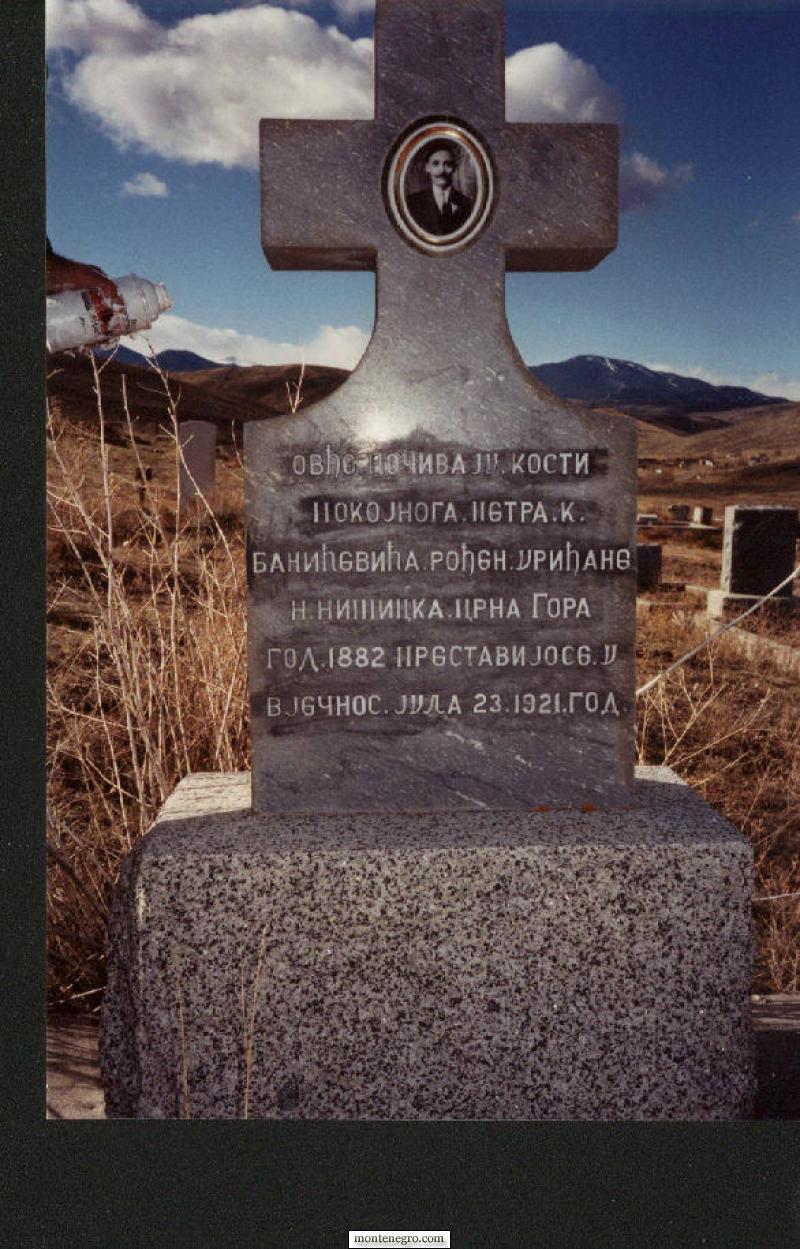
| Petar K. Banićević | Montenegro named; 1882–23 Jul 1921 | Banichevich, Peter K.; death Jul 1921, birth unknown |
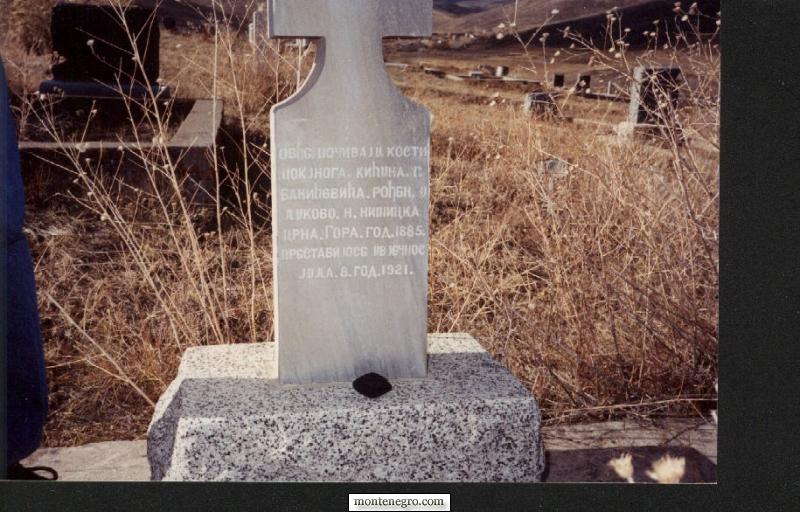
| Kićun G. Banićević | Jakovo, Nikšić area, Montenegro; 1885–8 Jul 1921 | Banichevich, Kichun G.; death matches, birth unknown |
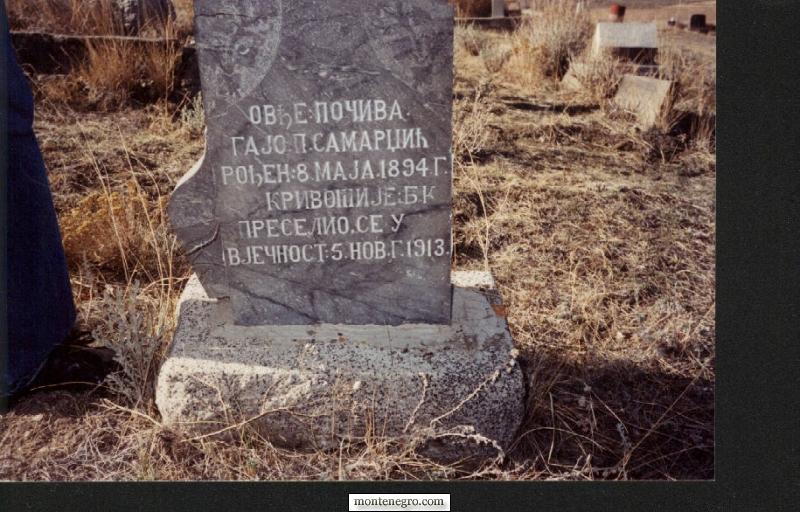
| Gajo P. Samardžić | Krivošije, Boka; 8 May 1894–5 Nov 1913 | Samardjich, Gajo P.; dates match |
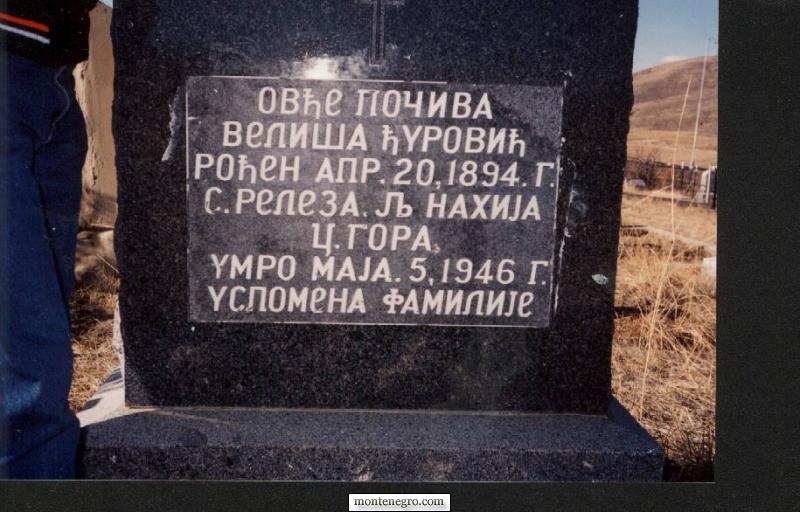
| Veliša Đurović | Releza, Lješanska Nahija; 20 Apr 1894–5 May 1946 | No obvious matching row located |
The differences are normal genealogical problems, not defects to hide. English-language records often transliterated č, ć, š, and ž without diacritics, while -ić became -ich, -ovich, or another clerk’s approximation. A search for Vučković should therefore include Vuckovic, Vukovich, Vuchkovich, and phonetic variants. The Montenegro language guide explains why one name can appear differently across Cyrillic and Latin records.
Kinship written into stone
The memorials preserve social connections that an alphabetical list can erase. Kalezić’s stone records a kum—a godparent or ritual sponsor—along with “brother Montenegrins.” Vučković’s names Pava as the wife who erected it. Lubarda’s names three brothers. These are clues for reconstructing households, sponsorship, chain migration, and mutual-aid networks, but they are not complete family trees. Each relationship should be tested against census schedules, marriage and death records, passenger arrivals, and naturalization files.
The two Banićević stones are especially suggestive. Petar died on 23 July 1921 and Kićun on 8 July 1921. Their shared surname, close dates, and related origin language justify researching them together, but not inventing a kinship or common cause of death. The current transcription lists both men yet does not supply their birth years. The photographs add those missing data while leaving the relationship unresolved.
A multiethnic cemetery, not an ethnic silo
Montana’s marker text describes sandstone, granite, and marble monuments, children’s stones with lamb motifs, Cyrillic inscriptions, and portrait ceramics. That material variety mirrors Bearcreek’s population. The correct historical picture is not a sealed Montenegrin colony but an industrial town where immigrants built overlapping neighbourhoods, workplaces, unions, fraternal groups, and families.
The 1943 catastrophe is central but chronologically separate from most stones shown here. The National Register nomination says 74 miners were killed in the Smith Mine by explosion and poison gas. The cemetery marker describes a monument to 75, and another entry in the Montana Historical Society’s official marker compilation gives the reconciliation directly: 74 miners died in the mine and one rescuer died later. The two official totals therefore describe different points in the same tragedy: 74 underground deaths and 75 people commemorated.
| Year | Event |
|---|---|
| 1906 | rail + mine growth |
| 1920 | immigration profile |
| 1943 | Smith disaster |
| 1947 | memorial installed |
| 1953 | operations end |
Source: mhs.mt.gov, npgallery.nps.gov, loc.gov
Practical genealogy workflow
- Start with the photograph, not a modern spelling. Save a literal Cyrillic transcription, a Latin transliteration, uncertain characters, monument material, symbols, and named relatives.
- Compare the cemetery index. Search every plausible spelling and use dates to separate people with similar names. Treat a transcription as a finding aid, not an infallible original.
- Locate the household. The National Archives census guide explains that 1910 schedules include birthplace, parents’ birthplaces, immigration year, citizenship, language, occupation, and industry. Later schedules add further naturalization clues.
- Search local newspapers and directories. Billings Public Library’s genealogy portal points to early city directories, vital indexes, historic Billings papers, and Library of Congress newspapers. Search both Bearcreek and Red Lodge.
- Use oral history for context, not substitution. The Zellick collection can explain neighbourhoods, food, work, unions, religion, and prejudice, but a memory about one family does not prove another person’s biography.
- Request the underlying record. Ask repositories for the highest-resolution image, cemetery survey sheet, accession information and any notes attached to the collection. Confirm the repository and rights status directly before publication or reuse.
For wider diaspora comparison, read the documented Montenegrin emigrants in Alaska, the Montenegrin emigration to Argentina book archive, and the La Montenegrina and Sjećanja reading guide. The Nikola Petanović archive and Montenegro.com diaspora research history show how scattered private evidence can be reconnected without turning inference into fact.
FAQ
Is Bearcreek Cemetery exclusively Montenegrin?
No. Montana’s official marker presents it as a multiethnic cemetery. The Cyrillic and explicitly Montenegrin stones are a significant cluster within that broader community record.
Were all eight men coal miners?
The photographs do not say. Bearcreek’s economy was dominated by coal, but occupation must be proved person by person through census, company, union, newspaper, or vital records.
Did these men die in the Smith Mine disaster?
No. Seven photographed death dates precede 1943; Đurović died in 1946. The disaster is essential town context, not the cause of death for this photo set.
Why do names differ between stone and index?
Cyrillic-to-Latin transliteration, missing diacritics, English phonetic spelling, and transcription choices create variants such as Vučković/Vukovich and Banićević/Banichevich.
Can descendants reuse the images?
This publication’s permission does not automatically grant third-party reuse. Descendants and researchers should request a rights statement and highest-resolution copy from Montenegro.com and any identified holding repository.