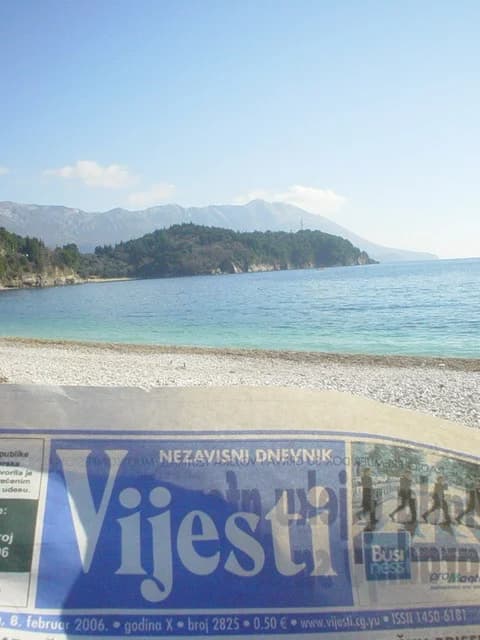
A two-paragraph archive note says that Vijesti published Gordan Stojović's series “Montenegrin Diaspora in South America” and that Montenegro.com helped connect emigrants with their homeland. It sounds like a press mention. In fact, it is a doorway into one of Montenegro's least measured histories: families dispersed across Argentina, Uruguay, Chile and neighbouring countries, rediscovered through early internet messages, newspaper reporting, field visits and imperfect public records.
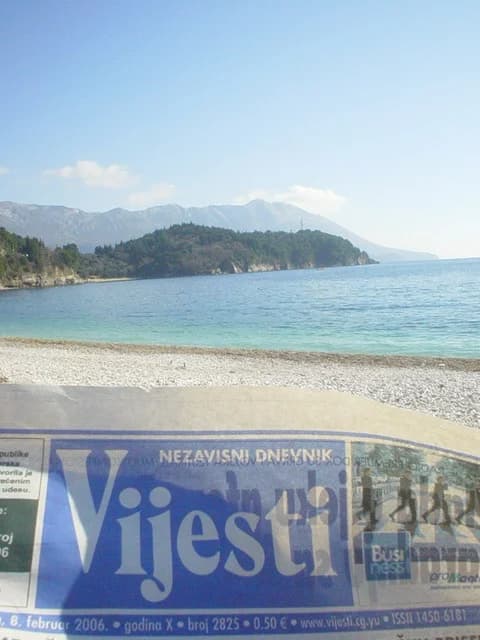
The original note cannot support every claim later attached to it. It gives no date for the newspaper series, no installment count and no page references. A surviving photograph visibly shows the Vijesti masthead dated 8 February 2006, but that proves only the date of the photographed issue. The migrated web page says it was updated in 2021. Calling the feature “recent,” as the old copy does, now conceals more than it explains.
What the surviving archive proves—and what it does not
| Archive element | What it supports | What remains unknown |
|---|---|---|
| Montenegro.com legacy text | It says Vijesti carried a Stojović series with the stated title | Dates, installment count, page numbers and full text |
| Newspaper-on-beach photograph | The visible issue is dated 8 February 2006 | Whether that issue contained the series |
| Montenegro.com wording | The platform credited itself with a role in reconnecting emigrants | Number of contacts, messages, outcomes or independent corroboration |
| Reference to “a decade” | Stojović had a sustained research network by the time of the note | The exact start and end dates intended by the writer |
| 2021 page update | The page was migrated or edited by that date | The original publication date |
This separation is not pedantry. Digital archives routinely collapse three clocks: the date an event happened, the date an article was first published and the date a platform migrated it. Here, the only safe description is that Montenegro.com's surviving page records a Vijesti series and an early online diaspora project, while the serial itself still needs a complete bibliographic reconstruction.
The wider publication trail is firmer. Matica crnogorska's bibliography lists Stojović's “Montenegrins in Argentina” in 2000, “Forgotten Montenegrin Colonies in America” in 2006, “Montenegrin Diaspora in Argentina and Surrounding Countries” in 2009 and an Argentina address book in 2010. That sequence establishes sustained work before later government and diplomatic roles. It does not validate each biographical detail in those publications; it gives researchers identifiable texts to find and test.
From a web contact to an evidence trail
The internet changed the first move in diaspora research. A descendant in Buenos Aires could search a surname, find a Montenegro page and send a message without knowing the right archive, village spelling or political-era nationality. A researcher in Montenegro could circulate a question across communities that had been separated from the language for generations. Those contacts mattered, but a contact is not yet a historical fact.
The strongest method converts a story into a chain. A family remembers a village or brother's name. A passenger entry supplies an arrival date and ship. A marriage or death record confirms parents. A Montenegrin parish or civil register anchors the person to a locality. A cemetery inscription or community minute book adds context. Each source answers a different question, and disagreement is information rather than an inconvenience to erase.
| Step | Stage | What it yields |
|---|---|---|
| 1 | Family interview | Names · nicknames · village; religion · relatives · dates |
| 2 | Arrival record | 1882–1937 Buenos Aires; name · ship · age · port |
| 3 | Life in America | Civil record · cemetery; newspaper · association |
| 4 | Montenegro link | Archive fonds · registers; locality · parents · date |
| Documentation | Record for each step | Spelling variants, repository, collection, page or certificate, access date, uncertainty |
| Standard of proof | Weighing a match | Surname match alone is a lead; two independent records make a relationship substantially stronger |
Argentina General Archive passenger-search guidance; State Archives of Montenegro holdings and access instructions
Why no honest article can give one diaspora number
A 2013 Vijesti report quoted estimates of 30,000–40,000 descendants under a narrower definition and as many as 60,000 when descent through women was included. Those figures are useful evidence of how researchers framed the community at the time. They are not census counts, and they should not be promoted into a current total.
Definitions do most of the damage. Does “Montenegrin” mean a person born inside today's borders, a citizen of the former Kingdom of Montenegro, somebody recorded as Austrian or Yugoslav, a child of one Montenegrin parent, or any descendant who retains the identity? The answer changes across periods and families. Women also disappear when researchers follow surnames alone. Assimilation changes language and religion without necessarily ending a memory of origin.
The archives have coverage limits too. Argentina's General Archive passenger search covers maritime arrivals at Buenos Aires from 1882 through 1937. The collection contains 808 books and more than four million arrival entries. That is a remarkable dataset, but it excludes earlier arrivals, other ports, land crossings and people moving onward from Uruguay or elsewhere. An “arrival” is also not a unique permanent immigrant; one person may cross more than once.
Montenegro's voluntary diaspora register, launched in 2025, is a useful modern contact and policy tool. It cannot retroactively census historical descendants, and voluntary sign-up produces its own selection bias. The correct dashboard therefore shows sources and definitions side by side rather than adding incompatible estimates.
| Evidence | Coverage | Use | Do not use it for |
|---|---|---|---|
| 2013 public estimate | Claimed 30,000–60,000 depending on lineage definition | History of public understanding | A current census total |
| Argentine passenger books | Buenos Aires maritime arrivals, 1882–1937 | Individual arrival evidence | All ports, all years or descendants |
| Community associations | Organized participants in particular places | Networks, events and oral-history leads | Everyone with Montenegrin ancestry |
| 2025 Montenegro register | Voluntary contemporary registrations | Connection and policy design | Historical population measurement |
| Family trees | Lineage assembled by individuals | Hypotheses and record discovery | Proof without source citations |
The South American map is a network, not a dot
Argentina holds the most visible institutional record, but treating “South American diaspora” as shorthand for Buenos Aires misses the structure. The 2013 account identified Dock Sud, Tandil, General Madariaga and La Montenegrina in Chaco among key Argentine locations. Families also moved through Montevideo and Carmelo in Uruguay and across the Andes or Pacific coast. A research map should plot people, dates and record repositories—not shade whole countries with an unsupported total.
Government reports show organization continuing after the early web work. A 2016 roundtable in Buenos Aires brought together participants from communities in Buenos Aires, Tandil and Mexico alongside scholars and Stojović, then ambassador. In 2017 an organized branch formed in Carmelo, Uruguay. The government account says Montenegrin settlers had arrived there more than 120 years earlier, many working in quarries and tracing family origins to Piperi and the wider Podgorica area.
Chile illustrates the problem of estimates without a census frame. Montenegro's diplomatic overview says more than 5,000 descendants live there and notes the 2016 opening of an honorary consulate in San Javier. It also says Chile lacked organized emigrant communities comparable to neighbouring countries at the time described. The number is therefore best treated as an official estimate attached to a diplomatic overview, not a measured register.
For one personal route into that Pacific history, read our archive on Petar Zambelić of Luštica and Chile. For the Argentine field archive, continue with Montenegro.com in General Madariaga and its third-part cemetery record. Those stories are leads and testimony; names and dates still need documentary checking.
What Montenegro.com appears to have done
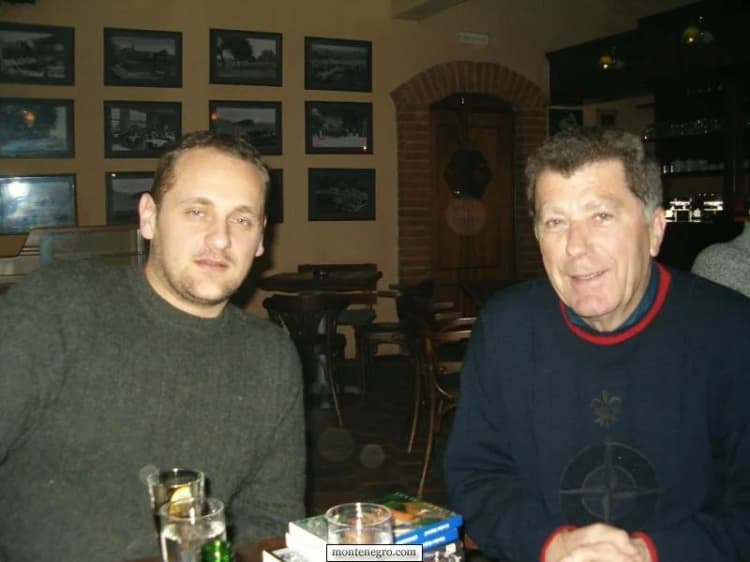
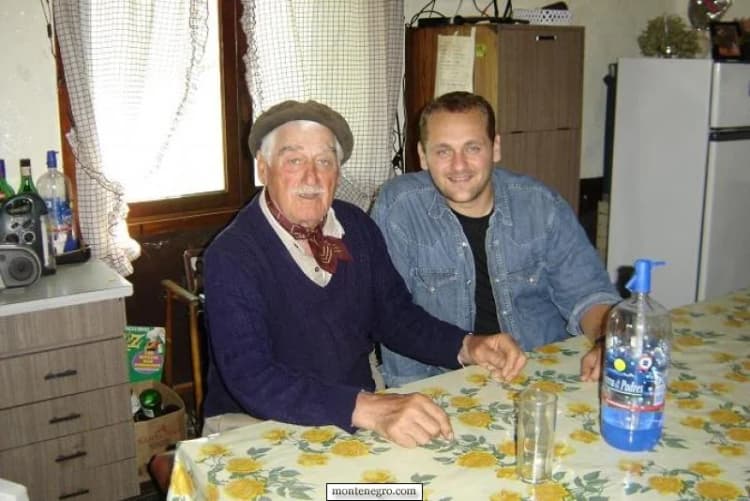
The old page's strongest institutional claim is that Montenegro.com helped reconnect expatriates with their homeland. The platform's surviving Argentina stories, names embedded in image files and references to direct encounters support the existence of a working contact network. The publication bibliography supports Stojović's parallel research record. Later public service and diplomatic reports show that the network eventually overlapped with formal institutions.
What is missing is a quantitative archive: inbox exports, consented correspondence, a dated project log, contact counts, outcomes and independent testimony from participating families. Without those, it would be promotional to say the website “reconnected the diaspora” as a finished achievement. A narrower statement is supported: it provided an early digital channel through which contacts and stories were collected and shared.
That contribution still matters. In the early 2000s, a searchable page could bridge an information gap that newspapers, associations and consulates handled slowly. It could publish a surname that a descendant found years later. It could also spread an error indefinitely. The same discoverability that connects a family makes source notes, dates and corrections essential.
From informal network to public institutions
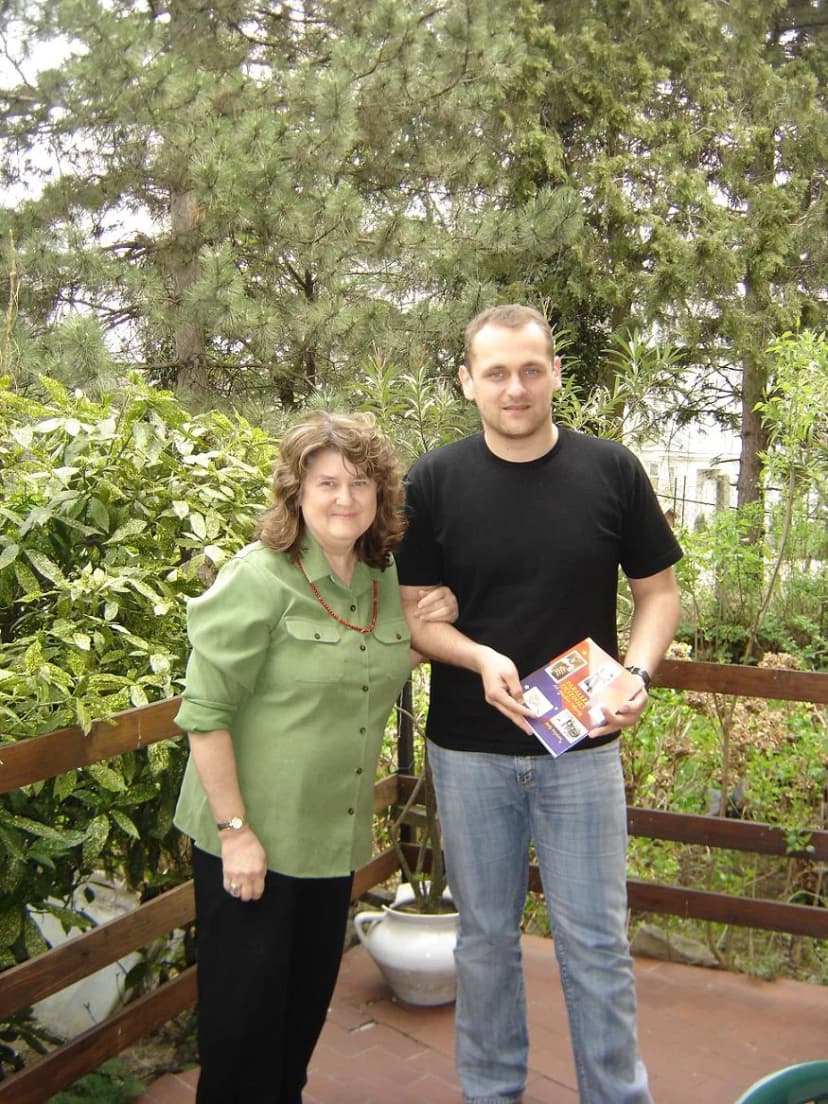
Montenegro and Argentina established diplomatic relations in September 2006, according to Argentina's foreign ministry. Montenegro later opened a resident embassy in Buenos Aires; Argentina's current diplomatic directory lists the mission and its official contact. Those institutions did not replace family and community networks, but they changed the routes through which cultural programs, documents and official communication could travel.
By 2016, the government appointed representatives from Argentina, Uruguay, Bolivia and other countries to a formal council for cooperation with emigrants. Community organization appeared in state reports from Buenos Aires, Chaco, Montevideo and Carmelo. In 2025 the diaspora register added a voluntary national contact mechanism. These are milestones of institutional visibility, not evidence that every descendant is represented.
The story is still developing. RTCG reported that a documentary series completed in 2026 followed communities in Argentina, Uruguay, Chile and Brazil, with Stojović involved in the research team. The production account emphasizes family testimony, multiple locations and the difficulty of establishing trust. That is the modern continuation of the web-and-newspaper archive: oral history first, followed by the harder work of evidence and context.
Our archive note on the Argentina emigration book identifies another stage in this publication chain. The related Argentina field essay preserves the tone of the original encounters. Neither should be mistaken for a population database.
Practical family-history workflow
Begin at home, not in a database. Interview the oldest willing relatives separately. Ask for full names, nicknames, approximate birth years, siblings, religion, occupation, village, nearby town, departure port, ship, destination and the names of people already in South America. Record who supplied each statement and whether it is direct memory or inherited family lore. Scan the back of photographs and envelopes, where dates and addresses often survive.
1. Build a spelling-variant sheet
Write the surname with and without diacritics, then list plausible Spanish and immigration-clerk forms. Official Montenegro pages themselves show forms such as Klisić/Klisich and Jokanović/Jokanovich in South American contexts. Do not assume every similar surname is the same family. Use variants to widen a search, then narrow it with age, relatives, occupation and place.
Historic nationality is equally unstable. A person from today's Montenegro might appear under Montenegro, Austria, Austro-Hungary, Serbia, Yugoslavia or a coastal locality, depending on year, border and clerk. Search the person before filtering too aggressively by nationality. A blank or surprising nationality field is not disproof of origin.
2. Search the Argentine arrival books
Use the General Archive's official search for Buenos Aires maritime arrivals between 1882 and 1937. Start broad: surname variant plus a wide date range. The result may show name, age, nationality, arrival date, ship and embarkation port. Download the available certificate and, where digitized, the whole book page. The neighbouring entries can reveal relatives or travelling companions omitted from a one-person index.
Cross-check CEMLA's immigrant-arrival database, but cite which database produced which result. Coverage and transcription can differ. No result can mean a spelling problem, an arrival outside the date range, another port, an overland crossing or a missing/damaged record. It does not mean the journey never happened.
3. Follow the person through civil life
An arrival record rarely proves parentage. Look next for marriage, birth and death registrations in the relevant Argentine province or neighbouring country. Cemetery registers, obituaries, association minutes, naturalization files and local newspapers can connect an immigrant name to spouse, parents, children and hometown. Keep images of the full record and its citation, not only a transcription copied into a family tree.
Community stories can point to General Madariaga, Tandil, Dock Sud, Chaco, Montevideo, Carmelo or San Javier. Let the record determine the itinerary. A family that lived in Chaco should not be forced into a Buenos Aires narrative simply because the capital has the easiest search tool.
4. Identify the Montenegro repository
The State Archives of Montenegro organizes holdings by archival department. Its online catalog lets researchers select Cetinje, Kotor, Herceg Novi, Bar, Podgorica and other departments, then inspect date ranges and collection descriptions. The Historical Archive Kotor, for example, lists 36 units of registers covering 1787–1969, plus church, photograph and other collections. That is a catalog description, not a promise of complete coverage for every parish or year.
The archive's access instructions say material may be used for research and personal needs and explain how to request certified copies. Contact the relevant department before travelling. Supply the person's name variants, approximate date, locality, parents if known, religion, record type and the South American evidence that led you there. “Please find my family” is difficult to answer; a bounded request for a named register and ten-year interval is workable.
5. Separate genealogy from citizenship
A documented ancestor does not automatically establish present nationality, citizenship or a right to a passport. Genealogical proof answers who was related to whom. Legal status depends on the law, dates, loss or acquisition rules and official documents. Use the archive for evidence and the competent authority for legal interpretation. Our Montenegro country FAQ is general travel context, not nationality advice.
6. Publish a transparent research note
For each conclusion, record repository, collection, volume, page or certificate number, URL, access date, transcription and confidence. Preserve the original spelling. If two records conflict, show the conflict. Redact birth dates, addresses and contact details of living people unless they have consented. A useful family archive invites correction without exposing relatives.
Planning an ancestry visit to Montenegro
Do not book a nationwide search around a surname alone. First establish the smallest credible origin area: village, historical municipality, parish or coastal district. Montenegro's short distances can be misleading; records from neighbouring places may sit in different archival departments or religious repositories. Write ahead and allow for limited reading-room hours.
Cetinje is the national archival and historical starting point for many projects. Our Cetinje guide explains the institutions and layout. If family tradition points to Njeguši, use the Njeguši heritage guide for place context, then verify the actual register location with the archive. If it points to Boka, the Kotor and Herceg Novi departments may matter more than Cetinje.
Build the trip around appointments, not assumptions. A productive sequence is one archive consultation, one municipal or parish inquiry and one visit to the documented locality. Bring copies of the South American records. Ask permission before photographing private registers, graves or family material. Pay local researchers for professional work rather than expecting distant relatives or archivists to complete an open-ended genealogy.
For logistics beyond the research appointment, use the Montenegro travel guide. The separate archive on Montenegrin emigrants in Alaska also shows why the same surname method must adapt to a different destination and record system.
Data ethics: connection is not consent
Early web projects often published names and photographs because visibility was the objective. Today's standards must be tighter. Historical figures and deceased relatives can be documented with sources; living descendants should control whether their contact information, family disputes, citizenship plans or DNA results appear online.
Do not upload an unredacted civil certificate merely because an archive supplied it. Do not label someone Montenegrin against their own identification. Descent can coexist with Argentine, Uruguayan, Chilean or other national identities; it can be cultural, genealogical, legal or all three. The archive should preserve complexity rather than recruit people into a category.
DNA matching is a lead, not a replacement for records. Shared DNA can support a relationship hypothesis, but interpreting the exact connection requires documented family lines and consent. Platforms can change privacy terms, and genetic data cannot be made private again once widely copied.
What a complete Vijesti reconstruction still requires
The original newspaper project remains incomplete as a digital archive. A proper reconstruction would locate every installment, record issue date and page, scan at preservation quality with permission, run searchable text, correct OCR against the page, identify photographs and captions, and attach a source note to each historical claim. The result should preserve the newspaper's sequence rather than merge it into a modern summary.
It should also publish a corrections file. Names transliterated from Montenegrin into Spanish and back are especially vulnerable to drift. Public-office titles change over time. Family claims that were reasonable in an interview may later be revised by a register. Corrections do not weaken the archive; they show that it is alive and accountable.
Until that work is done, the surviving Montenegro.com item should be labeled as an archive notice, not breaking news. Its value is not the word “recently.” Its value is evidence that a local travel platform, a national newspaper and a researcher were already using media to bridge a transatlantic memory gap.
Frequently asked questions
When did the Vijesti diaspora series run?
The surviving Montenegro.com page does not give dates or installment details. An associated photograph shows a newspaper issue dated 8 February 2006, but the image alone does not prove that the series appeared in that issue. A complete newspaper index or scan run is still needed.
How many people of Montenegrin descent live in South America?
No single current, comparable census figure was found. A 2013 public discussion used estimates of 30,000–60,000 under different lineage definitions, while country pages and communities publish other partial estimates. These numbers should not be added or presented as a census.
Where should I search for an ancestor who arrived in Argentina?
Start with Argentina's General Archive passenger search for maritime arrivals at Buenos Aires from 1882 to 1937, then cross-check CEMLA and provincial civil records. Search spelling variants and avoid filtering too narrowly by nationality.
Why might a Montenegrin ancestor be recorded under another nationality?
Borders and states changed, and clerks recorded political nationality, empire, port or broader identity. Depending on the date, a person from today's Montenegro may appear under Montenegro, Austria/Austro-Hungary, Serbia or Yugoslavia, among other descriptions.
Can the State Archives of Montenegro do the whole family tree?
The archive provides catalogs, access and copies, but a bounded request is far more likely to succeed than an open-ended surname search. Identify a locality, date range, record type and known relatives before contacting the relevant department.
Does proving an ancestor prove citizenship?
No. Genealogy and citizenship are separate. Records may prove descent, while eligibility depends on the applicable law and an official determination.
What was Montenegro.com's role?
The surviving archive supports a modest claim: the site published diaspora stories and helped create contacts in an early period of internet research. The evidence available does not quantify how many people were connected or independently verify every outcome.
Is the South American diaspora story still active?
Yes. Communities, Montenegro's diaspora institutions and the embassy remain active, and RTCG completed a new documentary series in 2026 covering several Latin American countries. Activity does not solve the historical counting problem, but it creates new testimony and records.