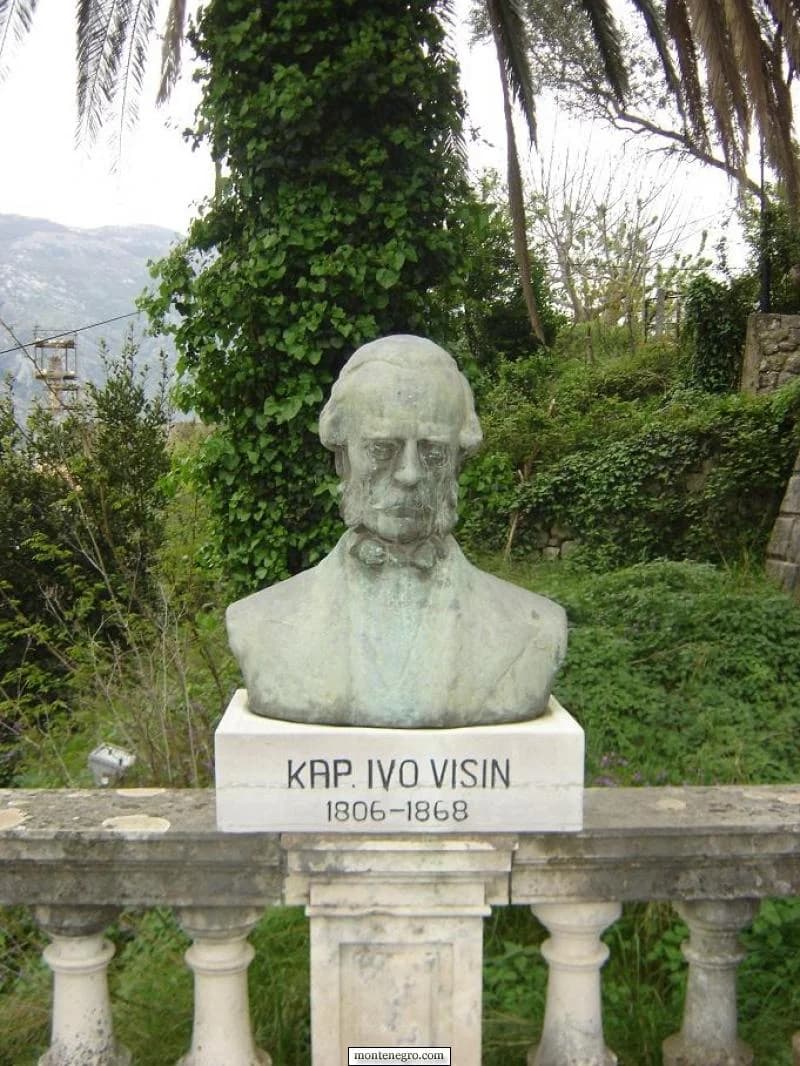
Ivo Visin’s voyage deserves a better story than the superlatives usually attached to it. Between 1852 and 1859, the Prčanj-born merchant captain took his small two-masted brig Splendido west from Antwerp, around Cape Horn, across the Pacific and through Asian trading waters, then home by the Cape of Good Hope. It was an extraordinary commercial circumnavigation under sail. It was not, however, the first voyage around the world by any South Slav, nor was Visin the fifth or sixth person ever to do it.
The most defensible distinction is narrower and more revealing: Visin was the first known South Slavic captain to circumnavigate in his own ship. That wording comes from a public correction reported at an event involving a Maritime Museum of Montenegro curator. It recognizes Stevan Vukotić’s earlier circumnavigation as an officer in Russian naval service, while preserving what was distinctive about Visin: ownership, command, merchant risk and a voyage sustained for more than seven years.
The documented facts at a glance
Several institutional accounts derive from the same nineteenth-century core: a voyage summary published in the 1860 Annuario Marittimo and material associated with Visin’s officer Federico Belavita. The original ship’s log is not known to survive, according to the Maritime Museum curator quoted by Radio Kotor. That loss matters. It means a modern writer should separate claims repeated by later encyclopedias from events demonstrable in a complete day-by-day log.
| Question | Best-supported answer | Evidence caution |
|---|---|---|
| Who was he? | Ivan, commonly Ivo, Visin; born in Prčanj on 3 November 1806 and died there on 17 August 1868 | “Vizin” is also common locally and in the legacy URL; Italian and German records may use Giovanni |
| What was the ship? | Splendido, a two-masted, square-rigged brig built at Andrija Zanon’s Rijeka yard | Some English pages say “brigantine” or “barque”; the technical description supports “brig” |
| Size? | 30 metres long and 311 tonnes in the cited technical encyclopedia | The source describes tonnage as displacement; popular retellings often call it carrying capacity |
| Departure? | Antwerp, 11 February 1852 | Visin, officer Federico Belavita and nine other crew members departed; later crew composition changed |
| Distance? | 101,297 nautical miles in the published record | A port-to-port total cannot reproduce every tack sailed against wind |
| Return? | Trieste in August 1859 | Institutional sources conflict between 10 and 30 August |
| Why historic? | First Austrian-flagged merchant ship credited with a circumnavigation; first South Slavic captain known to do it in his own vessel | Broader “first South Slav” and “fifth person ever” claims are not reliable |
Prčanj before Splendido
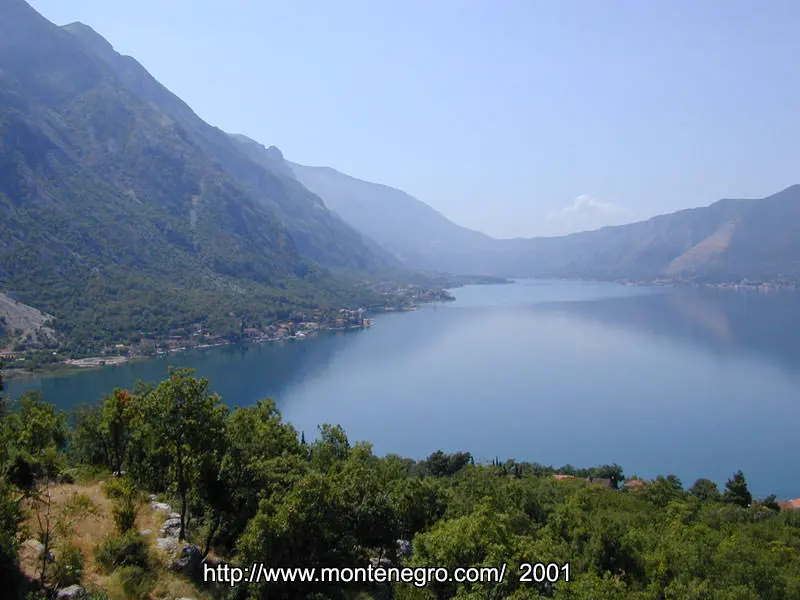
Visin was born into a coastal settlement whose scale can mislead a modern visitor. Prčanj is compact, but its captains, shipowners and crews belonged to networks extending far beyond the Adriatic. Its waterfront houses and churches were connected to the profits, losses and devotional culture of long-distance shipping. UNESCO describes Kotor and its neighbouring captains’ towns as bridgeheads linking Mediterranean culture with the Balkans. Visin’s career was exceptional, but the maritime literacy that made it possible was local infrastructure rather than individual magic.
The Croatian Technical Encyclopedia says Visin attended maritime school in Prčanj, began sailing in 1818 and later passed his captain’s examination in Trieste. Read that sequence against a dedicated guide to Prčanj’s captains’ village: seamanship began young, professional command required formal examination, and a Boka captain worked inside imperial commercial systems. In Visin’s lifetime Prčanj was under Habsburg rule. Calling him simply Montenegrin, Croatian, Yugoslav or Austrian without explaining period and purpose collapses different kinds of identity into one modern label.
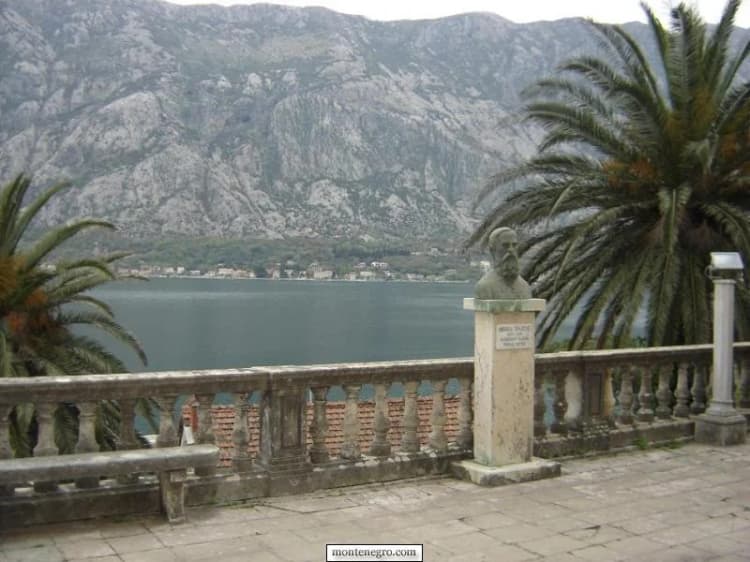
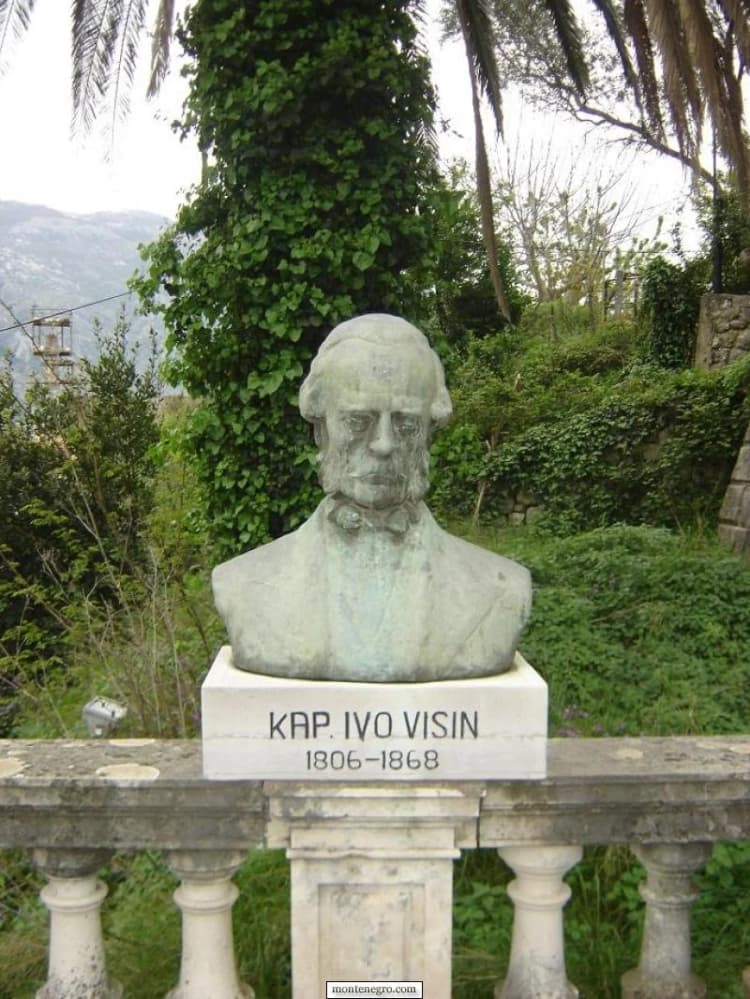
“Austrian merchant captain from Prčanj in the Bay of Kotor” is the clearest historical description. “Boka captain” is equally useful when discussing maritime culture. The spelling needs similar care. Visin is the form used by the Maritime Museum, the Croatian Technical Encyclopedia and the inscription on the bust. Vizin remains widespread in Montenegrin usage and in this page’s inherited slug. Both lead to the same person; neither spelling proves a modern national claim.
Building and commanding Splendido
Visin commissioned Splendido from shipbuilder Andrija Zanon in Rijeka in 1850. The technical encyclopedia describes a 30-metre brig with two masts, square sails and two guns. At 311 tonnes it was a working merchant vessel, not a naval exploration ship supported by a state expedition. Before the circumnavigation, Visin used it on voyages between the Black Sea and northern Europe.
That distinction changes how the world voyage should be imagined. A merchant captain had to find cargoes, negotiate ports, manage credit, maintain the vessel and retain a workable crew. The route was not a clean line drawn for posterity. It accumulated through successive commercial legs. Departing with eleven people aboard did not mean the same eleven completed the circuit; later accounts indicate crew turnover, with Belavita the central named companion in the surviving narrative.
The route, reconstructed carefully
The best-supported outline is westward. Splendido left Antwerp, rounded Cape Horn and reached Valparaíso on 14 November 1852. It continued to San Francisco and then crossed the Pacific into East and Southeast Asian trading waters. The Croatian Technical Encyclopedia records a severe storm between Taiwan and Luzon in which four principal sails were lost, an attack by four pirate vessels in 1853, and typhoons on 27 July and 9 August 1854. These are consequential claims, so they should be read against the encyclopedia’s sourced biographical entry, not embellished into cinematic scenes.
For several years the vessel traded among ports associated in later summaries with the Philippines, Indonesia, China and Australia. This was not six years anchored in a vaguely defined “Far East.” It was mobile commercial work within a vast region. By autumn 1858, institutional accounts place Splendido in Hong Kong and Shanghai. There Visin met Bernhard von Wüllerstorf-Urbair, commander of the Austrian frigate Novara, itself completing a state-sponsored scientific circumnavigation.
| Leg / waypoint | Date |
|---|---|
| Antwerp (departure) | 11 Feb 1852 |
| Cape Horn | — |
| Valparaíso | 14 Nov 1852 |
| San Francisco | — |
| Asian–Australian trading waters | — |
| Cape of Good Hope | — |
| Trieste (return) | Aug 1859 |
Source: tehnika.lzmk.hr, leks.canu.ac.me, vijesti.me
On 8 February 1859, the ship began the Indian Ocean homeward leg. It rounded the Cape of Good Hope around mid-April, entered the Atlantic, called in northern Europe and returned to Trieste in August. Plymouth appears in several retellings, but the core institutional summaries are more consistent on the broader sequence than on every intermediate stop. The result—101,297 nautical miles over 2,757 days in the CANU entry—captures the duration and scale without pretending the evidence can plot every day.
The August 1859 date problem
Two authoritative reference works disagree about Visin’s arrival. The Montenegrin Academy of Sciences and Arts encyclopedia gives 10 August 1859. The Croatian Technical Encyclopedia gives 30 August, a date also repeated in museum-backed publications. Rather than silently choose the more convenient number, this article uses “August 1859” in narrative passages and records both dates here.
The difference does not undermine the circumnavigation. It does reveal how derivative summaries can diverge even when they cite a shared nineteenth-century record. A digit may have been transcribed incorrectly, or the sources may refer to different moments of arrival, formal entry or reception. Without the missing log and a checked port register, the reason remains unresolved.
What “first” can honestly mean
The most repeated label—“first South Slav to sail around the world”—is too broad. At a 2021 Kotor event, publicist Siniša Luković noted that Stevan Vukotić from Grbalj had completed a circumnavigation roughly three decades earlier while serving as a Russian naval officer. Luković’s corrected formula was that Visin was the first South Slavic captain to go around the world in his own vessel. Radio Kotor’s report places that correction alongside remarks by a Maritime Museum curator, making it substantially better grounded than copied tourism slogans.
Claims that Visin was the fifth or sixth person ever to circle the globe are even weaker. By 1852, numerous naval and commercial circumnavigations had taken place across several empires. Counting “people,” “commanders,” “nationalities,” “ships” or “successful expeditions” produces different lists, and some lists incorrectly credit commanders who died before completion. The honest importance of Visin does not require an invented global rank.
| Claim | Status | Verdict |
|---|---|---|
| "First South Slav" | Too broad — Vukotić sailed earlier | × |
| First South Slavic captain in his own ship | Supported distinction | ✓ |
| "Fifth" or "sixth" person worldwide | Unsupported rank | × |
Source: radiokotor.info, tehnika.lzmk.hr
The imperial honors—and another date caution
Visin’s achievement mattered to the Habsburg maritime establishment because it demonstrated long-distance commercial capability under the Austrian flag. In 1860 Emperor Franz Joseph I awarded him the white Merito Navali honor and a knight’s cross of the Order of Franz Joseph. The Croatian Technical Encyclopedia places the ceremony aboard the warship Bellona in Trieste and also records Visin’s honorary citizenship of that port.
The white flag was created to recognize exceptional service to merchant navigation and trade. Later sources describe Visin’s award as uniquely rare, sometimes as the only white flag granted in peacetime. That narrower wording is safer than calling it the only flag ever awarded, because the honor existed in classes and the institutional descriptions do not all frame its history identically.
One display label introduces a small puzzle: the Maritime Museum’s English page describes the Merito Navali certificate below Visin’s portrait and gives 1859 in parentheses, while the reference literature places the imperial honors in 1860. The likely distinction is between voyage completion, documentation and presentation, but the page does not explain it. The article therefore dates the award ceremony to 1860 and leaves the display-page discrepancy visible.
What survives, and what has been lost
The most important surviving evidence is distributed. The Maritime Museum of Montenegro in Kotor Old Town has a second-floor central hall displaying Visin’s portrait, a model of Splendido, the Merito Navali certificate and a portrait of Federico Belavita. The same room contains navigation instruments and models that place the voyage within Boka’s wider merchant culture. The CANU museum catalogue documents those objects, although arrangements can change.
In Prčanj, the technical encyclopedia records the white Merito Navali flag and ceremonial invitation in the parish Church of the Nativity of the Virgin, while Visin’s bust stands nearby. Its account also identifies the House of the Three Sisters as Visin’s house and a protected cultural property. These claims should not be turned into promises that every object or building is open on demand. Churches are places of worship, fragile textiles may be stored rather than continuously displayed, and private or protected buildings are not automatically visitor attractions.
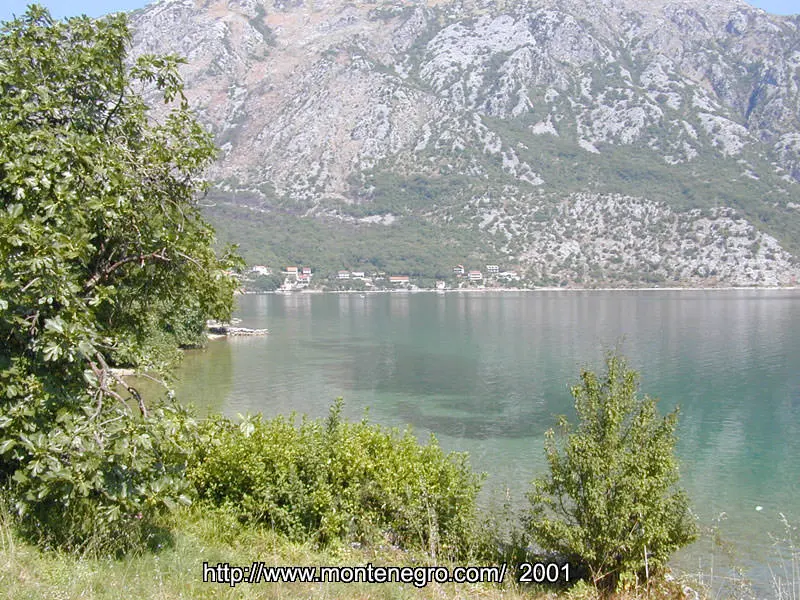
The major loss is the original Splendido logbook. A Maritime Museum curator said in 2021 that its location was unknown and identified the 1860 maritime yearbook prospectus, based on the log, as the sole published voyage account. Museum authors Petar Palavršić and Slavko Dabinović rebuilt the voyage from that source and Belavita material in a book published in Montenegrin and English. Kotor’s 2025 cultural programme shows the museum continuing that publication work with a planned German edition.
This evidence chain is strong enough for the route’s architecture but not for invented dialogue, exact daily weather or private motivation. It also explains why contradictions survive. A summary of a log is not the log; a later encyclopedia compresses the summary again. Responsible history identifies each compression.
Following Visin’s traces today
A useful visit combines Prčanj and Kotor rather than searching for a single “Ivo Visin attraction.” Start with the Basilica of Prčanj and its Visin context, then read the waterfront as a captains’ settlement. The bust is a memorial, the church is an active religious building, and historic houses remain part of a living village. Keep noise low, dress appropriately if entering a church, and do not touch, unfold or request access to stored objects unless custodians explicitly invite it.
Continue along the quiet inner-Bay shore through Muo, Prčanj, Stoliv and Lepetane to understand the settlement chain. Road space is tight and pavements can be intermittent. Use designated parking, avoid blocking waterfront gates and never stop on a blind bend for a photograph. A bus, taxi or careful point-to-point plan can be easier than repeatedly moving a car.
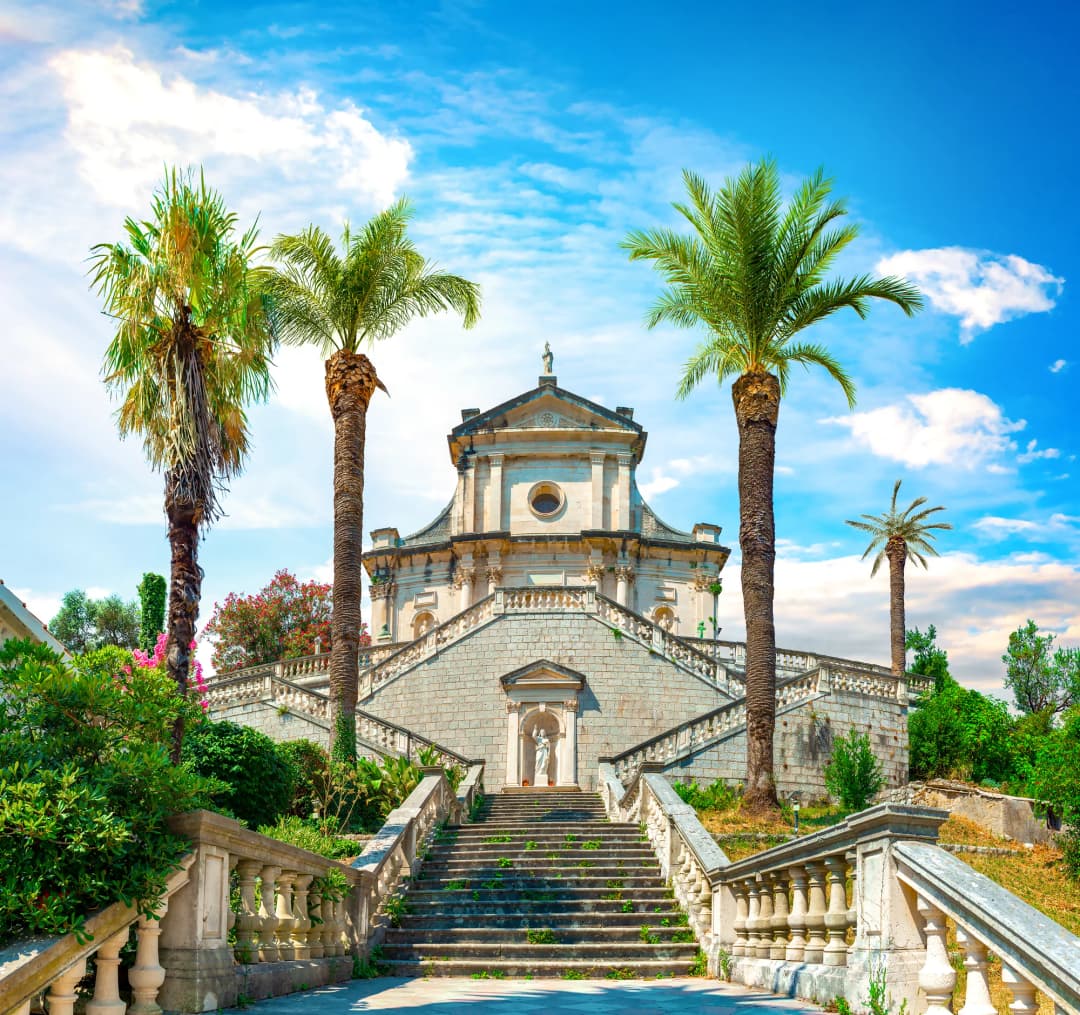
At the Maritime Museum, look for relationships rather than one trophy. Compare Splendido with other models, then examine octants, quadrants, chronometers and portolan material described in the same gallery. A 30-metre brig could cross oceans only because navigation, maintenance, discipline and commerce worked together. The museum’s location in the Grgurina Palace also connects objects to the wealth and domestic culture of Boka’s maritime families.
Practical planning
Confirm museum access before travel. The museum website identifies an address at Square of Bokeljska Mornarica 391 and publishes contact details, but hours can change by season, event and conservation need. The Municipality of Kotor lists the Maritime Museum among its cultural institutions. Use those institutional channels rather than an undated directory or copied travel blog.
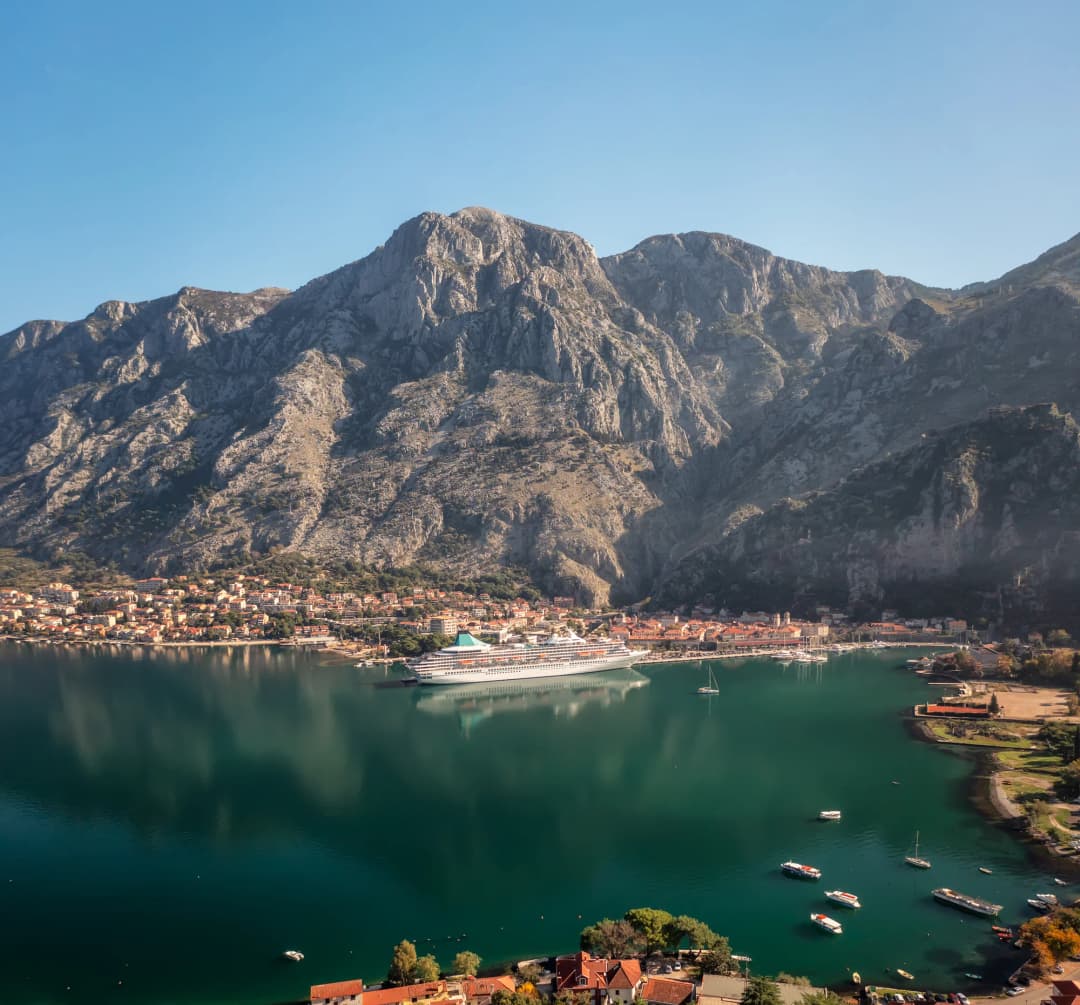
Allow half a day for the evidence trail. A focused museum visit plus a separate trip to Prčanj is more realistic than rushing both into a cruise-port hour. If arriving by ship, compare the constraints in the Kotor cruise port guide. If staying overnight, the Kotor accommodation-area guide explains the trade-off between Old Town atmosphere and easier road access. For transport, currency and wider trip logistics, use the first-time Montenegro planning guide.
Use the Bay as context, not scenery alone. The Bay of Kotor guide helps locate Prčanj within the inner basin. UNESCO’s description of coastal settlements linked by sea is particularly useful: Visin’s world began in a cultural landscape where the waterfront was infrastructure. Photographing it responsibly means respecting homes, moorings, church services and narrow public space.
Expect evidence to move. A model can be loaned, a gallery can close, a textile can be stored and a church custodian may be unavailable. The right response is not to pressure staff or enter restricted areas. Record what the current label says, including spelling and date, and compare it with the sources listed below.
How to read the voyage without turning it into legend
First, distinguish achievement from intention. The available summaries show a commercial ship working from port to port; they do not establish that every leg was plotted in Antwerp as a seven-year heroic circuit. The circumnavigation emerged through trade and decision-making. That makes it more, not less, impressive.
Second, keep political geography historical. Visin was born in Prčanj, operated as an Austrian merchant captain and belongs to the shared maritime history of Boka. Modern Montenegro preserves the principal sites and museum collections. Croatian reference institutions also study him, and South Slavic descriptors occur in older historiography. Those statements can coexist without retroactively assigning a twenty-first-century passport.
Third, value the crew. Federico Belavita is named because his role and portrait survive in the museum record. Nine additional sailors departed Antwerp, and the crew changed over time. A captain’s archive naturally concentrates credit at the top, but square-rigged sailing, repairs after lost canvas and survival through typhoons required collective labour.
Finally, treat uncertainty as information. The 10/30 August conflict, the 1859/1860 label difference and the brig/brigantine vocabulary do not make the story unusable. They show precisely where evidence is firm, where terminology shifts, and where a missing primary document limits confidence.
Frequently asked questions
Was Ivo Visin the first South Slav to sail around the world?
No, not under the broadest meaning. Stevan Vukotić completed an earlier circumnavigation as a Russian naval officer. The supportable distinction is that Visin was the first South Slavic captain known to circumnavigate in his own ship.
Was Splendido a barque, brig or brigantine?
Later texts use all three terms. The Croatian Technical Encyclopedia describes a two-masted vessel with square sails and calls it a brik, equivalent to brig. This article uses “brig” while acknowledging the museum’s English “brigantine.” Calling it a barque is less consistent with the cited rig description.
How long did the voyage last?
From 11 February 1852 until August 1859: 2,757 days in the CANU account, or about seven and a half years. “Eight years” appears in contemporary-style titles because the voyage touched eight calendar years, not because eight full years elapsed.
Did the same eleven people complete the entire voyage?
No reliable source supports that assumption. Visin, Belavita and nine other crew members left Antwerp, but crews changed during the long commercial circuit. The departure complement should not be presented as an unchanged return roster.
Where can I see objects connected with Visin?
The Maritime Museum of Montenegro describes a gallery with his portrait, a Splendido model, an award certificate and Belavita’s portrait. Sources place the white Merito Navali flag and ceremonial material in the parish church at Prčanj. Confirm current display and access directly; do not assume every object is continuously public.
Why do sources use both Visin and Vizin?
Both are established transliterations or local forms. “Visin” appears on the Prčanj bust and in museum and technical-reference usage. “Vizin” is common in Montenegrin-language retellings and survives in the original page slug. Search both spellings, and add “Ivo,” “Ivan” or “Giovanni” when working across catalogues.
What happened to Splendido’s logbook?
Its present location is unknown. A Maritime Museum curator said the voyage prospectus published in the 1860 maritime yearbook was based on the log. Modern reconstructions therefore rely on that publication, Belavita material and surviving museum objects rather than a complete accessible log.