Montenegrin food is not one menu. The coast draws on fish, shellfish, olive oil and Adriatic techniques; the central karst is associated with cured meat and cheese; the north builds filling meals around potatoes, flour, dairy and lamb. The best way to taste the country is to match the dish to its landscape—and to ask what the kitchen actually means by a familiar name.
These ten foods span Montenegro’s protected products, mountain cooking and coastal seafood traditions. Availability, recipes and protected origin vary, so ask each restaurant or producer what it serves and where the ingredients come from.
| Region | Typical dishes | What to ask |
|---|---|---|
| Coast | fish · shellfish · risotto | ask catch + price basis |
| Central karst | pršut · cheese | ask protected origin |
| North | kačamak · dairy · lamb | ask portion + preparation |
Source: montenegro.travel
The ten foods in one table
| Food | Best context | Key question |
|---|---|---|
| 1. Njeguški pršut | Njeguši / central karst | Is it certified protected Njeguški pršut? |
| 2. Kolašinski lisnati sir | Kolašin and northern food routes | Is it the protected layered cheese? |
| 3. Smočani kačamak | Mountain restaurant or rural household | Which flour and dairy are used? |
| 4. Lamb under sač or in milk | North and rural kitchens | Portion, method and wait time? |
| 5. Kastradina with greens | Cool-weather traditional menu | Which meat, greens and salt level? |
| 6. Riblja čorba | Bojana or another fish kitchen | Which fish and soup style? |
| 7. Whole grilled fish | Coastal konoba | Weight, price basis and origin? |
| 8. Crni rižot | Adriatic coast | Squid or cuttlefish; dairy or stock? |
| 9. Buzara | Coast, when shellfish are available | Which shellfish and sauce style? |
| 10. Priganice | Breakfast, rural table or dessert | Toppings, wheat and frying medium? |
1. Njeguški pršut: the protected name matters
The official geographical-indication specification is precise: Njeguški pršut is a bone-in pork ham, dry-salted with sea salt, smoked through slow burning of dry beech and dried and matured for at least nine months in the defined Njeguši production area. That is more useful than the familiar slogan about sea and mountain air.
On a menu, pršut can mean cured ham generally. Ask whether the board contains protected Njeguški pršut and whether the restaurant can identify the producer. A mixed “Montenegrin plate” may also include cheese, olives, sausage or other cured meat; those companions do not inherit the ham’s protected status.
For origin context, pair the tasting with the Njeguši village guide or the Perast–Njeguši–Lovćen route. The road and the food belong to the same landscape, but do not drink alcohol before driving the mountain bends.
| Check | What it means |
|---|---|
| Registered name | Formally protected designation |
| Product specification + defined area | Rules and geographic limits |
| Producer traceability or certification evidence | Documented proof from the producer |
| Generic dish name alone | Not proof |
Source: gov.me
2. Kolašinski lisnati sir: cheese in layers
Kolašinski lisnati sir appears on Montenegro’s current protected-quality register as a designation of origin. Lisnati means layered or in sheets: the structure separates into thin leaves. Slow Food’s profile describes a raw cow’s-milk tradition associated with Kolašin and nearby northern areas and notes its use with vegetables, meat, kačamak and cicvara.
Ask whether the cheese is Kolašinski lisnati sir or simply a fresh local cheese. That is not pedantry: the protected name and a generic style are different claims. Ask whether it is made from raw or pasteurized milk if that affects your choice rather than inferring ingredients from appearance.
The Kolašin four-season guide explains why food routes can be as important as skiing, while where to stay in Kolašin helps plan access to town and rural households.
3. Smočani kačamak: the mountain meal
Kačamak is not just “corn porridge.” The National Tourism Organisation describes versions based on potato or corn and enriched with cheeses and kajmak. Its detailed guide defines smočani kačamak with cooked potato plus wheat or corn flour, beaten until smooth, then finished with kajmak and crumbled cheese. FAO’s northern gastro-route work also documented kačamak as a representative regional dish.
It is rich and often a full meal. Ask which flour is used, which dairy is folded through, whether sour milk comes alongside, and how large one portion is. Wheat can appear even when a traveler expects corn only; dairy is integral to the common “smočani” version. Sharing may be sensible before ordering several mountain dishes.
| Group | Dish | Note |
|---|---|---|
| Protected products | 1 · Njeguški pršut | |
| Protected products | 2 · Lisnati sir | |
| Mountain dishes | 3 · Kačamak | |
| Mountain dishes | 4 · Lamb | |
| Mountain dishes | 5 · Kastradina | |
| Coastal dishes | 6 · Fish soup | |
| Coastal dishes | 7 · Grilled fish | |
| Coastal dishes | 8 · Black risotto | |
| Coastal dishes | 9 · Buzara | |
| Flexible finish | 10 · Priganice | honey or cheese; breakfast or dessert |
Source: montenegro.travel, fao.org, gov.me
4. Lamb under sač—or cooked in milk
The National Tourism Organisation explicitly recommends lamb simmered in milk and lamb roasted under sač, the heated iron cover used for slow cooking. FAO’s rural-food work likewise identifies milk-cooked lamb as a northern specialty. The method, cut and accompaniments differ by kitchen.
Ask whether the dish is priced per portion or by weight, the minimum order, expected preparation time and whether potatoes cook under the same cover. Some kitchens require advance notice for sač, while others schedule batches. If combining it with kačamak, one shared meat portion may be enough.
5. Kastradina with cabbage or greens
Kastradina is dried mutton. Montenegro’s tourism guide says it is commonly cooked with white cabbage; kitchens may also pair it with raštan or other greens. Its vegetable, soaking and cooking method vary by kitchen and season.
Ask how salty and smoky the batch is, which greens are used and whether pork or other meat enters the pot. It is a strong-flavoured choice, best balanced with a lighter meal elsewhere in the day. Travelers avoiding meat should not assume that a greens dish is vegetarian: raštan, beans and cabbage can be cooked with cured meat or stock.
6. Riblja čorba: ask which tradition
Riblja čorba means fish soup. The National Tourism Organisation’s gastronomy guide documents it in a restaurant profile from the Bojana and Ada Bojana area, but recipes vary by fish, stock and kitchen. Ask which fish is used and whether the soup contains shellfish, dairy or flour.
Ask which fish is used, whether the stock contains shellfish, whether flour thickens it, and whether the bowl is a starter or main portion. Bones can remain even in carefully prepared soup. A serious fish or shellfish allergy requires explicit cross-contact discussion, not simply choosing “clear” broth.
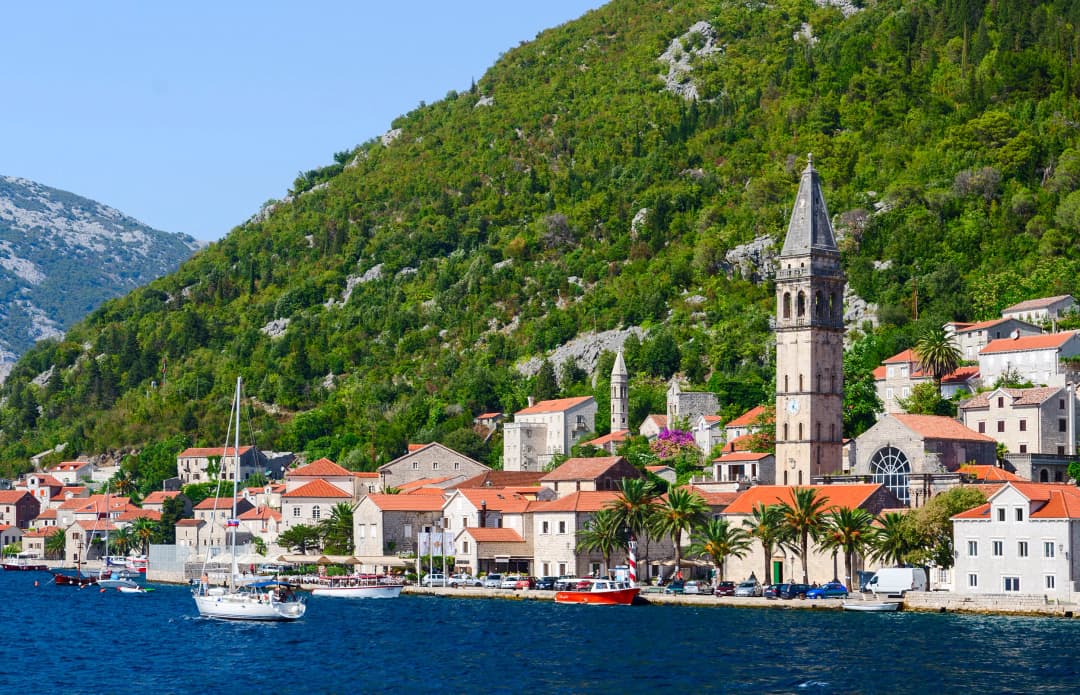
7. Whole grilled fish: confirm weight before fire
Sea bass (brancin) and sea bream (orada) are common names to recognize. Montenegro’s tourism guide lists brancin na gradele among Boka dishes. The best practical question is not “Is it fresh?” but a sequence: Which species? Farmed or wild? Local or imported? Whole weight? Price per kilogram or portion? What sides are included?
Montenegro’s Tourism and Hospitality Law requires visible prices, pricelists with food weight or drink volume, and a receipt showing type, quantity and price. Use that framework: agree the fish and weight before cooking. Do not rely on a generic “normal” price because species, origin, size, venue and season change it.
| Ask | Detail |
|---|---|
| Species? | local name too |
| Origin? | farmed / wild |
| Weight? | whole fish |
| Price basis? | kg or portion |
| Included? | sides + service |
Source: wapi.gov.me, montenegro.travel
8. Crni rižot: black risotto
Crni rižot is a black seafood risotto, usually coloured with squid or cuttlefish ink. Montenegro’s tourism guide includes it in Boka’s coastal repertoire. The exact mollusc, stock, wine, butter, cheese and texture differ by kitchen; it need not match an Italian regional version.
Ask whether it contains squid or cuttlefish, shellfish stock, dairy and wine. The ink stains teeth temporarily—that is normal, not a quality test. Order a smaller portion if it follows several starters; a glossy appearance does not reveal how much butter, oil or stock has been used.
9. Buzara: shellfish and sauce, not one recipe
Buzara is a preparation for mussels, prawns or other shellfish with aromatics and wine; “white” and tomato-based versions both occur. A National Tourism Organisation travel feature describes versions with wine, onion, tomato, herbs and spices. Ask which shellfish is in the portion and whether the price is per serving or weight.
Shellfish allergies require special caution because shared pots, utensils and stocks can spread allergens. Mussels should not be treated as proof of local harvest merely because the restaurant faces the Bay of Kotor. Ask origin if it matters, and accept that availability changes.

10. Priganice: a flexible finish
Priganice are small fried pieces of dough. Montenegro’s tourism guide places them on the traditional table, commonly with honey, and notes regional variation; they can also arrive with cheese or savoury accompaniments. They work as breakfast, a welcome snack or dessert, not only as a sweet course.
They commonly contain wheat and may contain milk or egg depending on the recipe. Ask about the dough, frying medium, shared fryer and toppings. “With honey” does not make the base free of dairy or gluten. If sharing, order one portion first—the number and size vary enormously.
Practical ordering: price, portions and allergens
Read the menu before ordering, especially where fish, meat or a platter is sold by weight. Ask whether a listed figure is per 100 grams, kilogram, piece or portion. Confirm bread, cover, sides and sauces rather than assuming they are included. The law supports displayed prices and itemized receipts; use those protections calmly and early.
For allergies, Montenegro’s official guide to unpackaged food says restaurant allergen information must be available in writing or through documented oral communication. Name the allergen, ask the server to check the kitchen record, and discuss cross-contact. Dish names are unreliable shortcuts: kačamak may contain wheat; greens may contain meat stock; risotto may contain shellfish stock or dairy; priganice may share frying oil.
| Step | What to cover |
|---|---|
| 1 · Name it | specific allergen and severity |
| 2 · Ingredients | stock · sauce · garnish · dough |
| 3 · Contact | fryer · grill · utensils · pot |
| 4 · Verify | written record or informed staff |
Source: gov.me
Montenegro’s food-hygiene regulation effective from 7 July 2026 covers production through distribution. Individual diners should still avoid food held at unsafe temperatures and report credible concerns. Rustic presentation alone says nothing about authenticity or hygiene.
Four questions that prevent ordering surprises
| Check | Purpose |
|---|---|
| Weight + price | Confirm the total |
| Portion + timing | Know what arrives |
| Name + producer | Verify protected claims |
| Allergens + contact | Check the kitchen record |
Source: wapi.gov.me
These questions work best before ordering, when the server can clarify the kitchen’s preparation and price structure. If an answer remains unclear, select a dish with simpler ingredients and a clearly stated portion price.
A realistic one-day tasting plan
Do not attempt all ten at once. At breakfast, share priganice with honey or cheese. At lunch, choose one regional main—kačamak or lamb inland; fish soup and grilled fish on the coast. Use dinner for a different category, perhaps shellfish buzara or black risotto. Treat protected pršut and layered cheese as small tastings rather than another main course.
A wider trip can distribute the list naturally. The Grand Tour of Montenegro connects landscapes, while five worthwhile stops helps prevent food detours from overwhelming the itinerary. Travelers comparing the wider Adriatic can use Montenegro versus Croatia without pretending the two cuisines have hard borders.
| Sitting | What to order |
|---|---|
| Breakfast | priganice |
| Lunch | one main |
| Taste | ham + cheese |
| Dinner | contrast |
A tasting plan works better than ordering ten calorie-dense dishes in one meal.
Frequently asked questions
Which Montenegrin dish should I try first?
Match the dish to the setting: choose kačamak or lamb in the mountains, protected pršut or cheese around their production areas, and fish or shellfish on the coast. Portion size, ingredients and current availability should guide the final choice.
Is Njeguški pršut the same as any Montenegrin pršut?
No. Njeguški pršut is a nationally protected geographical indication with a defined area and specification. Generic pršut does not automatically qualify.
Is kačamak gluten-free?
Do not assume so. Official descriptions allow wheat or corn flour, and preparation spaces may involve cross-contact. Ask which flour is used and discuss your requirements.
Are traditional greens vegetarian?
Not necessarily. Raštan, cabbage and beans may be cooked with kastradina, other meat or stock. Ask for the full preparation.
How is whole fish priced?
Restaurants may use a kilogram or portion basis. Check the displayed menu, confirm the whole weight and inclusions before cooking, and request the itemized receipt.
What should a vegetarian order?
Cheese, priganice, some pies and vegetable dishes may fit, but dairy, egg, meat stock and shared cooking surfaces vary. State the restriction explicitly.