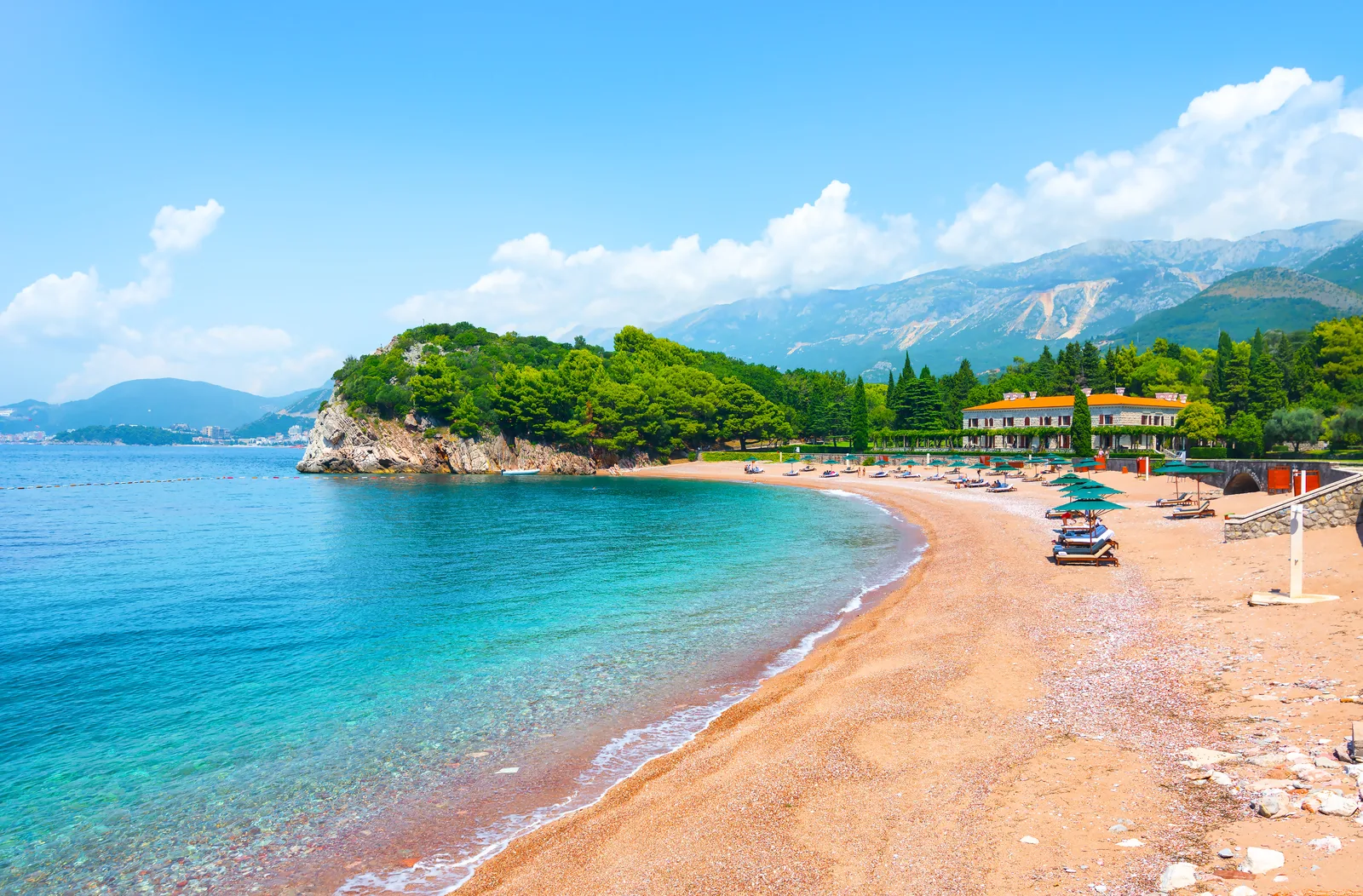
Miločer is both a landscape and an operating resort zone, and those are not the same thing. The wooded headland between Pržno and Sveti Stefan contains a royal-era estate, Villa Miločer, Queen’s Beach, King’s Beach and coastal paths. In 2026 the resort reopened after a five-year interruption—but beach and path access remained publicly disputed. A useful guide must therefore separate what can be seen, what the operator controls and what must be checked at the entrance.
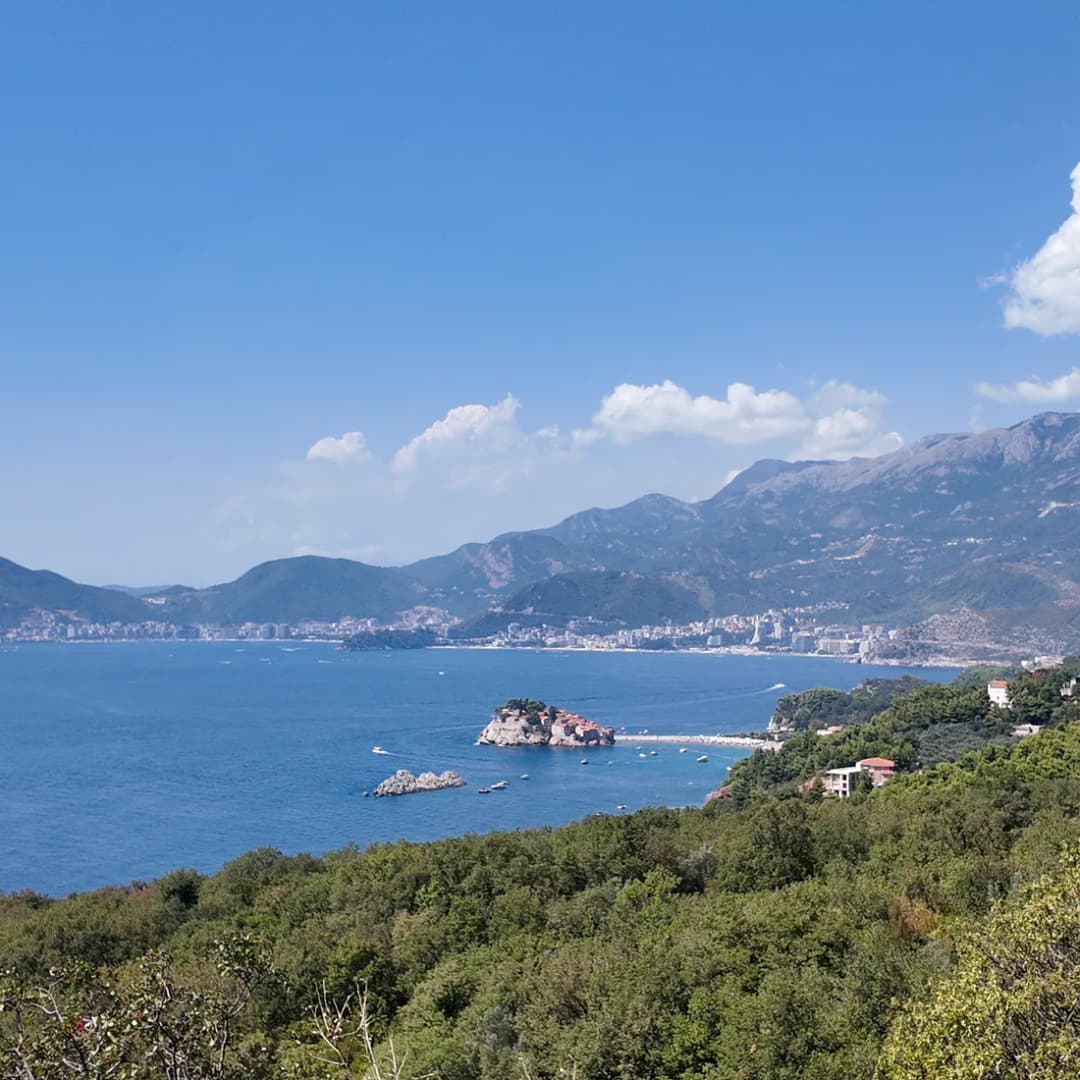
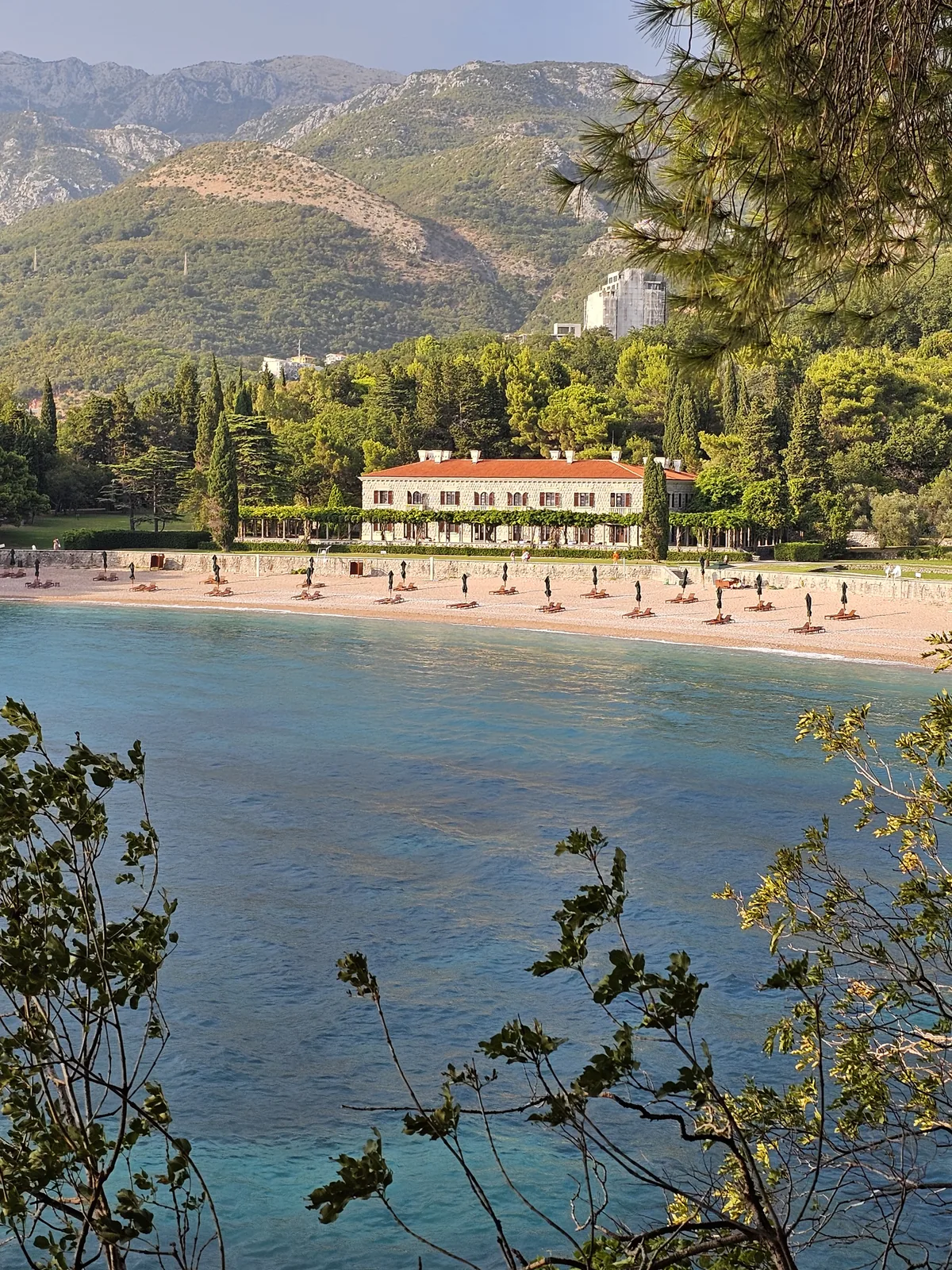
Geographically it is tiny: an exquisite stretch of coastline wedged between Bečići and Sveti Stefan on Montenegro’s Budva Riviera, barely a kilometre of shoreline. Once the private summer retreat of the Karađorđević royal family, Miločer today consists of a lush park, two celebrated beaches, and the restored royal villa now operating as part of the Aman Sveti Stefan resort. Into that small compass it packs one of the most photographed coastal corners in southeastern Europe—and one of the most contested.
Older guides to the area promise a great deal that should not be assumed in 2026: a half-hour coastal walk, reliable buses, water taxis, easy parking and loosely defined public access. Walking times and prices inherited from those accounts are recorded below where they are useful, but they are described as reported, not guaranteed. The dependable plan is simpler: choose a starting side, carry a fallback beach, and treat every access rule as current only when the operator or authority confirms it.
| Place | What is verified | Do not assume |
|---|---|---|
| Villa Miločer | Year-round resort accommodation | Public interior access |
| Queen’s Beach | Hotel-beach use reported in July | General entry or sunbeds |
| King’s Beach | Part of resort beach system | One rule for all visitors |
| Park paths | Passage routes exist | Every branch open all day |
| Pržno | Independent coastal fallback | Guaranteed parking or space |
The 2026 status: open resort, qualified access
The Government of Montenegro announced proposed settlement terms on 2 April 2026 after years of arbitration and closure. The plan required the operator to reopen, extended the lease to account for inactive years, gave the state a 10% annual profit share and said no additional Miločer Park construction could exceed existing permission and dimensions. Government background material identifies the 2021 trigger as a dispute over public access to beaches and paths near the spa.
Villa Miločer reopened first. Aman’s current site describes Villa Miločer as year-round and Sveti Stefan island as seasonal. Its Villa page says guests were welcomed from 22 May. The island page advertised a 1 July opening, and Vijesti reported on 1 July that the island had begun welcoming guests. This establishes opening-day operation, not later availability or the rights of a non-guest on every beach or path.
| Date | Stage |
|---|---|
| 2 APR | Settlement news |
| 22 MAY | Villa Miločer |
| 1 JUL | Island reported open |
Source: gov.me, aman.com, en.vijesti.me
Why access still needs a day-of check
A 24 July 2026 report in Vijesti records a live disagreement. Residents of Sveti Stefan and Pržno said access was still being denied or controlled. Aman told the newspaper that entry and walking through the Miločer complex were free for all visitors, while describing all four beaches as hotel beaches governed by operator rules. Aman also said Queen’s Beach was fully used as a hotel beach.
That last point matters because guide literature of the previous decade described the park as freely accessible and King’s Beach as partially public alongside a managed lounger area. Those descriptions and the operator’s July 2026 statement do not agree, and no reviewed primary source resolves them. Treat the older “partly public” picture as background, not as an entitlement you can assert at the gate.
The same report distinguishes path branches. The operator said the upper branch near Queen’s Beach remained available, while the lower branch had a special regime during bathing season, from May to October, for part of the day and no longer than 08:00–20:00. Local representatives disputed the arrangements. These are attributed July statements, not a court ruling or a permanent timetable.
The correct visitor advice is therefore conservative: use the July access report to understand the dispute, then ask on site which route is open now. Do not argue with staff, climb a gate or infer a right to loungers from permission to pass through.
| Step | Questions to ask |
|---|---|
| Pass through | which path? what time? |
| Enter beach | hotel rule? guest status? |
| Use furniture | available? price / entitlement? |
Source: en.vijesti.me
The royal landscape: 1934 is a beginning, not the whole date
Budva Museums and Galleries’ study of the coastal cultural landscape describes a royal residential complex developed on nearly 20 hectares behind the two coves from 1934 and completed in 1936. King Aleksandar did not live to see completion after his assassination in Marseille in October 1934. The estate belonged to Queen Marija and King Aleksandar and combined white-stone architecture, sea and intensive landscape design.
That is more dependable than assigning one 1934 completion date to “the villa.” Separate Montenegrin Academy lexicon entries credit Dragomir Tadić with Villa Miločer and Rajko Tatić with Queen Marija’s Villa Topliš, both dated 1936. Miločer is a complex of buildings and designed land, not one house or one architect hidden behind a single date. Widely circulated travel accounts tell it differently — that King Aleksandar I and Queen Marija selected the site in the late 1920s and that architect Momir Korunović designed a Miločer Palace completed in 1934 — and that version is worth knowing because you will meet it on signage and in older guides, but the Budva study and the two CANU entries are the more specific record.
The later chronology is less disputed. After the Second World War the communist government of Yugoslavia nationalised the estate; the palace became a luxury state hotel, first serving senior officials and later high-end tourists, and for decades Miločer and its beaches ranked among the most prestigious holiday destinations in Yugoslavia. Following Montenegro’s independence in 2006 the Aman group took over both the Miločer property and the nearby island of Sveti Stefan, restoring them as a single resort that opened in 2011, with the restoration retaining the original 1930s character alongside contemporary amenities.
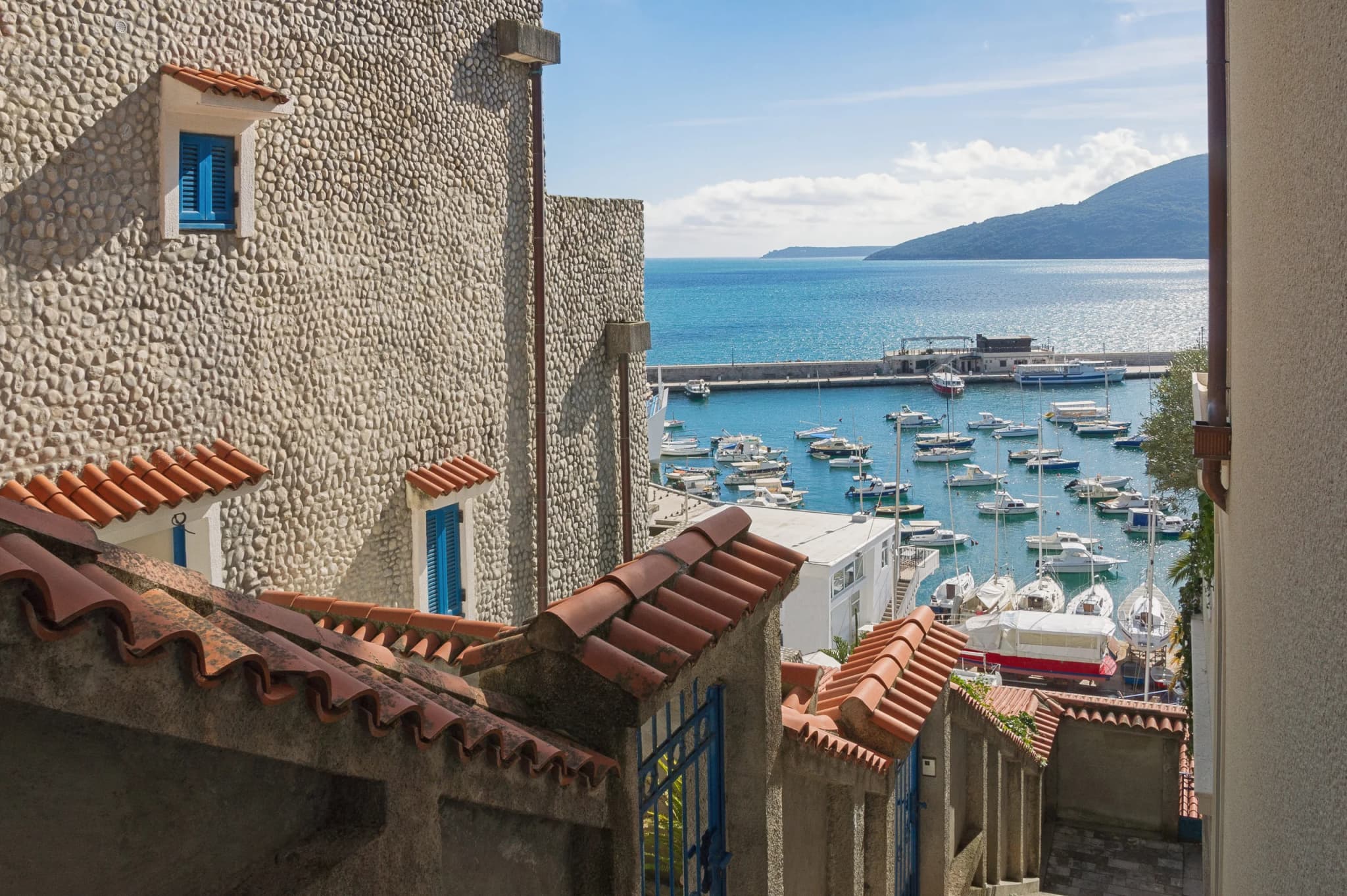
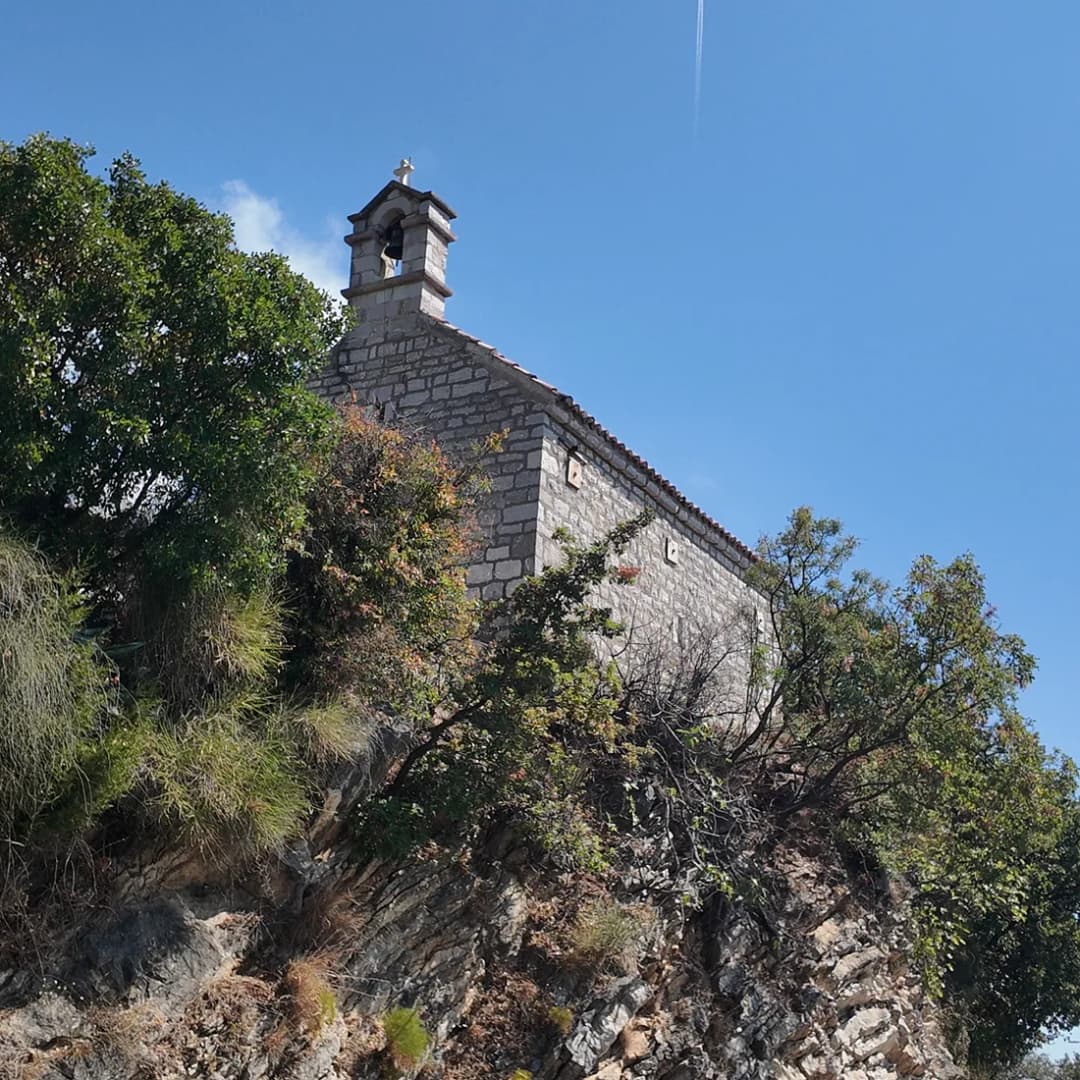
The building you can see from the park is a handsome stone villa in Mediterranean revival style, with terracotta roofing, arched loggias and manicured gardens; its blend of Dalmatian stone tradition and 1930s European elegance is considered one of the finest examples of interwar royal architecture in the Balkans. Non-guests cannot go inside — the villa’s suites and restaurant are reserved for hotel guests — but the exterior reads clearly from the paths.
The park’s cultural value comes from relationships: stone buildings, terraces, paths, mature cedar, pine and olive planting, and framed views toward the coast. For the broader royal and beach history, continue with Queen’s Beach and King’s Beach.
| Year | Building | Architect |
|---|---|---|
| 1934 | estate development | underway |
| 1936 | Villa Miločer | Dragomir Tadić |
| 1936 | Villa Topliš | Rajko Tatić |
Source: muzejiigalerijebd.me, leks.canu.ac.me
The park between the beaches
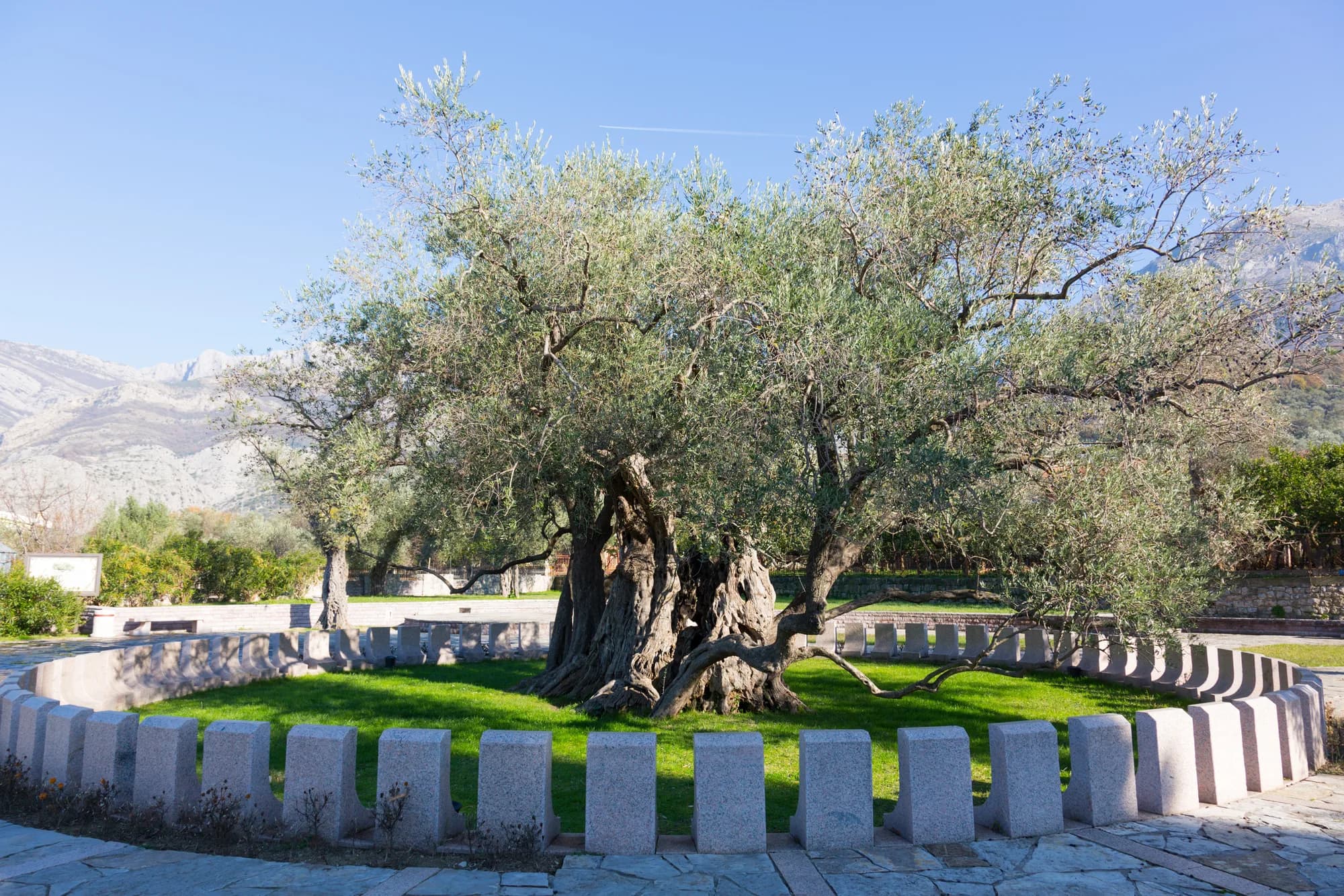
The parkland that connects Queen’s Beach to King’s Beach was the garden of the royal estate and remains one of the most impressive collections of Mediterranean and subtropical flora on the Adriatic. It is shaded by centuries-old pines, cedars and olives planted by royal gardeners in the 1930s, and guide accounts describe over 300 plant species thriving here — giant cedars of Lebanon, Canary Island palms, agaves, oleanders, magnolias and ancient olive trees — with informational plaques identifying many of them. Treat the “over 300 imported species” figure as an inherited estimate: no reviewed current inventory supports a precise total. The same caution applies to the park’s extent, given as about 18 hectares in travel literature and as nearly 20 hectares behind the two coves in the Budva heritage study.
What is not in doubt is the experience of walking it. Shaded paths criss-cross the slope, the canopy is dense enough to make a midday walk pleasant in high summer, and the turquoise Adriatic glints through the branches — it is easy to understand why Queen Marija chose this spot. Which branches are walkable on a given day is the open question, and it belongs to the operator and the seasonal regime described above rather than to the map.
Queen’s Beach and King’s Beach
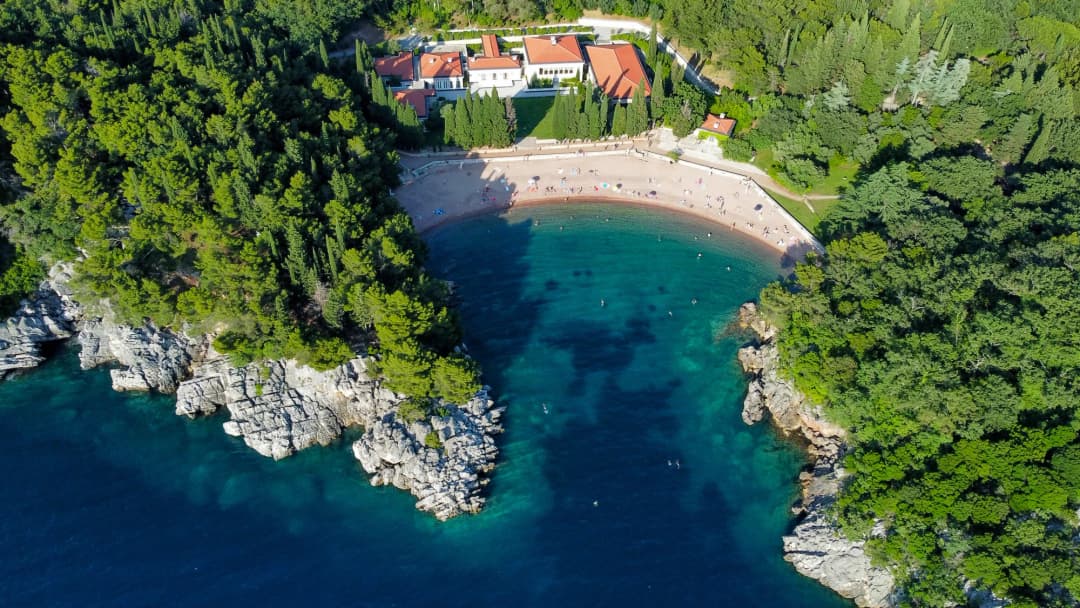
The Public Enterprise for Coastal Zone Management places Queen’s Beach in a small cove at the beginning of Miločer Park near the hotel, surrounded by vegetation. That description establishes location and context. It does not establish a 2026 admission price, public allocation, accessible route or right to use resort furniture.
Queen’s Beach (Kraljičina Plaža)
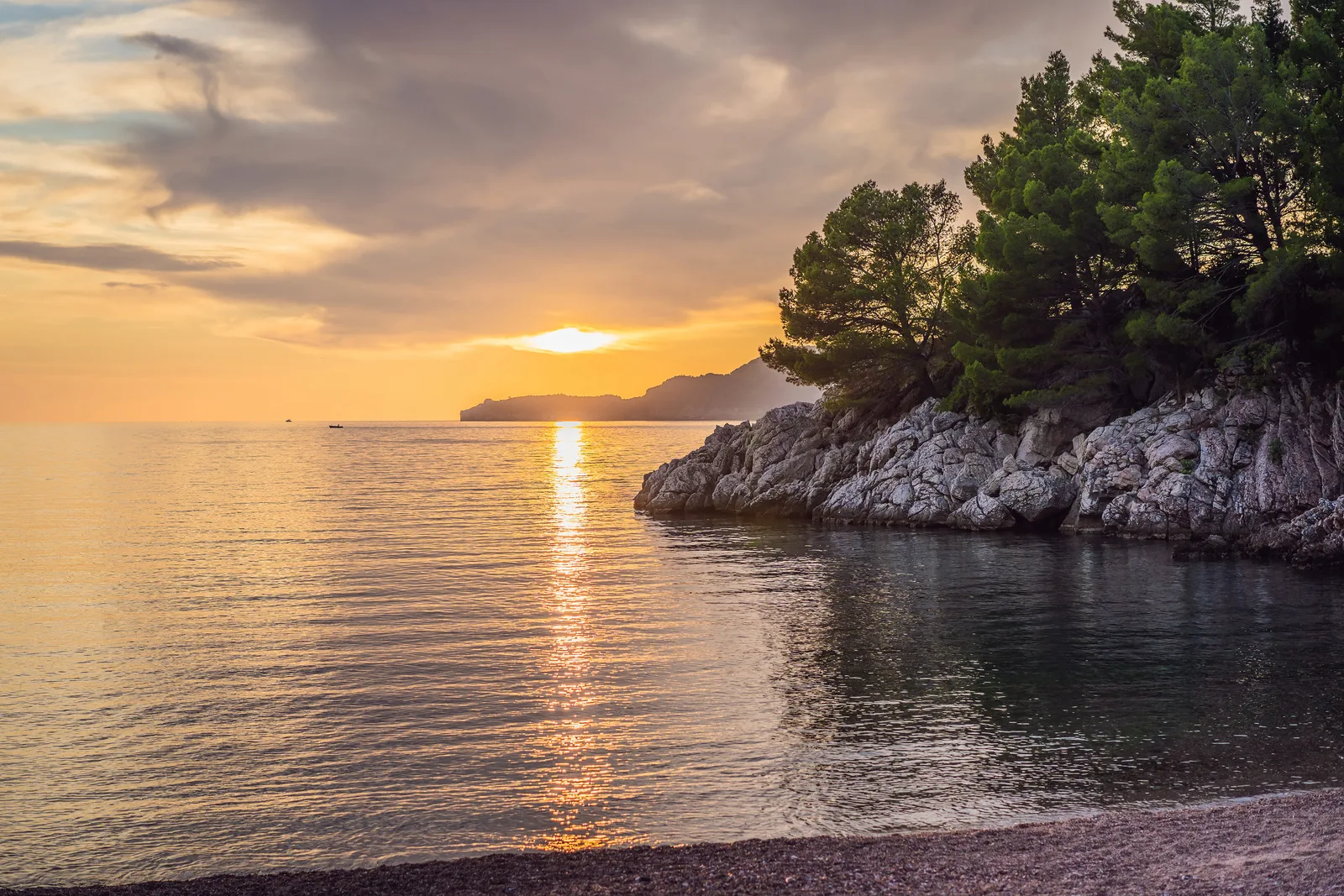
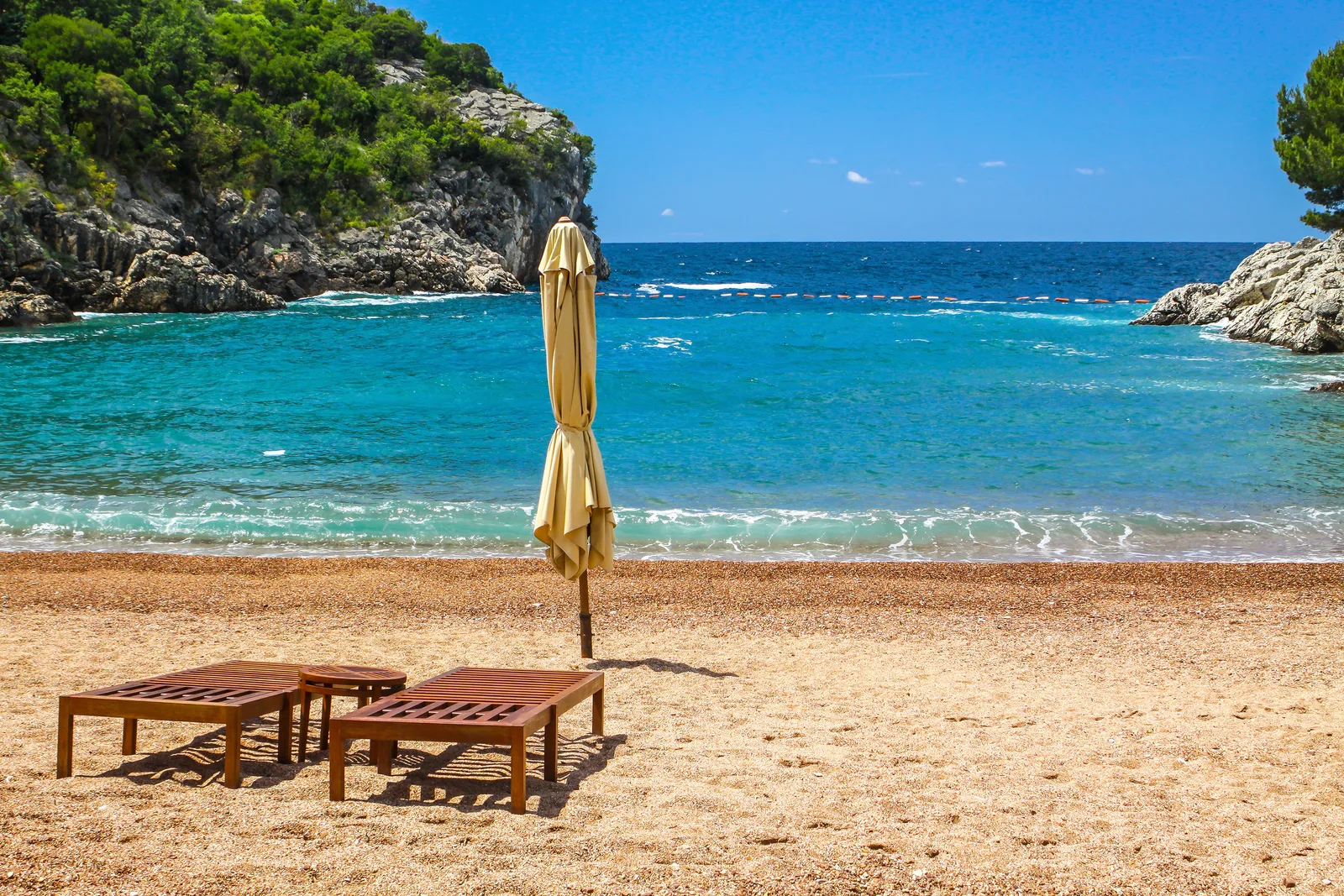
Queen’s Beach is the smaller and more exclusive of the two, a crescent of fine pinkish sand and smooth pebbles about 100 metres long, sheltered by dark cypresses and pines and facing a calm cove of crystal-clear water. It was originally Queen Marija’s private bathing spot and has been managed as part of the Aman resort since 2011. Travel accounts report that non-resort guests could buy a day’s use, historically 100 to 120 euros per person for a sunbed and umbrella, which would make it one of the most expensive beach experiences in the Mediterranean. Against that, Aman told Vijesti in July 2026 that Queen’s Beach was fully used as a hotel beach. No reviewed primary source publishes a current public price list, so ask before you plan a paid beach day around it. The setting itself is the reward: old-growth trees reaching almost to the waterline above pale turquoise water.
King’s Beach (Kraljeva Plaža)
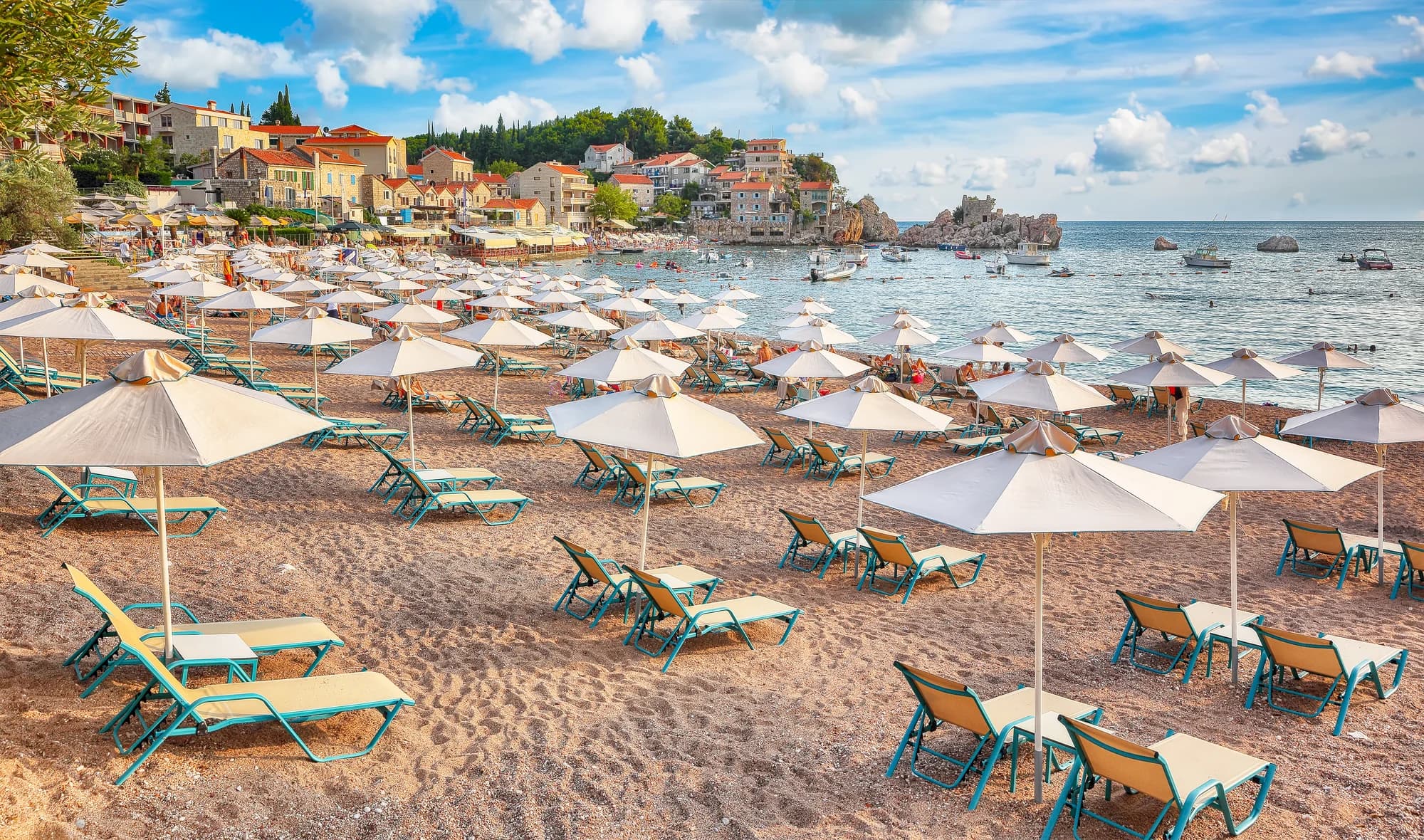
King’s Beach extends for about 300 metres just south of Queen’s Beach, separated by a rocky promontory. It is larger and offers a mix of pebble and sand, with shallow, gentle water that suits families with children, and the park behind it supplies natural shade. Older guides describe public sections alongside a managed lounger area, quoting around 20–40 euros for two sunbeds in the managed part; the operator’s 2026 position is that all four beaches in the complex are hotel beaches under its rules. At the southern end, a rocky headland with pines offers excellent snorkelling — the underwater rocks are home to sea urchins, small fish and colourful marine vegetation.
Names can also confuse. “Miločer Beach,” “King’s Beach,” “Queen’s Beach” and hotel marketing are not always used consistently across maps and articles. Before setting out, identify the cove you mean and save a screenshot of the route. If the goal is simply to swim, carry a public fallback rather than spending the day negotiating a hotel-beach regime.
Pržno is the logical northern fallback and has its own character; use our Pržno village guide. South of the park, the mainland beach by Sveti Stefan — free to access and good for swimming — offers another orientation point, while the island itself is an operating resort. For the larger destination context, see our Miločer travel guide.
| Source | Answers |
|---|---|
| Coastal authority | location + classification |
| Operator | current commercial rules |
| Dated reporting | claims + disputes at that date |
Source: morskodobro.me, en.vijesti.me
Getting there, and a route that survives a closed gate
Miločer lies on the Budva Riviera, roughly 9 kilometres south of Budva old town and about 3 kilometres north of the Sveti Stefan peninsula. The coastal road — the Jadranski Put, or Adriatic Highway — passes directly above the area, and a turnoff leads down to the park and beach zone.
Arriving from the main gateways
- From Budva: about 15 minutes by car via the coastal road. Local buses on the Budva–Petrovac route stop at the Miločer/Sveti Stefan junction, from where it is reported as a 10-minute walk downhill through the park. Taxis from Budva cost around 10–15 euros.
- From Tivat Airport: the closest airport is Tivat (TIV), approximately 30 kilometres and 40 minutes by car via the coastal road through Budva. Podgorica Airport (TGD) is about 75 kilometres away, roughly a 90-minute drive via the Sozina tunnel.
- From Kotor: driving south along the coast takes about 40 minutes, roughly 25 kilometres, passing through Budva and on along the riviera.
Aman’s getting-here page describes private transfers for guests and warns that July–August coastal traffic can extend journey times. It does not provide a public-bus timetable, visitor parking guarantee or public water-taxi schedule, so the bus and taxi figures above should be confirmed with the carrier or driver on the day. Independent travellers should verify the current bus with the carrier, choose legal parking before descending, and avoid a tight onward connection. Our Montenegro transport guide explains the wider network.
Walking in, from either side
From Pržno: begin at the public waterfront and approach Miločer from the north; the coastal path is described as a 10-minute walk. If passage is available, use the route staff direct you to. If the lower path is restricted, ask whether the upper route is open. Do not rely on a map line that may cross managed resort space.
From Sveti Stefan: one of the loveliest approaches is the seaside footpath from the mainland village — a paved promenade and then a park path leading north along the coast to Queen’s Beach and King’s Beach, a stroll of about 15 minutes through Mediterranean vegetation with views of the island. Walk north only if current signs and staff allow it. The island is not a free public old-town visit simply because its buildings are historic; Aman markets it as private resort accommodation with seasonal operation.
| Step | Action |
|---|---|
| 1 | Choose starting side |
| 2 | Ask current path |
| 3 | Rule fits your plan? |
| No | Fallback beach |
| Yes | Continue |
Source: aman.com, en.vijesti.me
Best time to visit
The Miločer beaches are at their best from mid-May through late September, with peak summer temperatures of 28–32°C and sea temperatures reaching 24–26°C in July and August. July and August also bring the largest crowds and the highest prices, and they coincide with the seasonal path regime described above, so they are the months in which an access plan is most likely to be constrained.