Petrovac (Petrovac na Moru) is an idyllic coastal town on Montenegro's Adriatic coast, offering a sophisticated, slower-paced alternative to the high-energy nightlife of neighboring Budva. Located 17 kilometers south of Budva and 30 minutes north of Bar, Petrovac is a beloved destination for...
600 mof beach
2offshore islets
Jul–Augthe busy months
Updated Originally published 42 min readby Pavle Obradović
Petrovac (Petrovac na Moru) is an idyllic coastal town on Montenegro's Adriatic coast, offering a sophisticated, slower-paced alternative to the high-energy nightlife of neighboring Budva. Located 17 kilometers south of Budva and 30 minutes north of Bar, Petrovac is a beloved destination for...
Overview
Petrovac (Petrovac na Moru) is an idyllic coastal town on Montenegro’s Adriatic coast, offering a sophisticated, slower-paced alternative to the high-energy nightlife of neighboring Budva. Located 17 kilometers south of Budva and 30 minutes north of Bar, Petrovac is a beloved destination for travelers seeking breathtaking beaches, historic sites, and an authentic Mediterranean atmosphere. Unlike more famous places like Kotor or Budva, Petrovac still feels authentic and small-scale, making it one of the coast’s more laid-back and stylish resorts.
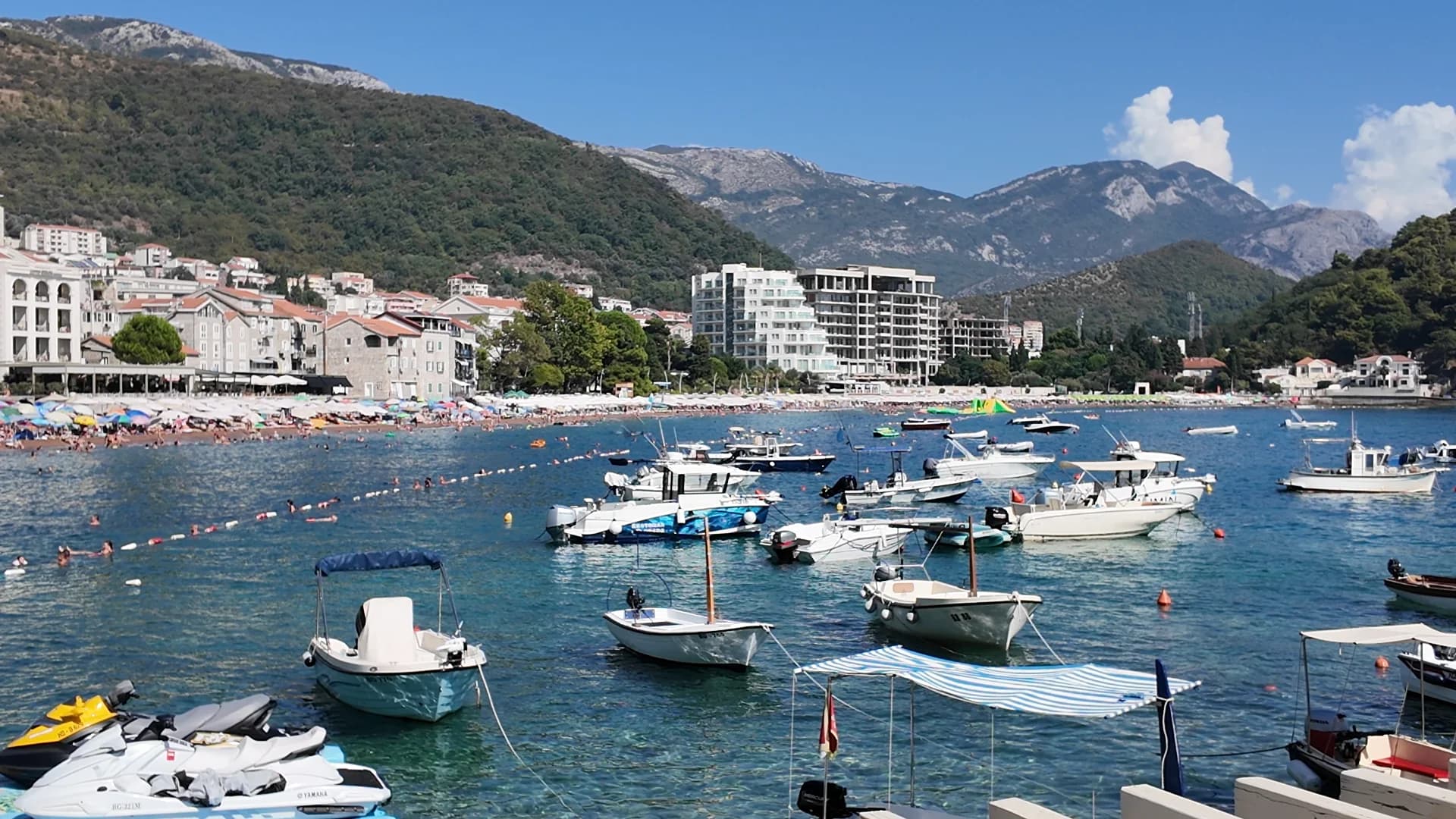
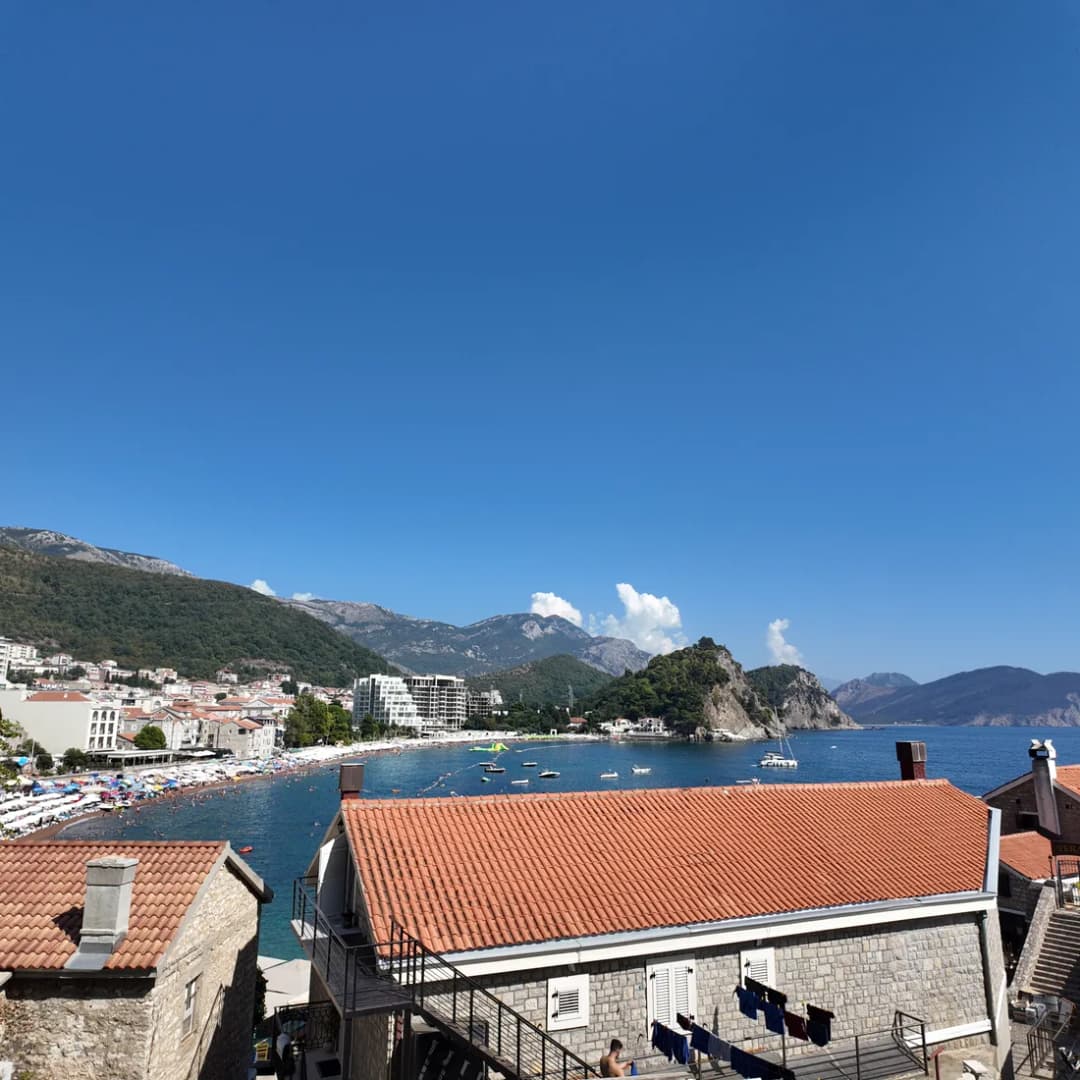
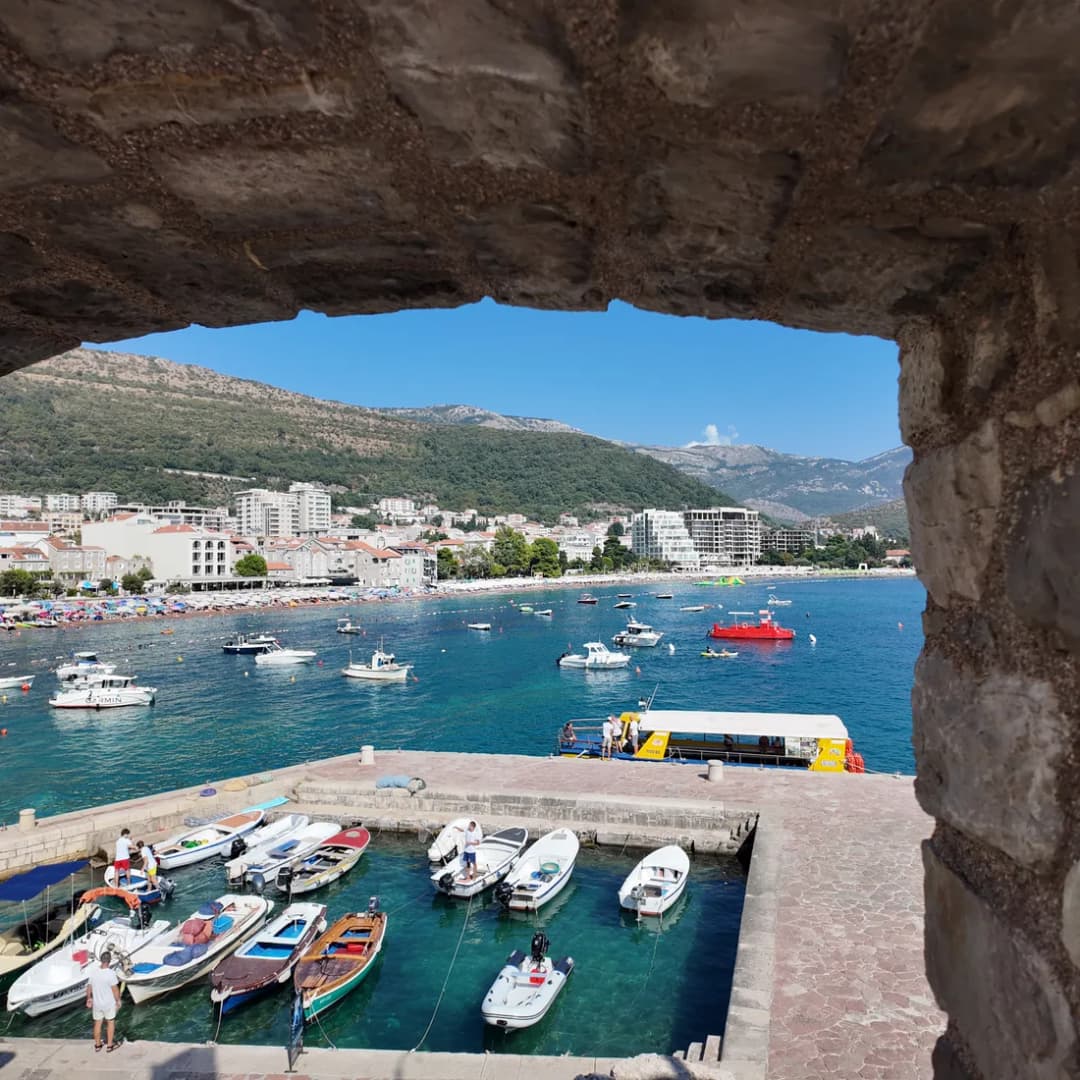
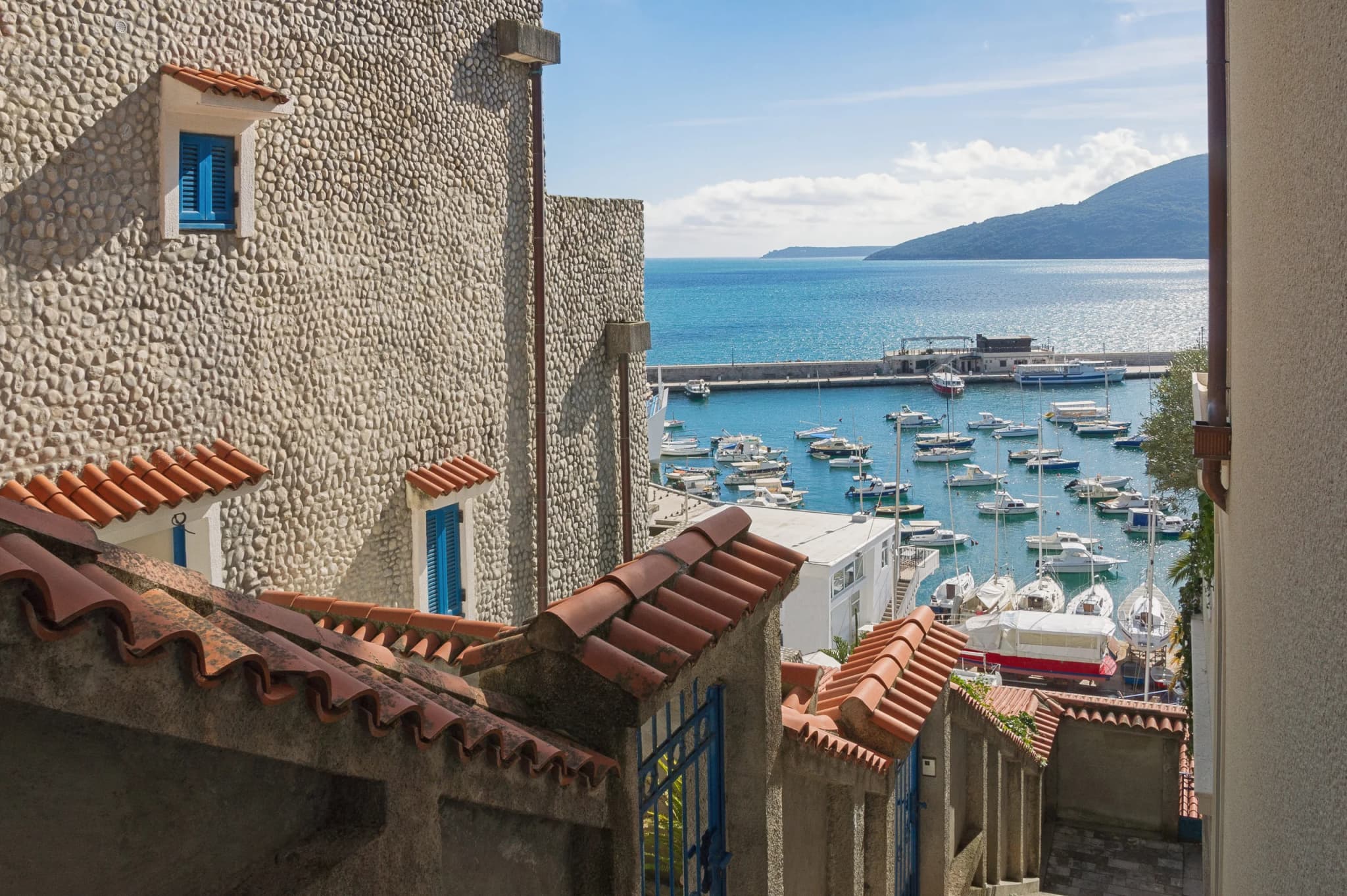
The harbour is the pick-up point for most water-based excursions, so it is worth a look on arrival even if you are not sailing.The whole town reads at a glance from the slopes above, which is why most first-time visitors orient themselves here before walking down.
This charming fishing village-turned-resort town is renowned for its distinctive red-pebbled beaches, Venetian fortress, Roman mosaics, and family-friendly atmosphere. With its iconic waterfront promenade lined with stone cottages and palms, Petrovac offers the perfect blend of natural beauty, historical significance, and modern tourist amenities.
Day trips
How far a day reaches
25 min
30 min
50 min
60 min
Top Attractions
Compare
The beaches, to scale
Buljarica Beach2,200 m
Shade · Wild
Petrovac Beach600–800 m
Amenities · Sand · Pebble
Lučice Beach220 m
Blue Flag · Shade · Sand
Perazića Do70 m
Quiet · Wild · Snorkelling
Buljarica Beach
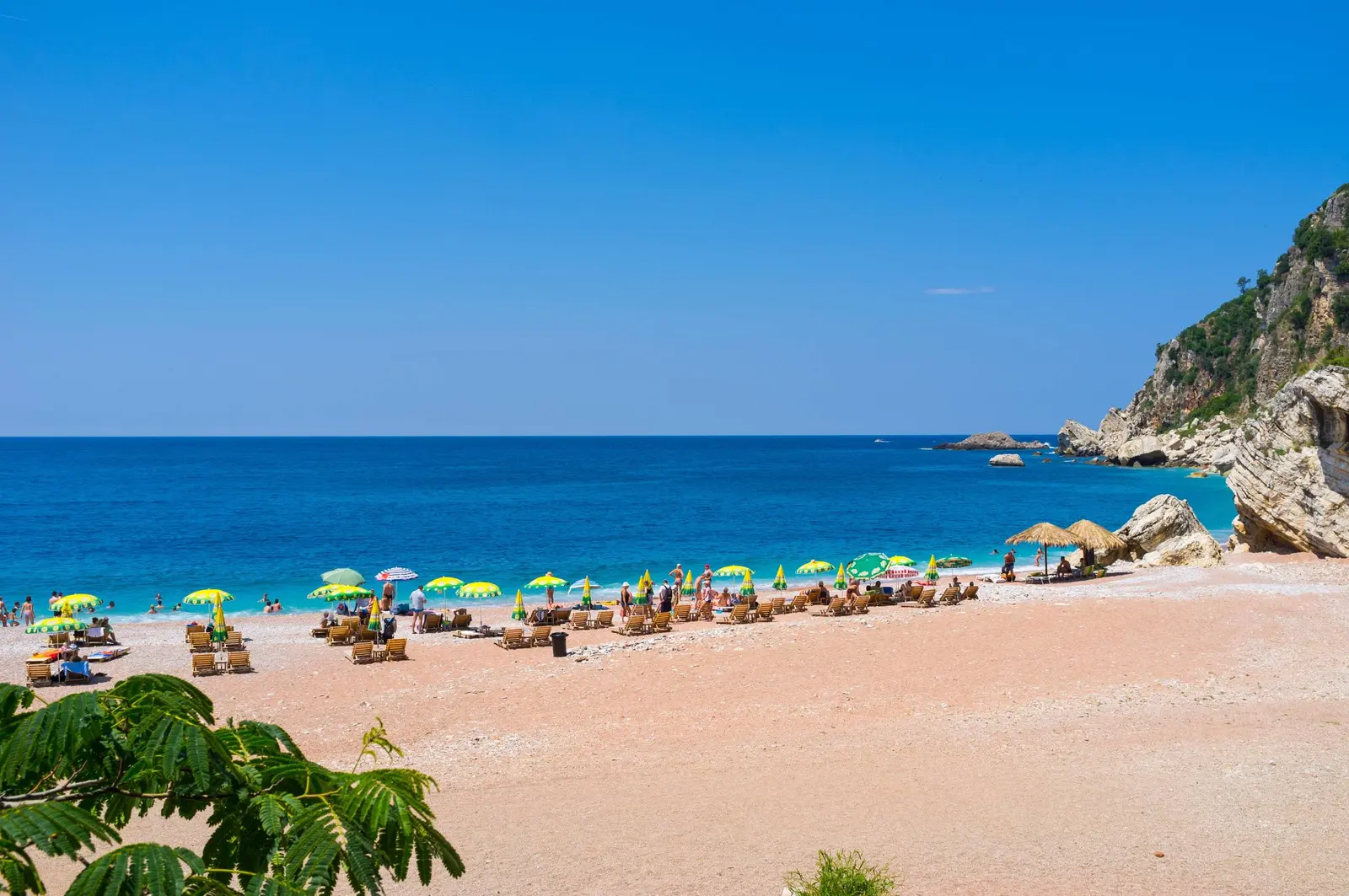
Buljarica is the longest beach in the Budva Riviera, stretching an impressive 2,200 meters. Located between Petrovac in the west and Sutomore in the southeast, this expansive beach offers a wilder, more natural experience compared to the developed beaches closer to town.
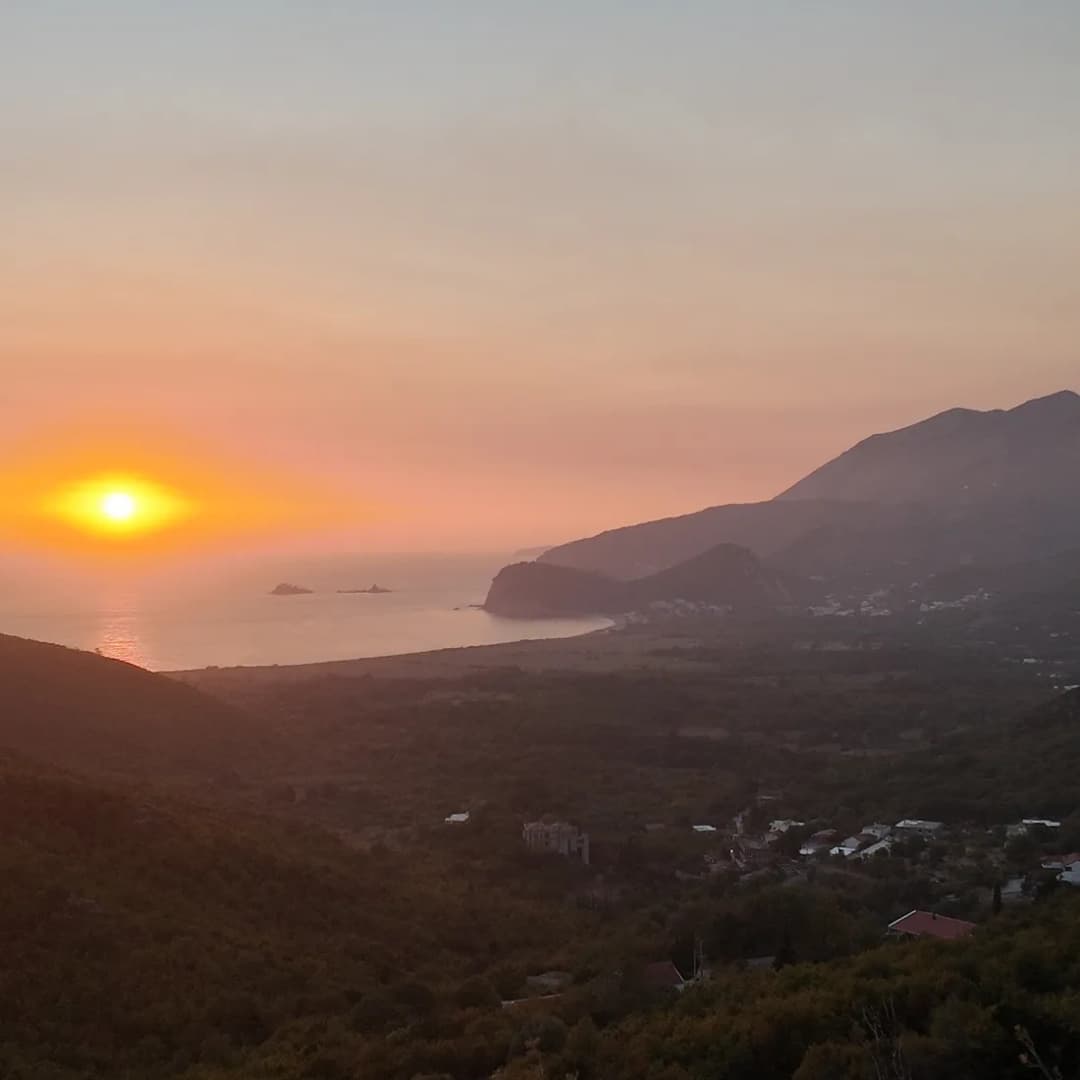
The bay faces west enough that the last light lands on the water rather than behind the hills.
Behind Buljarica Beach lies a significant wetland ecosystem with thick reeds, flood meadows, oak forests, swamp ash, elm, and olive trees. The area includes reedbeds, wet meadows, pastures, and fragments of oak forests. This wetland meets three of nine conditions of the Ramsar Convention on Wetlands as a unique, rare, and representative wetland on the east coast of the Adriatic.
The site serves as a habitat for many endangered species, including not only birds but also amphibians and reptiles. IBA (Important Bird Area) standards recommend this site for protection because of its value as a habitat and place of rest for a large number of endangered seabirds. The site is designated as an Emerald site under the Bern Convention, though it remains unprotected at local and national levels.
Reževići Monastery
The Reževići Monastery (Manastir Reževići) is a medieval Serbian Orthodox monastery complex located in Katun Reževići village on a hilltop between Budva and Petrovac, surrounded by a beautiful garden and offering stunning views overlooking the Adriatic Sea.
What the sources say
According to local legend, the Church of the Dormition of the Mother of God was built in the 1220s by Stefan Nemanjić (Stefan the First-Crowned), the first king of Serbia, while the Church of the Archdeacon Stefan was built by Stephen Uroš IV Dušan of Serbia in 1351. This 13th-century monastery is listed as a UNESCO-designated World Heritage Site under the protection of UNESCO.
The monastery was a significant gathering place for members of the Paštrovići tribe, who traditionally held meetings there to make important decisions or elect their chieftain. Frescoes from the beginning of the 17th century and some remains of 18th-century frescoes have been preserved. It is believed that they were the work of Strahinja of Budimlje, who painted frescoes in many churches during that period.
The monastery was badly damaged in an earthquake in 1979 and was subsequently restored. Visitors can explore the historic complex, appreciate its architectural beauty, and enjoy panoramic views of the coast from this elevated, peaceful location.
Petrovac Beach (Gradska Plaža)
The main town beach — Gradska Plaza, or City Beach — stretches for roughly 600 metres in a gentle crescent across the bay. Its most distinctive feature is the sand itself: a warm, reddish-brown colour that gives the water a particular golden-green hue in the shallows. This red sand is relatively unusual along the Montenegrin coast, where pebble beaches are far more common, and it contributes to the beach's popularity with families.
The seabed here shelves gradually, which means children can wade out a fair distance before the water reaches their waists. Lifeguards are on duty during the summer season, typically from June through early September. Sunbed and umbrella rentals are available along much of the beach, though there is space for those who prefer to lay their own towel on the sand.
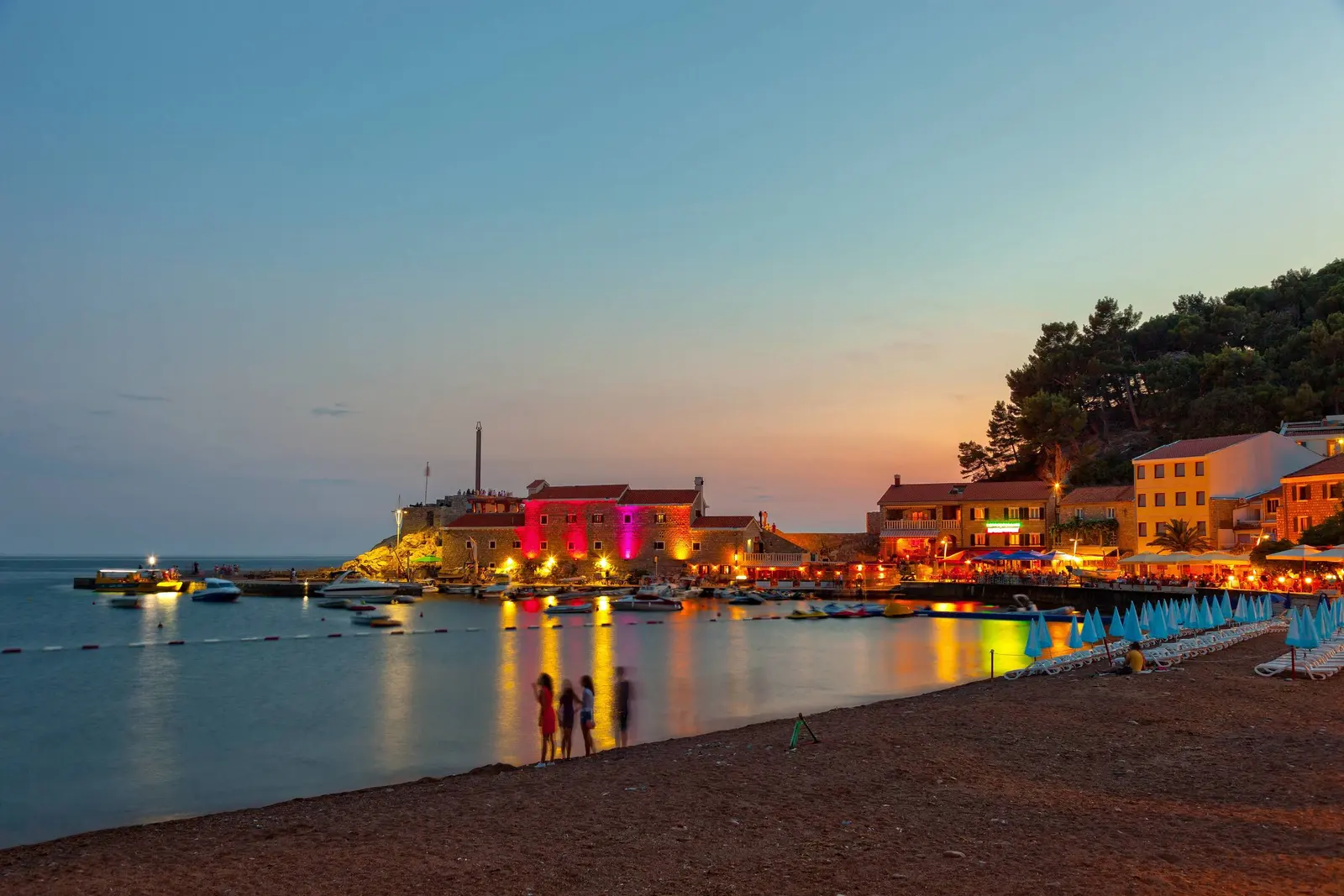
Behind the beach, the promenade is shaded by tamarisk and pine trees, with a continuous run of restaurants and cafes. It is a pleasant arrangement: you can swim, dry off, and be sitting down to a plate of grilled squid within two minutes. In the evening, the promenade becomes the place for the traditional Mediterranean passeggiata — families and couples strolling slowly as the sun drops behind the headland.
At the northern end of the beach, you will notice the old Venetian fortress rising from the rocks. At the southern end, the beach gives way to a rocky shoreline and the path that leads onward to Lucice and Perazica Do.
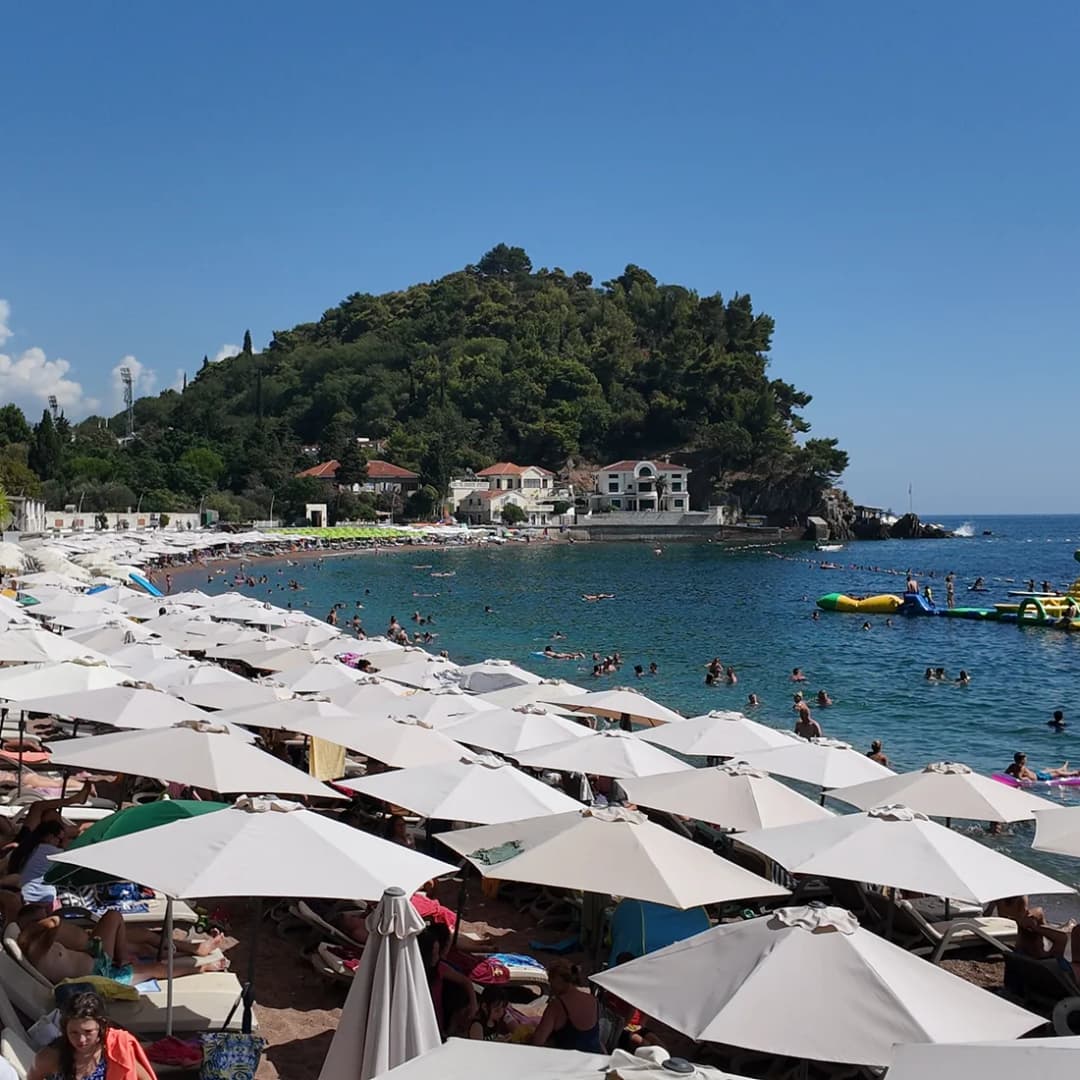
The colour comes from pulverised shell and coral washed ashore over centuries, and at 600–800 metres it is one of the longest beaches on the Budva Riviera. Behind the sand there are lockers, showers and toilets; the stone boardwalk is cleaned daily and has shaded benches under the palms. The bay sits between a rocky outcrop and the small marina, which is what keeps the water calm. It fills up in July and August.
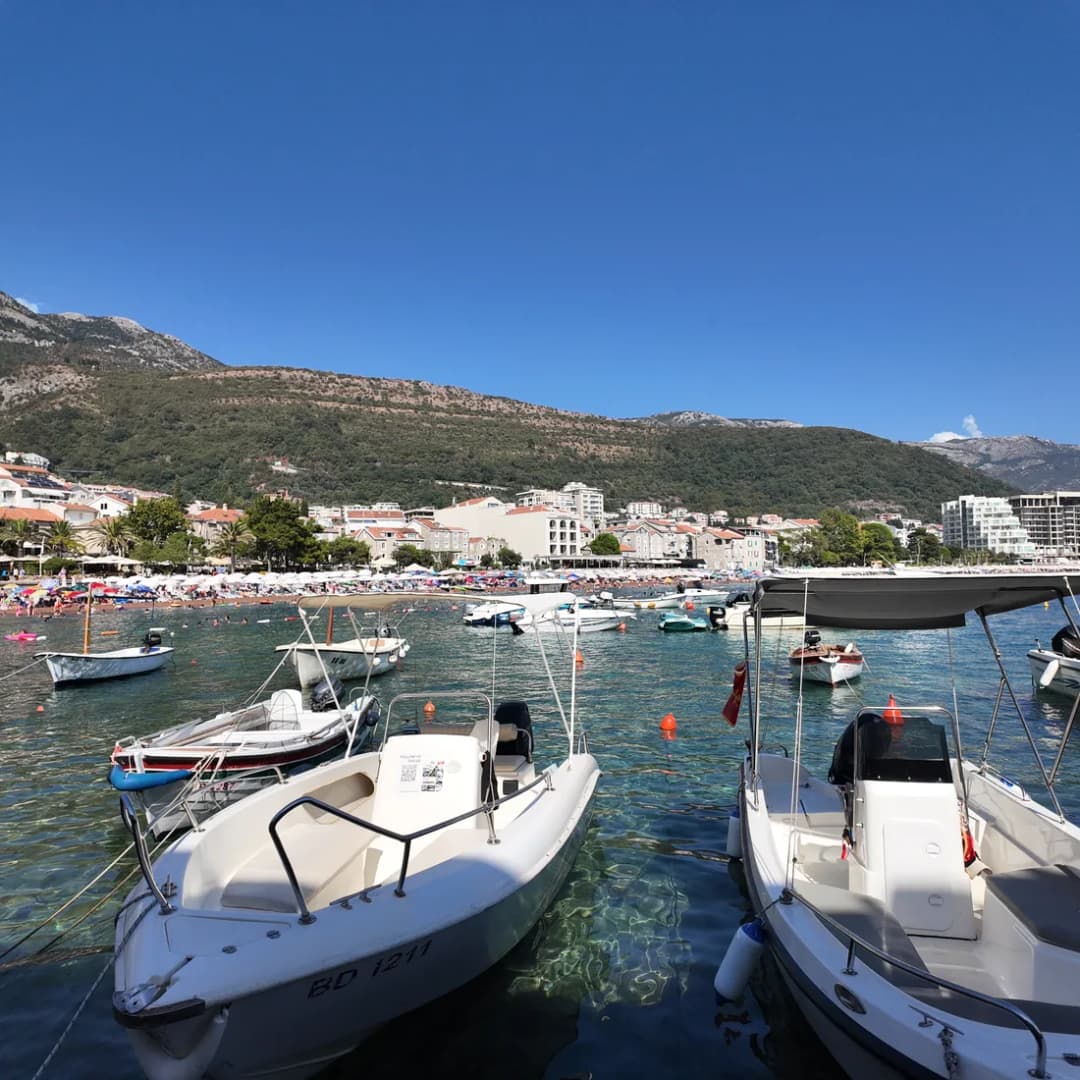
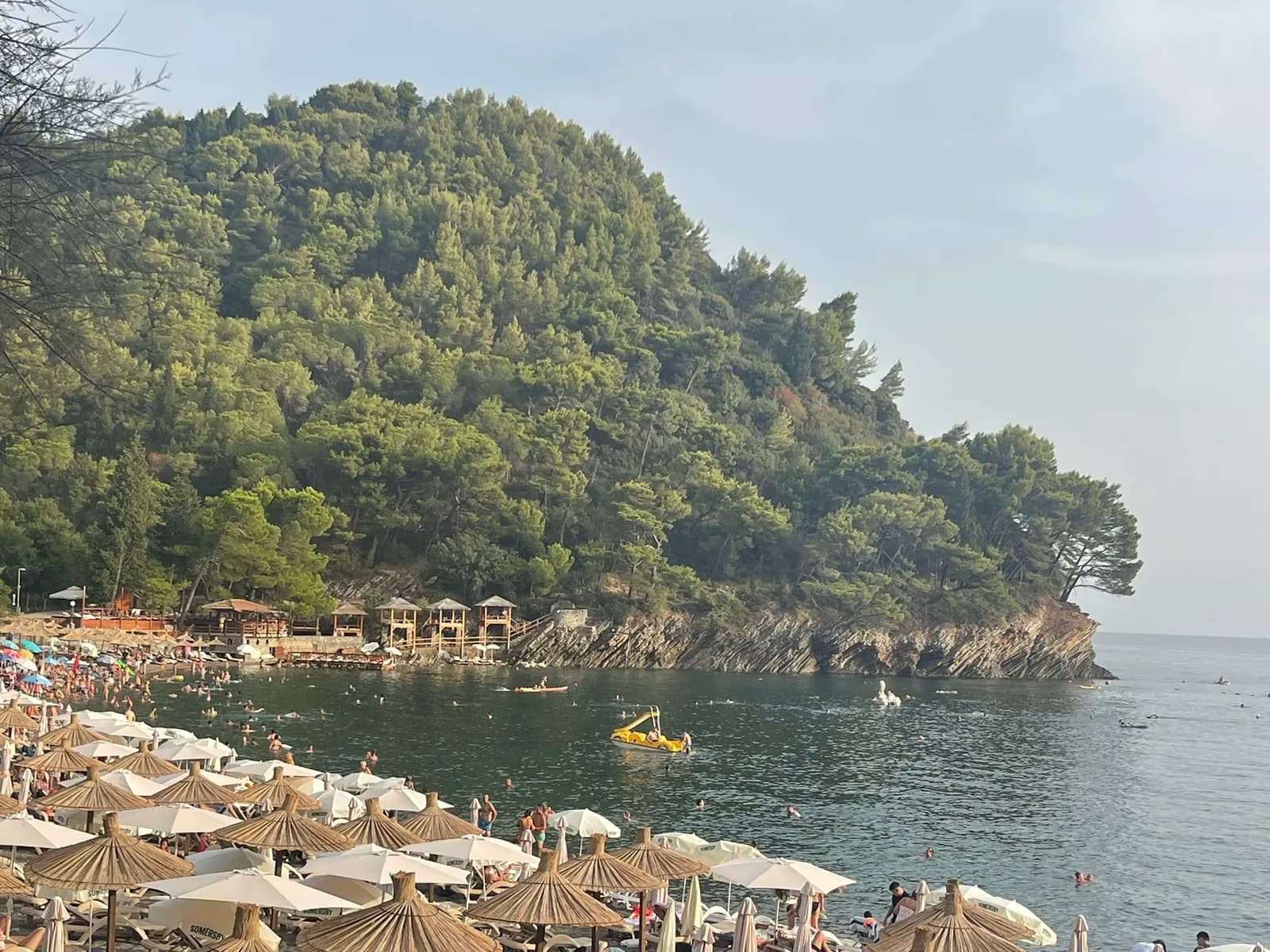
This vantage shows how short the town beach actually is end to end.Arrive before mid-morning in high season if you want a front row near the water rather than the back terraces.
What the sources actually measure
What the sources say
Budva Tourism
lists the curved town beach at 600 m and 9,525 m² and describes reddish sand.
Sediment profiles can shift after storms and seasonal preparation, so
photographs and official descriptions should not be read as a guarantee of one
surface underfoot. Inspect your section and consider water shoes if coarse
material is uncomfortable.
The promenade runs behind the beach, making food, shade and accommodation
easier to reach than at a remote cove. Yet proximity to businesses does not
prove a lifeguard is on duty. Montenegro’s coastal manager says an organized
bathing area should display an information board, marked sea boundary, rescue
equipment, licensed lifeguards and safety flags. Locate those features before
entering. Green indicates safe bathing, yellow limited or potentially
dangerous conditions, and red a prohibition or no lifeguard on duty.
Never use the appearance of calm water as the only test. Boat traffic, wind,
waves, visibility, heat and individual swimming ability matter. Keep children
within direct reach, stay inside marked bathing water and follow the on-duty
team. If the organized sector is not identifiable, treat the water as
unsupervised.
The promenade runs immediately behind the town beach. Lifeguard coverage and
crowd levels vary.
Lučice Beach
Lucice is the third beach in Petrovac's immediate orbit, and in many ways it strikes the perfect balance between the sociability of the main beach and the seclusion of Perazica Do. Located about ten minutes' walk south of the town centre, Lucice occupies a sheltered cove roughly 250 metres long, backed by a fragrant pine forest that provides natural shade.
The sand here is finer and lighter in colour than on the main beach, with some pebble sections near the waterline. The water is calm, shallow for a good distance out, and remarkably clear. Like the main beach, Lucice has sunbed and umbrella rentals during the summer, plus a handful of cafes and a small restaurant where you can eat without leaving the beach.
What makes Lucice particularly pleasant is the pine forest backdrop. The trees come right down to the edge of the sand, and in the morning, before the sun climbs too high, the dappled shade under the pines is one of the most beautiful spots on this stretch of coast. Families with small children especially appreciate this — the natural shade means you do not have to rely entirely on umbrellas, and the sheltered bay keeps the water wonderfully calm.
There is a small campsite nearby, and the beach attracts a slightly younger, more outdoorsy crowd alongside the families. Even at the height of summer, Lucice rarely feels as packed as the main beach.
Lučice holds a Blue Flag, the award given to beaches meeting 32 binding criteria on water quality, environmental management, safety and services. Medin Bar, on the sand, is a family place known locally for its pizza alongside salads and grilled meat and fish. There is paid, shaded parking, and in summer you can also arrive by taxi boat from Petrovac.
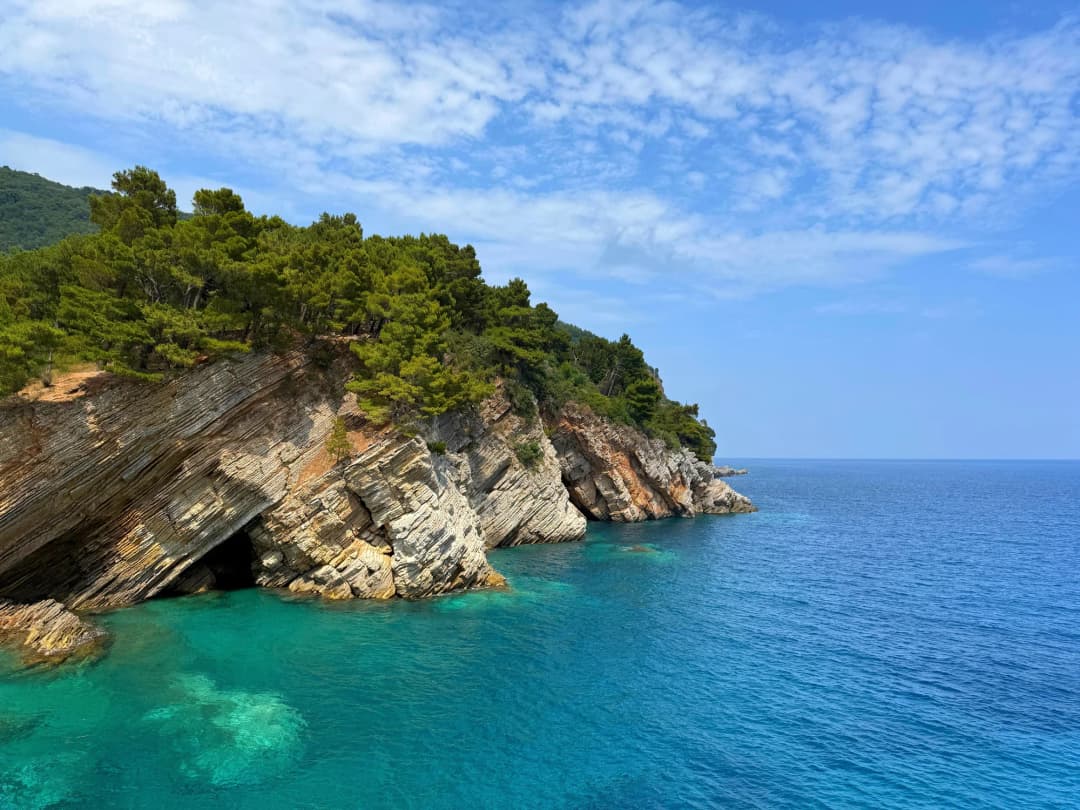
The rocky edges either side of the sand hold the clearest water, and they are reachable on foot from the main strip.
Perazića Do Beach
If Petrovac's main beach is the sociable, family-friendly gathering place, then Perazica Do is its wild, dramatic counterpart. This small cove lies to the south of town, tucked beneath towering cliffs that give it a sense of remoteness that belies its proximity to the centre.
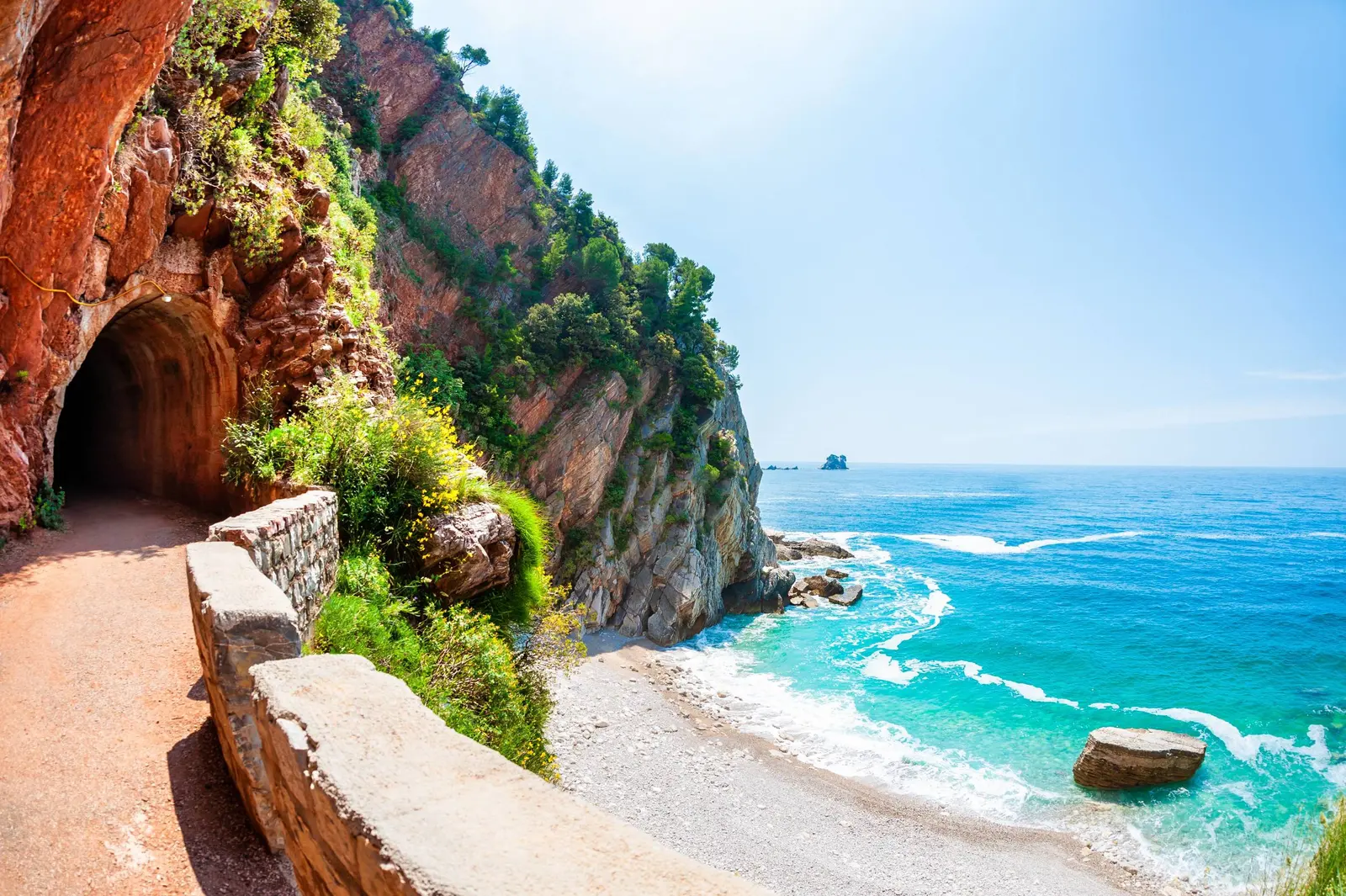
The beach is reached via a coastal path that leads south from Petrovac, passing through Mediterranean scrubland and a couple of short tunnels carved into the rock. The walk takes roughly ten to fifteen minutes from the southern end of town and is part of the appeal — the gradual reveal as you emerge from the path and see the cove below is genuinely impressive.
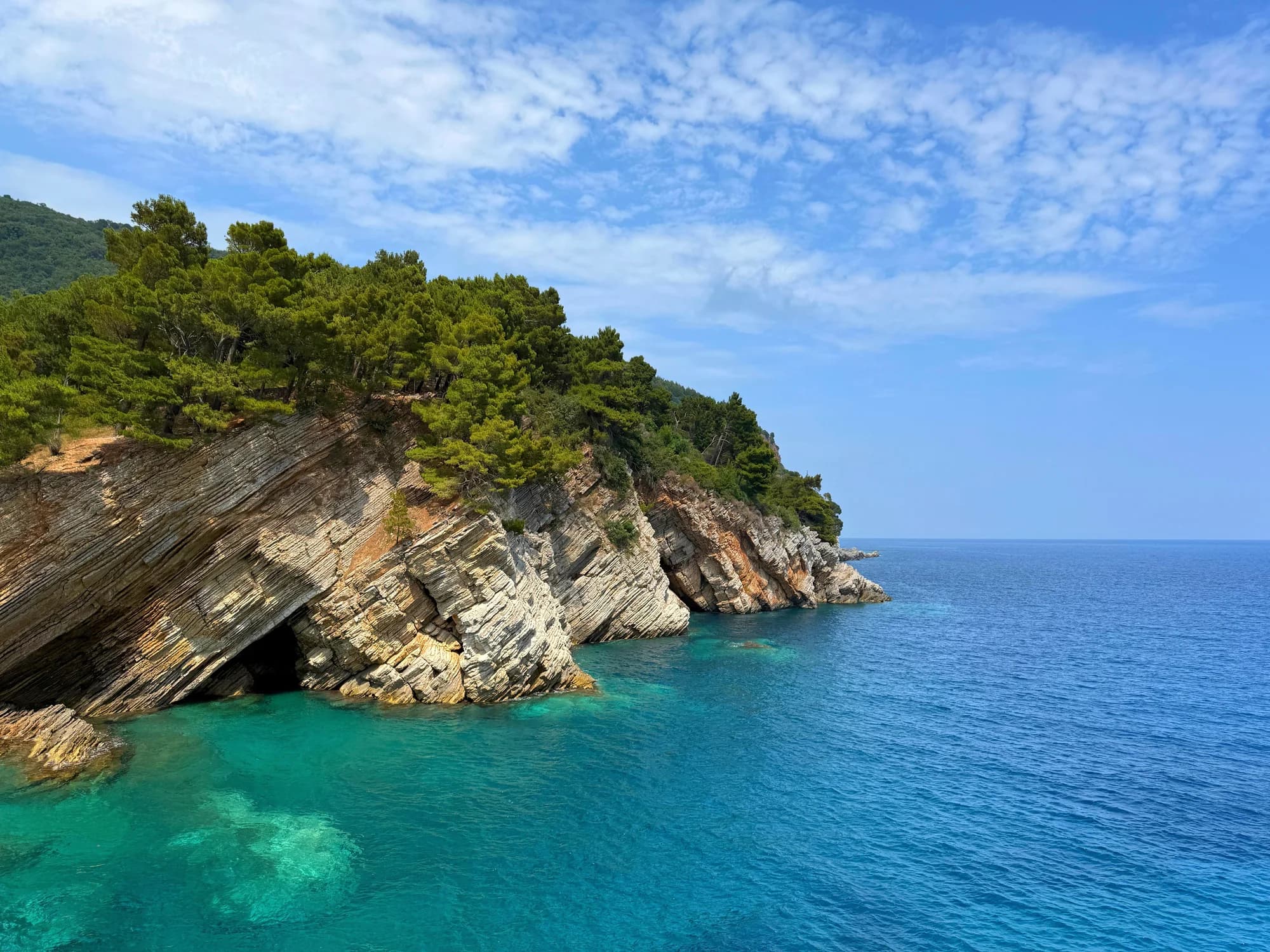
Perazica Do is small, no more than about 70 metres of coarse sand and pebble. The water is exceptionally clear, with a turquoise colour that deepens to cobalt blue just a short distance from shore. The cliffs that surround the cove shelter it from wind and give it an almost amphitheatre-like quality. Snorkelling here is excellent, particularly around the rocky edges where small fish congregate.
There is no development on the beach itself — no sunbed rentals, no bar, no facilities. You need to bring your own water, food, and shade. This is part of what makes it special. It is widely considered one of the most beautiful small beaches in Montenegro, and on a quiet morning in June or September, you may have it entirely to yourself.
There are no motorised water sports here, which is much of why it stays quiet. Between Petrovac and Perazića Do there is also a small red-pebble cove, reachable only by boat or kayak from the marina.
Several of the coves along this stretch are far simpler to reach by water than by the road above.
The Castello (Kastio)
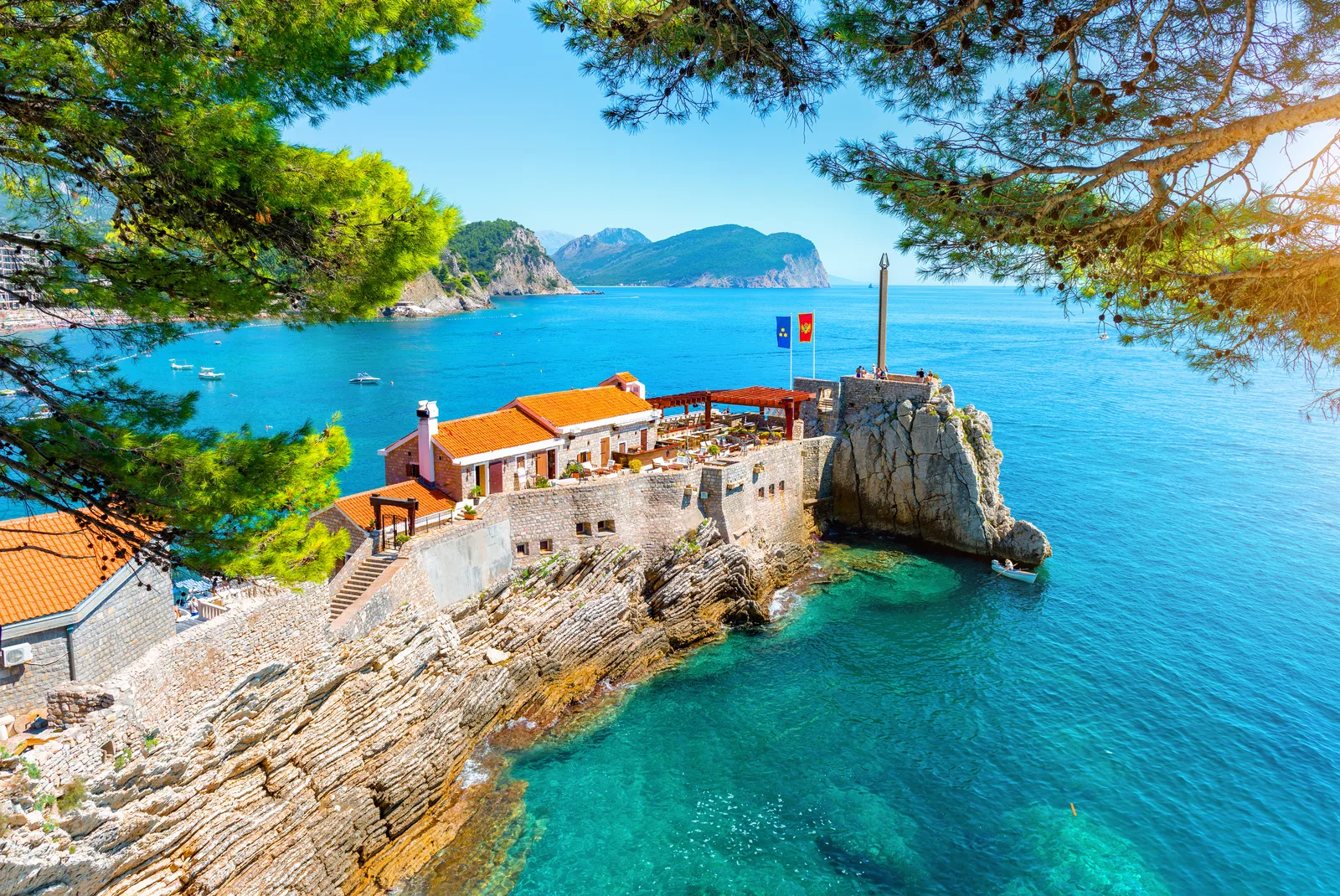
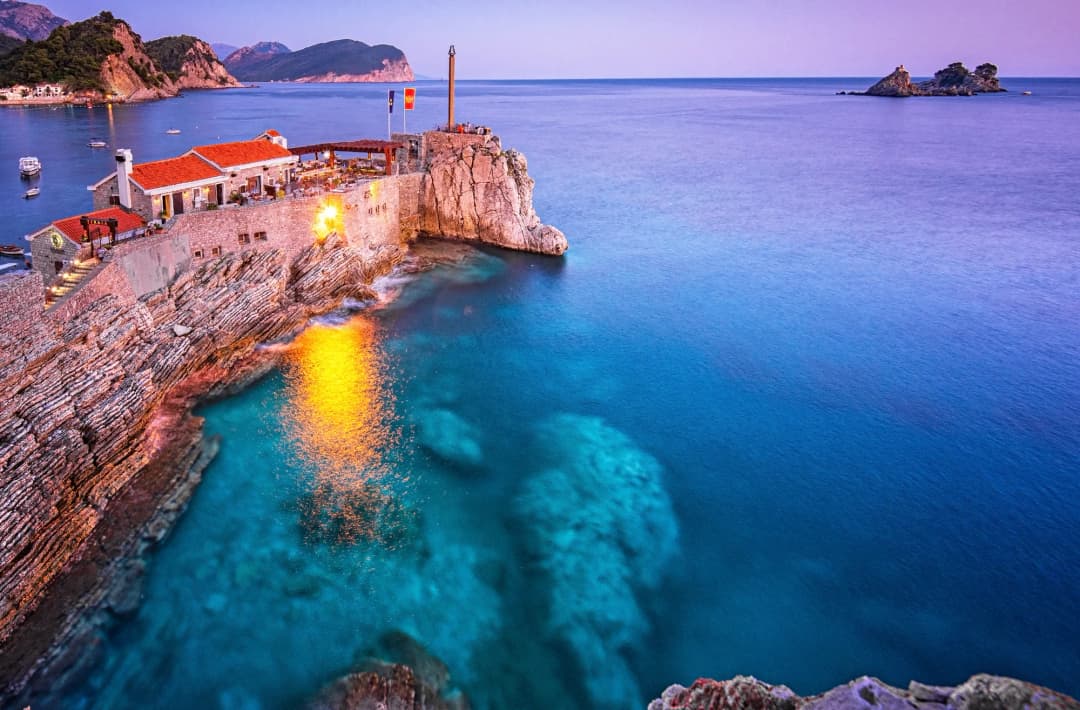
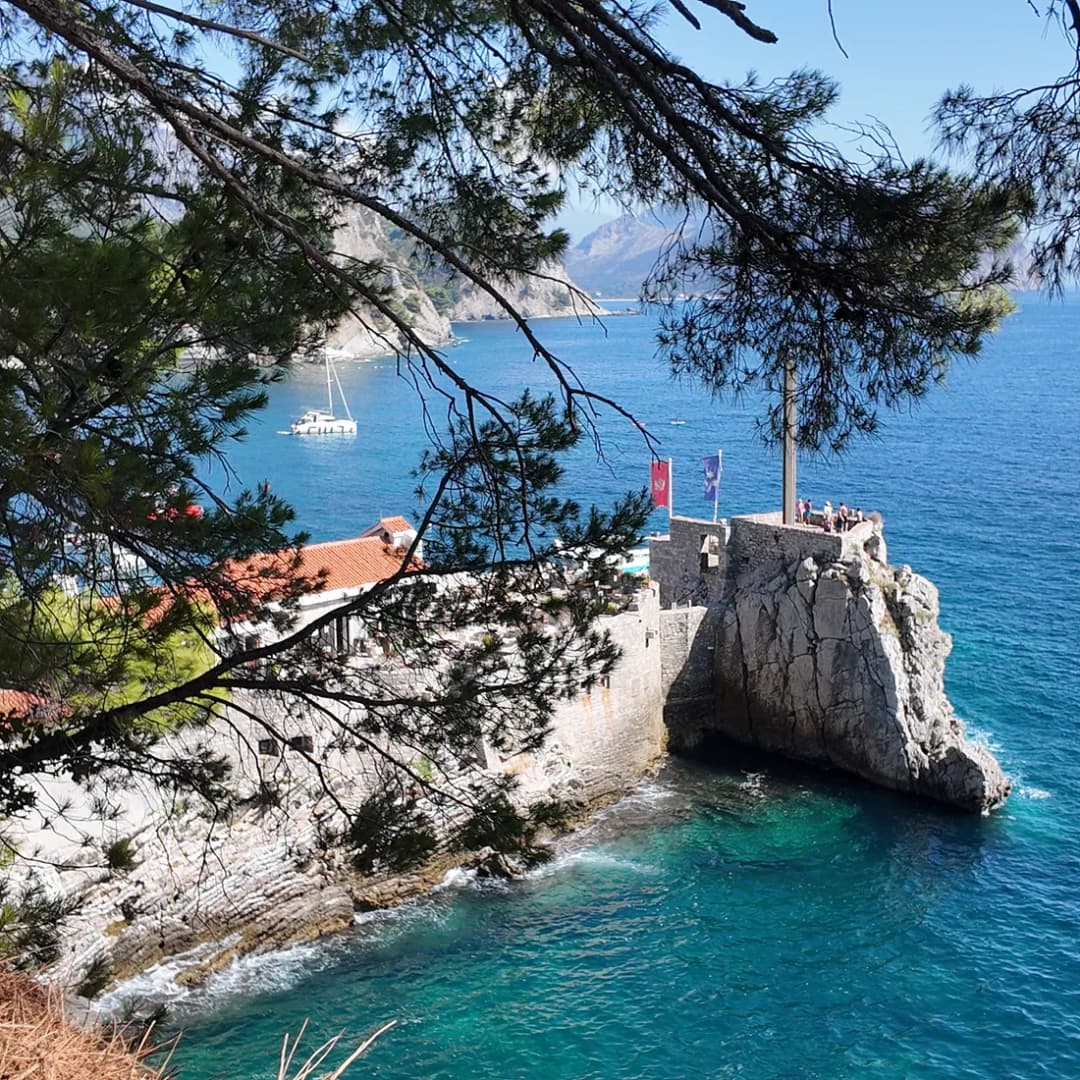
The Kastio — known locally as the Castello or Castello Veneziano — is the small Venetian fortress that occupies the rocky headland at the northern end of Petrovac beach. Built in the 16th century to defend the settlement from pirate raids, it is a compact, photogenic structure of weathered stone that has become one of the town's defining landmarks.
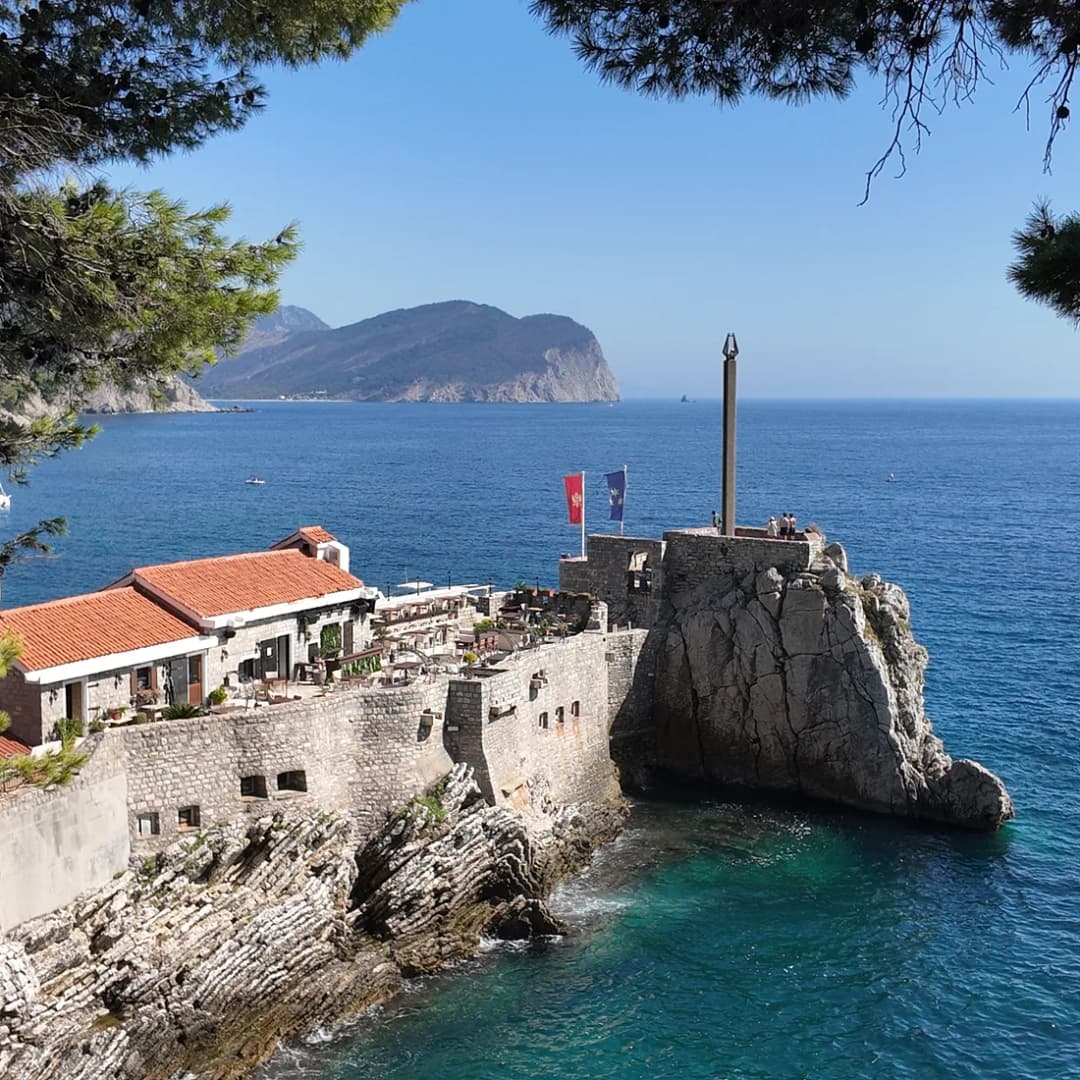
The fortress is modest in scale — a watchtower and refuge rather than a full military fortification. Today, you can walk up to its walls and enjoy what is arguably the best viewpoint in town. From here, the full sweep of the bay unfolds: the red-sand beach, the green promenade, terracotta rooftops climbing the hillside, and the two small islands offshore.
During summer, the fortress grounds are used for cultural events — small concerts, art exhibitions, and open-air film screenings. Even without an event, the Castello is the place to be at sunset. Arrive half an hour before the sun goes down, find a spot on the rocks, and watch the light turn the limestone cliffs a deep amber. It is one of those quiet Montenegrin moments that stays with you.
It is also known as Kastel Lastva, and was built to deter pirate raids, holding a permanent garrison. Today the walls house a restaurant and the Terasa La Cantina night club, looking out over the two islets and the length of the bay.
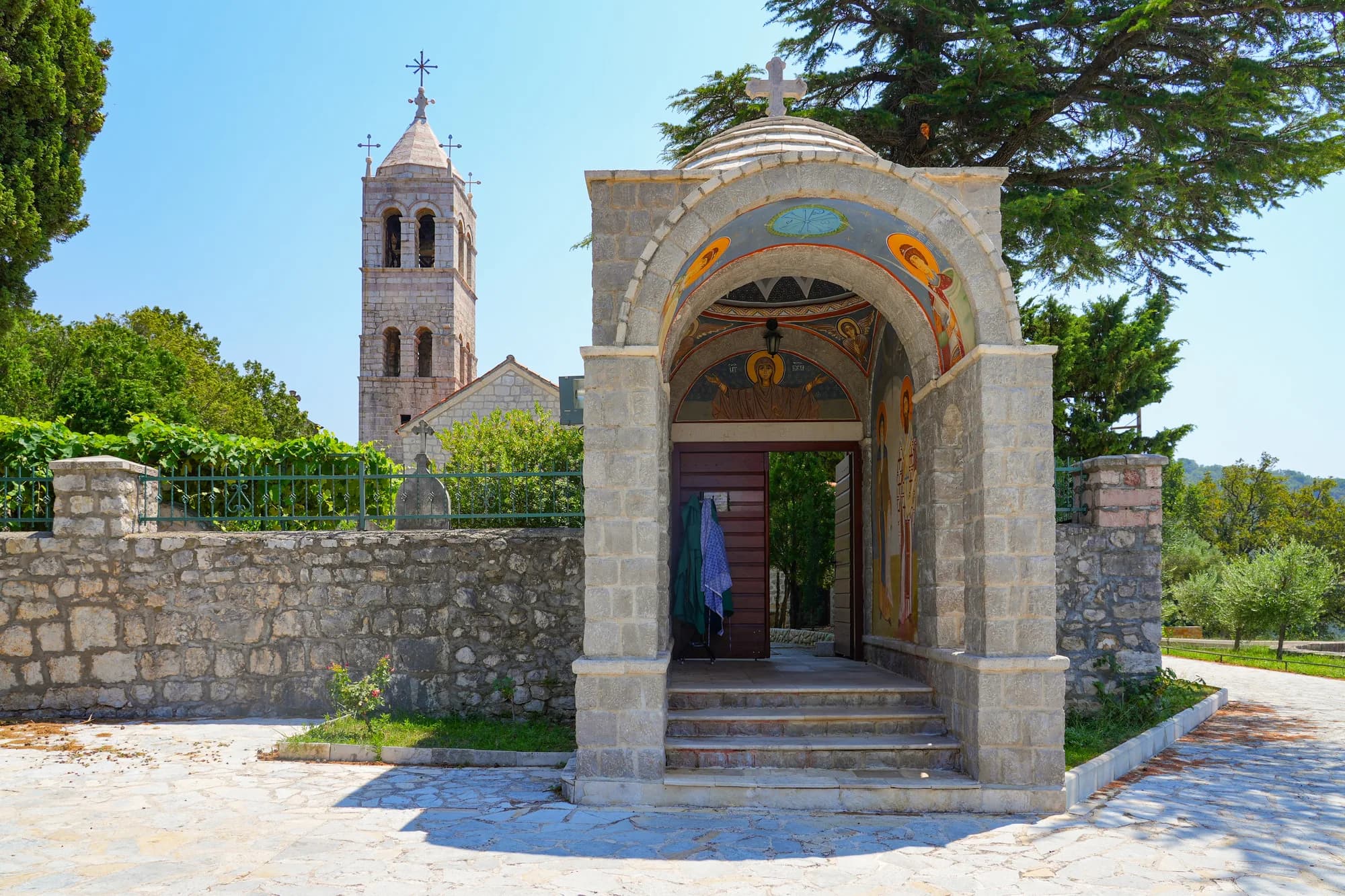
The arch is the natural photo stop on the way through, and the passage narrows to single file just past it.Entry is at ground level and the terrace is small, so it fills quickly around sunset.
The Roman mosaics at Mirišta
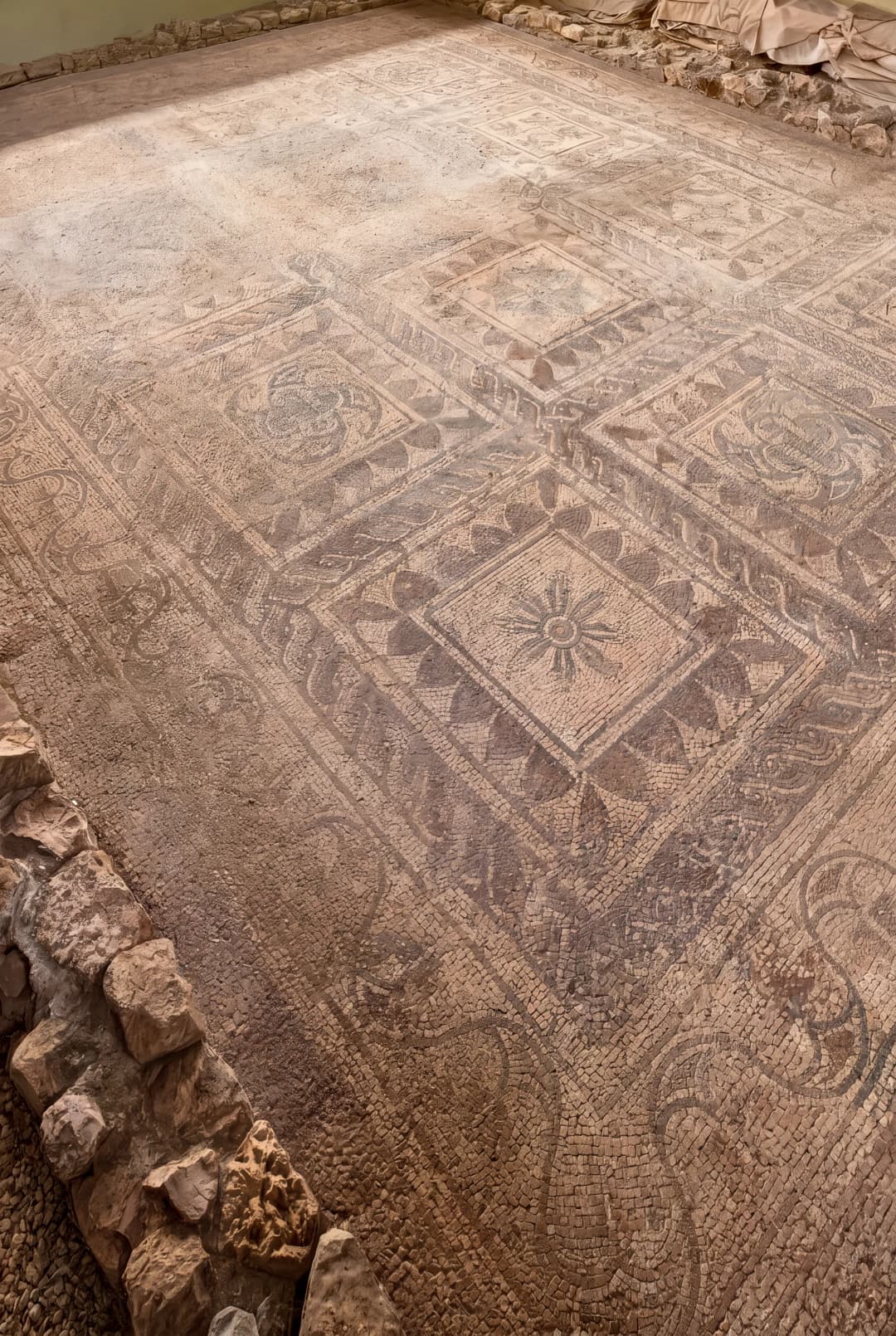
Budva Museums and Galleries describes a late-antique mosaic floor from the
third–fourth centuries. A scholarly volume published by the same institution
reports a much longer sequence at Mirišta: the Roman-period complex began near
the end of the first century BCE, changed repeatedly and remained in use into
the early seventh century CE. The visible mosaic is commonly placed within
late antiquity, often the fourth century, rather than serving as the date for
the whole site.
A mosaic floor is one phase of a settlement history, not proof that Petrovac
itself appeared fully formed on that date. Mirišta became the nucleus from
which medieval Lastva developed. That continuity makes the site important even
when conservation work limits what a visitor can see.
Access should not be improvised through private land or unsigned slopes. A
2025 Government cultural-heritage allocation included design work for
protection and presentation of the Roman villa with floor mosaic at Mirišta.
That indicates active conservation planning, not guaranteed museum-style
admission. Check with Budva Museums and Galleries or Petrovac’s Crvena Komuna
before going, follow temporary barriers and never step onto exposed
archaeology. Read the evidence in depth in our
Mirišta Roman mosaics guide.
The visible mosaic measures 37.5 square metres and was uncovered in 1941; it is protected under a glass pavilion, alongside the remains of a Roman villa and baths. A further fourth-century mosaic floor was found behind the church of Sveti Ilija.
The mosaic is one phase of a longer site history
Period
Development
Late 1st c BCE
complex begins
3rd–4th c CE
late-antique mosaic
Early 7th c CE
latest recorded use
2025
presentation design funded
Note
Conservation activity does not guarantee daily public access
Source: muzejiigalerijebd.me, gov.me
Sveta Neđelja and Katič
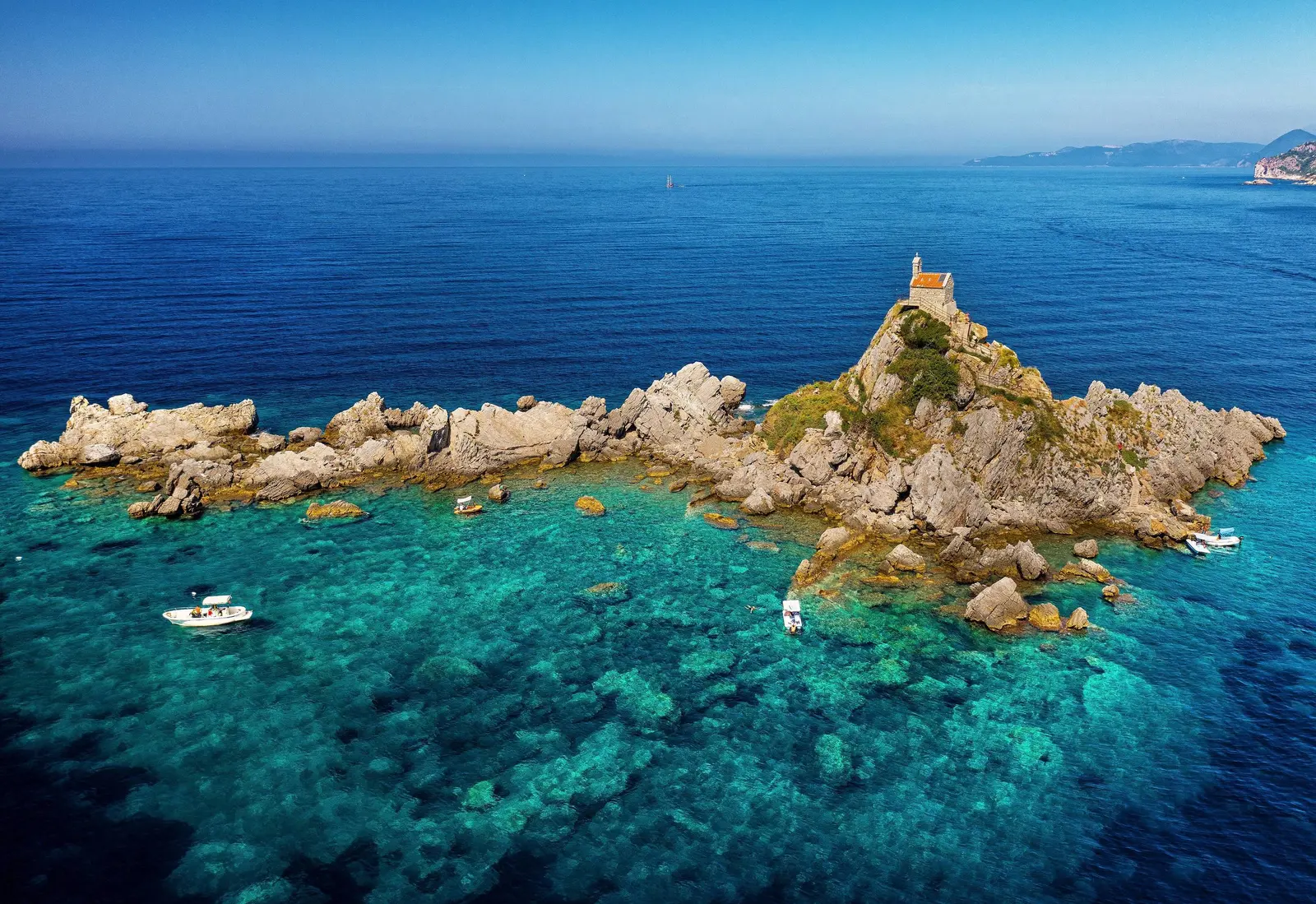
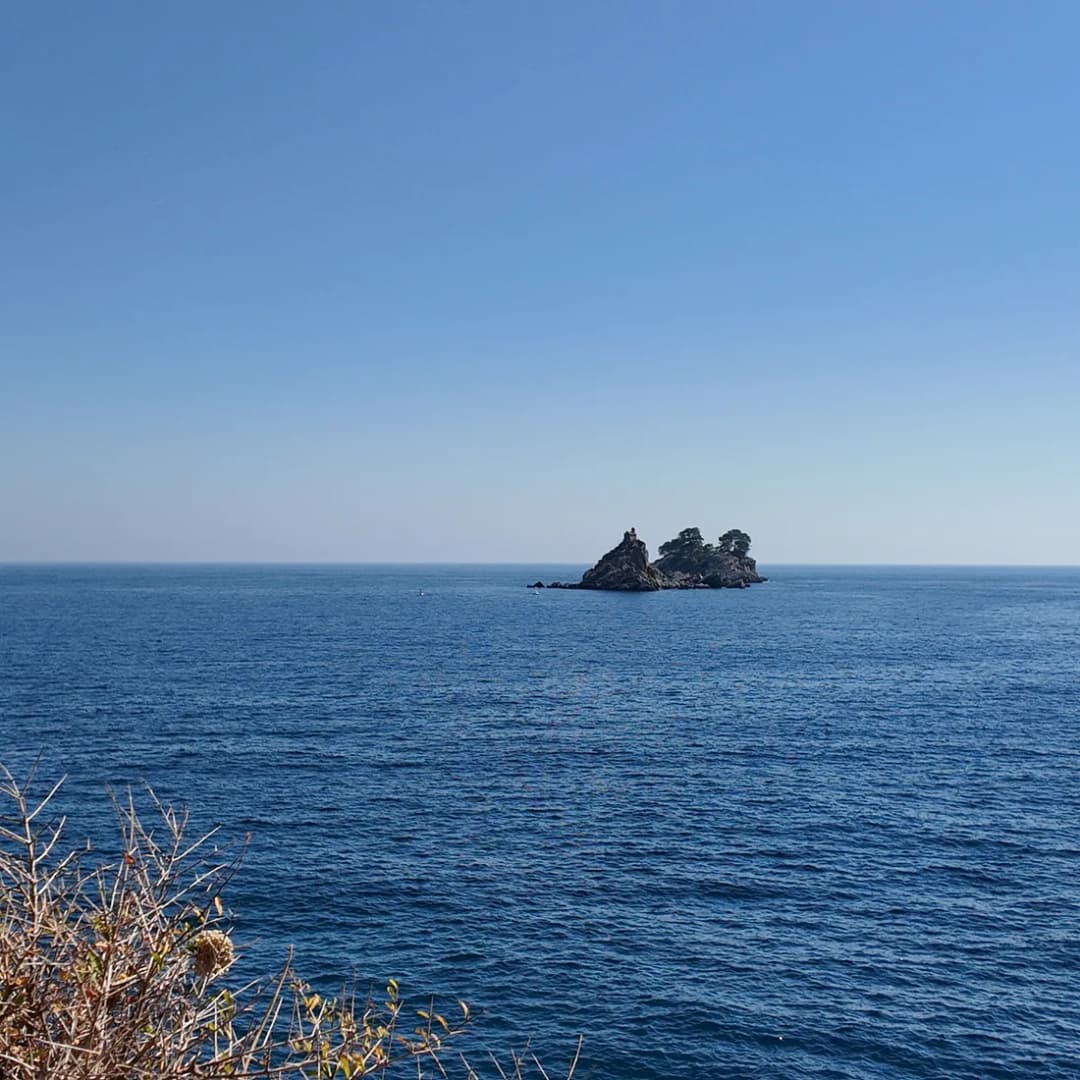
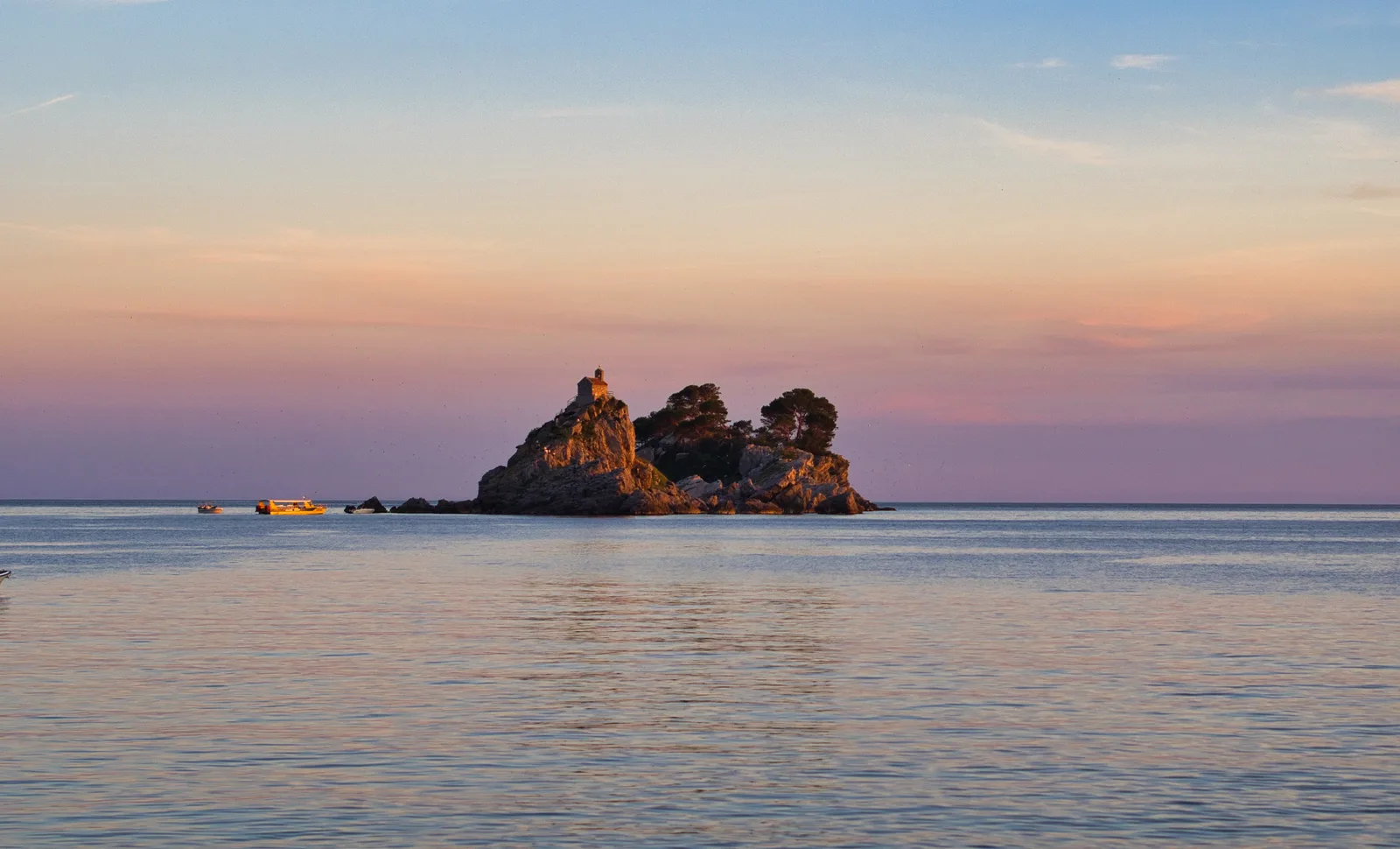
Roughly a kilometre offshore from Petrovac, two small rocky islands break the surface of the Adriatic. These are Katic and Sveta Nedjelja, and together they form one of the most photographed scenes on the Budva Riviera.
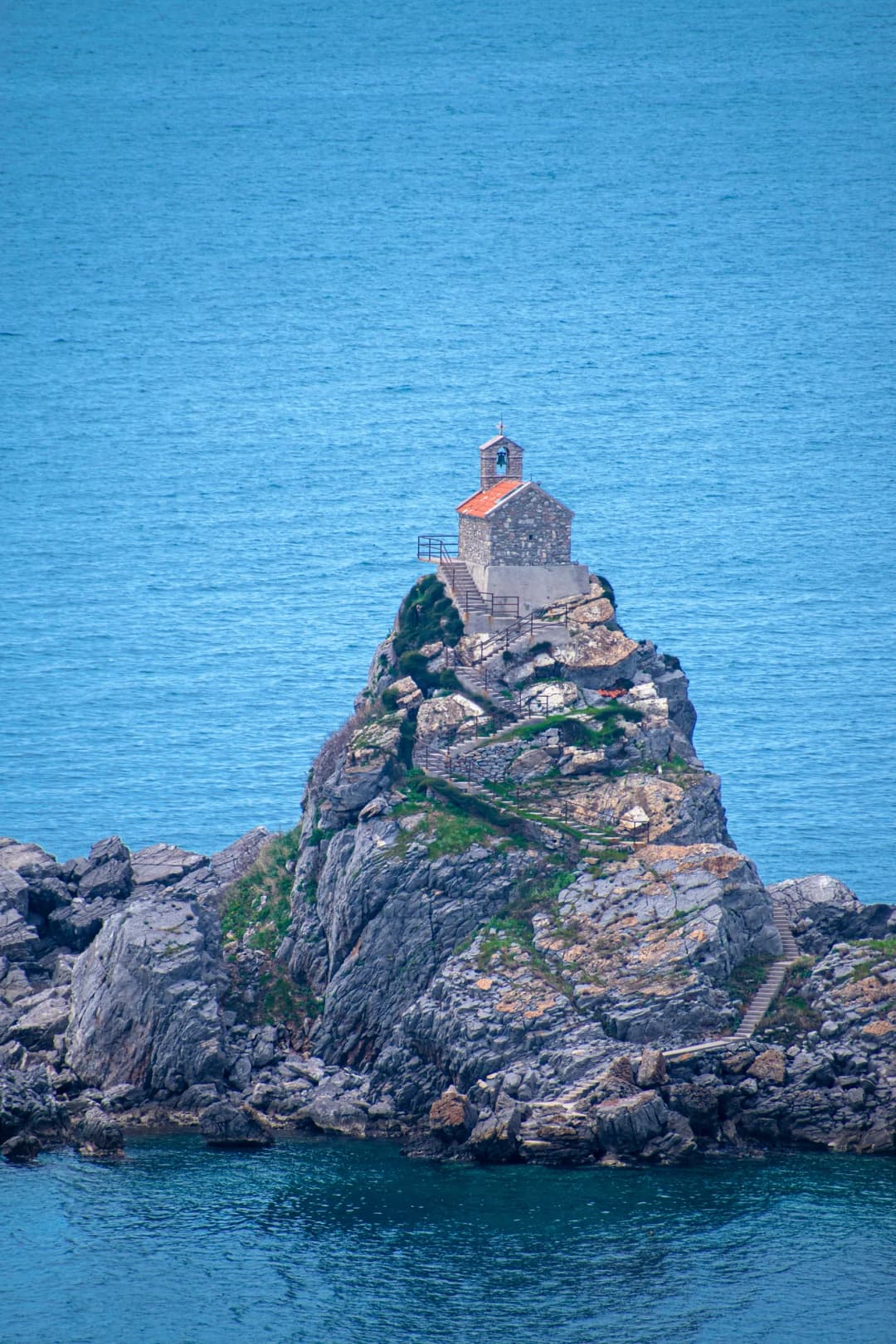
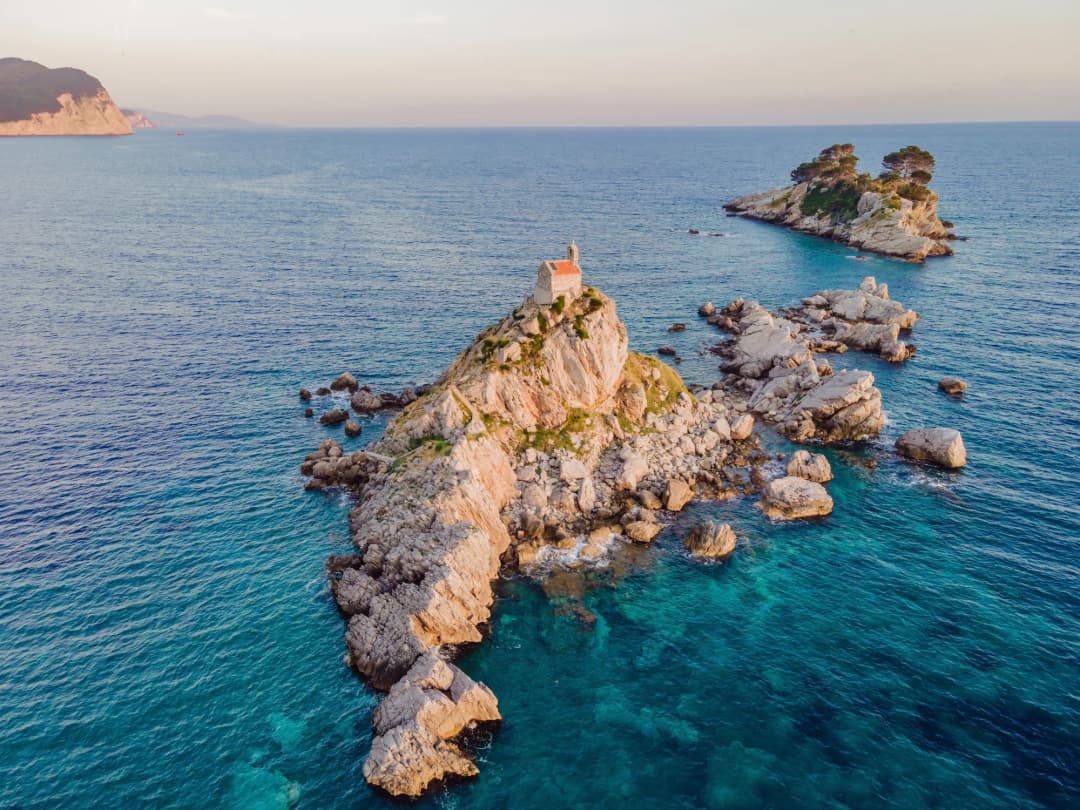
The larger of the two, Sveta Nedjelja (Holy Sunday), is topped by a tiny stone chapel rebuilt several times over the centuries. According to local legend, sailors caught in a storm vowed to build a church on the first land they saw. That land was this rocky outcrop. The chapel is simple and unadorned, but its setting — whitewashed stone perched on bare rock with the open sea behind — is undeniably striking. Katic, the smaller island, has no structures but is equally scenic, with dramatic rock formations that catch the late-afternoon light beautifully.
Both islands are visible from the beach and serve as a constant visual anchor for the town. During summer, local boat operators offer short trips out to the islands, giving you the chance to swim in the deep, clear water and see the chapel up close. Some trips combine the island visit with a stop at a nearby secluded beach. You will find boat captains along the beach or at the small harbour.
If you are a strong swimmer, the islands look temptingly close, but boat traffic in the bay can be heavy during peak season. A boat trip is the better option.
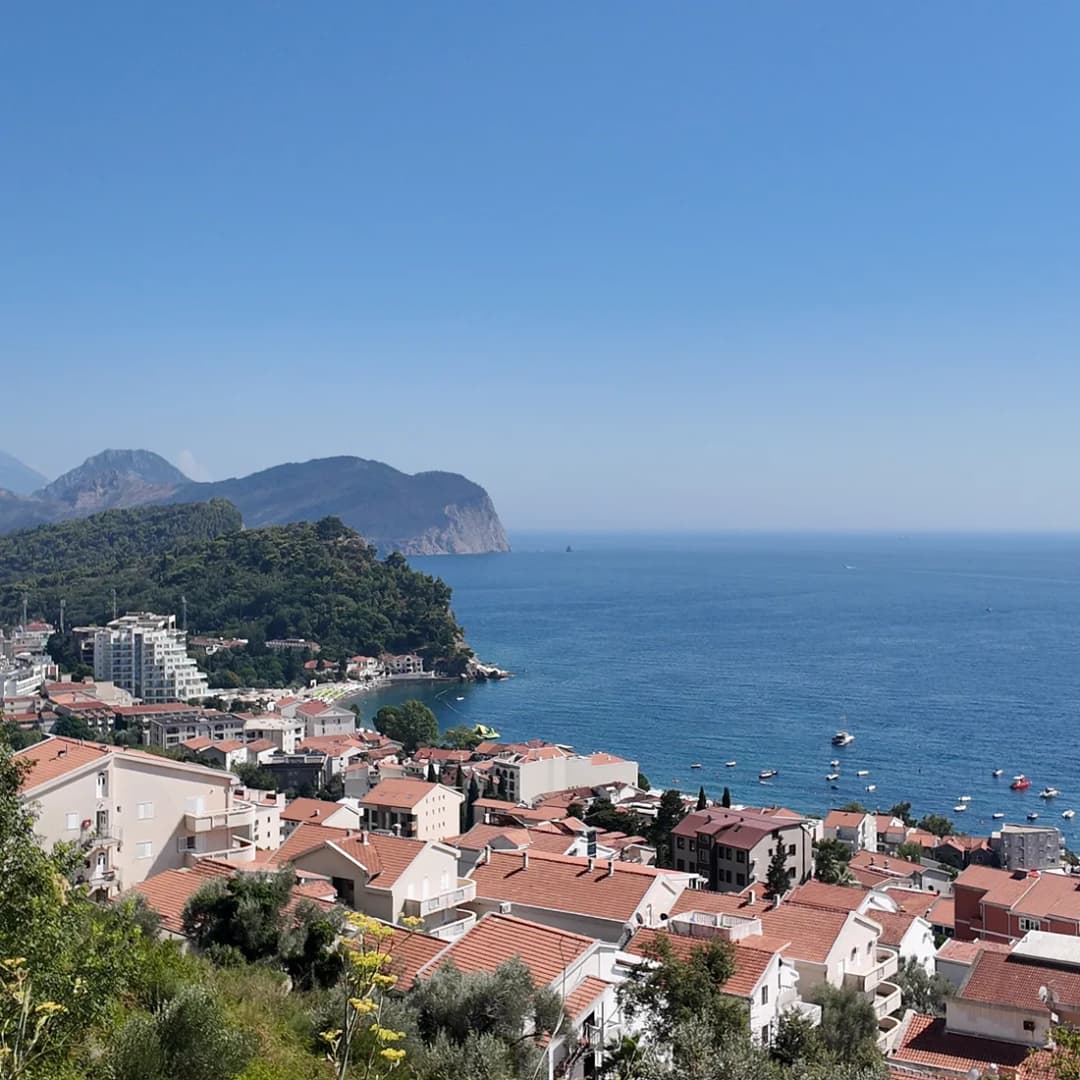
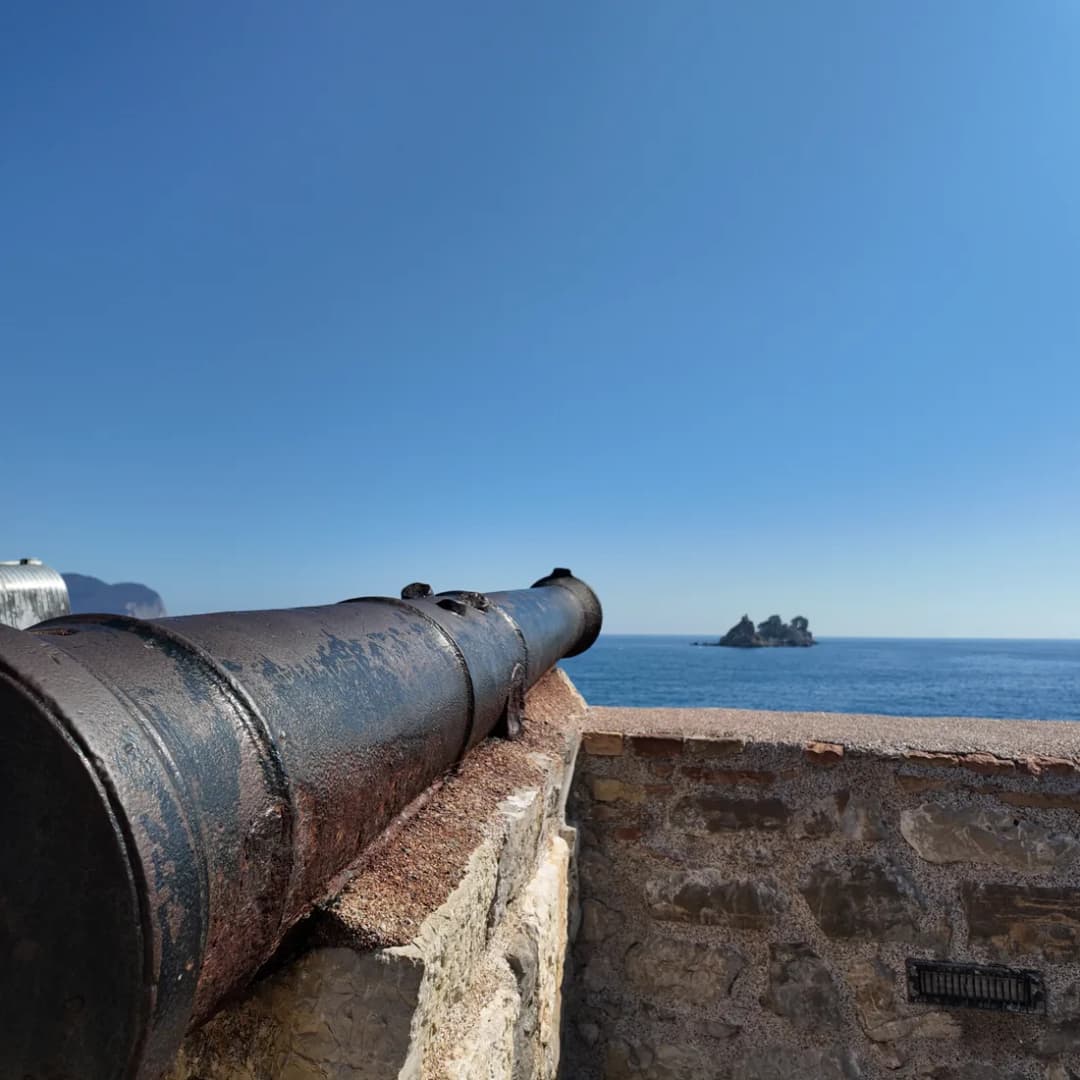
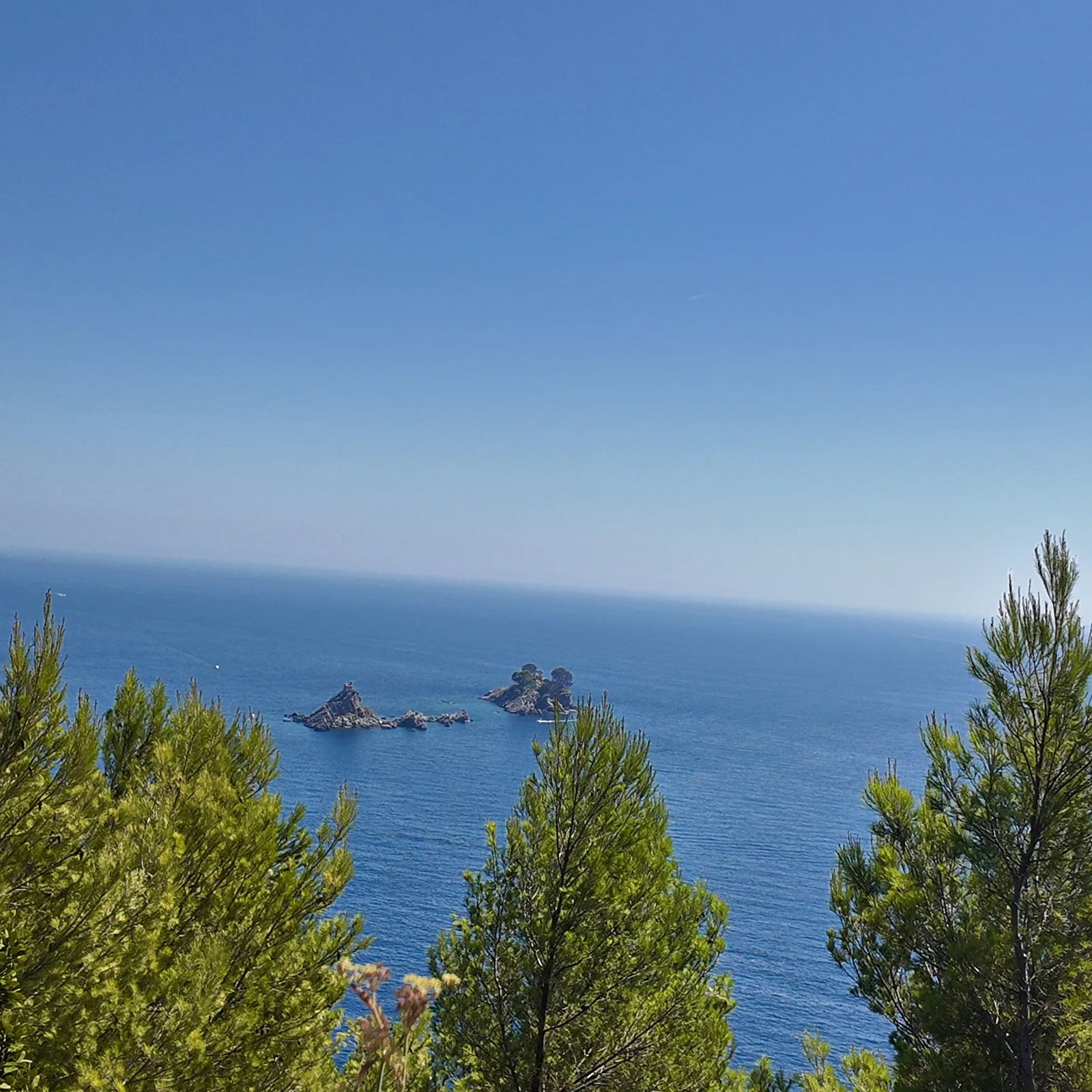
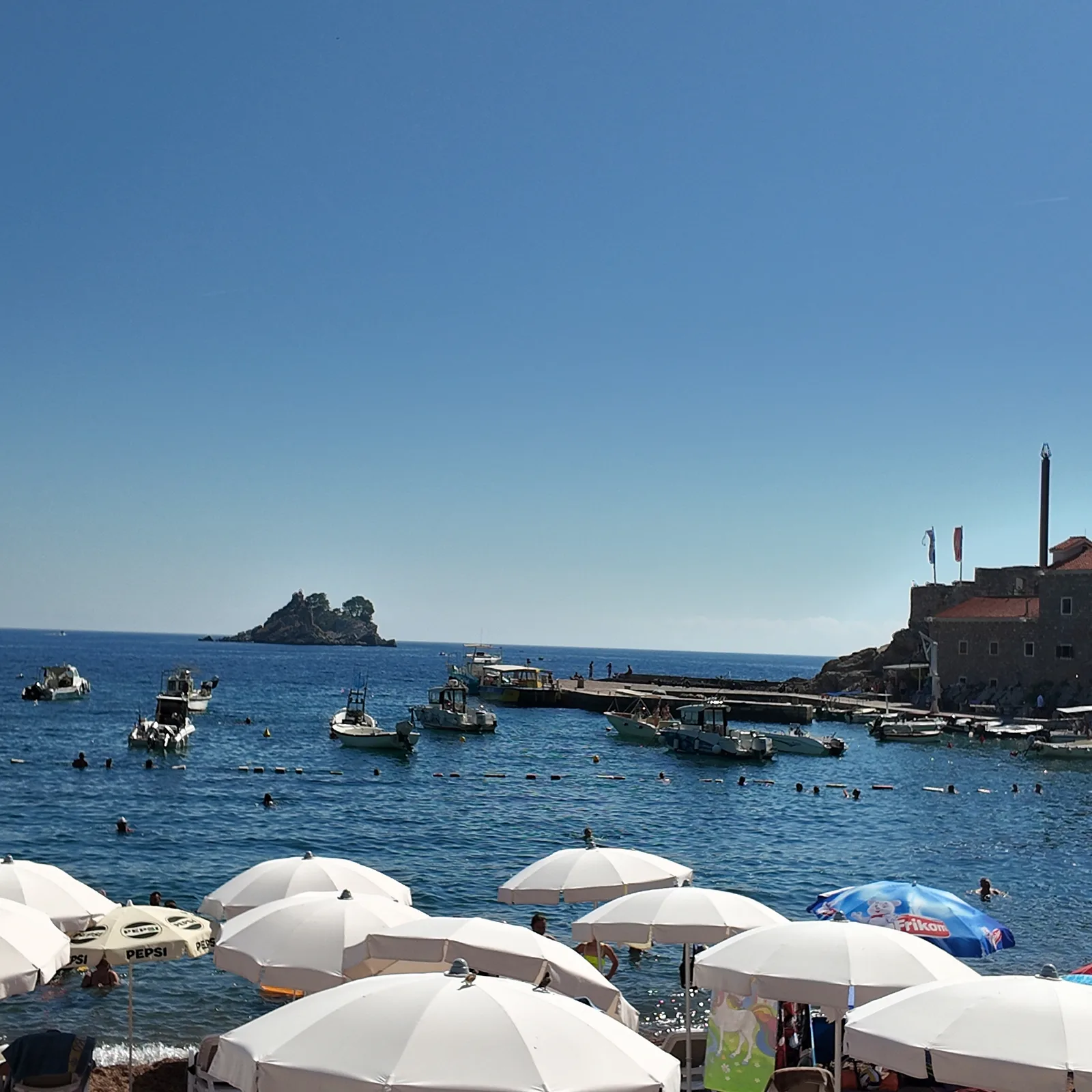
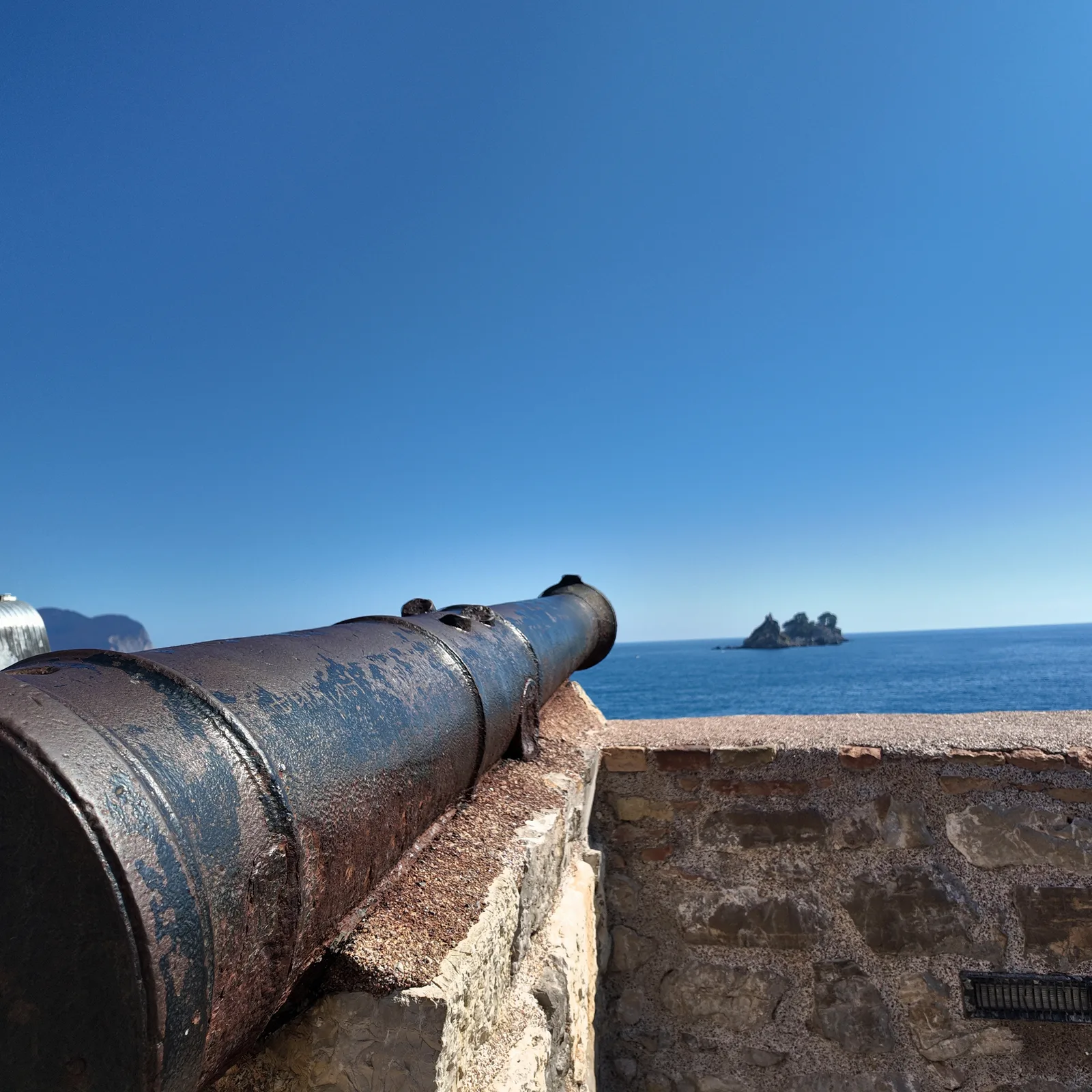
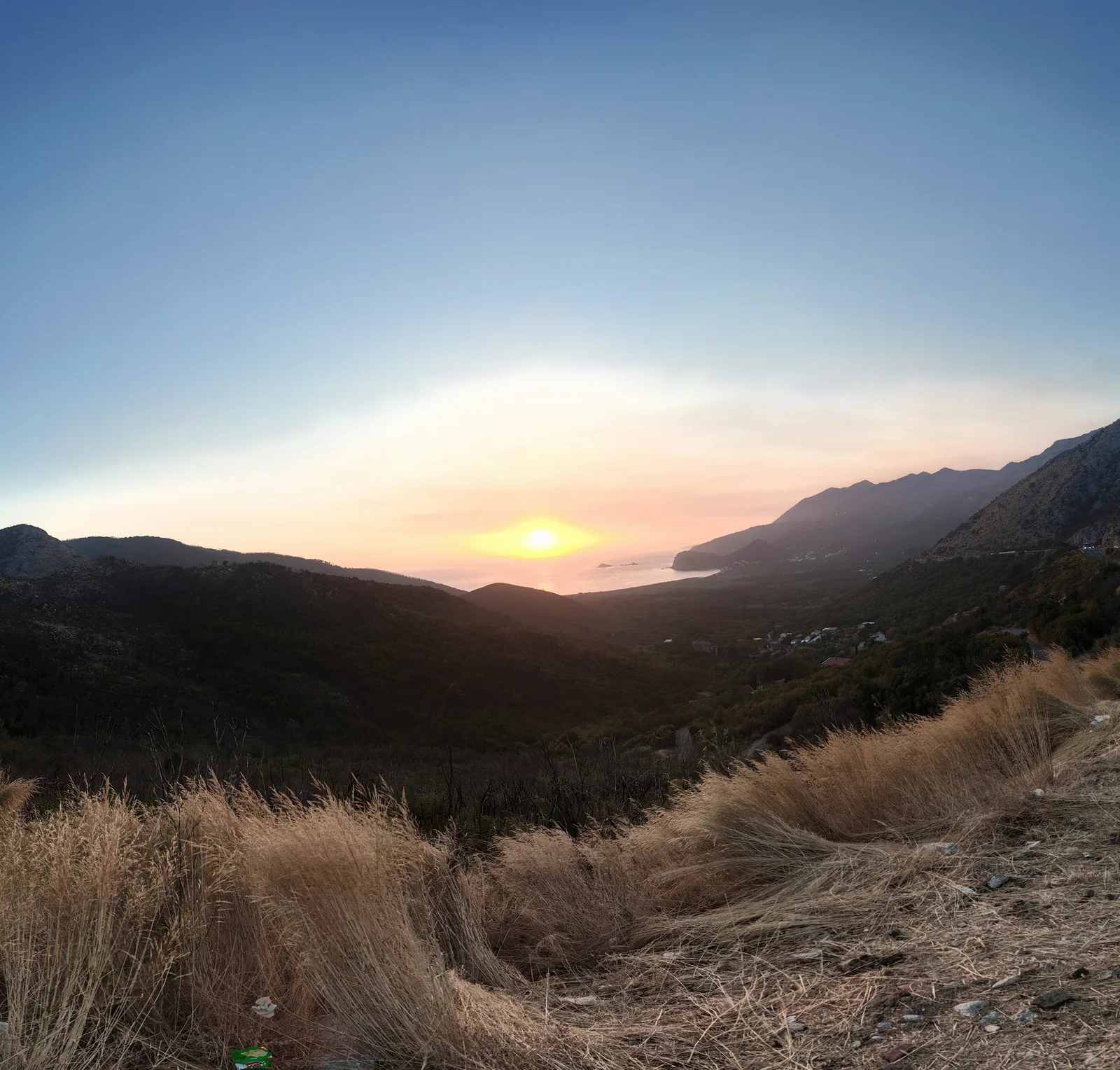
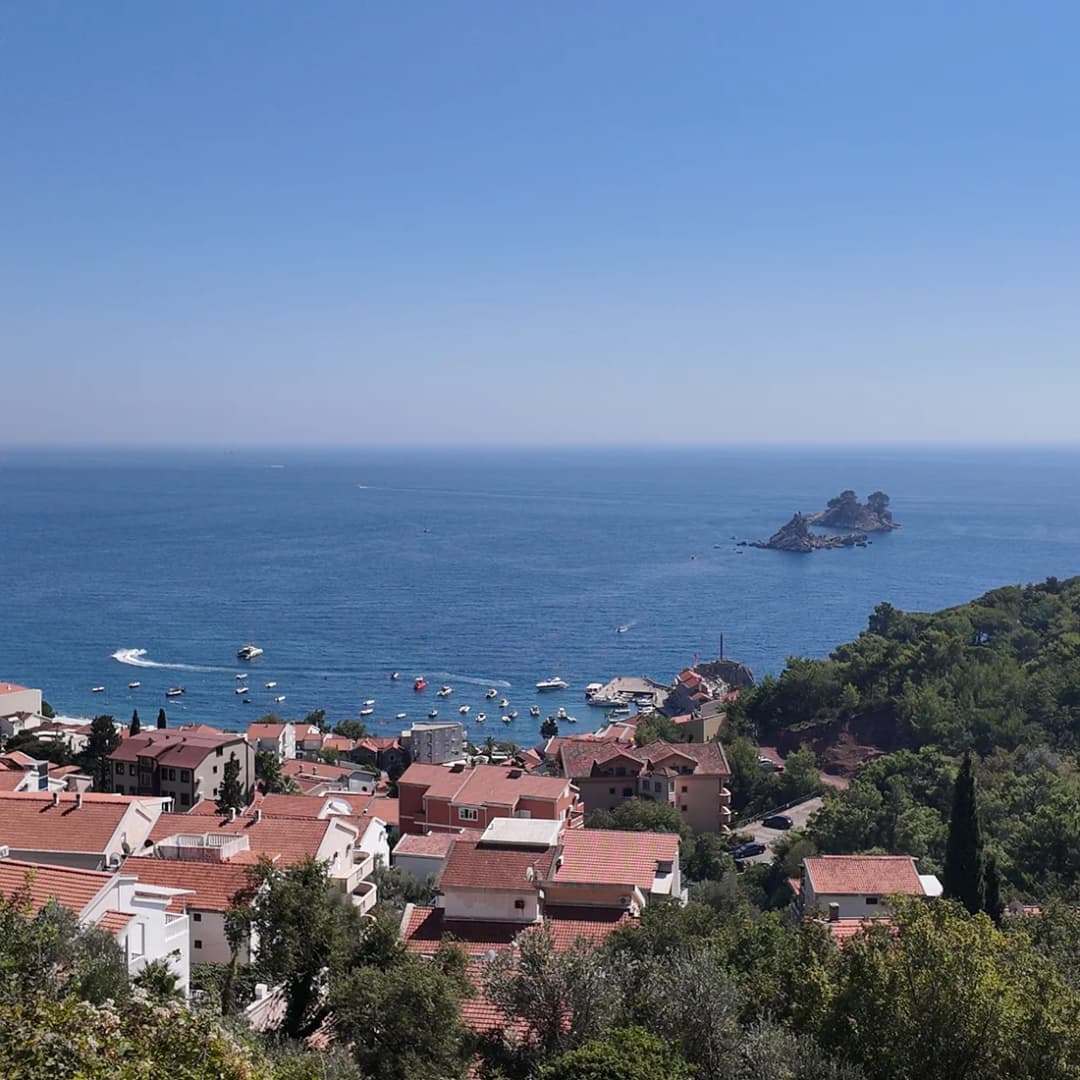
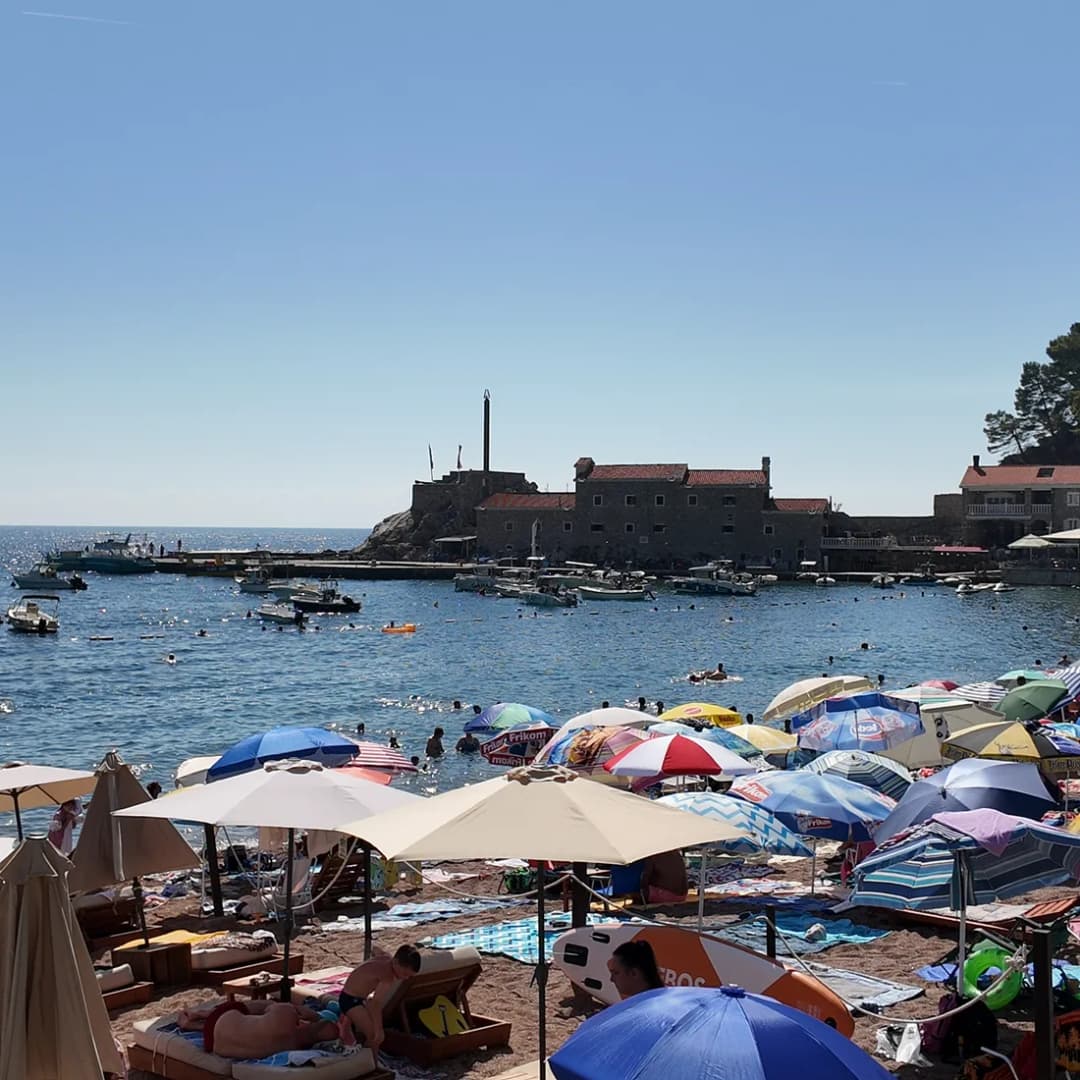
The islets from the pine slope above town: the bare rocks and the larger wooded outcrop sit about a kilometre offshore, with a small boat passing between them.The north end of the town beach in August: umbrellas reach the waterline, swimmers string out along the buoy lines, and the small-boat harbour sits under the Castello. The islets are on the horizon at far left.On the Castello's rampart, an old cannon points out to sea; the islets sit almost in line with its muzzle.The day ends above Buljarica, one bay to the south-east: the long beach and its wetland plain lie below the road, and the islets reappear beyond the headland that hides Petrovac.
Original photography by the montenegro.com team, August 2026.
The two islets lie about a kilometre out, almost in line with each other from the shore, so usually only one is visible from the town beach. Local legend has it that ringing the chapel bell brings happiness. They are Montenegro’s first protected marine and coastal area. The crossing takes about fifteen minutes, and half-day boat trips to both were around €10.
Their spacing is easiest to judge from height; from the beach the pair often appears as a single mass.
The islets are inside a nature park
The two rocky islets are Petrovac’s defining horizon. The public coastal
manager places them about 800 m from the town beach and identifies Sveta
Nedjelja by its small church. They are also namesakes of
Katič Nature Park, a 2,744 ha protected area extending from Cape Skočiđevojka to Cape Štrbina.
From the walls you can watch boat traffic keeping its distance from the rocks.
The park’s 2023–2027 management plan divides it into a 276 ha protection zone
II and a 2,468 ha zone III. Its documented values include
Posidonia oceanica seagrass, coral habitat near Veliki Katič, sea
caves and coastal cultural heritage. Those facts change visitor behaviour: use
an authorized operator, follow the park and crew instructions, do not anchor
independently on seagrass, and do not collect plants, animals or
archaeological material.
Neither the official distance nor a calm-day photograph makes an open-water
swim to the islets responsible. Currents, vessel movements, weather, fatigue
and the lack of a protected pedestrian route all matter. Nor does a boat view
guarantee permission to land at the chapel. Ask a current authorized operator
exactly where the trip goes, whether landing is permitted and how conditions
affect cancellation. Our dedicated
Katič and Sveta Nedjelja guide
keeps those questions separate from the town visit.
Sveta Nedjelja’s chapel crowns the rocky islet. Confirm current landing
access before setting out.
Crvena Komuna and Petrovac’s small churches
Crvena Komuna is more than a convenient cultural-centre label. Budva Museums
says the building stands on the former Petrovac municipality associated with
the first communist municipality on the Adriatic, established in 1920. The
memorial institution was founded in 1987. Its programme has included the Marko
Krstov Gregović gallery, a memorial room and cinema activity.
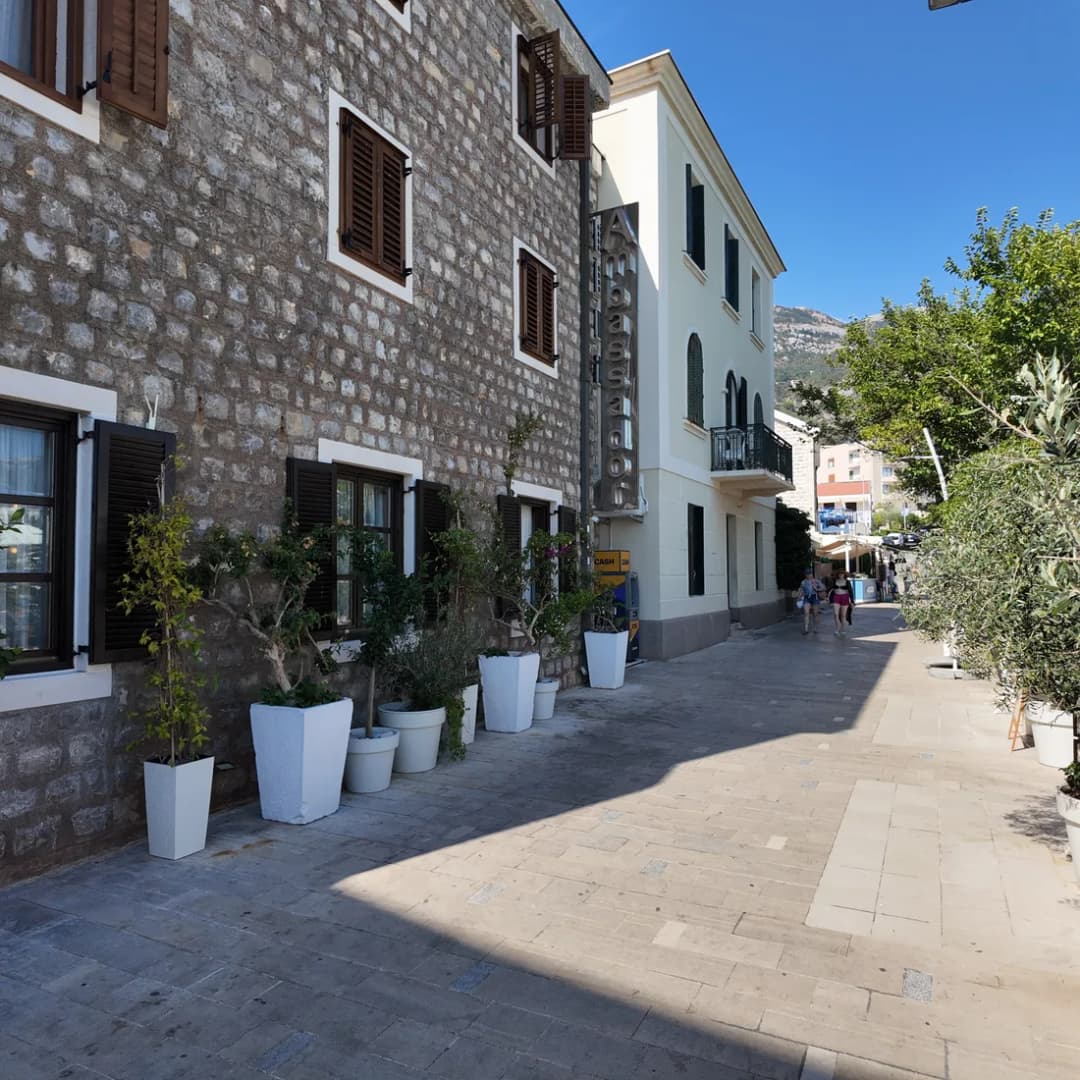
The older lanes run back from the seafront and are easy to miss if you stay on the promenade.
The institution currently lists Crvena Komuna at Obala 111 and publishes a
Petrovac contact number, but its main page does not publish dependable daily
public hours for every space. Contact it directly before planning a special
visit. A building can house multiple functions without all of them being open
at once.
The town’s smaller sacred buildings add another layer. Budva Museums dates St
Thomas and St Elijah broadly to the fourteenth–fifteenth centuries and
separately identifies St Vid as a Franciscan convent of nuns without assigning
it a date on its public page. Nearby, the Church of the Holy Cross at
Novoselje is described as fourteenth century with fresco work from the early
seventeenth. These are heritage sites and, where active, places of worship:
dress respectfully, keep voices low, ask before photographing interiors and
never assume an unlocked door or fixed timetable.
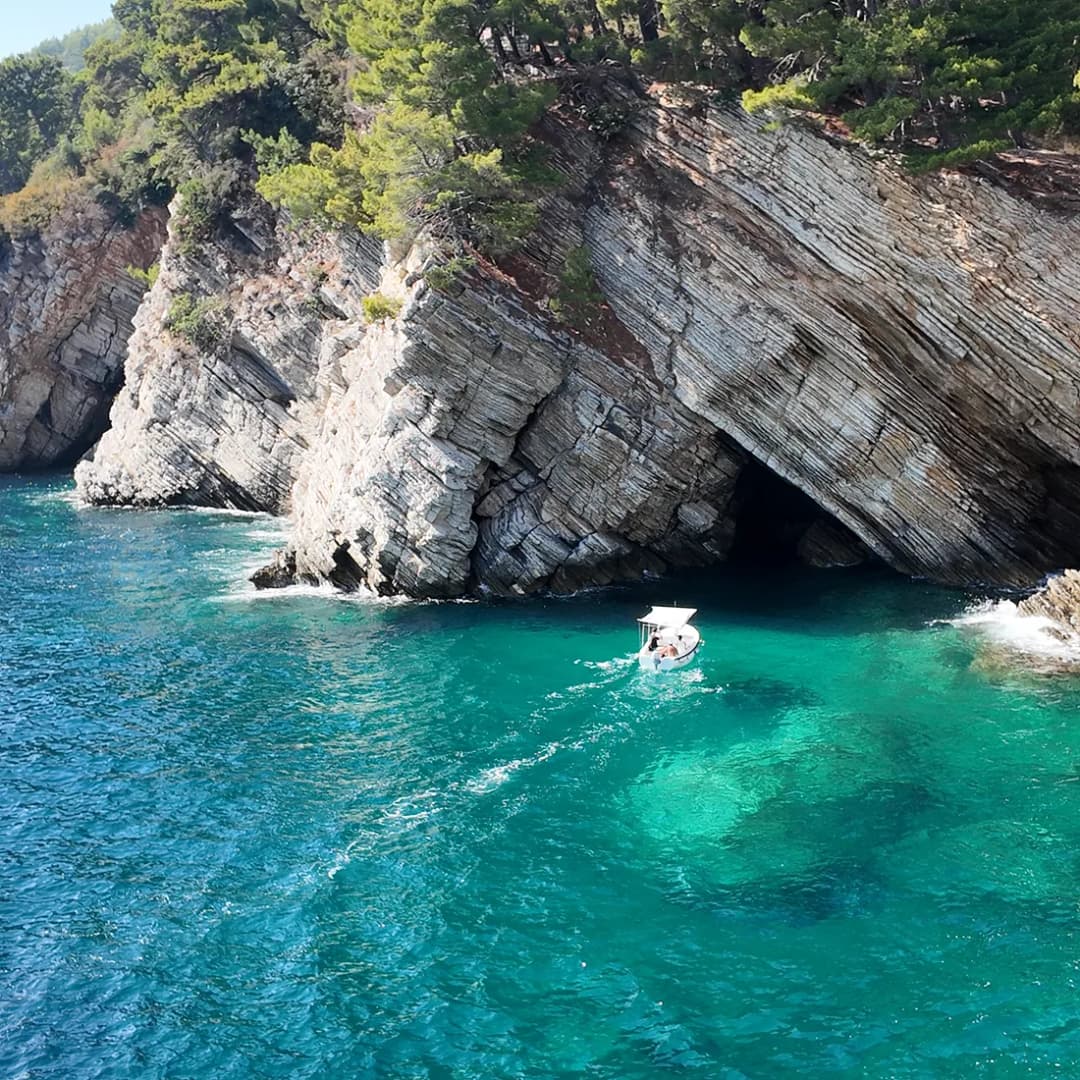
A cliffside pedestrian tunnel reaches a rocky cove near Petrovac. Check
local access and conditions before using the route.
Coastal Walks
One of Petrovac's greatest assets is its network of coastal paths, which let you explore the shoreline on foot. The terrain is varied — limestone rock, Mediterranean scrubland, olive groves, pine forests, and the ever-present Adriatic.
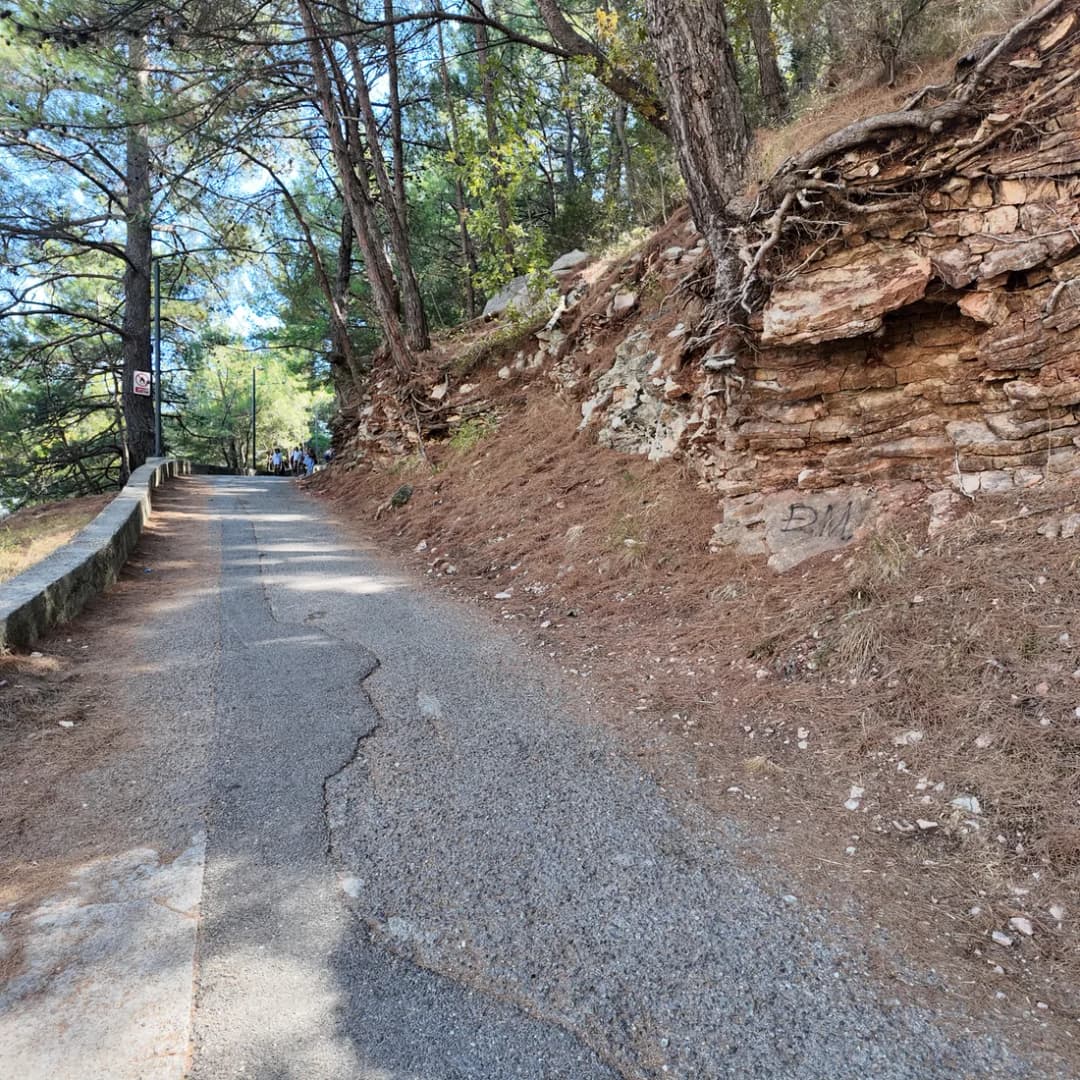
The pines give near-continuous shade, which makes this walk workable even in the middle of a summer day.
Northward: Toward Sveti Stefan and Crvena Glavica
A path climbs over the headland past the Castello and continues along the coast toward Crvena Glavica and eventually Sveti Stefan — roughly five to six kilometres one way. Even the first kilometre offers superb views back over Petrovac bay. Crvena Glavica (Red Head) is a cluster of small, rocky beaches with red-tinged sand backed by steep cliffs, quieter than the main beaches and well worth the effort.
Southward: Perazica Do, Rezevici, and Buljarica
The southern path is more popular. From the main beach, you pass Lucice and continue through pine forest to Perazica Do. Beyond that, the path climbs toward the 13th-century Rezevici Monastery, about three kilometres from town with beautiful views over the sea. Further south, Buljarica is a long, undeveloped pebble beach stretching over two kilometres. The full walk takes about forty minutes and passes through ancient olive groves.
These walks are best done in the morning or late afternoon. Bring water and wear sturdy sandals or light hiking shoes.
Culture and Events
Petrovac Night Festival (Petrovačka Noć)
Petrovac Night (Petrovačka Noć) is the town’s largest and most vibrant cultural celebration—a delightful seaside festival held every summer that celebrates Petrovac’s rich heritage and vibrant community spirit. This all-day festival of fish, wine, and beer is typically held at the end of August, though some cultural events also occur in July.
The event’s program includes traditional music, dance, and theater performances, with folk ensembles, choir performances, and theater groups showcasing local culture and traditions. Tourists and locals alike stroll through the promenade enjoying fish, beer, wine, and traditional sweets made according to local recipes, while participating in numerous sports competitions and listening to concerts by famous musicians.
As the evening progresses, the festival culminates in a spectacular fireworks display that lights up the night sky over Petrovac, followed by a colorful and lively parade that winds through the town’s streets. Petrovačka Noć provides an excellent opportunity for visitors to immerse themselves in local culture while enjoying the stunning coastal surroundings.
Mediterranean Atmosphere
Petrovac exudes a relaxed Mediterranean atmosphere with its stone boardwalk, lush Mediterranean plants perfuming the air, and historic Venetian fortress guarding the tiny stone harbor. The cuisine is based mainly on seafood prepared in traditional Mediterranean ways, with numerous waterfront restaurants offering fresh fish, grilled specialties, and local wines.
The town is before anything else a relaxed, child-friendly holiday spot where children delight in the freedom of the beaches and families can roam the esplanade at night with impunity. This family-friendly reputation makes Petrovac one of the best places on the coast for family vacations, with reasonably priced accommodation, clear water, and a safe, welcoming environment.
Petrovac maintains a more polished yet authentic character compared to the high-energy party atmosphere of Budva, offering visitors a chance to experience genuine Montenegrin coastal culture while still enjoying modern tourist amenities.
Nature and Activities
Beach Hopping
Petrovac serves as an excellent base for beach hopping along the Budva Riviera. Within walking distance or a short drive, visitors can explore multiple beaches, each with its own character:
Petrovac Beach: The main 600-800m beach with full amenities
Lučice Beach: A 220m Blue Flag beach surrounded by pine forests
Perazića Do: A hidden cove with turquoise waters ideal for snorkeling
Buljarica Beach: The 2,200m longest beach in the Budva Riviera with wetland ecosystem
Red-pebble cove: A small, beautiful hidden cove accessible only by boat or kayak
This diversity allows visitors to experience different beach environments, from busy and well-equipped to secluded and wild, all within the Petrovac area.
Coastal Paths and Hiking
Petrovac offers several excellent coastal walking routes and hiking trails that combine natural beauty with accessibility:
The islet works as a distance marker: keep it in view and you know you are still on the seaward path.
Health Trail to Perazića Do: The most famous trail, a flat, paved path winding through dense pine forests and three illuminated tunnels. This route offers a cool, shaded environment even at high noon, making it perfect for daytime walks.
Reževići Walking Path: One of the best activities in Petrovac is taking an evening walk along this well-constructed path that winds along Petrovac’s rugged coastline, offering spectacular views of the azure Adriatic waters.
Trail to Lučice Beach: Following the path at the southern end of the beach promenade leads to Lučica Beach through scenic coastal vegetation.
These trails run along the rocky coast and offer spectacular views, combining opportunities for exercise, nature observation, and photography. The protective natural shade, benches, and tunnels make hiking in Petrovac accessible to visitors of all fitness levels.
Snorkeling and Diving
The crystal-clear Adriatic waters around Petrovac provide excellent opportunities for snorkeling and diving. Several locations are particularly recommended:
Water clarity around the rocky headlands is noticeably better than off the sandy centre of the bay.
Lučice Beach: Offers good snorkeling with clear water and underwater visibility
Perazića Do: Wild beach with turquoise waters ideal for snorkeling, remaining peaceful due to the absence of motorized water sports
Katič and Sveta Neđelja Islands: The first declared marine and coastal protected area in Montenegro, these islets attract diving enthusiasts with their underwater features
Red-pebble cove: A hidden gem accessible only by boat or kayak, offering pristine snorkeling conditions
The protected marine area around the islands ensures healthy underwater ecosystems with diverse marine life, making it a sanctuary for underwater exploration.
Boat Trips and Excursions
Boat trips are a popular activity in Petrovac, with several options available from the marina:
Half-day tours to Katič and Sveta Neđelja Islands: Available for around €10, these trips include snorkeling programs and exploration of the first marine protected area in Montenegro
Montenegro Star glass boat: Offers panorama cruises to Sveti Stefan, Budva, Milčoer, and Queens Beach for only €15, providing outstanding value for a 2.5-hour excursion
Coastal tours: Various operators offer routes to nearby beaches, including trips to Hawaii Beach near Budva
Kayak and private boat rentals: Available for more adventurous visitors who want to explore hidden coves and the coastline at their own pace
Petrovac’s location makes it an ideal base for exploring the famous Skadar Lake, discovering monasteries in the area, and taking day trips to other coastal attractions along the Budva Riviera.
Where to Eat
Petrovac punches above its weight when it comes to food. The scene is dominated by seafood, but there is enough variety to keep you well fed for a week or more.
Along the Promenade
The beachfront is lined with restaurants, and while the density might suggest tourist-trap territory, the standard is genuinely high. Most display the day's catch at the entrance — look for whole grilled fish (branzino, orada, or dentex), black risotto, grilled squid, and mixed seafood platters.
Terasa Castello, located near the fortress at the northern end of the beach, offers one of the best settings in town — a terrace with direct views over the bay. The seafood is reliably good, the grilled steaks are excellent, and sunset here is particularly memorable.
Konoba Katic, named after the island visible offshore, is an excellent and affordable option known for generous portions and fresh seafood, including oysters when available. It is the kind of place where the waiter brings you a complimentary rakia at the end of your meal.
In Town
Step back from the promenade and you find the traditional konobas — stone-walled, family-run restaurants that serve Montenegrin comfort food. These are the places to try dishes like Njeguski steak (stuffed with ham and cheese from the mountain village of Njeguski), slow-cooked lamb, and hearty soups.
Konoba Mediterraneo is a favourite for its shaded terrace under lime trees and its well-executed Montenegrin and Mediterranean menu. The black risotto and stuffed squid are standouts.
Konoba Tramontana is another strong choice, particularly for seafood, with a terrace that provides excellent views over the bay.
What to Expect
Dining in Petrovac is unhurried — meals are meant to be long, with multiple courses and lingering over coffee. Prices are moderate: expect 10 to 20 euros for a main course, with dinner for two including wine around 50 to 70 euros. Italian influence is noticeable on many menus, a legacy of centuries of Venetian presence. You will find creditable pizzas and pastas alongside Montenegrin staples — handy if travelling with children not yet ready for grilled octopus.
Petrovac’s dining scene focuses on traditional Mediterranean cuisine with an emphasis on fresh seafood. The waterfront promenade and surrounding streets feature numerous restaurants, konobas (traditional taverns), and cafes:
Konoba Katič (Seafood Restaurant Katič): Waterfront restaurant with peaceful morning views, tables among trees and flowers, serving fresh fish, seafood, pasta, risotto, salads, and meat meals
Konoba Orada: Offers European and Mediterranean cuisine with seafood specialties, featuring an outdoor terrace with splendid sea views and complimentary Wi-Fi
Konoba Tramontana: Authentic Mediterranean dining with seafood specialties like stuffed squids, black risotto, and shrimp pasta, with an al fresco terrace providing stunning views of Petrovac Bay
Restaurant MUN: Excellent fish restaurant specializing in seafood, with Mediterranean fish skewers recommended for sampling a variety. Fresh lobsters from the tank are available when in stock
La Cantina Restaurant: Wide range of seafood options including grilled or fried fish, seashells, oysters, and prawns, with outdoor seating offering picturesque sea views
These restaurants offer a mix of traditional Mediterranean seafood, stunning sea views, and varying price points to suit different budgets. Many establishments feature outdoor terraces where diners can enjoy meals while overlooking the Adriatic Sea.
Nightlife
If you are looking for mega-clubs and international DJs, Petrovac is not the place. And that is precisely why many people choose it.
The evening scene revolves around the promenade. As the heat fades, the whole town migrates to the waterfront for the evening stroll — families, couples, groups of friends debating where to eat. The promenade fills with a gentle, convivial energy that peaks around sunset and continues until midnight.
Several bars serve cocktails and local wines with outdoor seating overlooking the sea. Hemingway Bar is popular for evening drinks, and Medusa cocktail bar tends to draw the most animated part of the crowd. During peak season, a few beach bars set up DJ decks for low-key sets. Occasionally, you will find live music near the Castello or open-air cultural events.
The honest truth is that the best Petrovac evening involves a long dinner, a promenade walk, a drink at a waterfront bar, and then the sound of the sea from your balcony. If you need more, Budva is twenty minutes away.
Practical Information
Location and Getting There
Petrovac is strategically located on Montenegro’s Adriatic coast, 17 kilometers (11 miles) south of Budva and 30 minutes north of Bar. This positioning makes it a convenient mid-point destination for visitors wanting to explore both towns on the Budva Riviera.
The journey from Budva to Petrovac takes approximately 25 minutes by car or bus. The UNESCO city of Kotor is only an hour’s drive from Petrovac. Petrovac is also accessible from Dubrovnik Airport in Croatia, which many international visitors use as their arrival point.
Getting Around
Petrovac is a “walking town” where most attractions, restaurants, and beaches are easily accessible on foot. The compact size of the town center and its pedestrian-friendly promenade make walking the most practical and enjoyable way to explore.
For those arriving by car, it’s essential to ensure your accommodation includes dedicated parking, as street parking spots are strictly enforced and towing is frequent during the summer season. Paid and shaded parking is available near Lučice Beach and other areas.
Local buses connect Petrovac with Budva, Bar, and other coastal towns, providing affordable public transportation options. Taxi boats and water taxis operate from the marina, offering scenic alternatives for reaching nearby beaches and attractions.
Best Time to Visit
The best time to visit Petrovac is from May to early June or September to early October, when the weather is pleasant, the water is clear, and the beaches are quieter. During these shoulder seasons, visitors can enjoy the full beauty of Petrovac without the crowds and higher prices of peak summer.
The swimming season typically runs from late May through early October, with water temperatures comfortable for swimming. July and August are the busiest and hottest months, with beaches becoming crowded and accommodation prices at their highest. However, some reviews recommend avoiding peak summer altogether, noting that Petrovac is a “fantastic beach town only during the off-season” when it hasn’t turned into an “overcrowded area with limited space for relaxation.”
From the road
On our August 2026 shoot the town beach was packed umbrella-to-umbrella in full daylight, the buoyed swim lanes and the little harbour below the Castello were just as busy, and the sea stayed mirror-calm through the day and into the evening. The quietest frames we brought back were from the pine slope above the Katič islets and from the coast road above Buljarica at sunset — in peak season, that is where the calm is.
Currency and Budget
The official currency in Montenegro is the Euro (€), despite Montenegro not being a member of the European Union. ATMs are widely available in Petrovac, and major credit cards like Visa and MasterCard are commonly accepted in hotels, restaurants, and larger shops.
On average, visitors should expect to spend around €50-€100 per day, depending on accommodation choice, dining preferences, and activities. Petrovac offers reasonably priced accommodation compared to more touristy destinations like Budva or Sveti Stefan, making it an excellent value for family vacations and budget-conscious travelers.
Family-Friendly Aspects
Petrovac is widely recognized as one of the best family-friendly beach resorts in Montenegro for several reasons:
Safe beaches: Protected bay with gentle waters, suitable for children
Walking town: Compact size allows families to walk everywhere safely
Promenade freedom: Children can roam the esplanade at night with impunity, reflecting the town’s safe, welcoming atmosphere
Reasonable prices: Accommodation and dining are more affordable than in Budva or Sveti Stefan
Multiple beach options: Three main beaches (Petrovac, Lučice, Buljarica) cater to different preferences
Blue Flag beach: Lučice Beach’s international recognition for safety and environmental standards
Activities for all ages: From beach play to boat trips to hiking trails suitable for families
This combination of safety, affordability, and family-oriented amenities makes Petrovac a quintessential resort for traditional family beach vacations, where children delight in the freedom of the beaches and parents can relax in a stress-free environment.
Quieter Alternative to Budva
Petrovac serves as an excellent quieter alternative to Budva for visitors seeking a more relaxed coastal experience. While Budva is the high-energy capital of Adriatic nightlife with crowded beaches and intense party atmosphere, Petrovac is its sophisticated, slower-paced sibling.
The town retains a tranquil air absent from many other resorts along this stretch of coastline, yet it’s still close enough to Budva (25 minutes) for day trips when visitors want more action. Petrovac is one of the more polished resorts in Montenegro, offering modern amenities while maintaining its authentic character and avoiding the over-development that has affected some other coastal towns.
As one visitor noted: “I would go back to Petrovac as there is a lot to do there and it is not yet spoilt by tourism.” This balance between development and authenticity makes Petrovac ideal for travelers who want beach resort amenities without sacrificing the genuine Mediterranean atmosphere.
Day Trips from Petrovac
Petrovac's central position on the coast makes it an excellent base for exploring wider Montenegro.
Budva and Sveti Stefan (20 minutes). Budva's walled Old Town is a fascinating maze of narrow streets, churches, and fortifications. Nearby Sveti Stefan, the iconic fortified island connected to the mainland by a narrow causeway, is one of Montenegro's most photographed sights.
Bar and Stari Bar (30 minutes). Head south to the port city of Bar and the ruins of Stari Bar, a sprawling hilltop city that once rivalled Dubrovnik. The ruins are atmospheric and far less crowded than other historical sites on the coast. Near the entrance, an ancient olive tree estimated to be over 2,000 years old still stands.
Kotor and the Bay of Kotor (50 minutes). The Bay of Kotor — often called Europe's southernmost fjord — is one of the most dramatic landscapes on the Mediterranean. Kotor itself is a UNESCO World Heritage Site with formidable medieval walls that climb the mountain behind town.
Skadar Lake (1 hour). Montenegro's largest lake is a haven for birdwatchers and nature lovers. Boat trips through its maze of channels, past floating water lily fields and island monasteries, offer a complete change of scenery from the coast.
Where to Stay
Petrovac offers accommodation ranging from established hotels to private apartment rentals. The town is small enough that virtually everything is within walking distance of the beach.
Hotel Palas is the largest hotel in Petrovac, a four-star property behind the beach amid olive and orange trees. With 171 rooms, many with sea views, plus a wellness centre and swimming pool, it is the closest thing Petrovac has to a full-service resort. Several smaller boutique hotels and guesthouses are also scattered through town, many recently renovated.
Apartments are the most popular option. The town is full of privately owned apartments ranging from studios to spacious multi-bedroom units with terraces and sea views — ideal for families or longer stays. Book in advance for July and August, when availability tightens.
Rezevici area. Just north of Petrovac, the village of Rezevici offers a quieter alternative — stone houses and villa rentals amid olive groves, with the 13th-century Rezevici Monastery nearby. You are a ten-minute drive from the beach but gain real tranquillity.
Petrovac offers a variety of accommodation options ranging from budget apartments to upscale hotels, with 562 hotels and vacation rentals to choose from:
Hotels: - Hotel Splendid Conference and Spa Resort: A 5-star hotel with direct beach access, adventure sports (waterskiing, parasailing, horseback riding), and an elegant on-site restaurant with ocean views - Hotel Ami Budva Petrovac: Highly rated (9.3/10 from 469 reviewers), one of the most popular hotels in Petrovac - Hotel Harmony: A small family hotel situated 150m from Petrovac beach and 300m from Lučice beach
Apartments and Vacation Rentals: - Apartments Del Mar: Located in the center of Petrovac close to Lučice beach, offering elegantly decorated apartments with free LAN and WiFi access - Airbnb rentals: Starting from $20/night, providing budget-friendly options for longer stays
Accommodation ranges from cozy boutique options to well-rated star hotels, catering to diverse preferences and budgets. Prices vary significantly between peak summer season (July-August) and shoulder seasons (May-June, September-October).
Getting There
Petrovac is well-connected by road and accessible from both of Montenegro's main airports.
By air.Tivat Airport is the closest, roughly 40 minutes' drive along the Adriatic Highway, handling many seasonal charter and low-cost flights in summer. Podgorica Airport is about one hour away and operates year-round. From either airport, you can arrange a taxi, private transfer, or rent a car.
By bus. Regular services connect Petrovac with Budva (20 minutes), Bar (30 minutes), Kotor (50 minutes), and Podgorica (1.5 hours). The bus stop is centrally located. Services run frequently in summer but are reduced in winter.
By car. Petrovac sits directly on the Adriatic Highway (Jadranski Put), the main coastal road. The drive from either direction is scenic and straightforward. Parking can be challenging in peak summer — check whether your accommodation offers parking.
By taxi or transfer. Taxis from Budva are readily available and reasonably priced. Most accommodation hosts can arrange airport transfers in advance.
Practical transport and same-day checks for 2026
Budva Tourism’s transport page currently publishes a year-round Budva–Petrovac
service and operator details. Verify the operator’s timetable on the same day
and arrive early. Confirm the stop direction before boarding, especially if
continuing toward Bar.
If driving, use a lawful signed parking area and keep a fallback if it is
full. Petrovac has no universal official parking price, free-space promise or
guarantee of summer availability. Never block emergency access or treat a
pavement, olive grove or beach approach as an improvised bay.
Carry water and sun protection, but do not overpack the waterfront walk. For
cultural sites, a light shoulder covering is useful. For emergencies,
Montenegro’s integrated number is 112; give the place name,
nearest landmark and nature of the incident, then follow instructions. Save
the number, but do not assume reception everywhere or use it for routine
travel questions.
Five checks beat one rigid itinerary
Step
Check
1
Recheck bus, road and lawful parking
2
Find the bathing-area information board
3
Read the flag and lifeguard hours
4
Confirm cultural-site or boat access
5
Emergency: call 112 and give a landmark
Source: budva.travel, morskodobro.me, gov.me
A responsible one- or two-day plan
One day: waterfront and heritage
Begin early at the town beach, when you can inspect the bathing board and flag
without committing the whole day. Walk the promenade to Kastio and view the
surviving waterfront fabric from public paths. Continue to Crvena Komuna and
check whether the relevant gallery or memorial space is open. Use the hottest
part of the day for shade and a slow meal rather than an exposed
archaeological search.
Late afternoon is suitable for another waterfront circuit and views toward the
islets. If you book a boat, verify the operator, permitted route, vessel,
lifejackets, landing status, cancellation terms and weather decision before
paying. Do not make a Katič trip the non-negotiable centre of the day.
Two days: choose one wider landscape
Use the second day for either Lučice and Buljarica to the south or the
Paštrovići coast to the north. Avoid cramming every named site into a road
loop. Drobni Pijesak has its own access and beach constraints; Reževići is an
active monastery, not a scenic prop. Plan them with our guides to
Drobni Pijesak and
Reževići Monastery.
Plan the return leg before you set out; the light goes quickly once the sun drops behind the ridge.
Lučice is visually distinct but still requires today’s swim checks. The
photograph below shows the cove’s physical form, not current services, prices
or safety. If you continue to Buljarica, allow time for its long shore and
wetland setting rather than treating it as an overflow car park for Petrovac.
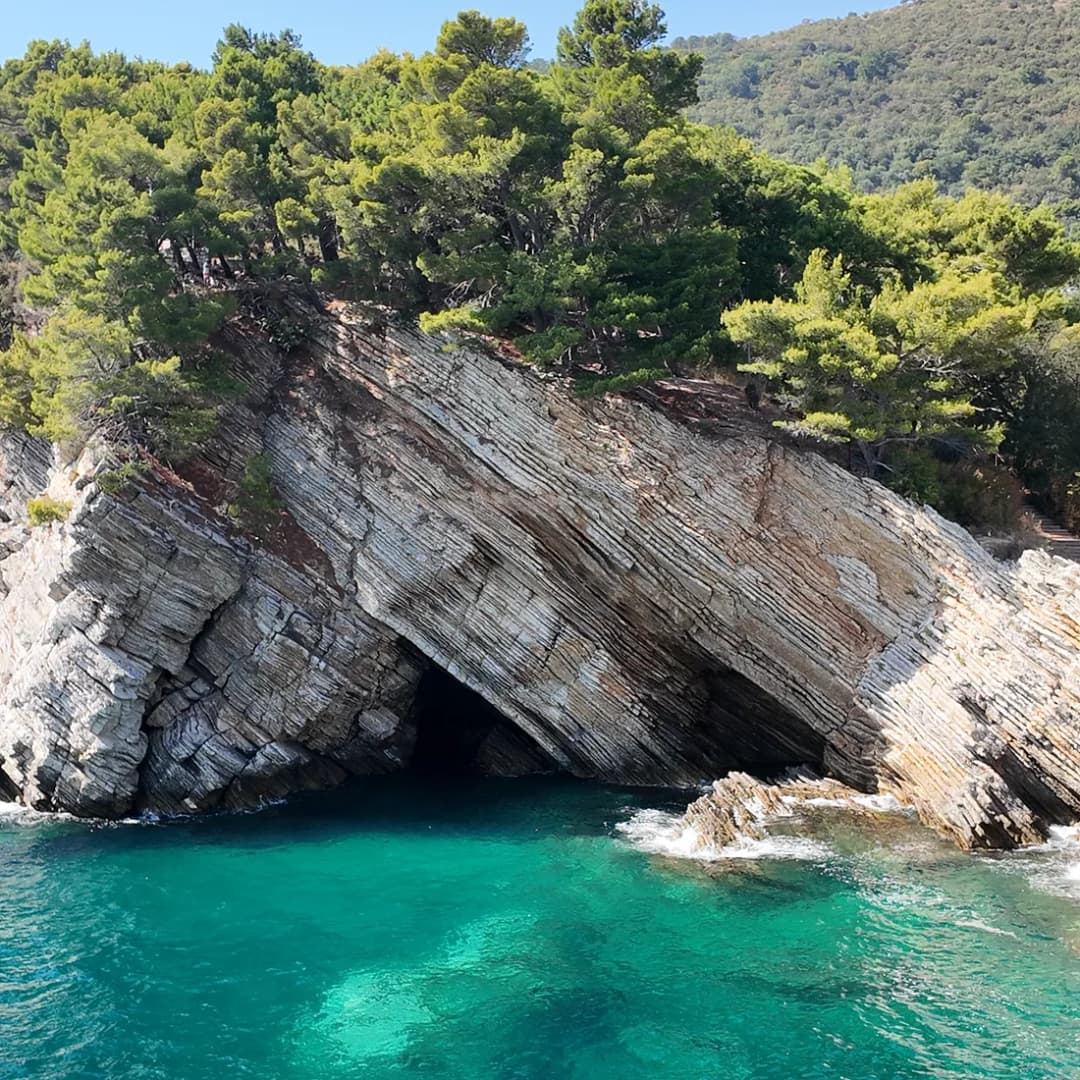
Lučice occupies a separate rocky cove south of Petrovac. Check current
supervision and services on site.
History
Ancient Roman Settlement of Lastva
Petrovac’s history dates back to Roman times, when it was known as Lastva. Archaeological excavations have uncovered evidence of a significant 3rd-4th century Roman settlement, including villas built on the karst plateaus of Medinski. In 1902, a Roman mosaic was discovered at Miriste beneath Petrovac from the 3rd or 4th century. Another remarkable mosaic measuring 37.5 square meters was found in 1941 and can be viewed today in a glass pavilion, accessible on weekdays from 10 a.m. to 2 p.m.
The discovery of a 4th-century mosaic floor and remains of a villa and baths found behind the Sveti Ilija church provides compelling evidence of Petrovac’s Roman heritage. These Roman mosaics remain one of the town’s most important historical attractions, offering tangible evidence of a settlement dating back nearly 2,000 years.
Paštrovići Tribe Territory
The settlement of Lastva belonged to the territory of the Paštrovići tribe, a coastal clan that maintained considerable autonomy while aligning with regional powers for protection against invasions. The Paštrovići is the name of both a clan and an ethnographic area of the Montenegrin coast stretching from Čanj to Bečići and from the Adriatic Sea to Crmnica.
In April 1423, the Paštrović assembly agreed to enter the service of Venice, accepting Venetian suzerainty and taxes. In return, they received promises to respect their tribal institutions, guarantees of their present lands, and recognition of their right to lost lands. Through this 1423 treaty, the province of Paštrovići received autonomous status, while the brotherhoods (families) of Paštrovići became a recognized “tribe.” The monastery at Reževići served as a gathering place for the Paštrovići tribe members, who traditionally held meetings there to make important decisions or elect their chieftain.
Venetian Era and Castello Fortress
In the 16th century, the Venetians built a fortress above the pier to discourage pirates from attacking the settlement. This Venetian Castello fortress (also known as Kastel Lastva or Kastio) housed a permanent Venetian garrison that spent most of its time defending the coast. The fortress also served economic purposes, with products such as wine being exported from it.
Approaching from the sand gives the clearest sense of how the fortress was positioned to command the bay's entrance.
The structure included a tower that served defensive purposes and had fortification features. The Lazaret within the complex originally functioned as a quarantine facility where those suffering from various diseases received treatment. It later served as a military administration center and a prison during the First and Second World Wars.
After the fortress was built, the whole place became known as Kastel Lastva. The fortress was renovated in the early 1970s for catering facilities and today stands as one of the most recognizable symbols of Petrovac, offering photogenic views of the beach from its position on a rocky outcrop next to the marina.
Yugoslav Tourism Era
The name “Petrovac” was given at the beginning of the 20th century in honor of King Peter I Karađorđević of Yugoslavia (Serbia). At that time, about 300 inhabitants lived in Petrovac. Between the two world wars, Petrovac became famous as a popular destination for wealthy tourists from the former Yugoslavia.
George Jovanovic, a young architect from Belgrade, was the first tourist to visit this charming coastal town in the 1920s and remained the town’s most loyal fan in the decades that followed. Petrovac was first discovered by tourists about 90 years ago, and year after year, the number of visitors has grown, with the town constantly increasing its accommodation capacity.
One significant Yugoslav-era project was Hotel AS in nearby Perazića Do. Construction began in 1973 on a unique and dramatic hotel built directly into the surrounding cliffside, just meters from the waterfront. Helmed by architect Stojan Kovačev, this magnificent white structure was funded by the Yugoslavia Automobile Association and the German auto club ADAC, finally opening to the public in 1983 with 419 beds. Today, the unfinished concrete skeleton of this building creates a dramatic backdrop to the beach.
Independent Montenegro
Montenegro voted to leave its union with Serbia on 21 May 2006 and declared independence on 3 June, ending close to nine decades inside one Yugoslav state or another. The money had changed ahead of the politics: the Deutsche Mark came into use in 1999 and the euro replaced it on 1 January 2002, four years before independence and without Montenegro ever joining the eurozone. That is why you pay in euros here in a country outside the European Union.
For Petrovac the years since have been about capacity. The town has gone on adding rooms season after season and now counts more than five hundred hotels and rental apartments around a bay that a century ago held a few hundred people. Offshore, Katič and Sveta Neđelja were designated Montenegro's first protected marine and coastal area, and the shoreline itself is administered by the state coastal authority rather than by the town.
One piece of unfinished Yugoslav business is still standing above the water. Hotel AS at Perazića Do, opened in 1983, was contracted out for redevelopment in 2002 and the holding company sold in 2009. The work was never completed, and Montenegro's own reporting had court proceedings still active in December 2025. Its concrete frame remains on the cliff — the most visible thing the two eras share.
From Lastva to Kastio and Lazaret
Budva Museums identifies Lastva as Petrovac’s older name and traces it in the
medieval historical tradition. Modern Petrovac overlays a much older
settlement landscape, but the available medieval texts do not establish one
exact town foundation date.
Budva Tourism’s heritage entry
dates Kastio to the sixteenth-century Venetian period. It served a military
role above the landing and was associated with storage and export, especially
wine. The nearby Lazaret was a quarantine and sanitary building; only portions
of its walls survive. Petrovac’s familiar waterfront silhouette is therefore
the result of defence, commerce and health control—not a purpose-built scenic
folly.
The fort’s current appearance reflects later alteration. Daily visiting hours
and accessibility conditions are not published by the official heritage pages,
so observe signs and barriers, especially around steps and exposed edges. For
a focused architectural account, continue to
Kastio fortress.
Petrovac’s town beach meets the Kastio waterfront at the northern end of the
bay.
A waterfront shaped by trade and control
Structure
Role
Traces today
KASTIO
fortified landing; garrison
storage and export
LAZARET
quarantine; sanitary control
surviving wall remains
Context
16th-century origins · later alterations
verify access
Source: budva.travel, muzejiigalerijebd.me
Conclusion
Petrovac, Montenegro offers a compelling blend of ancient history, natural beauty, and modern resort amenities that appeals to a wide range of travelers. From its Roman mosaics and Venetian fortress to its distinctive red-pebbled beaches and protected island marine reserve, Petrovac provides diverse attractions within a compact, walkable town.
The town’s evolution from the ancient Roman settlement of Lastva through its time as Venetian-controlled Kastel Lastva to its Yugoslav-era development as Petrovac reflects Montenegro’s rich cultural heritage. Today’s visitors can explore this layered history while enjoying crystal-clear Adriatic waters, fresh Mediterranean seafood, and the relaxed atmosphere that makes Petrovac one of the coast’s most beloved family-friendly destinations.
Whether you’re seeking a peaceful beach vacation, opportunities for outdoor activities like hiking and snorkeling, cultural experiences at festivals and historic sites, or simply a quieter alternative to busier resort towns, Petrovac delivers an authentic Montenegrin coastal experience that remains refreshingly unspoiled by mass tourism.
The best time to visit Petrovac is from May to early June or September to early October , when the weather is pleasant, the water is clear, and the beaches are quieter. During these shoulder seasons, visitors can enjoy the full beauty of Petrovac without the crowds and higher prices of peak summer.
Petrovac is strategically located on Montenegro’s Adriatic coast, 17 kilometers (11 miles) south of Budva and 30 minutes north of Bar . This positioning makes it a convenient mid-point destination for visitors wanting to explore both towns on the Budva Riviera.
Petrovac is a “walking town” where most attractions, restaurants, and beaches are easily accessible on foot. The compact size of the town center and its pedestrian-friendly promenade make walking the most practical and enjoyable way to explore.
Petrovac serves as an excellent base for beach hopping along the Budva Riviera. Within walking distance or a short drive, visitors can explore multiple beaches, each with its own character: Petrovac Beach : The main 600-800m beach with full amenities Lučice Beach : A 220m Blue Flag beach surrounded by pine forests Perazića Do : A hidden cove with turquoise waters ideal for snorkeling Buljarica Beach : The 2,200m long
One of Petrovac's greatest assets is its network of coastal paths, which let you explore the shoreline on foot. The terrain is varied — limestone rock, Mediterranean scrubland, olive groves, pine forests, and the ever-present Adriatic.
Petrovac punches above its weight when it comes to food. The scene is dominated by seafood, but there is enough variety to keep you well fed for a week or more.
If you are looking for mega-clubs and international DJs, Petrovac is not the place. And that is precisely why many people choose it. The evening scene revolves around the promenade. As the heat fades, the whole town migrates to the waterfront for the evening stroll — families, couples, groups of friends debating where to eat.
Pavle Obradović is from Herceg Novi. He was Manager of Montenegro.com, then Director of the Herceg Novi Tourism Organization, and is now Coordinator for Investment and Development Projects at the Municipality of Herceg Novi. He holds a BSc in International Hospitality and Service Management from the Rochester Institute of Technology (RIT).
···
Updated · Originally published
Montenegro Travel Newsletter
Get weekly stories, guides, and insider tips about Montenegro delivered to your inbox.








.JPG&w=2048&q=75)