Overview
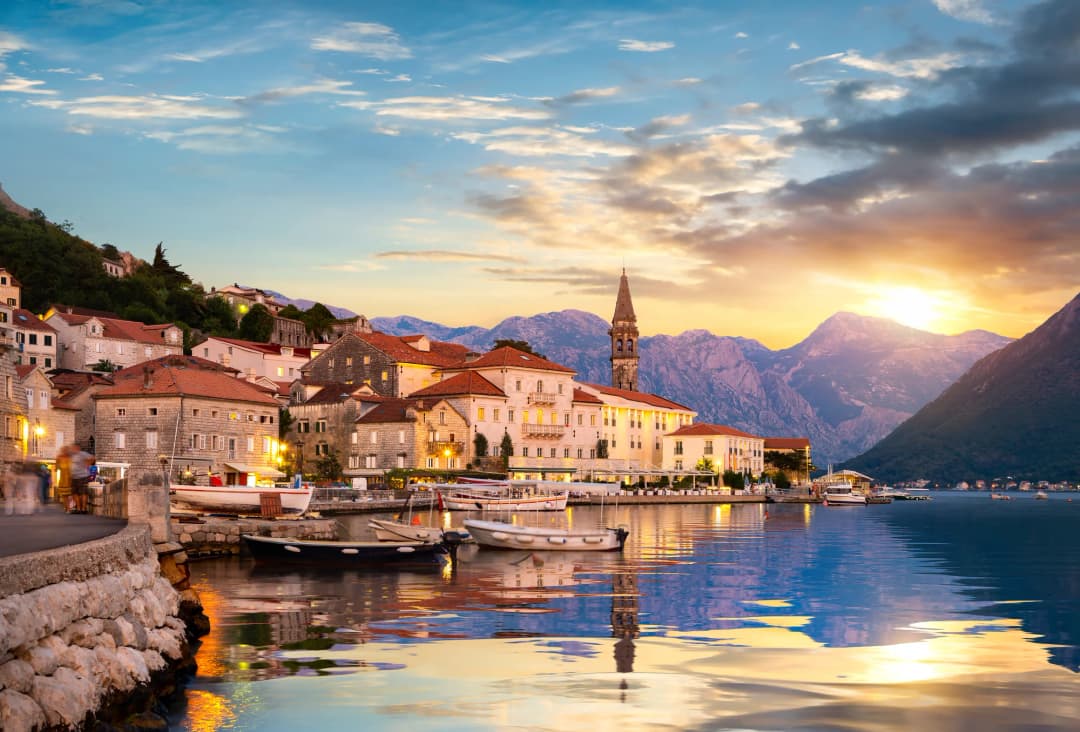
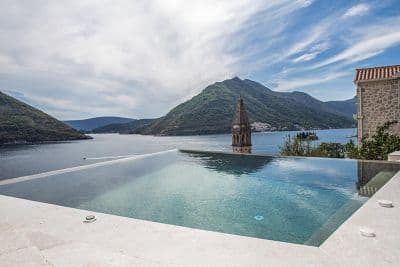
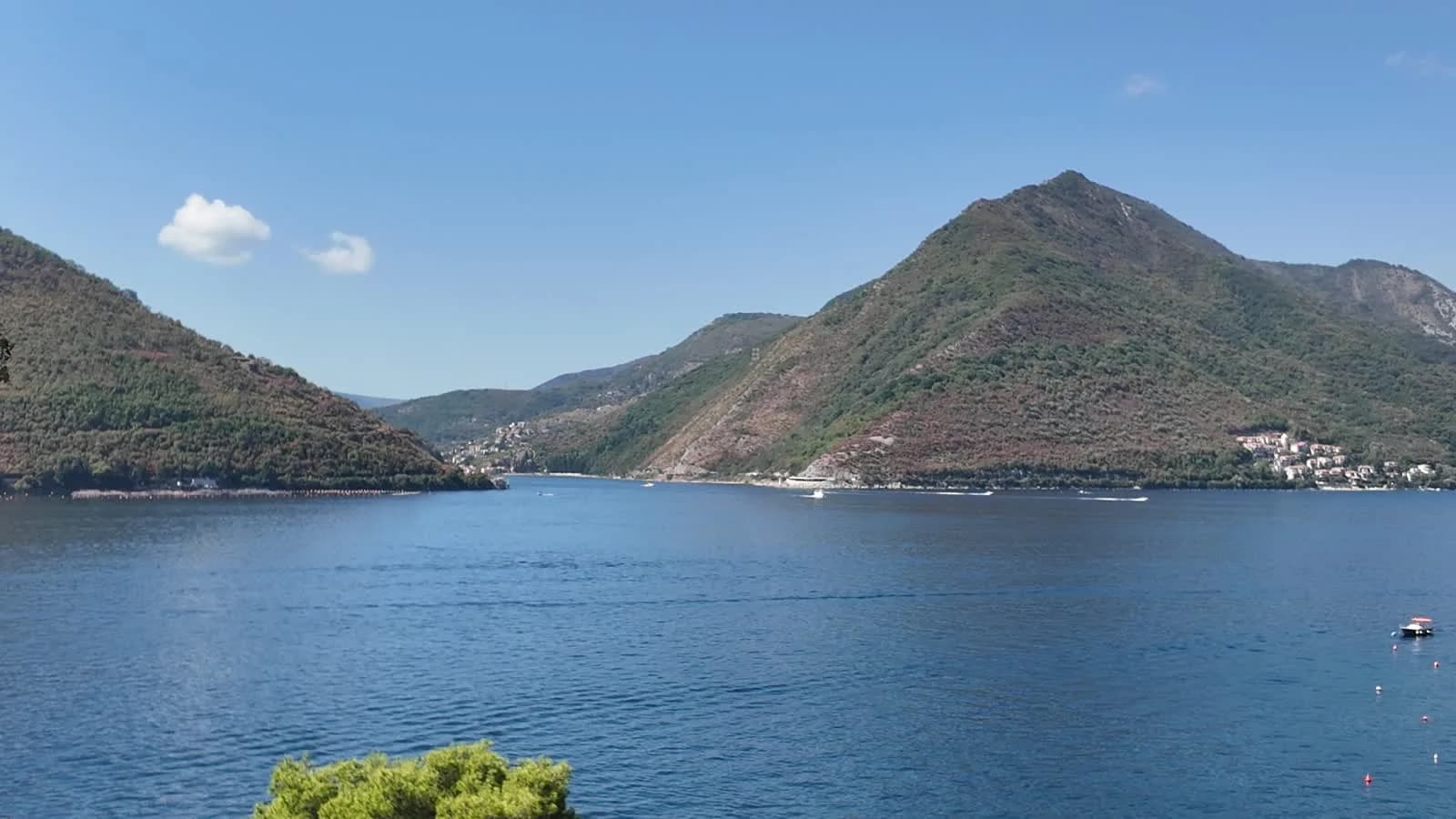
Perast is a small historic town in the Kotor Municipality of Montenegro, renowned for its well-preserved Baroque architecture, rich maritime heritage, and its role as a former Venetian naval center. Located on the northeastern shore of the Bay of Kotor, beneath the hill of St. Ilija (873 m), this car-free town punches above its weight historically—an astonishing feat for what amounted to a bayside village that never held more than 1,643 people.
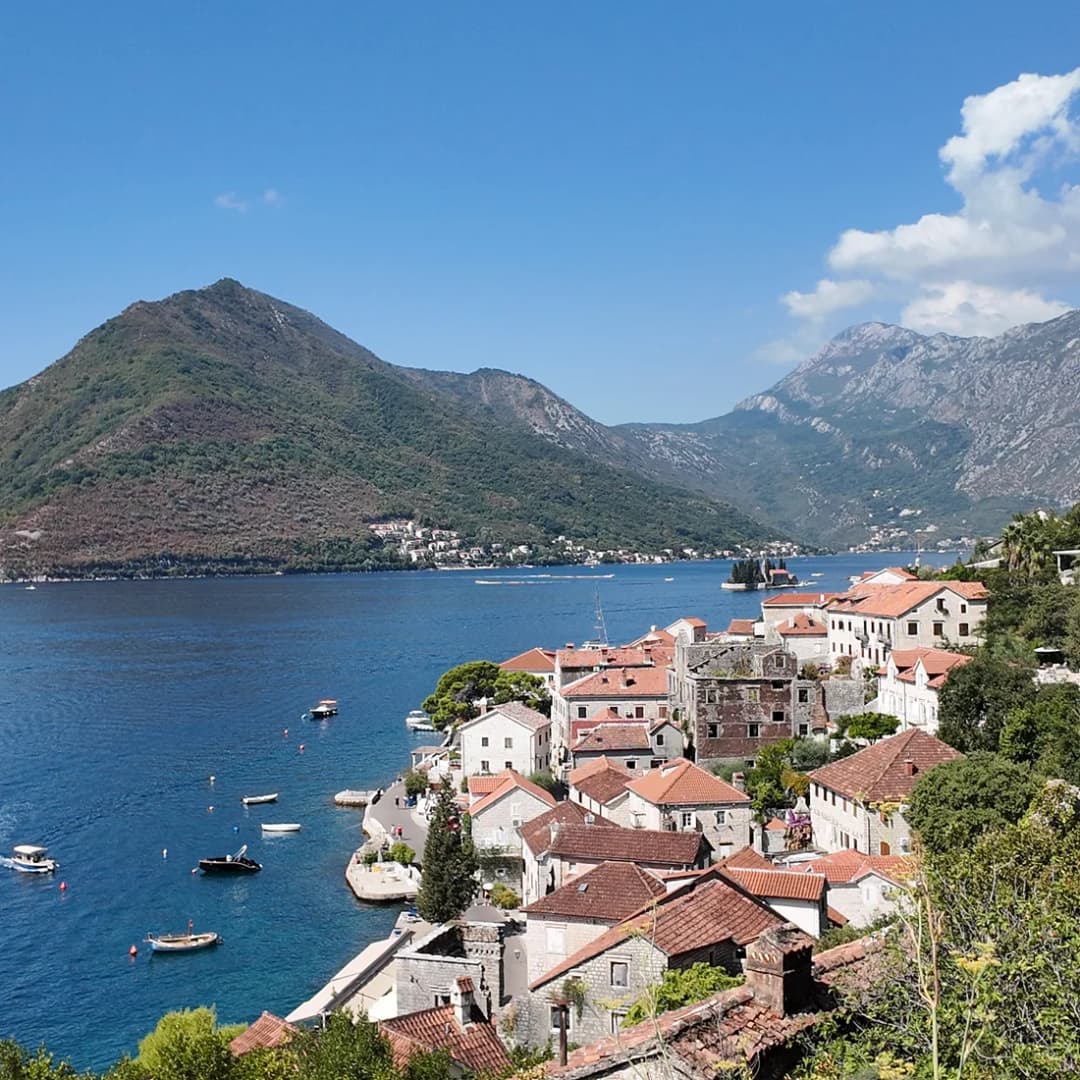
Situated on a cape that separates the Bay of Risano from that of Kotor, Perast overlooks the Verige strait, the narrowest part of the Bay of Kotor, just a few kilometers northwest of Kotor. The town is part of the Natural and Culturo-Historical Region of Kotor UNESCO World Heritage Site, inscribed in 1979.
Perast is small enough to cross on foot and layered enough to punish a rushed checklist. The best first visit has three anchors: the Perast Museum for evidence, the waterfront for townscape, and—only if weather, operator and access align—a licensed boat to Our Lady of the Rocks. Its palaces, church towers and two offshore islands are not all interchangeable public attractions.
This guide combines that practical plan with the town's full history. The planning sections use current museum pricing, municipal transport documents, maritime-safety guidance and UNESCO conservation material, and they avoid unsupported promises about cheap rowing boats, open palace interiors, easy cave access and an informal hike to a dilapidated fort.
| Priority | What it covers |
|---|---|
| ANCHOR | Perast Museum · published hours and ticket |
| WALK | waterfront · lanes · exterior architecture |
| CONDITIONAL | licensed island boat · weather · safe boarding |
Source: muzejikotor.me, montenegro.travel
Perast essentials at a glance
| Decision | Evidence | Action |
|---|---|---|
| Perast Museum ticket | €8 individual on current official page | Recheck price and eligibility |
| Summer museum hours | 15 Apr–15 Oct, Tue–Sun 08:00–20:00 | Avoid assuming Monday entry |
| Winter museum hours | 15 Oct–15 Apr, Tue–Sun 10:00–16:00 | January listed closed |
| Island visit | Boat required for Our Lady of the Rocks | Use licensed operator; verify landing and return |
| St George | Distinct island and religious site | Treat as a view unless landing is authorized |
| Bus | Municipality publishes dated Blue Line files | Check newest file, stop and both directions |
| Driving | Seasonal coastal-road restrictions published | Follow current signs and marked parking |
The official Muzeji Kotor fees and hours page displayed an €8 individual ticket when researched on 1 September 2026. It also listed €5 tickets for children under 12 and groups of at least ten, plus a €15 professional guiding service. A €12 combined Perast Museum–Roman Mosaics ticket and a €15 five-site ticket were listed. Read the current eligibility wording; a combined ticket saves money only when its included sites and your transport plan genuinely align.
The same page listed Tuesday–Sunday opening from 08:00 to 20:00 between 15 April and 15 October, and from 10:00 to 16:00 between 15 October and 15 April. Mondays, all of January, Orthodox Easter, 1 May, and 13–14 November were closure dates. Because the displayed ranges share both boundary dates, confirm 15 April or 15 October directly. Group and school visits require booking.
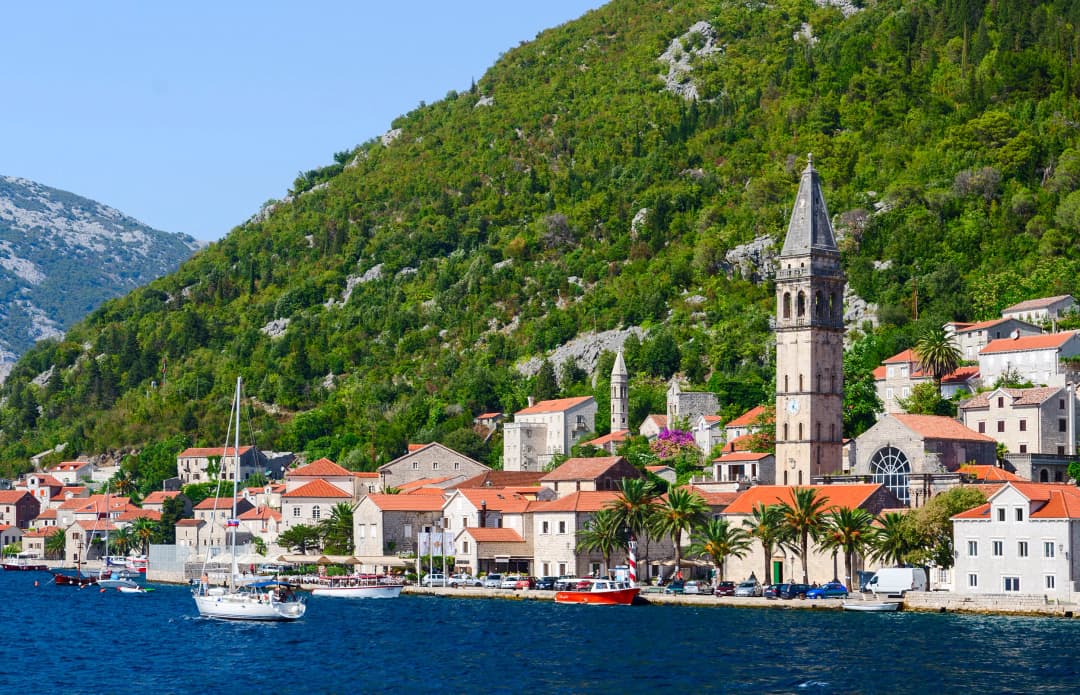
Perast Museum (Bujović Palace)
Begin here rather than with the legends. Perast Museum (Muzej grada Perasta) occupies Bujović Palace, the main Baroque palace in Perast, standing right on the waterfront on the town’s western shore, and it gives the waterfront façades a documented human scale. The museum’s arrangement turns abstract words such as “captains” and “Venetian period” into ship models, navigation aids, charts, weapons, portraits, coats of arms, furniture and domestic objects.
The Collection: The institution describes roughly 2,000 objects—over 2,000 items in the local count—across maritime, ethnographic and historical-art collections, plus the Visković family memorial holdings, municipal and school archives, and a library. Not every object is continuously displayed. The maritime collection forms the core: model ships, charts and instruments, weapons, portraits, furniture, traditional costumes, and documents from the 17th–19th centuries, along with the battle flags captured from the Ottomans during the 1654 defense, portraits of celebrated captains, and documents relating to the maritime school. Navigational instruments include an impressive array of compasses, sextants, octants, and chronometers that represent the cutting edge of technology in their day, enabling Perast’s captains to chart courses across the treacherous Adriatic and beyond. The art collection includes Baroque paintings from the town's churches, while the ethnographic section covers daily life in earlier centuries.
The Building: The palace was built in 1694 for Vicko Bujović—also recorded as Captain Ivan Bujovic—a Venetian captain and one of Perast’s most prominent citizens. It was designed by the Venetian architect Giovanni Battista Buon, whose name is also given as Giovanni Battista Fonte. The Perast Museum was founded by the municipal council in 1937 and finally moved into the palace after restoration in 1957; earthquake damage later forced closure, and remediation preceded reopening in 1998.
Visiting: Plan 30 to 45 minutes. The palace itself — grand staircase, carved stone balconies, views across the bay — is arguably as interesting as the exhibits. Entrance fees are modest; see the €8 individual ticket and seasonal hours above, and ask staff which floors are available, whether photography is allowed and what accessibility support exists. The pricing page grants free admission to persons with disabilities, but the selected sources do not publish a complete step-free route, lift specification or accessible-toilet plan.
| Year | Claim |
|---|---|
| 1420 | Venetian era |
| 1570 | fort cited |
| 1698 | navigation class |
| 1937 | museum founded |
| 1998 | museum reopened |
| Takeaway | History is a sequence of institutions and change—not one timeless "Baroque age." |
Source: muzejikotor.me
For a fuller palace-by-palace and church-by-church account, continue to the comprehensive Perast history guide.
Our Lady of the Rocks (Gospa od Škrpjela)
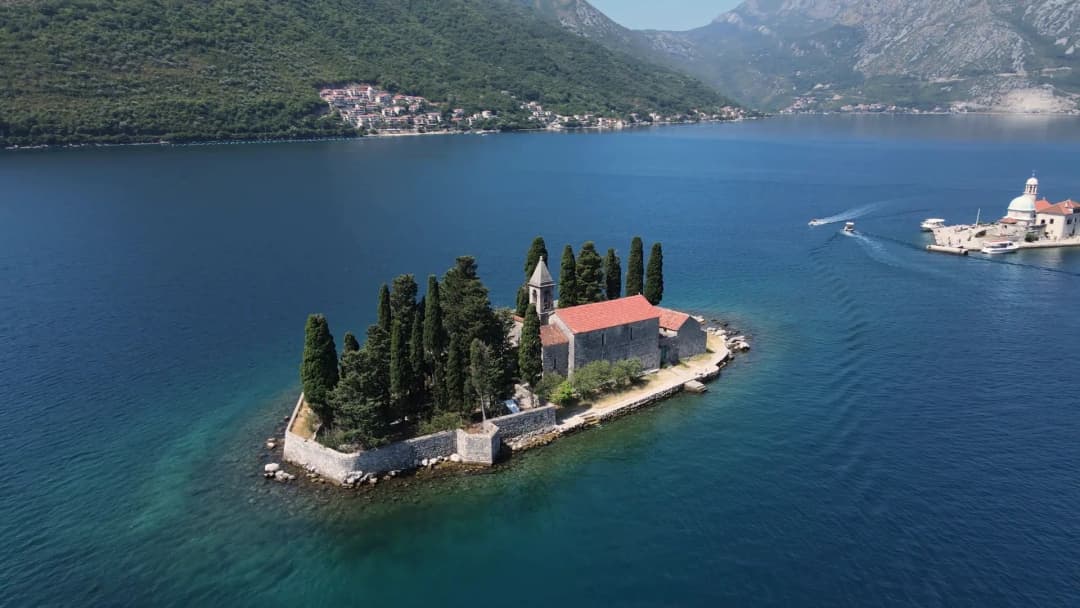
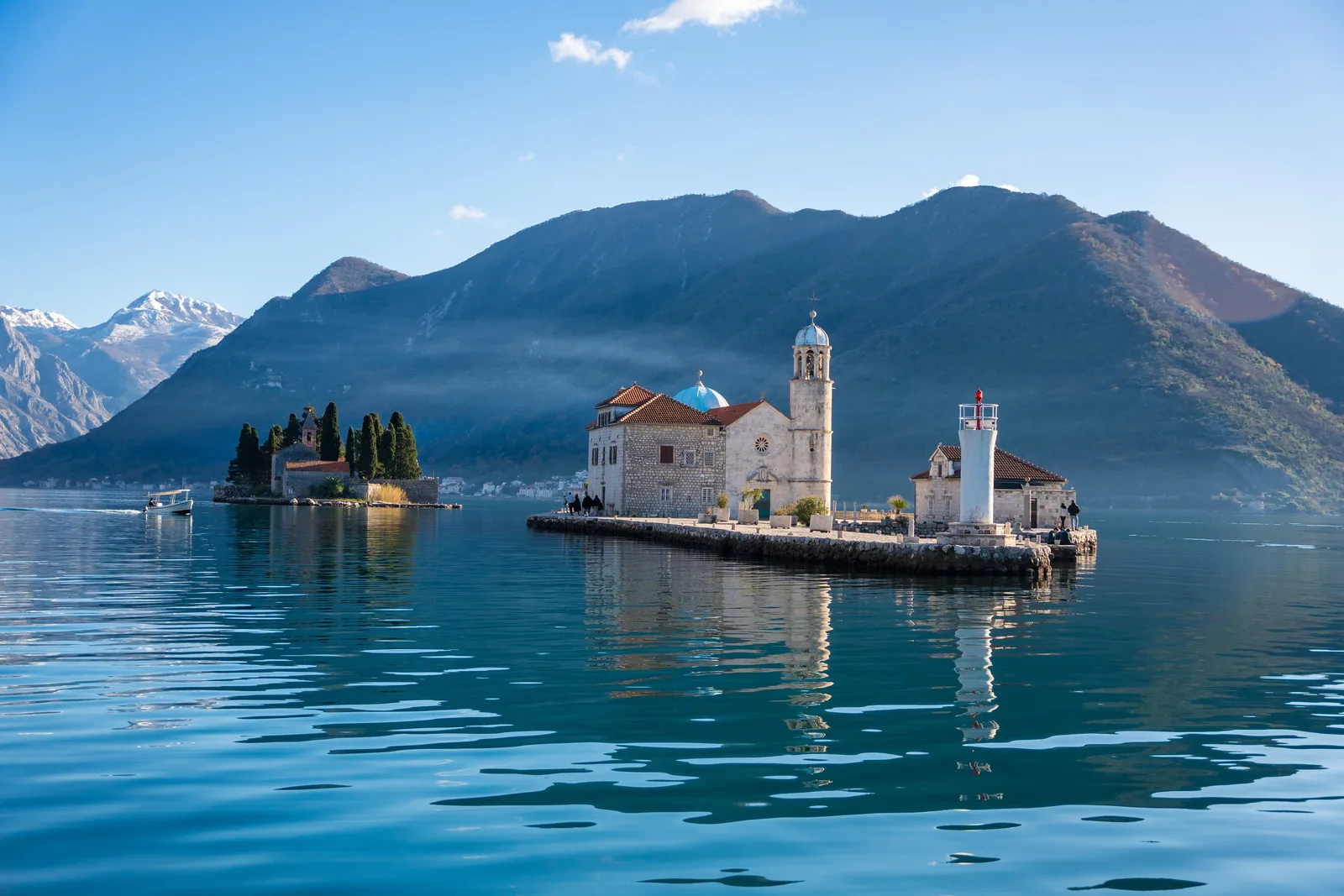
About 400 meters offshore from Perast, a small island rises from the bay topped by a domed church with a distinctive blue cupola. This is Our Lady of the Rocks (Montenegrin: Госпа од Шкрпјела) — Gospa od Skrpjela — one of the two islets off the coast of Perast and the only artificial island in the Adriatic. With an area of 3,030 m², it was built upon a rock (Škrpjel) over centuries through a unique tradition. Montenegro’s national tourism organisation describes it as a man-made island holding a Catholic church and museum.
Legend and creation
The origin story is one of the most beloved legends on the Montenegrin coast. According to legend, on July 22, 1452, two fishermen brothers from the Martešić family were sailing home when they noticed something caught on a rocky outcrop near the island of St. George. Rowing closer, they found an image of the Virgin Mary — an icon of the Virgin Mary and Child — on the rock. One brother had been suffering from an injured leg, and the following day his leg was miraculously healed. In gratitude for the healing they received, they made an oath: they would build an island above the rock where it was found, along with a church in honor of the Virgin Mary on that very spot.
But the rocky outcrop was barely above the waterline. They needed to create an island first. What followed was an extraordinary multigenerational project of faith. To turn the reef into an island, ships that had already served their time were sunk near it, having previously loaded them with stones. A decree was issued requiring all ships that called at Perast to drop one stone near the reef, and each time a Perast sailor returned from a successful voyage, he would drop a stone onto the submerged reef. By 1484, the island was large enough to support a small chapel. Pirates destroyed it in 1624, but the town rebuilt, and by 1630 the church we see today was taking shape. Over time, the reef became a plateau on which the church was built.
The church and museum
The building dates back to the 15th century, and the interior is surprisingly rich. The ceiling and walls feature 68 paintings by Tripo Kokolja, a famous 17th-century Baroque artist from Perast and the town's most celebrated painter; Muzeji Kotor identifies these 68 canvases as the church’s principal decorative achievement. His most important work, ten meters long, is The Death of the Virgin.
The small museum segment holds one of its most poignant artifacts: a tapestry embroidered by a local woman named Jacinta Kunic-Mijovic while she waited for her beloved to return from sea. She worked on it for 25 years, weaving her own hair into the design as it turned from dark to grey. She eventually went blind from the close work. You will also find collections of silver votive tablets left by sailors as offerings for safe passage.
Getting there: boat trips from the waterfront
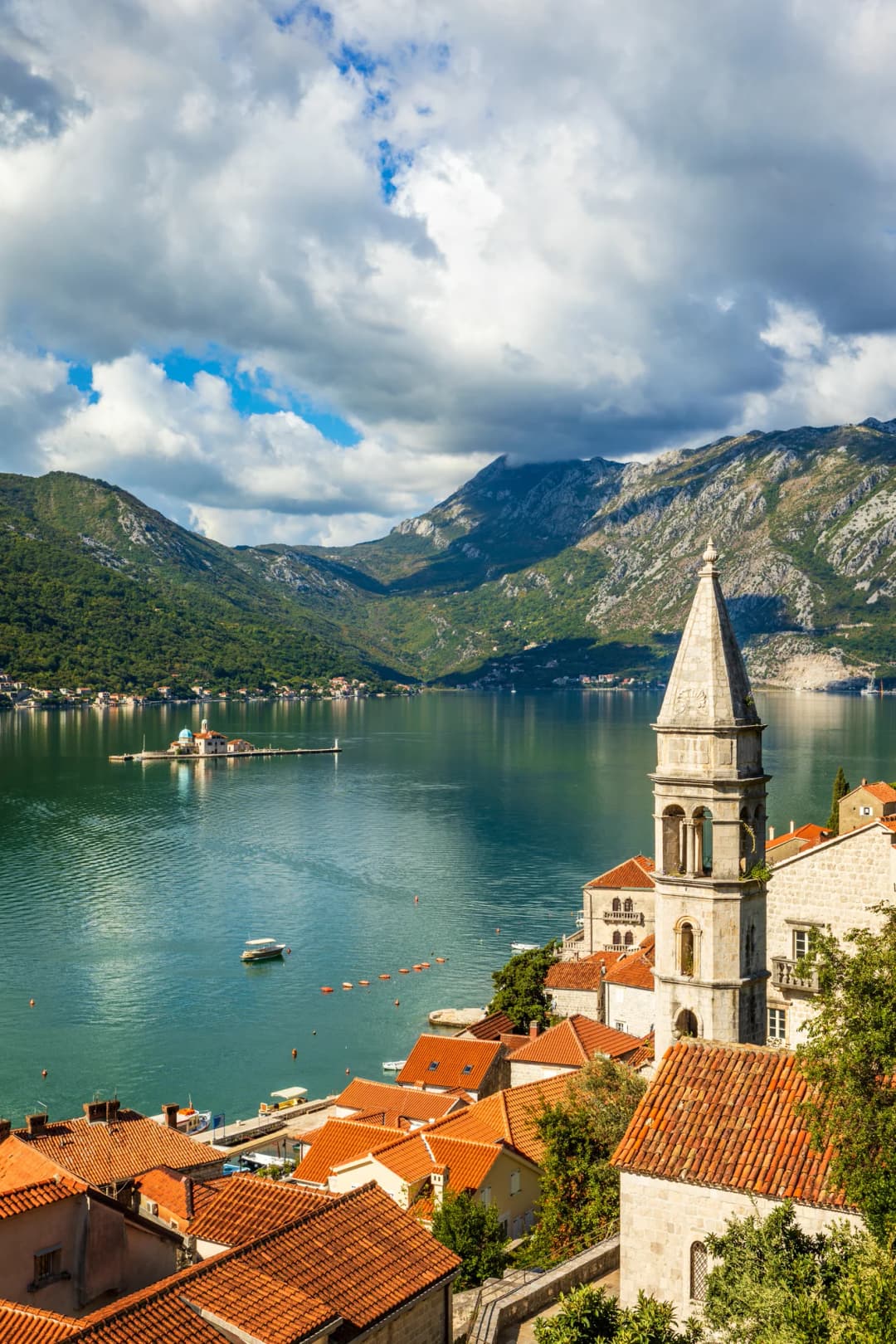
The only way onto Our Lady of the Rocks is by boat, and small boats wait along the Perast waterfront throughout the day, running from around 9 a.m. to 5 p.m. The standard shuttle costs around €5 per person return: a skipper takes you across in a ride of about five minutes, you spend roughly 30–45 minutes on the island visiting the church and museum, and the boat returns to collect you. No advance booking is normally needed in season — just walk down to the quay. Prices and timings vary by operator and time of year, so confirm on the day. For a fuller experience, guided Bay of Kotor boat tours (often starting from around €30 and sometimes departing from Kotor) take in the islands along with other stops around the bay.
Treat the crossing as conditional rather than guaranteed. National tourism and museum sources establish the island's cultural importance, but neither provides a dependable public boat fare, operating timetable, admission price, photography policy or daily landing guarantee. Choose a licensed passenger operator and ask four questions before paying: Is the island accepting visitors now? What exactly is included? When is the confirmed return? What happens if wind or another condition interrupts landing? Do not accept “any time” as a substitute for a return plan. Preserve enough buffer to reach your bus, driver or accommodation.
Boarding deserves more attention than the short crossing. Montenegro’s Maritime Safety Administration reported a 2026 injury during disembarkation at Our Lady of the Rocks and notes that many marine injuries occur while boarding or leaving a vessel. Wait for crew instruction, keep both hands available, use the provided handhold, avoid jumping and tell the operator in advance if steps, balance or transfers are difficult. The administration gives 129 for reporting an accident, injury or person missing from view at sea.
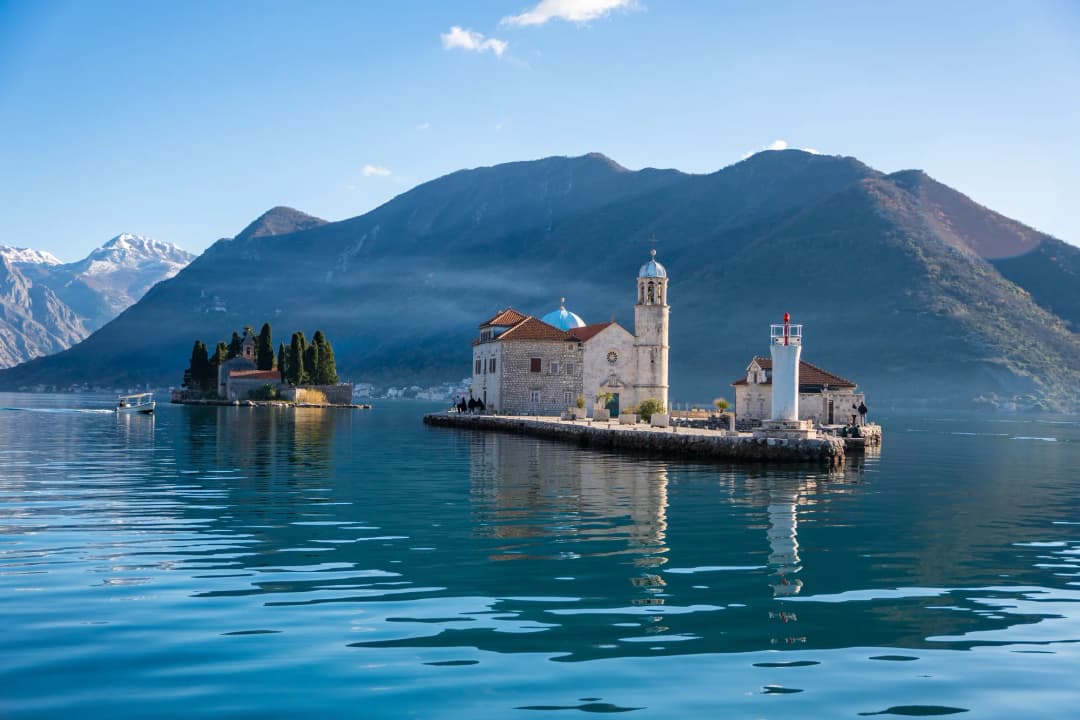
| Island | Access notes |
|---|---|
| OUR LADY OF THE ROCKS | church and museum documented; licensed boat required; confirm landing and return; ask access and photo rules |
| ST GEORGE | distinct religious island; no assumed public landing; view unless authorized |
Source: montenegro.travel, gov.me, muzejikotor.me
Every year on July 22, locals celebrate the Fašinada, continuing the centuries-old tradition of expanding their man-made creation. It belongs to living community heritage, not a generic boat excursion — see the culture section below, and the dedicated Fašinada evidence guide, which explains the 22 July ritual, participation boundaries and what visitors should not stage for themselves.
St. George Island (Sveti Đorđe)
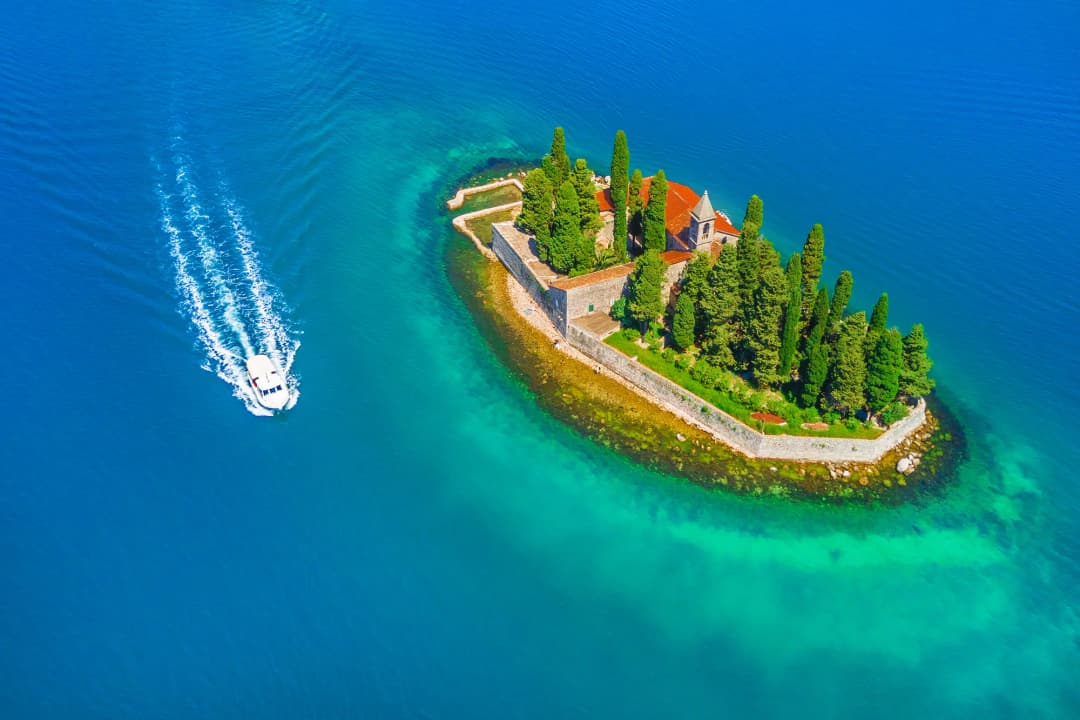
The second island off Perast's shore is a striking contrast to its man-made neighbor. St. George Island — Sveti Djordje — is a natural formation, thickly covered with dark cypresses that give it a brooding, almost Gothic atmosphere. The island features the Saint George Benedictine monastery, constructed in the 12th century, and it also contains the old graveyard for nobility from Perast and the entire Bay of Kotor. Locals call it the “Island of the Dead,” a nickname that makes more sense when you learn that for centuries Perast captains of ships and wealthy indigenous people were buried there, each tombstone adorned with a unique emblem.
The complex has survived the devastating 1667 earthquake and a 1751 raid by the Turkish pirate Karadoz. A small action took place during the Siege of Cattaro on October 14, 1813, when the French-held island was captured by a British and Sicilian naval force during the Napoleonic Wars.
The island has been leased by the Diocese of Subotica for the last 50 years and is therefore closed to the public for visits — the monastery grounds remain private, and boats are not permitted to land, though visitors can sometimes arrange brief visits with the friars who reside there. Treat it as a distinct religious and funerary landscape that may be seen from shore or water, not as an automatic landing. Do not repeat the inherited romantic tragedy as settled fact or assume that a boat operator can override site authority. Boat trips to Our Lady of the Rocks pass close enough for excellent photographs, and the island is at its most beautiful from a slight distance, its reflection shimmering in the bay.
Walking Perast: waterfront, palaces and churches
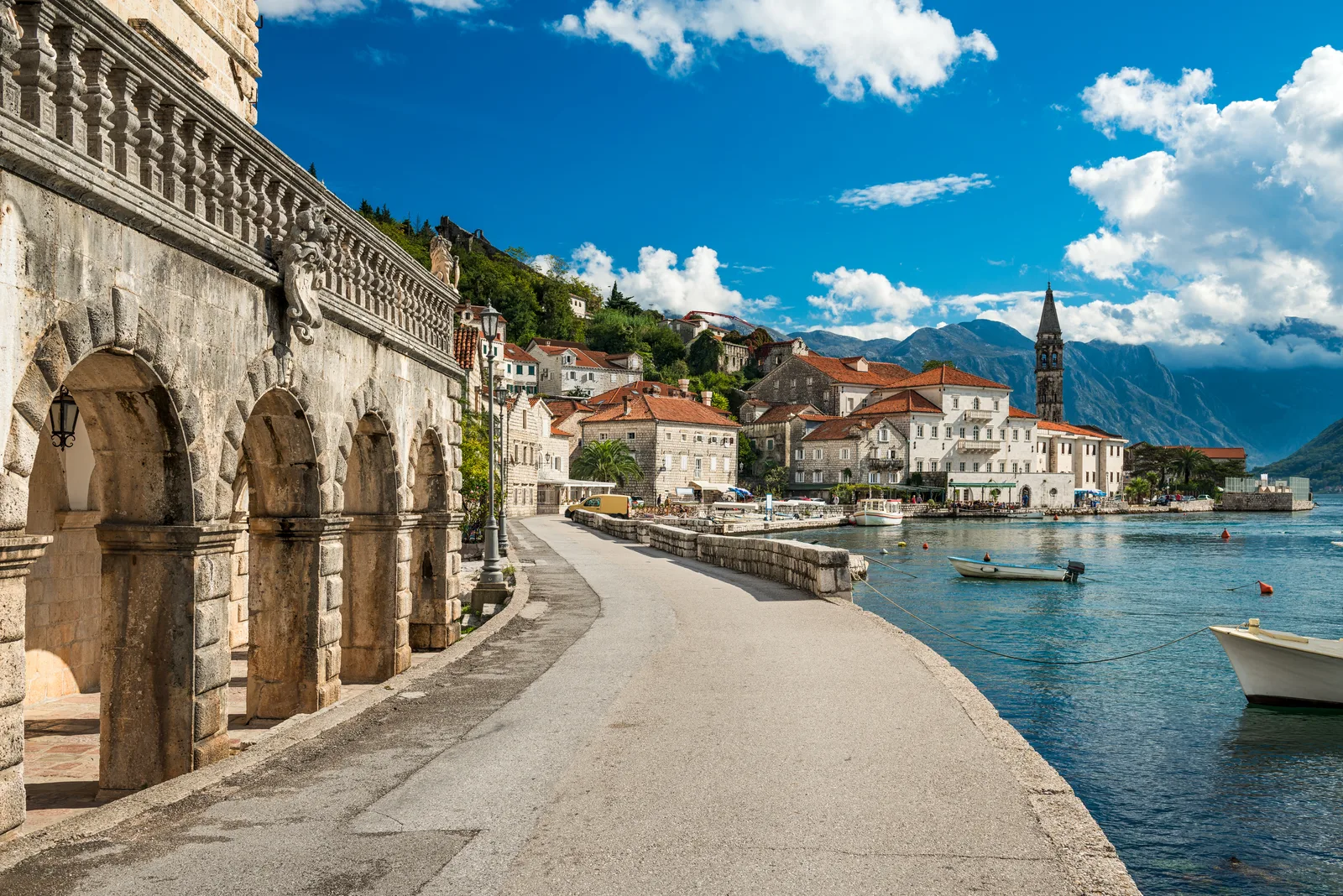
Perast is essentially a single waterfront promenade, perhaps a kilometer long, with a handful of narrow alleys climbing the hillside behind it. The town center is car-free, and at Perast's scale, your feet are all you need. The promenade runs along the water, passing palace after palace, each one a reminder of a different captain's fortune made at sea. Many have been restored as hotels or restaurants, their ground-floor arches now sheltering cafe tables.
UNESCO does not value Perast as a row of isolated postcard façades. Its statement of Outstanding Universal Value describes Kotor and Perast as authentically preserved small cities whose planning and architecture are integrated with the bay landscape. The protected whole includes settlements, shoreline, paths, roads, cultivated slopes and the steep rocky frame. That is why the most revealing walk looks both inland and across the water: start by reading street levels and stairways, then compare palace façades, defensive openings, church towers and small waterfront structures.
Baroque palaces
Perast’s architectural heritage is extraordinary. The town boasts 16 churches and 17 Baroque palaces that once belonged to prominent maritime families. Many of these palaces feature spacious courtyards, high ceilings, and decorative elements that reveal the influence of Venetian and Mediterranean styles. They line Perast’s one-kilometer-long shore, built by wealthy shipping merchants in the 17th and 18th centuries, and most of these historic structures are located on one road right by the water, offering plenty of photo opportunities.
The most prominent building is Bujovic Palace, the imposing 1694 Baroque structure that now houses the Perast Museum. Other notable examples include the elegant Visković Palace, showcasing magnificent architecture and fine detailing — but a named palace on a map is not necessarily a museum. In March 2026, the municipality reported conservation work to close façade openings and protect the interior of Visković Palace; that work is evidence of preservation, not proof that the interior is a public attraction.
Church of St. Nicholas and its bell tower
The Church of Saint Nicholas is the most prominent landmark in Perast, built in the 17th century as a grand Baroque-style church and dominating the central square. This is where Captain Viscovich lowered the Venetian flag for the last time. The temple is actually a combination of two churches: the old from 1616 and the newer, 18th-century structure, whose construction was never completed. A new, larger church was initiated in 1740 directly behind the original structure, intended to replace it. However, construction was halted during the Napoleonic Wars, leaving only the apse and sacristies completed. Rather than demolishing the old church, the builders merged the unfinished extension with the existing one.
The Bell Tower: Built in 1691 according to the design of Venetian architect Giuzeppe Beatija, the bell tower stands 55 meters tall—the tallest structure on the Bay of Kotor. The striking tower combines elements of Baroque, Renaissance, and Romanesque style. It has three bells, and the clock was brought from Venice in 1730.
Climbing the Tower: With around 150 steps, it’s a workout, but the narrow, winding nature of the staircase adds a sense of adventure. Be prepared to duck in places due to low head height and navigate with others coming and going. There’s a €1 entry fee per person, payable in cash only. The panoramic views from the top are spectacular — if the tower is open, the climb rewards you with the finest 360-degree panorama in the bay. Access can be intermittent and is not promised here: religious services, maintenance and local events can change access to both the church interior and the tower. Dress appropriately, silence phones and obtain explicit permission before photographing an interior, worshipper or private ceremony.
The Church of Our Lady of the Rosary, smaller and easier to overlook, sits along the waterfront and is worth ducking inside if the doors are open.
The lanes behind the waterfront
Behind the waterfront, narrow stone lanes climb steeply uphill between old walls draped with bougainvillea. Some lead to partially ruined palaces, others to tiny gardens. The pleasure is in the wandering itself, the crumbling stone, the unexpected views back down to the bay. Keep doorways, church thresholds and private terraces clear as you go.
UNESCO’s 2025 decision specifically called for enforceable conservation guidance for historic buildings in Perast and sustainable tourism management across the World Heritage property. It also requested stronger planning and monitoring against cumulative development pressure. Visitors participate at a small scale: do not sit on carved stone, climb walls, fly drones around homes and churches or enter construction areas for a photograph.
| Access level | Applies to |
|---|---|
| PUBLIC ROUTE | waterfront and evident lanes |
| MANAGED ENTRY | museum and open church |
| EXPLICIT PERMISSION | private, works, landing |
| Rule | No permission or managed route? Omit the stop. |
Source: whc.unesco.org, kotor.me
Photography
Perast is one of the most photogenic small towns in Montenegro, offering countless photo opportunities — but timing makes the difference between a good shot and an exceptional one.
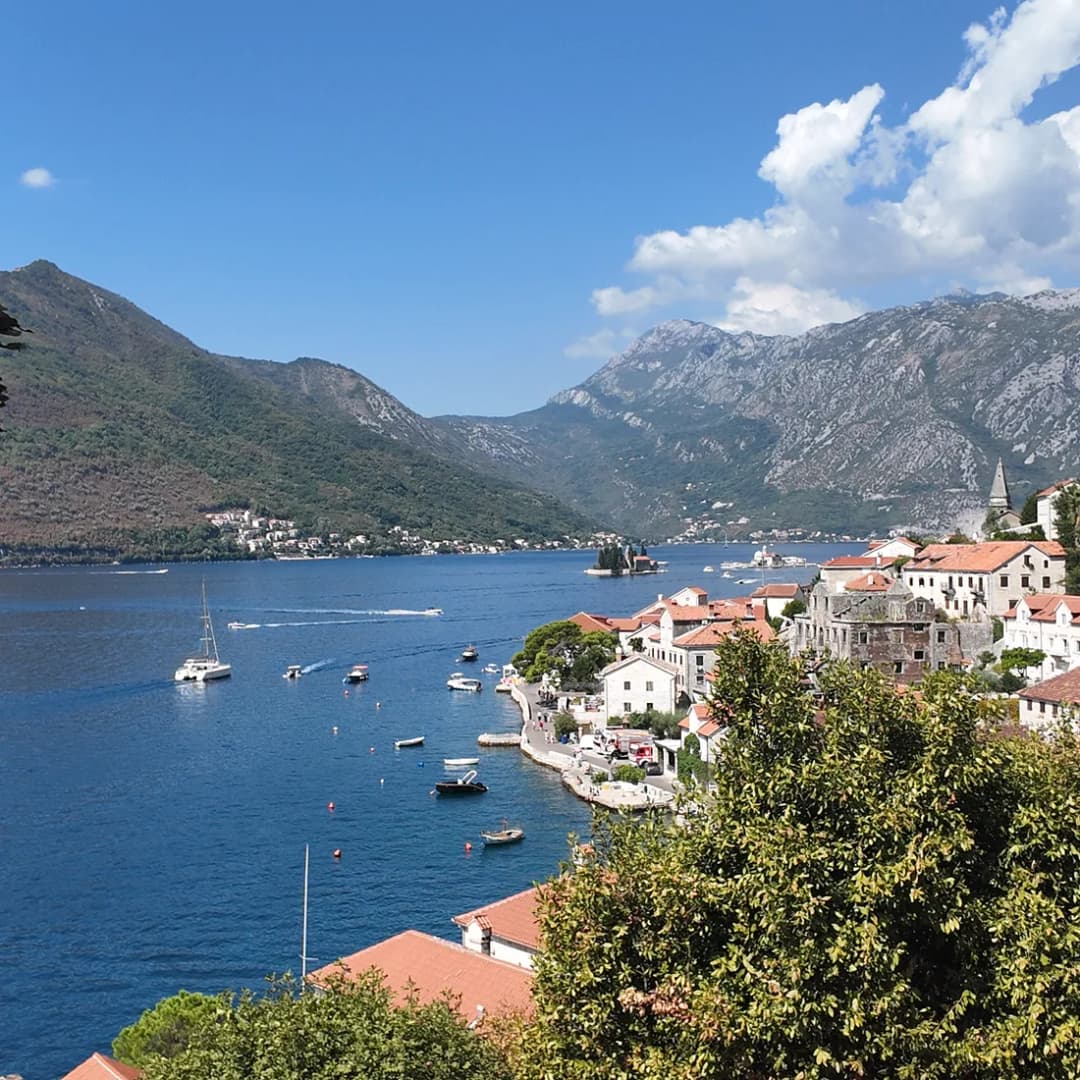
Morning light is ideal for Our Lady of the Rocks — the sun casts soft, warm light across the bay and illuminates the church facade. By midday the light is harsh; by late afternoon the island falls into shadow. Sunset is when the waterfront shines, the low sun turning the stone palaces honey-colored and the bay deepening to indigo. For sunset photography, visit Perast and Our Lady of the Rocks on a sunset tour—the views as the sun descends behind the mountain are spectacular.
For the classic elevated panorama, drive or walk along the main road above town. Several pull-off spots let you shoot down toward the waterfront with both islands beyond, and the Perast Viewpoint provides panoramic views of the mesmerizing Bay of Kotor, where the rugged mountains meet the tranquil waters. The boat ride to Our Lady of the Rocks is also prime shooting time — the view back toward Perast, with the bell tower rising above the palace rooftops and mountains behind, is stunning. Along the waterfront itself, the well-preserved Baroque architecture, historic palaces, and the two islands create a picturesque backdrop.
The single best tip: arrive before 9 AM in summer. You will have the waterfront nearly to yourself, the light will be soft, and the bay calm enough to produce perfect reflections. Early morning or late afternoon are the best times of day for lighting generally.
Culture and Events
Fašinada (July 22)
The Fašinada is an annual traditional event held every July 22nd, making it one of Montenegro’s most unique cultural ceremonies and one of its most atmospheric festivals. This custom has been continuously observed for over 500 years, enduring through wars, natural disasters like earthquakes, and even the recent global pandemic. In 2013, the tradition of Fašinada was officially declared a part of Montenegro’s intangible cultural heritage.
Historical Background: On July 22, 1452, the discovery of an icon of the Virgin Mary floating near a crag led the local Martešić brothers to initiate the creation of the island. The annual ceremony involves the local community gathering to deposit stones around the island of Our Lady of the Rocks, thereby helping to preserve the island’s structure.
The Ceremony: The Fašinada ceremony commences with locals forming a convoy of boats at sunset, filled with stones and adorned with greenery. Led by a boat carrying the pastor and notable citizens of Perast, this flotilla sails towards Our Lady of the Rocks, culminating in the stones’ deposition to reinforce the island. Fašinada was named after the Italian word “fascia” (tape or tie), because the boats are tied up to one another in a line moving towards the island.
This tradition sees participation exclusively from men who perform this task to the accompaniment of traditional folk songs.
Shooting the Rooster (May 15)
Shooting the Rooster is an annual event celebrated in Perast on May 15th to commemorate the victory of local residents over their much larger Ottoman invaders in 1654. It turns into a big festival and celebration, including a Kolo Chain Dance performance by the Boka Navy and lots of wine in the local taverns.
International Klapa Festival (September)
Usually in mid-to-late September, the International Klapa Festival takes place in the tranquil town of Perast, hosting numerous local as well as regional a capella groups. You can experience the traditional ways of choir singing that originated centuries ago in the taverns of Trieste, Italy.
Boka Navy Heritage
The Boka Navy is a traditional maritime organization that encompasses a series of activities associated with bringing the remains of St. Tryphon to Kotor back in 809. The Boka Navy Kotor is the oldest naval organization in the world. Perast residents embrace each Fešta—of which there are quite a lot—and the narrow cobblestone streets are then full of music and life.
Nature and Activities
Longer boat tours
Beyond the island shuttle, several boat tours depart from the town, offering trips to Our Lady of the Rocks, St. George Island, and further into the Bay of Kotor, with many tours including stops for swimming and sightseeing. Longer tours take in the Blue Cave with swimming opportunities and a visit to a submarine tunnel.
Kayaking and Paddleboarding
You can rent a kayak or SUP, with several locations around the waterfront offering hourly rentals for €10/hour. Kayaking on the often still and safe waters of the Bay of Kotor is a relaxing way to explore, with cool breezes and excellent views of Perast from the water.
Swimming
The crystal-clear waters of the Bay of Kotor provide a perfect opportunity for swimming, though Perast doesn’t have traditional sandy beaches but instead has several stone piers and designated swimming spots along the waterfront. Pirate Beach Bar at the north end of town is Perast’s main beach, with drinks and music throughout summer.
Dining and Accommodation
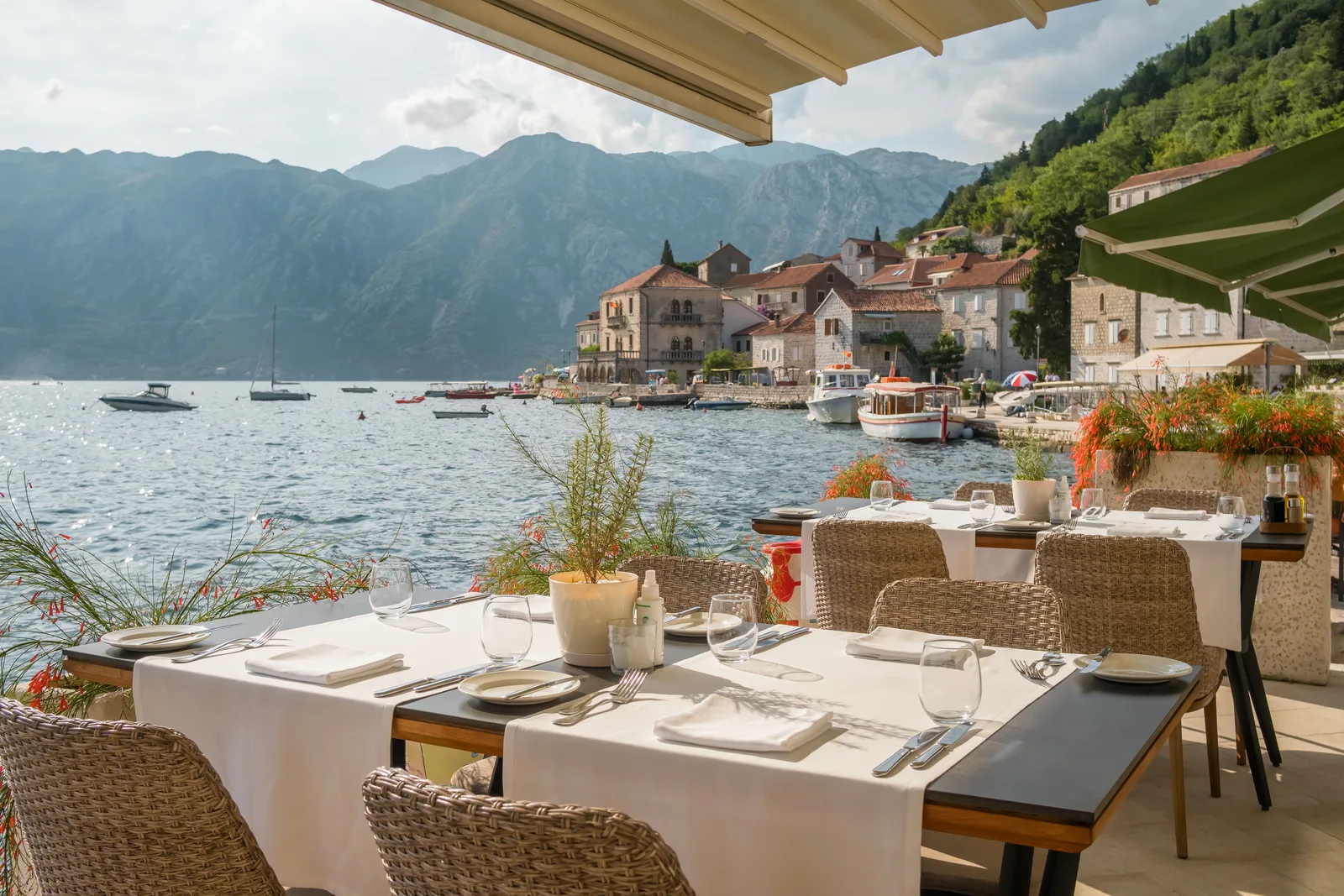
Restaurants
Most restaurants feature a menu of seafood, pasta, and pizza, showcasing Italy’s influence on Perast. Reservations for more popular restaurants are recommended for sunset, especially on weekends during high season.
Trattoria Rosmarino: Perched above the waterfront, Rosmarino offers breathtaking views of the bay, with a menu featuring fish, seafood, seasonal vegetables, and the delightful Perast cake for dessert.
Conte Hotel Restaurant: Located in the heart of UNESCO-protected Perast, offering a combination of tradition and gastronomic experience with fresh local ingredients like Albanian red shrimps, Mali Ston oysters, and Kvarner shrimps.
Fish Restaurant Djardin: A cozy and beautiful restaurant located close to St. Nicholas church, with stunning views over the two islets—Our Lady of the Rocks and Saint George.
Riva Restaurant (Heritage Grand Perast): Renowned for its Mediterranean flavors and breathtaking waterfront views, offering an array of seafood delicacies and authentic Montenegrin dishes.
Accommodation
Perast offers a charming selection of accommodations, ranging from cozy guesthouses to elegant 5-star hotels, with many options boasting stunning views of the bay, traditional architecture, and easy access to local attractions.
Featured Boutique Hotels:
Conte Hotel & Restaurant: Situated right on the seafront and consisting of several buildings spread throughout the town. The hotel’s architecture and interior design enhance its cozy and stylish ambiance with stylishly furnished rooms.
Boutique Hotel & Spa Casa del Mare - Mediterraneo: This charming boutique hotel is small and intimate but has considered every detail in its design and service. Each room has its own theme, and the hotel features an indoor pool, sauna, steam room, beach bar, seafront restaurant, and rooftop bar.
Vila Perast Boutique Hotel: A 3-star boutique hotel situated 350 meters from the Orthodox Church of the Nativity of the Virgin, providing shuttle service and bicycles for rent.
Perast hotels are at their most economical to book in February, where rates may be 82% lower than in the high season. The average rate is around €300+ per night during peak season. If you stay overnight, accommodation staff can help verify the day’s access and transport, but they do not replace official visitor registration rules. The tourist tax and registration guide explains what visitors and hosts need to check.
Getting to Perast
From Kotor
Perast is a short hop from Kotor: the drive is given as 12 kilometers along the bay road taking 15 to 20 minutes outside peak season, and elsewhere as 14 km and a 20- to 30-minute drive along the Adriatic coast; allow up to 45 minutes in July and August traffic. A boat ride is the alternative.
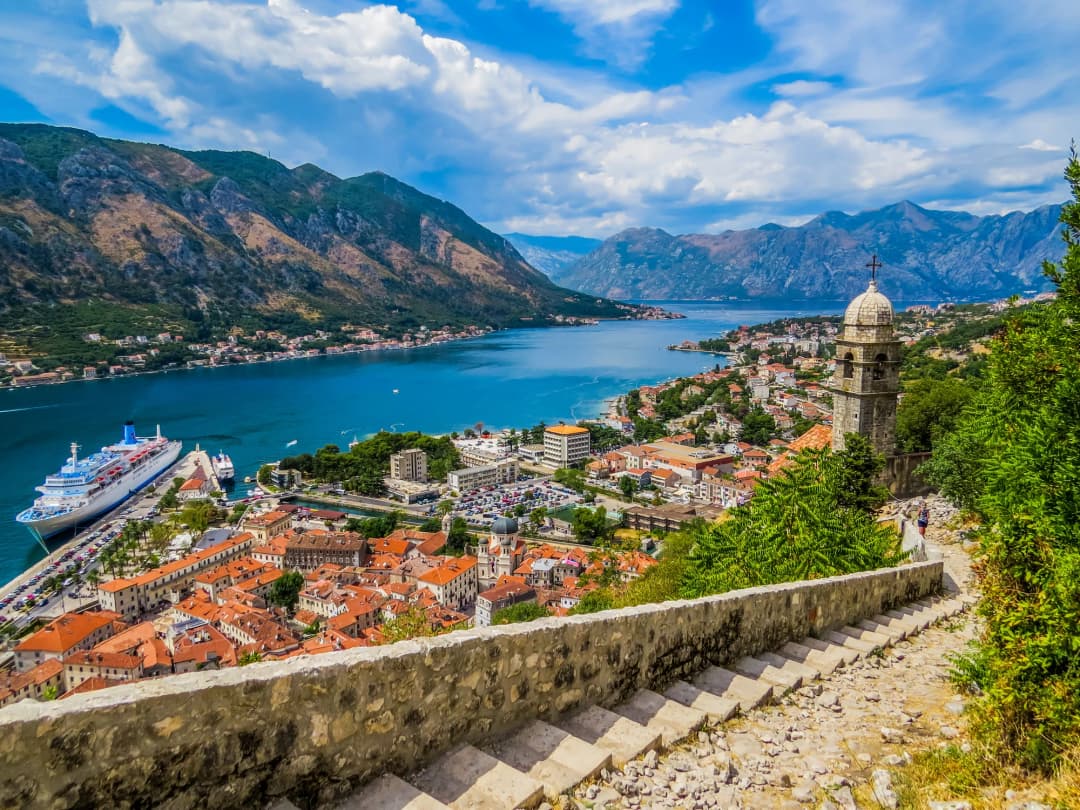
The best way to get from Kotor to Perast by public transport is the ‘blue line’ bus. Kotor municipality’s public-transport page links dated Blue Line files, including a Škaljari–Kostanjica route; the service is variously described as running between Kotor and Kostanjica along the northern coastline and between Kotor and Herceg Novi, stopping in Perast. It departs approximately once an hour from Kotor around a quarter past the hour six days a week, roughly hourly on weekdays, and only runs every two hours on Sundays. Tickets are bought in cash from the driver, payable on board, for about €1.50 to €2 one-way. The bus stop is on the main road above town; walk downhill to the waterfront.
Open the newest municipal file rather than copying an old blog timetable. Confirm that your intended departure serves the Perast stop, identify which side of the main road handles each direction, and save the return options offline. Traffic can erase a tight connection.
From Tivat Airport and Dubrovnik
From Tivat Airport, allow about 20 minutes via the Verige car ferry across the bay narrows, or 45 minutes driving around the bay through Kotor. From Dubrovnik airport, allow about two hours including the border crossing. Perast is also accessible via organized day trips from Dubrovnik, Croatia, typically combining visits to multiple Bay of Kotor destinations.
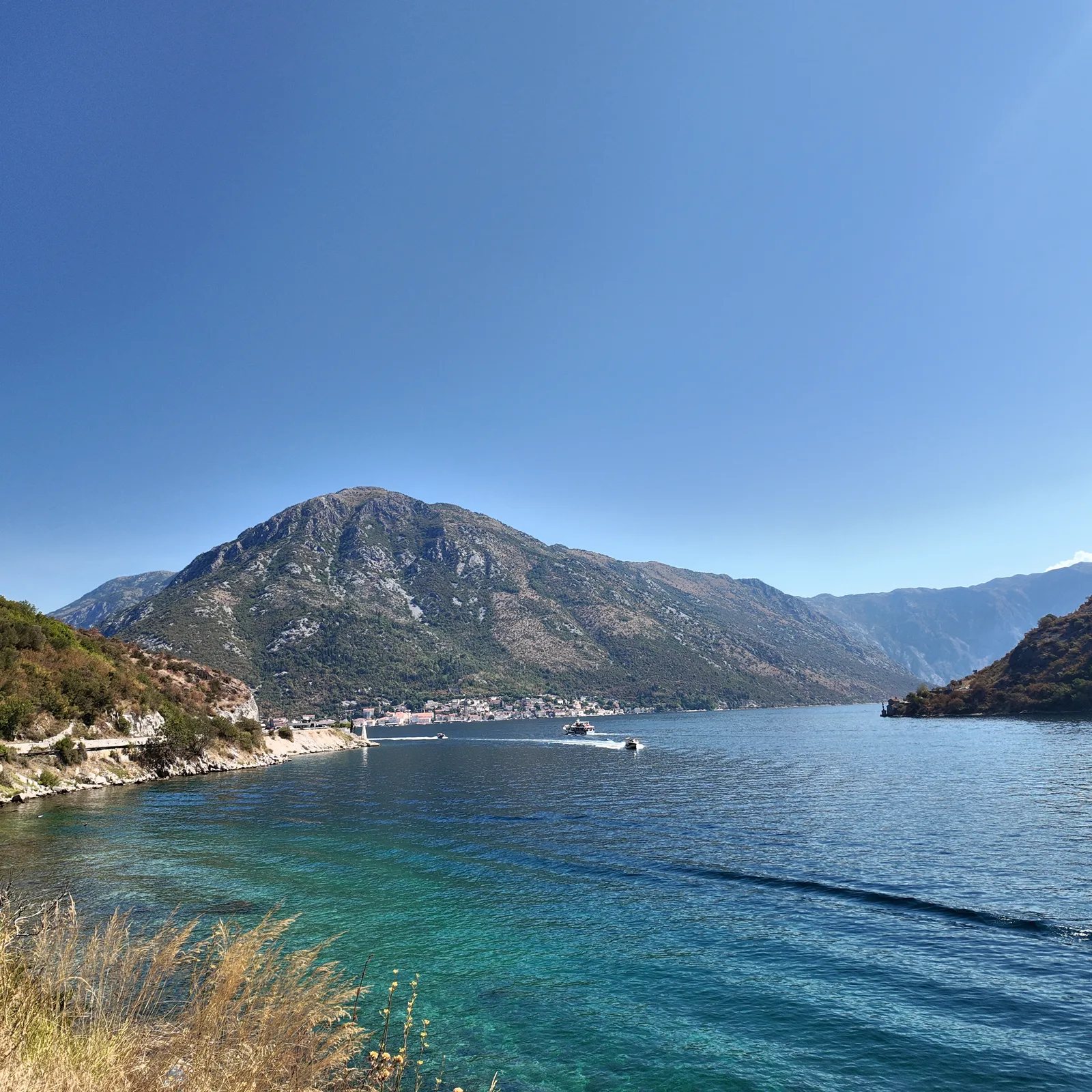
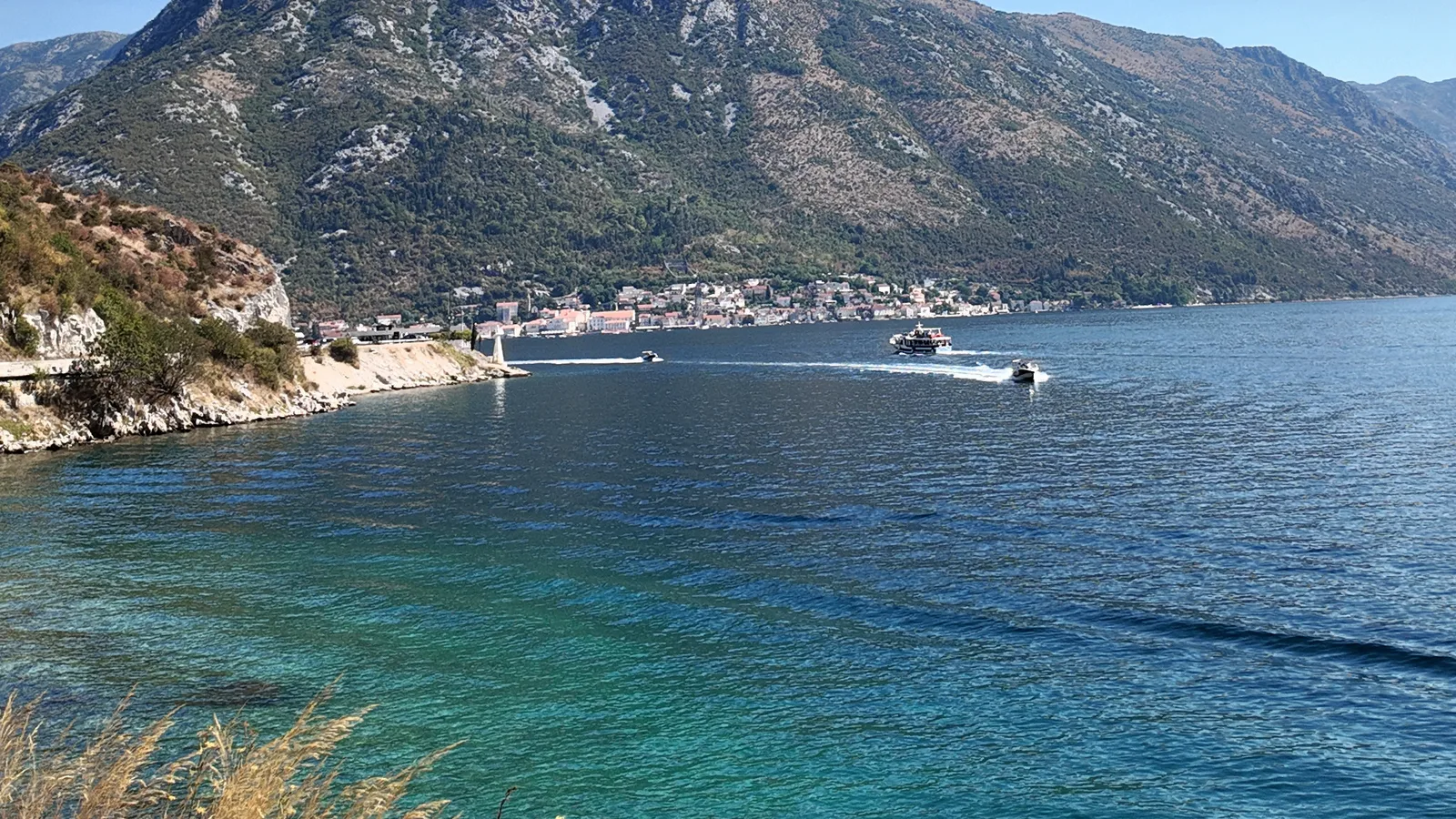
Original photography by the montenegro.com team, August 2026.
Driving, the car-free centre and parking
Perast is a car-free town that has been entirely pedestrianized, allowing only delivery vehicles and one public transport bus to pass through its historic center. You cannot drive into Perast at all in order to unload your luggage—parking barriers block access. Parking is the single biggest practical challenge, and it is extremely limited.
Drivers should expect the lower coastal road to be controlled seasonally. A published municipal traffic decision restricts most motor traffic there from 15 May through 30 September between 08:00 and 01:00, with exemptions. Because that decision is older and local arrangements can change, the current barrier, signs and staff instructions control. Do not argue from an undated map.
Use marked parking only. In 2025, the municipality reported installing bollards in Perast at surfaces previously used for illegal parking. That is direct evidence that an informal roadside space may not be legal or safe. Never stop in the main carriageway for luggage or a photograph, and do not block a bus stop, doorway or turning area.
Parking Options:
Parking 1: Arriving from Kotor, you’ll find Parking 1 on your left-hand side. Day tickets cost €8. They have no hourly rates for short stays.
Parking 2: Located on the northern end of town, offering the same rates and conditions. Parking 2 is a little closer to Perast’s major attractions like the Perast Maritime Museum, the central town square, St. Nicholas Church, and the marina where boats depart to the islands.
These small lots at either end of town fill quickly in summer, and some operators offer free parking with a boat ticket purchase. Overflow street parking exists along the main road above, but means a longer walk. Arriving before 9 AM is the only reliable strategy in peak season.
Hotel Parking: If you’re staying in a hotel, most of them have their own golf cart for picking up guests from the parking areas.
Alternative Parking: If you find car parking in Perast too expensive, you might consider leaving your car in neighboring Risan, which is just 3 kilometers away. There are several unpaid parking spaces in the center of town and along the coastal road. From Risan, you can take a bus or taxi, or simply walk.
A water taxi from Kotor eliminates the parking problem entirely and is arguably the most enjoyable way to arrive — approaching Perast from the water, as its original inhabitants did, with the full panorama revealing itself as you draw near.
| Mode | Step 1 | Step 2 | Step 3 |
|---|---|---|---|
| BUS | newest municipal file | stop and direction | return saved offline |
| CAR | current barrier/signs | marked legal space | no roadside improvising |
| BOTH | KEEP A RETURN BUFFER |
Source: kotor.me
Getting Around and How Long to Stay
The town of Perast is small—about 1.5 kilometers from end to end, around a 20-minute walk, with the waterfront promenade itself roughly a kilometer long. There are free golf carts that will take you anywhere within Perast.
About 4 to 5 hours should be plenty for a leisurely visit, including the boat trip to Our Lady of the Rocks island.
Money: You will need cash in small denominations. Restaurants usually accept credit cards, but the ferry to Our Lady of the Rocks, the museum on the island, and the bell tower only accept cash.