Seventy-seven people in a chestnut wood on the Ottoman side of an old frontier — which is why the oldest village is a hundred metres up the hill and the shore came later.
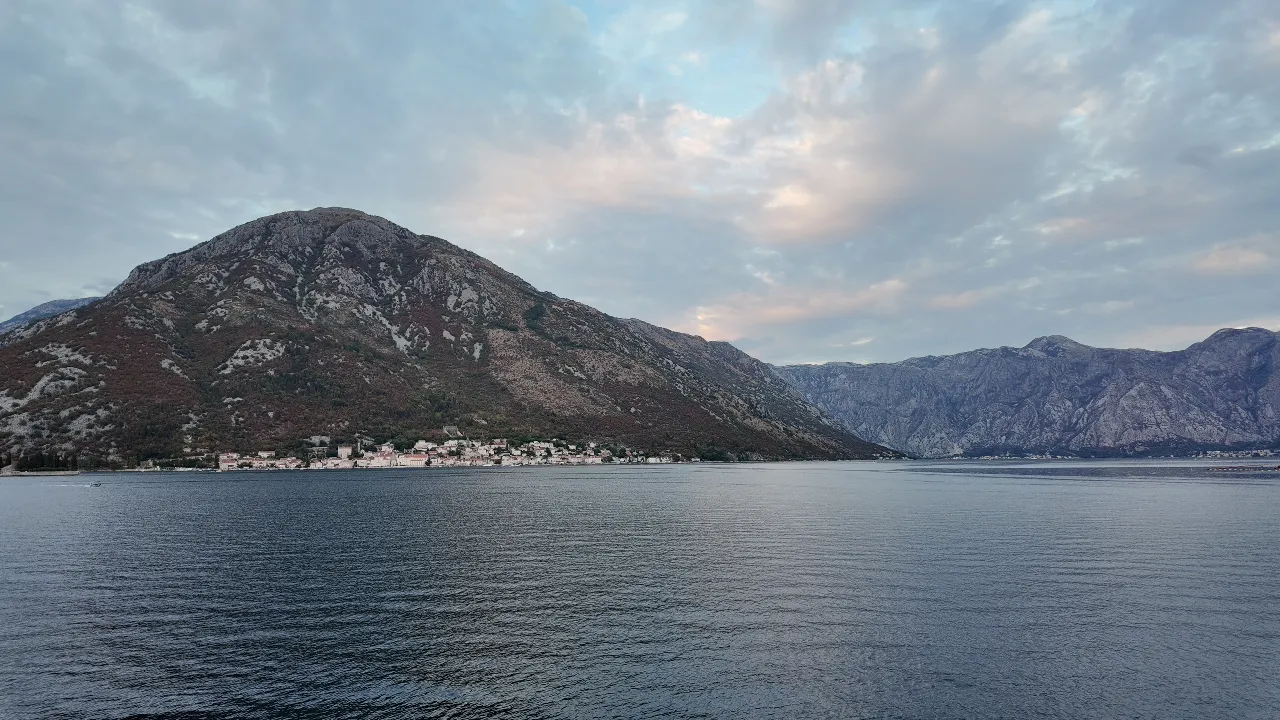
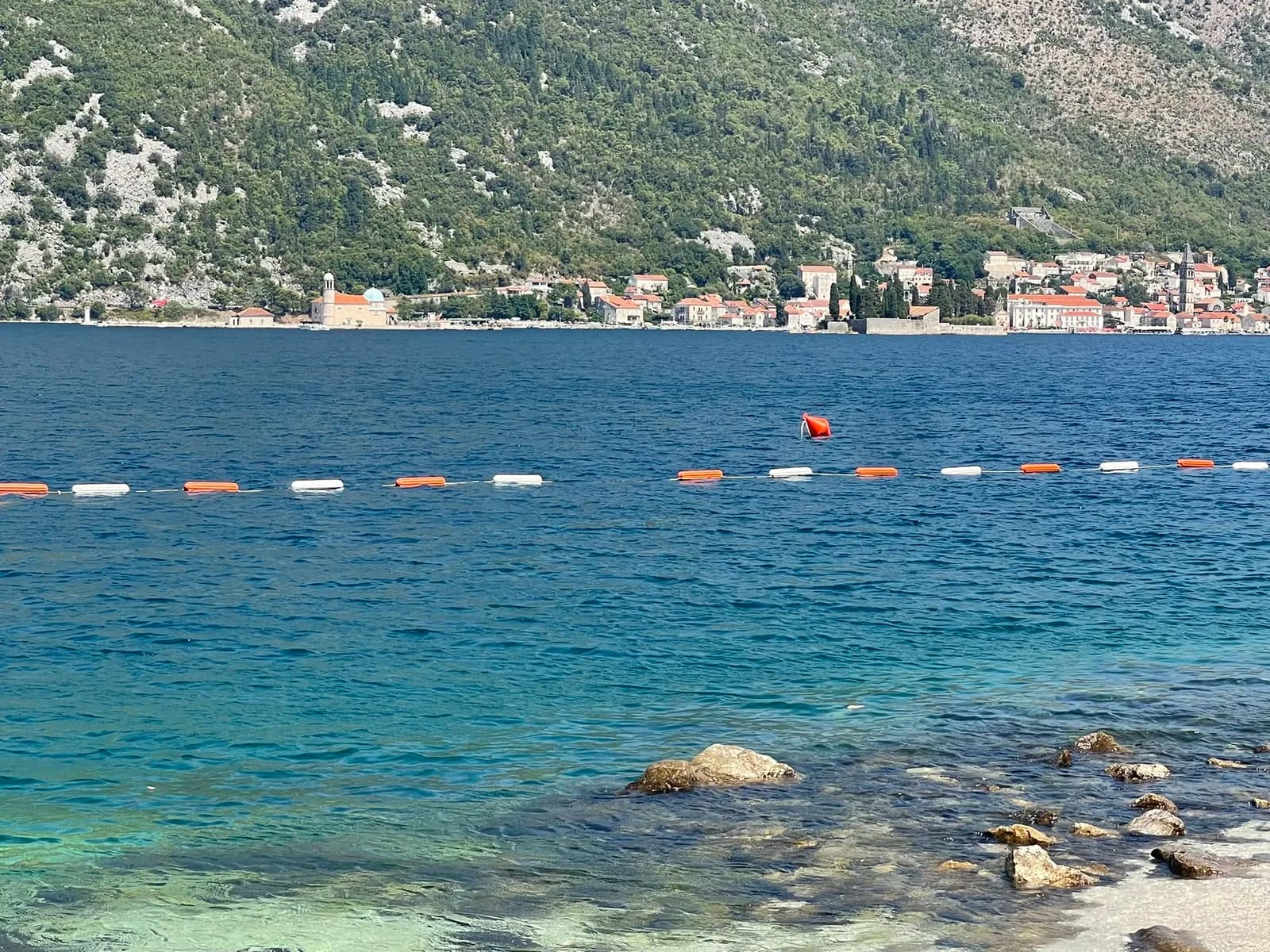
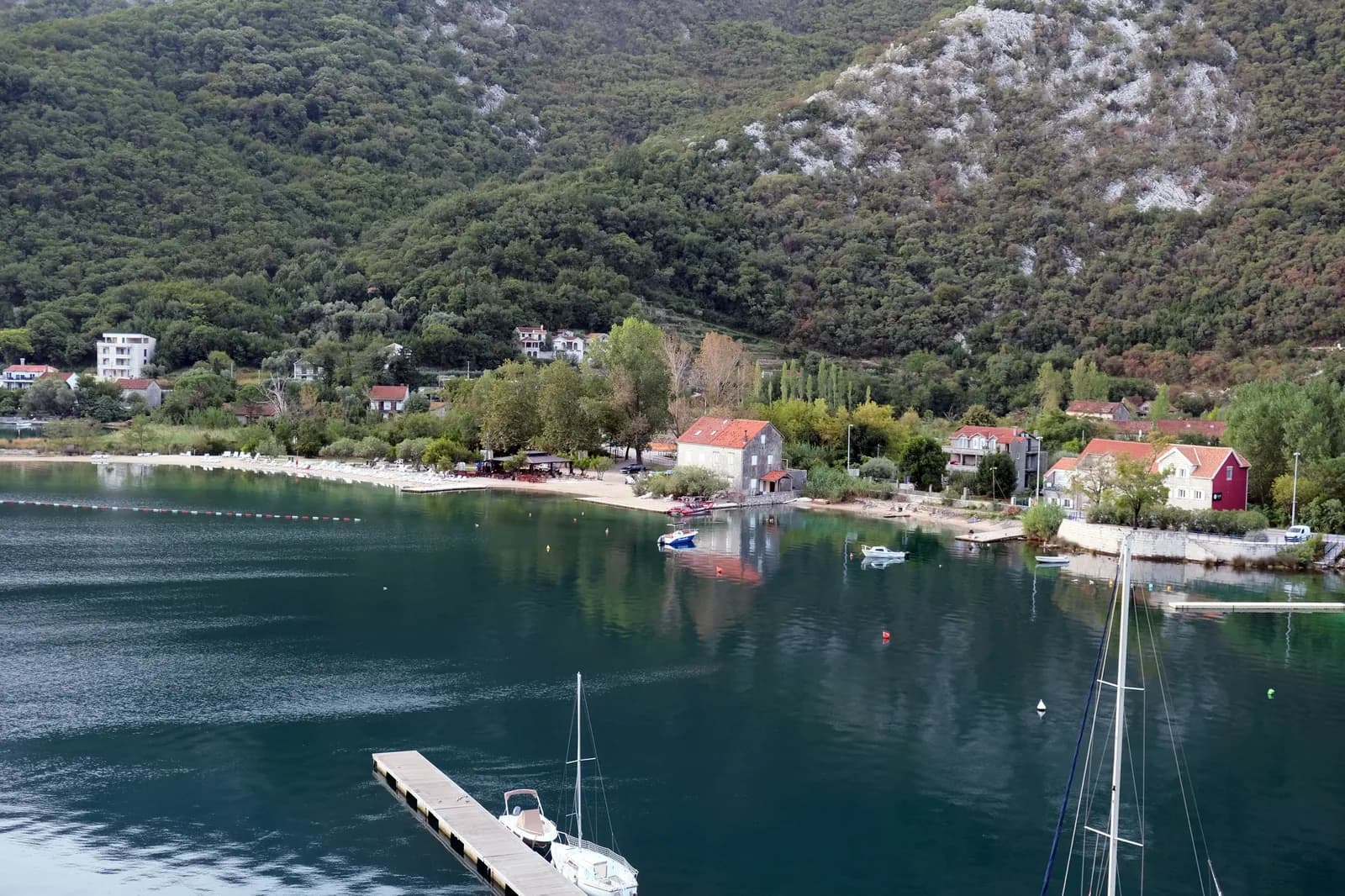
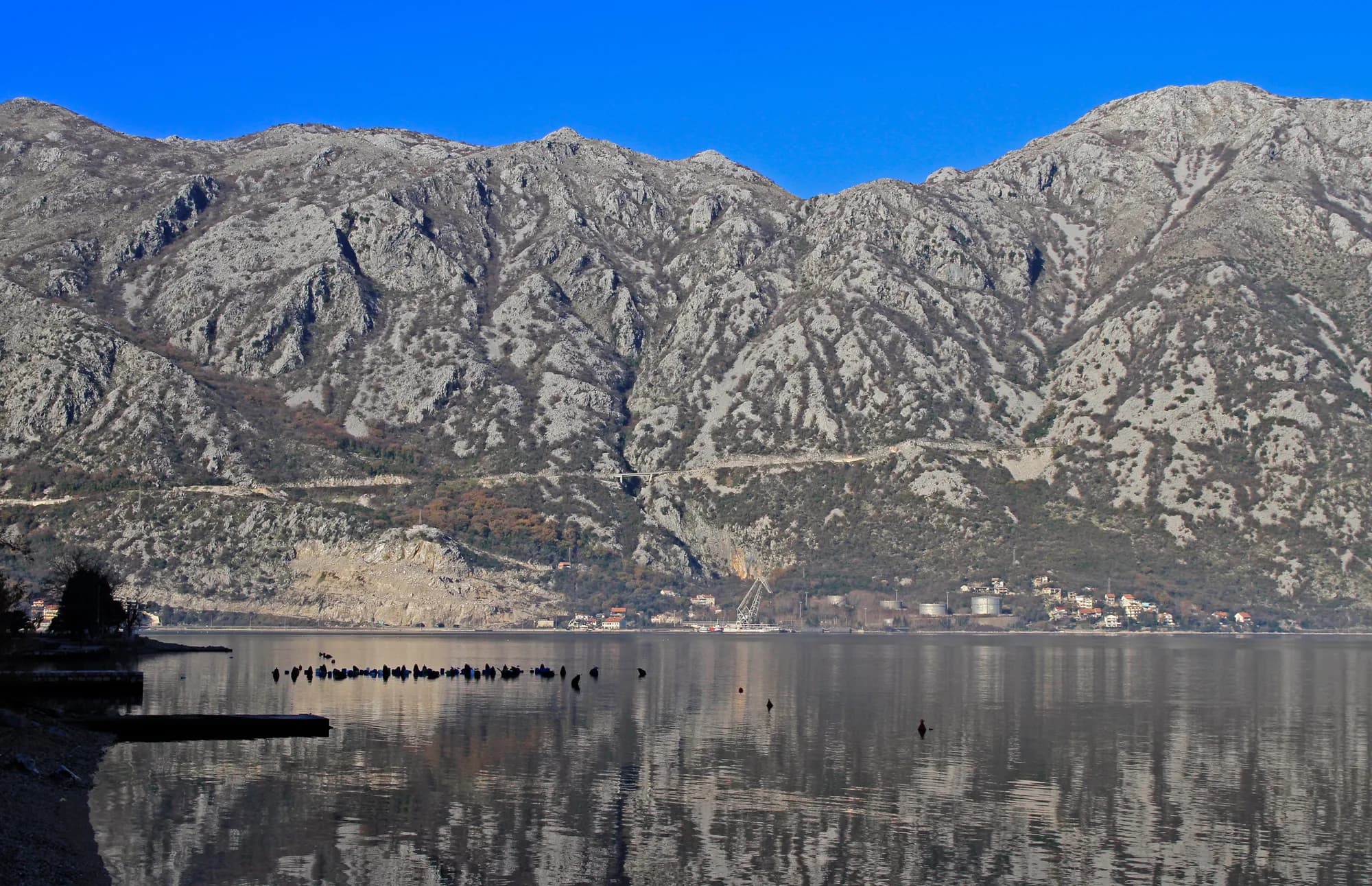
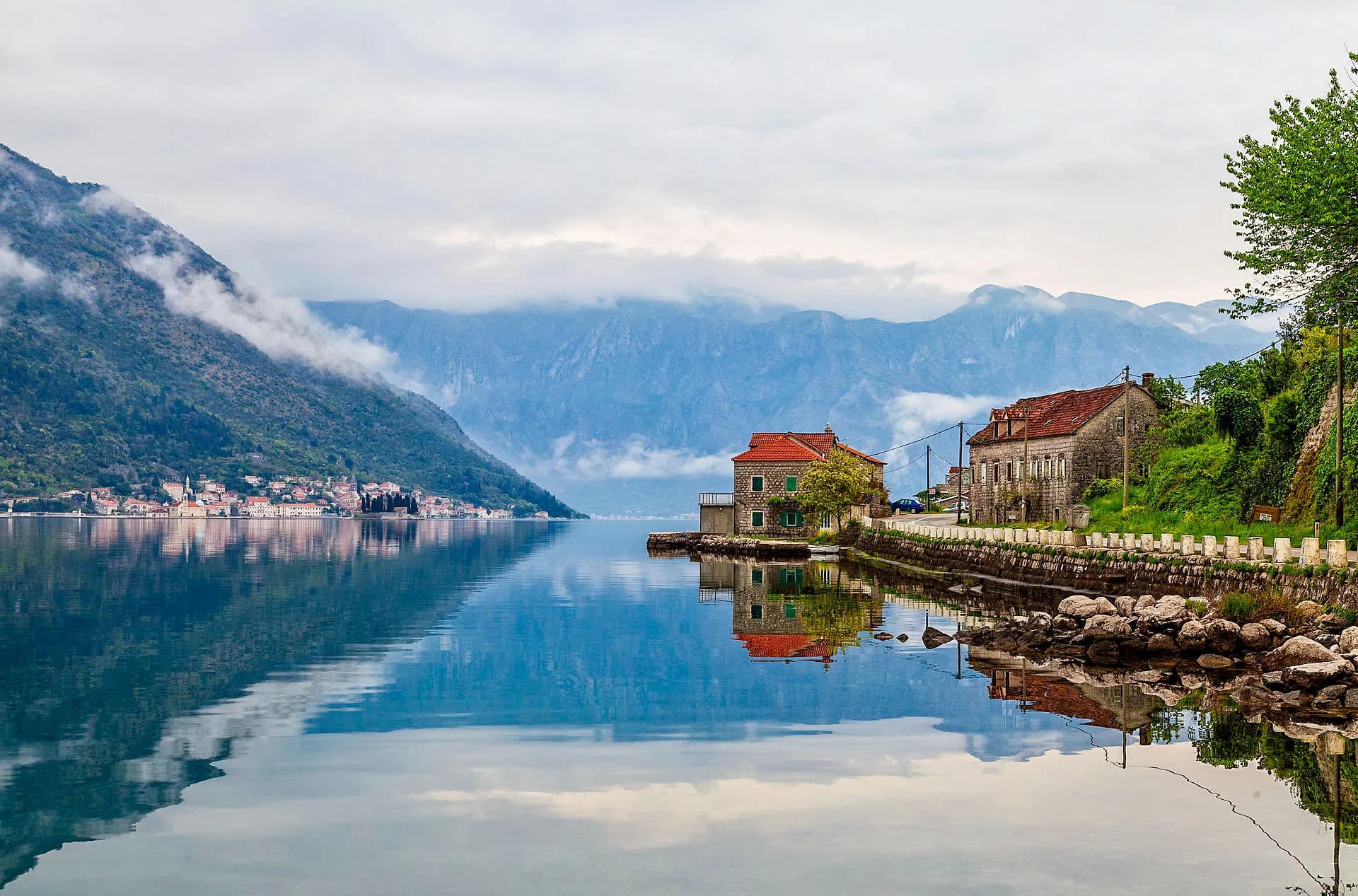
Kostanjica is a small, tranquil settlement strung along the inner Bay of Kotor between Risan and the Verige narrows, on the slopes facing Perast. Here the dramatic mountains plunge straight toward the still, dark waters of Europe's southernmost fjord-like bay, and the village looks directly across to Perast's twin islets, Our Lady of the Rocks and St George. There is little to do in the conventional sense, and that is the point: Kostanjica is for travellers seeking peace, solitude and the quiet rhythm of a genuine bayside community rather than resorts, bars or crowds.
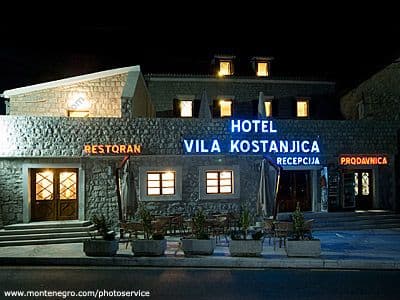
2 accommodations in Kostanjica
The five villages of the Risan bay
Residents by settlement, 2023 census, with Perast across the water for scale
Risan holds more than five times the other four villages of its own bay put together — and Lipci, where the Bronze Age stags are painted, is down to seventeen people.
Who visits Montenegro
Share of foreign overnight stays, 2025
MONSTAT · 2025
Census population, Kostanjica municipality
Two hundred and fifteen people in 1948, and the count still climbed twice after that — 227 in 1953, 186 in 1981. Then 127 in 2003, 127 again in 2011, and 77 in 2023: two in five gone in twelve years. The heritage study traces the emptying in three waves — emigration to America after Boka seafaring collapsed, a reprieve between the wars when the Tivat arsenal was hiring, then the move to Tivat, Kotor and Herceg Novi after 1945. Of the five old hamlets up the hill, only Selo and Čelina survive even as ruins.
The frontier ran through this shore, and Kostanjica was on the far side of it. That is the single fact that explains the village: for two hundred years the families lived up the hill, and the water — the main road of the bay — held stores and boat shelters. Widths are to scale.
Dates from the protection study of Kostanjica’s built heritage (EXPEDITIO / Faculty of Architecture Podgorica, 2009, after Milinović, Nakićenović and Butorac), which puts Ottoman rule here at 1483–1684 and Venetian rule at 1684–1797. Other records date the conquest itself to 1481–82 and make the upper bay Herceg Stefan Vukčić’s before it; popular trail guides put Kostanjica on the Venetian side through those two centuries, which the study does not. The church date is Nakićenović’s — Milinović puts it later in the century.
A day on the shore road
One lane each way, two kitchens, and the view doing the work
Meanwhile, in 1687
Kostanjica — two centuries of Ottoman rule end here in the campaign of 1684 to 1687. Local tradition counts four fortified Turkish houses in the shore zone and a tower at the top of the village, tied into the Ottoman fortification at Verige; the farming families lived above them. For their part in taking the northern bay, Venice grants the men of Perast the estates from Risan to Herceg Novi, Kostanjica among them, and the village starts coming down to the water.
Castelnuovo: Venice opens the siege of Herceg Novi on 1 September under Girolamo Corner and takes the town on the 30th, ending two centuries of Ottoman rule at the mouth of the bay.
The Acropolis — the same war, the same month. On the evening of 26 September a Venetian mortar shell finds the Ottoman powder store inside the Parthenon; three hundred people are killed and the temple is wrecked.
London: Newton’s Principia is published in July, at Halley’s expense.
“A new carriage road was traced on the shore. It disturbed the authentic relation of the settlement towards the sea, which had until then been the main thoroughfare.”
Studija zaštite graditeljskog nasljeđa Kostanjice, on the shore road of the early 20th century
The protection study of the village’s built heritage, prepared by the Faculty of Architecture in Podgorica for the amendments to Kostanjica’s detailed urban project and published by EXPEDITIO in 2009. The trunk road followed in the 1960s and cut many of the village’s landings and boat shelters off from the houses that built them.
“He came to Naluka and there on the very shore made a strong and large house, in which until recently an oil mill and a prison with an iron door could be made out.”
Local legend
the shepherd Ćuzo and his treasure, as the village tells it
Search thousands of hotels and apartments with live prices.
We may earn a commission from partner links. This helps us keep Montenegro.com free for travelers.
Search hotels, apartments and guest houses with live availability.
We may earn a commission from partner links. This helps us keep Montenegro.com free for travelers.
Kostanjica, also spelt Kostanjica, is strung along the inner Bay of Kotor between Risan and the Verige narrows, on the slopes facing Perast. Kotor is 20 to 25 minutes away by car and Tivat airport about half an hour.
Directly across the water to Perast and its two islets, Our Lady of the Rocks and St George. Morning and evening light on that stretch of bay is the reason people choose this shore over the busier side.
Yes, from rocks and small pebble inlets rather than a built beach. The water is deep close in and stays clean, and the swimming spots are uncrowded even in August because there is no beach service to draw people.
A handful of family guesthouses and waterfront homes, with fish coming in from local boats. There are no hotels or bars to speak of; meals are usually arranged through your hosts or in the neighbouring villages.
It is one of the better quiet bases. Perast is just across the water and a short drive around the shore, Risan and its Roman mosaics are minutes west, and Kotor and Herceg Novi are each well within half an hour.
Travellers who want stillness and a view rather than nightlife, and who have a car. If you want restaurants, shops and things happening in the evening, stay in Kotor or Herceg Novi and visit here instead.
MayThe first cherries — by villagers’ accounts fruit ripens earlier here than anywhere else in the bay — Kostanjica cherries reached the Kotor market on 1 May
JunSveti Ivan Krstitelj — the Nativity of St John the Baptist, 24 June — patron of the village church and of the place
JulCamping season — Auto Kamp Lara takes tents and vans from 1 July to 30 September; Autocamp Đule sits along the same shore
OctU kostanje — the chestnut picking ran from 5 October to 5 November and the whole village turned out for it; the woods still run from the shore to about 200 metres up
The local plate
The fish kitchens on this shore run one menu: whatever came in that morning, over coals, with blitva, olive oil and lemon. The village’s other harvests are stranger. Chestnuts were the living here until the second half of the last century — the picking ran from 5 October to 5 November and every resident went. A drying house cured laurel leaf for the Ljekobilje works at Risan, and when the heritage study was written a small private still in the village was working laurel, wormwood and immortelle for the pharmaceutical trade.
Where Konoba Ribar, on the magistrala at the eastern end of the village, eleven till midnight; a second kitchen sits mid-strip and opens at eight
2 properties in Kostanjica are already listed here. Adding yours is free — no subscription, no exclusivity, and you keep your own guests and prices.
List your propertyKostanjica in numbers
the earliest dated mention: a vineyard here, left to the Abbey of Sv. Đorđe by Novak Dobriković of Perast
2023 census — 40 men and 37 women, down from 127 in 2011
sv. Ivan Krstitelj by the shore, 19th century; Sv. Gospođa at Banovina, 1925
Gospa od Škrpjela and Sveti Đorđe — the study calls the village their natural visual frame
the Verige narrows, three kilometres down the shore, where chains were once drawn across the water
to the Kamenari ramp, and thirteen kilometres in all to Tivat airport
EXPEDITIO and the Faculty of Architecture Podgorica, "Kostanjica: prirodno i kulturno nasljeđe" (2009) · MONSTAT settlement censuses 1948–2023 · Diocese of Kotor
The shape of the bay
Towns at their true positions; the water drawn as a ribbon
Schematic — not a nautical chart.
A few hours
Twenty minutes, one swim, and a village that explains itself in what it is built of.
One full day
The north shore in one loop: three-thousand-year-old stags, Roman floors, a Baroque town, and a hamlet to sleep in.
The shore strip
Best for apartments in the houses between the road and the water, and Boka Gardens, a resort of villas and apartments whose 250 m pebble beach is for its own guests
The campsites
Best for Đule and Lara pitch on the shore at the western end of the village; Lara opens on 1 July and closes on 30 September
Morinj, 1.7 km west
Best for the cold spring water that runs into the bay, and Ćatovića Mlini, a konoba in old watermills
Risan, 7.5 km round the bay
Best for a small town instead of a hamlet, with Roman mosaics in it
Best time: May · June · September