Djenovići: A Tranquil Bay of Kotor Village Near Herceg Novi
Djenovići is a tranquil Bay of Kotor village near Herceg Novi, offering clear swimming waters, historic stone houses, and an authentic Montenegrin coastal experience away from the crowds.
Updated Originally published 23 min readby Pavle Obradović
Djenovici — Comprehensive Travel Guide
Overview
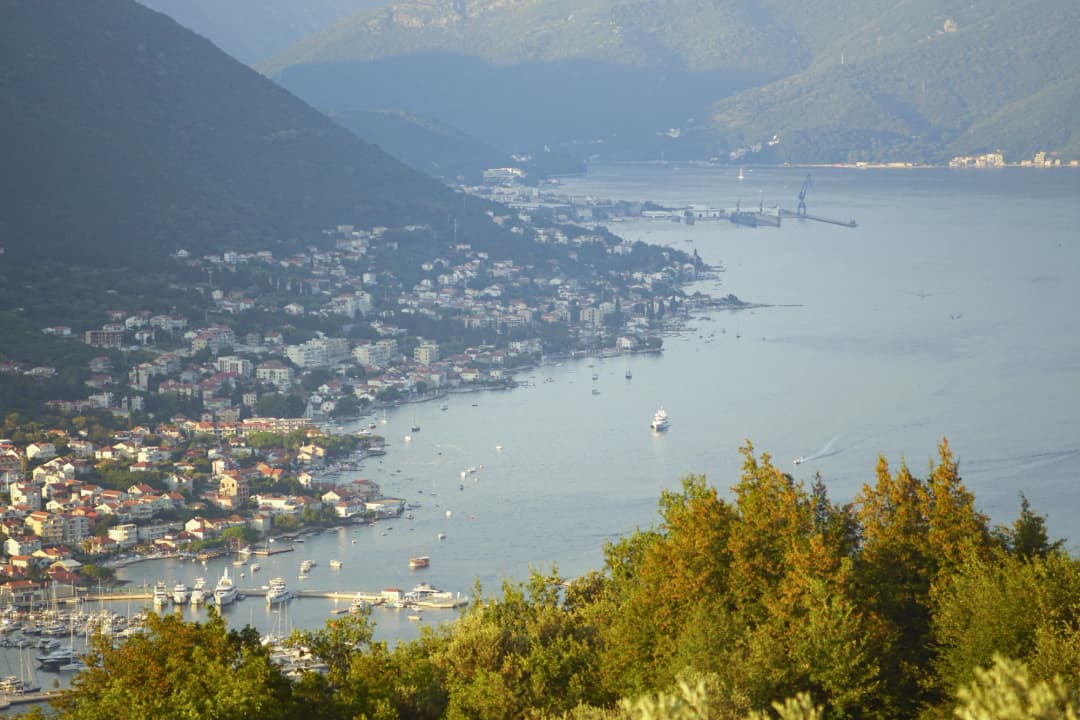
Djenovici is a small, sun-drenched coastal village nestled along the southern shore of the entrance to the Bay of Kotor, situated roughly halfway between the resort town of Herceg Novi and the narrow Verige Strait. With a permanent population of only a few hundred residents, this settlement has preserved an authenticity that larger Montenegrin coastal towns have gradually lost. The village stretches along a narrow strip of shoreline backed by steep, forested hills, offering commanding views across the bay toward the Lustica peninsula and the open Adriatic beyond.
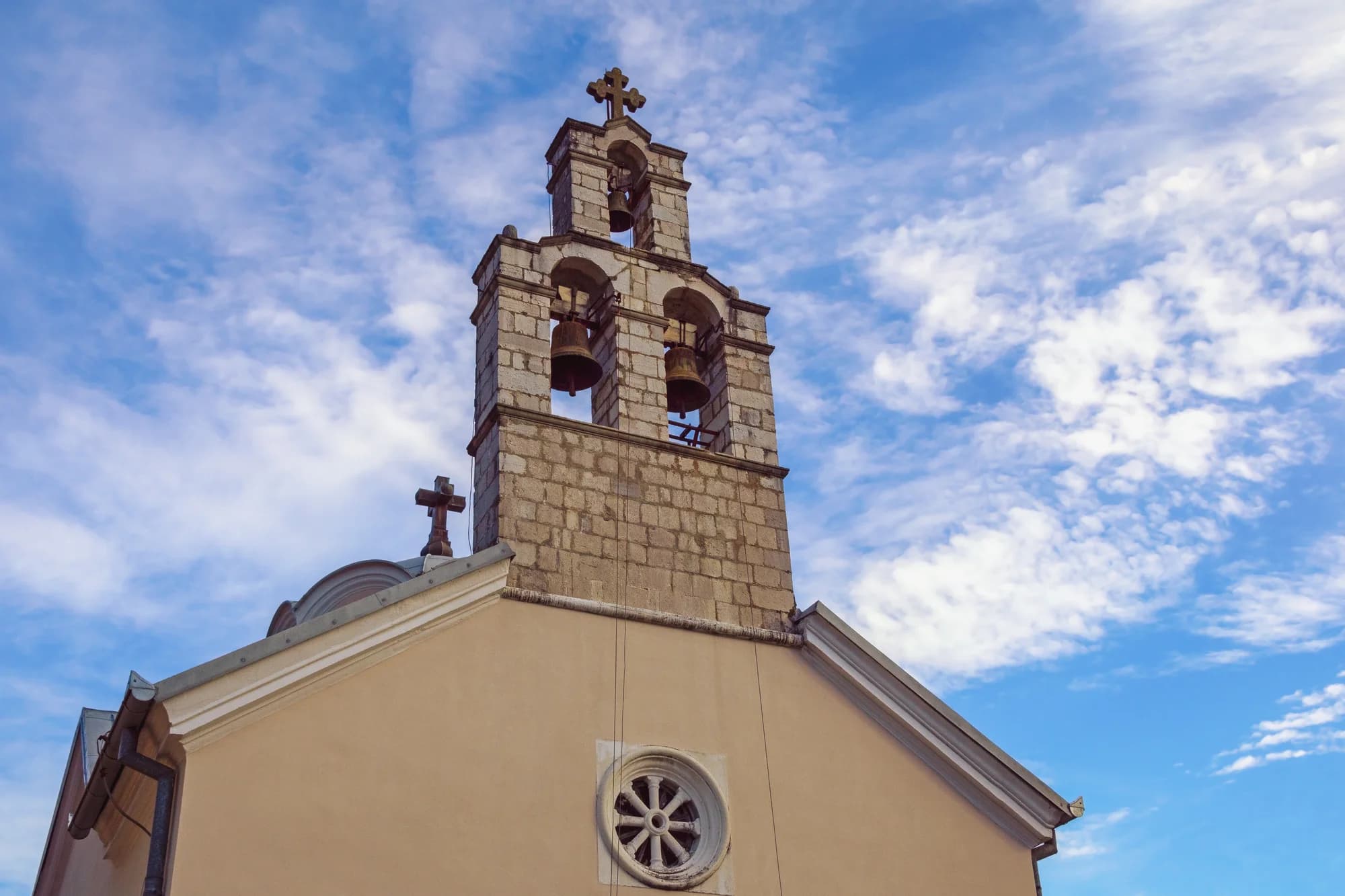
Historically, Djenovici was home to seafaring families who earned their livelihood through fishing and maritime trade. Several well-preserved stone houses dating to the 18th and 19th centuries still line the waterfront, their facades weathered by centuries of Adriatic winds. The village's Church of St. George, a modest Orthodox chapel perched on a small rise above the shore, dates to the late medieval period and remains the spiritual centre of the community.
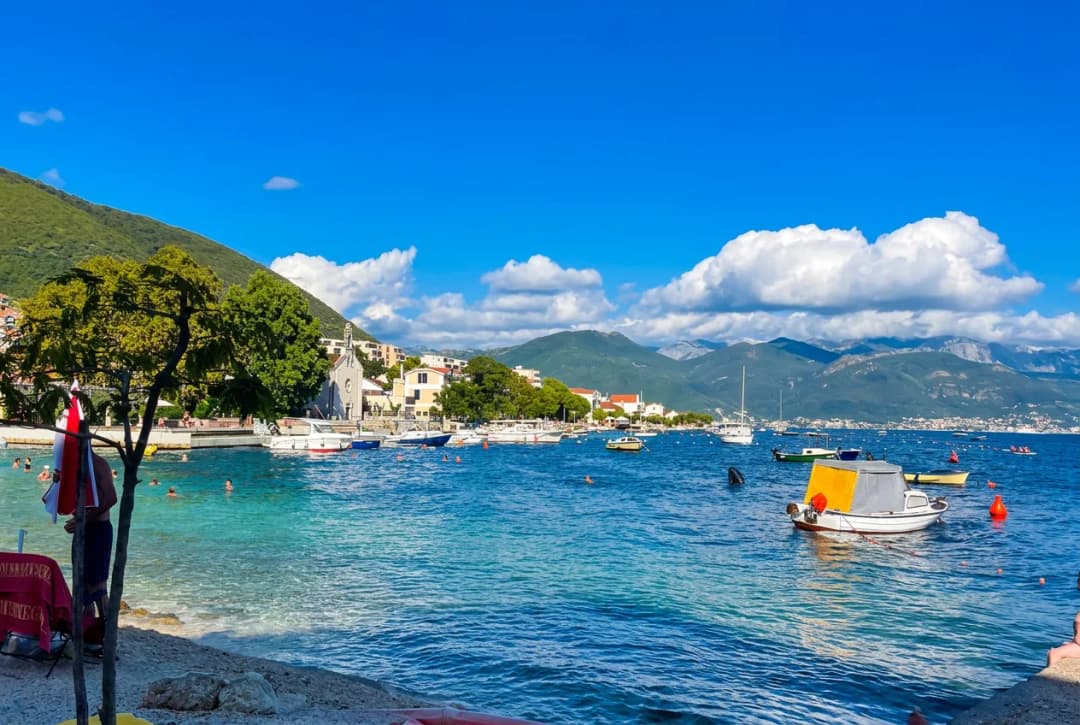
Today, Djenovici appeals to visitors who prefer quiet seaside relaxation over the bustle of Herceg Novi or Kotor. Its small pebble beaches, clear swimming waters, waterfront promenade, and handful of genuine konoba restaurants create a laid-back Mediterranean atmosphere that is increasingly rare along the rapidly developing Montenegrin coast. For those who want the real Bay of Kotor experience without the tourist crowds, Djenovici delivers.
Getting There & Getting Around
Djenovici lies approximately 5 km southeast of Herceg Novi's Old Town along the coastal road (M2). From Tivat Airport, the closest international airport, the drive takes about 25 minutes via the Bay of Kotor coastal road. From Dubrovnik Airport in neighbouring Croatia, the journey is roughly 45 minutes including the Montenegrin border crossing at Debeli Brijeg. From Podgorica, allow approximately two hours via the highway and the Sozina tunnel.
Local buses running the Herceg Novi–Kotor route stop in Djenovici regularly throughout the day, with departures approximately every 20–30 minutes during summer. The village is small enough to explore entirely on foot. A waterfront promenade connects Djenovici to the neighbouring settlements of Baosici to the west and Bijela to the east, making for a pleasant seaside walk of about 2 km in either direction.
Water taxis and small excursion boats depart from the Herceg Novi marina and occasionally stop at Djenovici, particularly during the summer months. This is an enjoyable way to arrive while taking in panoramic views of the bay. The village is also well-positioned for the Kamenari–Lepetane ferry crossing (about 10 km east), which provides a shortcut to the Tivat side of the bay.
Top Things to See & Do
1. Swim at the Village Beaches
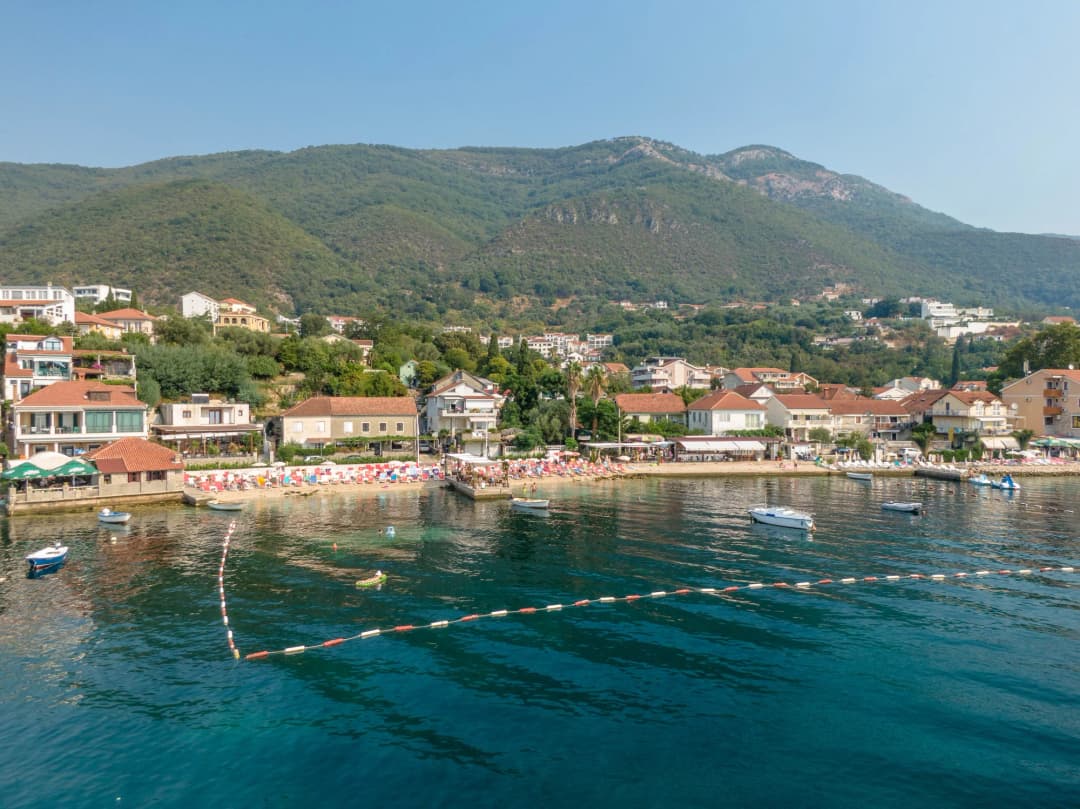
Djenovici has several small pebble and concrete swimming platforms along its waterfront. The water here is exceptionally clear due to the bay's depth and tidal currents at the outer entrance. The main beach near the village centre has a gentle entry suitable for families with children, with pebbles underfoot that give way to sandy bottom a few metres out. For more seclusion, walk east along the shore toward Bijela where smaller coves are tucked between the rocks, often empty even in peak summer.
2. Explore the Old Stone Houses and Captain's Houses
The village's historic core features handsome stone houses built in the Boka Kotorska maritime style — thick walls of local limestone, green shutters, and terracotta roofs. Wander the narrow lanes above the waterfront to appreciate the traditional architecture up close. Several houses bear carved stone plaques with family crests and construction dates from the 1700s and 1800s. The Church of St. George, set on a slight elevation above the main road, is worth a visit for its simple interior and the shade of the old trees in its courtyard.
3. Walk the Seaside Promenade
The waterfront promenade through Djenovici is one of the most pleasant stretches of coastal walking in the Herceg Novi area. The path, shaded by Mediterranean pines and oleander, runs along the shore with continuous views across the bay. Walking eastward toward Bijela, you pass through increasingly quiet residential areas where the pace of life slows even further. Walking westward through Baosici toward Herceg Novi, the path eventually connects to the famous setaliste (promenade) that runs along the entire Herceg Novi waterfront. The full walk to Herceg Novi's Old Town takes about an hour and is recommended for the late afternoon or early evening.
4. Sea Kayaking in the Bay
The sheltered waters around Djenovici are ideal for sea kayaking. Several outfitters based in Herceg Novi offer guided kayak tours that pass through the village, exploring the coastline toward the Blue Grotto on the Lustica peninsula. Independent kayakers will find the calm morning waters before the afternoon maestral breeze an excellent time to paddle. The coastline between Djenovici and the Verige Strait offers varied scenery, from sandy beaches to dramatic limestone cliffs.
5. Hike the Hills Above the Village
Behind Djenovici, trails wind uphill through Mediterranean scrub of rosemary, sage, and wild thyme. A moderate 45-minute climb leads to a viewpoint offering spectacular panoramas of the bay entrance, the fortress of Mamula Island, the Croatian coast, and the mountains of Orjen rising behind Herceg Novi. The trails are unmarked but generally easy to follow — ask your host for directions to the best viewpoint. Spring is the ideal season for hiking, when the hillsides are carpeted with wildflowers and temperatures are comfortable.
6. Day Trip to Mamula Island and Blue Grotto
From Djenovici, it is easy to join a boat excursion to nearby Mamula Island, a small fortified islet at the bay's entrance built by the Austro-Hungarians in the 1850s, and the Blue Grotto (Plava Spilja), a sea cave on the Lustica peninsula where the water glows an ethereal blue from reflected sunlight. Tours depart regularly from Herceg Novi and can often pick up passengers along the Djenovici waterfront by arrangement. The excursion typically lasts 2–3 hours and costs around 15–25 euros per person.
7. Visit Bijela and Its Maritime Heritage
The neighbouring town of Bijela, about 2 km east of Djenovici, is home to a historic shipyard that has been building and repairing vessels since the Austro-Hungarian era. While the shipyard itself is a working industrial facility, the town has a pleasant waterfront with cafes, a small beach, and the Church of the Resurrection of Christ, which contains interesting religious artworks. The walk from Djenovici to Bijela along the coastal path is flat, scenic, and takes about 25 minutes.
Where to Eat
Konoba Feral, located on the waterfront, is a beloved local seafood restaurant known for grilled fish, black risotto, and octopus salad prepared in the traditional Boka style. Dining on the terrace with views across the bay is one of the great simple pleasures of a visit to Djenovici. The portions are generous, the seafood is fresh, and the prices are reasonable — expect to pay 15–25 euros per person for a full meal with local wine.
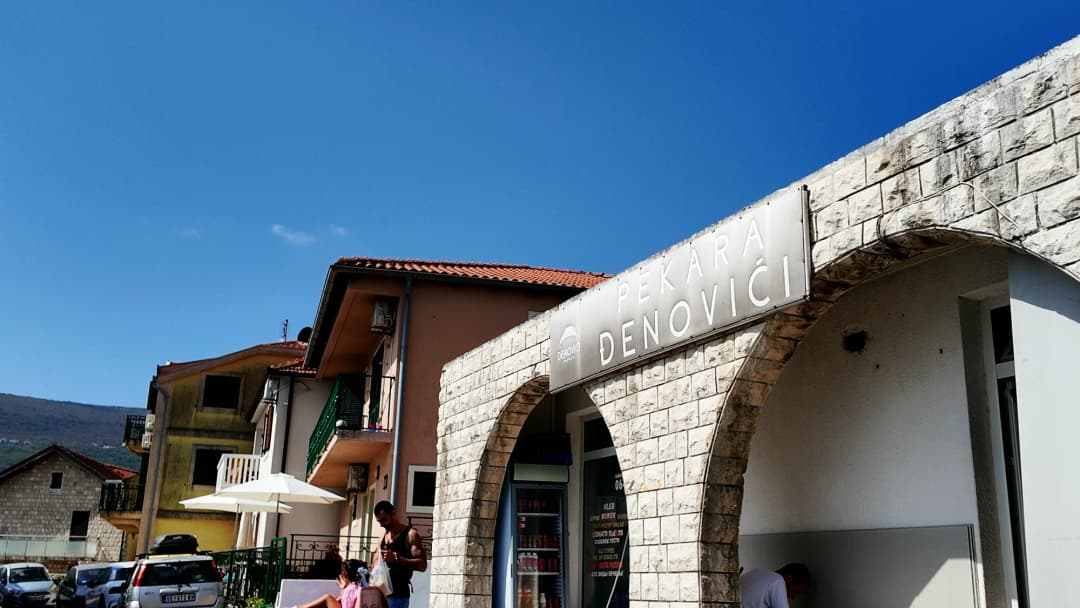
Other small restaurants and cafe-bars along the promenade serve fresh pastries, strong Montenegrin coffee, light lunches, and cold beers. The village bakery produces excellent burek (filled pastry) and fresh bread each morning — perfect for a simple breakfast before a swim.
For a wider selection of restaurants, Herceg Novi is a short bus ride or a pleasant walk away. The old town area has dozens of restaurants ranging from traditional konobas serving centuries-old recipes to modern Mediterranean fusion. The waterfront restaurants along the pet Danica (Five Daisies) square in Herceg Novi are particularly popular for their evening atmosphere.
Best Time to Visit
The best time to visit Djenovici is from May to October, when the weather is warm and the sea temperature is comfortable for swimming. July and August are the hottest months, with temperatures often exceeding 30°C and the sea reaching a bathtub-warm 25–26°C. The village is at its liveliest during these months, with the waterfront cafes and restaurants in full swing. For a quieter experience with pleasant weather and fewer visitors, June and September are ideal — the sea is still warm, the days are long, and accommodation prices drop noticeably from peak rates. Spring (April–May) brings wildflowers and mild temperatures perfect for hiking, but the water may still be cool for swimming. The bay's sheltered geography ensures that even winter days frequently see sunshine and temperatures of 12–15°C.
Climate at a glance
Best time: May · June · September
Where to Stay
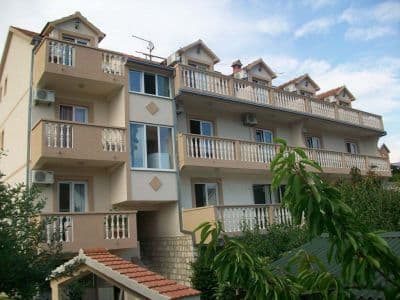
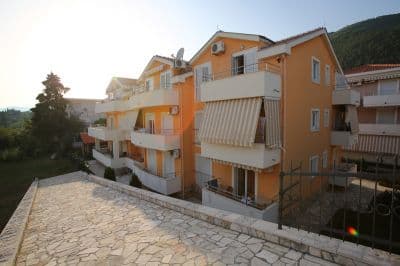
Djenovici offers a selection of apartments and holiday homes, many in traditional stone buildings with modern interiors. With approximately 8 properties available on montenegro.com, visitors can choose from waterfront apartments with sea views to hillside retreats with private terraces overlooking the bay. The range of options makes Djenovici suitable for couples, families, and solo travellers alike. Booking through montenegro.com ensures direct contact with local hosts, competitive pricing without intermediary fees, and the kind of personal recommendations and local knowledge that make the difference between a good holiday and a great one.
Practical Tips
Bring water shoes — the beaches are pebble and the rocky shore can be sharp underfoot. Sea urchins are occasionally present in the shallower areas.
The afternoon maestral wind picks up around 2–3 PM most summer days, making it an excellent time for a cooling swim but less ideal for kayaking or paddleboarding.
Djenovici is an excellent base for exploring Herceg Novi's Old Town, the Savina Monastery, Forte Mare, and Kanli Kula — all within a 10-minute drive or 45-minute walk.
The village has limited parking; if driving in summer, arrive early or use the bus from Herceg Novi. Your accommodation host can advise on the best parking options.
Mobile phone coverage and Wi-Fi are good throughout the village, making it suitable for remote workers seeking a quiet Mediterranean base with reliable connectivity.
The Kamenari–Lepetane ferry, about 10 km east, provides quick access to Tivat, Kotor, and the southern bay shore — useful for day trips without driving the full bay circuit.
Evening mosquitoes can be persistent near the waterfront. Pack repellent or a plug-in device for your accommodation.
Ask your host about local olive oil and honey — several families in the Djenovici area produce small quantities of excellent artisanal products that are not available in shops.
Đenovići in one evidence table
What can be stated—and what still needs a live check
Question
Best evidence
Safe conclusion
Do not infer
How large?
2023 census
1,225 residents
Summer population or visitor beds
What is the shore like?
Local image + bathing register
Small, varied, engineered bathing edges
One continuous sandy beach
Did Stoli exist?
Municipal tradition + professional review
The name and legend are documented
A mapped, excavated sunken city
Which church is protected?
2018 protection study
St Stephen has a 1957 protection decision
Unrestricted access or current condition
Can I rely on a bus time?
Operator schedule portal
Check the current image and direction
A copied timetable remains valid
Is the water safe?
Morsko Dobro monitoring
Check the named sampled beach and latest test
Every informal access point was tested
A resident settlement before a holiday label
What the sources say
The MONSTAT 2023 settlement workbook records 1,225 residents in Đenovići: 601 male and 624 female. That number is useful precisely because it is modest. It tells us this is a census settlement with a year-round population, not how many people are present in August, how many apartments are offered, or how crowded one waterfront section feels at 19:00.
The village sits within a sequence rather than in isolation. Kumbor is immediately to the west and Baošići to the east; Herceg Novi’s urban centre lies farther west along the same riviera. The coast, the main road and rising side streets create different experiences over a short distance. A flat-looking bay address can still involve steps or a steep final approach. Ask an accommodation host for the exact pedestrian route, not only a straight-line distance to the sea.
That structure explains the appeal better than the old promise of being “isolated from civilisation.” Đenovići works for visitors who want a smaller base while retaining access to the rest of the riviera. It does not remove traffic, building work, event sound, boats or other people. Quiet is dependent on the exact room, road exposure and date.
The shore: small beaches, walls, piers and uncertainty
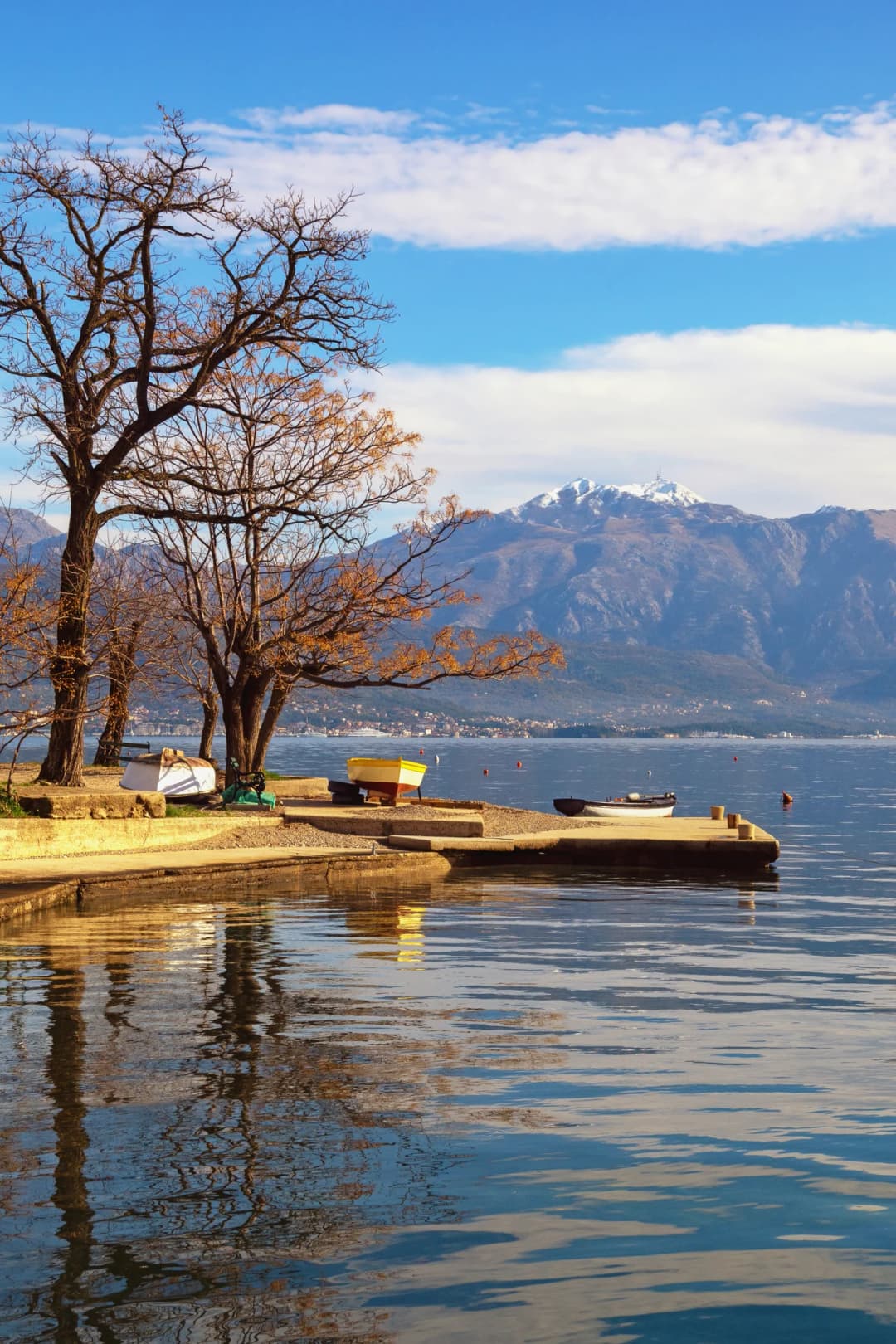
The inherited article described sandy beaches as if the whole coast had one surface. The licensed Đenovići image shows a more typical small-scale edge: a compact bathing area, boats, hard waterfront and houses close behind. Elsewhere along this part of the bay, pebble sections, concrete platforms, private-looking frontages and short public approaches can sit close together. Beach composition can also change after maintenance and winter weather.
Use the official Morsko Dobro bathing-water portal before swimming. Filter by Herceg Novi municipality, then select the named beach, season and latest test. A good result belongs to that sample and date. It is not proof about an unsampled ladder, a harbour corner, water immediately after heavy rain, or a place where boats are manoeuvring.
For a safer beach choice, make three checks together:
Legal and physical access: use a signed or clearly public approach; do not cross a restaurant terrace or accommodation yard because a map shows blue water.
Operating conditions: look for the latest quality result, local notices, wind, runoff and vessel activity.
Your entry needs: inspect steps, handrails, depth change, shade and the return route before committing.
Small does not mean bad, and engineered does not mean accessible. A concrete platform may offer a stable surface but only a ladder entry. A pebble strip may be easier at the waterline but difficult for wheels. No reviewed source establishes a universal step-free standard for Đenovići’s shore.
A beach name is only the first check
Check
What to confirm
Also confirm
ACCESS
public approach
safe surface
SAMPLE
matching beach
latest test
ENTRY
depth / ladder
boats / weather
One failed check is enough to choose another entry.
Stoli: a legend with an evidence boundary
Herceg Novi Municipality’s riviera overview uses careful language: according to legend, Đenovići was connected with the Greco-Roman settlement Stoli, which sank after an earthquake. It also says Stoli remains the name of a locality on the western shore and that the form Gioneoevich appears in Venetian documents. That page proves a civic narrative and a place-name tradition. It does not establish coordinates, a destruction date or a catalogued submerged city.
A 2019 article in the Chamber of Engineers journal is more explicit. Its author calls Stoli a location-lost Roman-period place on the cadastral boundary of Kumbor and Đenovići, describes the history as unreliable and the locality as unresearched, and argues that military isolation helped create the legend. The article discusses later subsidence and reused material, but it is not a modern underwater excavation report.
Stoli: keep each claim on its evidence level
Evidence level
Claim
DOCUMENTED
Stoli survives as a locality name; the sunken-town story is recorded as legend.
PROFESSIONAL CAUTION
A 2019 review calls the place location-lost, historically uncertain and unresearched.
HYPOTHESIS
Ancient occupation, reused material and later subsidence deserve targeted study.
NOT ESTABLISHED
A mapped sunken city, certain wall dates or a proven Domitian findspot.
Municipality and Chamber of Engineers sources, reviewed 30 Aug 2026.
The old article went further, asserting that geometric walls visible underwater were certainly once above sea level and that a marble head of Emperor Domitian was found at Stoli and is now viewable in a Kotor lapidarium. The reviewed municipal protection study does not identify a Stoli underwater property, and no current museum collection page was found that verifies that provenance and display status. Those statements therefore do not survive as facts here.
This does not “debunk” local memory. It restores its category. Visitors can learn the Stoli story as tradition without touching, moving or collecting underwater material. If archaeological evidence is encountered, photograph it in place only where lawful, retain location information and report it to the relevant heritage authority; do not convert curiosity into an unsupervised dive or souvenir hunt.
The church landscape: four dates, one important conflict
The municipality’s church inventory lists four Đenovići entries: St Simeon from the sixteenth century with an archaic cemetery, St Stephen as 1870, St Spiridon as 1870–1910, and St Nicholas as sixteenth–seventeenth century. The same page says its inventory and map come from Lazar Seferović’s book, so these are attributed catalogue dates rather than fresh building surveys.
The municipality’s 2018 cultural-property protection study gives a different account of St Stephen. On PDF page 99 it records a protection decision from 25 November 1957, dates the church to the eighteenth century, and describes the building, grave-slab-covered plateau and protected surroundings. It also says the church was in poor condition and threatened by collapse at the time of study.
The conflict should remain visible. “1870” may refer to a later construction, rebuilding or a different source tradition, but the reviewed documents do not reconcile it. Nor can the 2018 condition statement be promoted to a 2026 inspection. The practical conclusion is conservative: treat St Stephen as a protected hillside cultural property, check current access locally and do not lean on masonry, cross grave slabs casually or enter a building merely because a map pin exists.
Catalogue dates are not all the same kind of evidence
Church
Dating
St Simeon
16th c.
St Nicholas
16th–17th c.
St Stephen
inventory: 1870 / study: 18th c.
St Spiridon
1870–1910
Keep the St Stephen disagreement visible; verify current access separately.
The same study identifies a ruined St Elijah church site above St Stephen, says it was incorrectly registered as St Ivan, and describes only foundation-zone remains. Tradition supplies much of its chronology. That is a heritage location, not an advertised attraction with staffed access or a maintained trail.
A twentieth-century memory route on the waterfront
Đenovići also carries a history that is neither ancient nor picturesque. A tourism-organisation account of the annual commemoration places the 1918 sailors’ mutiny at the Vranković house and records a route involving the house, a plaque on the local-community building and a wreath laid at sea. The event report documents how the village remembers the revolt; it is not a complete history of the Austro-Hungarian naval uprising.
The municipal protection study separately records a protected memorial fountain beside St Spiridon and a memorial plaque on the cultural centre. Together these show why a waterfront walk should not be reduced to beaches and restaurants. Everyday buildings, a church precinct, the pier and the water itself form a memory landscape.
The waterfront is also a memory route
Stop
Marker
Vranković
house
Community
building plaque
Wreath
placed at sea
Memorial fountain
by St Spiridon
Event account documents the route; protection study documents the memorial properties.
Neighbouring Kumbor, immediately west of Đenovići, shows the riviera’s compressed geography of waterfront, settlement and steep mountain backdrop. It is contextual, not an image of Đenovići.
Getting around without copying a timetable
Đenovići lies on the main riviera corridor, but a route that looks linear on a map still has two very different layers: the through road and the lower waterfront streets. Bus stops belong to the road network; beach access and restaurants may sit below it. Confirm which side of the road serves your direction and allow time to cross safely.
Blue Line’s Herceg Novi transport page publishes urban and suburban timetable images plus current operator contacts. Separately, Montenegro’s March 2026 transport-licence register lists Blue Line for passenger transport through 6 February 2027. The ministry record verifies the operator context, not one immutable departure. Check the current schedule image, weekday category, direction and stop with the operator on the day.
For driving, ask whether accommodation parking is on-site, reserved and reachable without a tight final turn. The municipality recorded a 2026 contract for the lower road in Đenovići and another for the community-centre roof. Procurement records do not prove that work is active on your date, but they are a reminder that access can change. Check current municipal traffic notices instead of assuming an old street photo is operational evidence.
How Đenovići stacks up from the water
Level
What is there
BAY
—
LOWER WATERFRONT
—
MAIN ROAD + BUS STOPS
—
SIDE STREETS RISE
rooms / churches / steps
Conceptual planning diagram—not a measured elevation profile.
Four checks beat one perfect itinerary
Check
Confirm
Confirm
Confirm
1 ROUTE
stop side
steps / slope
road notice
2 SHORE
named beach
latest sample
boat activity
3 RETURN
current schedule
last practical bus
fallback taxi
4 STAY
guest registration
tax receipt
host contact
If one check fails, change the plan—not the evidence. Operator, tourism office and Morsko Dobro sources reviewed 30 Aug 2026.
Practical visitor administration and seasonal information
What the sources say
The Herceg Novi Tourism Organisation’s current information page lists a seasonal bureau at the Đenovići local community from 1 June to 1 October. It says visitors must register residence within 24 hours of entering Montenegro; when a visitor stays in registered private accommodation or a hotel, the provider must do this within 12 hours of arrival. A later app-obligations block on the same page says providers register a guest stay within 24 hours, so the safest reading is to follow the stricter 12-hour deadline and ask for confirmation. An online booking alone is not proof of registration.
The page currently publishes an adult residence tax of €1 per person per night, €0.50 for ages 12–18 and an exemption under 12. These are current figures, not timeless copy. Recheck the official page for your stay, particularly if the booking spans a new season or local decision.
Events: date them or lose them
Đenovići participates in the cultural life of the wider riviera. In 2026, the tourism organisation scheduled the Caravan of Festivities to begin at Vojvodić pier on 3 July. That is a useful historical record of the pier as a community-event space. It is not evidence that the event recurs on 3 July every year.
Winter connects the village with the Mimosa Festival corridor. For the sourced flower, programme traditions and current-event caveats, use the dedicated Mimosa Festival evidence guide. A travel article should never convert an earlier parade route into next year’s programme.
Boat trips: choose a destination, then verify a licensed departure
Legacy copy promised boats from Đenovići to Rose, Žanjice, the Blue Cave, Mamula, Perast and Kotor as if all routes operated regularly. No reviewed 2026 source establishes that complete departure network from Đenovići. Boats may be advertised seasonally, privately or from neighbouring points, but the operator, vessel, weather plan, boarding point and return must be checked for the day.
Use destination guides to judge the trip before buying it: read the small-harbour context for Rose, the entry and safety rules in the Blue Cave guide, and the access evidence for the boat-only Dobreč cove. For a longer cross-bay day, the Miholjska Prevlaka history helps distinguish a meaningful destination from a checklist stop.
Before paying, ask for the operator name, exact boarding pin, passenger capacity, safety equipment, cave-entry policy, swim stops, return time and cancellation/refund rule. Weather or harbour conditions can make a changed route the responsible outcome.
Portonovi in neighbouring Kumbor is a different waterfront environment from village-scale Đenovići. Proximity does not make its marina, services or access rules interchangeable with Đenovići.
A responsible half-day on foot
Start on the lower waterfront only after checking whether road or event notices affect it. Read the Vojvodić pier and local-community area as civic space, not simply a photo stop. Continue along public passages, noting the changing relationship between bathing edges, boats and homes. Do not assume every waterside strip is continuous or public.
If you climb toward church sites, carry water, use footwear suited to steep surfaces and turn back where access becomes unclear. St Stephen’s protected setting includes grave slabs, while the St Elijah ruins are not a maintained visitor attraction. Respect worship, funerals and private property. A closed door is not evidence of neglect, and a ruin is not permission to climb.
For a longer, flatter urban promenade, use the Five Danicas story before heading west toward Herceg Novi. The named Pet Danica promenade itself runs in the urban section from Igalo to Meljine; it should not be casually extended in wording to cover every riviera waterfront eastward. For a quieter comparison on the approach to town, the Zelenika guide explains another working bay settlement.
Who Đenovići suits—and who should check twice
Good fit: travellers comfortable with a small settlement, mixed waterfront surfaces, self-directed planning and live transport checks.
Check the exact property: anyone needing step-free access, guaranteed parking, a large sandy beach, silence, or a staffed attraction within a short flat walk.
Use a different base if essential: you need a major bus terminal, a broad continuous promenade immediately outside, or a fixed daily excursion programme.
The strongest reason to stay is not that Đenovići supplies everything. It is that it makes the riviera legible at village scale: shore, road, hillside, memory and neighbouring development all remain close enough to compare.
History & Heritage
Djenovici's history is typical of the smaller settlements along the Bay of Kotor — a story of maritime families, stone houses built to last centuries, and a life shaped by the sea. The village's name may derive from the Slavic personal name "Djenov," suggesting it was originally the settlement of a founding family, a common naming pattern in the Boka Kotorska.
During the Venetian Republic's long rule over the bay (1420–1797), Djenovici developed as a settlement of fishermen and minor maritime traders. While the village never achieved the commercial significance of larger bay settlements like Perast or Kotor, its families participated in the broader maritime economy that made the Boka Kotorska one of the most important seafaring regions on the Adriatic. The captain's houses that survive along the waterfront — distinguished by their carved stone doorways, green-shuttered windows, and family crests — testify to the modest but genuine prosperity that maritime trade brought to even the smallest communities.
The Austro-Hungarian period (1797–1918) brought modernisation to the bay, including improved roads, telegraph communications, and the development of a naval infrastructure centred on the dockyards at nearby Bijela. Djenovici benefited from its proximity to these developments while maintaining its residential character. The village church was restored during this period, and several new houses were built in a style that blended traditional Boka Kotorska elements with modest Austrian influences.
The small marina in Djenovici, though informal by modern standards, continues a centuries-old tradition of boat moorings along this stretch of shore. Fishing boats and small pleasure craft bob at anchor just offshore, creating the kind of working maritime scene that has characterised the village for generations. The transition from working fishing village to a place that also welcomes visitors has been gradual and organic, which is why Djenovici retains its authentic character.
Quick answers
When is the best time to visit DjenovićI?+
The best time to visit Djenovici is from May to October , when the weather is warm and the sea temperature is comfortable for swimming. July and August are the hottest months, with temperatures often exceeding 30°C and the sea reaching a bathtub-warm 25–26°C.
Djenovici lies approximately 5 km southeast of Herceg Novi's Old Town along the coastal road (M2). From Tivat Airport , the closest international airport, the drive takes about 25 minutes via the Bay of Kotor coastal road.
Đenovići lies on the main riviera corridor, but a route that looks linear on a map still has two very different layers: the through road and the lower waterfront streets. Bus stops belong to the road network; beach access and restaurants may sit below it.
Konoba Feral , located on the waterfront, is a beloved local seafood restaurant known for grilled fish, black risotto, and octopus salad prepared in the traditional Boka style. Dining on the terrace with views across the bay is one of the great simple pleasures of a visit to Djenovici.
Djenovici offers a selection of apartments and holiday homes, many in traditional stone buildings with modern interiors. With approximately 8 properties available on montenegro.com , visitors can choose from waterfront apartments with sea views to hillside retreats with private terraces overlooking the bay.
Pavle Obradović is from Herceg Novi. He was Manager of Montenegro.com, then Director of the Herceg Novi Tourism Organization, and is now Coordinator for Investment and Development Projects at the Municipality of Herceg Novi. He holds a BSc in International Hospitality and Service Management from the Rochester Institute of Technology (RIT).
···
Updated · Originally published
Montenegro Travel Newsletter
Get weekly stories, guides, and insider tips about Montenegro delivered to your inbox.