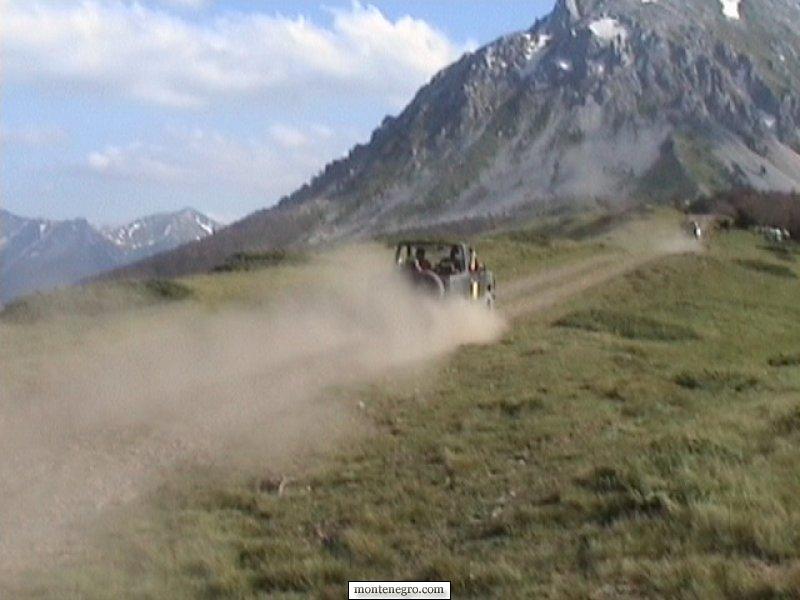
Montenegro Trophy is a Nikšić-based jeep rally built around mountain travel, road-book orientation and a final skills course—not a conventional flat-out speed rally. A published programme announced the 26th edition for 3–5 July 2026, with a three-day route from Montenegro’s central highlands to Gusinje. Stefan Radošević’s 2004 travelogue provides a participant’s view of the fifth edition.
The 2004 account records the terrain, route impressions and competition details of that edition. Later reports show how the event evolved, while future entrants must obtain current routes, fees, deadlines, vehicle rules and scoring directly from the organiser. Historic tracks are context, not a GPX itinerary or permission to drive off-road independently.
Montenegro Trophy at a glance
| Question | Published answer | What must be rechecked |
|---|---|---|
| What is it? | A sports-tourism off-road caravan combining a route-book orientation section with a skills course. | Current classes, scoring and whether a touring-only option is offered. |
| Where is it based? | The event traditionally starts in Nikšić, but its route changes and has crossed many municipalities. | The exact start, overnight stops and finish for the next edition. |
| How old is it? | A 2007 Government archive says it was established in 2000. Later organiser-linked reports say activity began in 1999. | The reason for the one-year difference remains unresolved. |
| Which edition was announced in 2026? | The 26th, scheduled for 3–5 July 2026. | The announcement is not a complete post-event result record. |
| Is it a speed rally? | No. Dated reports describe target average speed, target arrival times and penalties, followed by a controlled skills course. | Never transfer one year’s penalties or course rules to another year. |
| Can visitors copy the route? | No. An old rally route is not a public self-drive trail. | Access, protected-area rules, landowner permission, weather and road condition. |
A Government of Montenegro archive notice for the 2007 event calls Montenegro Trophy a tourist-sport manifestation, says it was established in 2000, identifies 2007 as the eighth edition, and describes its purpose as promoting lesser-known landscapes alongside competition in driving skill. These details describe the 2007 event; current rules require a new dated notice.
What the rally is—and what it is not
“Rally” can suggest a closed special stage where the fastest elapsed time wins. Montenegro Trophy’s published format is different. Crews travel in a supported caravan, navigate with a road book and try to maintain a specified average speed between controls. Arriving early can be as wrong as arriving late. A separate obstacle or skills course then tests vehicle placement and control. Organiser Ratko Perošević explained in 2024 that orientation and skills points were added for the general classification.
That makes the co-driver more than a passenger. The crew must interpret instructions, watch time and distance, recognize turns, and help the driver resist the urge to “make up time” unsafely. The touring dimension is equally important: routes are designed to show participants places away from the standard north–south road trip, with community welcomes, meals and overnight stops woven into the programme.
| Element | What it covers |
|---|---|
| Road-book orientation | target average speed; target arrival time |
| Skills course | vehicle placement; controlled obstacles |
| General classification | orientation points plus skills result |
Source: vijesti.me, rtnk.me
It also means this is not the Finnish Montenegro Off Road Club, Yamaha’s Ténéré Travel Trophy, an athletics meeting, a poker tournament or any other event that appears under similar search terms. The subject here is the Nikšić-based organisation and its Montenegro Trophy jeep/off-road rally in Montenegro.
| Year | Source | Marker |
|---|---|---|
| 2000 | Government archive | established |
| 2004 | archive report | 5th edition |
| 2007 | Government notice | 8th edition |
| 2025 | anniversary event | 25 years |
| 2026 | published programme | 26th edition |
| Unresolved wording conflict | Some later organiser-linked coverage says “since 1999” | its meaning is not defined |
Source: gov.me, rtnk.me, onogost.me
The fifth rally: what Stefan Radošević recorded in 2004
Stefan Radošević of Podgorica submitted his participant travelogue in August 2004. It records the names, route impressions and scoring details that caught his attention, but it is not a formal results bulletin. Some people appear only by surname, and some place details are approximate.
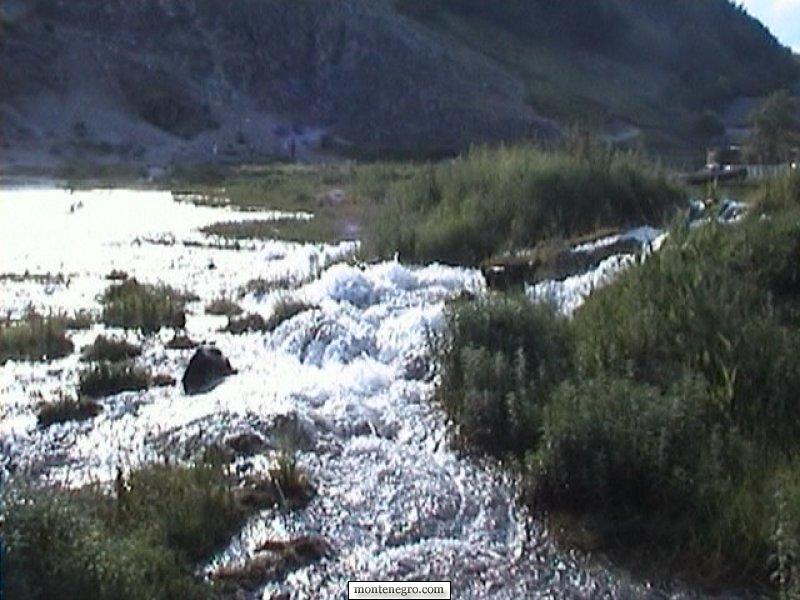
Radošević begins with terrain rather than administration: steep descents, sharp bends, roads cut into slopes, open valleys and fast water. The first engines were heard in Nikšić. From there, he says, the opening stage crossed Sinjajevina and Maganik on the way to Berane, where the caravan stayed overnight. For a modern sense of the start city—not a rally route—use the Nikšić travel guide.
| Step | Area |
|---|---|
| 1 | Nikšić |
| 2 | Sinjajevina and Maganik |
| 3 | Berane |
| 4 | Plav, Komovi and Prokletije |
| 5 | Ali Pasha Springs near Gusinje |
| Note | Control coordinates and connecting tracks are not provided. |
Source: montenegro.com
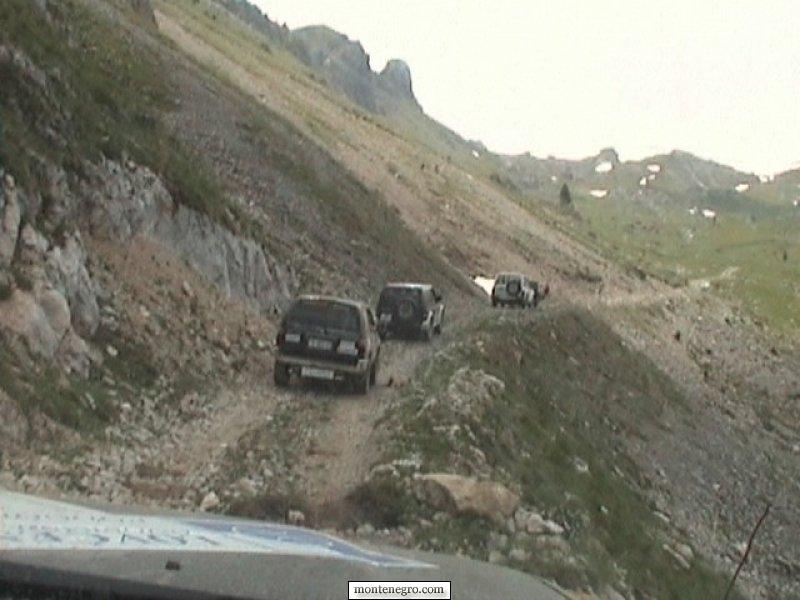
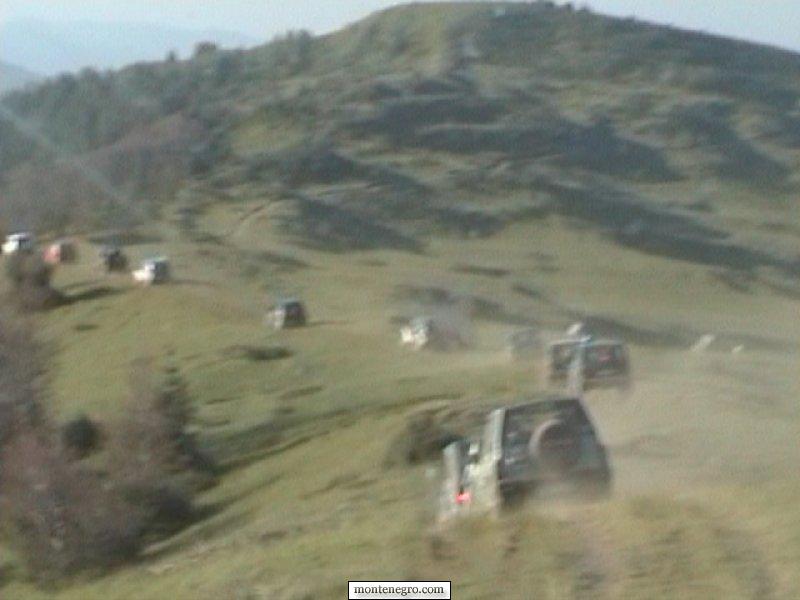
The second day moved to Plav, where residents welcomed the caravan and the town’s mayor spoke before the route continued through the Komovi and Prokletije areas. Radošević writes that some crews stopped to photograph the scenery and that the stage ended near the meeting area of Montenegro, Kosovo and Albania, where local hosts served cheese, kačamak, sour milk and sandwiches.
That description should be read as a 2004 memory, not precise border guidance. The official road crossing between Plav and Albania is Grnčar–Baškim; being near a frontier does not authorize a crossing on a mountain track. Travellers planning a legal onward journey should use the current Montenegro-to-Albania guide and verify the open border point and documents before departure.
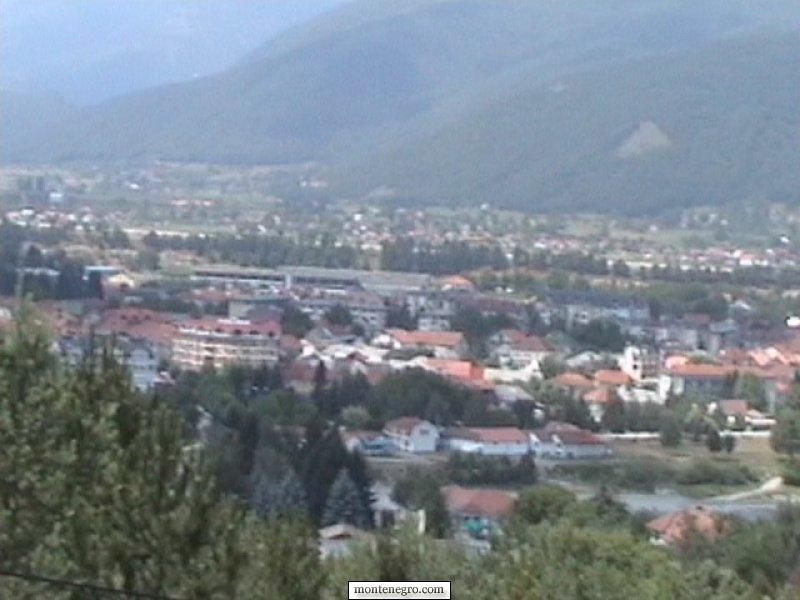
Back in Berane, the report turns to the orientation test. Crews had to cover specified road sections in a target time and were penalised for crossing the finish either early or late. In that edition, Radošević records 20 penalty points for every second away from the target. The next day’s skills test included “wooden steps”; knocking one down added a five-second penalty. These numbers belong to the fifth rally only. Later coverage confirms the same broad two-part concept, but not the permanence of those exact penalties.
| Test | Penalty | Applies to |
|---|---|---|
| Orientation | 20 points | for every second early or late |
| Skills course | +5 seconds | for each wooden step knocked down |
| Caution | Do not use these values without the current edition rulebook. |
Source: montenegro.com
2004 archive results
| Classification | First | Second | Third |
|---|---|---|---|
| Orientation | Goran Mugoša | Sandro Tatar | Ivanovic |
| Skills | Stanišić | Krivokapić | Zeković |
| Overall | Goran Mugoša | Sandro Tatar | Radmila Bolstrom, Sweden |
The spellings follow the 2004 participant account. “Ivanovic” appears without a first name or diacritic, while “Bolstrom” may be an anglicised or incomplete rendering. The account does not include a separate official classification sheet.

Radošević ends with a prediction: the rally could become part of Montenegro’s tourism offer, noting participants from Sweden, Serbia and Italy. On the way home, the group stopped at Ali Pasha Springs near Gusinje, a place then unfamiliar to him. Later editions repeatedly combine international crews, remote landscapes and local hospitality, so the prediction reads less like promotional hope and more like an early description of the event’s durable model.
..gdje_su_nam_priredili_docek.jpg)
How the event evolved after 2004
Dated reports show continuity in format but deliberate change in geography. The 21st summer rally in 2021 covered about 350 kilometres and brought 30 crews and roughly 80 participants through Nikšić, Šavnik, Žabljak, Mojkovac, Bijelo Polje and Pljevlja. A 2022 report put more than 100 participants on a Nikšić-to-Plav route, with the skills event in Gusinje and visits around Ali Pasha Springs and Grlja.
In 2024, about 40 teams travelled roughly 300 kilometres through central and southern Montenegro. Coverage described two days following a road book, using target average speed and arrival time, followed by the skills course. That year’s organiser preview explicitly emphasized the tourism component and said the caravan would be accompanied by police, medical personnel and a mechanic. These are event-specific arrangements, not services an independent visitor should assume are present on the same roads.
The October 2025 anniversary event returned the spotlight to the Nikšić hinterland. RTNK recorded 40 crews, about 120 participants and close to 130 kilometres via Župa, Maganik, Lukavica, Kapetanovo Lake, Vučje, Ivanje and Orah. The skills test used separate long- and short-vehicle categories. RTCG reported a rounded 120-kilometre figure. Neither distance supplies navigation or public access permission.
| Year | Published scale | Recorded route or focus | Publication type |
|---|---|---|---|
| 2004 | 5th edition; no complete crew count in the account | Nikšić–Sinjajevina–Maganik–Berane, then Plav, Komovi/Prokletije area and Gusinje | Participant travelogue. |
| 2021 | 30 crews, about 80 people, about 350 km | Nikšić through six northern municipalities | Post-event news report. |
| 2022 | More than 100 participants; 178 km reported for the first leg | Nikšić to Plav, then Gusinje area | Reports covering different portions. |
| 2024 | About 40 teams, about 300 km | Nikšić, Cetinje and Bar municipalities | Preview and post-event coverage. |
| 2025 | 40 crews, about 120 people, 120–130 km | Nikšić hinterland and two skills classes | Post-event reports. |
| 2026 | 26th edition announced | Lola, Sinjajevina, Mojkovac, Bjelasica, Andrijevica, Plav, Gusinje and Vusanje | Pre-event programme. |
The published 2026 programme
Onogošt published a programme on 18 June 2026 for the 26th rally on 3–5 July. Day one was planned for roughly 200 kilometres: across Lola and Sinjajevina to lunch in Mojkovac, then over Bjelasica to an overnight stop in Andrijevica. Day two was listed at about 70 kilometres through Banje and Piševo, Murino and Plav to Gusinje, with an overnight in Vusanje. A skills course beside the Grnčar River, lunch and awards were scheduled for day three.
| Day | Distance | Route | Overnight |
|---|---|---|---|
| Day 1 | ≈200 km | Lola → Sinjajevina; Mojkovac lunch; Bjelasica → Andrijevica | Andrijevica |
| Day 2 | ≈70 km | Banje and Piševo; Murino → Plav → Gusinje; finish toward Vusanje | Vusanje |
| Day 3 | No route distance published | Skills: course beside Grnčar; ceremonial lunch; awards | — |
| Note | Schedules can change with weather, access and operations. |
Source: onogost.me
The same notice set a 25 June registration deadline and a €220 participant fee, with age-based terms for children. Those details applied only to that edition. Use a new dated organiser notice for registration contacts, prices, eligibility and child-safety terms.
The 2026 route above is the published pre-event programme. Weather, access or operational decisions can change a mountain event after its schedule is announced.
Practical entry decision: should you enter?
Montenegro Trophy suits a crew that values navigation, long social days and mountain scenery as much as the obstacle course. It is a poor fit for anyone seeking an independent trail download, a rental-car shortcut or a licence to drive anywhere a four-wheel drive can physically reach. Before paying, ask the organiser one consolidated set of questions and keep the answers with the edition notice.
- Confirm the class. Ask whether your crew is entering the scored orientation-and-skills competition, a touring class, or another category. Request the current rulebook and clarify tie-breaks and penalties.
- Confirm vehicle eligibility. Give the exact make, model, year, dimensions, fuel type and modifications. Ask about road registration, inspection, insurance, tyre requirements, recovery points and any long/short vehicle division.
- Confirm crew eligibility. Provide the driver’s licence category and ask about co-drivers, additional passengers, minimum ages, child restraints and passenger changes. A past child fee does not answer safety or eligibility.
- Confirm navigation equipment. Ask whether the road book is paper or digital, how distance is measured, whether a trip meter is required, when the briefing occurs and what language support exists.
- Confirm the package. Establish what the fee includes: meals, lodging, local taxes, recovery, mechanical support, medical cover, awards and passenger costs. Ask what happens after cancellation or route shortening.
- Confirm communications. Ask about mobile dead zones, radio requirements, emergency procedure, sweep vehicle, convoy spacing and the process for retiring from a stage.
- Confirm international paperwork. If the event crosses a national border, require the official crossing point, passport and vehicle-document instructions in writing. A route “near” a border is not a crossing.
| Gate | Check |
|---|---|
| 1. Current edition | dated notice and rulebook |
| 2. Eligibility | vehicle, driver, crew and passengers |
| 3. Package | fee, lodging, recovery and refunds |
| 4. Safety | briefing, radio, medical and retirement |
| Note | An old fee or route announcement fails gate 1 automatically. |
Source: vijesti.me, onogost.me
For travellers combining the event with a broader holiday, the seven-day Montenegro itinerary helps distinguish ordinary public-road stages from organiser-only terrain. The Montenegro hiking guide offers legal, lower-impact ways to experience mountain landscapes when participation is not the right fit.
Vehicle and recovery preparation
A suitable badge on the tailgate is not preparation. Have a competent mechanic inspect tyres—including the spare—brakes, steering, suspension, cooling, battery mounting, lights and fluid leaks. Verify that front and rear recovery points are designed for recovery loads. Ask the organiser what straps, shackles, jack, compressor, tyre-repair equipment, extinguishers and first-aid equipment are mandatory, and how loose items must be secured.
Fuel planning should come from the current route manager. A distance figure alone does not reveal low-range consumption, idling, detours or station availability. Carry drinking water, food for an unexpected delay, sun protection, insulating layers, rain protection and personal medication. Offline maps are useful for situational awareness, but they do not replace the road book or create access rights.
Every crew should agree on stop conditions before the start: rising engine temperature, loss of braking, steering damage, tyre sidewall failure, an unsecured passenger, poor visibility, fatigue, or an instruction from marshals. The sporting penalty for stopping is less important than avoiding a rescue.
| Layer | Items |
|---|---|
| Roadworthiness | tyres · brakes · steering · cooling · no leaks |
| Recovery | rated points · organiser-specified kit · secure loads |
| Crew | water · layers · medication · navigation backup |
| Before start | Stop rules agreed before start |
Source: rtnk.me, vijesti.me
Safety, emergency and environmental rules
Use the organiser’s chain of command first during an active stage. For a genuine emergency in Montenegro, call 112. The Ministry of the Interior states that 112 operates nationwide, around the clock, and coordinates medical, police, fire and search-and-rescue services. Give the road-book position, last confirmed control, direction of travel, GPS coordinates if available, number of people and nature of the hazard. Do not leave an injured person merely to chase a stronger signal unless the dispatcher or event safety plan requires it.
| Step | Action |
|---|---|
| 1. Stop safely | protect people and scene |
| 2. Use event plan | marshal, radio or control contact |
| 3. Call 112 | for genuine emergency |
| 4. Report | position · people · hazard · access |
| Note | Last control + direction + road-book position can be as important as GPS. |
Source: gov.me
AMSCG’s public-road help and information number is 19807, but ordinary roadside assistance may not recover a vehicle from an organiser-only mountain track. Confirm recovery coverage and payment before the event. Tell someone outside the vehicle your edition, crew names and expected finish; do not rely on public live tracking unless the organiser explicitly provides it.
Protected landscapes impose real limits. National Parks of Montenegro says ATV and motocross use is prohibited outside categorised roads in national parks and identifies off-road vehicle activity as a biodiversity and visitor-safety concern. Its visitor rules also prohibit fire outside designated places, littering and disturbing wildlife. A professionally organised rally may operate under permissions and controls that do not transfer to spectators or later visitors.
- Stay on the authorised event line; never widen a track to pass mud or another vehicle.
- Reduce speed near homes, katuns, livestock, walkers and cyclists. Dust and noise affect working landscapes.
- Avoid wheelspin. If the vehicle cannot progress without digging, stop and use the recovery plan.
- Pack out all waste and report any fuel, oil or coolant spill immediately.
- Do not light fires, discard smoking material or park over dry vegetation.
- Do not publish sensitive shortcut tracks as public “off-road routes.”
- Yield to marshals, residents and emergency vehicles even when timing is being scored.
The landscape is not a disposable obstacle. The event’s stated tourism mission only works if the villages, water, pasture and forest it promotes are left in better condition than an unmanaged convoy would leave them.
Watching without joining the convoy
Do not follow the caravan in a separate vehicle, park on an access track, stand below a loose slope or enter the skills course without instruction. Spectators should use only a publicly announced viewing area and marshal-controlled approach. The final skills course is often the easiest component to watch, but its site changes: verify the date, public access, parking and safe boundary in the current announcement.
If no spectator information is published, experience the destination independently on public roads and maintained trails instead. Plav, Gusinje and Ali Pasha Springs do not require a rally to reward a visit. Build extra days around the towns rather than trying to intercept the convoy.
Building a responsible rally trip
Nikšić is the traditional organisational anchor, while Plav and Gusinje are recurring eastern destinations. Podgorica can work as an international arrival base before transferring to Nikšić; compare practical districts in the Podgorica accommodation guide. Do not schedule a flight, long coastal drive or border crossing immediately after the nominal finish: awards, recovery and mountain delays can extend the day.
For a longer stay, use the rally as one dated commitment inside an ordinary itinerary, not as the map for the whole holiday. The case for travelling while small-scale cultural and outdoor events remain accessible is explored in Why Visit Montenegro Now. Remote workers extending beyond a holiday should separately check the current legal position in the digital-nomad visa guide; rally registration has no bearing on immigration status.
FAQ
Is Montenegro Trophy still running?
Yes. A dated 2026 notice announced the 26th edition for 3–5 July 2026. It published a pre-event route, which remained subject to weather, access and operational changes.
When is the next Montenegro Trophy?
No future date should be inferred from old first-week-of-July patterns. Wait for a dated organiser announcement and verify registration, route, class, vehicle rules and package before making non-refundable plans.
Did the rally begin in 1999 or 2000?
The 2007 Government archive says it was established in 2000 and calls that year’s event the eighth. Later organiser-linked reports say “since 1999.” Numbered editions through 2026 align with a 2000 first edition, but dated reports do not explain whether 1999 refers to formation or planning.
Is it a race for fastest time?
Not in the usual special-stage sense. Dated reports describe a road-book orientation test where crews target an average speed and arrival time, then a separate skills course. Ask for the current rulebook because scoring can change.
Can I enter with a rental SUV?
Do not assume so. Rental contracts commonly restrict unpaved or competitive use, and the organiser may impose vehicle and insurance requirements. Obtain written approval from both the rental company and organiser; otherwise use another plan.
Can children participate?
A 2026 announcement included child fee terms but did not define current eligibility or safety requirements. Ask about minimum age, seating position, approved restraints, stage access and the right to withdraw. The driver remains responsible for refusing conditions that are unsuitable for a child.
Can I drive the 2004 or 2026 route myself?
No. Rally routes may cross private, protected, seasonal or organiser-only tracks. Use public roads and official maintained routes unless the current land manager grants access.
What should a co-driver prepare?
Learn the current road-book notation, timekeeping and distance-calibration procedure. Carry the required navigation kit, pencils or backup power, and know the retirement and emergency protocol. Precision and calm matter more than speed.
What number should I call in an emergency?
Call 112 for a genuine emergency in Montenegro. During the rally, also follow the edition safety plan and contact chain. For public-road assistance and traffic information, AMSCG uses 19807; confirm whether and how off-road recovery is covered.