Central Montenegro
Čevo
Ten people live in the village Njegoš called a nest of heroes — the Ozrinići seat in the Katunska nahija, a third of the way along the road from Cetinje to Nikšić.
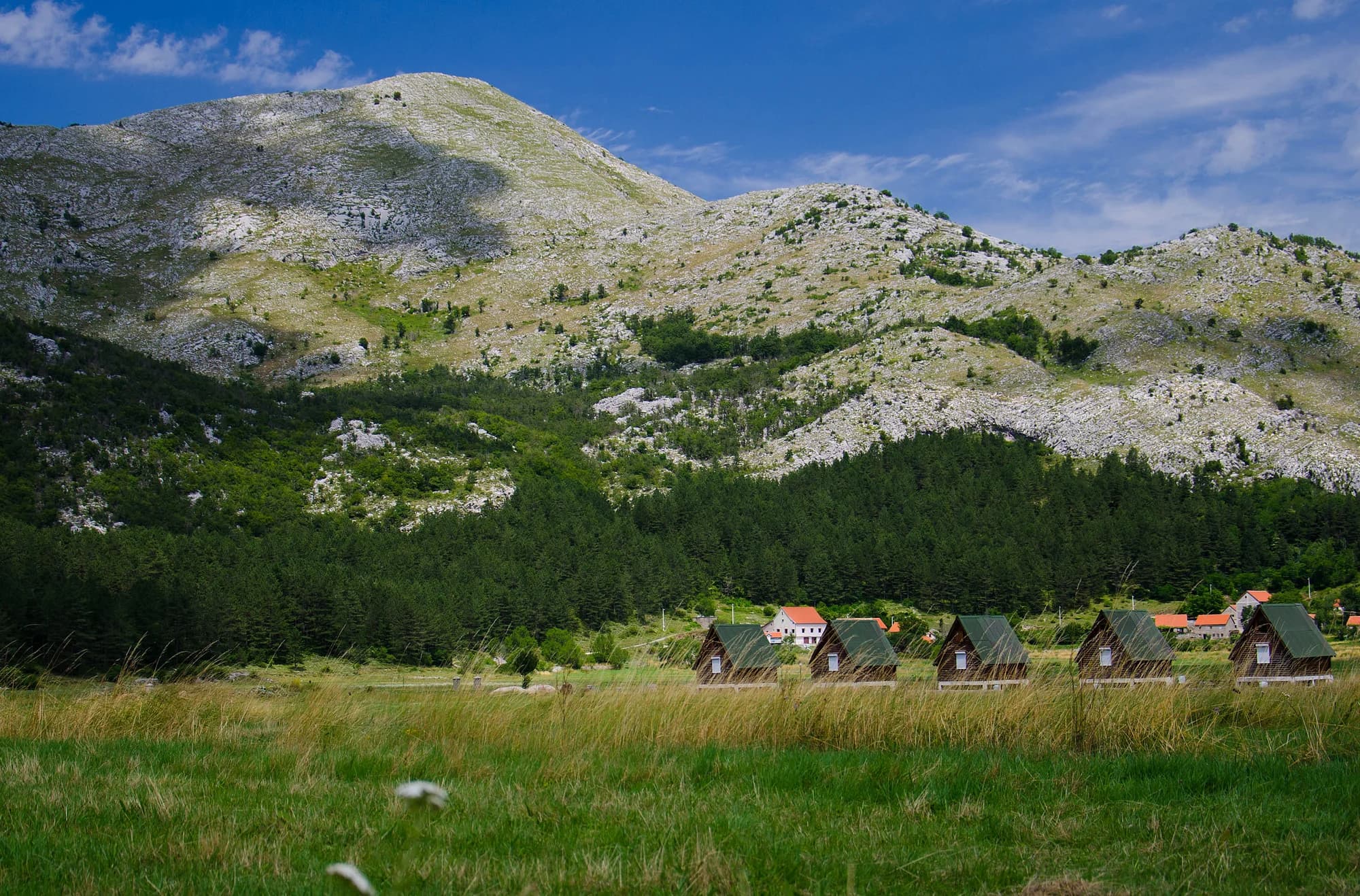
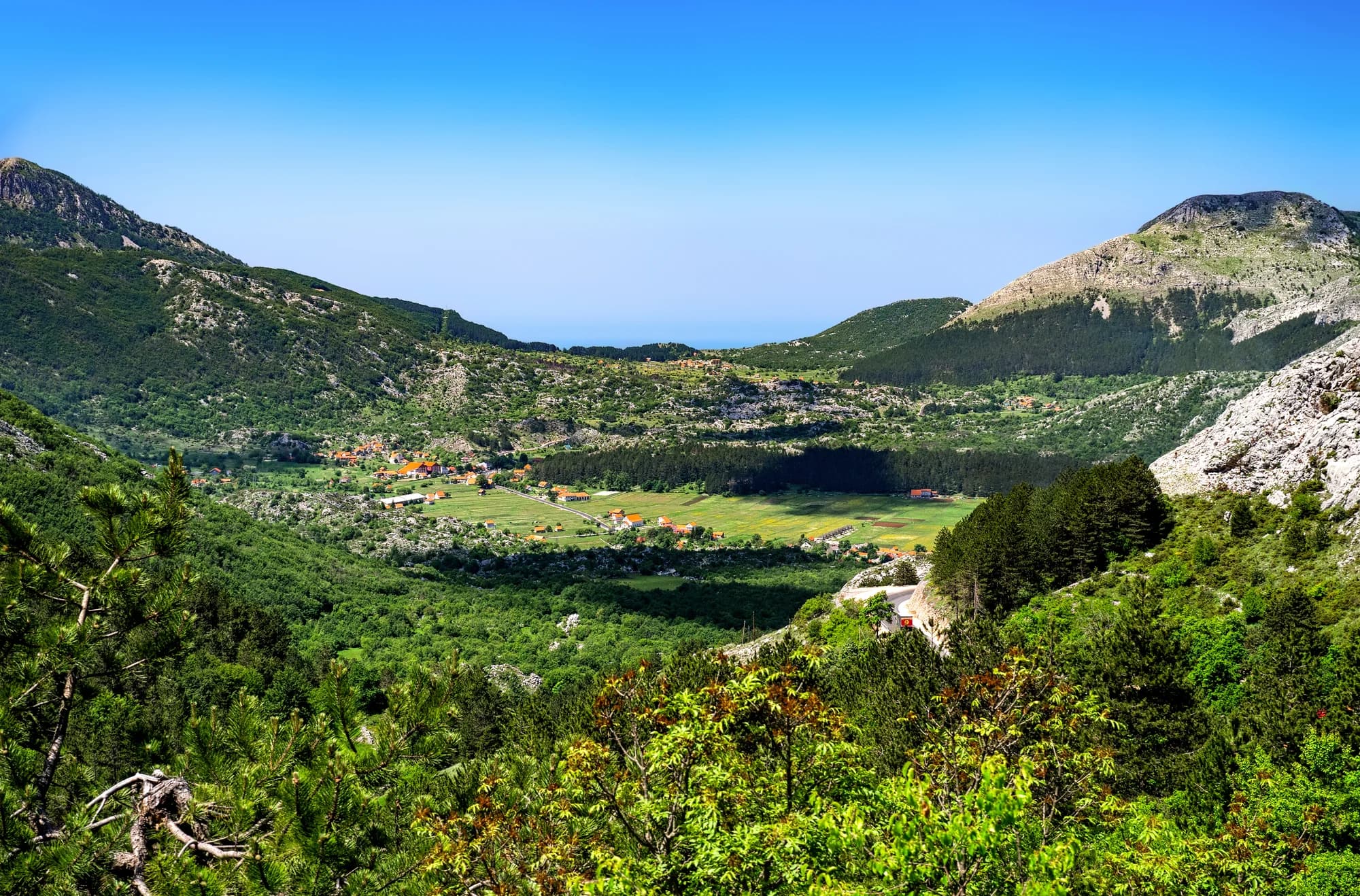
Čevo sits on a high karst plateau in the Old Montenegro heartland between Cetinje and Nikšić, at around 900 metres. It is the historic centre of the Cuce, one of the highland tribes of this region, and the landscape explains a great deal about them: bare grey limestone, sinkholes and shallow poljes, thin soil gathered painstakingly into walled plots, and almost no surface water, since everything drains straight through the rock. Views run for tens of kilometres in every direction, toward Lovćen in one direction and the mountains above Nikšić in the other. This is country that was never comfortable and was never meant to be. Settlement here has always been pastoral — sheep and goats on the karst, stone houses with heavy slab roofs, cisterns for rainwater because there are no wells — and the tribal society that developed on these plateaus supplied much of the manpower and the mythology of Montenegro's long resistance to Ottoman rule. Čevo has been fought over and burned more than once, including during the Second World War, and the memorials and rebuilt houses in the village record that plainly. For visitors, the appeal is the drive and the silence. The roads that cross this plateau between Cetinje, Čevo and Nikšić run for long stretches with no traffic at all through a landscape that looks lunar in summer light and stark under snow. Walking here is open and unmarked, following shepherd tracks between dolines and abandoned katuns. There is very little in the way of services, so fuel, water and food are worth sorting out before setting off. Čevo suits self-sufficient travellers with their own transport — drivers, cyclists and walkers who want empty country and an unvarnished sense of old Montenegro. May to October is the practical window; winters bring heavy snow and roads that can stay closed for days.
The nearest neighbours
Residents by settlement, 2023 census