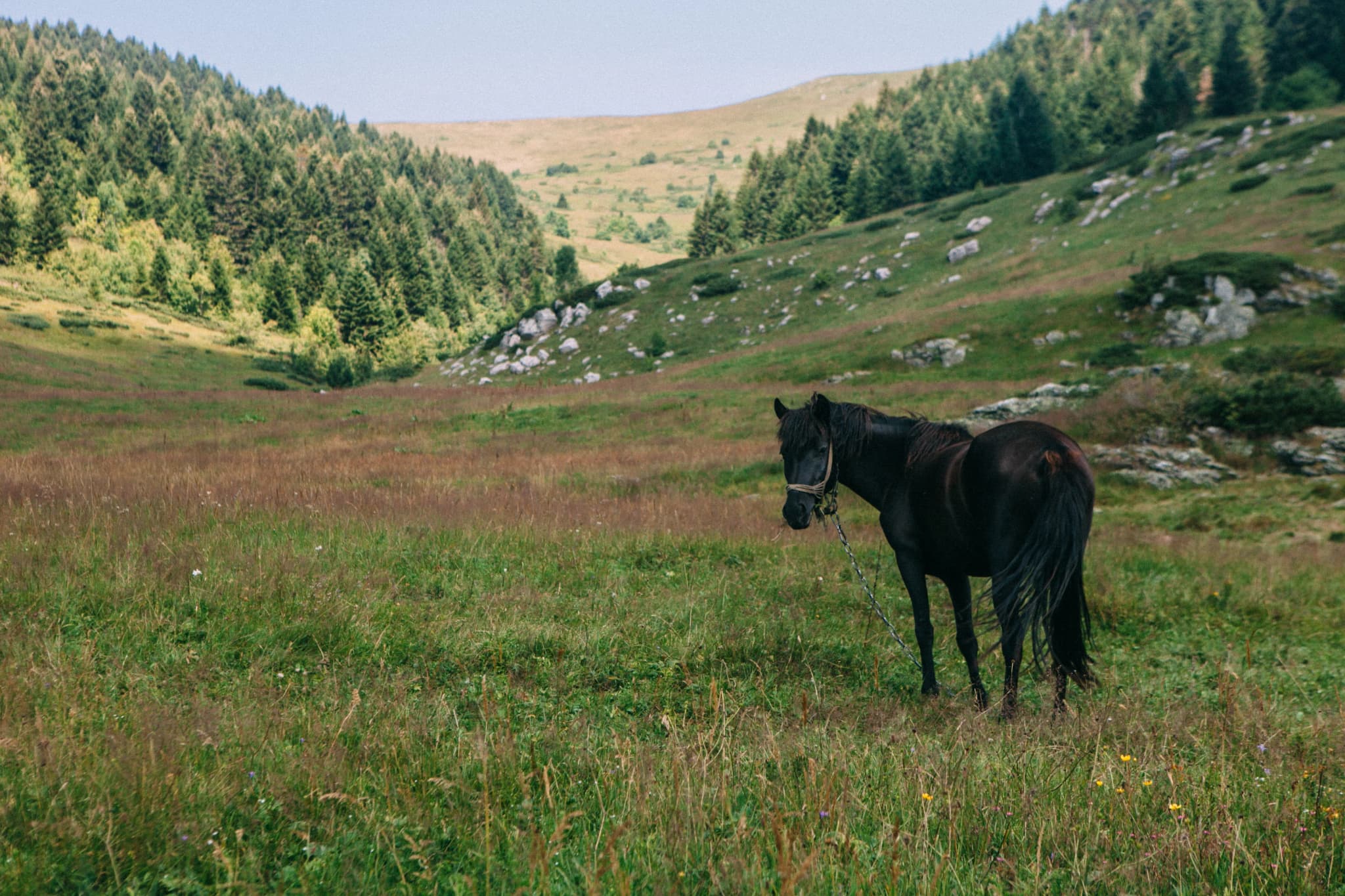
Montenegro is small enough to cross in a few hours and varied enough to fill a month: a fjord-like bay of Venetian towns, a coast that turns from pebble coves to sandy flats, Europe's deepest gorge, a lake of pelicans and monasteries, and a mountain capital that was a royal court until 1916. The hard part is choosing.
These are our 30 picks, grouped by region so you can see what fits together on one trip. Each comes with what it costs, how long it takes and the catch that might change your plans, and each links to the in-depth guide where we have sourced the details.
The short answer
- First visit, one week: Kotor's walls and Perast (1, 3), the Lovćen road to Cetinje (26, 27), Lake Skadar (23) and a beach day at Mogren or Petrovac (8, 10).
- Beaches: the Budva Riviera for coves and town life, Ulcinj and Ada Bojana for long sand and space (8–13).
- Mountains: Durmitor and the Tara Canyon together, two or three nights in Žabljak (15–18).
- Culture: Kotor, Cetinje, Ostrog and Stari Bar (2, 27, 28, 11).
- Biggest caveat: July and August bring the heat, the cruise ships and the queues. June and September are the sweet spot.
Facts checked against our destination guides in October 2026. Prices and opening hours change every season, so confirm them before you go. "Best" here is our editorial judgement, not a ranking.
All 30 at a glance
Bay of Kotor
The Bay of Kotor is a 28 km drowned river canyon of four inner bays, ringed by mountains that rise to 1,895 m at Orjen. Most first trips start here, and most people underestimate how much there is to see.
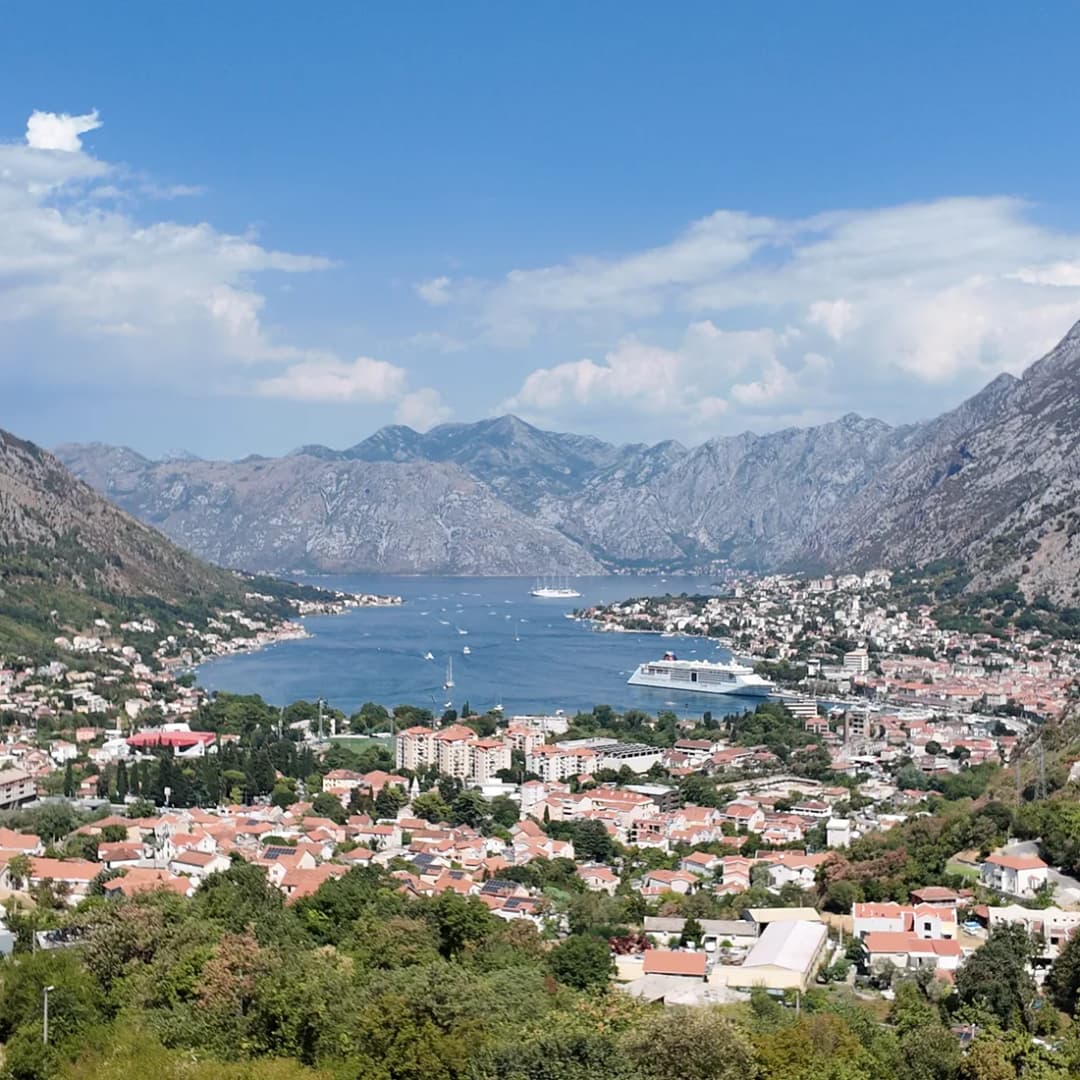
1. Climb Kotor's city walls to San Giovanni
- Where: above Kotor Old Town; entrances at Parilo and Škaljarska pjaca
- Time needed: 1.5–2 hours up and down
- Cost: €15 (the rate set in 2025; check at the booth)
- Best for: the view that sells Montenegro
- Watch out: roughly 1,350 steps with little shade. Booths open 07:00–20:00 from May to September, and being on the walls after 22:00 is prohibited
The fortress of San Giovanni sits about 260 m above the sea, and the walls zigzag up to it for more than 4 km. Go at opening time or in the last two hours before closing: the light is better and the heat is bearable. From December to February the booths close and you climb at your own risk. In May 2026 the town sealed two gun-port gaps people used as free side entrances, so use the official gates. Full detail is in our Kotor walls guide.
2. Wander Kotor Old Town and St Tryphon's Cathedral
- Where: Kotor, about 8 km from Tivat Airport
- Time needed: half a day
- Cost: free to enter; the Maritime Museum is around €4
- Best for: getting lost in Venetian lanes
- Watch out: cruise days. Around 500 ship calls are scheduled for 2026, so arrive before 10am or after 5pm
Venice ruled Kotor from 1420 to 1797, and the town still reads like it: marble squares, palaces and a Sea Gate from the 16th century. St Tryphon's Cathedral was consecrated in 1166 on a church first built in 809, and its twin bell towers came later, in the 17th century. Rebuilding after the earthquake of 15 April 1979 is part of the story the stones tell. See our Kotor Old Town guide and our guide to things to do in Kotor.
3. Take the boat from Perast to Our Lady of the Rocks
- Where: Perast, about 30 minutes from Tivat
- Time needed: half a day with the museum
- Cost: shared boats around €5 return (no operator publishes a fixed fare); Perast Museum €8
- Best for: the bay at its most baroque
- Watch out: step carefully off the boat at the island. A passenger fell into the sea there in June 2026
Perast has 237 residents, a 940-metre car-free waterfront and more palaces than it knows what to do with. The islet church of Our Lady of the Rocks sits a little over half a kilometre offshore; by tradition, sailors began building the island in 1452 by dropping stones on a reef. On 22 July each year the Fašinada boat procession still adds to it. Boats run roughly 9am to 5pm. Plan it with our Perast guide.
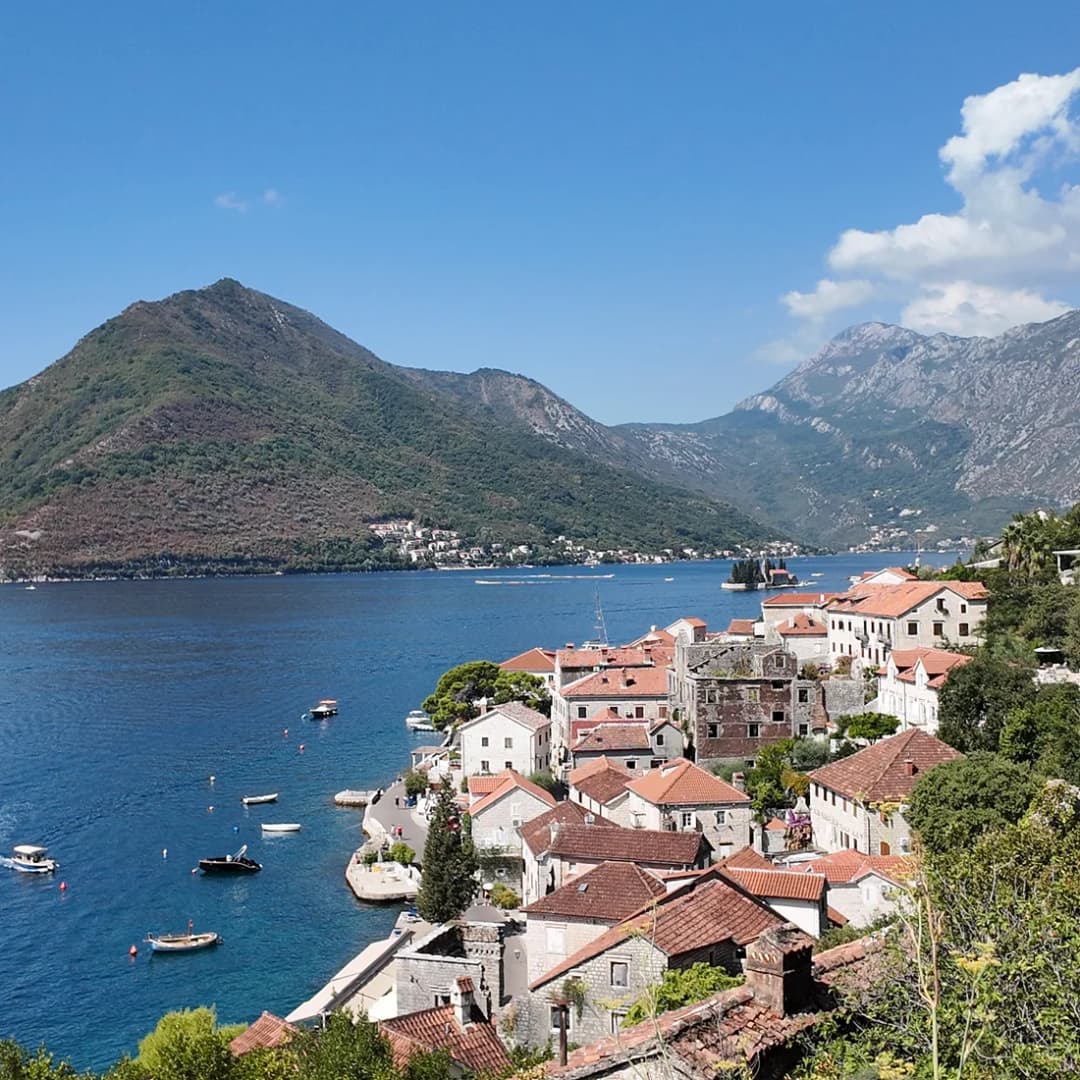
4. Walk Herceg Novi's forts and the Pet Danica promenade
- Where: the mouth of the bay, 40–50 minutes from Tivat Airport
- Time needed: half a day
- Cost: Kanli Kula and Forte Mare €4 each (2026), open 09:00–19:00; the old town is free
- Best for: a town that lives for itself, not for visitors
- Watch out: the town is stairs from top to bottom
Founded in 1382 by the Bosnian king Tvrtko I, Herceg Novi layers a 17th-century clock tower, the 16th-century Kanli Kula (now an open-air stage) and the 15th-century Forte Mare. Below them, the Pet Danica promenade runs about 6–7 km along the old railway line toward Igalo and Zelenika, named after five young women killed in the Second World War. Start with our Herceg Novi Old Town guide.
5. Stroll Tivat's Porto Montenegro
- Where: Tivat, 3–4 km from the airport
- Time needed: 2–3 hours
- Cost: free to walk; beach-club sunbeds about €15–40 a day
- Best for: a polished contrast to the old towns
- Watch out: restaurant prices match the yachts
The marina is built on an Austro-Hungarian naval arsenal from 1889 and has been converted since 2006 into a village of cafés, shops and 580 berths for yachts up to 250 m. It is a 10–15 minute walk from Tivat's centre, and Kotor is 20 minutes away by car. Details in our Porto Montenegro guide.
6. Paddle into the Blue Cave on Luštica
- Where: the seaward side of the Luštica peninsula
- Time needed: half a day by boat trip
- Cost: varies by operator and changed with the 2026 rules
- Best for: turquoise light and a swim, when the sea allows
- Watch out: since 25 May 2026, motor boats may not enter the cave. Only non-motor craft such as kayaks and paddleboards go inside, and swimming is not guaranteed
Boat trips still run to the cave mouth, and many now carry kayaks or paddleboards for the last stretch. Inspectors fined boats in June and July 2026, so pick an operator that explains the rule up front. Read our Blue Cave guide before booking, then stay for Luštica's 40 km village road in our Luštica guide.
The Budva Riviera and the south coast
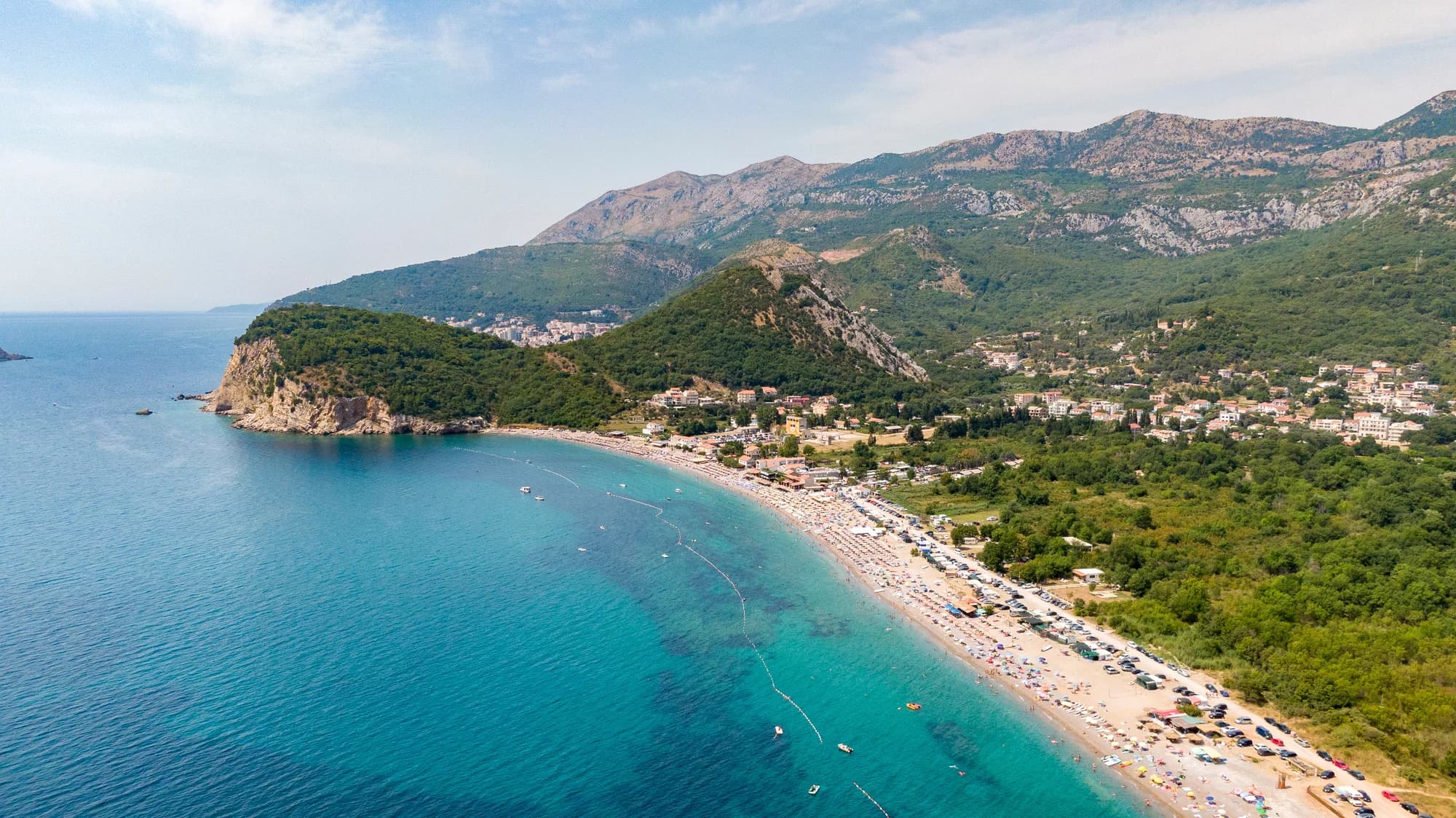
South of the bay, the coast opens out. Budva is the busy centre; the farther south you go, the longer and sandier the beaches become. Our beach atlas ranks every one of them on the same measures.
7. Explore Budva Old Town
- Where: Budva, about 20 km from Tivat Airport
- Time needed: 2–3 hours
- Cost: free to enter; the walls €2 (April–November), the City Museum €5
- Best for: an evening walk before dinner
- Watch out: parking. Zones cost about €1–2 per started hour in summer 2026
Budva claims more than 2,500 years of history, and its walls were rebuilt after the 1979 earthquake. The Modern Gallery is free; the Citadela is privately run, so check access on the day. See our Budva Old Town guide.
8. Swim at Mogren Beach
- Where: an 8–10 minute cliff walk from Budva, past the Ballerina statue
- Time needed: half a day
- Cost: free; you pay only for sunbeds
- Best for: sand within walking distance of town
- Watch out: the path gate is locked in rough seas. A swimmer drowned at Mogren II on 27 July 2026 after the beach had closed for big waves
Two fine-sand coves, Mogren I and II, about 350 m in total, are joined by a short tunnel through the rock. There is no road and no car park, which is half the charm. See our Mogren Beach guide.
9. See Sveti Stefan up close
- Where: about 10 km south of Budva
- Time needed: 1–3 hours
- Cost: the causeway is public; resort-guided walks of the island cost €25 (11:30 and 16:00)
- Best for: the coast's signature view
- Watch out: beach sets are expensive (€220 a day on the public beach in 2026), and a fence closes part of the shore path from Pržno from 8am
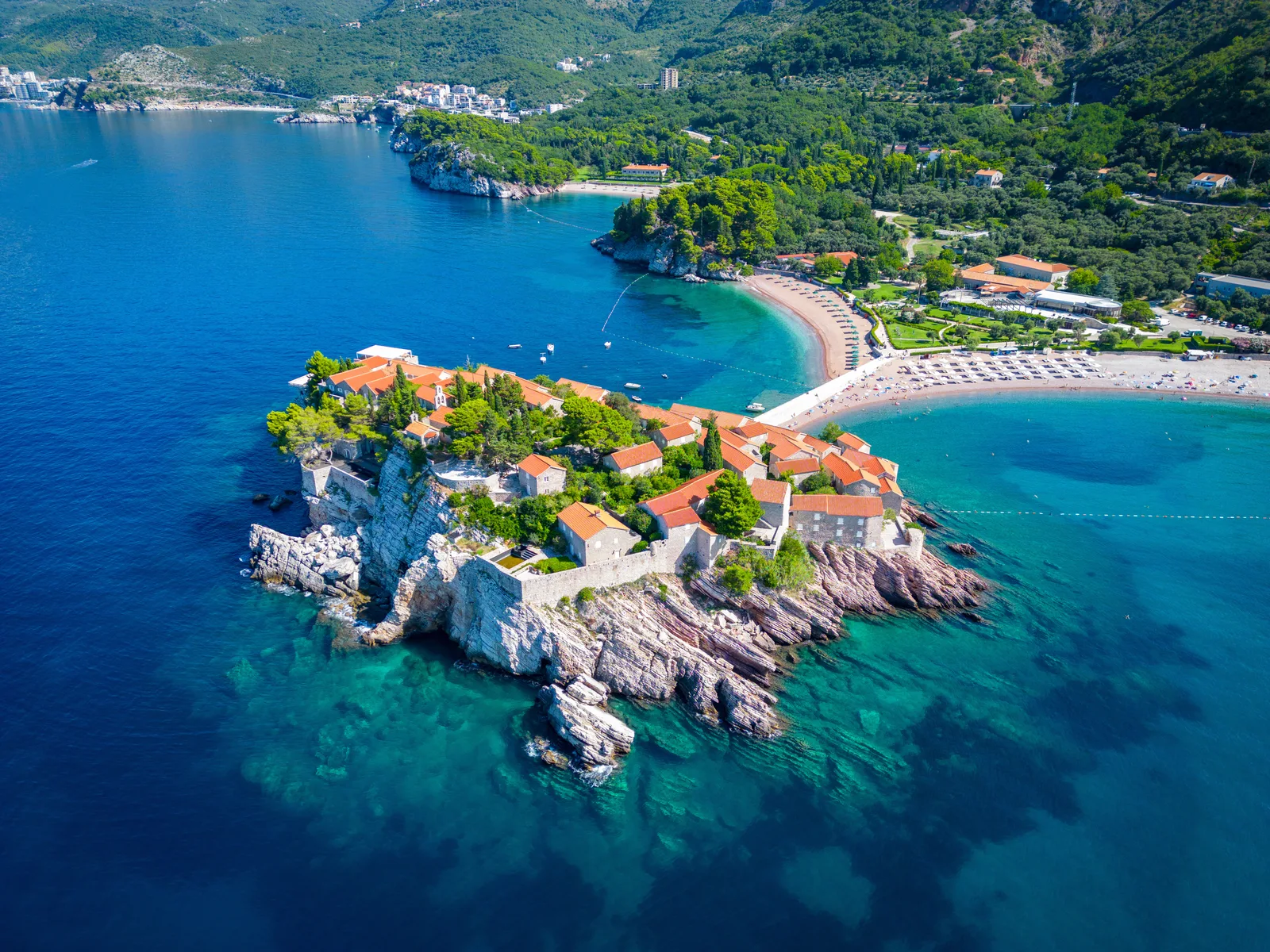
The 1.64-hectare fortified islet became a hotel-town in 1960. After closing in 2021, it reopened on 1 July 2026, with Villa Miločer reopening in May. Walk the causeway to the gate, or join a guided walk inside. The neighbouring King's and Queen's beaches date from the 1930s royal estate; their 2026 access rules were not published when we checked. See our Sveti Stefan guide.
10. Kayak from Petrovac to its islets
- Where: 17 km south of Budva
- Time needed: half a day
- Cost: the beach is free; kayak hire varies
- Best for: families and a calmer base than Budva
- Watch out: the Kastio fort publishes no opening hours
Petrovac curves around a beach of roughly 600 m below a 16th-century Venetian fort. Offshore, the Katič and Sveta Neđelja islets make up Montenegro's first protected marine area, a popular kayak paddle. A 4th-century Roman mosaic was found behind the church of Sveti Ilija. See our Petrovac guide.
11. Read Stari Bar layer by layer, then visit the old olive tree
- Where: about 4 km inland from Bar
- Time needed: 2–3 hours
- Cost: Stari Bar €5 (08:00–20:00 in 2026); the olive tree €2
- Best for: history without the crowds
- Watch out: the olive tree publishes no reliable opening hours
Stari Bar is a ruined hill town of 238 numbered remains, on UNESCO's Tentative List since 2010 but not an inscribed World Heritage Site. Allow about 90 minutes. Nearby at Mirovica, Stara Maslina is an olive tree with an official age estimate of about 2,240 years and a trunk 7.8 m round, protected since 1957. See our Stari Bar guide and old olive tree guide.
12. Ulcinj Old Town and Velika Plaža
- Where: the far south, about 70 km from Podgorica Airport
- Time needed: a day
- Cost: free; sunbed sets on Velika Plaža about €5–15 a day
- Best for: long sand and room to spread out
- Watch out: Velika Plaža starts about 5 km from town, so plan transport
Ulcinj's walled old town covers about 29 hectares above the sea; Venice held it from 1421 and the Ottomans from 1571. Below it, Mala Plaža is a 360 m town beach. Velika Plaža, the long beach, runs about 10 km end to end, or 12–13 km if you count the sand right through to the river. See our Ulcinj guide and Velika Plaža guide.
13. Eat fish on stilts at Ada Bojana
- Where: about 15 km south of Ulcinj, 20–25 minutes by car
- Time needed: half a day
- Cost: sunbed sets €10–20; a seafood lunch €20–35 per person
- Best for: kitesurfing and riverside restaurants
- Watch out: part of the beach is still signposted clothing-optional
This triangular island at the mouth of the Bojana river has a seaward beach of about 3 km and a line of timber fish restaurants on piles along the river. See our Ada Bojana guide.
14. Watch birds at Ulcinj Salina
- Where: just outside Ulcinj
- Time needed: 2–3 hours
- Cost: no fixed fee is published
- Best for: birders and photographers
- Watch out: access has no fixed hours. Confirm the entrance with the Ulcinj tourism office, and remember flamingos are never guaranteed
The old salt pans cover about 15 square kilometres and a Ramsar wetland where 252 bird species have been recorded. Their dykes are being repaired in 2026. See our Ulcinj Salina guide.
Mountains and national parks
Inland, Montenegro becomes high country. Mountain parks are best from roughly May to October, and the high passes of Durmitor and Prokletije can hold snow into June. Our national parks guide covers all five.
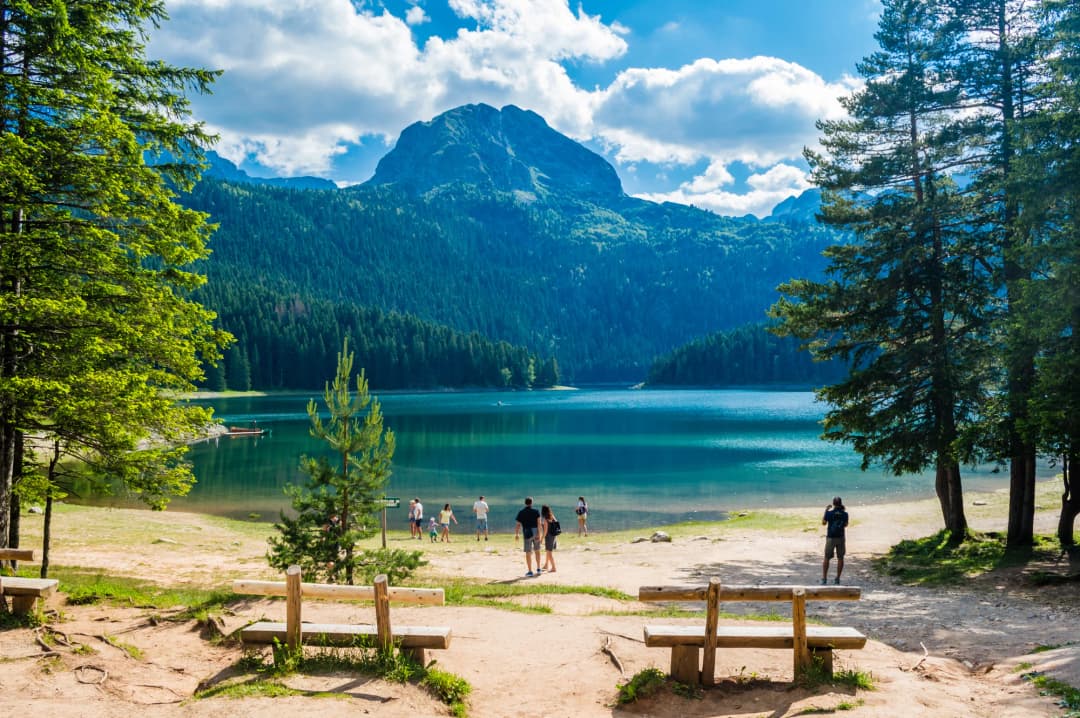
15. Walk around Durmitor's Black Lake
- Where: a 30–40 minute walk from Žabljak
- Time needed: about an hour for the 4 km loop
- Cost: Durmitor park entry €5 per day; under-15s free
- Best for: an easy first taste of the mountains
- Watch out: Žabljak sits at 1,456 m, so nights are cold even in summer
Black Lake is really two basins joined by a narrow neck, up to 49 m deep, in a park that has been a UNESCO World Heritage Site since 1980. From Žabljak, the 76 km Durmitor Ring road links the park's viewpoints. See our Durmitor and Black Lake guide.
16. Summit Bobotov Kuk
- Where: Durmitor, from the Sedlo pass or from Black Lake
- Time needed: 6–8 hours round trip from Sedlo
- Cost: park entry only
- Best for: fit hikers
- Watch out: the season runs from late June to early October; start early and check the forecast
Durmitor's highest peak stands 2,523 m by the park plan's figure (other sources give 2,522–2,525 m). From Sedlo it is about 12.7 km with roughly 720 m of ascent; from Black Lake via katun Lokvice, allow at least three hours each way. Plan it with our Žabljak and Durmitor guide.
17. Raft the Tara Canyon
- Where: Brštanovica to Šćepan Polje is the classic run
- Time needed: a full day, with 2–3 hours on the water
- Cost: one 2026 listing for the 18 km day starts at €75, including equipment, a meal and transfer
- Best for: the country's signature adventure
- Watch out: the season runs roughly April or May to October, and spring snowmelt brings the strongest water
UNESCO describes the Tara as Europe's deepest gorge, reaching about 1,300 m at its deepest point along a canyon of roughly 80 km. Most operators collect from Žabljak or Plužine. Read our Tara Canyon guide for operators and safety.
18. Cross the Đurđevića Tara bridge, or zip-line beside it
- Where: 25–30 minutes from Žabljak
- Time needed: 1–2 hours
- Cost: the bridge is free; the zip-line was around €20–30 a ride when last checked
- Best for: a big view with little walking
- Watch out: the zip-line runs roughly May to October only, and summer parking is charged
Built from 1937 to 1940, the five-arched bridge stands 172 m above the river and runs 365 m across. The 350 m zip-line cable alongside reaches about 80 km/h. See our Đurđevića Tara guide.
19. Drive the Piva canyon road to Piva Lake
- Where: Plužine, north-west Montenegro
- Time needed: half a day
- Cost: free
- Best for: a spectacular canyon drive
- Watch out: the road is narrow, with dozens of rock tunnels, so drive slowly
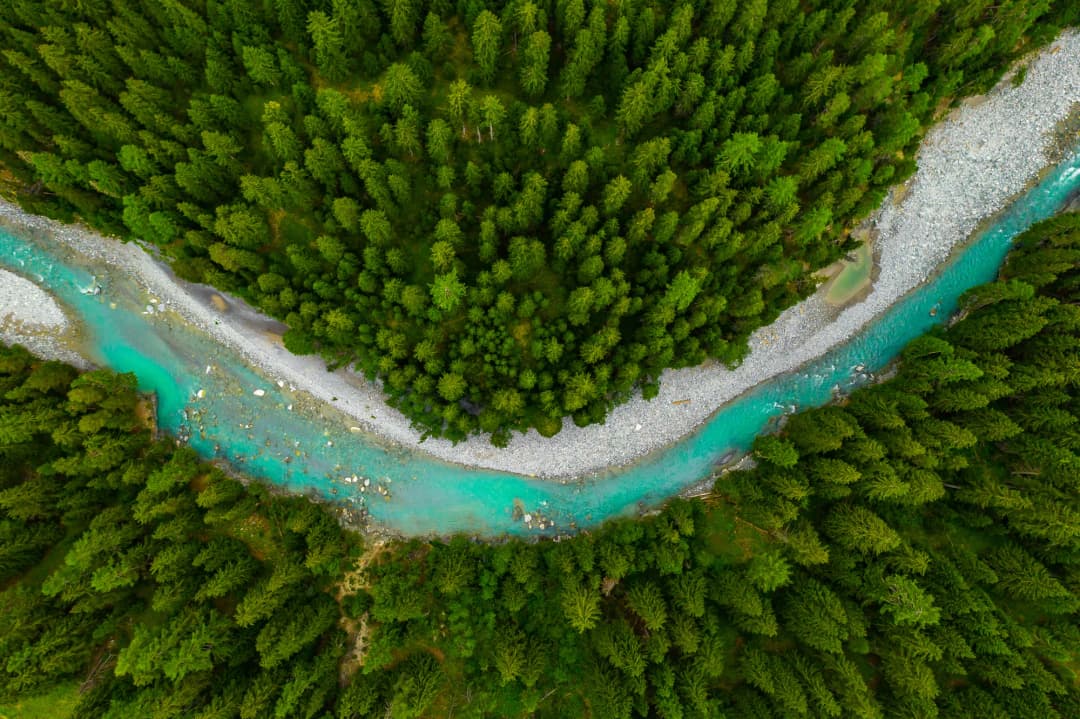
Behind the 220 m Mratinje dam, Piva Lake stretches 45 km and is more than 200 m deep in places. The canyon road above it cuts through 56 small rock tunnels. Piva Monastery was moved stone by stone between 1969 and 1982 to save it from the rising water; it now stands 2 km from Plužine. See our Plužine guide.
20. Walk the old forest at Biogradska Gora
- Where: about 30 minutes from Kolašin
- Time needed: half a day
- Cost: day ticket €4; wooden boat €10 an hour (August 2026)
- Best for: families and gentle walkers
- Watch out: boat and kayak hire is charged by the hour
Prince Nikola protected this forest as a royal reserve in 1878, and it became a national park in 1952. A 1,600-hectare primeval reserve lies within it, one of Europe's remaining old-growth forests. The 3.3 km circuit around Biogradsko jezero, at 1,094 m, is flat and well marked. See our Biogradska Gora guide.
21. Go remote in Plav, Gusinje and the Prokletije
- Where: the north-east, about 3–3.5 hours from Podgorica
- Time needed: two or three days
- Cost: low; buses €10–12 each way
- Best for: serious hikers and anyone escaping the crowds
- Watch out: cross-border walks need written police approval, applied for at least 15 days ahead
Prokletije became a national park in 2009, and Plav at 906 m is its lake town. Hridsko jezero, at 1,970 m, is a 4–5 hour hike, and the Ali Pasha Springs near Gusinje are an easy outing. The 192 km Peaks of the Balkans route loops through Montenegro, Albania and Kosovo. See our Plav guide and Gusinje guide.
22. Ski or hike at Kolašin
- Where: Kolašin, at 954 m
- Time needed: one to three days
- Cost: check current lift passes with the resort
- Best for: winter sports, and summer hiking on Bjelasica
- Watch out: winter tyres are compulsory from 15 November to 1 April
Two ski areas, Kolašin 1450 and Kolašin 1600, share about 45 km of marked pistes. The newer area opened in 2019, and its six-seat lift tops out at 2,035 m. See our Kolašin guide.
Lake Skadar
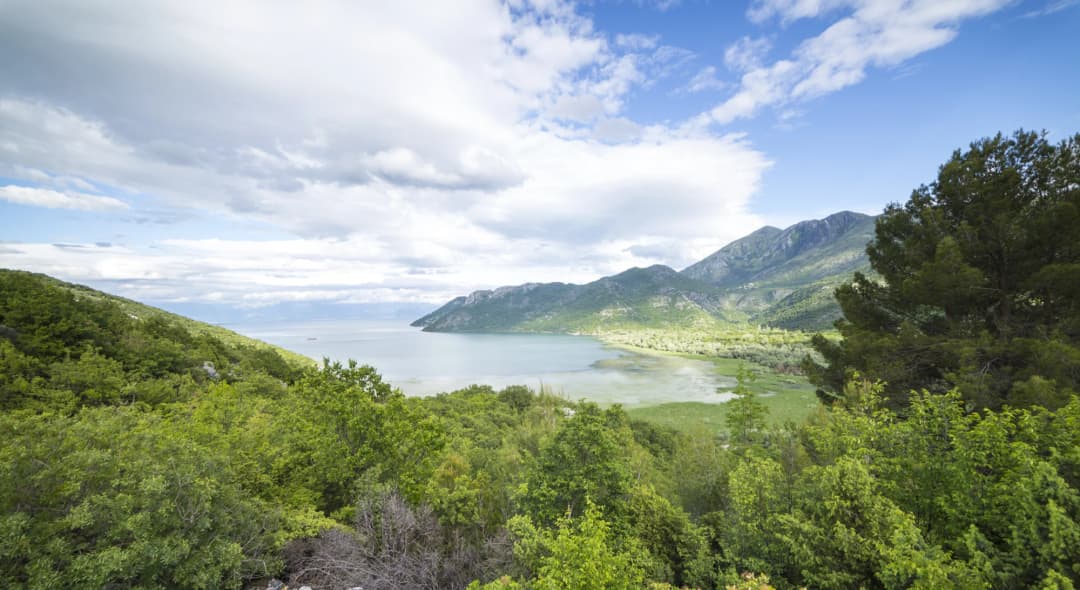
The Balkans' largest lake is a national park of water lilies, island monasteries and family wine cellars, 30–40 minutes from Podgorica Airport. Plan it with our Lake Skadar and Virpazar guide.
23. Take a boat out from Virpazar
- Where: Virpazar, on the lake's western shore
- Time needed: 2–3 hours
- Cost: shared tours usually €15–25 per person; park entry €5 per day, and a skippered boat €40 an hour on the park's list (August 2026)
- Best for: birds, water lilies and monasteries
- Watch out: ask whether the park fee is included; pages and operators differ
More than 280 bird species have been recorded on the lake, and a 2023 count found 165 adult pelicans. April to June is the best birding season. Boats pass island monasteries such as Kom, a 14th-century foundation, and Starčevo, built in the 1370s. Guided kayak trips of 3–4 hours run from €25–40.
24. See the river bend from Pavlova Strana
- Where: on the Cetinje road, about 5 km before Rijeka Crnojevića
- Time needed: half a day with a boat ride
- Cost: river trips around €30–50 for two people
- Best for: the classic horseshoe-bend photograph
- Watch out: there is no ATM in the village, so bring cash. By road it is about 45 minutes from Virpazar, not 15
The viewpoint at Pavlova Strana, at about 680 m, looks down on the Crnojevića river looping toward the lake. In the village below, boats run 90 minutes to two hours, roughly April to October. See our Rijeka Crnojevića guide.
25. Taste Vranac in the Crmnica wine villages
- Where: the hills around Virpazar
- Time needed: half a day
- Cost: most tastings €5–15 per person
- Best for: wine lovers
- Watch out: take a taxi or a driver; don't drive to tastings
Crmnica is the cradle of Vranac, Montenegro's signature red grape. Family cellars here, some run by the same families for more than ten generations, pour it with cheese and pršut. Near Podgorica, Plantaže farms about 2,300 hectares, and its Šipčanik cellar is a converted military tunnel. See our wine guide.
Culture and history
Old Montenegro, the mountain heartland behind the coast, is where the country's story lives: a royal capital, the tomb of its national poet and its holiest monastery.
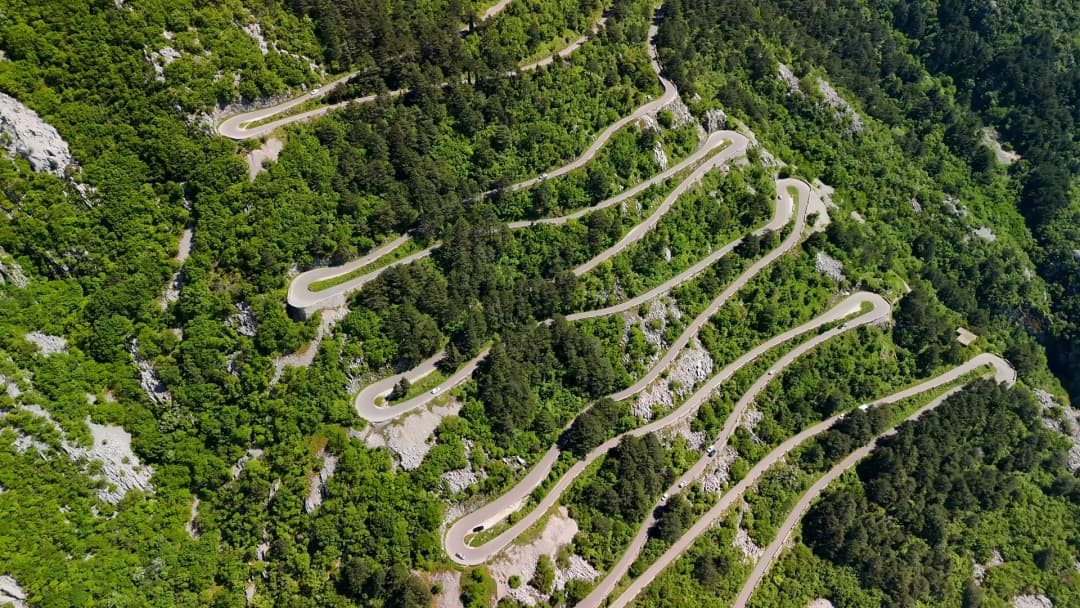
26. Drive the Lovćen serpentines to the Njegoš Mausoleum
- Where: Lovćen National Park, about 45 minutes from Kotor
- Time needed: half a day
- Cost: mausoleum €8 in 2026; a small park fee may also apply
- Best for: the panorama over half the country
- Watch out: the mausoleum closes in winter (roughly mid-November to mid-April), and a 2026 police order changes how the Kotor serpentine can be used, so check before driving
The road from Kotor climbs 25 hairpins, built by Austria-Hungary in the 1880s. At the top, 461 steps lead through a tunnel to Ivan Meštrović's mausoleum for the prince-bishop and poet Njegoš, completed in 1974 at about 1,660 m. See our Lovćen guide.
27. Explore Cetinje, the old royal capital
- Where: 30 minutes from Podgorica; 8 km from Lovćen's entrance
- Time needed: half a day
- Cost: €20 collective museum ticket, or €8 for King Nikola's museum alone (September 2026); the monastery is free
- Best for: history and embassy-era architecture
- Watch out: cover shoulders and knees at the monastery; women are asked for a headscarf and a long skirt, both lent at the door
Cetinje was Montenegro's capital from 1482 to 1946. King Nikola's palace, built in 1863–67, was the royal seat until the Austro-Hungarian occupation of January 1916. Museums open daily 09–17 in the summer season. See our Cetinje guide.
28. Visit Ostrog Monastery
- Where: 50 km from Podgorica (1 hour), 8 km off the Nikšić highway
- Time needed: half a day
- Cost: free
- Best for: faith, architecture and a cliff-face view
- Watch out: the dress code is strictly enforced, and the access road is steep and winding
The upper monastery is set into a cliff about 900 m above the valley, where Saint Basil arrived around 1665. It is Montenegro's most important pilgrimage site. Walk up from the lower monastery (about 3 km, 30–45 minutes), and arrive before 9am to beat the coaches. See our Ostrog guide.
29. Give Podgorica and ancient Doclea a morning
- Where: the capital, 15 minutes from its airport
- Time needed: half a day
- Cost: mostly free
- Best for: everyday Montenegro, and a base for Skadar and Ostrog
- Watch out: summers are hot; plan outdoor sights for early or late
Capital since 1946 and home to 179,505 people at the 2023 census, Podgorica pairs the Ottoman lanes of Stara Varoš with the cable-stayed Millennium Bridge of 2005. About 3 km north-west lie the ruins of Roman Doclea; access can shift during fieldwork. See our Podgorica guide.
30. Eat pršut in Njeguši, then a long konoba dinner
- Where: Njeguši, about 15 km and 30–40 minutes above Kotor; konobas everywhere
- Time needed: a long lunch
- Cost: meals in Njeguši about €10–18; bring cash
- Best for: anyone who travels to eat
- Watch out: lamb under the sač usually has to be ordered in advance
Njeguši, at about 900 m, cures its pršut over beechwood for one to two years and serves it with its brined sheep's or goat's cheese. On the coast, order black risotto or buzara, mussels or prawns in a wine sauce, with a glass of Krstač, the local white. See our food guide and Njeguši guide.

Planning your trip
When to go
June and September are the sweet spot: warm sea, open mountain roads and fewer people. July and August are the busiest and most expensive months, and the sea reaches about 25°C in August. May and October are the best value. December to March is ski season in the north. See best time to visit Montenegro.
Getting there and around
Tivat Airport is mainly a summer airport, 30–40 minutes from Kotor; Podgorica flies year-round. Dubrovnik is 1.5–2.5 hours from the Bay of Kotor, but summer border queues can add an hour or more. For most of this list a rental car is the practical choice: dipped headlights are compulsory all year, and the blood-alcohol limit is 0.03%. See getting to Montenegro, getting around and renting a car.
How many days you need
Three days is enough to see one region properly, not the whole country. Ten days covers coast, mountains and lake comfortably. Compare them side by side in our Montenegro itinerary guide, or go straight to a route: 3 days, 5 days, 7 days and 10 days.
Money and rules
Montenegro uses the euro, although it is not in the EU. Use bank ATMs and always choose to be charged in euros. Tourist tax is about €1 per adult per night in the main resorts, and you must be registered within 24 hours of arrival; hotels do this for you. A mid-range budget runs about €90–140 per person per day. See trip costs and tourist tax and the white card.
How we chose
Our 30 picks balance the famous and the overlooked across every region, so that any trip length has something on the list. The facts come from our own destination guides, each of which sources its figures. We checked them for this page in October 2026. Prices, opening hours and access rules in Montenegro change from season to season, so each item flags what to confirm. If you spot something out of date, tell us and we will correct it. When you're ready, find somewhere to stay or browse all our destinations.