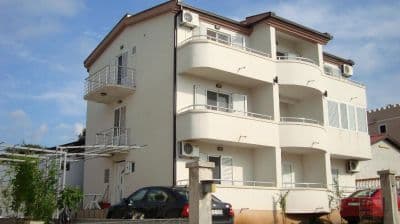
Bar is Montenegro's main port: Stari Bar's ruins above town, a 2,000-year-old olive tree, the Belgrade railway and ferries to Italy. Beaches, stays and tips.
500 mof beach
47 kmto the airport
€8a sunbed
Jul–Augthe busy months
Updated Originally published 32 min readby Pavle Obradović
Bar is Montenegro’s principal seaport, on the southern Adriatic coast at the foot of Mount Rumija (1,594 m), and the end of the Belgrade–Bar railway; it was home to 45,754 people at the 2023 census [44]. It is three places rather than one: the modern coastal town, with the promenade, King Nikola’s palace museum, the marina and the port; Stari Bar, four and a half hectares of ruined medieval town about four kilometres inland; and Mirovica, where an olive tree that a government study put at about 2,240 years still bears fruit. The ruins and the olive are the two things to see, and the town is where the beaches, the station and the ferry terminal are. It is less developed for tourism than Kotor or Budva, and the boats to Italy that Bar was long known for publish no sailings as of September 2026.
Bar at a glance
Stari Bar — the ruined old town, 4.5 hectares, 5 km up the hill by road (about 13 minutes). Entry has run at €2–3; no tariff or opening time is published.
The Old Olive (Stara maslina) — at Mirovica, a short drive from Stari Bar, estimated at about 2,240 years. Open daily 08:00–18:00; €2 for an adult, €1 for a child over eight.
King Nikola’s palace — on the seafront at Topolica, home to Bar’s Local Museum. No ticket price or opening hours are published.
Beaches — Topolica, the city beach, about 500 m of pebble in front of the palace; Šušanj just north under pines; sand at Sutomore, 9 km up the coast. Two loungers and an umbrella cost €8–15.
Airports — Podgorica 47 km, about an hour by road; Tivat 58 km, about an hour and twenty minutes.
Train — Bar is the end of the Belgrade–Bar line: about eleven hours from Belgrade, €23.80 in second class.
Ferry to Italy — no operator currently publishes a Bar–Bari or Bar–Ancona departure.
Best time — swimming from June to the end of September; about 270 sunny days a year.
Stari Bar (the old town)
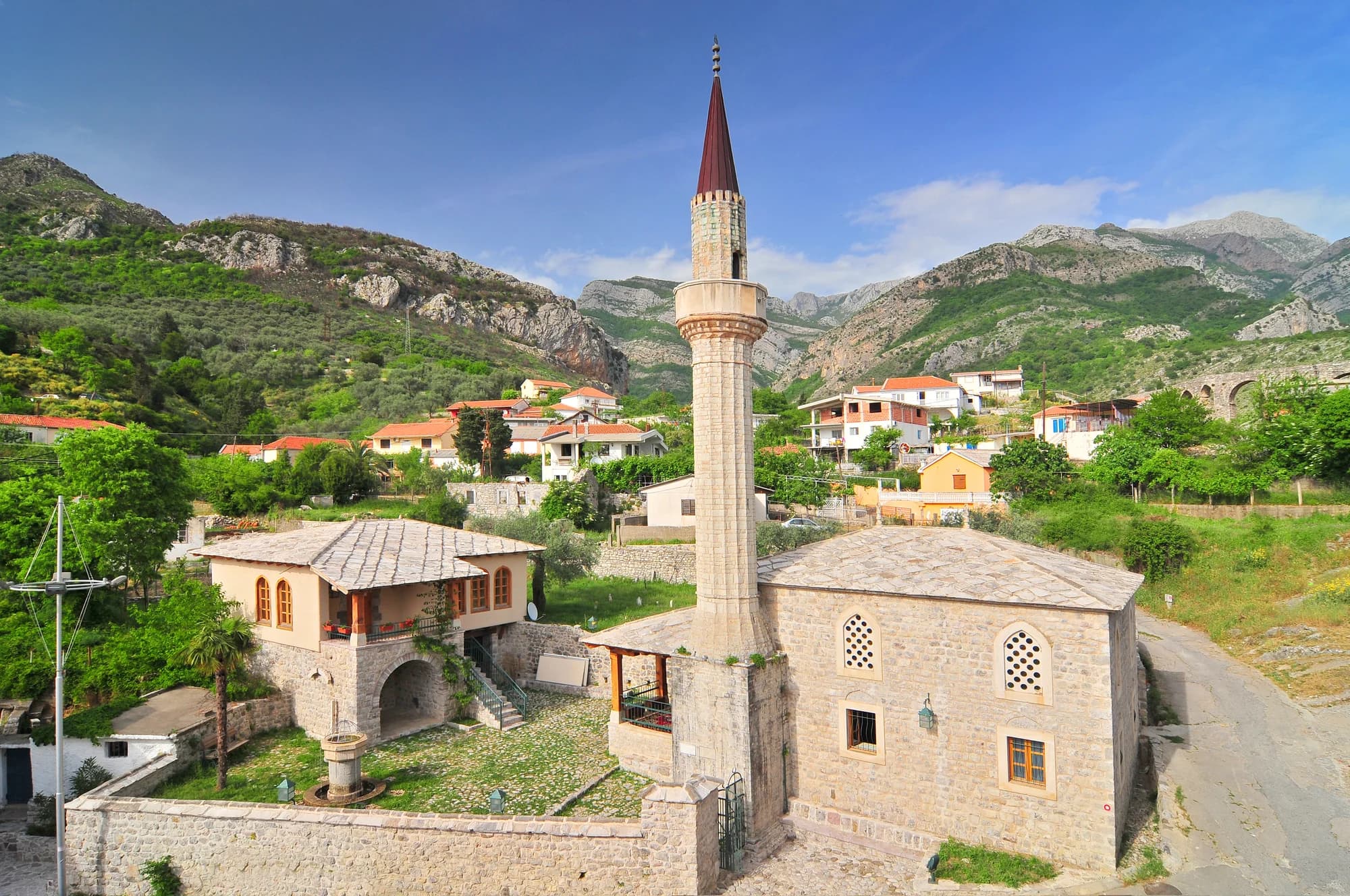
The municipal heritage inventory places Stari Bar about four kilometres from the sea, across 4.5 hectares. It calls the fortress an open-air museum, with conserved churches, palaces, vaults, olive mills, a customs-house visitor centre, an archaeological museum in the Archbishop's Palace, a creative hub and a hamam. By road it is 5 km up the hill from the marina, about thirteen minutes by car and an hour on foot [43].
What to see inside the walls
The datable pieces are the main gate of the fourteenth to sixteenth centuries, the thirteenth-century church of St Nicholas, the Tatarovica citadel in use from the tenth century to the nineteenth, and the clock tower of 1753 with a face on each of its four sides. The cathedral of St George began Romanesque in the eleventh century, served as a mosque and a powder store under the Ottomans, and was wrecked by a gunpowder explosion in 1881. The aqueduct that watered the town came down in the 1979 earthquake, and the Byzantine curtain wall of the eleventh and twelfth centuries still stands under its vines. The customs-house visitor centre and the museum in the Archbishop's Palace are worth more than a lap of the walls.
Romanesque churches stand beside Ottoman mosques and Byzantine walling runs into Venetian work. They are the buildings successive rulers put up and converted, and a single wall can carry medieval, Venetian, Ottoman and modern conservation work in the same run of stone. For the same layering in an inland town, see the Bijelo Polje cultural walk.
Two authorities have counted the buildings and they do not agree. The municipality gives the remains of more than 250 structures; Montenegro's UNESCO submission says around 600 public and private edifices — most likely because one is counting what survives and the other what once stood. Either way, a handful of buildings are conserved and interpreted, and the rest are walls [13][15][16]. The dates are unsettled too: the municipality puts the aqueduct at the end of the 16th century or the start of the 17th, while UNESCO's text calls it 18th-century. Ottoman-era is as far as the evidence goes.
Tickets, hours and access
Entry has run at €2–3, but neither the municipality nor the Cultural Centre publishes a tariff or an opening time, so treat both as unconfirmed. The Bar Cultural Centre and the tourism organisation are the ones to ask about the day you are going, and inside the site the barriers and the staff are the authority.
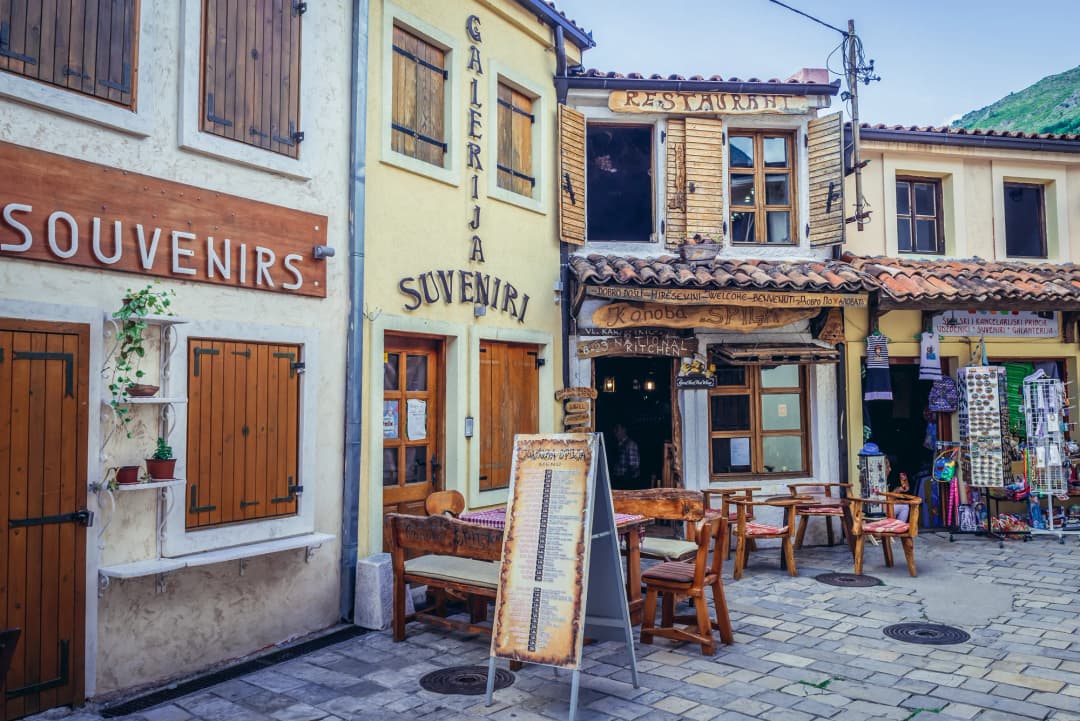
Take a car, a taxi or the local bus up from the shore. On foot it is a road with traffic on it, climbed in full sun in July; go early, while the stone is still cool. Inside the fortress the going is stone, steps and open ground, and nobody publishes a step-free route through it — a wheelchair or a pushchair will get as far as the customs-house visitor centre and no further. The lane up from the car park to the gate is lined with restaurants and stalls selling olive oil, honey and handicrafts.
Tentative List is not World Heritage status
What the sources say
UNESCO records Old Town of Bar on Montenegro's Tentative List, submitted on 6 July 2010 under cultural criteria (ii), (iii) and (v). A Tentative List is an inventory of properties a state may consider nominating. It is a necessary planning stage, not inscription by the World Heritage Committee [16]. UNESCO does not run Stari Bar.
Tentative is a planning stage—not inscription: Old Town of Bar's current UNESCO status
Stage
Status
Tentative List
Submitted 2010
Nomination
Not established here
World Heritage
Not inscribed
Current verified status
Tentative List
Source: whc.unesco.org
The Old Olive (Stara maslina) at Mirovica
The tree stands at Mirovica, a short drive from Stari Bar, and its canopy spreads some ten metres around. A Government of Montenegro report on a 2015 study puts it at approximately 2,240 years — one of two trees sampled that came out above 2,000. It is an estimate, not a birth certificate, and it does not go up by one every January the way some listings suggest. Nor does it make the tree the oldest olive in the world: the study compared Montenegrin trees, not global ones.
The tree has burned twice and it still fruits; the oil is still pressed. Feuding families are said to have come here to settle their quarrels, which is where the village got its name — mir is peace. It was declared a public good in 1957 and taken into state protection, passing from private hands to the municipality.
The Mirovica olive's great age is supported by an estimate of about 2,240 years. The photograph cannot establish a precise planting date or global record.
Tickets and opening hours
The National House of Olives runs the site and publishes the visit: every day from 08:00 to 18:00, €2 for an adult and €1 for a child over eight, free for under-eights and free for residents of Bar. A decision amending that price list was issued in August 2026 without the published page changing, so ring the ticket office on +382 67 137 931 if the exact fare matters. There is a small shop at the gate selling oil and souvenirs.
The tree is fenced and viewed from a platform. Stay outside the barrier, take nothing, not even a fallen twig, and do not count on finding it in fruit on the day you come.
Separate measurement, protection and myth: what the Old Olive evidence supports
Category
Item
Detail
Supported
≈2,240 years
2015 estimate
Current action
Check visitor contact
Respect barriers
Not established
Exact planting year
World's oldest title
Reading
An estimate is strong evidence
Without being an exact birthday
Source: gov.me, kucamaslina.me
Bar’s olive trade
Olive oil was an established part of local culture by the 6th century. Today more than 1,700 growers tend approximately 10,000 old zutica olive trees, an indigenous variety [24][25]. The UN Industrial Development Organization has taken an interest in the old groves, and growers from Bar and Ulcinj market a joint label, 42N 19E [24].
Kuća maslina, the national olive house in Stari Bar, took in 117,000 kg of olives over the 2025–26 season, 81% of them from Bar municipality — Tuzi sent 7%, Podgorica 5–6%, Zeta 4.5%, and Budva none at all. Extra virgin is the only segment still growing [46].
What to see in modern Bar
The coastal town holds the promenade, the palace and its museum, the marina, the shops, the railway station and the port. All of it is within a walk.
Compare
The beaches, to scale
Sutomore Beach1,193 m
Sand · Family
Čanj Beach937 m
Šušanj Beach717 m
Shade · Pebble
Beaches500 m
Shade · Amenities · Sand
Topolica City Beach500 m
Amenities · Sand · Pebble
Maljevik334 m
Veliki Pijesak330 m
Amenities · Pebble
King Nikola’s Palace (Villa Topolica) and the Local Museum
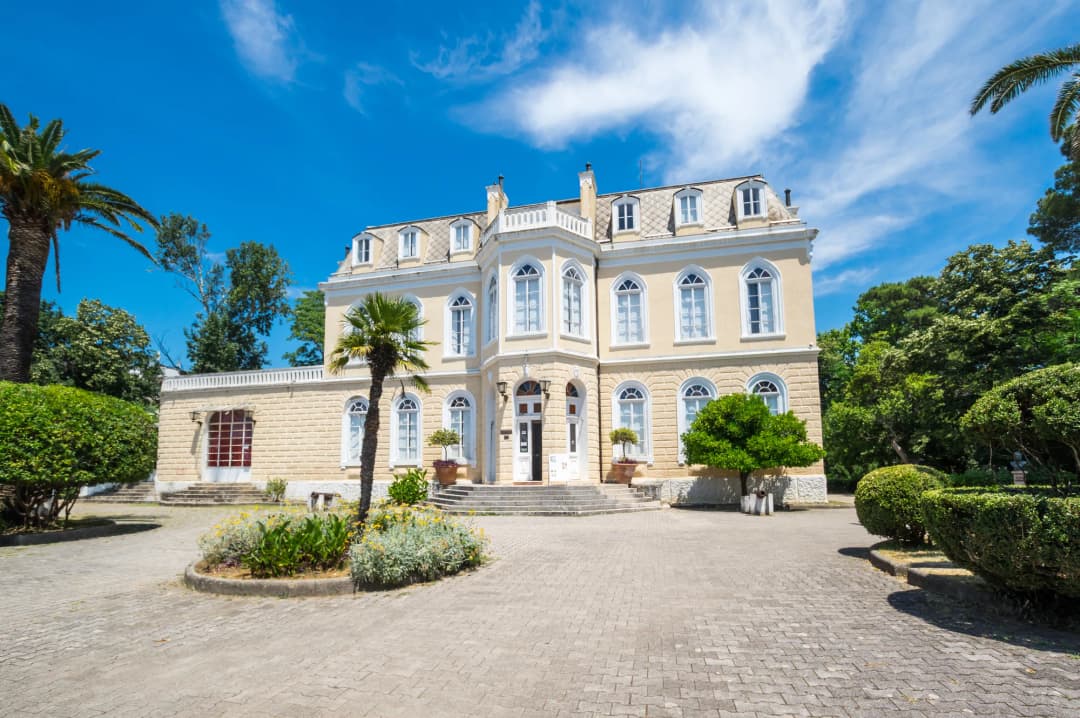
King Nikola’s palace stands in its own park on the Bar seafront. The Cultural Centre says the seaside palace is first mentioned in 1885 and associates its design with court architect Josip Slade. The Tourism Organisation describes a complex of large and small residences, chapel, guard building, winter garden and landscaped park, created for Princess Zorka and Petar Karađorđević. Today the main building houses Bar's Local Museum [17][18].
The palace was built on the ruins of the villa of Bar's last Ottoman lord, Selim-bey Mustafagić. Petar Karađorđević, later King Peter I of Serbia, named the estate Villa Topolica after Topola in Serbia; a ballroom was added in 1910. The palms, eucalyptus and agave in the park came in ships that called here a century ago. The museum has been in the main house since 1959 — archaeology, ethnography, art, royal furniture and folk costume — and it faces straight onto the city beach.
No ticket price or opening time is published, and the figures that circulate are second-hand and out of date, so ring the Cultural Centre before you build a morning around it. The story that the palace was a wedding present is examined in our King Nikola palace guide. For a noble house and garden absorbed into a modern town elsewhere in the country, see the Buća Palace and Tivat park guide.
The cathedral of St Jovan Vladimir
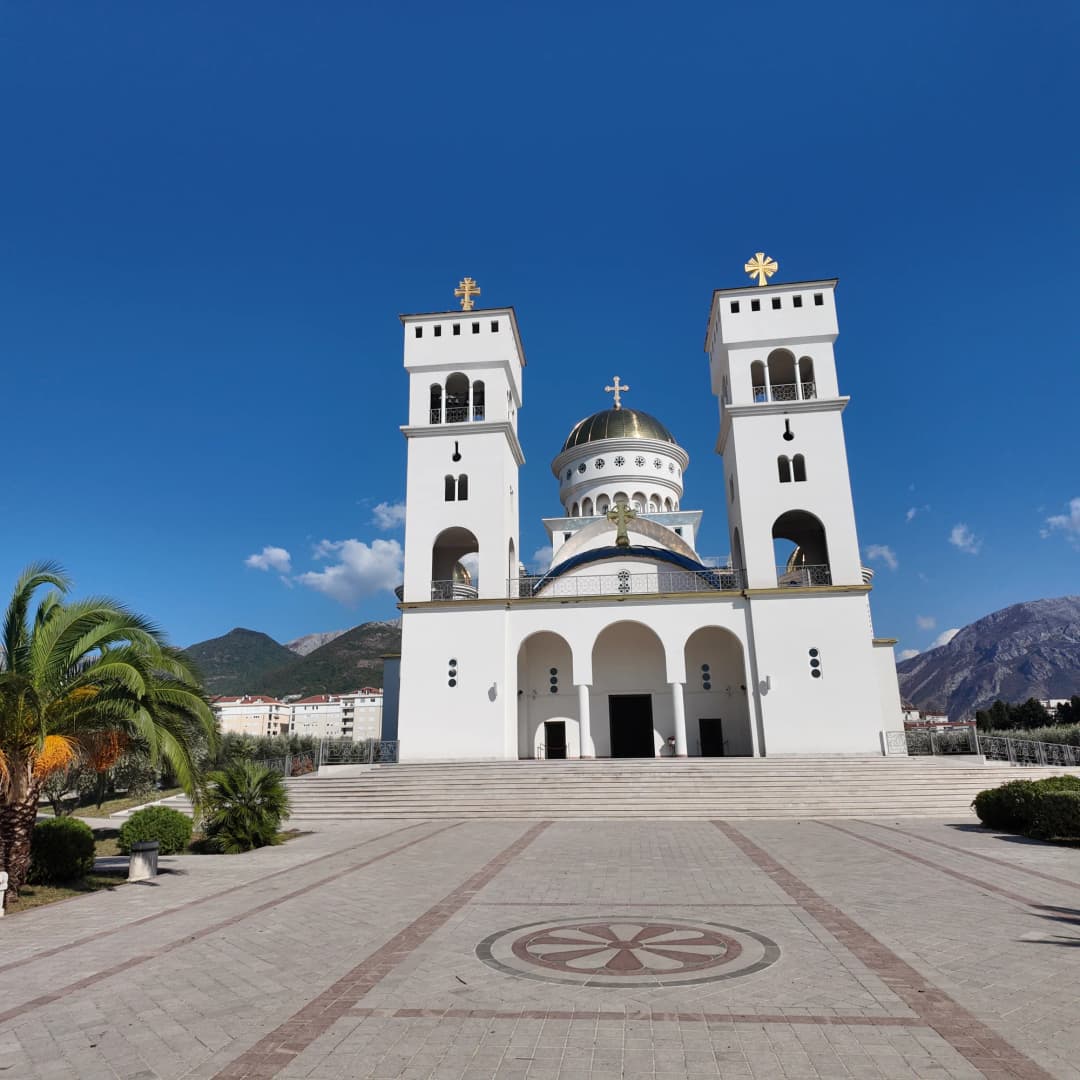
The cathedral of St Jovan Vladimir at Topolica, consecrated 25 September 2016. Our full guide to the cathedral covers its thirty-seven-year story, the frescoes and the visit.
The promenade and Topolica
Topolica, the city beach, runs from the marina to the mouth of the Željeznica in front of the palace park, with a palm promenade of bars and cafés behind it and playgrounds on the sand [23].
The port and Marina Bar
Bar is Montenegro’s largest and principal seaport, handling nearly all of the country’s overseas trade. The modern port, capable of handling approximately 5 million tons of cargo, officially began operations in its current form on July 13, 1983, following post-earthquake reconstruction [10].
Marina Bar is one of Montenegro’s largest marinas, 104 nautical miles from the Strait of Otranto. It has approximately 700 serviced berths and full shipyard facilities, including a 75-tonne travel lift, electrical and mechanical workshops and a fuel station. It is a working yard as much as a marina, and a common wintering base for boats cruising the southern Adriatic [22].
Beaches
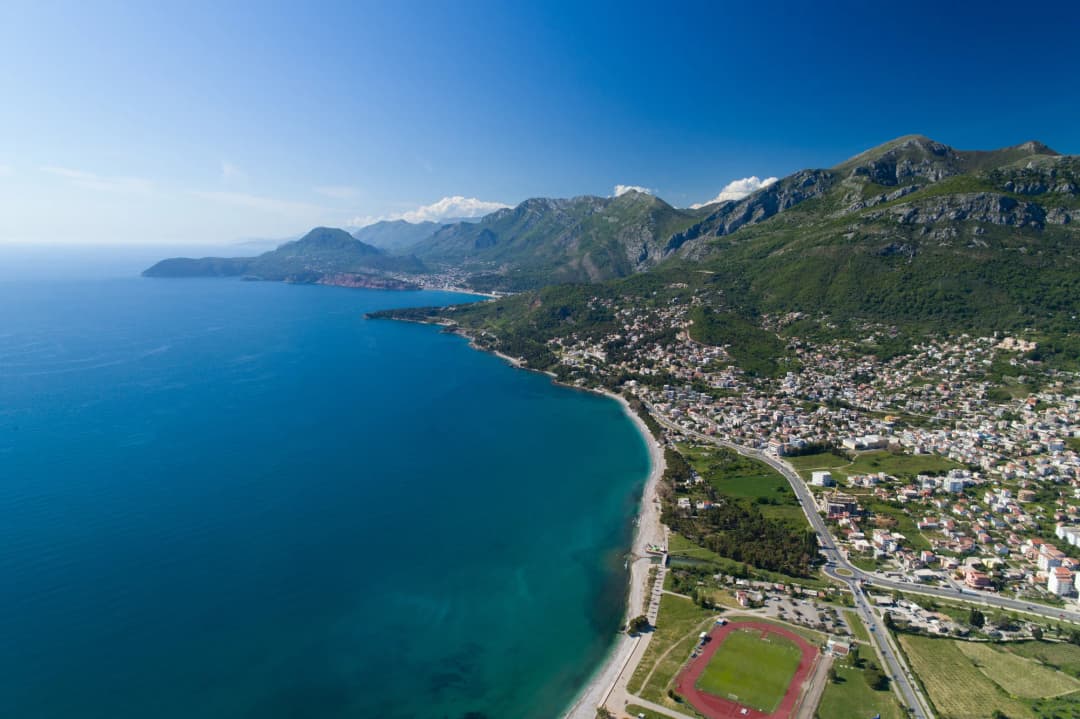
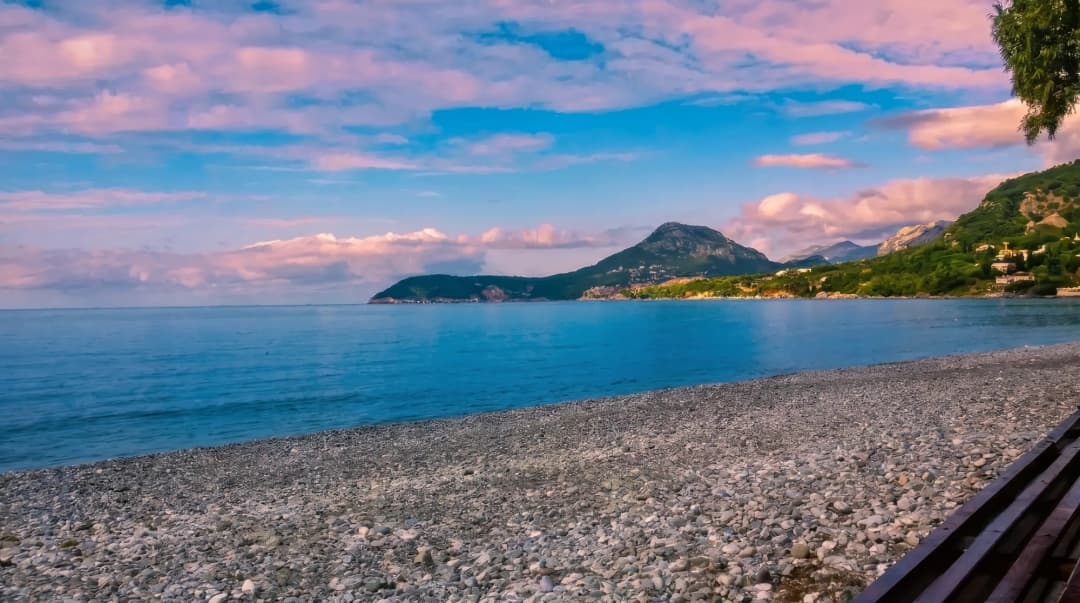
Bar municipality has about thirty kilometres of shore: pebble and concrete in front of the town, pine-backed shingle immediately north, sand at Sutomore, and small shingle bays south towards Ulcinj. Lengths below are the longest span of each beach as mapped on OpenStreetMap [43].
Topolica City Beach – about 500 m in front of King Nikola's palace, pebble with sand and larger stones, with loungers, playgrounds and beach bars; the shallow end makes it the default family choice [23]
Šušanj Beach – 717 m of pebble, 15,881 m², with mature pines standing at the back of it, which is the only real shade on this stretch
Sutomore Beach – 1,193 m of coarse sand, 37,835 m², shelving gently; the busiest family beach in the municipality and the one the Belgrade trains empty onto
Čanj Beach – 937 m, 46,926 m², a cove beach north of Sutomore reached down its own side road
Maljevik – a 334 m cove beach north of the town, with no road down to most of it
Veliki Pijesak – a 330 m shingle beach of 8,495 m², 10 km south on the Ulcinj road, equipped in season with loungers, showers and a lifeguard
Two loungers and an umbrella cost €8–15 on the city beaches and €8–12 at Sutomore, high-season street prices in 2026; the beaches themselves are free to walk onto. The water is warm enough to swim in from June to the end of September, and at the southern bays well into October [23][31][44].
Is the water clean?
What the sources say
The city beach sits next to a working port, which is where the worry usually starts. Morsko dobro, the state coastal authority, samples Bar municipality's fifteen bathing sites through the season and publishes each round: in the report of 7 September 2026, from samples taken between 31 August and 3 September, thirteen of the fifteen rated excellent and the other two good [48]. That is one round, not a standing guarantee. Check the named beach in the current round before you swim, and read the flags on the day.
If one beach does not suit, move along the coast. Keep children and weak swimmers clear of the port approaches, the marina and the boat lanes whatever the water grade says: the hazard there is traffic, not bacteria.
Getting there and around
Road distances and driving times, measured with OSRM on OpenStreetMap data in September 2026 [43]:
Two figures in wide circulation are wrong: Budva is 39 km from Bar, not 55, and Tivat airport is 58 km away, not 80. Buses along the coast road run to Podgorica, Budva and Ulcinj through the day, from the station beside the railway.
By train. Bar is the end of the line, and the station is in the town. Montenegrin Railways runs a date-based search for Bar–Podgorica and the international trains, and Bar station answers on +382 30 301 619. A seat reservation is compulsory in first and second class on international trains and costs €3 [49]. Search your actual date; seasonal timetables and engineering work move the times.
By road. From Podgorica and the lake the fast way in is the Sozina tunnel, and it is tolled. Monteput's current tariff: €1 for a motorcycle, €2.50 for an ordinary two-axle car, €5 for three or more axles, or for a two-axle vehicle over 1.9 m tall whose permitted mass is 3,500 kg or less, €10 for a two- or three-axle vehicle over 3,500 kg, and €18 for four axles or more [49]. A roof box, a van or a trailer can move you up a class. In July and August allow for the queue.
By sea. Bar has a long ferry connection to Italy, but see the ferry section below before relying on it.
A transport mode is usable only after a dated check
Mode
First check
Second check
Train
Search travel date
Recheck disruption
Road
Classify vehicle
Check traffic
Ferry
Find live operator
Require booking
Rule
Historic route ≠ today's departure
Source: zpcg.me, monteput.me, bar.me
Between the town, Stari Bar and Mirovica
The town, Stari Bar and the Old Olive are not one seafront walk. Stari Bar is 5 km up the hill by road, and Mirovica is a separate stop off the same hill road; use a car, a taxi or the local bus between the shore and the hill.
Bar is a triangle, not one old-town stroll: three distinct visitor zones
Zone
What it is
Access note
Modern Bar
Promenade + museum
Rail + working port
Stari Bar
Fortified archaeology
About 4 km inland
Mirovica
Old Olive site
Separate access check
All zones
Confirm transfers
Do not assume continuous safe pavement
Source: bar.me, kucamaslina.me, lukabar.me
The ferry to Italy: what is actually bookable
The overnight boat to Bari is the thing most writing about Bar still promises, and it is the thing not to count on. The crossing took eight hours, out late and in early, with cars and foot passengers, and Ferryhopper puts the terminal about 2 km south-east of the town centre. No operator currently publishes a departure.
Montenegro Lines is now Barska plovidba (montenegrolines.net redirects to barskaplovidba.me), the agency rather than the carrier: its cancellation notices name Jadrolinija on Bar–Bari and Adria Ferries on Bar–Ancona. The newest departures published anywhere on its site are the Bar–Ancona sailings of July to September 2024. It does publish a 2025 fare sheet for Bar–Bari — €58 an adult, €22 a child, €77 for a car under five metres and €115 over, €43 a motorcycle, plus service charges of €20 a passenger and €24 a car — and no date to use it on. The last sailing notices of any kind are the cancellations of July and August 2025 [50]. The ferry tab on the Municipality of Bar's timetable page is empty [51].
Direct Ferries, checked on 1 September 2026, states that there are currently no ferries running between Bar and Bari, and lists the route historically as Jadrolinija, one sailing weekly, eight hours [36]. Ferryhopper still describes the Bari–Bar direction as running from July to August and prints €78 for one adult, while both of its schedule panels for Bar read “No information currently available” [35]. Neither Jadrolinija's nor Adria Ferries' own pages list a Bar line.
So do not book a hotel, a car hire or a connecting flight around a Bar–Italy crossing until a named operator shows you a bookable departure on your date. The longer Ancona crossing has a published tariff, low season to high — €90–145 for a deck place, €98–285 for a cabin berth, €125–216 for a car, plus port charges of €15 a passenger and €20 a car [50] — which shows the shape of a fare, not this year's price.
The Belgrade–Bar railway
The Belgrade–Bar railway runs 476 km from the Serbian capital down to this shore, through 254 tunnels and more than 230 bridges. It opened on 28 May 1976 after twenty-five years of building [32][33][34][44]. The set piece is the Mala Rijeka viaduct, which carries the track about 200 m above the river and is 498 m long; it held the record for the highest railway bridge in the world until 2001 [32][33].
It takes about eleven hours today, against roughly seven when the line was new. Belgrade to Bar is €23.80 in second class and €35.60 in first; Belgrade to Podgorica is €21.60 and €32.40. On the night train a couchette is €8–12 extra and a sleeper bed €16–24, or €48 for a single-berth sleeper on top of a first-class ticket. The day train leaves Belgrade at 09:45 and the night train, the Lovćen, at 19:54; northbound they leave Bar at 09:00 and 20:10. The day train runs in summer only, second class only. From July 2026 both railways sell tickets online, though the Montenegrin side takes an order rather than confirming a seat; the carriage and berth numbers follow by email one to forty-eight hours later [32].
The best scenery is the crossing of Skadar Lake between Virpazar and Podgorica and the climb from Podgorica to Kolašin through the gorges [32][33][34]; sit on the right-hand side of the train travelling southbound (left-hand side going north) [33].
The line it replaced was a 43.3 km narrow gauge, 750 mm wide, from the port up to Virpazar on Skadar Lake, open from 1908 to 1959 [47].
Best time to visit and festivals
The climate is Mediterranean, and Bar is one of the sunniest places on the Adriatic: about 270 sunny days a year, which is also why the marina winters so many boats. July averages 25–27 °C, winters are mild and wet, and the swimming season runs from June to the end of September [22].
Bar Chronicle (Barski ljetopis), July and August
The Bar Chronicle is a multimedia cultural festival held every July and August since 1988, organised by the Bar Cultural Centre. It runs theatre by domestic and international troupes, art exhibitions, literary evenings and concerts of traditional and classical music, and since 2003 the Mediterranean Book Fair [6][28].
Maslinijada (olive fair), after the harvest
Maslinijada is Bar’s own olive fair, held in Stari Bar after the harvest and first run in 2002. The month is not settled — some listings say November, others December — so check the Cultural Centre’s programme before you book a flight around it. It brings growers, pressers and buyers into one place, with tastings and sales of olives and oil, stands by beekeepers, winemakers and growers of medicinal plants, music, folk dancing, local food, fireworks over the bay and displays of the folk costume of the Bar area [26][27].
Both festivals move venue and week more often than the annual listings admit; the Budva Theatre City guide is the model for checking a programme before you commit to dates.
Hiking: Rumija, Haj-Nehaj and Skadar Lake
Bar is the only town on the Montenegrin Adriatic with a mountain behind it and a lake behind that, and both are day trips rather than expeditions. The tracks through the olive terraces above Stari Bar are the easy version — an hour or two on foot from the fortress gate, through scrub, groves and pine, past the old olive and up into the foothills.
Rumija (1,594 m) rises directly behind Bar, between the Adriatic coast and Skadar Lake; the climb from sea level is more than 1,500 metres [29]. The classic hiking route starts in Bar’s old town at 198 m and climbs through the village of Mali Mikulići at 788 m; SummitPost times it at four to five hours one way, which makes it a full day rather than a half one. Published route lengths disagree — 9.4 km in one place, 15 km in another — so plan on the hours and the height. Beyond the treeline the 360-degree view takes in the Adriatic, the city of Bar, Skadar Lake and mountain peaks stretching into Albania [29].
Every year on Trinity Day (fifty days after Easter), a procession carries Vladimir’s Cross to the summit, with participants of all three faiths — Orthodox, Catholic and Muslim [29].
Haj-Nehaj fortress above Sutomore
At 231 metres above Sutomore, in Bar municipality, Haj-Nehaj is a Venetian fortification raised to hold the line against the Ottomans. Accounts differ on the century: most guidebooks say fifteenth, while the Sutomore chronology dates the walls to 1542, which is the sixteenth. The name is usually read as fear and fear-not [7][8][45].
Inside the walls is the ruined church of St Demetrius. The double-altar story attached to it — one Orthodox, one Catholic, under one roof — belongs to a different building: the shared nave is recorded at the church of St Tekla, in the town below the crag, and the two accounts cannot both be right. Go for the walls and the view [7][45].
The 1979 earthquake did it further damage. The climb from Sutomore beach is about a kilometre of path and 230 m of ascent through olive terraces and pine — half an hour if you are quick, an hour in August heat — and there is no ticket office, no gate and no water at the top. The view runs from Sutomore bay round to Bar [7][8][45].
Skadar Lake from Virpazar
The gateway to Skadar Lake National Park, Virpazar, is 23 km from Bar and about half an hour by road [43]; the local trains up the line stop there too — under half an hour, €1.80 in second class and €2.00 in first — and Bar station will confirm the day's times on +382 30 301 619 [49]. Budget for the lake itself rather than for getting to it: the national park charges €5 per person per day, a seat on a shared boat out of Virpazar runs about €20, a private boat €50 for 75 minutes to €160 for four hours, and kayaks €3–5 an hour [30][47].
Skadar Lake is the largest lake in the Balkans and one of Europe’s most important wetland habitats, home to approximately 270 bird species including Dalmatian pelicans, pygmy cormorants, and various herons. Boats from Virpazar visit the lake’s monasteries, fishing villages and water lily fields [30].
Where to stay, and what it costs
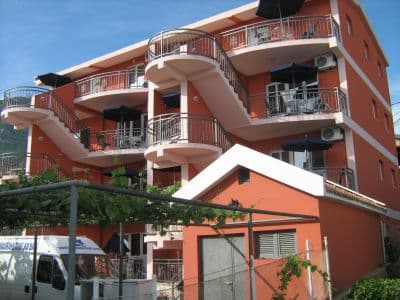
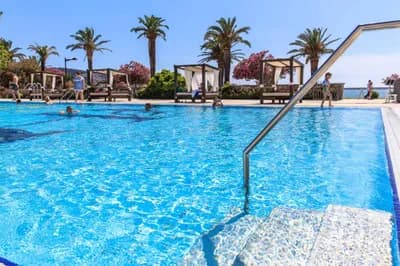
The choice is really a choice of shore. The town itself puts the promenade, the museum, the market, the station and the port within a walk, and its beach is pebble and busy. Šušanj, immediately north, is the local families' side: shingle under pines, residential streets behind. Sutomore, 9 km up the coast, has the sand and the cheapest beds on this stretch. South of town the coast road runs past Veliki Pijesak to Dobra Voda, where the settlements drop off olive terraces into the water and you need a car or the coast bus. Bar is a resident town first and a resort second [44].
What Bar costs
Street prices in the summer of 2026, with the fixed public charges beside them. Two rows are blank because nobody publishes them [44][49]:
What you actually pay in Bar, summer 2026
Item
Price
Where it comes from
Espresso
€1.00–1.50
Street prices, town and riviera
Beer
€2.50–3.00
Street prices
Dinner for two, fish, with wine
€25–40
Street prices
Two loungers and an umbrella
€8–15
City beaches
Sozina tunnel, ordinary car
€2.50
Monteput tariff, category 2
Skadar Lake national park
€5 per person per day
Park price list
Shared boat out of Virpazar
€20 per person
Operator's published rate
Old Olive at Mirovica, adult
€2
Kuća maslina tariff — €1 over eight, free under eight
Stari Bar entry
No tariff published — €2–3 in practice
Palace museum entry
No tariff published — ring the Cultural Centre
Day trips, and one or two days in Bar
Bar's argument as a base is that the lake, the mountain and the Albanian border are all inside forty minutes, which is not true of anywhere else on the coast. Sutomore and the Haj-Nehaj climb are 14 minutes up the coast, Virpazar and the lake boats 29 minutes over the ridge, and Ulcinj, the Albanian-speaking south with Velika plaža beyond it, 37 minutes away; Budva is just under an hour and Podgorica, through the Sozina tunnel, about an hour (distances in the table above) [43]. Kotor, at 85 minutes, is a long day, better done as a night away.
One day. Stari Bar early in the morning, lunch in the bazaar lane below the gate, then the Old Olive at Mirovica and the groves on the way down. Come down for the afternoon on the promenade and the palace museum, and swim off Topolica or Šušanj if the current water round says so. The olive house posts 08:00 to 18:00; Stari Bar and the palace museum post nothing, so do not build the day around either of them.
Two days. Give the fortress and the olive country the first day, and the town, the museum, the beach and dinner at the marina the second, so a closed interior costs you an hour instead of the trip. A third day, if you have it, can go to Skadar Lake from Virpazar by boat, the Haj-Nehaj climb above Sutomore, or the run south to Veliki Pijesak and Utjeha.
A longer national route can use our seven-day Montenegro itinerary; and if you are carrying on south, the Montenegro-to-Albania guide covers the border and the buses, which change more often than either country announces. If Stari Bar leaves you wanting more archaeology, the Risan Roman mosaics are intact Roman floors under cover, up at the head of the Bay of Kotor.
What travellers say
Travel writers often call Bar one of Montenegro’s most underrated destinations, with history to match Kotor and Budva and fewer crowds. As one travel blogger wrote: “Bar might not show up in glossy travel brochures, but it’s one of those underrated towns in Montenegro where life moves slower” [31][37].
At Stari Bar it is the scale visitors remark on — roofless streets on a hilltop, Rumija behind, and hardly anyone else in them; Jules Brown wrote of walking “among the ruins in the lost city of Stari Bar” [14][38]. The Old Olive ranks among TripAdvisor’s top-rated attractions in Bar, and visitors are struck less by its age than by the fact that it still bears fruit [19][20][21].
History
Nobody can give Bar a founding date. The finds are early and the name changes — Antibareos, Antibarum, Antivari, Bar — but the town has no year one. The Bar you walk through is the outcome of a siege, a move downhill, a port plan, two railways and an earthquake.
A city shifted from fortress to port: selected turning points
Year
Event
Type
1042
Battle of Bar
Political
1077
Mihailo
Political
1089
Archbishopric
Ecclesiastical
1571
Ottoman rule
Political
1878
Siege + move
Political
1908
Virpazar rail
Transport
1976
Belgrade rail
Transport
1979
Earthquake
Event
Note
1908 local railway ≠ 1976 Belgrade–Bar railway
Source: bar.me, lukabar.me
Ancient, Roman and Byzantine Bar
The area has been inhabited since the Neolithic, and the first settlement on the site of Stari Bar dates from the beginning of the Bronze Age. Illyrian tribes were the earliest known inhabitants. The Romans called their settlement Antibarium – “opposite Bari”, across the Adriatic from the Italian city [1][2]. Excavations at Stari Bar have found occupation layers from 800 BC [3].
After the fall of the Western Roman Empire, Antibarium came under Byzantine control as part of the Theme of Dyrrhacium. It was mentioned as the reconstructed Roman castle “Antipargal” in the 6th century, and the name “Antibarium” was first recorded in the 10th [1].
Vojislav, Mihailo and the archbishopric of 1089
Stefan Vojislav took Bar into his state around 1040 and won his victory near the town in 1042; Mihailo was recognised as king in 1077, and the Vojislavljević dynasty held Bar until 1090. The Archbishopric of Bar, a diocese since the 9th century, was raised to an archdiocese in 1089, confirmed by Pope Clement III, and its archbishops bore the title “Primates of Serbia” (Primas Serbiae). The city then passed to the medieval Serbian state under the Nemanjić dynasty; the archbishopric was abolished after 1140 and restored by the Nemanjićs in 1199 [4][5]. Bar also produced the “Genealogy of Bar” (Barski rodoslov / Ljetopis Popa Dukljanina), one of the oldest Slavic literary monuments, a chronicle of the rulers of the region’s Slavic principalities [6].
Venice and the Ottomans, to 1878
Rule shifted among Byzantines, the Nemanjić dynasty, Balšići, Venice and the Ottoman Empire. Venice held Bar through a long 15th- and 16th-century phase, valuing it for its position on the sea and fortifying it; Haj-Nehaj above Sutomore is its fortress against the Ottomans [7][8].
The Ottomans captured Bar in 1571 and held it for more than three centuries. Many churches became mosques, and the Cathedral of St George was turned into a gunpowder depot. Hammams, bazaars and mosques went up beside the Romanesque and Byzantine buildings [1][9]. Emigration of the Catholic population and the arrival of new groups led to the gradual collapse of the Archdiocese’s parish structures; some parishes became Orthodox for lack of Catholic priests [5].
Montenegrin Bar, the port and the railways
Montenegrin forces took the fortress in 1878 after siege and bombardment, and the Treaty of Berlin that year, after the Russo-Turkish War, ceded Antivari to the Principality of Montenegro. Life did not simply resume inside the walls: residents moved first to the suburb and then toward Pristan on the coast. Prince Nikola I began modernising the town, and work on the modern port started in 1905 [1][10]. In 1904 Marconi opened a wireless link from Bar across to Bari — the first in the Balkans, and the reason the town appears in the early history of radio [44].
Two railways, seventy years apart, are easy to confuse: the narrow gauge to Virpazar of 1908–1959 and the Belgrade–Bar main line of 1976. Pristan, the first coastal settlement, was then cleared for the port itself, and Topolica took the growth instead.
The earthquake of 1979
On 15 April 1979 an earthquake of magnitude 6.9, with its epicentre in the Adriatic between Bar and Ulcinj, registered X (Extreme) on the Mercalli scale and caused catastrophic damage along the Montenegrin coast. In Bar much of the city had to be rebuilt. 101 people died in Montenegro and 35 in Albania, more than 100,000 were left homeless, and a 1984 UNESCO report counted 1,487 culturally significant objects damaged across the region. Stari Bar, already in decline, was abandoned completely: the aqueduct that supplied it was destroyed and the last inhabitants moved to the coast [11][12].
Independence and the working port (2006 to today)
Montenegro left the state union with Serbia after the referendum of 21 May 2006. Since then Bar has been the country's cargo gateway and the third-busiest municipality on the coast for tourism, with 2.22 million overnight stays in 2025, 14.4% of the national total, behind Budva and Herceg Novi. Guests stay 8.5 nights on average, the longest on the coast alongside Tivat. The population has grown from 34,463 in 1991 to 45,754 in 2023 [44].
Quick answers
When is the best time to visit Bar?+
The climate is Mediterranean, and Bar is one of the sunniest places on the Adriatic: about 270 sunny days a year , which is also why the marina winters so many boats. July averages 25–27 °C, winters are mild and wet, and the swimming season runs from June to the end of September [22].
Road distances and driving times, measured with OSRM on OpenStreetMap data in September 2026 [43]: Two figures in wide circulation are wrong: Budva is 39 km from Bar, not 55, and Tivat airport is 58 km away, not 80.
Bar municipality has about thirty kilometres of shore: pebble and concrete in front of the town, pine-backed shingle immediately north, sand at Sutomore, and small shingle bays south towards Ulcinj. Lengths below are the longest span of each beach as mapped on OpenStreetMap [43].
Bar is the only town on the Montenegrin Adriatic with a mountain behind it and a lake behind that, and both are day trips rather than expeditions. The tracks through the olive terraces above Stari Bar are the easy version — an hour or two on foot from the fortress gate, through scrub, groves and pine, past the old olive and up into the foothills.
The choice is really a choice of shore. The town itself puts the promenade, the museum, the market, the station and the port within a walk, and its beach is pebble and busy. Šušanj, immediately north, is the local families' side: shingle under pines, residential streets behind.
Bar's argument as a base is that the lake, the mountain and the Albanian border are all inside forty minutes, which is not true of anywhere else on the coast. Sutomore and the Haj-Nehaj climb are 14 minutes up the coast, Virpazar and the lake boats 29 minutes over the ridge, and Ulcinj, the Albanian-speaking south with Velika plaža beyond it, 37 minutes away; Budva is just under an hour and Podgorica, through the Soz
Pavle Obradović is from Herceg Novi. He was Manager of Montenegro.com, then Director of the Herceg Novi Tourism Organization, and is now Coordinator for Investment and Development Projects at the Municipality of Herceg Novi. He holds a BSc in International Hospitality and Service Management from the Rochester Institute of Technology (RIT).
···
Updated · Originally published
Montenegro Travel Newsletter
Get weekly stories, guides, and insider tips about Montenegro delivered to your inbox.